Navigating the crowded market of mobile advertising apps and platforms can feel overwhelming for even the most seasoned performance marketer. With dozens of channels promising high-value users and impressive ROAS, how do you decide where to allocate your budget for maximum impact? Cutting through the marketing noise to find the right tool for your specific goals, whether it's driving installs for a new gaming app or acquiring high LTV users for a subscription service, is a critical first step. This guide is built to solve that exact problem.
We have compiled and analyzed the top platforms to help you make an informed decision. Forget generic descriptions; this is a practical resource for growth teams and marketers. Each entry provides a detailed breakdown of key features, honest strengths and weaknesses, ideal use-cases, and pricing information. We also explore Meta Ads integrations and evaluate the automation and scaling capabilities of each option.
This list is your shortcut to finding the right advertising partner. For each platform, you'll find direct links and screenshots to see the interface for yourself. We'll examine everything from major players like Google and Meta to specialized DSPs like Moloco and Liftoff, giving you a clear picture of what each can offer your mobile growth strategy.
1. AdStellar AI
Featured Choice for Meta Campaign Automation & Scale
AdStellar AI presents a powerful solution for teams looking to dramatically accelerate their Meta advertising efforts. It operates as an end-to-end platform, connecting directly to your Meta Ads Manager to automate the entire campaign workflow, from bulk ad creation to performance-based scaling. Its primary function is to eliminate the manual, time-consuming tasks associated with high-volume testing.
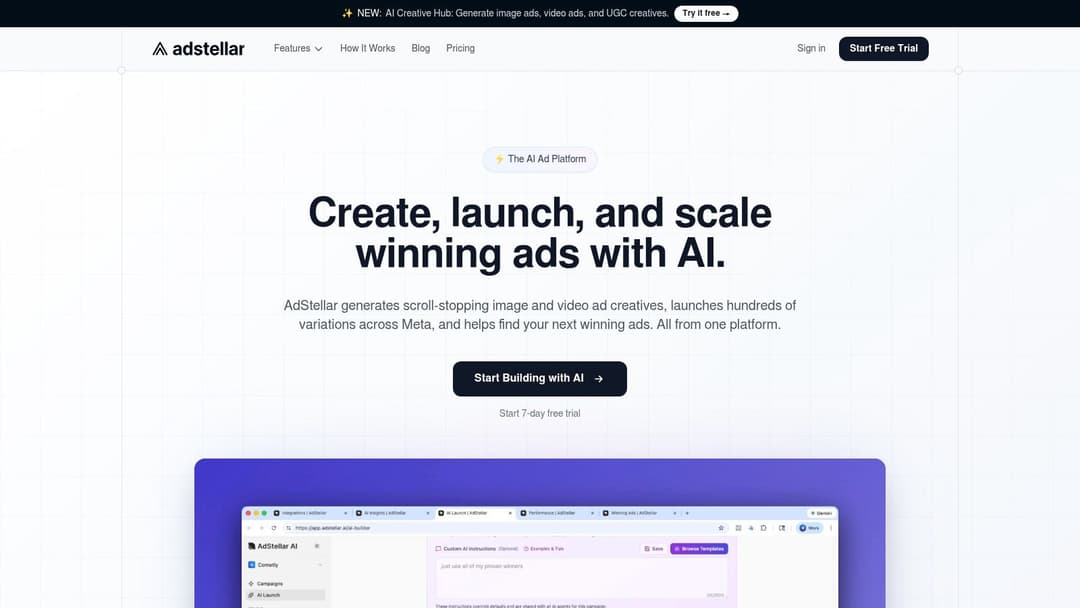
The platform’s strength lies in its AI-driven optimization. By ingesting your historical account data, AdStellar continuously learns what resonates with your audience. Its AI Insights feature ranks creatives, copy, and audience segments against your specific goals (like ROAS or CPL), providing a clear, data-backed roadmap for what to launch next. This focus on data-backed decision-making makes it an excellent choice among mobile advertising apps for performance-focused teams.
Strengths & Weaknesses
| Strengths | Weaknesses |
|---|---|
| Massive Time Savings: Automates bulk ad creation and can launch hundreds of ad variations in minutes, not hours. | Meta-Only Focus: The platform is purpose-built for Meta and does not support campaigns on Google, TikTok, or other ad networks. |
| Data-Driven Optimization: AI ranks all campaign components by performance metrics, helping you allocate budget to proven winners. | Opaque Pricing: No public pricing is available. You must contact sales for a demo and custom quote, which can slow down the evaluation. |
| Automated Scaling: Identifies high-performing ads and automatically scales their budget as new performance data is collected. | Data Dependency: New accounts with limited historical data may experience a slower ramp-up period as the AI models need data to learn. |
| Centralized Workflow: Manages campaigns, creatives, audiences, and reporting in a single unified interface. |
Who Is It Best For?
AdStellar AI is ideal for performance marketers, growth teams, and agencies managing substantial Meta ad spend. E-commerce/DTC brands and acquisition-focused SaaS companies that rely on high-volume creative testing to find winning ads will see the most significant impact. It is purpose-built for teams that need to move faster than the manual workflows in Ads Manager allow. For a deeper dive into the specific benefits, you can explore more about this mobile advertising application on their blog.
Pricing & Access
Pricing is not publicly listed. Access requires scheduling a demo with their sales team to discuss your specific needs, get a quote, and arrange onboarding. A Meta Ads Manager account with sufficient historical data is a practical prerequisite to gain the full benefit of its AI capabilities from day one.
2. Google Ads – App Campaigns
Google’s App Campaigns are a foundational tool for marketers looking to drive installs and in-app actions at scale. Instead of managing placements manually, you provide creative assets like text, images, and videos, and Google’s algorithm automatically assembles and serves them across its massive network. This includes high-intent properties like Google Play, Search, and YouTube, making it one of the most powerful mobile advertising apps for reaching users actively looking for solutions.
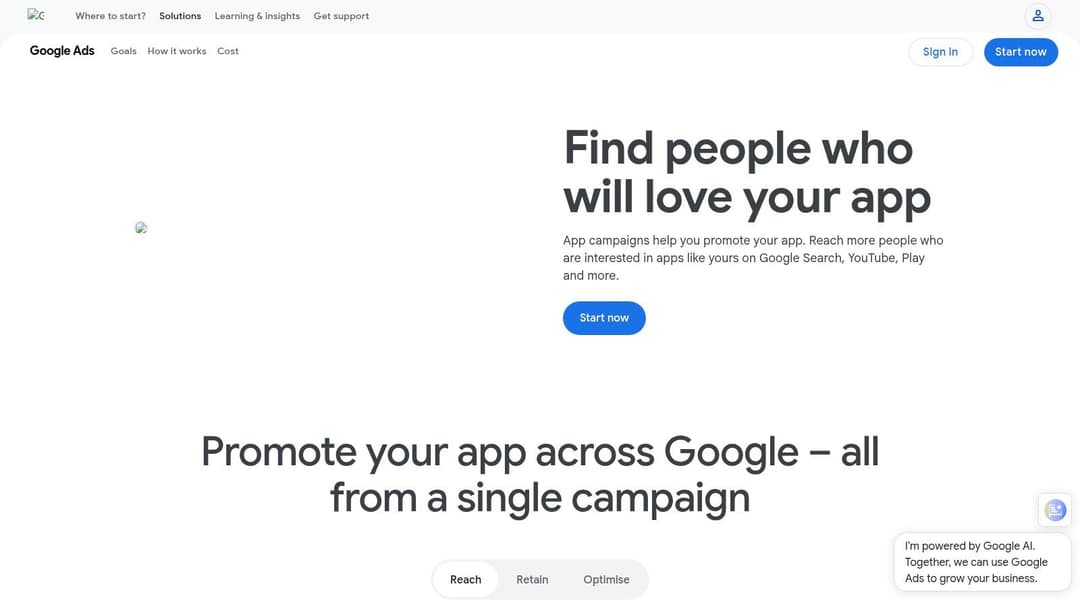
The platform is built on automation, using machine learning for bidding (tCPA/tROAS) and creative optimization, which significantly reduces setup time. This hands-off approach is a double-edged sword; it’s excellent for efficiency but offers less granular control over targeting and placements compared to some social platforms. The creative feedback is also less direct, making it a "black box" at times. For a deeper understanding of campaign structure, you can learn more about advertising an app and how to prepare your assets for best results. It's an essential platform for any app marketer's toolkit.
Website: Google Ads App Campaigns
3. Apple Search Ads (Basic and Advanced)
For iOS-exclusive acquisition, Apple Search Ads is an essential platform, placing your app directly in front of high-intent users within the App Store. It offers two tiers: Basic, an automated pay-per-install model for smaller budgets, and Advanced, which provides full control over keyword bidding, placements, and audiences. This direct access to store-level search intent makes it one of the most effective mobile advertising apps for capturing quality users at the exact moment they are looking for a solution.
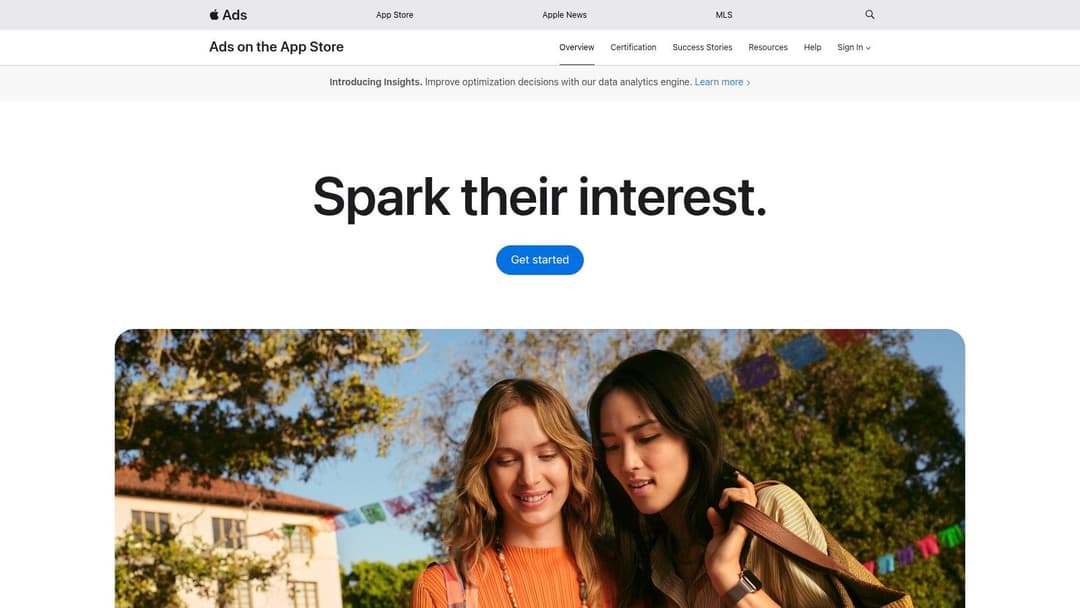
The primary advantage is user quality; since ads appear natively in search results, the Today tab, and on product pages, the intent is exceptionally high. The Advanced option is particularly powerful, offering transparent keyword and query data that is invaluable for optimizing campaigns and protecting brand terms. However, its biggest limitation is its exclusivity to the iOS ecosystem, offering no reach on Android. Furthermore, the Basic tier is capped at $10,000 per month and lacks the granular controls needed for scaling, making Advanced the go-to for serious marketers.
Website: Apple Search Ads
4. Meta Advantage+ App Campaigns (Facebook & Instagram)
Meta’s Advantage+ App Campaigns are essential for marketers aiming to drive growth across Facebook, Instagram, and the Audience Network. Instead of manual setup, you supply creative assets and conversion goals, and Meta’s machine learning handles audience targeting, placement, and creative delivery. This automated approach is designed to find users most likely to install your app or complete valuable in-app events, making it one of the most powerful mobile advertising apps for full-funnel social media growth.
The system streamlines campaign creation, automatically testing creative combinations and optimizing for down-funnel events like purchases (AEO/VO) or registrations. Its strength lies in its enormous scale and rich behavioral data, which fuels a strong creative testing environment with formats like Reels and Stories. However, performance is highly dependent on the quality of data signals sent from your SDK or MMP, and auction volatility can cause unpredictable performance during competitive periods. For more on this, you can learn how artificial intelligence shapes Facebook ad performance. It’s an indispensable platform for social-first app marketing.
Website: Meta Advantage+ App Campaigns
5. TikTok Ads – App Promotion (Smart+)
TikTok’s App Promotion objective is a dominant force for reaching highly engaged, mobile-first audiences. It supports campaigns focused on installs, in-app events, and value-based optimization, making it a strong video-first channel for performance marketers. Its advertising suite, particularly with Smart+ campaigns, automates creative mixing, budget allocation, and placements to help scale user acquisition quickly. The platform thrives on authentic, user-generated content (UGC) style creative, which often drives superior engagement and lower acquisition costs compared to overly polished ads.
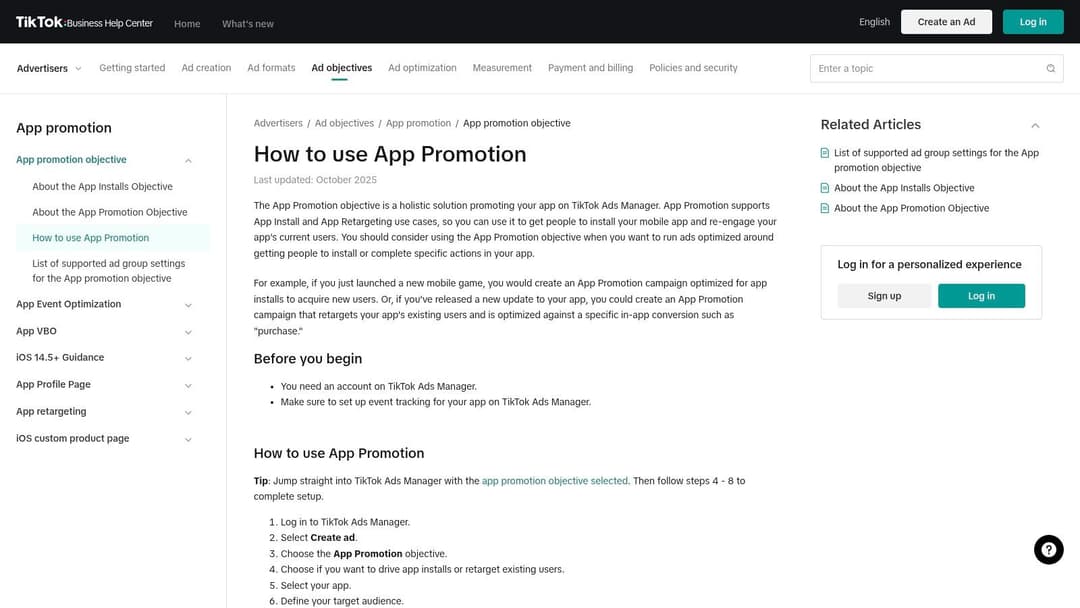
The platform offers mature features for app marketers, including retargeting and value optimization (Target ROAS on Android via Smart+), plus SKAN-aware options for iOS. The main challenge is the high demand for creative assets; success requires a constant production of new videos to avoid ad fatigue. While the Smart+ automation is efficient, it does limit manual control over specific placements, which may be a drawback for advertisers who prefer granular management. For brands whose audience is active on the platform, it has become one of the essential mobile advertising apps for driving growth.
Website: TikTok For Business - App Promotion
6. Snapchat for Business – App Install Ads
Snapchat's mobile-first performance ads offer a direct line to younger demographics, driving app installs and in-app actions on a platform known for high user engagement. Its strength lies in full-screen, immersive ad formats that feel native to the user experience. With placements across Stories, Spotlight, and Discover, it’s particularly effective for reaching Gen Z and younger Millennials in categories like gaming, social, and entertainment.
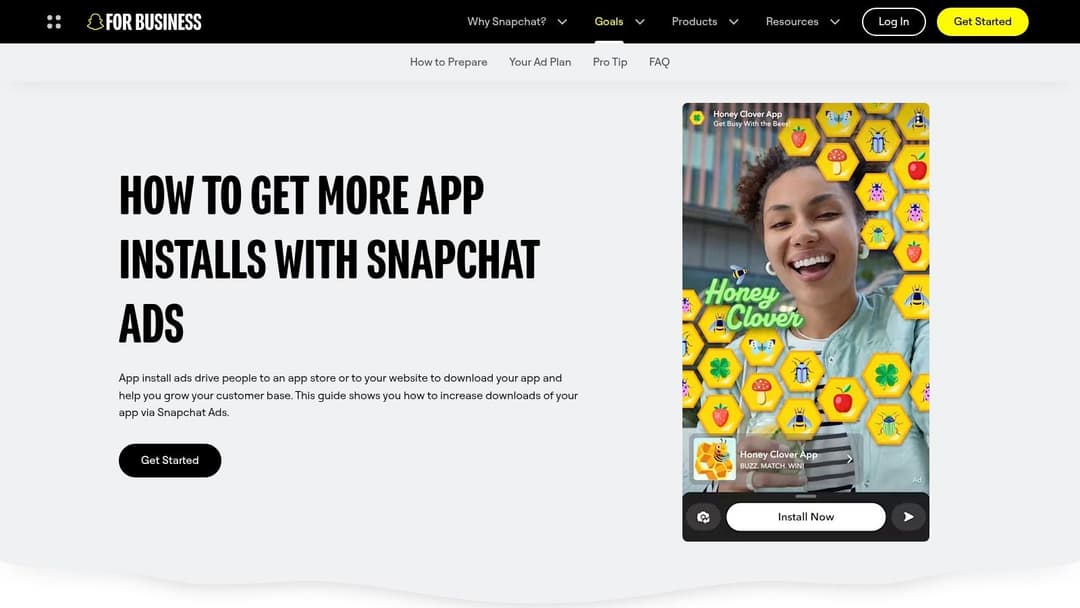
The platform supports key performance marketing goals with App Install objectives, SKAN integration, and deep linking capabilities. The standout feature is its support for Augmented Reality (AR) Lenses, allowing for truly interactive and memorable ad experiences that can deliver strong performance. While its total audience scale is smaller than that of Meta or Google, its unique creative formats make it one of the more distinct mobile advertising apps. However, producing high-quality video and AR assets requires more production effort, a key consideration for teams with limited creative resources.
Website: Snapchat for Business
7. Unity Ads (User Acquisition)
For advertisers in the mobile gaming space, Unity Ads is a primary channel for performance user acquisition. It provides direct access to a massive in-app inventory of gaming audiences through its own exchange and the LevelPlay mediation platform. It is purpose-built for gaming advertisers, with a focus on rewarded video, interstitial, and playable ad formats that resonate deeply with players. The platform allows for precise campaign controls with dynamic CPI and tCPM bidding models.
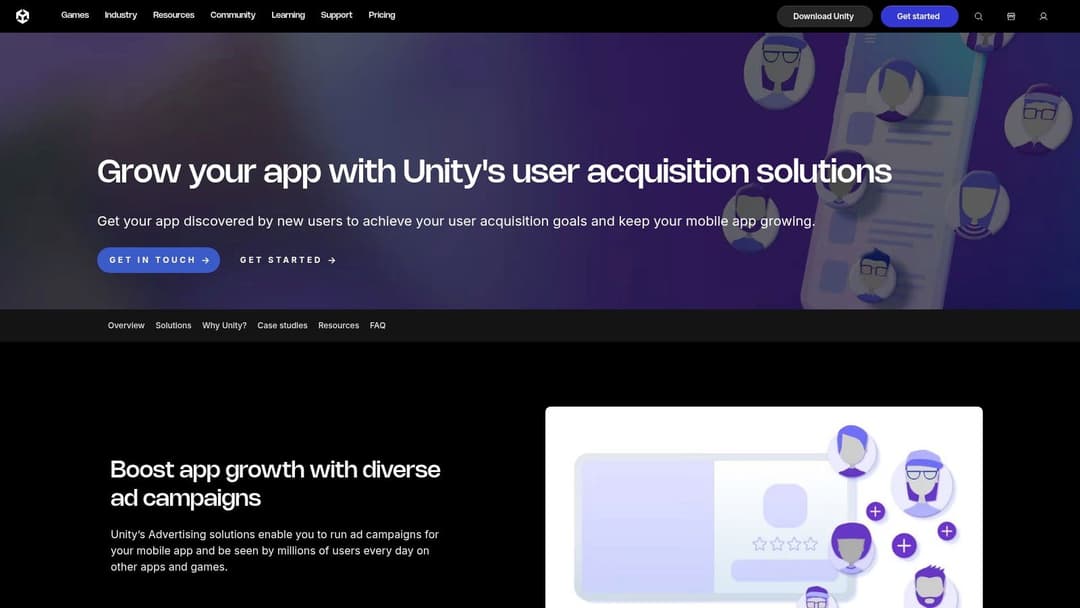
Its core strength lies in its deep integration with the gaming ecosystem, which delivers predictable performance when optimizing for CPI or conversion rate. However, this specialization is also a limitation; non-gaming apps will find the audience reach much narrower compared to broader networks. Advertisers must also be prepared to produce gameplay-style assets and specific creative specs to succeed. As one of the most effective mobile advertising apps for gaming, Unity Ads is a non-negotiable part of the media mix for any serious game publisher.
Website: Unity Ads (User Acquisition)
8. AppLovin – AppDiscovery (DSP)
AppLovin's AppDiscovery is a powerful demand-side platform designed for acquiring high-value users, with a strong focus on its extensive in-app supply and the MAX mediation ecosystem. It operates primarily through machine learning, programmatic user acquisition, and a Campaign Management API, making it a go-to for performance marketers aiming for scale. Its tight integration between supply and demand within the AppLovin stack allows it to deliver efficient performance, particularly for reaching engaged audiences in the gaming vertical.
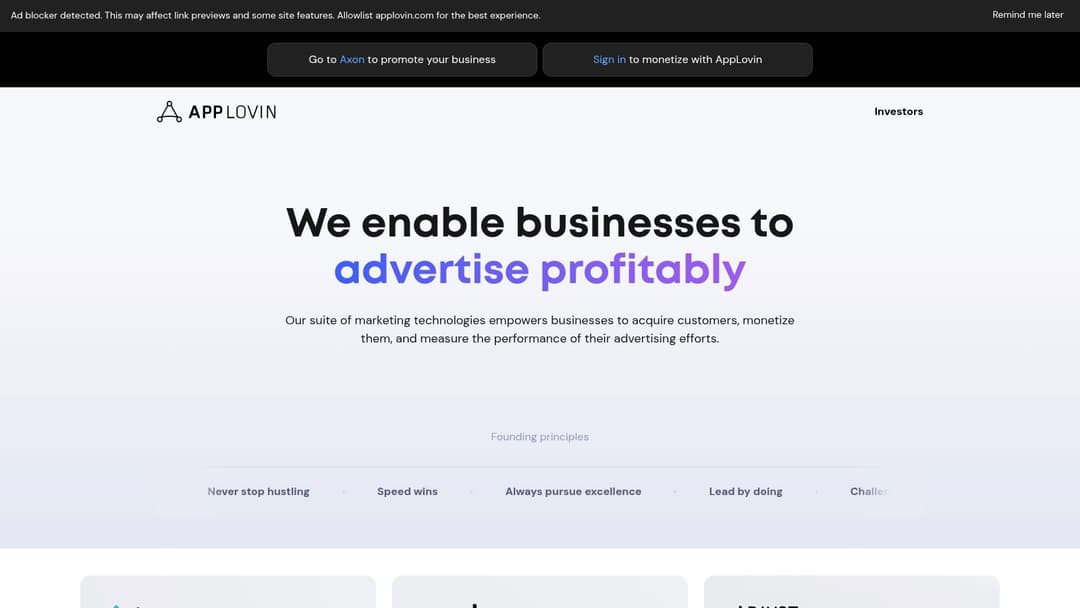
Unlike fully self-serve mobile advertising apps, access to AppDiscovery is often based on an invite or approval process, reflecting its positioning for advanced programmatic buyers and large-scale advertisers. While its inventory has a notable gaming skew, the quality of its user base is a significant draw. For teams with the technical capability to use its API and the budget to meet its likely minimums, AppDiscovery offers a direct path to a massive, high-engagement user network that is difficult to access otherwise.
Website: AppLovin
9. Liftoff
Liftoff is a performance marketing platform that combines machine-learning optimization with full-service creative support to drive installs and high-value downstream events. It operates primarily as a managed service, focusing on lifetime value (LTV) and ROAS optimization for mobile app growth. This makes it one of the most hands-on mobile advertising apps for teams that need strategic guidance alongside powerful ad-serving technology.
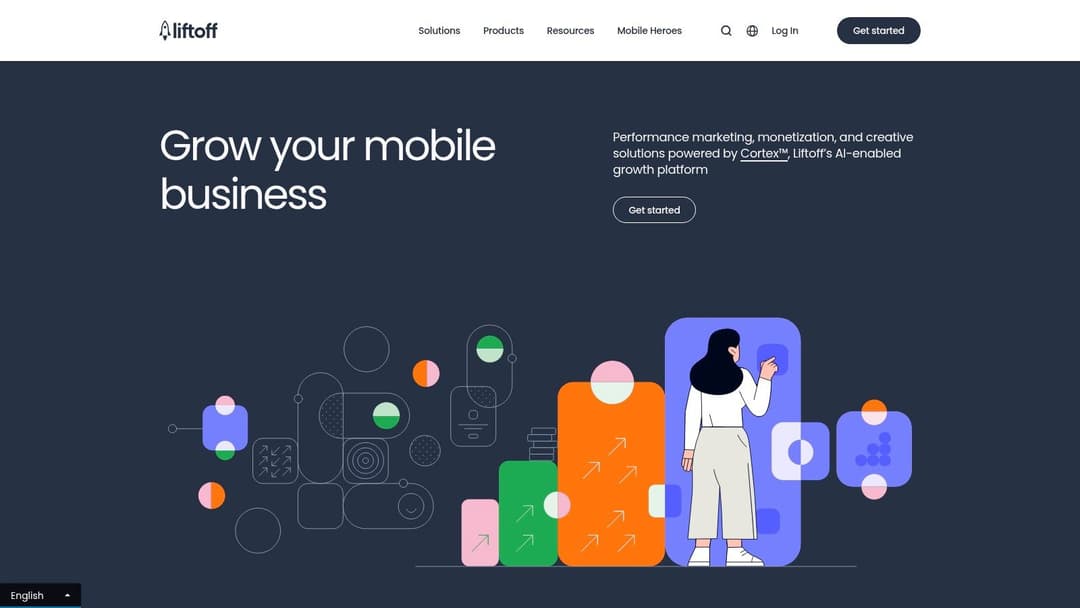
The platform’s strength is its blend of tech and service. Liftoff’s team assists with creative strategy, production (including UGC and playables), and A/B testing, which is a major advantage for advertisers without large internal creative teams. However, this managed approach means it requires spend commitments and offers less transparency than fully self-serve social platforms. As a prominent player, you can find it mentioned among the top demand-side platforms. It’s an ideal partner for performance-focused marketers who value expert-led campaign management and creative optimization.
Website: Liftoff
10. Moloco Ads
Moloco Ads is a machine-learning-driven performance advertising platform that excels at finding high-value users across the independent in-app ecosystem. It operates on an outcome-optimized buying (oCPM) model, which means it bids not just for installs, but for users likely to generate revenue and high lifetime value. This makes it a strong choice for performance marketers focused on measurable, bottom-line results rather than just top-of-funnel volume.
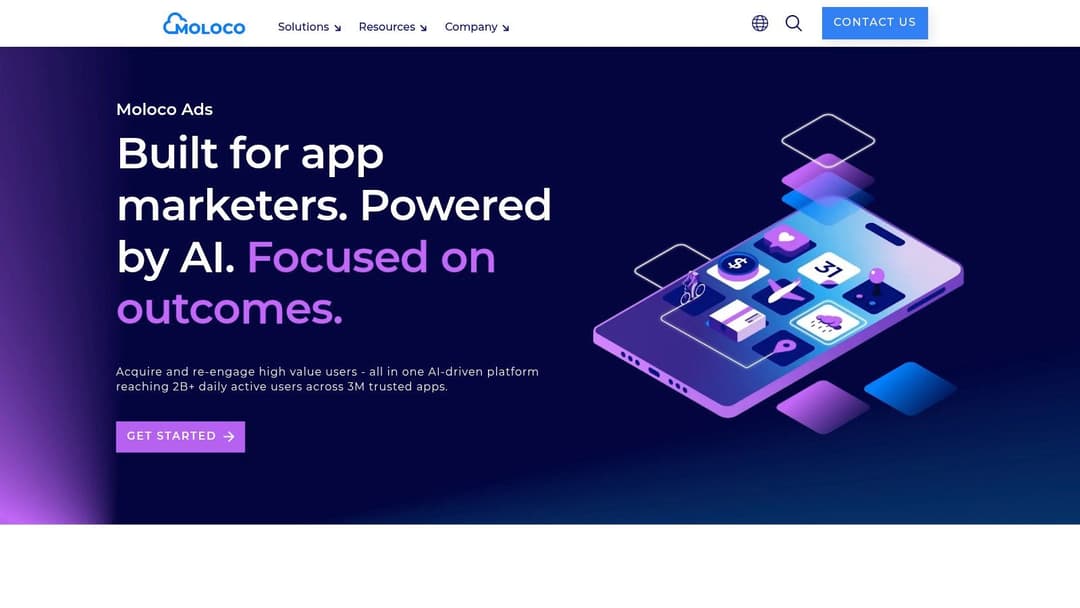
The platform's reputation is built on its powerful machine learning, which analyzes first-party data to predict user quality and optimize campaigns for ROAS goals. Its key strength is its transparent reporting and direct integrations with major MMPs, giving marketers clear insight into performance. However, its effectiveness is highly dependent on having solid in-app event tracking in place; without clean data, the algorithm cannot perform optimally. Additionally, its reach is concentrated within the in-app advertising space, lacking the social or search intent signals found on other major platforms. For those with strong data hygiene, Moloco Ads is one of the best mobile advertising apps for programmatic growth.
Website: Moloco Ads
11. Chartboost (DSP & Exchange)
Chartboost is a programmatic in-app advertising platform and exchange with a long-standing reputation in the mobile gaming world. Primarily serving as a DSP and exchange, it enables advertisers to run real-time bidding campaigns and target users by genre, OS, country, and more. For performance marketers focused on gaming, Chartboost provides direct access to a high-quality, relevant supply of inventory, making it a key player among specialized mobile advertising apps for reaching engaged players.
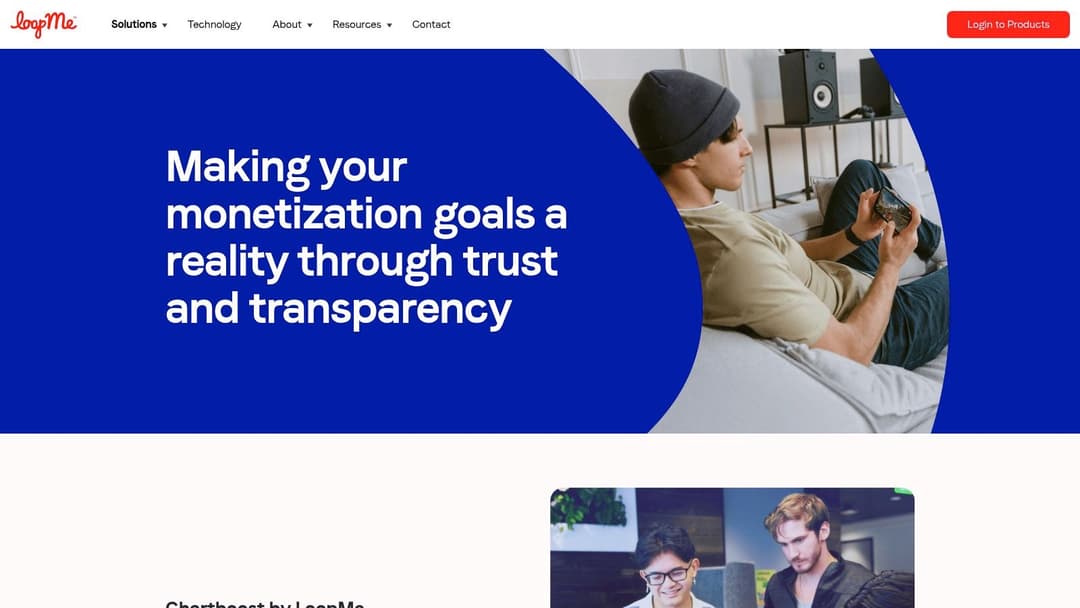
The platform offers both self-serve and managed options, providing transparent programmatic controls and deep performance knowledge. Its main strength is its gaming-heavy inventory, which can also be a limitation for advertisers outside this vertical. To get the most value, a solid understanding of programmatic buying is necessary, as its features are built for experienced media buyers. Chartboost supports SKAN and integrates with major mobile measurement partners (MMPs) and mediation platforms, ensuring it fits within a modern UA tech stack.
Website: Chartboost
12. Digital Turbine (DT Reach, DT Exchange, On‑Device)
Digital Turbine offers a unique way to reach users by moving beyond traditional in-app ads and into on-device placements. Its core strength lies in its partnerships with mobile carriers and OEMs, enabling app preloads and native integrations directly onto the device's operating system. This provides a distinct channel for user acquisition, placing your app in front of users during their initial device setup or through native discovery widgets. For performance marketers, this represents a less-saturated avenue to find incremental audiences that may not be active on conventional social or search networks.
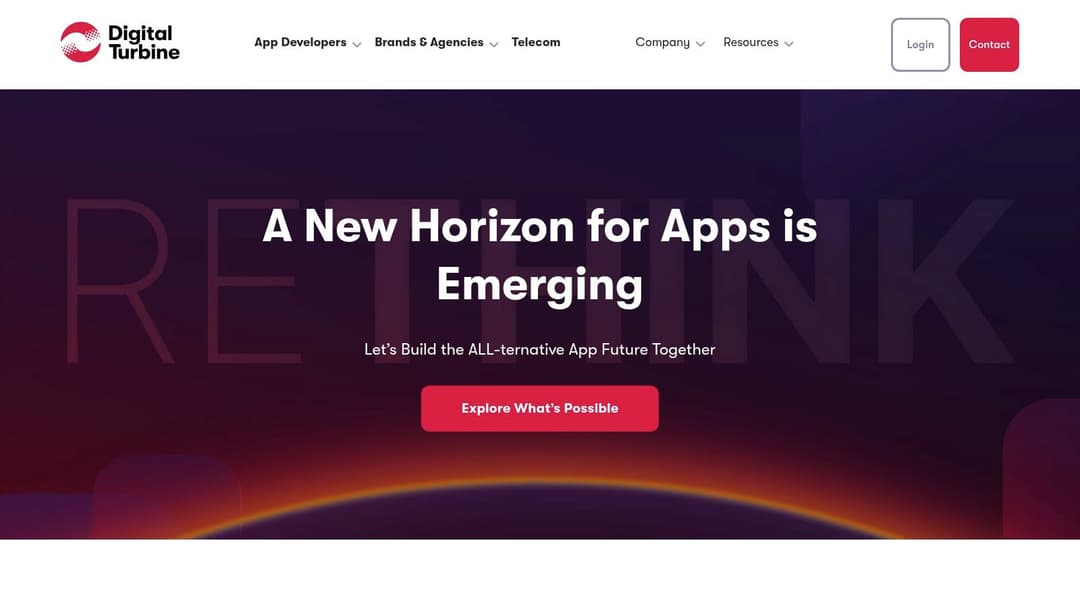
While its on-device reach is a powerful differentiator, access is typically managed through sales teams via insertion orders, which can lead to longer setup times than self-serve platforms. Performance can also vary depending on the specific OEM or carrier footprint in your target markets. Alongside its on-device solutions, the DT Exchange provides access to standard in-app inventory, making it a well-rounded option. This platform is one of the more specialized mobile advertising apps for complementing a primary UA strategy with exclusive, high-intent placements.
Website: Digital Turbine
Top 12 Mobile Ad Platforms Comparison
| Platform | Core features | Performance & UX | Value proposition | Best for | Pricing & control |
|---|---|---|---|---|---|
| AdStellar AI | AI-driven bulk ad creation; Meta Ads Manager OAuth; AI Insights; continuous model retraining; centralized workflows | Ranks creatives/audiences by ROAS/CPL/CPA; speeds launch/testing (claims 10×); reduces manual setup | End-to-end automation for high‑volume testing and data‑backed scaling on Meta | Media buyers, agencies, e‑commerce, growth teams, acquisition‑focused SaaS | No public pricing; demo/sales-led; Meta‑only focus |
| Google Ads – App Campaigns | Unified app campaign across Search/YouTube/Play/Display; auto-assemble creatives; automated bidding | Massive reach & intent signals; low setup overhead; automated creative testing | Scale installs and in‑app actions across Google properties with minimal manual work | Broad UA needs; cross‑network acquisition; Android + iOS | CPC/tCPA/tROAS options; less granular targeting control |
| Apple Search Ads (Basic & Advanced) | App Store search placements; Basic (CPI) and Advanced (keyword control) | High‑intent store users; transparent query/keyword data (Advanced) | High‑quality iOS installs and precise keyword/placement control | iOS apps, launch bursts, brand protection | Basic: pay‑per‑install with cap; Advanced: CPT bidding; iOS only |
| Meta Advantage+ App Campaigns | Automated placements/audiences/creative across Facebook & Instagram; ML optimization | Huge social reach; many ad formats (Reels, Stories, Feed); strong creative testing | Social‑scale installs and event optimization with automated delivery | Social-first apps; retargeting; creative-centric growth teams | Automated; needs good SDK/MMP signals; auction volatility possible |
| TikTok Ads – App Promotion (Smart+) | Video-first app campaigns; Smart+ automates creative mixing, budgets, placements | High engagement with UGC-style creative; strong video performance | Rapid scale via short-form video & creative optimization | Younger audiences; apps relying on viral/creative assets | Smart+ automates control (less manual placement control) |
| Snapchat for Business – App Install Ads | Full‑screen video, AR Lenses, Story/Spotlight placements; SKAN & MMP support | Strong reach to Gen Z; immersive AR experiences boost engagement | Standout creative formats for younger demographics | Gen Z and younger Millennial audiences; gaming/social apps | Managed/self-serve; smaller scale than Meta |
| Unity Ads (User Acquisition) | In‑app video/interstitial/playable formats; LevelPlay mediation | Deep gaming inventory; predictable CPI/CVR when optimized | Optimized UA for mobile games with gameplay‑style creatives | Mobile game advertisers and studios | CPI/tCPM bidding; gaming-focused creative requirements |
| AppLovin – AppDiscovery (DSP) | ML‑driven UA across AppLovin supply; creative services; campaign APIs | Efficient scale in gaming/high‑engagement apps; integrated stack | Programmatic UA with tight supply–demand integration for performance | Gaming advertisers; programmatic buyers | Often invite/approval; API access for advanced buyers |
| Liftoff | ML optimization to LTV; creative production and strategy; retargeting | Full‑service creative & testing support; managed campaign approach | LTV/ROAS focus with hands‑on creative and campaign management | Teams needing managed service and creative production | Typically managed service; spend commitments possible |
| Moloco Ads | oCPM revenue‑optimized buying; MMP integrations; ML optimization | Emphasis on measurable revenue and LTV outcomes | Outcome‑driven in‑app acquisition focused on revenue and user quality | ROI/LTV-focused advertisers in the in‑app ecosystem | In‑app focused; requires strong event instrumentation |
| Chartboost (DSP & Exchange) | Programmatic in‑app exchange; RTB; targeting by genre/OS/country; SKAN support | Deep mobile‑gaming supply; transparent programmatic controls | Programmatic access to gaming inventory with RTB flexibility | Gaming advertisers and programmatic buyers | Self‑serve and managed options; programmatic expertise helps |
| Digital Turbine (DT Reach/Exchange/On‑Device) | On‑device placements, OEM/carrier placements, app preloads; DT Exchange | Unique on‑device discovery; premium creative units (Aurora) | Incremental reach via on‑device channels beyond standard networks | Apps seeking OEM/carrier distribution and incremental reach | Sales/managed IO; longer setup and variable performance by market |
Final Thoughts
Navigating the world of mobile advertising apps can feel overwhelming, but as we've detailed, the right combination of tools can profoundly impact your user acquisition and retargeting efforts. The key is to move beyond a one-size-fits-all approach and build a strategic portfolio that aligns with your specific campaign goals, budget, and target audience. From the massive reach of walled gardens like Google and Meta to the specialized programmatic power of DSPs like Moloco and Liftoff, each platform offers distinct advantages.
The core takeaway is that no single app is a magic bullet. Success often comes from a blended strategy. For instance, a new gaming app might start with Apple Search Ads for high-intent installs, layer in TikTok Ads to capture viral trends, and then use a platform like AppLovin to scale user acquisition across a broad network of publishers. The challenge isn't just picking the tools; it's managing them effectively without fragmenting your data and overextending your team.
Making Your Selection: Key Considerations
Before committing your budget, distill your choice down to a few critical factors:
- Your Primary Goal: Are you focused on raw install volume, high LTV users, or re-engaging lapsed players? Platforms like Unity are great for installs, while Meta's Advantage+ campaigns excel at finding users who will perform specific in-app events.
- Audience and Vertical: Where does your ideal user spend their time? If you're targeting Gen Z, Snapchat and TikTok are non-negotiable. For broader B2C or e-commerce apps, Google and Meta provide unparalleled scale.
- Budget and Scale: Your budget dictates your options. Self-serve platforms are accessible for smaller teams, while managed DSPs like Liftoff often require a more significant minimum spend but provide dedicated expertise and wider reach.
- Team Capacity: Be realistic about what your team can manage. Juggling five different ad dashboards is a recipe for burnout and missed opportunities. This is where automation and centralized management become critical.
Ultimately, the most effective mobile advertising apps are the ones that integrate seamlessly into your workflow and provide clear, actionable data. As you evaluate options like AdStellar AI, Google Ads, or Digital Turbine, prioritize platforms that offer robust automation. The ability to automate bidding, creative testing, and budget allocation is what separates campaigns that merely run from campaigns that consistently win. Start small with one or two channels, master them, and then methodically expand your stack. This deliberate, data-informed approach will build a resilient and profitable mobile growth engine for the long term.
Tired of juggling multiple ad dashboards and manually optimizing campaigns? AdStellar AI centralizes your campaign management and uses predictive AI to automate budget allocation and creative decisions across platforms like Meta and Google. See how you can achieve better results with less effort by visiting AdStellar AI today.