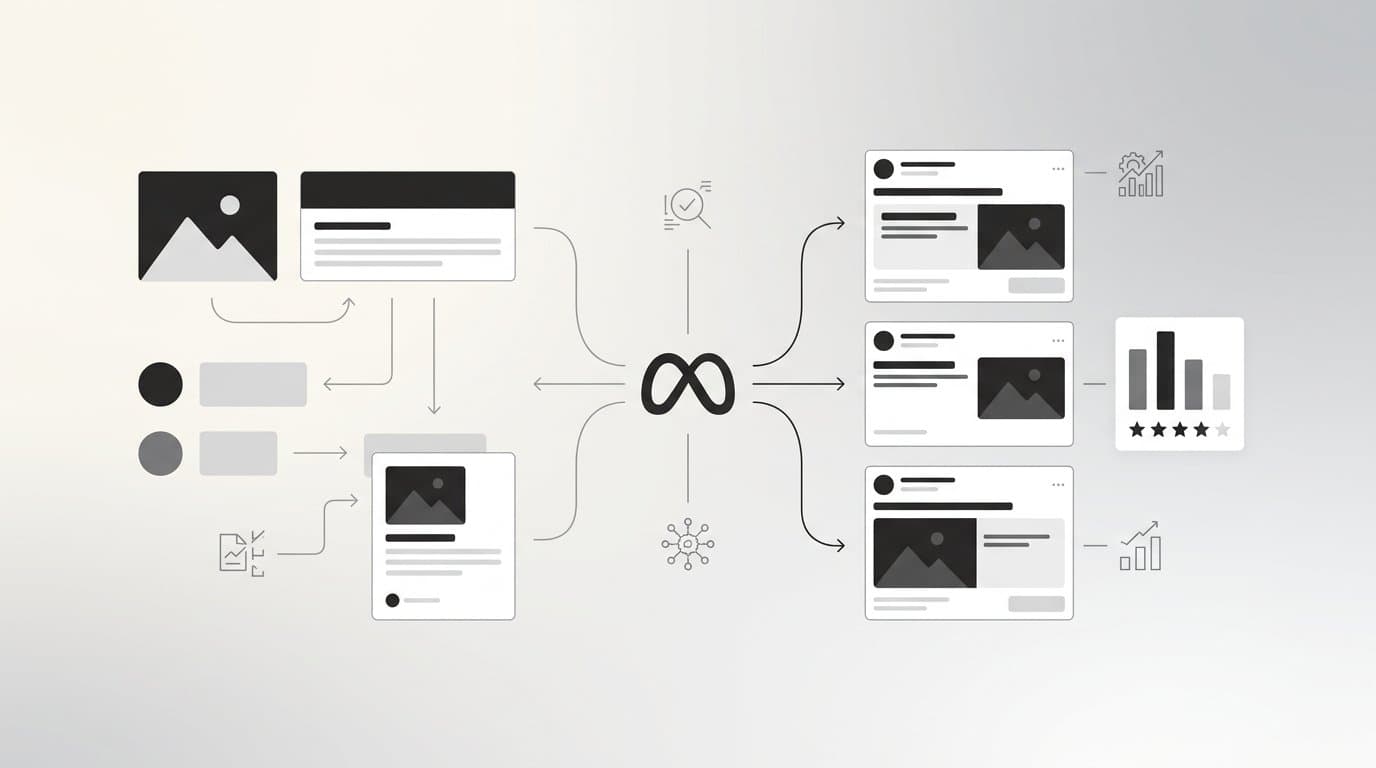
If you are looking for a Revealbot alternative with AI creative capabilities, AdStellar is the strongest option because it combines automated campaign management with a full AI creative suite that generates image ads, video ads, and UGC-style content in one platform. Revealbot is built around rules-based automation for budget and bidding, but it does not generate ad creatives, meaning you still need a separate tool or team to produce the actual ads.
That gap is the core reason most advertisers start searching for alternatives. You end up paying for Revealbot to manage campaigns while also paying a designer, a video editor, or a separate creative tool to produce the ads themselves. The alternatives below close that gap by pairing automation with creative generation, so you can go from idea to live campaign without switching platforms.
This guide covers the best Revealbot alternatives that include AI creative features, explains what each tool does well, and answers the most common follow-up questions buyers ask before switching.
1. AdStellar: The Most Complete Revealbot Replacement
The Challenge It Solves
Revealbot handles what happens after you have an ad, but it does not help you make one. If your workflow requires a separate designer for images, a video editor for motion content, and then a rules engine to manage the campaign, you are running three tools where one should suffice. AdStellar is built specifically to collapse that stack into a single platform.
The Strategy Explained
AdStellar is a full-stack Meta ad platform with generative AI at its core. The AI Ad Creative feature lets you generate image ads, video ads, and UGC-style avatar content from a product URL, clone competitor ads from the Meta Ad Library, or build creatives from scratch with chat-based refinement. No designers, no video editors, no actors needed.
Once creatives are ready, the AI Campaign Builder analyzes your past campaigns, ranks every creative, headline, and audience by performance, and builds complete Meta campaigns in minutes. Every decision is explained transparently so you understand the strategy behind the output. The Bulk Ad Launch feature then lets you mix multiple creatives, headlines, audiences, and copy to generate hundreds of ad variations and launch them to Meta in clicks rather than hours.
Performance tracking happens through AI Insights leaderboards that rank creatives, headlines, copy, audiences, and landing pages by real metrics like ROAS, CPA, and CTR. The Winners Hub consolidates your best performers in one place so you can instantly pull any winner into your next campaign without digging through historical data.
Implementation Steps
1. Connect your Meta ad account and product URL to AdStellar to give the AI context about your brand and existing performance data.
2. Use the AI Ad Creative tool to generate your first batch of image, video, or UGC-style ads, then refine them using the chat-based editor.
3. Run the AI Campaign Builder to build your campaign structure, then use Bulk Ad Launch to deploy multiple variations simultaneously.
4. Monitor AI Insights leaderboards to identify winners, then use the Winners Hub to feed top performers directly into your next campaign cycle.
Pro Tips
Use the Meta Ad Library clone feature to analyze what competitors are running before generating your own creatives. This gives the AI real market context and often produces first-draft ads that are already directionally strong. Set your ROAS and CPA benchmarks inside AI Insights immediately so the scoring system is calibrated to your actual goals from day one.
2. Madgicx: Audience Intelligence with a Creative Studio
The Challenge It Solves
Some advertisers switching from Revealbot are primarily frustrated by its lack of audience intelligence. They want a tool that not only automates budget rules but also identifies and targets the right audiences with less manual research. Madgicx positions itself as an autonomous ad buying platform that addresses both concerns.
The Strategy Explained
Madgicx combines audience automation with a creative studio, making it a reasonable option for media buyers who want both in one tool. Its audience intelligence features are generally considered its strongest differentiator, helping advertisers discover and test audience segments with less manual setup than Revealbot's rules-based approach requires.

The creative studio allows for ad creation, though it is more focused on static formats than video or UGC-style content. If your creative needs are primarily image-based and your main frustration with Revealbot is the lack of audience automation, Madgicx covers that ground reasonably well. It is less suited for advertisers who need video ad generation or UGC-style content as part of their regular creative output.
Implementation Steps
1. Connect your Meta ad account and let Madgicx analyze your existing audience data and campaign history.
2. Use the audience intelligence features to identify new segments worth testing alongside your existing targeting.
3. Build static ad creatives inside the creative studio and pair them with the audience recommendations.
Pro Tips
Madgicx works best when you already have meaningful campaign history for it to analyze. If you are starting fresh or have limited historical data, the audience intelligence features will have less to work with. For advertisers who need video or UGC creative alongside audience automation, pairing Madgicx with a separate video tool still leaves you managing multiple platforms.
3. Motion: Creative Analytics Without Creative Generation
The Challenge It Solves
Many advertisers running Meta and TikTok campaigns struggle to understand which creative elements are actually driving performance. They know a campaign is working but cannot pinpoint whether it is the hook, the headline, the format, or the audience. Motion is built specifically to answer that question with detailed creative breakdowns.
The Strategy Explained
Motion is a creative analytics and reporting platform, not a campaign management or creative generation tool. It surfaces winning creatives with detailed performance breakdowns across Meta and TikTok, helping creative teams understand what is resonating and why. For teams that already have a strong creative production process and a separate campaign management tool, Motion adds a meaningful analytics layer.

The important distinction is that Motion does not replace Revealbot's automation features and does not generate any creatives. It is an add-on to an existing workflow rather than a replacement for it. If your primary reason for leaving Revealbot is the lack of creative generation, Motion does not solve that problem.
Implementation Steps
1. Connect your Meta and TikTok ad accounts to Motion and allow it to pull in your existing creative performance data.
2. Use the creative breakdowns to identify which ad formats, hooks, and visual styles are generating the strongest results.
3. Share Motion's insights with your creative team to inform the next round of ad production.
Pro Tips
Motion is most valuable for teams producing a high volume of creative variations who need a structured way to analyze what is working. If you are running a lean operation with limited creative output, the depth of analytics Motion provides may exceed what your workflow can act on. Use it as a decision-support layer, not a replacement for campaign management or creative production.
4. Pencil: AI Video Creative with Performance Prediction
The Challenge It Solves
Video ad production is one of the most time-consuming and expensive parts of running paid social campaigns. Hiring video editors, sourcing footage, and iterating on cuts takes days or weeks. Pencil is designed to compress that timeline using AI-generated video and static ad creatives with a built-in performance prediction layer.
The Strategy Explained
Pencil focuses on AI-powered video and static ad creative generation with performance prediction scores that estimate how well an ad is likely to perform before you spend any budget. This makes it useful for teams that want to pre-screen creative quality before launching. The performance prediction feature is based on patterns from ads that have run across its platform.

The significant limitation is that Pencil has no campaign management features. It is a creative generation tool only, which means you still need Meta Ads Manager, Revealbot, or another automation platform to actually run your campaigns. For advertisers trying to reduce tool sprawl, Pencil solves one half of the problem while leaving the other half intact.
Implementation Steps
1. Input your brand assets, product information, and creative brief into Pencil to generate initial video and static ad variations.
2. Review the performance prediction scores to prioritize which creatives to launch first.
3. Export approved creatives and upload them to Meta Ads Manager or your preferred campaign management tool for launch.
Pro Tips
Pencil's performance prediction is most useful as a filter rather than a guarantee. Use it to eliminate obvious underperformers before spending budget, but treat it as one signal among many rather than the final word on creative quality. Real audience data from live campaigns will always tell you more than any pre-launch score.
5. Smartly.io: Enterprise Multi-Platform Automation
The Challenge It Solves
Large agencies and enterprise brands managing campaigns across multiple platforms with complex product catalogs face a different set of problems than most SMB advertisers. They need dynamic creative templates that pull from product feeds at scale and automation that works across Meta, TikTok, Pinterest, and other channels simultaneously. Smartly.io is built for that operating environment.
The Strategy Explained
Smartly.io offers enterprise-grade multi-platform automation with dynamic creative templates driven by product feeds. This means you can build a template once and have it automatically populate with product images, prices, and copy pulled directly from your catalog, generating hundreds of product-specific ad variations without manual creative work for each one.

The platform is significantly more complex and expensive than most SMB or mid-market tools. Implementation typically requires dedicated onboarding support, and the pricing reflects an enterprise customer profile. For smaller advertisers or DTC brands running primarily on Meta, Smartly.io is likely more platform than the workflow requires. It is worth evaluating seriously if you are managing large-scale multi-platform campaigns with product feed requirements.
Implementation Steps
1. Work with Smartly.io's onboarding team to connect your product feeds and ad accounts across all relevant platforms.
2. Build dynamic creative templates that pull product data automatically and define the rules for how templates adapt to different placements and formats.
3. Set up automation rules for budget management and bidding across platforms, then monitor performance through Smartly's reporting dashboards.
Pro Tips
Smartly.io delivers its strongest value when you have a large product catalog and need to run highly personalized product ads at scale. If your catalog is small or your campaigns are relatively straightforward, the complexity of the platform will slow you down rather than speed you up. Evaluate it honestly against your actual operational scale before committing to implementation.
6. AdCreative.ai: Dedicated Static Creative Generation
The Challenge It Solves
Some advertisers do not need video or UGC-style content. Their primary bottleneck is producing enough static image ad variations quickly enough to keep up with testing cycles. AdCreative.ai addresses this specific need with a focused tool for AI-generated static creatives that include brand kit integration and performance scoring.
The Strategy Explained
AdCreative.ai is a dedicated static ad creative generator. You upload your brand kit, including logos, colors, and fonts, and the platform generates image ad variations using that brand context. A performance scoring system ranks generated creatives based on patterns from ads that have run across the platform, giving you a signal about which designs are likely to perform before you launch them.

Like Pencil, AdCreative.ai has no campaign management or budget automation features. It functions as a creative layer that sits on top of Meta Ads Manager or another automation tool. For advertisers who already have a campaign management workflow they are happy with and simply need faster static creative production, it fills that role cleanly. For anyone trying to replace Revealbot entirely, it covers only the creative side of the equation.
Implementation Steps
1. Upload your brand kit to AdCreative.ai and input your campaign brief, product details, and target audience context.
2. Generate multiple static creative variations and review the performance scores to prioritize which designs to test first.
3. Export approved creatives and import them into your existing campaign management tool for launch and testing.
Pro Tips
AdCreative.ai works best when you give it strong brand context upfront. The more specific your brand kit and creative brief, the more on-brand the generated outputs will be. Use it to generate a broad range of variations quickly, then apply your own judgment to filter for the ones that best match your campaign objectives before reviewing the performance scores.
Common Questions About Revealbot Alternatives
Does Revealbot have AI creative features?
No. As of 2026, Revealbot does not include any generative AI creative capabilities. It is a rules-based automation tool for budget management, bidding, and campaign scaling. You need a separate tool to produce the actual ad creatives.
Which Revealbot alternative is best for small Meta advertisers?
AdStellar is the most practical option for small to mid-sized Meta advertisers because it combines creative generation, campaign building, and performance insights in one platform without the complexity or pricing of enterprise tools like Smartly.io.
Can I replace Revealbot with a free tool?
Meta Ads Manager includes basic automation rules at no additional cost, but it does not offer AI creative generation or the depth of automation that Revealbot or its alternatives provide. For advertisers who need AI creative alongside campaign automation, a dedicated platform is necessary.
What is the difference between Revealbot and AdStellar?
Revealbot automates budget and bidding rules but does not generate creatives. AdStellar generates the creative, builds the campaign, launches variations at scale, and surfaces winners through AI-powered leaderboards, covering the full workflow from creative to conversion in one platform.
Putting It All Together
The core gap in Revealbot is creative generation. It automates what happens after you have an ad, but it does not help you make the ad. The right alternative depends on where that gap sits in your specific workflow.
If you want a single platform that generates the creative, builds the campaign, launches variations at scale, and tells you what is winning, AdStellar is the most complete replacement. It is the only option on this list that covers generative AI creative including video and UGC avatars, campaign building, bulk launching, and creative performance leaderboards inside a single Meta-focused platform.
If you only need creative analytics layered on top of your existing setup, Motion fills that role without requiring you to change your campaign management workflow. If you need enterprise-scale multi-platform automation with dynamic templates driven by product feeds, Smartly.io is worth a serious evaluation. If your only bottleneck is static creative production and you are satisfied with your campaign management setup, AdCreative.ai or Pencil handle that piece specifically.
For most Meta advertisers running DTC or ecommerce campaigns who want to cut tool sprawl and move faster, the math is straightforward. Revealbot plus a separate creative tool plus a designer adds up to more cost, more coordination, and more context-switching than a single integrated platform requires.
Start Free Trial With AdStellar and be among the first to launch and scale your ad campaigns faster with an intelligent platform that automatically builds and tests winning ads based on real performance data.