In a saturated digital landscape, generic ad copy gets ignored. The difference between a campaign that breaks even and one that drives exponential growth often comes down to a few carefully chosen words. This guide moves beyond simple templates to provide a strategic breakdown of 10 powerful sample ad copy frameworks proven to deliver measurable results.
We'll dissect precisely what makes each example work, from optimizing for Return on Ad Spend (ROAS) on Meta feeds to crafting curiosity-driven hooks that stop the scroll. You won't find vague advice here. Instead, you'll get a detailed playbook designed for immediate application. Each framework includes a replicable formula, deep strategic analysis, and actionable A/B testing ideas you can implement today.
This collection is built for performance marketers, growth teams, and e-commerce brands who need more than just inspiration; they need a system. We will explore how to craft benefit-driven copy that quantifies ROI, leverage social proof for maximum impact, and use scarcity to drive conversions. We'll also examine how to personalize copy for segmented campaigns and sequence hooks in video ads to keep viewers engaged.
The goal is to equip you with a versatile toolkit of high-performing ad copy structures that you can adapt to any industry, audience, or campaign objective. Ultimately, strategic ad copy doesn't operate in a vacuum; it thrives when integrated with powerful conversion rate optimization techniques to maximize its impact and ensure long-term wins. Let’s dive into the examples.
1. Meta Feed Ad Copy for ROAS Optimization
Meta Feed ads designed for Return on Ad Spend (ROAS) optimization are meticulously crafted to convert high-intent users into customers, directly tying ad creative to revenue. This approach ditches vanity metrics for pure performance, using benefit-driven language, clear value propositions, and compelling calls to action to maximize profitability. The core principle is simple: every word must justify its existence by contributing to the bottom line.
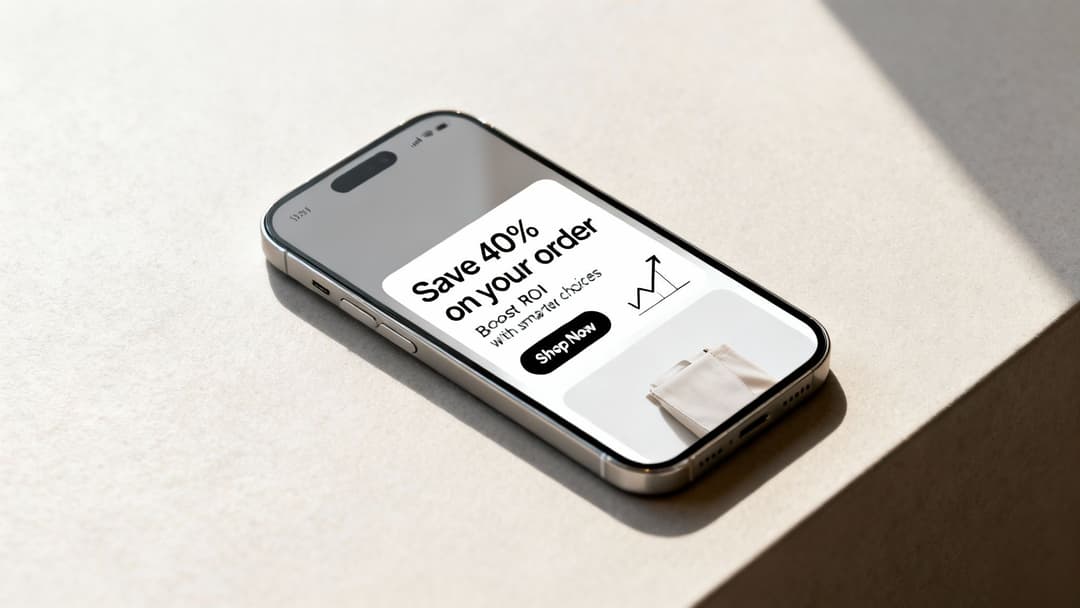
This sample ad copy style is the lifeblood of direct-to-consumer (DTC) brands that rely on paid social for growth. It focuses on solving a specific problem or fulfilling a clear desire, making the purchase decision as easy as possible.
Strategic Breakdown
- Lead with the Primary Benefit: Immediately answer the user's question, "What's in it for me?" Glossier's "Skincare that actually works" is a masterclass in this, directly addressing a common pain point.
- Establish Credibility or Value: Follow up the primary benefit with a supporting point. Dollar Shave Club’s audacious "$1 first month" removes all financial risk, while Allbirds' "Made from natural materials" appeals to eco-conscious consumers.
- Clear Call to Action (CTA): End with a direct, low-friction instruction. "Shop Now" and "Learn More" are standard, but tailoring the CTA to the offer ("Claim Your Trial") can further boost performance.
Key Insight: ROAS-focused copy is not about being clever; it's about being clear. The path from seeing the ad to making a purchase should be seamless and compelling, with the copy acting as the most efficient guide.
Actionable Tips for Implementation
- Quantify Everything: Use numbers to make benefits tangible. "Save 40%," "Join 50,000+ happy customers," or "Ready in 5 minutes" are more powerful than generic claims.
- Test Emotional Triggers: A/B test different angles like urgency ("Offer ends tonight"), social proof ("The razor everyone is talking about"), and scarcity ("Only 100 left in stock"). This helps you discover what motivates your specific audience. To explore a wider range of effective copy techniques, you can find a deep dive into what constitutes good ad copy on our blog.
- Leverage AI for Variation: Use tools like AdStellar to generate dozens of ROAS-focused ad copy variations instantly. This allows for rapid, data-driven testing to find the highest-performing message without manual effort.
2. Lead Generation Ad Copy for CPL Minimization
Lead generation ad copy optimized for Cost Per Lead (CPL) minimization is engineered to acquire qualified contacts at the lowest possible price. This approach prioritizes friction reduction, clearly communicates the value of the lead magnet, and quickly builds trust. The goal is to make the decision to submit a form feel like an obvious, high-value exchange for the user. Every word is chosen to lower barriers and increase conversion rates on lead forms.
This sample ad copy style is the engine for B2B SaaS and service-based businesses that depend on a steady pipeline of new prospects. It focuses on offering an irresistible, tangible asset in exchange for contact information, directly fueling the sales funnel.
Strategic Breakdown
- Lead with the Outcome, Not the Offer: Start by highlighting the result the user will achieve. HubSpot’s "See how your website compares to competitors in 60 seconds" focuses on the valuable insight, not just the "free marketing audit."
- Inject Powerful Social Proof: Immediately follow up with numbers that build credibility and reduce perceived risk. Calendly’s "Trusted by 10M+ professionals" leverages its massive user base to signal reliability and effectiveness.
- Clear, Low-Friction CTA: Guide the user with a direct instruction that emphasizes the value exchange. "Download the Report" or "Get Your Free Audit" are more compelling and specific than a generic "Submit."
Key Insight: CPL-focused copy thrives on clarity and perceived value. The user must instantly understand what they get and why it's worth their information, making the conversion a no-brainer.
Actionable Tips for Implementation
- Quantify the Value: Use specific numbers to articulate the benefit. "Get 28% more meetings" or "Join 500+ top companies" is far more persuasive than vague promises of improvement.
- Test Guarantee Messaging: A/B test copy that explicitly removes risk, such as "No credit card required" or "Instant access, no strings attached." This small addition can significantly lower hesitation and reduce CPL. For more advanced strategies, explore our guide to creating effective lead gen ads.
- Leverage AI for Persona-Based Copy: Use a tool like AdStellar to generate dozens of CPL-optimized variations tailored to different audience personas. Testing copy that speaks directly to a specific segment’s pain points is key to finding the most cost-effective messaging.
3. Mobile-First Copy for App Installs and User Acquisition
Mobile-first ad copy is hyper-concise messaging engineered for app install and user acquisition campaigns. It operates on the principle that attention on mobile is scarce and screen real estate is limited. This approach prioritizes immediate app benefits, powerful verbs, and clear, compelling CTAs designed to drive downloads and minimize Cost Per Install (CPI). Every character must earn its place.
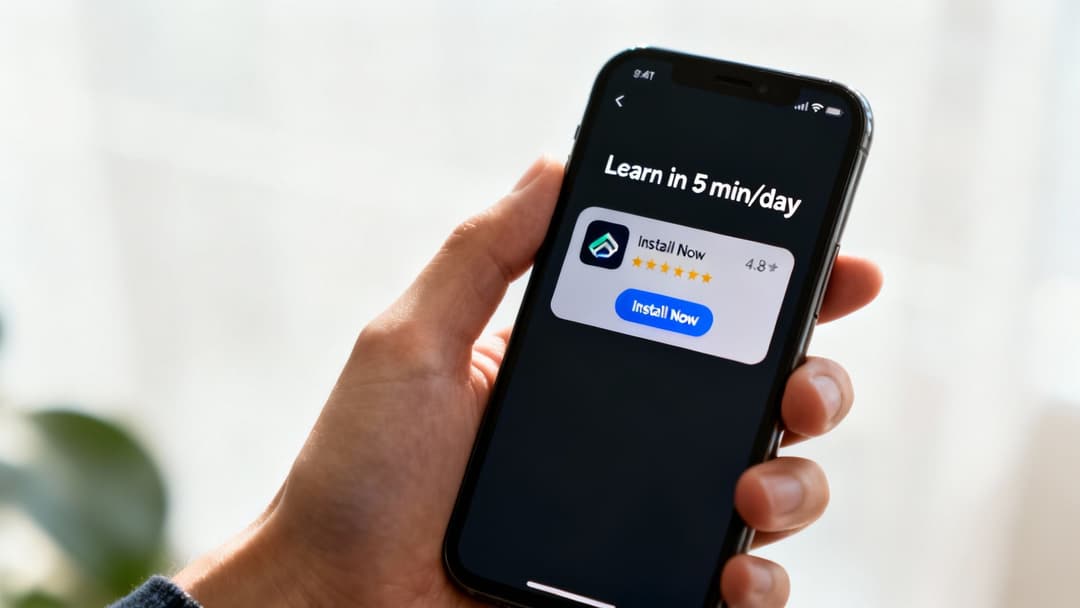
This sample ad copy style is the backbone of user acquisition for mobile app companies, from gaming studios to lifestyle brands. It focuses on communicating the core value proposition instantly, making the decision to tap "Install" feel like a natural next step for the user.
Strategic Breakdown
- Lead with an Aspirational or Functional Hook: Immediately capture user intent. TikTok’s “Creativity starts here” offers an aspirational benefit, while Uber Eats’ “Get your fave food delivered” solves a direct, functional need.
- Highlight Simplicity or Speed: Address the user's potential hesitation about effort or time commitment. Duolingo’s famous “Learn a language in 5 minutes a day” brilliantly removes the barrier to entry, making a daunting task feel achievable.
- Direct and Unambiguous CTA: Guide the user to the single desired action. Standard CTAs like "Install Now" or "Download" are effective, but framing it as a benefit, like "Get the App," can also be powerful.
Key Insight: Mobile-first copy succeeds by removing friction. It presents the app's primary value so quickly and clearly that the user's thought process moves from "What is this?" to "I want this" in a matter of seconds.
Actionable Tips for Implementation
- Use Power Verbs: Start your copy with action-oriented words to create momentum. "Discover," "Unlock," "Join," and "Get" are more engaging than passive descriptions.
- Incorporate Social Proof: If possible, include download numbers or star ratings. "Join 10 million users" or "Rated 4.8 stars" builds instant credibility and reduces perceived risk for new installers.
- Leverage AI for Mobile Variations: Use a tool like AdStellar to bulk-create hundreds of mobile-optimized copy variations. This enables rapid testing of different value propositions, benefit angles, and CTAs across iOS and Android to find the combinations that drive the lowest CPI.
4. Conversational AI-Driven Copy for Chatbot Engagement
Conversational ad copy is designed to initiate a one-on-one dialogue with users, funneling them from an ad directly into a chatbot or messaging experience. This approach replaces a hard sell with a helpful conversation, using casual, question-based language to pre-qualify leads, answer questions, and guide users toward a conversion. The goal is to build rapport and lower friction by meeting customers in a familiar, interactive environment like Meta Messenger.
This sample ad copy style excels for businesses with complex products, personalized services, or a high volume of common customer queries. It transforms the ad from a monologue into a dialogue, increasing engagement and gathering valuable customer data.
Strategic Breakdown
- Lead with an Engaging Question: Start the conversation before the first click. Domino's "Hungry? We can help. Chat to order your pizza" is direct and action-oriented, immediately proposing a solution.
- Offer Personalized Assistance: Frame the chatbot as an expert or concierge. Sephora's "Not sure which shade is right? Chat with our beauty expert" promises a tailored solution, making the interaction valuable.
- Clear Call to Action (CTA): The CTA should set the expectation for a conversation. "Send Message," "Chat with Us," or "Get Started" are more appropriate than a standard "Shop Now," as they accurately describe the next step.
Key Insight: Conversational copy succeeds by being genuinely helpful, not just clever. The user should feel they are starting a productive conversation that will solve a problem or answer a question, making them more likely to engage.
Actionable Tips for Implementation
- Match Your Brand's Voice: Ensure the conversational tone is authentic. A formal B2B brand like Intercom might use "Quick question? Our team is ready," while a DTC brand can be more casual.
- Test Questions vs. Statements: A/B test different conversation starters. A question like "Need help finding the perfect gift?" might outperform a statement like "Find the perfect gift in our chat." To further explore how AI can assist in crafting engaging copy for chatbots, tools like SupportGPT offer practical applications.
- Leverage AI for Persona Alignment: Use tools like AdStellar to generate conversational copy variations tailored to specific customer personas. This ensures the language resonates deeply with each audience segment, boosting chatbot interaction rates and downstream conversions.
5. Video Ad Copy with Hook and CTA Sequencing
Video ad copy is a specialized script designed to capture attention within the first three seconds, maintain engagement, and drive a specific action. Unlike static ads, this copy is sequenced into three parts: a powerful hook, mid-video benefit reinforcement, and a clear call to action (CTA). The goal is to create a seamless narrative that stops the scroll and guides the viewer from passive observation to active conversion on platforms like Meta, TikTok, and YouTube Shorts.
This sample ad copy format is critical for direct-to-consumer brands that rely on dynamic, engaging content. It ensures the messaging aligns perfectly with the visual storytelling, preventing a disconnect between what users see and what they read.
Strategic Breakdown
- Lead with a Pattern-Interrupt Hook: The first three seconds are everything. Your copy must pose a provocative question, state a bold claim, or create curiosity. Oura Ring’s "Your sleep data is lying to you" is a perfect example, immediately challenging a common belief and compelling the viewer to learn why.
- Reinforce with a Visual Demo or Benefit: After the hook, the mid-video copy (often as on-screen text) should directly connect the initial claim to the solution. BlendJet’s ad shows the blender crushing ice after the "Wait for it..." hook, instantly proving its power and fulfilling the viewer's curiosity.
- End with a Direct CTA: The final part of the copy must clearly state the next step. It should align with the campaign goal, using direct language like "Shop the Sale," "Try It Yourself," or "Tap to Learn More."
Key Insight: In video ads, the copy is not just text; it's a timed script. The hook's strength determines your view rate, the mid-video benefits build desire, and the CTA converts that desire into action. Each part must work in concert with the visuals.
Actionable Tips for Implementation
- Generate and Test Hook Variations: The hook is the highest-leverage element. Use a tool like AdStellar to generate dozens of hook variations for the same video creative. A/B test a problem-focused hook ("Tired of restless nights?") against a solution-focused one ("The secret to deep sleep is here.")
- Use On-Screen Captions: Assume users are watching with the sound off. All spoken dialogue and key benefits should be displayed as on-screen text to maximize comprehension and impact. Keep text concise and easy to read.
- Monitor Video View-Through Rates: Pay close attention to 3-second, 25%, and 50% view rates. A high 3-second view rate but a sharp drop-off at 25% indicates a strong hook but a weak mid-video message. Use this data to optimize your copy sequence. You can also ensure your creative is perfectly formatted by understanding the correct video size for Facebook ads.
6. Audience-Specific Copy Personalization for Segmented Campaigns
Audience-specific copy moves beyond one-size-fits-all messaging by tailoring ads to distinct customer segments based on their behaviors, demographics, or purchase history. This strategy recognizes that different users have different motivations. A new visitor needs a different message than a loyal customer, and an executive cares about different benefits than an individual contributor. The goal is to make each person feel like the ad was written specifically for them, dramatically increasing relevance and click-through rates.
This sample ad copy approach is a cornerstone of sophisticated marketing, used by brands like Airbnb and Nike to speak directly to the unique needs of their diverse user bases. It ensures that the right message reaches the right person at the right time.
Strategic Breakdown
- Address a Segment-Specific Pain Point: Lead with a hook that resonates with a particular group's unique challenges or goals. Slack's "Save 10 hours/week" targets executives focused on efficiency, while "Simplify your workflow" appeals to individual contributors seeking less friction in their daily tasks.
- Align Language and Tone: Match the vocabulary and style that your audience segment uses. Nike’s copy for "the casual runner" might be encouraging and accessible, while its messaging for "the elite athlete" will use technical, performance-oriented language.
- Present a Relevant Offer or CTA: The call to action should align with the segment’s stage in the customer journey. A new audience might respond best to "Explore a new city," while repeat travelers for Airbnb could be enticed with "Unlock insider tips."
Key Insight: Personalization is the most direct path to higher relevance. By segmenting your audience and crafting bespoke copy, you transform a generic broadcast into a personal conversation, significantly boosting engagement and conversion rates.
Actionable Tips for Implementation
- Define Core Personas: Before writing, clearly outline 3-5 key audience personas. Understanding their distinct goals and pain points is the foundation for effective copy. For a deeper guide, you can learn how to identify a target audience in our detailed blog post.
- Test Different Appeals: Pit rational benefits against emotional triggers for different segments. For example, test data-driven ROI messaging for a B2B financial analyst segment against a story-driven, inspirational message for a creative director segment.
- Automate Variation Generation: Use tools like AdStellar's audience modules to create dozens of copy variations for each segment. This allows you to test hypotheses at scale and quickly identify the messaging that resonates most strongly with each group.
7. Scarcity and Urgency Copy for High-Converting Campaigns
Ad copy built on scarcity and urgency leverages core psychological triggers like Fear of Missing Out (FOMO) to accelerate the customer's decision-making process. By introducing constraints such as limited time, low stock, or exclusive access, this strategy creates a powerful incentive to act immediately. The goal is to shift the user's mindset from passive consideration to active conversion by framing the offer as a fleeting opportunity that cannot be missed.
This sample ad copy style is a staple for e-commerce promotions, event registrations, and product launches. It works by making the cost of inaction seem greater than the cost of purchase, effectively pushing high-intent users over the finish line.
Strategic Breakdown
- Create a Time-Bound Frame: Lead with a clear deadline to establish immediate urgency. MasterClass’s "Only 100 spots left. Enroll before we close registration" creates a finite window of opportunity.
- Highlight Scarcity: Emphasize limited availability to increase perceived value. Glossier’s "Sold out everywhere else. Limited restock" positions the product as highly desirable and rare.
- Direct and Action-Oriented CTA: Use a command that reinforces the need for speed. "Shop the Flash Sale" or "Claim Your Spot Now" are more compelling than a generic "Learn More" in this context.
Key Insight: The effectiveness of urgency and scarcity copy is tied directly to its credibility. Overuse or manufactured pressure can erode brand trust. Reserve this tactic for legitimate limited-time offers to maintain its impact and protect your brand's integrity.
Actionable Tips for Implementation
- Test Urgency Levels: Use variations to find the sweet spot between motivation and pressure. Test "Ends in 24 hours" against "Sale ends tonight" to see which drives a higher conversion lift without causing decision paralysis.
- Combine with a Clear Benefit: Pair the urgency with the value proposition. Warby Parker's "Flash sale ends in 2 days. Save 30%" connects the time limit directly to a tangible benefit, making the call to act more powerful.
- Automate Variation Testing: Leverage AI tools like AdStellar to generate and test dozens of scarcity-driven headlines and body copy combinations. This helps identify the optimal intensity and phrasing for your specific audience, improving CPA during time-sensitive campaigns.
8. Social Proof and Testimonial-Based Copy
Social proof and testimonial-based ad copy leverages the power of third-party validation to build trust and reduce purchase anxiety. By showcasing positive reviews, user counts, and expert endorsements, this strategy uses the psychological principle that people conform to the actions of others under the assumption that those actions are correct. It’s a powerful way to borrow credibility, especially for brands that are new or operate in competitive markets.
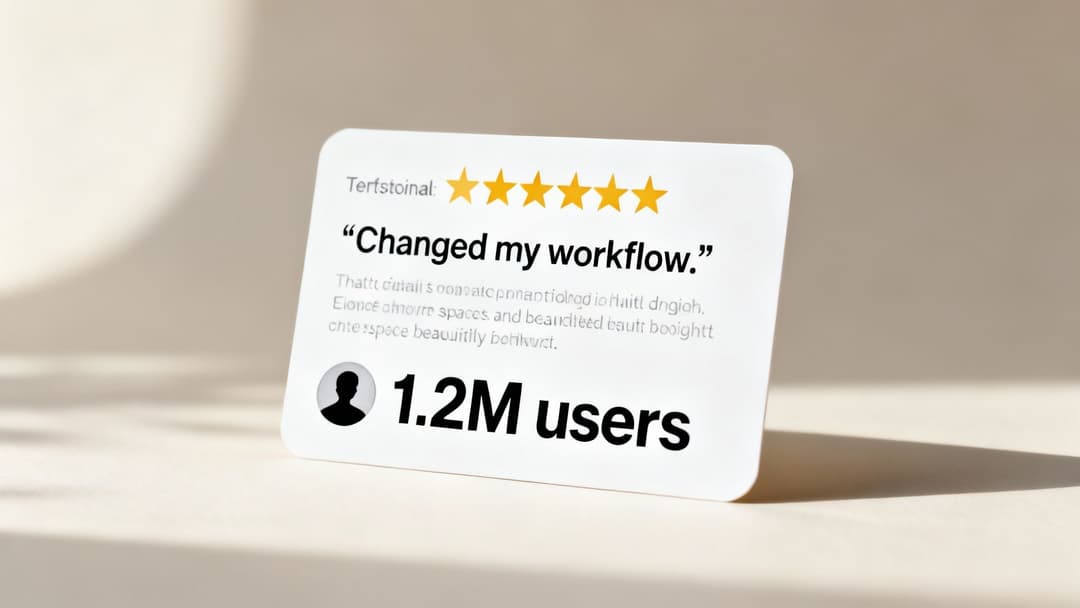
This sample ad copy style is particularly effective for SaaS platforms and B2B services like Shopify, whose "Trusted by 1.7M+ businesses" line instantly establishes authority and scale. It reassures potential customers that they are making a safe, popular choice, which is critical for high-consideration products or services.
Strategic Breakdown
- Lead with the Strongest Proof: Start with your most impressive metric or quote. Grammarly's "Used by 15M+ students and professionals daily" immediately communicates widespread adoption and utility.
- Attribute and Add Detail: Give your proof a face or a source. An anonymous "Great product!" is weak, but "This tool changed my entire workflow. - Jane D., Marketing Director" adds a layer of authenticity and relatability.
- Connect Proof to a Benefit: Don't just state the fact; explain why it matters. Trustpilot's "Rated 4.8★ by 50K+ customers" implies a high-quality, reliable service that the user can also benefit from. The CTA "Join them today" reinforces this sense of community.
Key Insight: Social proof isn't just about showing off numbers; it's about making the prospect feel secure. The copy should communicate, "Many people like you have chosen us and are happy. You will be, too."
Actionable Tips for Implementation
- Prioritize Specificity: Use exact numbers whenever possible. "1,247,593 users" feels more real and trustworthy than a rounded "Over 1 million users."
- Test Formats: A/B test a direct quote from a customer against a data-driven claim ("4.9/5 stars from 10,000+ reviews"). Some audiences respond better to personal stories, while others prefer hard data.
- Generate Diverse Angles: Use a tool like AdStellar to create dozens of social proof variations. You can test angles like industry-specific testimonials ("The #1 tool for e-commerce founders"), user milestones ("Join the 500 new users who signed up this week"), or media mentions.
9. Benefit-Driven Copy with ROI Quantification
Benefit-driven copy with Return on Investment (ROI) quantification moves beyond listing features to articulate tangible business outcomes. This approach targets performance-minded buyers by translating a product's value into hard numbers like time saved, revenue increased, or costs reduced. It answers the crucial question, "What specific, measurable result will I get?" making the purchase decision a simple matter of calculation rather than speculation.
This sample ad copy style is a cornerstone for SaaS, fintech, and B2B platforms where efficiency and profitability are the primary purchase drivers. By leading with a quantifiable outcome, the ad immediately establishes its value and filters for an audience focused on performance metrics.
Strategic Breakdown
- Lead with the Quantified Outcome: Start with the most compelling number. Slack’s "Your teams will save 32 minutes per day" is brilliant because it's specific, relatable, and immediately demonstrates value.
- Provide Context or Scale: Give the number meaning over time. Slack follows up its daily stat with "That's 168 hours per year," amplifying the benefit and justifying the investment on a larger scale. Calendly's "Save 7 hours per week on scheduling" achieves a similar effect.
- Implicit Call to Action (CTA): The benefit itself often acts as the CTA. When Stripe states you can "Increase revenue by 15% on average," the implied action is to adopt their platform to achieve that result. The formal "Learn More" or "Get Started" simply facilitates this decision.
Key Insight: For business-oriented audiences, ROI isn't just a metric; it's the entire conversation. This copy speaks their language by framing the product not as a tool, but as a direct lever for improving their bottom line.
Actionable Tips for Implementation
- Be Hyper-Specific: Vague claims like "improves efficiency" are weak. Use concrete numbers from case studies or user data. "Reduce support tickets by 40%" is far more powerful than "better customer service."
- Test Different Benefit Frames: A/B test which type of ROI resonates most. Does your audience care more about time saved (convenience), money earned (growth), or costs cut (efficiency)? Track which frame delivers the best performance. If you need a refresher, you can explore our detailed guide on how to calculate return on ad spend to better measure your tests.
- Generate and Test Variations at Scale: Use a tool like AdStellar to create dozens of copy variations based on different ROI data points. This allows you to rapidly test which specific numbers and timeframes (per day, week, or year) generate the highest conversion rates.
10. Curiosity and Pattern-Interrupt Copy for Awareness and Consideration
Curiosity and pattern-interrupt copy is engineered to stop the scroll. This approach breaks through the relentless monotony of social feeds by using surprising statements, posing intriguing questions, or making bold claims that violate a user's expectations. It forces a cognitive pause, compelling the user to engage simply to resolve the curiosity gap you've created. This style prioritizes attention and initial clicks over immediate sales, making it ideal for awareness and consideration campaigns.
This sample ad copy style is a favorite of challenger brands aiming to disrupt established markets. By creating a memorable hook, they can capture mindshare and pull users into their marketing funnel, even if the purchase intent isn't initially high.
Strategic Breakdown
- Create an Open Loop: Start with a statement that demands an answer. Purple Mattress's "Your mattress is killing you. Here's why." is a classic example. It presents a dramatic problem and promises a solution, making it almost impossible not to click.
- Violate Expectations: Say something the user does not expect to hear from a brand. Dollar Shave Club’s legendary "Our blades are f***ing great" was so shocking and refreshingly honest that it instantly cut through the noise of its polished competitors.
- Bridge to the Value Proposition: The hook earns the click, but the landing page must immediately connect the curiosity to your product's benefit. Oura’s "You're sleeping wrong. Here's proof." leads directly to how their ring provides the data to fix it.
Key Insight: The goal of pattern-interrupt copy isn't to sell the product in the ad itself; it's to sell the click. The copy's only job is to create an information gap so compelling that the user has to visit your site to close it.
Actionable Tips for Implementation
- Lead with a Shocking Statistic: Use data to create disbelief. "You're wasting 40% of your software budget" or "9 out of 10 startups fail for this one reason" can be powerful hooks.
- Pose a Reflective Question: Trigger self-reflection with questions like, "Is your daily coffee habit secretly hurting your productivity?" This makes the ad feel personal and relevant.
- Test Controversy Levels: A bold statement gets attention, but going too far can alienate your audience. A/B test different levels of provocation to find the sweet spot that intrigues without offending.
- Use AI for Creative Hooks: Leverage tools like AdStellar to generate dozens of pattern-interrupt variations. This allows you to test numerous angles, from counter-intuitive claims to puzzling questions, to find what truly stops the scroll for your audience.
10-Point Sample Ad Copy Comparison
| Copy Type | Implementation Complexity | Resource Requirements | Expected Outcomes | Ideal Use Cases | Key Advantages |
|---|---|---|---|---|---|
| Meta Feed Ad Copy for ROAS Optimization | Medium — iterative A/B testing and messaging refinement | Moderate — strong visuals, analytics, ongoing ad spend | Improved ROAS and direct sales conversions | E‑commerce, DTC, product campaigns | Benefit-led messaging, scalable testing, native feed performance |
| Lead Generation Ad Copy for CPL Minimization | Medium–High — form & funnel optimization plus nurture flows | Moderate — lead magnets, CRM, follow-up sequences | Lower CPL with higher-qualified leads (longer nurture) | B2B SaaS, service providers, demand‑gen funnels | Low‑friction offers, trust signals, measurable lead capture |
| Mobile-First Copy for App Installs and User Acquisition | Low–Medium — concise craft and platform alignment | Moderate — app creatives, store assets, UA tracking | Lower CPI and higher install velocity | Mobile apps, gaming, consumer UA campaigns | Ultra‑short hooks, fast testing, optimized for mobile attention |
| Conversational AI-Driven Copy for Chatbot Engagement | High — persona design and chatbot integration | High — chatbot platform, backend logic, conversation design | Higher engagement and richer pre-qualification data | Messenger/Chat-driven sales, support, lead qualification | Builds rapport, collects intent data, increases interactions |
| Video Ad Copy with Hook and CTA Sequencing | High — synchronized copy with video production cycles | High — video production, captions, editing resources | Higher completion rates and improved conversions/ROAS | Short‑form video (Meta/TikTok), product demos, storytelling | Strong narrative impact, captions boost sound‑off engagement |
| Audience-Specific Copy Personalization for Segmented Campaigns | High — segment definitions and dynamic content mapping | High — audience data, localization, many creative variants | Higher CTR/conversion by segment; reduced wasted spend | Marketplaces, multi‑persona B2B, large retail audiences | Increased relevance, budget efficiency, scalable personalization |
| Scarcity and Urgency Copy for High-Converting Campaigns | Low–Medium — timing and credibility management | Low–Moderate — inventory/offer controls, countdown tools | Significant short‑term conversion lift; faster CPA improvements | Flash sales, limited launches, event registrations | Measurable conversion uplift, effective for time‑bound offers |
| Social Proof and Testimonial-Based Copy | Low — sourcing and formatting authentic proof | Low — customer data, permissions, creative placement | Increased trust and higher conversions for unknown brands | New products, trust-building, B2B services | Credibility boost, reduces purchase anxiety, easy updates |
| Benefit-Driven Copy with ROI Quantification | Medium — requires defensible data and validation | Moderate — case studies, metrics, calculators | Strong justification for purchase; improved ROAS | B2B SaaS, fintech, enterprise productivity tools | Quantifiable persuasion, appeals to performance‑minded buyers |
| Curiosity and Pattern-Interrupt Copy for Awareness and Consideration | Low–Medium — creative ideation and follow‑through planning | Moderate — compelling hooks, landing page alignment, testing | Higher CTR and awareness; potential for lower-quality clicks | Awareness campaigns, challenger brands, rebrands | Breaks feed clutter, drives initial engagement and consideration |
From Sample to System: Scaling Your Winning Ad Copy
We've journeyed through ten distinct frameworks for high-impact ad copy, from ROAS-optimized Meta ads to curiosity-driven awareness campaigns. Each sample ad copy provided in this guide is more than just a template; it's a strategic starting point rooted in proven psychological principles and platform-specific best practices.
The core lesson is this: effective ad copy is never a one-time effort. It’s an ongoing process of understanding your audience, articulating value, and relentlessly iterating. The examples, from scarcity-driven promotions to benefit-quantified B2B messaging, all share a common DNA. They are built on a deep understanding of the customer's mindset at a specific stage of their journey.
Synthesizing the Key Insights
Across all the ad copy examples we analyzed, several critical themes emerged. These are the foundational pillars that separate mediocre ads from campaigns that print money.
- Clarity Over Cleverness: Your primary goal is to be understood instantly. Whether you're minimizing CPL or driving app installs, a clear, direct message that communicates value will always outperform a witty but confusing one.
- Specificity Sells: Vague promises like "improve your life" fall flat. Quantifiable benefits, such as "cut your reporting time by 50%," provide tangible proof and make the value proposition undeniable. This was a key element in our benefit-driven and ROI-focused examples.
- Context is King: The best ad copy feels native to its platform and tailored to its audience segment. The mobile-first video hook that works on TikTok will differ dramatically from the testimonial-based copy that excels on LinkedIn. Personalization is no longer a luxury; it's a requirement for cutting through the noise.
- The Hook is Everything: You have mere seconds to capture attention. As demonstrated in our pattern-interrupt and video ad copy samples, the first line or first three seconds determines whether a user stops scrolling or keeps moving. Your hook must be sharp, relevant, and compelling.
Your Actionable Roadmap to Implementation
Reading about a great sample ad copy is one thing; building a system to produce winning ads at scale is another. Here are the immediate next steps to transform these insights into measurable results for your own campaigns.
- Audit Your Current Ads: Take your top-performing and worst-performing ads from the last 30 days. Analyze them against the frameworks discussed. Which principles are your winners using? Which ones are your losers ignoring? This simple audit will reveal immediate opportunities for improvement.
- Select Two Frameworks to Test: Don't try to implement everything at once. Choose two frameworks that align with your most urgent campaign goal. If you need leads now, focus on the Lead Gen and Scarcity/Urgency models. If you’re building brand, start with the Social Proof and Curiosity-Gap examples.
- Develop a Hypothesis-Driven Testing Plan: For each framework, create a clear A/B testing hypothesis. For example: "Hypothesis: A testimonial-based ad headline will decrease our CPL by 15% compared to our current feature-based headline for our cold traffic audience."
- Systematize Your Learnings: Create a simple spreadsheet or use a project management tool to track every test. Record the hypothesis, the copy variations, the audience, the results, and, most importantly, the key takeaway. This "learning log" prevents you from repeating mistakes and helps you build a custom playbook for what resonates with your audience.
Ultimately, the power of a good sample ad copy lies not in copying it verbatim, but in understanding the strategic thinking behind it. By internalizing these principles and committing to a structured testing methodology, you move from being an ad copy writer to an ad copy strategist. You stop guessing what might work and start building a predictable, scalable engine for customer acquisition. This systematic approach is the true secret to unlocking sustained growth and turning your advertising budget into your most powerful asset.
Ready to move from manual testing to a powerful, AI-driven advertising system? AdStellar AI takes the frameworks discussed in this article and puts them on autopilot, allowing you to generate, test, and scale hundreds of ad copy variations in minutes, not weeks. Let our AI uncover your next winning message so you can focus on strategy. Discover how leading marketers are building high-performance advertising engines at AdStellar AI.