Attention is the scarcest resource in digital advertising right now. Not budget. Not creative talent. Not targeting data. Attention. And on Meta platforms, you have roughly two seconds to earn it before a thumb swipes your ad into oblivion.
Short form video ads have become the format built specifically for this reality. They are designed around how people actually behave on mobile feeds, not how advertisers wish they would behave. And for marketers running campaigns on Meta, understanding this format is no longer optional. It is the difference between ads that get seen and ads that get skipped.
This guide breaks down exactly what short form video ads are, why they perform the way they do on Meta, how to structure them for maximum impact, and how to build and test them at a pace that actually moves the needle. Whether you are running campaigns in-house or managing spend for clients, what follows is a practical framework you can apply immediately.
The Format That Rewired How People Watch Ads
Short form video ads are generally defined as video content under 60 seconds, with many practitioners finding the 15 to 30 second range to be the sweet spot for Meta placements. Meta itself recommends keeping videos at 15 seconds or under for Stories and Reels to maximize completion rates. These are not arbitrary guidelines. They reflect how users actually engage with content in fast-moving, vertical scroll environments.
The format is native to mobile. Vertical orientation (9:16 aspect ratio) is the standard for Reels and Stories because it fills the entire screen without letterboxing or dead space. Square format (1:1) holds up well in Feed placements where the viewing context is slightly different. The point is that short form video was designed for the phone in your hand, not the television on your wall.
Meta's placement ecosystem shaped this format significantly. Reels, Stories, and Feed each have their own viewing behaviors. Stories disappear after 24 hours and users tap through them quickly. Reels autoplay in a dedicated tab where users are already in a video consumption mindset. Feed is a mixed environment where video competes directly with static images, carousels, and text posts. Short form video works across all three because it respects the user's time and delivers its message before patience runs out.
It is also worth clarifying the relationship between short form video ads and UGC-style video ads, because the lines blur constantly on Meta. Short form video is a format descriptor. UGC-style is a creative aesthetic. A short form video ad can look polished and branded, or it can look like something filmed on an iPhone in someone's living room. Both are short form. The UGC aesthetic has become so prevalent because it mimics organic content, which helps ads blend into the feed rather than standing out as obviously promotional. More on that in a later section.
What matters at this stage is understanding that short form video is fundamentally different from pre-roll ads or long-form brand videos. Pre-roll assumes a captive audience sitting through content they chose. Long-form video assumes interest has already been established. Short form video assumes nothing. It has to earn every second of attention it gets, which is why the structure of these ads matters so much.
Why Motion Wins the Feed
Static images are easier to produce and still have a place in any Meta advertiser's toolkit. But video has a structural advantage in a scrolling feed: motion. The human eye is wired to notice movement. When everything else in the feed is still, a video that starts with dynamic visuals or a sudden change in scene has an inherent edge in capturing attention before the viewer has consciously decided to stop scrolling.
That attention advantage is only the beginning. Once someone stops, video allows you to do something a static image fundamentally cannot: tell a story across time. You can show a problem, introduce a product, demonstrate how it works, and deliver a payoff, all in 20 seconds. A static image gives you one frame. Video gives you a sequence, and sequences are how humans process and remember information.
The Meta algorithm amplifies this dynamic in ways that directly affect your ad costs and delivery. Meta's system pays close attention to engagement signals, and for video ads, those signals include thumb-stop rate, video completion rate, and overall engagement. When your video earns strong early retention, the algorithm interprets that as a signal that the content is relevant and engaging. That tends to improve delivery efficiency over time.
Completion rate is particularly telling. If a large percentage of viewers are watching your 20-second ad all the way through, that is a strong signal that the content is holding attention, not just catching it. These video-specific signals give you early feedback on creative quality before your conversion data has enough volume to be statistically meaningful. For performance marketers who need to make decisions quickly, that is genuinely valuable.
The honest trade-off is production effort. A well-structured short form video ad takes more time and resources to create than a static image. This is why testing volume matters so much. If you can only produce one or two video creatives per month, you are limiting your ability to find what actually resonates. The marketers who win with short form video on Meta are typically those who have solved the production bottleneck and can generate multiple creative variations quickly. That is a theme we will return to.
Anatomy of a High-Performing Short Form Video Ad
Every effective short form video ad follows a recognizable structure, even when it does not feel scripted. Understanding this structure is what separates ads that hold attention from ads that lose it in the first few frames.
The Hook (Seconds 0 to 3): This is the make-or-break window. Your opening must stop the scroll immediately. That means leading with something visually surprising, emotionally resonant, or directly relevant to a problem your audience recognizes. A talking head staring blankly at the camera for two seconds before saying anything is not a hook. A bold text overlay, a dramatic visual change, a direct question, or an unexpected visual all work better. The hook's only job is to earn the next five seconds.
Value Delivery (Seconds 3 to 15 or so): Once you have the viewer's attention, you need to deliver on the implicit promise your hook made. This is where you show the product, explain the benefit, demonstrate the solution, or tell the story. Keep it tight. Every second that does not add value is a second where you risk losing the viewer. Cut anything that does not move the narrative forward.
The Call to Action (Final Seconds): Short form video ads should end with a clear, specific direction. "Shop now," "Learn more," "Try it free," or any other action that matches the campaign objective. The CTA should feel like a natural conclusion to what the viewer just watched, not a sudden pivot into sales mode.
Format specs matter as much as structure. For Reels and Stories, shoot or export in 9:16 vertical format. For Feed placements, 1:1 square is a reliable choice. Keep text overlays out of the bottom 20% of the frame where UI elements can obscure them. Use large, readable fonts for on-screen text.
Sound-off viewing is a well-established behavior on Meta, particularly in Feed. A significant portion of users scroll through their feed with the phone on silent or in a public place where they will not turn the volume up. This means captions are not a nice-to-have feature. They are essential. If your video ad only makes sense with audio, you are excluding a large portion of your audience. Burn captions into the video or use text overlays that carry the narrative even when the sound is off. Visual storytelling should do enough of the work that a viewer with no audio still understands what you are offering.
Creative Angles That Actually Convert
Knowing the structure of a short form video ad is one thing. Knowing what to put inside that structure is another. Certain creative angles have proven consistently effective on Meta, not because of any single study, but because they align with how people process information and make decisions.
Problem-Solution: Open with a problem your target audience knows intimately. Make them feel seen. Then introduce your product or service as the resolution. This format works because it creates immediate relevance. The viewer thinks "that is exactly my situation" before you have even mentioned your brand.
Before and After: Visual transformation is one of the most compelling narratives available in short form video. Show the state before your product, then the state after. The contrast does the persuasion work for you. This format is especially effective for products where the outcome is visible and tangible.
Social Proof and Testimonial Style: A real person talking directly to camera about a product they use tends to feel more credible than a polished brand announcement. This is the core logic behind UGC-style ads. When someone who looks like your target customer explains why they love your product in their own words, it bypasses the skepticism that polished advertising often triggers.
Product Demonstration: Show the product doing what it does. This is particularly effective for products where the mechanism of action is interesting or where the value is not immediately obvious from a static image. Watching something work is often more convincing than reading about it.
The UGC-style aesthetic deserves its own attention here. These ads are intentionally raw. They look like organic content. They are often filmed vertically on a phone, with natural lighting, conversational delivery, and no obvious production polish. The reason they often outperform highly produced brand videos on Meta is simple: they blend into the feed. Users are less likely to trigger their mental "this is an ad" filter, which means they engage with the content more openly.
The good news is that you do not need to hire actors or a production crew to create UGC-style content. AI tools can now generate avatar-based video content that captures this aesthetic from nothing more than a product URL. More on that shortly.
Creative iteration is the final piece of this section and it is critical. One video is never enough. Different hooks resonate with different segments of your audience. Different angles convert better at different stages of the funnel. The goal is to build a library of variations from a single concept: swap the hook, change the voiceover, test a different CTA, adjust the pacing. Each variation is a new data point that tells you what your audience actually responds to.
Testing and Scaling Short Form Video Campaigns
Having great creative is only half the equation. The other half is knowing how to test it systematically so you can identify winners and scale them before your budget gets wasted on underperformers.
The basic principle of creative testing on Meta is isolation. When you change multiple variables at once, you cannot determine which change drove the result. Structure your ad sets so that you are testing one creative variable at a time: same audience, same budget, different creative. This gives you clean data that points to the actual driver of performance.
For short form video specifically, the metrics you need to watch go beyond standard conversion data. These video-specific signals are your early warning system:
Thumb-Stop Rate: The percentage of impressions where the viewer watched past the first three seconds. This tells you how effective your hook is at stopping the scroll. A low thumb-stop rate means your opening is not compelling enough, regardless of how good the rest of the ad is.
Hook Rate: Similar to thumb-stop, this measures early retention and tells you whether your opening seconds are earning continued attention. Some practitioners use these terms interchangeably; the core measurement is the same.
Video Completion Rate: The percentage of viewers who watch to the end, or to a defined threshold like 75% of the video. High completion rates indicate that your content holds attention throughout, not just at the start. This is a strong signal of overall creative quality.
These metrics are available directly in Meta Ads Manager and are genuinely useful as leading indicators before your conversion data has enough volume to draw conclusions. If a creative has a strong thumb-stop rate but low completion rate, the hook is working but the middle is losing people. If completion rate is high but conversion is low, the creative is engaging but the CTA or offer may need work. Each metric tells a different part of the story.
Scaling a winning video creative requires a staged approach. Start by increasing budget gradually on the winning ad set, watching for efficiency changes as spend increases. Expand to new audiences once you have confirmed performance at the original targeting level. And plan for creative refresh proactively. Video creatives on Meta typically experience audience fatigue faster than static ads because they rely on novelty for engagement. When you see frequency climbing and performance declining, it is time to introduce new variations, not to abandon the concept entirely.
From Concept to Live Campaign Without the Production Bottleneck
Here is the reality that most performance marketers run into: the creative testing strategy described above only works if you can actually produce enough creative variations to test. And traditional video production is slow. Scripting, filming, editing, and reviewing a single video ad can take days. By the time you have three or four variations ready, the campaign window has shifted or the budget has already been spent on untested creative.
This production bottleneck is the most commonly cited barrier among performance marketers who know what they should be doing but cannot execute it at the pace the platform demands. The math is simple. More creative variations mean more data points. More data points mean faster identification of winners. Faster identification of winners means better return on ad spend. Anything that slows down creative production slows down the entire performance loop.
AI-powered creative tools have changed this equation significantly. Platforms like AdStellar can generate video ad creatives, including UGC-style avatar content, directly from a product URL. No designers, no video editors, no actors, no studio time. You can go from product page to multiple video ad variations in a fraction of the time traditional production requires. The creative quality is built for the Meta feed, vertical format, motion-first, and optimized for the hook-heavy structure that the platform rewards.
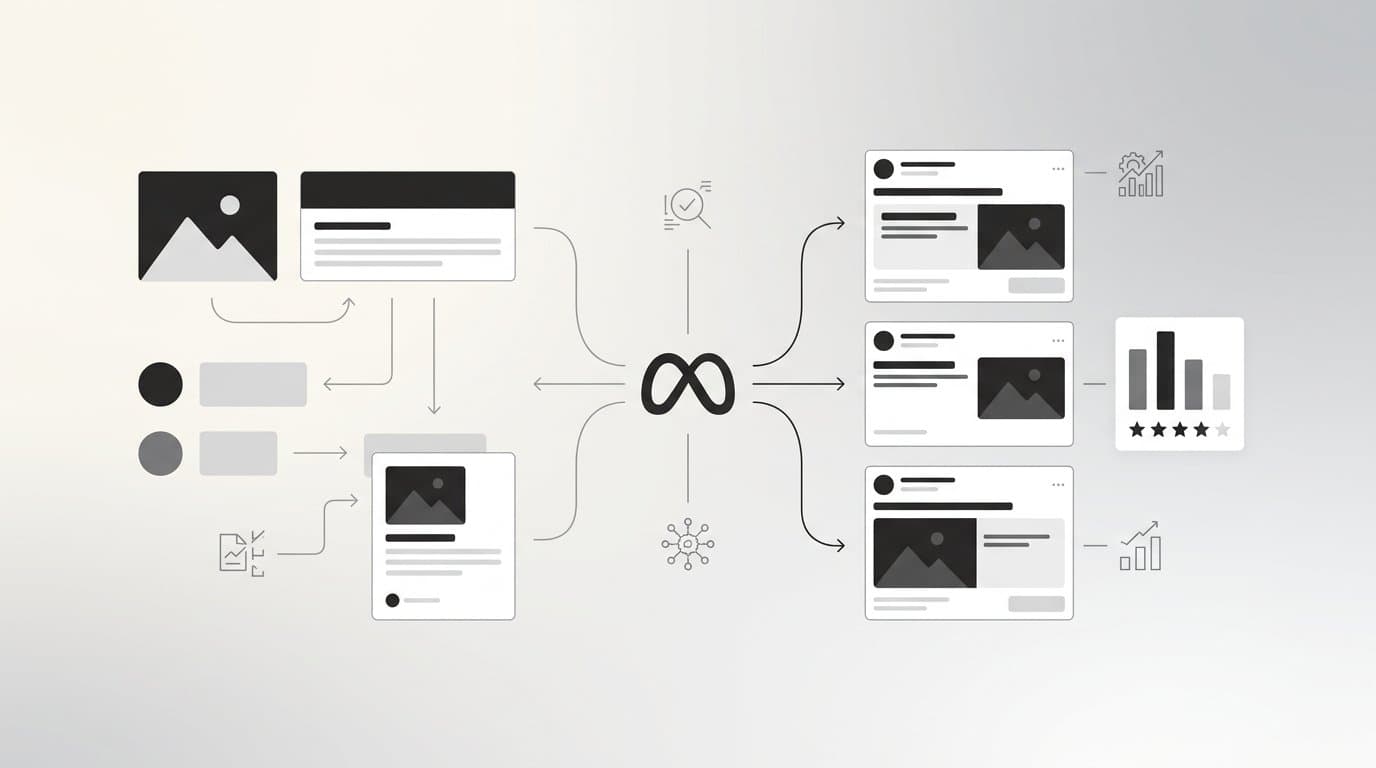
The bulk launch capability takes this further. AdStellar's Bulk Ad Launch lets you mix multiple video creatives with different headlines, audiences, and copy variations, then generate every combination and push them all to Meta in clicks rather than hours. What used to require a full day of manual setup in Ads Manager can happen in minutes. That means your testing cycle compresses dramatically, and you get to performance data faster.
Once campaigns are live, AdStellar's AI Insights surface winners by the metrics that matter: ROAS, CPA, and CTR. Leaderboards rank your creatives against your own benchmarks so you can see at a glance what is working and what is not. The Winners Hub stores your top-performing creatives, headlines, and audiences so you can pull them directly into future campaigns without starting from scratch. The entire workflow from creative generation to performance analysis lives in one place, which removes the friction that typically slows down iteration.
Putting It All Together
Short form video ads are not a trend waiting to peak. They are the dominant format on Meta right now, built for the way people actually consume content on mobile. The gap between brands that test aggressively with this format and those that do not is already visible in performance data, and it is widening.
The framework is straightforward even if the execution requires discipline. Understand the format and its native specs. Build every ad around a hook that earns the next three seconds. Deliver value quickly and close with a clear action. Test multiple creative angles, including UGC-style content that blends into the feed. Track the video-specific metrics that tell you what is working before your conversion data catches up. Scale winners methodically and refresh creative before fatigue sets in.
The marketers who execute this consistently are not necessarily the ones with the biggest budgets or the most experienced creative teams. They are the ones who have removed the friction from their creative testing cycle and built a system that generates, launches, and evaluates ads faster than their competitors.
If you are ready to close the gap between your current creative output and the volume your testing strategy actually requires, Start Free Trial With AdStellar and be among the first to launch and scale your ad campaigns 10x faster with an intelligent platform that automatically builds and tests winning ads based on real performance data.