Every media buyer eventually hits the same crossroads. You have budget, you have a product, and you need to decide where to put your creative energy. Do you go static or video? Do you invest in production or keep it lean? And if someone on your team confidently declares that "video always wins," do you believe them?
The honest answer is that neither format universally dominates. The format that wins depends on your funnel stage, your audience, your offer, and frankly, what you have not tested yet. The "video always wins" camp and the "static is cheaper and good enough" camp are both partly right and partly wrong, which means the real skill is knowing when to deploy each one.
This guide cuts through the noise. We will look at how static and video ads actually behave inside the Meta ecosystem, where each format has a genuine edge, how to build a decision framework based on your goals and resources, and why the smartest teams are not picking sides at all. They are testing both, faster than ever, using AI tools that remove the production bottleneck that used to make that kind of systematic testing impossible for most advertisers.
How Each Format Behaves in the Meta Feed
To make smart creative decisions, you need to understand what is actually happening under the hood when Meta serves your ad. The two formats are not just visually different. They send different signals to the algorithm and trigger different behaviors from the people seeing them.
Static ads, which include single images, carousels, and graphic-based creatives, load instantly and communicate a message in a fraction of a second. There is no buffering, no waiting for the hook to land. The viewer either gets it immediately or keeps scrolling. This makes static formats particularly powerful in high-intent placements where the person is already in a buying mindset. Think retargeting campaigns, product catalog ads, and bottom-of-funnel offers where speed of comprehension matters more than storytelling.
Video ads work differently. Motion captures attention in a way that static images cannot, and video gives you time to build context, demonstrate a product, establish credibility, and create an emotional connection before you ask for a click. For cold audiences who have never encountered your brand, that extra time is valuable. A well-crafted 15 or 30-second video can move someone from complete unfamiliarity to genuine interest in a way that a single image rarely can.
The algorithm treats these formats differently too. Video ads accumulate engagement signals that static ads simply cannot generate: watch time, replays, sound-on views, and percentage of video completed. These signals feed Meta's delivery system and help the algorithm understand who is genuinely interested in your content. Static ads, by contrast, are evaluated more heavily on immediate click-through rate and downstream conversion behavior. The algorithm is essentially asking, "Did people click this? Did they buy?" rather than "Did people spend time with this?"
Neither signal is inherently better. They serve different purposes in the auction. A static ad with a strong offer and a high CTR can absolutely win on ROAS. A video with deep watch time and strong brand recall can build the warm audience pool that makes your retargeting campaigns more profitable later. Understanding this dynamic is the foundation for everything else in this guide.
Where Static Ads Have the Edge
Let's be direct: static ads are underrated. In a world where every marketing blog breathlessly declares that video is the future, the humble static ad keeps quietly driving conversions for performance marketers who know how to use it.
Production speed and iteration velocity: A strong static ad can be created, tested, and revised in hours. You do not need a video editor, a production budget, or a script. You need a clear offer, a compelling visual, and a headline that earns the click. This makes static formats ideal for rapid testing cycles, especially for lean teams or early-stage advertisers who need to find their winning message before they invest in more complex production.
Direct response and retargeting contexts: When someone has already visited your product page, watched your video, or engaged with your brand, they do not need a story. They need a reminder. A clean static ad with a clear price, a strong offer, or a product shot they recognize can outperform video in retargeting because it removes friction. The viewer already knows who you are. The job of the ad is simply to close the loop, and static does that efficiently.
Carousel ads as a creative powerhouse: Carousels are one of the most underutilized formats in Meta advertising. A well-built carousel lets you showcase multiple products, walk through a series of benefits, or tell a mini-story across several frames, all without video production complexity. For e-commerce brands with multiple SKUs, carousels can drive strong performance by matching individual products to individual viewer interests through dynamic product ads.
Lower cognitive load for high-intent buyers: There is a real behavioral dynamic at play here. When someone is close to a purchase decision, a video that asks for 15 or 30 seconds of attention can actually slow them down. A static ad that delivers the essential information instantly, price, product, offer, call to action, respects where they are in the journey and makes it easier to convert.
None of this means static is always the right call. But it does mean that dismissing static as "less engaging" or "old school" is a mistake that will cost you performance. The format earns its place in every serious media buyer's toolkit.
Where Video Ads Dominate
Video's strengths are real, and in several specific contexts, nothing else comes close.
Cold audience prospecting: When you are reaching people who have never heard of your brand, you are asking them to trust you enough to click. That is a big ask from a single image. Video gives you time to earn that trust. You can show the product in action, share a customer story, demonstrate a transformation, or create an emotional hook that makes the viewer feel something before you ask them to do anything. For top-of-funnel prospecting, video builds the relationship that makes everything downstream more efficient.
Reels and Stories placements: Meta has invested heavily in Reels, and those placements are video-native by design. When a static image appears in a Reels feed, it often feels jarring and out of place compared to the content surrounding it. Native video content, especially content that feels organic rather than produced, blends into the feed in a way that earns attention rather than demanding it. Ignoring video means effectively ignoring some of Meta's highest-engagement placements.
UGC-style video as the current top performer: Across the performance marketing community, one trend has emerged consistently over the past few years: authentic, creator-style video that looks and feels like organic content tends to outperform polished brand videos in both engagement and conversion. The reason is psychological. Viewers have become highly attuned to what an ad looks like, and they scroll past anything that triggers their "this is an ad" reflex. UGC-style content, someone talking to camera, a casual product demo, a before-and-after, disarms that reflex and earns more genuine attention.
Complex products that need explanation: Some products simply cannot be communicated in a single image. If your product has a unique mechanism, a surprising use case, or a benefit that requires demonstration to be believed, video is not optional. It is the only format that can do the job properly. Trying to explain a complex product in a static ad often results in cluttered creative that confuses rather than converts.
The pattern here is clear. Video excels when you need to build trust, tell a story, demonstrate value, or meet audiences where they are in video-native placements. Those are not small use cases. They are the core of most prospecting strategies on Meta.
The Real Decision Framework: Funnel Stage, Budget, and Goals
Now that the strengths of each format are clear, the practical question is how to decide which one to use and when. Here is a framework that senior media buyers actually use, with the caveat that it is a starting point, not a rigid rule.
Match format to funnel stage: The most reliable starting heuristic is video for awareness and consideration, static for conversion and retargeting. Cold audiences benefit from the trust-building and storytelling that video enables. Warm and hot audiences, people who already know your brand, respond well to the direct, frictionless communication that static delivers. Start here and let your data tell you when to deviate.
Budget reality check: Video production costs more, in both time and money. If your team is lean or your budget is limited, there is a real argument for mastering static first. A library of well-tested static creatives with proven messaging gives you a strong foundation. As you scale and generate more revenue, you can layer in video production with the confidence that your core messaging already works. Jumping straight to expensive video production before you know what resonates is a common and costly mistake.
Goal-based selection: If your primary KPI is ROAS or CPA, test both formats against real data before drawing conclusions. If your goal is brand awareness, video views, or building a warm audience for future retargeting, video is the clear choice because those outcomes require the engagement signals that only video generates. Aligning format selection with your actual KPI prevents the common trap of optimizing the wrong metric with the wrong format.
Product category matters too: Fashion and lifestyle products often perform well with aspirational video. Straightforward e-commerce products with strong price points often convert efficiently with clean static ads. Software and tools frequently benefit from demo-style video at the top of the funnel and feature-focused static at the bottom. There is no universal answer, which brings us to the most important point of all.
Why Testing Both Formats Is the Only Right Answer
Here is the uncomfortable truth that every experienced media buyer eventually accepts: creative performance is fundamentally unpredictable. The format, hook, headline, or offer that you were certain would win often does not. And the simple static ad you threw together as a control sometimes outperforms the polished video you spent three weeks producing.
This is not a failure of strategy. It is the nature of advertising. Audiences are human, contexts shift, and the combination of format, message, and moment that resonates is something you discover through data, not intuition.
The performance marketing community broadly agrees on this point. Meta's own Creative Best Practices documentation emphasizes testing as the foundation of effective advertising. Practitioners across the industry consistently report that assumptions about which format will win, based on category norms or past experience, regularly prove wrong when put to an actual test.
The problem has never been that marketers do not understand the value of testing. The problem is that testing has traditionally been expensive and slow. Creating multiple static variations requires design resources. Creating video variations requires production resources. Running enough variations to get statistically meaningful data requires budget and time that many teams simply do not have.
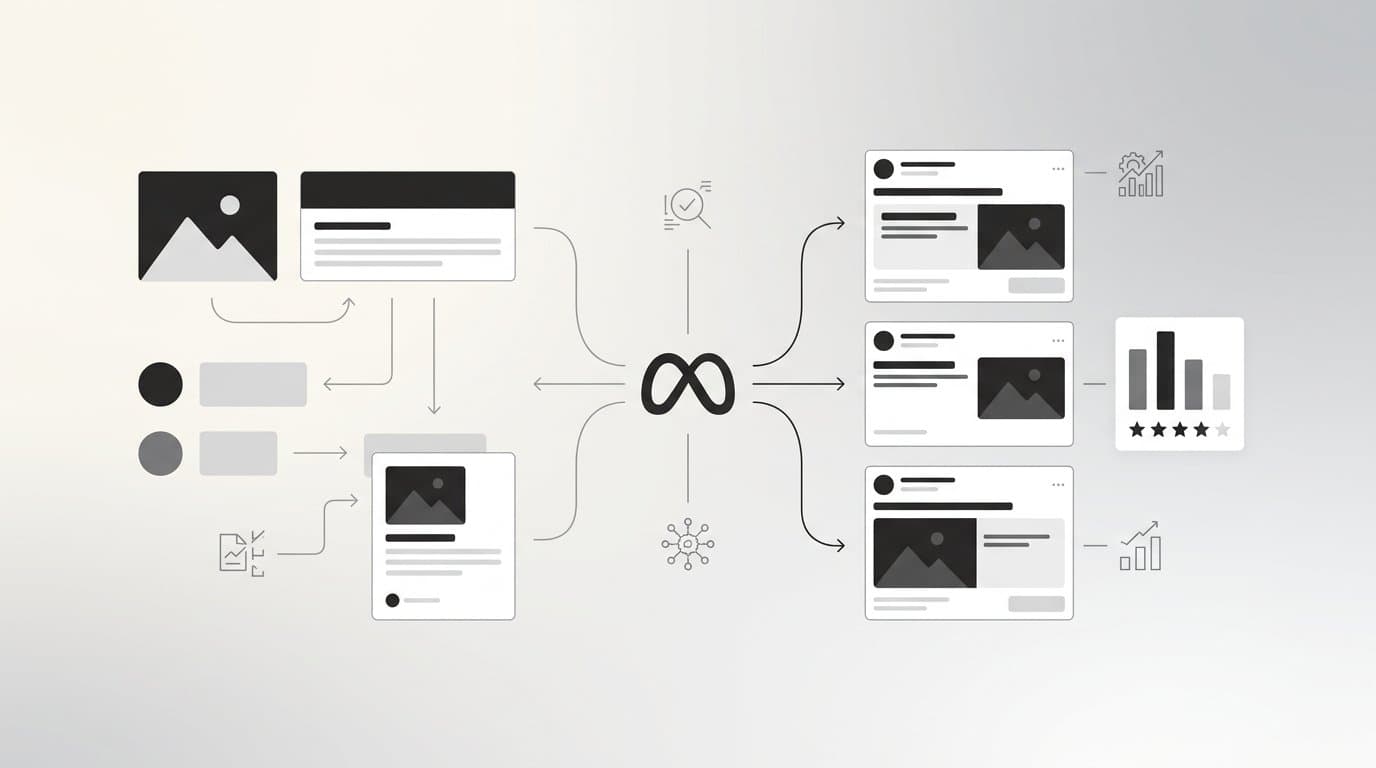
This is where AI-powered platforms are genuinely changing the game. AdStellar removes the production barrier by generating image ads, video ads, and UGC-style avatar content directly from a product URL. No designers, no video editors, no actors required. The Bulk Ad Launch feature creates hundreds of ad variations, mixing different creatives, headlines, audiences, and copy, and launches them to Meta in minutes rather than days.
The result is that you can run the kind of multivariate testing across formats, hooks, and audiences that used to require a large team and a significant production budget. AdStellar's AI Insights leaderboards then rank every creative, headline, and audience by real performance metrics like ROAS, CPA, and CTR, so you are not guessing which format won. You know, because the data tells you.
This changes the entire framing of the static vs video debate. Instead of making a decision upfront based on assumptions, you make a small bet on both, let the data decide, and then scale the winner. That is how the best performance marketing teams operate, and AI tools are making it accessible to teams of every size.
Putting It All Together: A Smarter Creative Strategy
The goal is not to pick a side. The goal is to build a system that continuously generates creative, identifies winners, and scales them efficiently. Here is what that looks like in practice.
Start with a creative mix that uses video for prospecting and static for retargeting as your baseline structure. Launch both formats simultaneously so you are generating performance data from the start rather than sequencing formats over weeks or months. Use your AI Insights leaderboard to track which format, hook, and headline combination is driving the best results against your specific KPI, whether that is ROAS, CPA, or CTR.
As data accumulates, your Winners Hub becomes your most valuable asset. It surfaces your best-performing creatives, headlines, audiences, and offers in one place, with real performance data attached. When you identify a winning pattern, whether it is a specific video hook style, a particular offer framing in a static ad, or a carousel structure that consistently drives clicks, you replicate that pattern across future campaigns. You are not starting from scratch every time. You are compounding what works.
The AI Campaign Builder takes this further by analyzing your past campaigns, ranking every creative and audience by performance, and building complete Meta campaigns in minutes. Every decision is explained, so you understand why a particular format or audience combination is being recommended, not just what the output is. The system gets smarter with every campaign you run.
This is the real answer to the static vs video question. It is not a debate to be settled with a blog post or an industry generalization. It is a question to be answered by your own data, generated through systematic testing, and acted on through a platform that makes scaling winners as simple as clicking a button.