UGC-style ads consistently outperform polished brand creative on Meta. Most performance marketers already know this. The problem isn't awareness of what works. The problem is actually producing enough of it, fast enough, without burning through your budget or your team's bandwidth.
Talk to any paid social manager running Meta campaigns at scale and you'll hear the same frustration: UGC is the format that wins, but the process of creating it is a constant grind. Finding reliable creators, managing revisions, keeping content fresh, staying on-brand without killing authenticity. It never really stops.
This guide is for marketers who are past the "should we do UGC?" conversation. You already know the answer. What you need is a clear-eyed look at why UGC ad creation is so difficult to execute consistently, and a practical path forward that doesn't require doubling your production team or tripling your creative budget. Let's get into it.
Why Native Creative Has Become the Dominant Format on Meta
There's a simple psychological reason why UGC-style ads work so well in social feeds: they don't look like ads. When a user is scrolling through Instagram or Facebook, their brain is primed to skip anything that registers as a commercial. A polished studio spot with a branded intro, professional lighting, and a voiceover triggers that skip reflex almost instantly.
A talking-head video filmed on an iPhone, a casual product demo with ambient background noise, a testimonial that sounds like someone texting a recommendation to a friend. These formats slip past the mental filter because they match the visual language of organic content. The viewer's guard is down before they even realize they're watching an ad.
This isn't just intuition. It reflects how Meta's ad ecosystem actually functions. The platform rewards content that earns genuine engagement. When users stop scrolling, watch, comment, or share, the algorithm interprets that as a signal of relevance and distributes the creative more efficiently. Authentic-looking content tends to generate that kind of engagement more readily than brand-produced studio work, which translates directly into lower CPMs and better delivery for advertisers who get the format right.
The strategic implication is significant. UGC-style creative isn't just a creative preference. It's a performance lever. Brands that consistently produce high-quality, authentic-feeling ad content have a structural advantage in Meta's auction system over competitors still relying on traditional brand creative.
Here's the tension this creates: demand for UGC creative has surged dramatically as more advertisers have caught on to the format's effectiveness. But the production infrastructure most teams rely on was built for a different era of advertising. Hiring creators, briefing them, managing deliverables, editing, iterating. That process was designed for quarterly campaigns, not the continuous creative pipeline that modern Meta advertising actually requires.
The result is a gap between what the algorithm rewards and what most teams can realistically produce. That gap is where the real UGC ad creation challenges live, and it's a pattern consistent with the broader challenges in digital advertising that performance teams face today.
The Biggest UGC Ad Creation Challenges Marketers Face Today
When you break down the UGC production process, the friction points become obvious. They cluster around three core problems: finding the right people, managing the cost and time involved, and keeping up with the volume demand that Meta campaigns actually require.
Creator sourcing is more time-intensive than it looks. The process of finding a creator who fits your brand, can deliver on-brief, and will actually follow through on a timeline involves a surprising amount of manual work. You're scrolling through platforms, reviewing portfolios, sending outreach messages, waiting for replies, negotiating rates, drafting contracts, and then hoping the deliverable matches what you briefed. Do this across five or ten creators simultaneously and it becomes a part-time job in itself.
Quality consistency is a persistent problem. Even experienced creators interpret briefs differently. One creator's idea of "authentic and casual" might look genuinely engaging on screen. Another's might look low-effort or off-brand. Without a reliable way to predict output quality before you've paid for it, you end up with a lot of unusable content that still cost real money to produce.
Cost and turnaround timelines compound quickly. Individual creator fees vary widely depending on their following, production quality, and exclusivity requirements. When you factor in multiple rounds of revisions, which are almost always necessary, a single batch of UGC ads can stretch from a few days into several weeks before anything actually launches. The reality is that ad creation is time consuming regardless of format, but UGC amplifies the problem significantly.
Creative fatigue is relentless on Meta specifically. Meta's auction system penalizes repetitive creative. As an ad accumulates impressions, its performance degrades. Audiences have already seen it. Engagement drops, CPMs rise, and the algorithm starts deprioritizing delivery. The only solution is a constant pipeline of fresh variations. For teams relying on external creators, that means the sourcing and production cycle never actually ends. You finish one round and immediately need to start the next.
The volume math doesn't work at scale. Effective Meta advertising often requires testing dozens or even hundreds of creative variations to identify what resonates with different audience segments. When each variation requires a separate creator engagement, the cost and time involved make that kind of systematic testing prohibitive for most teams. These creative testing challenges are a core reason why so many advertisers plateau on Meta.
Each of these challenges is real on its own. Together, they create a bottleneck that caps how aggressively most teams can scale their Meta ad spend, regardless of budget.
Hidden Pitfalls That Stall Campaigns Before They Start
Beyond the obvious production friction, there are subtler problems that often don't surface until a campaign is already in motion. These are the issues that catch teams off guard and cause delays or complications that are harder to anticipate.
Usage rights are a legal gray area that many teams underestimate. When a creator produces content for your brand, the question of who owns that content, for how long, and on which platforms is not always clearly defined. Contracts that seem straightforward can leave ambiguity around whether you can repurpose content across different ad accounts, run it as paid dark posts, or use it in perpetuity. Creators sometimes repurpose their own content for other brands or post it organically after the campaign runs, which can create brand confusion or dilute the exclusivity you paid for. Getting this right requires careful contract language upfront, which adds another layer of complexity to the sourcing process.
The authenticity versus brand consistency tension is genuinely difficult to resolve. The whole point of UGC-style content is that it feels real and unscripted. But brands have messaging requirements, compliance considerations, and visual identity guidelines that need to be respected. The more tightly you script a creator, the less authentic the output feels. The more freedom you give them, the higher the risk of content that drifts off-brand or misrepresents your product. These are the kinds of ad copywriting challenges that become especially acute in UGC formats.
This tension often results in one of two failure modes: over-scripted content that performs no better than a traditional brand ad, or genuinely authentic content that says the wrong things. Finding the balance requires skilled creative direction and usually several rounds of revision, which feeds directly back into the timeline problem.
Performance unpredictability is a significant hidden cost. Without a data-driven framework for selecting and testing creative angles, teams often rely on intuition or internal consensus to decide which UGC concepts to produce. This is an expensive way to make creative decisions. A concept that everyone in the room loves might land flat with your actual audience, while a simpler angle you almost didn't pursue turns out to be the winner.
The problem is compounded by the fact that most UGC production processes don't generate enough variations to run meaningful tests. When you've invested weeks and significant budget into a small batch of creator content, there's organizational pressure to make it work rather than objectively assess whether it's performing. Understanding the full scope of Meta ad campaign scaling challenges helps explain why so many teams get stuck at this stage.
These hidden pitfalls don't invalidate UGC as a strategy. They do, however, underscore why solving the production process is just as important as understanding the format.
Scaling UGC Without Scaling Your Team or Budget
The traditional model of UGC production, find creators, brief them, wait, revise, launch, has a ceiling. At some point, scaling the volume of creative you need requires scaling the number of creators you're managing, the budget you're allocating to production, or both. For most teams, that ceiling arrives well before they've reached the creative volume that Meta campaigns actually reward.
This is where AI-generated UGC-style creative enters the picture. Over the past couple of years, AI avatar technology has matured to the point where it can produce talking-head video content that carries the visual language of creator-made UGC without requiring a human creator at all. If you're evaluating options, a comparison of the best UGC ad generators for ecommerce is a good starting point. This isn't about replacing authentic human storytelling in every context. It's about solving a specific operational problem: producing enough creative variations, fast enough, to feed a performance advertising program at scale.
The implications are significant. When you remove creator dependency from the equation, the bottlenecks around sourcing, negotiation, revision cycles, and usage rights largely disappear. You can generate multiple UGC-style video variations in the time it would previously take to brief a single creator. You control the messaging precisely. You own the output entirely.
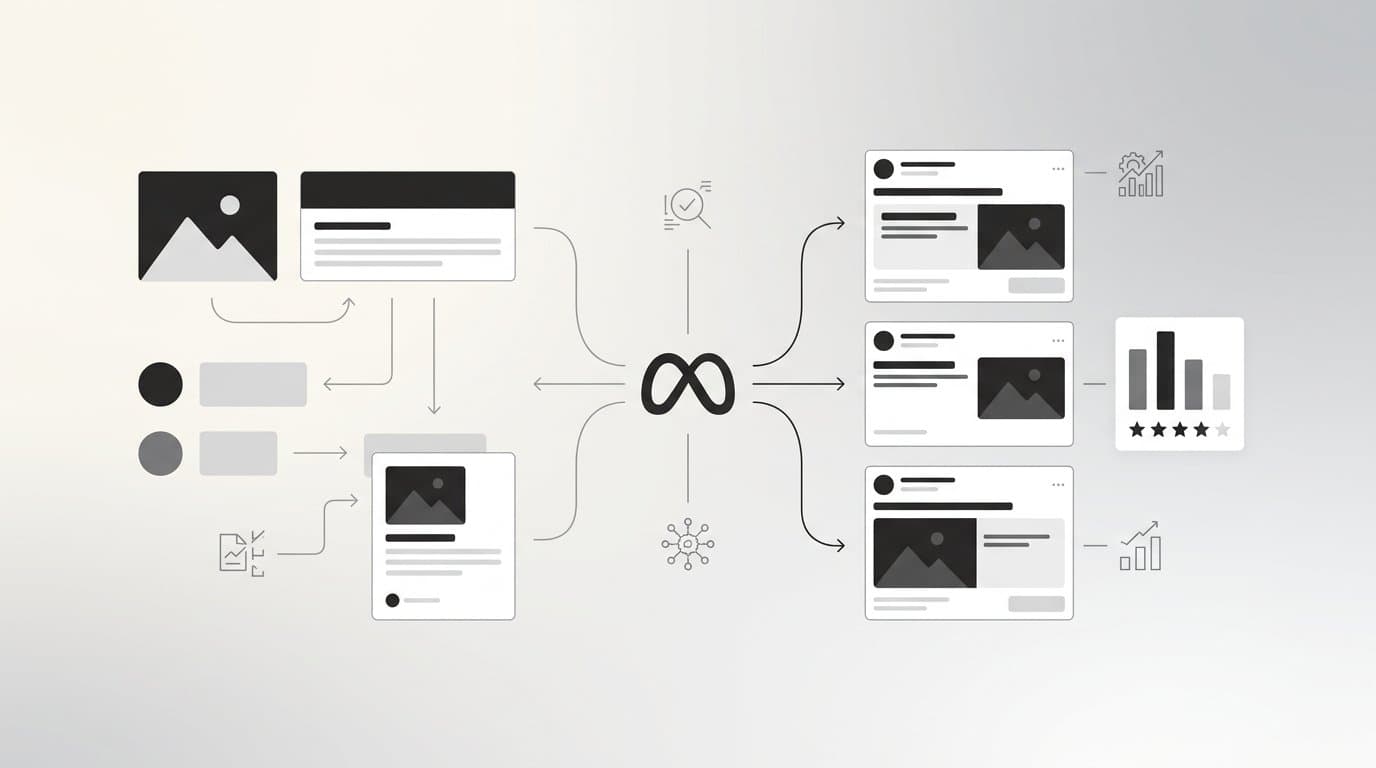
Bulk creative generation changes the testing math. Instead of launching five or ten creator-produced variations and hoping one of them resonates, you can generate dozens of combinations across different hooks, scripts, visual styles, and formats. A dedicated bulk ad creation approach, paired with multivariate testing at the ad set level, lets you run the kind of systematic creative testing that actually surfaces winners rather than guessing at them.
The feedback loop is what makes scale sustainable. Generating volume is only valuable if you're learning from what you produce. A well-structured creative program uses real performance data, actual ROAS, CPA, and CTR from live campaigns, to identify which creative elements are driving results. Those winning elements get recycled into new variations. The process compounds over time, getting more efficient with each cycle because you're building on what's already proven to work rather than starting from scratch.
This is the model that breaks the ceiling. Not more creators. More intelligence applied to the creative process itself.
Building a Data-Driven UGC Creative Workflow
Understanding the solution conceptually is one thing. Implementing it as a repeatable workflow is another. Here's how a data-driven UGC creative process actually works in practice.
Step one: Generate multiple variations from the start. Rather than producing one or two "hero" UGC concepts and betting on them, the goal is to enter every testing cycle with genuine variety. Different hooks, different angles, different formats. Some variations might lead with a problem the product solves. Others might open with a bold claim or a product demonstration. Learning proven strategies for AI UGC video ads can help you structure these variations more effectively. The point is to give the algorithm real options to optimize against rather than forcing it to work with a narrow creative set.
Step two: Structure your launch for learning. Bulk launching tools allow you to create hundreds of ad combinations by mixing creatives, headlines, copy, and audiences systematically. This isn't just about efficiency. It's about generating statistically meaningful data across enough variations to make confident decisions about what's working. When you launch ten variations instead of two, you learn ten times as fast.
Step three: Let performance data drive creative decisions. This is where leaderboard-style analytics become essential. Rather than reviewing performance in a spreadsheet and trying to draw conclusions manually, a leaderboard ranks your creatives, headlines, audiences, and landing pages by the metrics that actually matter to your goals: ROAS, CPA, CTR, and whatever benchmarks you've set. You can see at a glance which creative elements are performing above your targets and which are dragging down results.
This kind of visibility replaces the guesswork that typically characterizes creative decision-making. Instead of debating internally about which ad "feels" better, you're looking at ranked performance data and making decisions that the numbers support. An AI powered ad creation tool can accelerate this entire loop significantly.
Step four: Build and maintain a winners library. Top-performing creatives, headlines, audience segments, and copy variations should be captured in a centralized place where they're instantly accessible for future campaigns. This is the compounding element of the workflow. Every campaign you run adds to your library of proven elements. When you launch the next campaign, you're not starting from zero. You're pulling from a curated set of combinations that have already demonstrated performance in your specific account.
AdStellar's Winners Hub is built exactly for this purpose. Your best performers across every dimension, creatives, headlines, audiences, and more, are stored with their actual performance data attached. When you're ready to build the next campaign, you select from what's already proven and layer in new variations to keep testing. The AI Campaign Builder then analyzes your historical data, ranks every element by performance, and builds complete Meta campaigns in minutes with full transparency into every decision it makes.
This workflow transforms UGC creative production from a reactive scramble into a systematic process that gets more effective over time.
Turning UGC Challenges Into a Competitive Advantage
Here's a reframe worth sitting with: most of your competitors are still struggling with the same UGC ad creation challenges you are. Creator sourcing, revision cycles, creative fatigue, performance unpredictability. These are industry-wide problems, not unique to your team. The marketers and brands that solve them don't just remove a bottleneck. They build a structural advantage over everyone still stuck in the traditional model.
When you can generate UGC-style creative at volume without creator dependency, test systematically across dozens of variations, surface winners with data rather than intuition, and recycle proven elements into every new campaign, you're operating at a different speed and efficiency than the competition. That compounds over time. Your creative library grows. Your AI gets smarter about your account's specific performance patterns. Your cost to acquire a winning ad decreases with each cycle.
The shift is from a manual, creator-dependent production model to an AI-powered, data-informed creative workflow. That shift doesn't happen all at once, but the direction is clear. Teams that make it happen early are the ones who will scale their Meta ad spend profitably while competitors are still waiting on revision round three from a creator they hired three weeks ago.
AdStellar is built to make that shift as straightforward as possible. Generate image ads, video ads, and UGC-style avatar content directly from a product URL. Clone competitor ads from the Meta Ad Library. Launch hundreds of ad combinations in minutes with bulk ad launching. Surface winners through real-time performance leaderboards. Store your best performers in the Winners Hub for instant reuse. Every decision the AI makes is explained transparently so you understand the strategy behind it, not just the output.
If you're ready to stop wrestling with the traditional UGC production bottleneck and start running a creative workflow that actually scales, the place to start is a hands-on trial. Start Free Trial With AdStellar and be among the first to launch and scale your ad campaigns faster with an intelligent platform that automatically builds and tests winning ads based on real performance data. Seven days, no commitment, and you'll see exactly how different the process feels when AI is handling the heavy lifting.