You're spending 6 hours building a single Meta campaign. Manually creating ad sets for each audience segment. Copy-pasting creative variations across placements. Triple-checking targeting parameters before hitting publish. Then waiting 48 hours to see if any of it works.
Meanwhile, your competitor just launched 47 campaign variations in the time it took you to set up your first ad set. They're already collecting performance data while you're still debating whether to test 25-34 or 25-40 age ranges.
Here's what most media buyers don't realize: this manual chaos isn't inevitable. The marketers launching campaigns 10× faster than you aren't working longer hours or managing bigger teams. They're using programmatic advertising to automate the repetitive work that's keeping you trapped in Ads Manager instead of focusing on strategy.
But if you're like most performance marketers, "programmatic advertising" probably sounds like enterprise-level complexity reserved for brands with seven-figure budgets and dedicated ad ops teams. You've heard the term in webinars and agency pitches, but what does it actually mean for someone managing Meta campaigns with a lean team and aggressive growth targets?
The truth is simpler than the jargon suggests. Programmatic advertising is the automated approach that's transforming how modern media buyers launch, test, and scale campaigns—eliminating the manual bottlenecks that limit testing velocity and prevent you from competing at the speed the market demands.
This guide breaks down exactly what programmatic advertising is, why it matters for media buyers and growth teams running paid social campaigns, and most importantly—the seven concrete benefits that explain why marketers who embrace automation are building competitive advantages while others are still reading campaign setup guides.
What Is Programmatic Advertising? (And Why It Matters For Meta Campaigns)
Programmatic advertising is the automated buying, placement, and optimization of digital ads using software and algorithms instead of manual processes. For Meta campaigns specifically, this means using technology to handle the repetitive tasks that consume hours of your day—audience creation, campaign structuring, creative deployment, and performance monitoring.
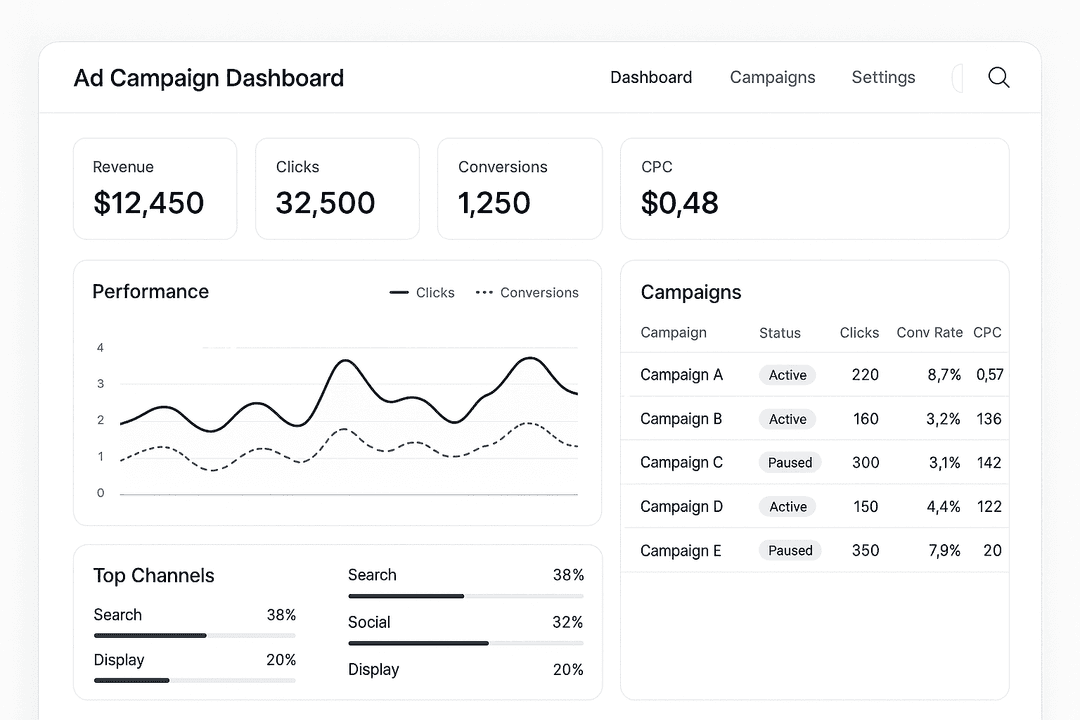
Think of it this way: traditional advertising is like manually addressing and mailing 1,000 letters. Programmatic advertising is like setting up an email automation that personalizes and sends those messages instantly based on recipient behavior and preferences.
The core difference isn't just speed—it's the ability to test and optimize at a scale that's physically impossible with manual methods. When you're using PPC automation tools, you can launch dozens of campaign variations simultaneously, each targeting different audience segments with tailored creative, and let the algorithm identify winning combinations while you focus on strategic decisions.
For media buyers managing Meta campaigns, programmatic advertising typically involves three key components: automated campaign creation (building ad sets and ads programmatically), dynamic audience targeting (using data to automatically adjust who sees your ads), and real-time optimization (automatically allocating budget to top performers).
This matters because the competitive landscape has fundamentally changed. The brands winning on Meta aren't necessarily spending more—they're testing more, learning faster, and scaling winners before competitors even finish their first campaign setup. Manual processes can't compete with that velocity.
Understanding AI vs traditional advertising methods reveals why automation has become essential rather than optional for performance marketers.
Benefit #1: Launch Campaigns 10× Faster (Without Sacrificing Quality)
The most immediate benefit of programmatic advertising is speed—but not the reckless kind that sacrifices quality for velocity. This is structured speed that maintains strategic rigor while eliminating the manual bottlenecks that slow down campaign launches.
Here's what this looks like in practice: instead of spending 45 minutes manually creating each ad set (selecting audiences, setting budgets, choosing placements, uploading creative), you define your testing parameters once and let automation handle the execution. What used to take an afternoon now takes minutes.
The time savings compound across every stage of campaign management. Audience creation that required 20 minutes of clicking through Ads Manager now happens instantly. Creative deployment across multiple ad sets that meant copy-pasting the same assets 30 times now executes automatically. Budget allocation that required manual calculations and adjustments now follows predefined rules.
But speed alone isn't the advantage—it's what that speed enables. When you can launch campaigns 10× faster, you can test 10× more variations. More variations mean more data. More data means faster learning. Faster learning means quicker identification of winning combinations. And quicker wins mean you're scaling profitable campaigns while competitors are still in testing phase.
This velocity advantage is particularly critical for time-sensitive opportunities. Product launches, seasonal promotions, trending topics—these windows close quickly. The ability to go from strategy to live campaigns in hours instead of days means you capture opportunities that manual processes would miss entirely.
The quality question is valid: can automated campaign creation really match the thoughtfulness of manual setup? The answer is yes, because you're not removing human judgment—you're removing human repetition. You still define the strategy, audiences, and creative approach. Automation just handles the mechanical execution of those decisions across dozens or hundreds of variations.
Benefit #2: Test More Variables Simultaneously (And Find Winners Faster)
Manual campaign management forces you into sequential testing. You test audience A against audience B. Wait for statistical significance. Then test creative variation 1 against variation 2. Wait again. Then test placement options. More waiting. This linear approach means you're always weeks away from finding optimal combinations.
Programmatic advertising enables parallel testing at a scale that's impossible manually. You can simultaneously test multiple audiences, creative variations, placements, and messaging angles—then let performance data reveal which combinations work best. Instead of testing 2-3 variables over several weeks, you test 20-30 combinations in days.
This matters because advertising performance isn't about individual variables—it's about combinations. The creative that works for cold audiences might fail for warm audiences. The messaging that resonates on Instagram might underperform on Facebook. The offer that converts 25-34 year-olds might not work for 35-44. You can't discover these interaction effects through sequential testing.
Learning how to use AI to launch ads enables this kind of comprehensive testing approach that reveals winning combinations faster than traditional methods.
Ready to transform your advertising strategy? Get Started With AdStellar AI and be among the first to launch and scale your ad campaigns 10× faster with our intelligent platform that automatically builds and tests winning ads based on real performance data.