Digital marketers know the drill. You're juggling fifteen different ad variations, refreshing performance dashboards every hour, and manually shifting budgets between campaigns based on yesterday's data. By the time you've analyzed what's working, the market has already moved.
This is where AI ad automation enters the picture. Not as some futuristic promise, but as a practical technology that's reshaping how advertising actually gets done. At its core, AI ad automation uses machine learning to handle the repetitive, data-intensive tasks that eat up your day—creative production, campaign optimization, performance analysis—while continuously learning what drives results for your specific business.
This guide breaks down exactly what AI ad automation is, how it works, and why it's becoming the standard approach for marketers who need to move faster and smarter than their competition.
The Technology Behind Intelligent Advertising
Think of AI ad automation as a system that watches everything your ads do, learns from the patterns, and makes optimization decisions while you're focused on strategy. The technology relies on machine learning algorithms that process performance data across your campaigns, identifying what's actually driving conversions versus what's just burning budget.
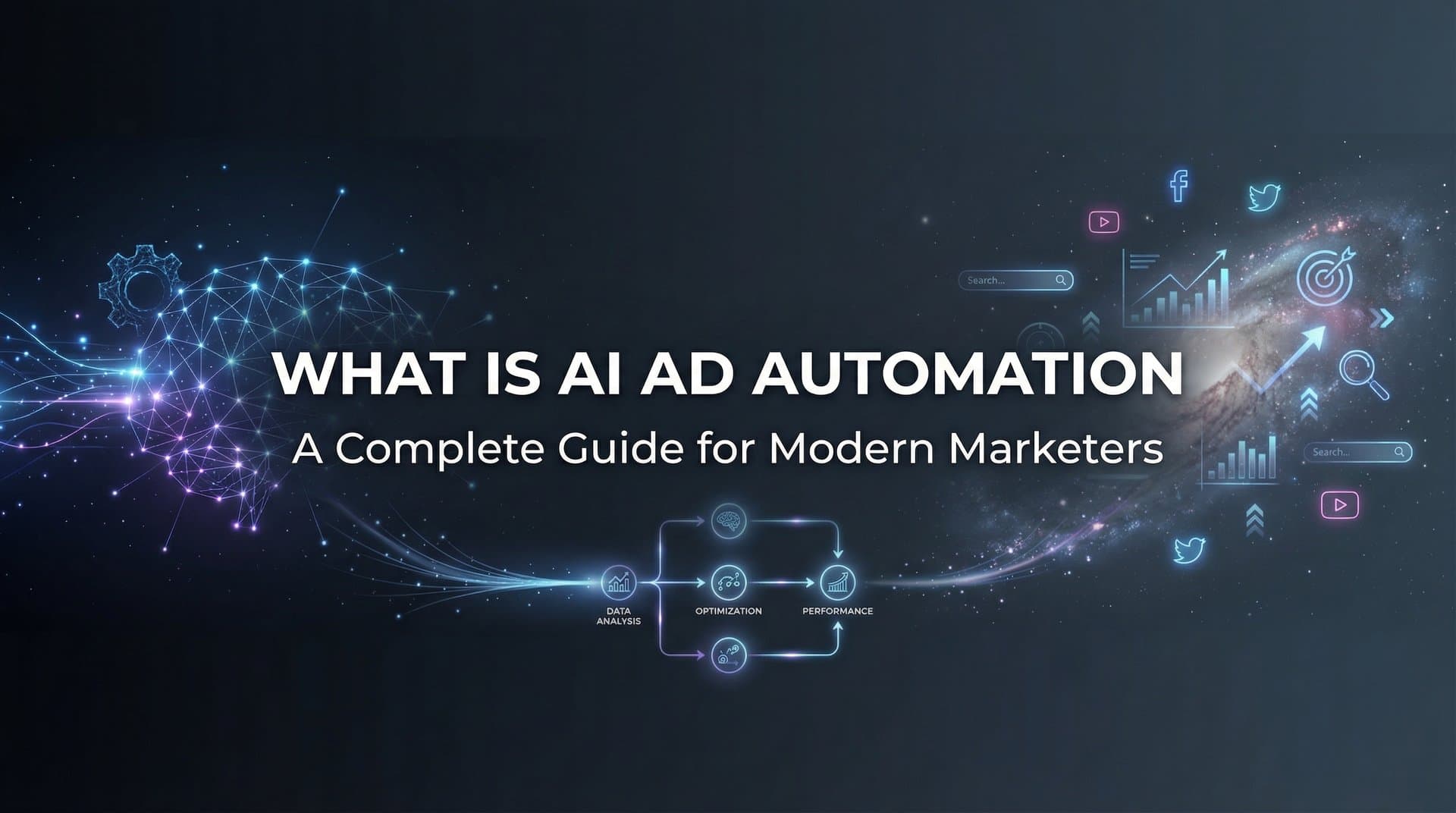
Here's how the automation loop works in practice. First, the system collects data from every ad, audience segment, and campaign you run. It's tracking metrics like click-through rates, conversion rates, cost per acquisition, and return on ad spend across thousands of data points.
Next comes pattern recognition. The AI analyzes this flood of information to spot trends that aren't obvious to human observation. Maybe your video ads consistently outperform static images with audiences aged 35-44, or certain headline formats drive higher conversion rates on mobile devices. The system identifies these patterns automatically.
Then it makes decisions. Based on what it's learned, the AI determines where to allocate budget, which creative variations to test next, or which audiences deserve more investment. These decisions happen in real time, not after you've had a chance to review a weekly report.
The system executes those decisions by actually making changes to your campaigns. It might shift budget from an underperforming ad set to one that's crushing your target CPA, or generate new creative variations based on elements from your top performers.
Finally, and this is what separates AI from traditional automation, the system learns from the results of its actions. Every decision becomes new data that informs future optimization. The AI gets smarter with each campaign you run, which is why understanding campaign learning in Facebook ads automation is essential for maximizing results.
The critical difference between AI automation and rule-based systems comes down to adaptability. Traditional automation follows if-then logic you set up manually: if CPA exceeds $50, pause the campaign. AI automation doesn't need those predetermined rules. It learns what "good performance" means for your business by analyzing actual results, then optimizes toward those outcomes without requiring you to update rules as market conditions change.
This continuous learning loop means the technology improves over time. Your first AI-powered campaign builds the baseline. Your tenth campaign benefits from everything the system learned from the previous nine. That's fundamentally different from manual optimization, where each campaign starts from scratch unless you remember to apply lessons from past performance.
Five Ways AI Transforms Your Advertising Workflow
AI ad automation isn't a single feature. It's a collection of capabilities that work together to handle different aspects of your advertising workflow. Understanding these five pillars helps clarify what the technology actually does versus what's marketing hype.
Creative Generation: AI can produce scroll-stopping image ads, video content, and UGC-style creatives without requiring designers or video editors. Feed it a product URL, and the system generates multiple creative variations optimized for different audience segments. Some platforms let you clone competitor ads directly from the Meta Ad Library, using AI to recreate successful creative approaches while maintaining your brand voice. The chat-based editing means you can refine any generated creative with simple instructions like "make the text larger" or "change the background to blue."
Audience Optimization: Instead of manually building audience segments based on assumptions, AI analyzes your historical campaign data to identify which audiences actually convert. The system ranks every audience segment you've tested by performance metrics that matter to your business, whether that's ROAS, CPA, or conversion rate. When building new campaigns, it recommends high-performing audiences and can automatically create lookalike segments based on your best converters.
Budget Allocation and Bidding: This is where AI automation shows its speed advantage. The system monitors performance across all your campaigns simultaneously, making real-time decisions about where to invest more budget and where to pull back. If one ad set is converting at half your target CPA while another is struggling, the AI shifts budget automatically. It handles bid adjustments based on auction dynamics and performance signals, optimizing for your specific goals rather than following generic best practices. For a deeper dive into these capabilities, explore Meta campaign automation benefits.
Performance Analysis: AI-powered insights go beyond basic reporting. The system creates leaderboards that rank every creative, headline, audience, and landing page by actual performance data. You set your target goals—maybe a $30 CPA or 4x ROAS—and the AI scores everything against those benchmarks. Instead of digging through reports to find winners, the platform surfaces them automatically with explanations of why certain elements outperform others.
Campaign Building: AI agents can construct complete Meta Ad campaigns by analyzing your past performance and selecting proven combinations of creative, copy, and audiences. The system explains its recommendations with full transparency, so you understand the strategy behind each decision. As you run more campaigns, the AI builds a knowledge base of what works for your specific business, making future campaign builds faster and more effective.
These five pillars work together in a continuous cycle. Creative generation produces the raw materials. Audience optimization determines who sees them. Budget allocation ensures top performers get more investment. Performance analysis identifies what's working. And campaign building applies those insights to your next launch, starting the cycle again with smarter inputs.
Where Humans Spend Time vs. Where AI Takes Over
The clearest way to understand AI ad automation is seeing what changes in your actual workflow. Let's compare how the same advertising tasks play out with manual processes versus AI-powered systems.
Creative Production: Manual approach means briefing designers, waiting for concepts, reviewing drafts, requesting revisions, and repeating the process for every variation you want to test. A single campaign might require weeks of back-and-forth to produce ten creative variations. AI automation generates those ten variations in minutes from a product URL or competitor ad reference, with instant refinements through chat-based editing.
A/B Testing Setup: Traditional testing requires manually duplicating ad sets, changing one variable at a time, ensuring proper budget distribution, and tracking which variation is which. Testing five headlines across three audiences means creating fifteen ad sets by hand. AI automation creates those combinations automatically through bulk launching, generating hundreds of variations and managing the testing structure without manual setup. This is one reason why many marketers are evaluating Facebook automation vs manual campaigns for their workflows.
Performance Monitoring: Manual monitoring means checking dashboards multiple times per day, comparing metrics across campaigns, identifying trends, and deciding when to make changes. By the time you spot an underperforming ad and pause it, you've already spent budget you can't recover. AI automation monitors everything continuously, making optimization decisions in real time based on performance signals, not delayed human analysis.
Scaling Successful Campaigns: When you find a winner manually, you need to identify what made it successful, recreate those elements in new campaigns, and hope the success translates. AI automation analyzes winning elements automatically, ranks them by performance, and applies those insights to future campaigns while continuing to test new variations.
The scale difference becomes obvious when you consider testing capacity. A human marketer might realistically test twenty ad variations per campaign, carefully monitoring each one. AI automation can generate and test hundreds of variations simultaneously, identifying winners faster and with more statistical confidence.
Decision quality shifts from gut instinct supported by delayed data to continuous optimization based on real-time performance. You're no longer making budget allocation decisions based on yesterday's results. The system adjusts as performance changes throughout the day.
AI Automation Across Your Campaign Lifecycle
Understanding when and how AI automation applies throughout your advertising workflow helps clarify the practical value. Let's walk through a campaign from planning to optimization.
Pre-Launch Planning: You start with a product or offer you want to promote. Instead of spending hours designing creatives, you feed the product URL into an AI creative generator. The system produces multiple image ads, video variations, and UGC-style content automatically. You can clone high-performing competitor ads from the Meta Ad Library, letting AI recreate successful creative approaches with your branding. The AI campaign builder analyzes your historical performance data, ranking every creative, headline, and audience you've tested previously. It recommends combinations based on what's actually worked, explaining the rationale behind each suggestion. For detailed guidance on this phase, check out our Facebook campaign planning automation resource.
Campaign Launch: Traditional launching means manually setting up ad sets, uploading creatives one by one, writing copy variations, and configuring targeting for each combination. Bulk ad launching changes this completely. You select multiple creatives, headlines, audiences, and copy variations. The AI generates every possible combination and launches them to Meta in clicks. What would take hours of manual setup happens in minutes. Learn more about streamlining this process with Facebook campaign launch automation.
Active Optimization: Once campaigns are running, AI automation monitors performance across every ad, ad set, and campaign simultaneously. The system makes real-time bid adjustments based on auction dynamics and your performance goals. Budget automatically shifts toward top performers and away from underperformers. If one creative is converting at twice the rate of others, the AI allocates more budget there without waiting for you to notice and make manual changes.
Performance Analysis: Instead of exporting data to spreadsheets and building comparison reports, AI-powered leaderboards rank everything by metrics that matter to your business. Set your target CPA at $30, and the system scores every creative, audience, and headline against that benchmark. You instantly see which elements are crushing your goals and which are dragging down performance. The insights include explanations of why certain combinations work better, not just raw numbers.
Continuous Improvement: Winners from completed campaigns automatically feed into your next launch. The Winners Hub stores your best-performing creatives, headlines, audiences, and landing pages with real performance data attached. When building your next campaign, you can instantly add proven winners while the AI generates new variations to test. Each campaign makes the system smarter, building a knowledge base specific to your business.
This workflow represents a shift from reactive to proactive advertising. You're not constantly checking dashboards and manually adjusting campaigns based on delayed data. The AI handles real-time optimization while you focus on strategy, creative direction, and scaling what works.
Making the Transition to Intelligent Automation
If you're considering AI ad automation, understanding what you need to get started helps set realistic expectations and choose the right approach for your situation.
Data Requirements: AI systems learn from performance data, so having campaign history gives the technology more to work with. That doesn't mean you need years of data to start. Even a few months of campaign performance provides enough signal for the AI to identify patterns and make initial recommendations. The system gets smarter as you run more campaigns, so early launches build the foundation for increasingly sophisticated optimization.
Platform Decisions: You'll encounter two main approaches to AI ad automation. Point solutions focus on specific tasks like creative generation or bid optimization. Full-stack platforms handle everything from creative production through campaign management and performance analysis in one workflow. The advantage of integrated platforms is that insights from one part of the process inform decisions in other areas. Your creative performance data influences audience recommendations. Budget allocation learns from which creative-audience combinations actually convert. When evaluating options, our comparison of Facebook campaign automation platforms can help guide your decision.
Setting Expectations: AI automation delivers immediate value through time savings on creative production and campaign setup. Performance improvements compound over time as the system learns what works for your specific business. Your first AI-powered campaign might perform similarly to manual efforts, but with dramatically less time investment. By your fifth campaign, the AI has learned enough to make noticeably smarter recommendations and optimization decisions.
The learning curve is gentler than you might expect. Modern AI platforms use conversational interfaces where you can refine creatives or adjust campaign parameters with simple instructions. You don't need technical expertise or data science knowledge to leverage the technology effectively.
Start with one campaign type or product category rather than trying to automate everything at once. Let the AI learn what works for that specific use case, then expand to other areas of your advertising as you see results and build confidence in the system's recommendations. Many teams find success by starting with a Facebook ad campaign automation free trial to test the waters.
Your Path Forward in AI-Powered Advertising
AI ad automation represents more than incremental improvement in how advertising gets done. It's a fundamental shift from manual, time-intensive processes to intelligent systems that learn and optimize continuously. The technology handles repetitive tasks that consume your day while making faster, data-driven decisions than human analysis allows.
The marketers gaining advantage right now aren't waiting for AI to mature further. They're adopting platforms that bring creative generation, campaign building, and performance optimization together in one workflow. They're testing hundreds of variations where competitors test dozens. They're optimizing in real time while others react to yesterday's data.
This isn't future technology. It's accessible now, and the gap between early adopters and late movers grows with each campaign cycle. Every campaign you run with AI automation makes the system smarter. Every insight feeds into better recommendations. Every winner becomes part of your competitive advantage.
Ready to transform your advertising strategy? Start Free Trial With AdStellar and be among the first to launch and scale your ad campaigns 10× faster with our intelligent platform that automatically builds and tests winning ads based on real performance data.