You’re probably in one of two spots right now. Either Black Friday feels far enough away that the team keeps pushing the hard decisions to next week, or it’s close enough that every open tab looks like a fire drill. The offer isn’t finalized, creative is half-approved, and someone is still asking whether you can “just test a few things live” once the weekend starts.
That approach usually gets punished.
facebook ads black friday campaigns don’t fail because marketers forgot to turn ads on. They fail because teams bring normal-quarter habits into the most expensive, least forgiving auction environment of the year. BFCM is short, crowded, and brutally efficient at exposing weak offers, shaky tracking, thin creative libraries, and messy account structure. If your account needs to learn during the sale, you’re already paying tuition at the worst possible moment.
The brands that come out of Black Friday with margin intact usually do three things well. They prepare earlier than feels comfortable, they simplify aggressively, and they treat the days after Cyber Monday as part of the campaign, not the end of it.
Why Black Friday on Facebook is a Different Beast
Black Friday on Meta isn’t just “more traffic.” It’s a compressed battle for attention, inventory, and conversion intent. Every competitor who looked half-asleep in September suddenly finds religion in November. Budgets expand, approvals speed up, founders want answers hourly, and mediocre ads get exposed fast because the auction gets unforgiving.
The platform still matters more than many realize. In Black Friday 2024, Meta captured 68.77% of total ad spend across nearly 30,000 brands, and CPMs rose +17.79% to $20.33, according to Triple Whale’s Black Friday statistics. That’s the clearest possible signal that Facebook and Instagram aren’t optional side channels during BFCM. They’re where a huge share of the fight happens.
Your year-round playbook usually breaks here
What works in a calmer month often breaks under holiday pressure:
- Weak creative rotation: If you only have a handful of usable ads, frequency problems show up faster.
- Late testing: Learning on Black Friday means paying premium prices to discover what you could’ve known earlier.
- Overbuilt structures: Too many campaigns and ad sets fragment signal when you need concentration.
- Soft offers: If your promotion looks interchangeable, the auction won’t save you.
A standard campaign can survive some inefficiency in quieter periods. A BFCM campaign can’t. Every flaw gets more expensive.
Practical rule: If your account needs more data to decide what message, angle, or audience works, solve that before holiday week. Don’t rent clarity at Black Friday prices.
Meta is where mistakes get expensive fast
Marketers often ask whether they should diversify heavily during BFCM. In practice, many marketers still need to get Meta right first. It combines scale, purchase intent, and retargeting power in a way that makes it central to the holiday plan. If you want a useful outside perspective on tactical setup, Your Guide to Facebook Black Friday Ads gives a solid companion read.
You also need to go into the period with realistic expectations about pricing. If your finance team or founder is still using old assumptions for what traffic “should” cost, send them a baseline explainer like this breakdown of Facebook ad costs and what drives them. It helps reset the conversation before launch week turns into blame week.
The hidden pressure is time, not just cost
The hardest part of BFCM isn’t only expensive CPMs. It’s the lack of recovery time. Outside holiday periods, you can sometimes absorb a slow day, refresh creatives, and let the account settle. On Black Friday weekend, a bad morning can wreck a whole revenue target. There isn’t much room for drift.
That’s why experienced teams treat BFCM less like a campaign and more like a prepared operation. Offers are approved early. Tracking is verified. creative winners are known in advance. The account enters the weekend with decisions already made.
If you’re improvising during the event, you’re usually paying more to learn less.
Your Six-Week Pre-BFCM Launch and Testing Timeline
The cleanest Black Friday accounts I’ve seen all share one trait. They did the messy work before the market got expensive. Shopify’s BFCM guidance points to a six-week runway built around early creative tests, 30-, 60-, and 90-day retargeting audiences, and verified Pixel event tracking before auction pressure peaks, as outlined in Shopify’s Facebook Black Friday ad playbook.
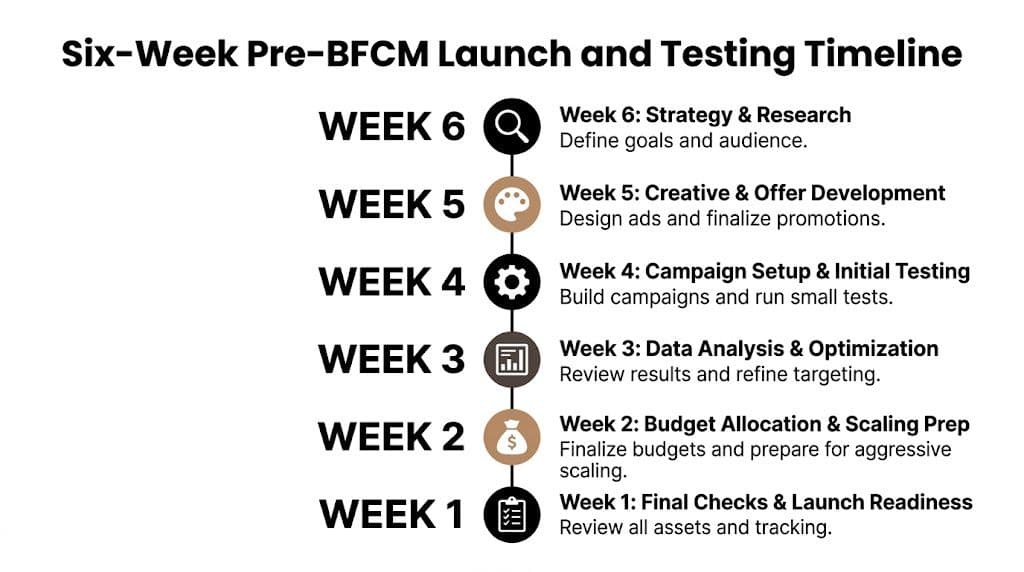
If you need a preflight document your team can work from, this Facebook campaign launch checklist is a useful operational reference. Use it to catch the boring issues that become expensive issues later.
Week 6 and Week 5
Start with the infrastructure and the commercial logic. Before anyone argues about hooks or thumbnails, confirm the account can measure what matters and the business knows what it’s trying to sell.
Week 6 should lock these down:
Pixel and event tracking
Confirm purchase-path events are firing correctly. At minimum, the account needs clean signals for the major funnel actions your team will optimize against.
Offer design
Pick the offer now, not after creative production starts. Sitewide discount, category push, bundle strategy, early access, giftable hero product. Any delay here creates downstream chaos.
Landing page readiness
Check mobile experience, product page speed, promo visibility, inventory messaging, and checkout friction. Great ads won’t rescue a weak destination.
Week 5 is for audience groundwork and angle mapping:
- Build retargeting pools: Set up your warm audiences with enough range to be useful when spend ramps.
- Segment by buyer quality: Returning customers, recent purchasers, cart visitors, product viewers, and high-intent engagers should not all see the same message.
- Map angles before making assets: Discount-first, gifting, urgency, problem-solution, bundle value, and customer proof all need their own lane.
A lot of teams reverse this. They make ads first, then scramble to figure out where each one belongs. That creates a random creative library instead of a system.
Week 4 and Week 3
The serious work begins. You’re not trying to “go viral.” You’re trying to identify messages that deserve budget.
What to test early
A useful testing slate usually includes:
- Different opening hooks: Offer-led, pain-led, gift-led, and proof-led.
- Different formats: Static, carousel, UGC-style video, founder-style video, product demo.
- Different proof types: Reviews, before-and-after framing, bestseller positioning, use case clarity.
- Different buyer motivations: Save money, solve a problem, reduce decision effort, buy before stock runs low.
By this point, the account should be collecting enough directional signal to tell you what not to scale. That’s just as important as finding a winner.
Kill weak angles early. BFCM isn’t the time to keep “giving it a little more time” to ads that already look hesitant.
Week 4 priorities
- Build the first test campaigns
- Keep budget controlled
- Compare angles, not tiny copy tweaks
- Watch whether winners are consistent across placements
Week 3 priorities
- Review click quality, downstream behavior, and conversion fit
- Cut the losers decisively
- Produce second-generation variants from the strongest concepts
- Pressure-test whether the best creative still works with fresh copy and formats
Week 2 and Week 1
By two weeks out, the account should move from exploration to deployment planning. The worst move here is continuing broad experimentation because the team is nervous about commitment.
What should already be true by Week 2
| Area | What good looks like |
|---|---|
| Offer | Finalized and approved |
| Tracking | Key events verified and stable |
| Creative | Clear winners and backups identified |
| Audiences | Warm pools built and prospecting paths decided |
| Landing pages | Promo experience checked across devices |
Week 2 is where you build draft campaigns, assign budget logic, line up naming conventions, and prepare backup creative. If the team still doesn’t know which angle leads the sale, that’s the problem to solve immediately.
Week 1 is for restraint. Stop changing foundational decisions unless something is clearly broken. Review URLs, UTMs, promo timing, ad copy, audience exclusions, and inventory alignment. Make sure stakeholders understand the escalation path during launch days. Too many people touching the account creates expensive noise.
The real objective of the six-week runway
The point isn’t to make your campaign feel organized. The point is to arrive at Black Friday with known winners. That means:
- proven messaging
- clean technical setup
- enough creative depth to rotate when fatigue appears
- audiences already populated
- fewer surprise decisions under pressure
Teams that ignore this usually end up testing in the most expensive window of the year. Teams that respect it spend the event reallocating budget to assets that already earned the right to scale.
Designing Your Bulletproof BFCM Campaign Structure
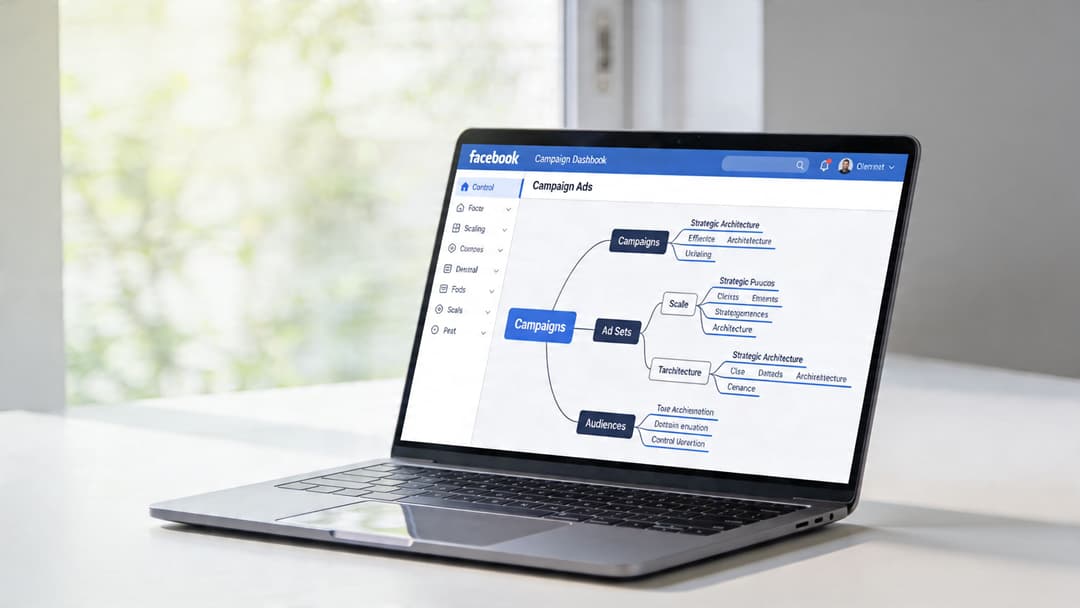
When Black Friday traffic hits, campaign structure needs to do one job well. It needs to keep signal clean enough that you can make fast budget decisions without fighting your own account design. If the structure is too fragmented, performance gets hard to read. If it’s too rigid, you can’t redirect spend quickly when one angle takes off.
A good BFCM setup is usually simpler than people expect. If you want a framework for simplifying account design, this Facebook campaign structure guide is worth reviewing before you build.
The three-campaign model that holds up under pressure
For most ecommerce teams, a practical holiday structure has three layers.
1. Advantage+ shopping for broad discovery
Meta gains the ability to find buyers across a wider pool. It works best when the account already has strong creative and enough conversion history to guide distribution. During BFCM, broad reach matters because purchase demand expands beyond your neat audience assumptions.
Use this campaign to house your strongest, most generally compelling assets. Not every ad belongs here. The creative needs to communicate quickly and sell without much explanation.
2. Manual prospecting for controlled testing
Keep a separate prospecting campaign where you can test creative themes, audience concepts, or specific prospecting logic with more control. This is useful when you want visibility into how certain messages behave outside the automation-heavy setup.
A manual campaign also protects you from putting every cold audience decision in one basket. If broad delivery starts favoring one message too heavily, you still have a controlled environment for testing alternatives.
3. Dedicated retargeting for intent capture
Retargeting should be its own lane. Product viewers, cart abandoners, engaged visitors, and previous buyers all sit closer to purchase than net-new users. They need different urgency, different proof, and often cleaner friction-reduction messaging.
This campaign should focus on removing hesitation:
- shipping concerns
- timing concerns
- product fit doubts
- price justification
- giftability or bundle value
How many ad sets is too many
Teams often lose their way. On Black Friday, extra granularity often feels smart because it gives the illusion of control. In reality, over-segmentation creates slower learning and muddier readouts.
A cleaner approach:
| Campaign type | Better approach | Risky approach |
|---|---|---|
| Broad prospecting | Fewer ad sets with stronger budget concentration | Splitting too many cold audiences apart |
| Retargeting | Group by intent level or recency | Tiny audience slices with overlapping users |
| Creative testing | Distinct angle-based groups | Dozens of minor copy variants in separate buckets |
If two ad sets are effectively chasing the same user with small differences, merge them. During BFCM, duplication costs money.
The account doesn’t need more moving parts. It needs clearer signal.
CBO versus manual control
Campaign Budget Optimization is useful when you’ve already narrowed the field and want Meta to push harder into what’s working. It’s less useful when you’re still trying to learn which concept deserves investment. That’s why many teams use tighter control during pre-BFCM testing, then consolidate once winners are obvious.
The practical trade-off looks like this:
- Use more control when you’re validating creative angles or protecting budget for specific audience ideas.
- Use more automation when the account has enough confidence and you want efficiency under speed.
The mistake is switching too late. If you wait until Black Friday to consolidate weakly tested structures, you’re forcing the account to reorganize in the middle of the sale.
Bidding logic during the peak period
Holiday auctions punish overly precious bidding strategies. In most cases, simpler bidding logic holds up better because it gives the system room to find available conversions. The more you overconstrain a campaign without enough volume or confidence, the more likely you are to throttle delivery at the wrong time.
What matters most isn’t cleverness. It’s alignment:
- broad campaigns need broad-worthy creative
- retargeting needs urgency without desperation
- testing lanes need enough isolation to produce useful reads
- winners need a structure that can absorb more spend without collapsing
A bulletproof setup doesn’t guarantee efficiency. It gives you the best chance of making the right decision quickly when the market gets noisy.
Creative and Copy Formulas That Convert During BFCM
The easiest way to waste Black Friday budget is to confuse loud with persuasive. A lot of holiday ads scream sale, stack too much text on the image, and assume urgency alone will carry the conversion. It usually doesn’t. Buyers are comparing tabs, skimming fast, and filtering out anything that looks generic.
During the 2023 Cyber Five, Reels ads more than doubled their share of impressions on Instagram to 11.9% and on Facebook to 5.7%, according to Tinuiti’s Cyber Five ad trend analysis. That matters because it confirms what many media buyers already felt in account performance. Short-form video is no longer a nice extra for holiday campaigns. It’s part of the core creative mix.

If your team needs help tightening messaging before production, this resource on winning copywriting for Facebook Ads is a useful refresher. For a more conversion-focused framework, this guide to mastering Facebook ad copy for higher conversions is also worth bookmarking.
Formula one, problem then deal
Some of the best BFCM ads still start with the buyer’s problem, not the promotion. The deal becomes the reason to act now, not the entire message.
Structure
- name the frustration
- sharpen it slightly
- present the product as the fix
- attach the offer as the trigger
Example approach: You’re not just saying “Black Friday sale now live.” You’re saying the product solves an annoying issue, and now there’s a timely reason to stop delaying the purchase.
This works well for skincare, supplements, home products, and software offers where the pain point is obvious.
Formula two, social proof with buying confidence
Holiday buyers are often less patient than usual. They want quick reassurance that the product is credible and that other people already trust it.
A strong proof-led ad usually includes:
- an immediate visual of the product in use
- a clear review angle or customer outcome
- one purchase-reducing friction killer, such as gifting simplicity or bestseller positioning
- a direct holiday action line
Buyers don’t need more adjectives. They need a reason to feel safe deciding fast.
This format is especially useful when the brand has strong user-generated content, recognizable creator faces, or obvious repeat-purchase behavior.
Formula three, gift guide framing
Gift guide ads can cut through because they reduce decision fatigue. Instead of asking a user to evaluate a product from scratch, they package it into a simpler holiday context.
Try carousel or short video concepts built around:
- gifts for someone hard to shop for
- gifts under a clear category theme
- gifts for specific use cases
- last-minute solutions with a clean value message
This structure often outperforms more aggressive direct-sale language when the buyer isn’t shopping for themselves.
A strong video approach looks like this:
What short-form video needs to do fast
Reels-style creative has less room for warm-up. The opening has to earn the next few seconds quickly.
The first seconds matter most
Your short-form holiday video should do one of these immediately:
- Show the transformation: Before and after, messy and clean, slow and fast, cluttered and fixed.
- State the use case: Who it’s for and why it matters.
- Lead with the offer in context: Not just a discount, but a reason the deal matters now.
- Show the product in motion: Static beauty shots alone usually struggle in fast feeds.
What hurts performance most is indecision. A video that takes too long to reveal the product, the buyer, or the point will get skipped.
Copy that usually loses during BFCM
Some patterns consistently underperform, even when the design looks polished.
| Copy habit | Why it struggles |
|---|---|
| All-caps sale shouting | Looks interchangeable with every other holiday ad |
| Feature dumping | Slows understanding in a fast scroll environment |
| Vague urgency | “Limited time” without context loses credibility |
| Long setup before the offer | Makes the user work too hard before caring |
The strongest holiday ads feel obvious. Not simplistic, but obvious. The buyer knows what the product is, why it matters, why now, and what to do next.
That’s the standard.
Audience Targeting and Aggressive Scaling Tactics
Most BFCM accounts don’t lose because they lacked reach. They lose because they scaled the wrong audience with the wrong message, or they expanded too fast without checking whether the quality held up. Good scaling starts with audience priority, not budget bravado.
For non-ecommerce brands, the rules shift even more. The Business Toolkit notes that B2B SaaS Black Friday strategy should move toward lead generation with VIP early-access lists, and that broad targeting can outperform lookalikes for these verticals when paired with creative testing that avoids tired “SALE” messaging, as discussed in this Black Friday Facebook ads guide for sales campaigns. That’s a useful reminder that not every holiday campaign needs to imitate DTC tactics.
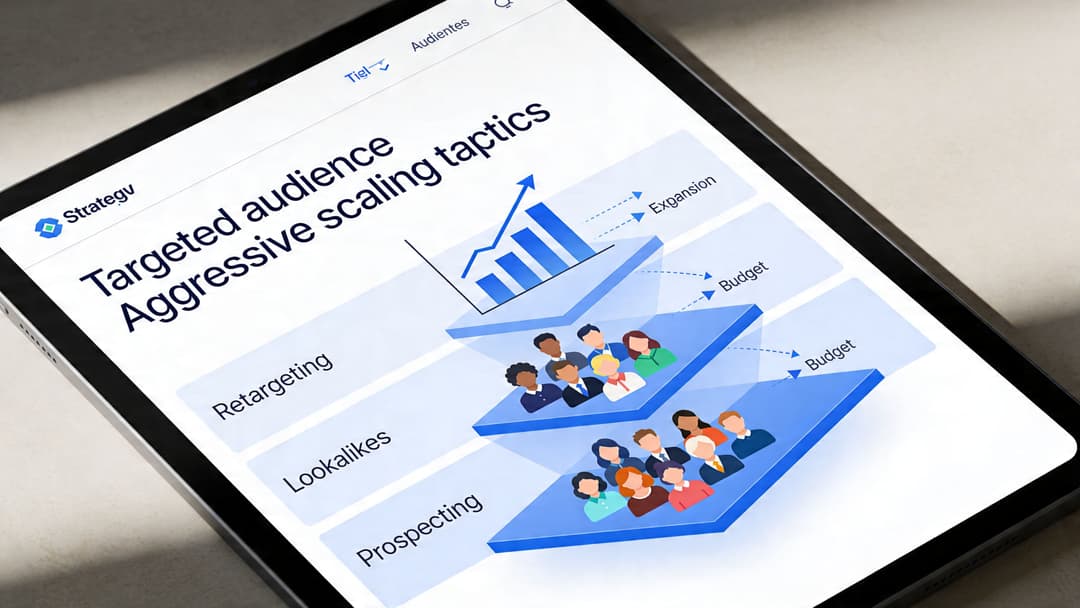
If your team is still over-relying on narrow audience cloning, review this practical guide to Facebook lookalike audiences before holiday setup hardens.
Start with the audiences most likely to close
The fastest money during Black Friday usually sits in warm pools. Not because warm audiences are novel, but because timing matters more during holiday periods and these users need less persuasion.
Warm audience priority order
A practical order looks like this:
Recent high-intent visitors
Product viewers, cart abandoners, checkout starters. These users need friction reduction and urgency.
Past purchasers
This group often responds well to bundles, giftable add-ons, restocks, or loyalty framing.
Engaged traffic
Users who interacted with ads, video, social content, or email-linked pages may need stronger proof before they convert.
Don’t run the same creative across all three. Someone who abandoned a cart needs a different nudge than someone who merely watched a video.
When to expand beyond warm traffic
Warm pools cap out quickly during BFCM. Once the account starts spending through them, you need reliable cold acquisition paths ready. Many teams then panic and launch too many lookalikes, too many interest stacks, or too many “just in case” ad sets.
A better progression is:
| Stage | Audience approach | What the creative should do |
|---|---|---|
| First expansion | Broad or lightly guided prospecting | Introduce the offer with speed and clarity |
| Second expansion | Audience variants with proven messaging | Keep the hook stable and test format shifts |
| Third expansion | Wider broad delivery if quality holds | Let the account pursue scale without over-segmentation |
What matters is continuity. If broad works, let it work. Don’t interrupt momentum because the structure feels too simple.
Broad targeting isn’t lazy when the creative is sharp and the offer is strong. During BFCM, simplicity often outperforms audience micromanagement.
Scaling without breaking the account
Aggressive scaling sounds exciting until it wipes out efficiency. The safest scaling is still deliberate. Increase spend where the account has already shown repeatable intent, not where one ad had a lucky run.
Useful scaling checks:
- Is the winning ad performing across enough spend to trust it?
- Is conversion quality holding after budget increases?
- Is retargeting still healthy, or has frequency started doing damage?
- Are you scaling the concept, or just one isolated execution?
A lot of marketers make the mistake of scaling only the exact ad that won. Better move: scale the angle. If “giftable convenience” is working, create more versions of that story in other formats and placements.
The B2B and lead-gen adaptation
Holiday urgency can work outside ecommerce, but the ask needs to fit the buying journey. For SaaS, agencies, and service businesses, don’t force a purchase-style campaign onto a lead-gen reality.
Better B2B offers for this period often include:
- early-access lists for annual plans
- limited enrollment offers
- seasonal onboarding incentives
- bonus implementation support
- event or webinar registration tied to a year-end promotion
The creative tone matters. “SALE ENDS SOON” can feel cheap in B2B if the product normally sells on trust and expertise. In those cases, social proof, business outcome clarity, and founder or customer-led video usually land better than heavy discount theatrics.
What usually fails when teams chase volume
The most common scaling mistakes are predictable:
- Audience overlap everywhere: The same user gets hammered by slightly different campaigns.
- Too many creative swaps at once: You can’t tell what caused the change.
- Panic expansion into weak traffic: Spend rises faster than buyer intent.
- Neglecting message-market fit: The account broadens, but the ad still talks like it’s retargeting.
Scaling on Black Friday isn’t about acting fast for the sake of speed. It’s about deciding fast because you prepared the account to produce signals you can trust.
The Post-BFCM Recovery and Analysis Playbook
Most facebook ads black friday guides effectively end on Cyber Monday. That’s a mistake. Some of the worst account damage happens right after the sale, when teams shut off winners, slash budgets randomly, and act surprised when performance falls apart.
Triple Whale highlights a frequently observed but rarely planned for gap. After BFCM, ad accounts often see performance crash, with ROAS dropping 30% to 50%, while evergreen ads should remain live to keep collecting data and stabilize delivery, as discussed in Triple Whale’s BFCM Facebook ads analysis. That post-holiday dip doesn’t mean the account is broken. It usually means the environment changed fast and the account needs a controlled transition.
What to do on Cyber Tuesday
Don’t nuke the account because peak demand faded.
Instead:
- Keep evergreen campaigns alive: Even if you reduce spend, preserve data flow.
- Pause clearly seasonal ads first: Deep discount urgency usually ages badly the moment the event ends.
- Watch audience fatigue: Warm pools may be exhausted after repeated exposure.
- Separate offer failure from demand normalization: Some decline is expected. Chaos is optional.
The biggest operational mistake is treating post-BFCM as cleanup only. It is a stabilization period.
If you turn everything off, the account has nothing stable to relearn from.
The first two to four weeks after the event
This window needs discipline. The goal isn’t to chase holiday-level efficiency after the holiday. The goal is to rebuild a steady base.
A practical recovery sequence
First, keep a small set of evergreen ads running. These should be the least seasonal, most broadly persuasive assets from your account.
Second, review which BFCM creative themes have life beyond the sale. “Best seller,” “giftable,” “problem-solution,” and customer proof often adapt better than pure discount language.
Third, feed the account fresh top-of-funnel traffic again. Not every visitor needs to buy immediately. The platform needs new behavior patterns after the holiday spike.
Fourth, rebuild your reporting with context. Compare pre-BFCM, event period, and post-BFCM separately. If you lump them together, you’ll misread what happened.
What the postmortem should actually answer
A useful review doesn’t just ask which ad had the highest return. It asks what kind of demand the business created and what should carry forward.
Use questions like these:
| Review area | Better question |
|---|---|
| Offer | Did the promotion bring in quality customers or mostly price-sensitive buyers? |
| Creative | Which angle won repeatedly across formats, not just in one ad? |
| Audience | Which pools saturated fastest, and which expanded cleanly? |
| Site experience | Where did buyers hesitate once they clicked? |
| Operations | What delayed launches, approvals, or budget moves? |
That postmortem should feed next year’s plan, but it should also improve Q1 performance. Holiday data is too expensive to waste.
Don’t let the account snap back blindly
Some brands spend weeks training Meta around holiday urgency, discount responsiveness, and heavy buyer intent, then expect normal campaigns to work unchanged the next day. They won’t. The account needs a bridge back to baseline.
Keep what’s still useful:
- strong proof-led creative
- audience exclusions that prevented overlap
- mobile-first ad formatting
- the clearest landing pages
- campaign names and reporting logic that made decisions easier
Drop what was purely situational:
- artificial urgency
- holiday-specific references
- overused promotional language
- exhausted retargeting pools
The best BFCM operators don’t just finish the event with revenue. They leave with cleaner data, stronger creative lessons, and an account that can keep performing after the noise fades.
Ad accounts move fastest when strategy, creative volume, and execution speed are all aligned. AdStellar AI helps teams launch, test, and scale Meta campaigns faster by turning proven ideas into large batches of creative, copy, and audience combinations without the usual manual setup drag. It’s not a substitute for judgment. It’s a force multiplier for marketers who already know that winning Black Friday on Facebook comes from disciplined testing, sharper decisions, and faster iteration.