Managing Meta ad campaigns shouldn't feel like juggling flaming torches while riding a unicycle. Yet for many digital marketers, that's exactly what it feels like when campaign data lives in six different tabs, performance metrics hide in buried breakdowns, and optimization decisions require cross-referencing three spreadsheets before lunch.
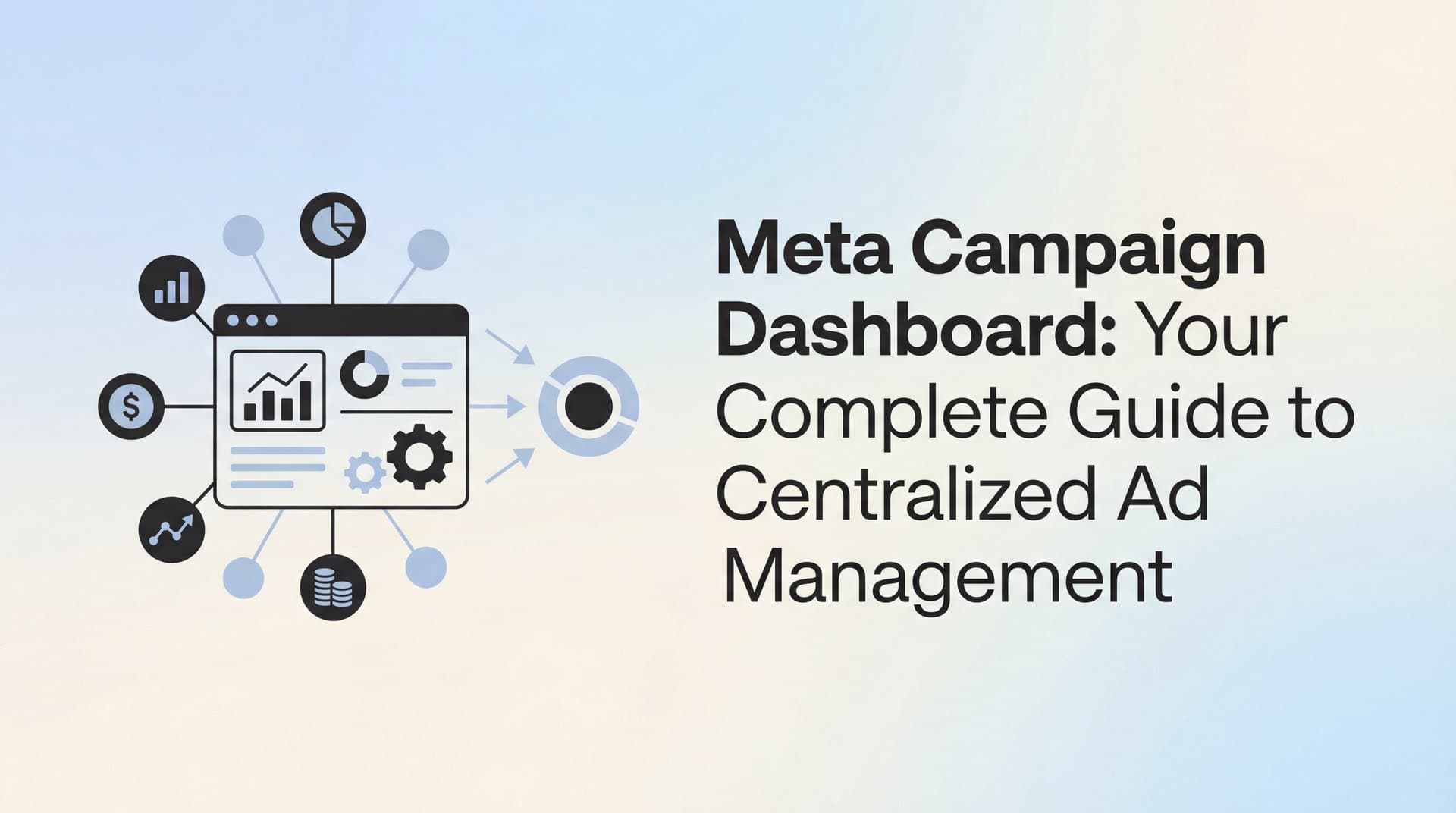
The meta campaign dashboard changes everything. It's the central nervous system of your advertising operation—bringing together real-time performance data, budget tracking, audience insights, and optimization controls into one unified command center. Instead of hunting for answers across fragmented tools, you get instant visibility into what's working, what's draining budget, and where your next winning campaign is hiding.
Whether you're managing three campaigns or three hundred, mastering your dashboard setup transforms reactive firefighting into proactive optimization. Let's break down exactly how to build and leverage a dashboard that actually drives performance.
The Building Blocks of Campaign Control
Think of your campaign dashboard as mission control for your advertising operation. Every effective dashboard starts with three foundational layers that work together to give you complete campaign visibility.
The first layer is your real-time performance metrics. These are the vital signs of your campaigns—the numbers that tell you whether you're winning or bleeding budget. Your dashboard should surface ROAS (Return on Ad Spend), CPA (Cost Per Acquisition), CTR (Click-Through Rate), frequency, and conversion tracking without requiring you to dig through multiple screens. The key word here is "surface"—if you need three clicks to see your ROAS, your dashboard isn't working for you.
The second layer is campaign hierarchy visualization. Meta's advertising structure runs three levels deep: campaigns, ad sets, and individual ads. Your dashboard needs to show you performance at each level simultaneously. Why? Because a campaign might look profitable at the top level while hiding three ad sets that are hemorrhaging money. Or you might have one ad set crushing it while two others drag down the average. Without hierarchical visibility, you're flying blind.
The third layer is budget tracking and pacing. You need to see at a glance how much you've spent, how much remains, and whether you're on track to hit your targets. This includes daily budget burn rates, lifetime budget progress, and alerts when campaigns are spending faster or slower than expected. Understanding meta ads budget allocation issues helps you identify when pacing problems signal deeper structural concerns.
Here's where dashboard architecture gets interesting: native Meta Ads Manager provides all these components, but the layout prioritizes Meta's needs over yours. You get standard columns, predetermined breakdowns, and a structure designed to serve billions of advertisers with different goals. Third-party dashboard solutions flip this equation—they let you configure views around your specific objectives, team workflows, and decision-making patterns.
The most effective dashboards also include quick-access controls. You shouldn't need to navigate away from your performance view to pause an underperforming ad set or increase budget on a winner. The best setups put performance data and optimization controls side by side, reducing the friction between insight and action.
One often-overlooked component is time comparison functionality. Your dashboard should let you instantly compare this week versus last week, this month versus last month, or current performance versus your best historical period. Context transforms raw numbers into actionable intelligence. A 2.5% CTR means nothing in isolation—but if it's down from your usual 3.8%, that's a signal worth investigating.
Cutting Through the Noise
Raw data is overwhelming. Your dashboard shows hundreds of metrics across dozens of campaigns, and somewhere in that ocean of numbers are the insights that matter. The difference between average marketers and exceptional ones often comes down to filtering and segmentation skills.
Start with objective-based filtering. A brand awareness campaign and a direct response conversion campaign require completely different metrics. For awareness campaigns, focus on reach, impressions, frequency, and CPM (Cost Per Thousand Impressions). For conversion campaigns, prioritize ROAS, CPA, conversion rate, and cost per click. Configure separate dashboard views for each objective so you're always looking at relevant metrics.
Custom column configurations are your secret weapon. Meta Ads Manager lets you create custom columns that show exactly the metrics you care about in the order that makes sense for your workflow. Most marketers stick with default columns and waste mental energy scanning irrelevant data. Build custom views that surface your key metrics first, secondary metrics second, and hide everything else.
Segmentation reveals patterns invisible in aggregate data. Break down performance by placement (Feed vs. Stories vs. Reels), device type (mobile vs. desktop), audience demographics, or time of day. You might discover your ads crush it on mobile but flop on desktop, or that your target audience engages completely differently on weekends. These insights only emerge when you slice your data strategically through proper marketing campaign analytics practices.
Automated alerts transform your dashboard from a passive reporting tool into an active monitoring system. Set threshold notifications for metrics that matter: alert me when ROAS drops below 3x, when frequency exceeds 4, when CPA climbs above $50, or when daily spend deviates more than 20% from target. Instead of checking your dashboard obsessively, let your dashboard tell you when something needs attention.
Here's a pro technique: create saved filter combinations for different review scenarios. Build a "morning check" filter that shows overnight performance for active campaigns above $100 daily spend. Create a "weekly review" filter that surfaces campaigns running more than seven days with spend above $500. Develop a "troubleshooting" filter that isolates underperforming campaigns with high spend and low ROAS. These saved views turn dashboard review from a time sink into a focused process.
Leveraging Advanced Dashboard Intelligence
Once you've mastered basic dashboard functionality, advanced features unlock optimization opportunities most advertisers never see. These capabilities separate casual campaign managers from strategic performance marketers.
Cross-campaign comparison views let you stack multiple campaigns side by side with identical metrics and time periods. This reveals your top performers instantly and highlights patterns across successful campaigns. You might notice your three best-performing campaigns all use video creative, target similar age ranges, and run placement optimization. That's not coincidence—that's a winning formula worth replicating.
Attribution window settings dramatically affect how your dashboard reports conversions. Meta offers 1-day click, 7-day click, 1-day view, and 7-day view attribution windows. The window you choose changes which campaigns get credit for conversions. Shorter windows favor bottom-of-funnel campaigns that drive immediate action. Longer windows give credit to awareness campaigns that influence purchases days later. Understanding meta ads attribution ensures you're measuring what actually matters for your business model.
Audience overlap analysis prevents you from competing against yourself. When multiple campaigns target overlapping audiences, you drive up costs and create auction competition within your own account. Advanced dashboards surface these overlaps, letting you consolidate audiences or adjust targeting before you waste budget. This feature alone can reduce CPAs by 20-40% in accounts running multiple campaigns.
Creative fatigue indicators tell you when your ads are wearing out. Frequency metrics show how many times the average person sees your ad, but advanced dashboards go deeper—tracking CTR trends over time, engagement rate decline, and cost increases that signal audience burnout. When your dashboard flags creative fatigue early, you can refresh creative before performance tanks.
Breakdown dimensions unlock granular insights. Instead of seeing campaign-level performance, break down by age, gender, placement, device, or geographic location. You might discover your 25-34 age group converts at 2x the rate of your 35-44 group, or that Instagram Stories outperform Feed placements by 50%. These insights drive budget reallocation and targeting refinement that compound over time.
The most sophisticated dashboards also include competitive intelligence features. While you can't see competitor campaigns directly, you can track your share of voice, auction overlap rates, and relative performance trends that indicate competitive pressure. When your CPAs suddenly spike across all campaigns, competitive intelligence helps you understand whether it's your creative, your targeting, or increased competition driving the change.
When Your Dashboard Starts Thinking
Traditional dashboards show you what happened. AI-enhanced dashboards tell you what to do next. This represents a fundamental shift in how campaign management works—from human analysis of data to AI-powered recommendations that surface optimization opportunities automatically.
AI scoring systems evaluate every campaign, ad set, and creative against your specific goals. Instead of manually calculating which campaigns deliver the best ROAS or lowest CPA, AI analyzes performance across multiple dimensions simultaneously and assigns scores that reflect true quality. A campaign might have decent ROAS but poor audience quality, high creative fatigue, and unsustainable cost trends. AI scoring captures this complexity in a single metric you can act on immediately.
Predictive analytics forecast campaign trajectory before you burn through your budget. By analyzing current performance trends, historical data patterns, and seasonal factors, AI can predict whether a campaign will hit your targets or fall short. This lets you make proactive adjustments—scaling winners earlier and cutting losers faster—rather than waiting for results to become obvious. Mastering meta campaign optimization becomes significantly easier when AI handles the heavy analytical lifting.
The real power emerges from continuous learning systems. Every campaign you run generates data about what works for your specific business, audience, and creative style. AI-enhanced dashboards learn from this history, building increasingly accurate models of what drives performance in your account. Over time, recommendations become more precise, predictions become more accurate, and optimization suggestions reflect patterns unique to your advertising operation.
AdStellar AI's AI Insights dashboard exemplifies this evolution. Rather than presenting raw metrics and leaving analysis to you, it provides custom goal-based scoring that evaluates campaigns against your specific objectives. The platform analyzes historical performance data to identify winning elements—top-performing creatives, headlines, and audiences—then surfaces these insights directly in your dashboard. This transforms insight generation from a manual research project into an automated background process.
AI-enhanced dashboards also automate the insight-to-action loop. When AI identifies an optimization opportunity—a winning audience segment worth expanding, a creative element worth testing, or a budget allocation that could improve ROAS—it can automatically generate recommendations with implementation steps. Some platforms go further, allowing AI to execute approved optimizations automatically based on predefined rules and performance thresholds. This represents the cutting edge of AI driven meta advertising capabilities.
The competitive advantage here is speed and scale. Human marketers can effectively manage 5-10 campaigns with deep analysis. AI-enhanced dashboards can monitor hundreds of campaigns simultaneously, identify optimization opportunities across all of them, and surface the highest-impact actions first. This lets small teams manage advertising operations that previously required entire departments.
Creating Your Dashboard Routine
The best dashboard in the world delivers zero value if you don't use it effectively. Successful campaign management requires establishing review cadences that match your campaign objectives and optimization opportunities.
Daily dashboard checks focus on tactical monitoring. Spend 10-15 minutes each morning reviewing active campaigns for major deviations from expected performance. Look for budget pacing issues, sudden cost spikes, creative fatigue signals, or campaigns that exceeded or fell short of overnight targets. This isn't deep analysis—it's quality control to catch problems before they compound.
For high-spend campaigns or time-sensitive promotions, consider twice-daily checks. Morning reviews catch overnight issues, while afternoon checks ensure campaigns stay on track through peak performance hours. This cadence makes sense for campaigns spending $1,000+ daily or running limited-time offers where every hour matters.
Weekly reviews go deeper. Block 60-90 minutes to analyze performance trends, compare campaigns, evaluate creative performance, and plan optimization tests. This is when you identify winning patterns worth scaling, underperforming elements worth cutting, and new opportunities worth testing. Weekly reviews should generate a concrete action list: three campaigns to scale, two creatives to refresh, one audience segment to test. Implementing systematic meta campaign testing frameworks ensures these reviews translate into measurable improvements.
Monthly strategic reviews zoom out to the big picture. Evaluate overall account performance against business objectives, analyze customer acquisition costs relative to lifetime value, assess creative strategy effectiveness, and plan major campaign initiatives for the coming month. This is also when you review dashboard configuration itself—are you tracking the right metrics? Do your custom views still match your workflow? Should you add new filters or alerts?
Integrate dashboard insights directly into your campaign iteration cycle. When weekly reviews identify winning elements, immediately build those insights into new campaign variations. When you spot creative fatigue, schedule creative refreshes before performance degrades. When audience analysis reveals high-performing segments, expand targeting to similar audiences. The dashboard-to-action loop should be seamless and rapid.
Scaling from single campaigns to agency-level multi-account management requires workflow evolution. Single accounts can use simple daily checks and weekly reviews. Managing 5-10 accounts demands standardized review templates and automated reporting. Agency-level operations with dozens of accounts require tiered review systems—account managers handle daily monitoring while strategists focus on weekly optimization and monthly planning. Developing a streamlined agency workflow for meta advertising becomes essential at this scale.
Document your dashboard insights over time. Create a simple log tracking what optimizations you made, why you made them, and what results they generated. This builds institutional knowledge that improves decision-making quality and trains new team members faster. It also helps you identify your own patterns—which optimization types consistently work versus which sound good but deliver disappointing results.
Maximizing Your Dashboard Investment
Most marketers use about 20% of their dashboard's capabilities. Here's how to extract maximum value from the tool you already have.
Start with a dashboard audit. Open your current setup and honestly assess: Can you answer your five most important campaign questions within 30 seconds? Do you have custom views configured for different objectives? Are your alerts catching issues before they cost you money? If you answered no to any of these, your dashboard needs optimization before your campaigns do.
Build your essential custom columns first. Create a "Conversion Campaigns" view with ROAS, CPA, conversion rate, cost per click, and total conversions. Build an "Awareness Campaigns" view with reach, impressions, CPM, frequency, and engagement rate. Develop a "Testing Campaigns" view that highlights statistical significance indicators and comparative performance metrics. These three views cover 90% of campaign management scenarios.
Configure threshold alerts for your account's specific parameters. Don't use generic alert settings—customize them based on your historical performance and business objectives. If your target CPA is $40, set alerts at $50 (warning) and $60 (critical). If your campaigns typically maintain 2-3x ROAS, alert when performance drops below 2x. Personalized thresholds catch meaningful deviations without generating alert fatigue from normal variance.
Common dashboard mistakes cost marketers thousands in missed opportunities. The biggest: looking at aggregate data without segmentation. Your overall campaign might show 2.5x ROAS, but if you segment by placement, you might discover Feed placements deliver 4x while Stories deliver 1.2x. Without segmentation, you'd never reallocate budget to maximize returns.
Another frequent error is ignoring frequency metrics. Many marketers obsess over ROAS and CPA while frequency creeps from 3 to 6 to 9. By the time they notice creative fatigue, performance has degraded significantly and recovery requires complete creative refresh. Monitor frequency alongside conversion metrics to catch fatigue early. Understanding meta campaign optimization techniques helps you respond effectively when these warning signs appear.
The attribution window mistake trips up even experienced marketers. They optimize campaigns based on 1-day click attribution, then wonder why their awareness campaigns look unprofitable. Different campaign objectives require different attribution windows. Match your measurement approach to your campaign strategy or you'll systematically undervalue top-of-funnel efforts.
For marketers ready to upgrade their campaign management approach, consider platforms that integrate dashboard intelligence with campaign automation. The next evolution combines performance monitoring with automated meta campaigns, letting you move from insight to execution without manual campaign construction. When your dashboard identifies a winning audience-creative combination, AI can automatically build and launch new campaign variations testing that insight at scale.
Your Dashboard as Competitive Advantage
A well-configured meta campaign dashboard transforms reactive ad management into proactive optimization. Instead of discovering problems after they've drained your budget, you catch issues early and capitalize on opportunities while they're still fresh. Instead of relying on gut feel and guesswork, you make data-driven decisions backed by comprehensive performance intelligence.
The competitive advantage compounds over time. Every campaign you run generates insights that improve future campaigns. Every optimization you test builds knowledge about what works for your specific business. Every dashboard review sharpens your ability to spot patterns and opportunities others miss. Marketers who master their dashboards don't just manage campaigns better—they develop strategic advantages that competitors can't easily replicate.
The evolution toward AI-enhanced dashboards accelerates this advantage. When your dashboard not only shows you what happened but recommends what to do next—and can automatically execute those optimizations—you're operating at a fundamentally different level than marketers still manually analyzing spreadsheets and building campaigns from scratch.
Ready to transform your advertising strategy? Start Free Trial With AdStellar AI and be among the first to launch and scale your ad campaigns 10× faster with our intelligent platform that automatically builds and tests winning ads based on real performance data. Our AI Insights dashboard brings together performance monitoring, predictive analytics, and automated campaign building in one unified system—so you spend less time analyzing data and more time scaling what works.