In the world of performance marketing, speed, scale, and data-driven decisions are non-negotiable. Manually building campaigns, testing creative, and optimizing budgets across multiple social platforms is a recipe for burnout and missed opportunities. The right social media advertising tools don't just save time; they unlock new levels of growth by automating repetitive tasks, surfacing critical insights, and enabling high-velocity experimentation.
This guide cuts through the noise to deliver a comprehensive roundup of the essential tools every performance marketer needs to know. We will navigate everything from the foundational native ad managers like Meta and TikTok to sophisticated third-party automation suites and specialized AI platforms. Our focus is on practical application, moving beyond generic feature lists to provide a clear, honest assessment of each tool's strengths and weaknesses.
Inside, you'll find detailed breakdowns, screenshots, and direct links for 12 key platforms. We will cover:
- Best Use Cases: Pinpointing the scenarios where each tool truly excels.
- Key Limitations: Understanding what a platform doesn't do is as important as what it does.
- Pricing Pointers: Getting a realistic sense of investment before you commit.
- Example Stacks: Recommending tool combinations for agencies, e-commerce brands, and B2B teams.
Our goal is to equip you with the knowledge to build a powerful, efficient ad tech stack tailored to your specific goals. Of course, selecting your preferred social media advertising tools is just the first step. Understanding the nuances of effective PPC campaign management is crucial to maximizing your return on investment once your stack is in place. Let's dive into the platforms that will define your success.
1. AdStellar AI
AdStellar AI establishes itself as a premier choice among social media advertising tools, specifically engineered for performance marketing teams managing Meta campaigns. It operates as an AI-first platform designed to automate and accelerate the entire campaign lifecycle, from creative generation to performance-driven scaling. Instead of tedious manual setups in Ads Manager, AdStellar empowers teams to generate, test, and launch hundreds of ad variations across different creatives, copy, and audiences in a fraction of the time.
This platform centralizes the entire workflow, integrating a media library, audience builder, and creative studio directly with Meta's API via a secure OAuth connection. Its core strength lies in turning creative experimentation into a systematic, data-backed process.
Key Features and Use Cases
AdStellar’s standout capabilities are built for speed and intelligent optimization, making it an indispensable asset for high-velocity teams.
- Bulk Ad Generation & Launch: The platform’s primary value is its ability to create hundreds of campaign variations in minutes. For an e-commerce brand launching a new product, this means testing dozens of product images against multiple headlines, body copy, and audience segments simultaneously to quickly identify winning combinations.
- Goal-Aligned AI Insights: AdStellar moves beyond vanity metrics. Its AI ranks every creative, audience, and message against your specific business goals, such as ROAS, CPA, or CPL. This allows performance marketers to confidently reallocate budget to top performers and cut wasteful ad spend.
- Auto-Learning & Scaling: The system continuously ingests performance data, learning what resonates with your audience. Its "AI Launch" feature can then automatically assemble new campaigns using proven winning components, while its auto-scaling models identify and allocate more budget to high-potential ads as new data comes in.
This combination of features makes AdStellar AI a commanding tool, particularly for teams who find that traditional A/B testing methods are too slow to keep up with market demands. For a deeper look into how AI is transforming the landscape, you can explore some of the best AI tools for digital marketing to understand the broader context.
Practical Considerations
Best For: Performance marketers, e-commerce/DTC brands, and agencies who need to scale Meta advertising with speed and data-driven precision.
| Pros | Cons |
|---|---|
| Extreme speed and scale: Automates bulk ad creation to launch hundreds of variants up to 10× faster. | Meta-only focus: Not an all-in-one suite for cross-platform management (e.g., Google, TikTok). |
| Goal-aligned AI insights: Ranks all ad components by key performance metrics (ROAS, CPL, CPA). | Dependent on historical data: Accounts with limited performance history may experience slower model learning. |
| Auto-learning and scaling: Continuously learns from data to assemble and scale winning campaigns. | Limited public information: Pricing and case studies are not publicly listed; requires direct contact with sales. |
| Centralized workflow: Replaces manual setup with a seamless, integrated process via secure OAuth. |
Pricing: AdStellar’s pricing is not publicly listed on its website. Teams interested in the platform will need to contact the sales team or request a demo to receive details on plans and enterprise options. It is also advisable to request case studies or references during the evaluation process.
Learn more at AdStellar.ai.
2. Meta Ads Manager (Facebook + Instagram)
As the native platform for Facebook and Instagram, Meta Ads Manager is the foundational tool for any brand serious about social media advertising. Its primary strength lies in its massive user base and the unparalleled depth of its audience targeting capabilities, making it indispensable for direct-response campaigns.
This platform allows advertisers to manage every aspect of the campaign lifecycle, from initial setup using objectives like sales or leads, to detailed audience segmentation, and finally, performance analysis. While its interface can be complex for newcomers, its power is undeniable. The integration with Meta Pixel and the Conversions API (CAPI) provides robust tracking that fuels its machine learning for conversion optimization, a key differentiator.
Key Details & Features:
| Feature | Description |
|---|---|
| Unified Campaign Mgmt | Create, edit, and manage ads across Facebook, Instagram, Messenger, and Audience Network. |
| Audience Targeting | Granular options based on demographics, interests, behaviors, custom audiences, and lookalikes. |
| Optimization & Delivery | Advanced algorithms optimize for specific campaign objectives (e.g., conversions, clicks, impressions). |
| Budget Control | Set daily or lifetime budgets with advanced scheduling and pacing rules. |
| Reporting & Analytics | Deep, customizable reporting with breakdowns by placement, demographic, device, and more. |
Best For: E-commerce and B2C brands scaling direct-response campaigns, as well as B2B advertisers focused on lead generation through precise audience targeting.
Pricing: Free to use; you only pay for the ad spend you authorize.
Pros:
- Unmatched Reach: Access to billions of active users.
- Granular Targeting: Highly specific audience segmentation capabilities.
- Powerful Optimization: Advanced machine learning for maximizing campaign goals.
Cons:
- Steep Learning Curve: The interface can be overwhelming for beginners.
- Inconsistent Budget Pacing: Daily spend can fluctuate with the weekly averaging model.
- Limited Support: Customer support can be slow or difficult to access, especially for new accounts.
For a deeper dive into maximizing your results, explore these Facebook advertising best practices.
Website: https://www.facebook.com/business/ads
3. TikTok Ads Manager
As the native platform for the world's fastest-growing video app, TikTok Ads Manager is an essential tool for reaching a highly engaged, younger demographic. Its primary strength lies in its seamless integration with the short-form video format, offering advertisers a unique inventory of full-screen, sound-on ad experiences that feel native to the user's "For You" page.
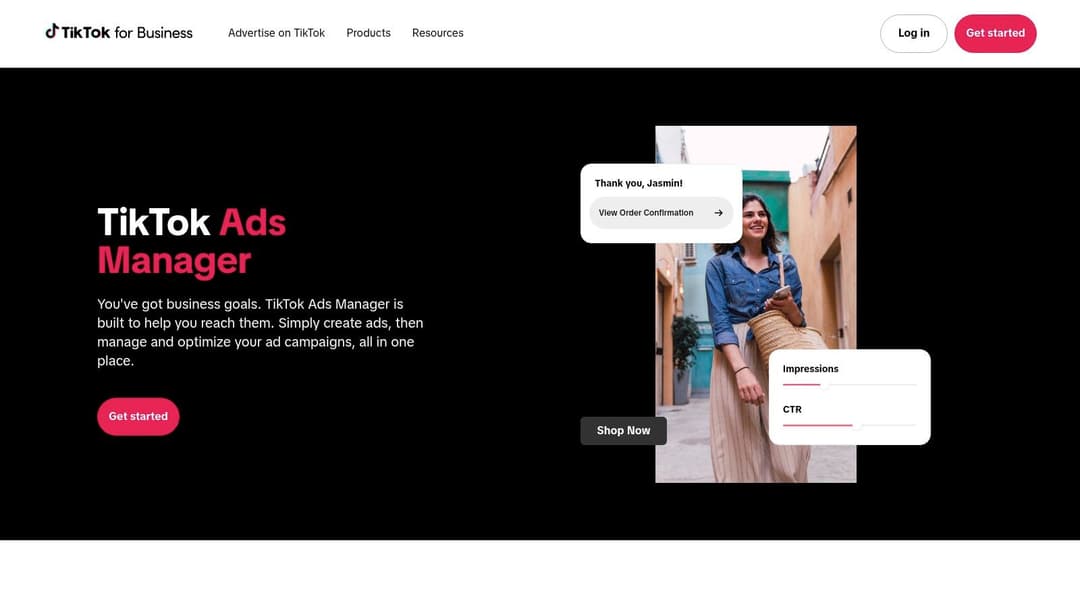
The platform has rapidly evolved, incorporating AI-guided workflows and powerful creative tools directly into its interface to help brands produce effective content. Features like its Business Center provide crucial controls for agencies and larger teams managing multiple accounts, offering centralized billing and user permissions. For performance-focused marketers, TikTok's system is built to drive objectives from brand awareness to direct conversions and app installs.
Key Details & Features:
| Feature | Description |
|---|---|
| Native Ad Formats | Specializes in In-Feed Ads, TopView, Branded Effects, and Spark Ads that leverage organic content. |
| AI-Guided Workflows | Simplified campaign setup and optimization suggestions powered by automation to guide new advertisers. |
| Business Center | A central hub for managing multiple ad accounts, users, billing, and setting account-level spending caps. |
| Creative Tools | In-platform video editor, templates, and access to a commercial music library to create ads easily. |
| Budget Controls | Set daily or lifetime budgets with clear guidance and minimums to ensure stable ad delivery and pacing. |
Best For: E-commerce, CPG, and app-based businesses targeting Gen Z and Millennial audiences with engaging, trend-driven video content.
Pricing: Free to use; you pay for your ad spend, though campaigns often have higher minimum daily budgets ($50+) compared to other platforms.
Pros:
- Highly Engaging Inventory: Access to a unique, full-screen video ad environment.
- Stable Delivery: Clear minimum budget standards help stabilize campaign pacing.
- Account-Level Controls: Business Center allows for effective spend management across teams.
Cons:
- Higher Budget Minimums: Requires a larger starting budget than some competitors.
- Confusing Workflows: Navigating between the Ads Manager and the Business Center can be unintuitive.
- Creative-Dependent: Performance is heavily reliant on producing authentic, platform-native video creative.
Developing a robust advertising plan is key, so make sure to review your overarching paid social media strategy before diving in.
Website: https://ads.tiktok.com/business/en-US/solutions/ads-manager
4. LinkedIn Ads (Campaign Manager)
For B2B advertisers, LinkedIn's Campaign Manager is an indispensable platform. Its primary strength is its direct access to a professional network, offering unparalleled firmographic and role-based targeting that other platforms cannot match. This makes it a cornerstone for campaigns focused on generating high-quality leads, reaching specific decision-makers, and driving account-based marketing (ABM) strategies.
The platform allows advertisers to manage campaigns using objectives like website visits, lead generation, and brand awareness. It excels with native ad formats like Sponsored Content, Conversation Ads, and its highly effective Lead Gen Forms, which pre-fill with a user's profile data to reduce friction. While its cost-per-click can be higher than consumer-focused platforms, the lead quality and business intent often justify the investment for high-consideration products and services.
Key Details & Features:
| Feature | Description |
|---|---|
| Professional Targeting | Target users by job title, industry, company size, seniority, skills, and specific company names. |
| Lead Gen Forms | Native forms that pre-populate with user profile data, simplifying lead capture and boosting conversions. |
| Campaign Groups | Organize multiple campaigns into logical groups and manage shared budgets at the group level. |
| Ad Formats | Includes Sponsored Content (in-feed), Conversation Ads (in-message), and Dynamic Ads for personalization. |
| Website Demographics | Gain insights into the professional traits of your website visitors by installing the LinkedIn Insight Tag. |
Best For: B2B companies, particularly in SaaS, professional services, and high-tech industries, focused on generating high-quality leads and reaching specific professional audiences.
Pricing: Free to use; you only pay for your authorized ad spend, which often has higher minimums than other platforms.
Pros:
- High-Quality B2B Leads: Access an audience with strong professional and purchase intent.
- Precise Targeting: Unmatched ability to target by professional attributes like job title and company.
- Seamless Lead Capture: Lead Gen Forms provide an excellent user experience and high conversion rates.
Cons:
- Higher CPCs: Costs are generally higher compared to consumer-focused social media advertising tools.
- Smaller User Base: Reach is more limited than platforms like Facebook or Instagram.
- Slower Pacing: Campaigns can sometimes take longer to gain momentum and spend their budget.
Website: https://business.linkedin.com/marketing-solutions/ads
5. Pinterest Ads (Ads Manager)
Pinterest Ads operates in a unique space where social media meets search engine, making it a powerful platform for brands whose products align with visual discovery and inspiration. Unlike other platforms driven by social connections, Pinterest is fueled by user intent, as people actively search for ideas, products, and solutions, creating a high-value environment for advertisers.
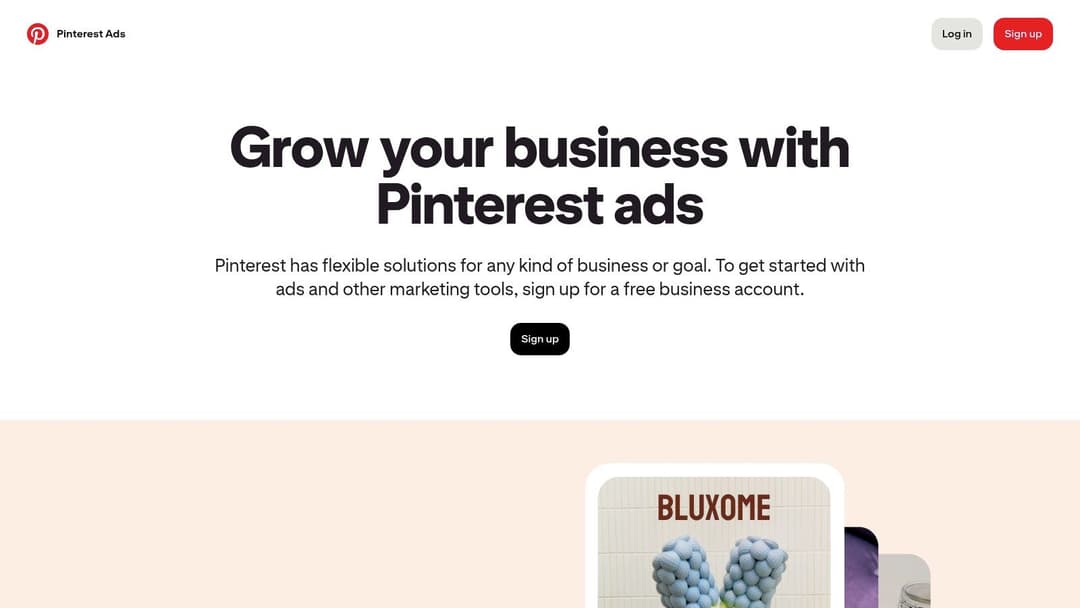
The platform’s Ads Manager is particularly effective for driving top-of-funnel awareness and mid-funnel consideration, guiding users from initial discovery to purchase. Its strength lies in reaching consumers with commercial intent early in their decision-making process. The deep integration with e-commerce platforms and robust Shopping Ad formats, like Catalogs, make it a natural fit for retail and lifestyle brands. As one of the more visually-driven social media advertising tools, creative quality is paramount for success.
Key Details & Features:
| Feature | Description |
|---|---|
| Visual Discovery Ads | Formats include static Pins, Video Pins, Carousels, and Collections to capture user attention. |
| Shopping & Catalogs | Sync product catalogs to create dynamic, shoppable Pins and streamline e-commerce advertising. |
| Audience Targeting | Target based on keywords, interests, demographics, and customer lists (ActAlike audiences). |
| Bidding Options | Control costs with CPC, CPM, and CPV bidding strategies and clear documentation on bid floors. |
| Budget Management | Features include budget caps, billing thresholds, and transparent spend reporting for financial control. |
Best For: E-commerce, CPG, home decor, fashion, and DIY brands that benefit from a visual, high-intent discovery-to-purchase path.
Pricing: Free to use; payment is for authorized ad spend.
Pros:
- High Commercial Intent: Users are actively planning purchases, leading to higher engagement quality.
- Lower Ad Costs: Often provides lower CPC and CPM rates compared to more saturated social platforms.
- Strong E-commerce Integrations: Seamless catalog and shopping features for retail brands.
Cons:
- Niche Audience: The user base is less broad than platforms like Meta, making it less suitable for some verticals.
- Performance Variability: Campaign success is highly dependent on the vertical and requires a learning period.
- Regional Feature Gaps: Ad formats and platform features can vary by country and account status.
Website: https://ads.pinterest.com
6. Snapchat for Business (Ads Manager)
As the go-to platform for reaching Gen Z and younger millennials, Snapchat for Business provides a suite of unique and immersive ad formats. Its primary strength is its mobile-first, vertical video environment, making it a crucial tool for brands aiming to capture the attention of a demographic that is often harder to engage on traditional social media platforms.
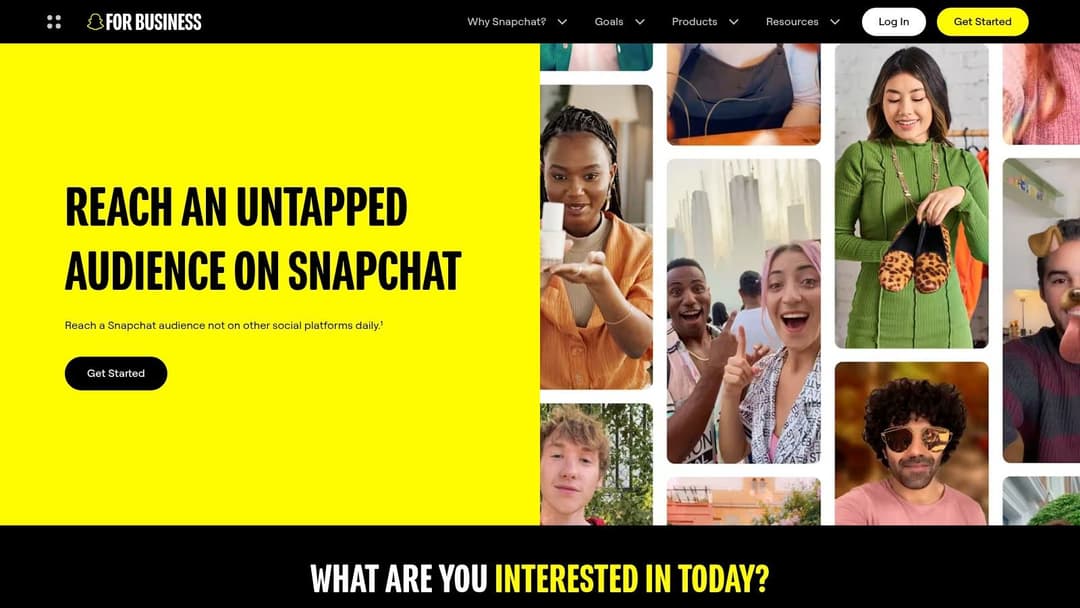
The self-serve Ads Manager is designed for accessibility, allowing advertisers to launch everything from simple image ads to complex Augmented Reality (AR) Lenses. By leaning into its playful and creative nature, brands can build highly engaging campaigns that don't feel like traditional advertisements. The platform’s Snap Pixel and event tracking capabilities also provide the necessary data for optimizing campaigns toward direct-response goals like purchases or app installs.
Key Details & Features:
| Feature | Description |
|---|---|
| Immersive Ad Formats | Includes vertical video, Story Ads, Collection Ads, non-skippable Commercials, and interactive AR Lenses. |
| Audience Targeting | Options include demographics, interests, lookalike audiences, and retargeting based on Snap Pixel data. |
| Mobile-First Creative | The entire platform is built around full-screen, vertical assets designed for an immersive mobile experience. |
| Snap Pixel & Events | Track website actions, attribute conversions, and build custom audiences to measure and optimize campaigns. |
| Goal-Based Bidding | Optimize campaigns toward specific objectives such as app installs, website traffic, or online sales. |
Best For: B2C and e-commerce brands targeting users under 35, especially those in fashion, entertainment, and consumer packaged goods that can leverage creative, visually-driven content.
Pricing: Free to use; you only pay for your authorized ad spend.
Pros:
- Strong Gen Z Reach: High penetration among a valuable and hard-to-reach younger audience.
- Innovative Ad Formats: Unique AR Lenses and filters offer a highly engaging user experience.
- Simple Interface: The Ads Manager is more straightforward and less cluttered than some competitors.
Cons:
- Niche Audience: The user base is heavily skewed young, which may not align with all brand targets.
- Creative Demands: Requires a steady supply of high-quality, mobile-first vertical video and creative assets.
- Lower B2B Potential: Less effective for most B2B marketing campaigns compared to platforms like LinkedIn or Meta.
Website: https://forbusiness.snapchat.com
7. X Ads (formerly Twitter) via Business.X.com
X Ads, the self-serve platform for the platform formerly known as Twitter, offers a unique opportunity for advertisers to engage with audiences in a real-time, conversational environment. Its primary advantage lies in its ability to launch timely campaigns that tap into current events and trending topics, making it ideal for brands focused on awareness and engagement.
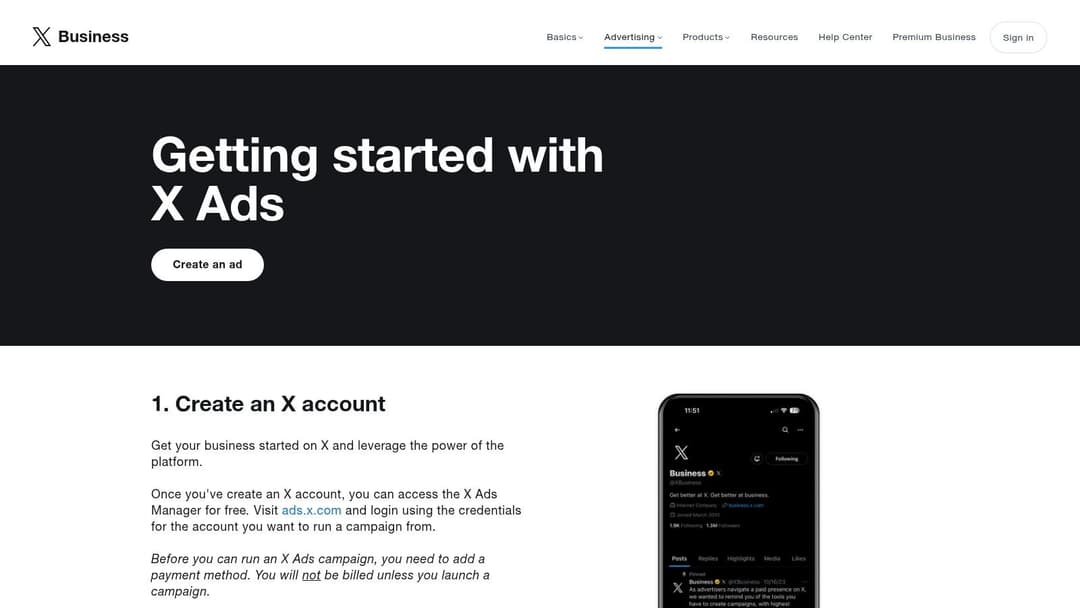
The platform’s ad creation process is streamlined, allowing users to quickly promote existing posts or create new campaigns from scratch within the Ads Manager. While it may not have the granular conversion tracking of platforms like Meta, its strength is in driving website traffic, video views, and app installs by leveraging the platform's fast-paced nature. This makes it a valuable component of a broader social media advertising tools portfolio.
Key Details & Features:
| Feature | Description |
|---|---|
| Objective-Based Campaigns | Choose from objectives like Website Clicks, Engagement, App Installs, and Video Views. |
| Simple Ad Creation | A streamlined creative workflow allows users to promote posts directly from the composer. |
| Ads Manager Interface | Access a dedicated dashboard for creating, managing, and analyzing campaign performance. |
| Promotional Credits | Limited-time promotional ad credits are sometimes offered with Premium Business subscriptions. |
| Keyword & Interest Targeting | Target users based on keywords used in posts, interests, follower lookalikes, and conversation topics. |
Best For: Brands in media, tech, and entertainment focused on top-of-funnel awareness, driving conversation, and capitalizing on real-time cultural moments.
Pricing: Free to use; you only pay for your authorized ad spend. Access is available after creating an X account.
Pros:
- Rapid Ad Creation: The ability to quickly promote posts makes for fast campaign launches.
- Real-Time Environment: Perfect for timely campaigns that tap into current conversations and trends.
- Potential Ad Credits: Premium Business subscribers may receive promotional credits to offset costs.
Cons:
- Variable Performance: Campaign benchmarks and costs can fluctuate significantly by industry and niche.
- Brand Safety Concerns: The platform's dynamic nature requires careful monitoring for brand safety.
- Less Robust Conversion Focus: Can be less effective for direct-response goals compared to other platforms.
For those getting started, this platform is a straightforward entry point into paid social.
Website: https://business.x.com/en/advertising/get-started-with-twitter-ads
8. Reddit Ads (Ads Manager)
Reddit's native Ads Manager is a powerful tool for advertisers looking to tap into highly specific and engaged communities. Its primary strength is the ability to target users based on their participation in niche subreddits, allowing brands to reach audiences with very specific interests and a high level of intent and trust within their online communities.
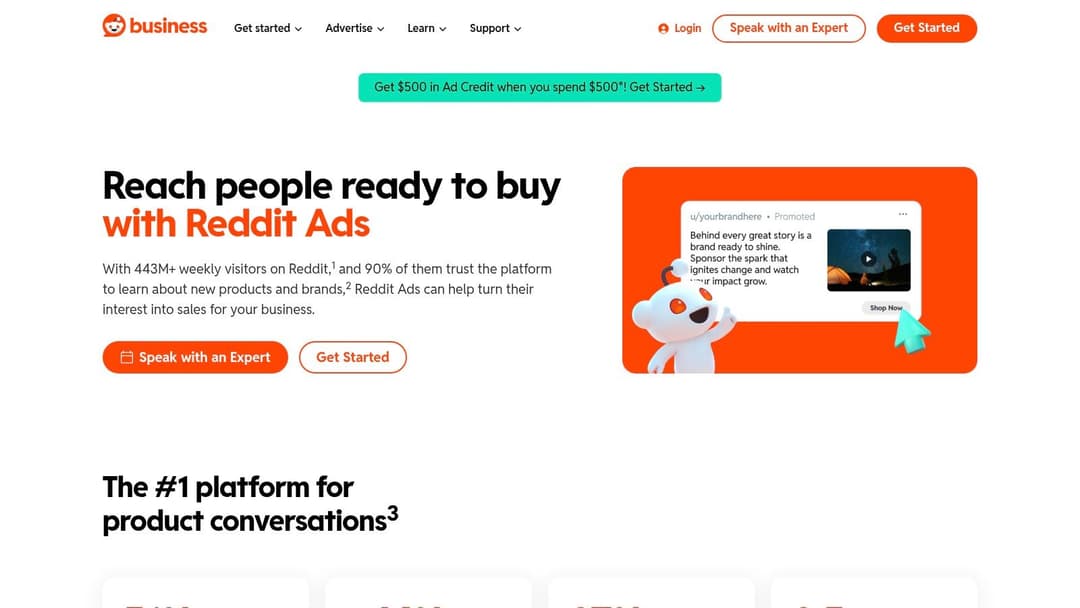
This platform offers a unique opportunity for community-led discovery, where authentic messaging can drive significant brand lift. While historically seen as a brand awareness play, Reddit is rapidly evolving its performance-focused ad products and optimization features. This makes it an increasingly viable channel for direct-response goals, provided the creative approach respects the platform's distinct culture.
Key Details & Features:
| Feature | Description |
|---|---|
| Community & Interest Targeting | Target users based on subreddits they follow, interests, and custom audiences for retargeting. |
| Flexible Bidding Models | Utilizes CPC, CPM, and CPV bidding strategies aligned with campaign objectives like traffic, conversions, or views. |
| Dynamic Product Ads | Growing support for e-commerce, including catalog-based ads for product promotion. |
| AI & Community Intelligence | An evolving suite of tools designed to help advertisers find and understand relevant communities and trends. |
| Simple & Advanced Create | Two creation flows cater to both beginners and experienced advertisers needing more granular control. |
Best For: Brands with niche products, gaming and tech companies, and DTC advertisers who can craft authentic, community-centric creative.
Pricing: Free to use; pay only for ad spend, with low daily minimums (often starting around $5).
Pros:
- Highly Engaged Communities: Access to passionate, niche audiences that are difficult to reach elsewhere.
- Low Cost of Entry: Low daily minimums make it accessible for testing and smaller budgets.
- Improving Performance Tools: New features are continually released to enhance conversion tracking and ROAS.
Cons:
- Sensitive Creative Requirements: Ads must align with subreddit norms to avoid negative feedback and moderation issues.
- Limited Scale: Can be difficult to scale campaigns to a very broad audience compared to larger platforms.
- Niche Audience Understanding: Requires a deep understanding of Reddit's culture and specific community dynamics.
Website: https://ads.reddit.com
9. Smartly.io
Smartly.io is a powerful, enterprise-level platform designed for large-scale social media advertisers who need to unify creative production and cross-channel media buying. Its core value lies in automating and scaling both creative variations and campaign management across major platforms like Meta, TikTok, Snapchat, Pinterest, and YouTube, making it a go-to tool for sophisticated advertising teams.
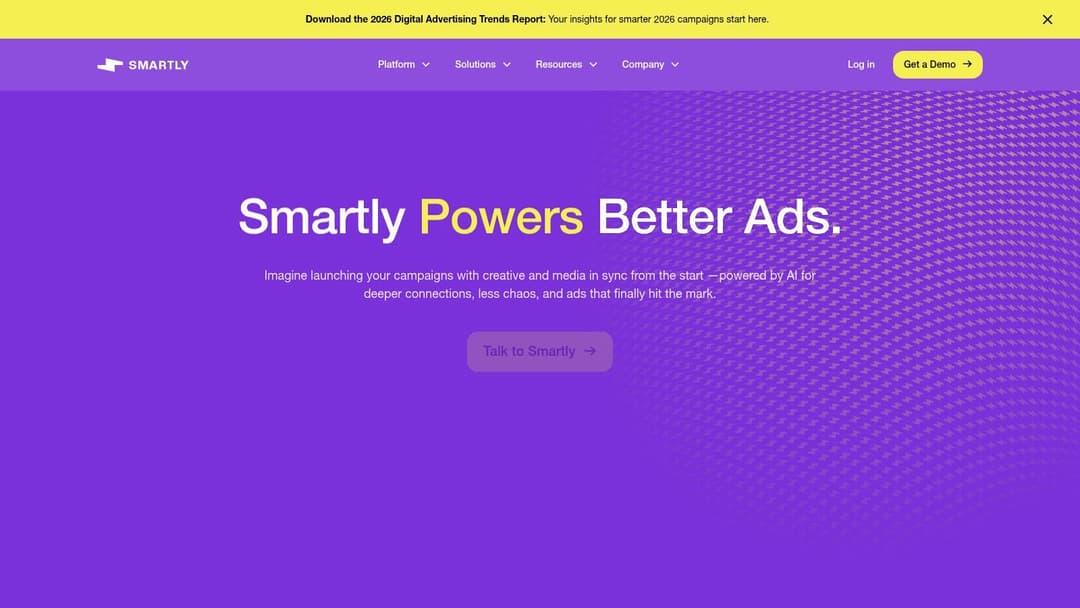
The platform excels at orchestrating complex campaigns and producing dynamic creative at a volume that would be impossible manually. By combining AI-assisted creative tools with advanced budget pacing and optimization features, Smartly.io helps global brands and agencies maintain control and drive efficiency across their entire paid social portfolio. It's built to solve the challenges that arise when managing millions in ad spend.
Key Details & Features:
| Feature | Description |
|---|---|
| Creative Automation | AI-assisted creative production, dynamic templates, and automated A/B testing workflows. |
| Cross-Channel Mgmt | Manage and orchestrate campaigns, budgets, and reporting across multiple major social platforms. |
| Retail & E-commerce | Advanced capabilities for product catalog ads, including dynamic local inventory and feed management. |
| Predictive Optimization | Algorithms for predictive budget allocation and automated bidding to maximize campaign performance. |
| Testing & Insights | Integrated Creative Studio and testing frameworks to systematically identify winning ad variations. |
Best For: Large advertisers, global brands, and agencies managing significant ad spend across multiple social channels and requiring creative production at scale.
Pricing: Enterprise-level, sales-led pricing based on a percentage of ad spend. Not suitable for small businesses.
Pros:
- Unified Workflow: Seamlessly combines creative production and media buying.
- Proven at Scale: Trusted by major advertisers for large-scale, multi-market operations.
- Deep Integrations: Robust API connections with all major social advertising platforms.
Cons:
- High Cost: Pricing structure is prohibitive for smaller advertisers.
- Process Adoption: Requires significant team commitment and process change to realize its full value.
- Complexity: Can have a steep learning curve due to its extensive feature set.
To understand how this fits into a broader strategy, review some of the top Facebook ads automation tools available.
Website: https://www.smartly.io
10. Skai (formerly Kenshoo)
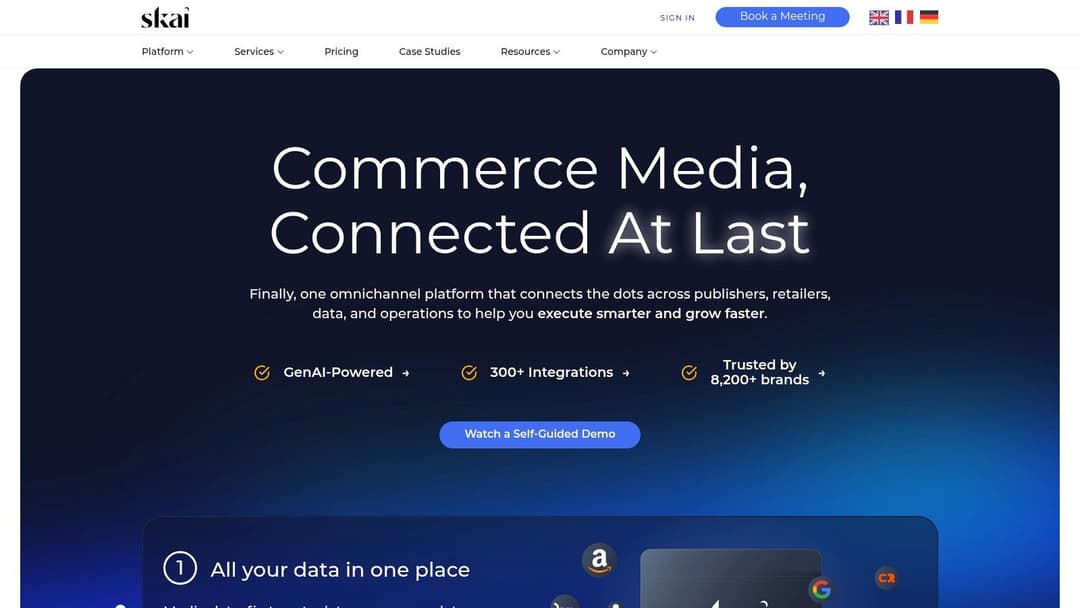
Skai stands out as an enterprise-grade, omnichannel platform for brands managing large, complex advertising portfolios across social, search, and retail media. Its core value is providing a unified command center, allowing large teams to execute, automate, and measure campaigns on platforms like Meta, TikTok, Amazon, and Google from a single interface. This consolidation is a significant workflow advantage for enterprise advertisers.
The platform is designed for scale, offering sophisticated automation for bidding, budgeting, and campaign creation that goes beyond the capabilities of native tools. It pulls in disparate data sources to provide holistic insights, connecting social ad performance with search trends and retail media impact. This cross-channel view is essential for large advertisers seeking to understand the customer journey and allocate budgets intelligently.
Key Details & Features:
| Feature | Description |
|---|---|
| Cross-Publisher Mgmt | Manage campaigns across social, search, retail, and app marketing from one dashboard. |
| Automation Tools | Set rules-based automation for bidding, budget management, and campaign alerts. |
| Budget Optimization | Advanced budget pacing and scenario planning tools to maximize portfolio-level ROI. |
| Competitive Insights | Market intelligence features to track competitor activity and industry trends. |
| Advanced Measurement | Integrated measurement solutions to analyze incrementality and true channel impact. |
Best For: Large enterprises and agencies managing multi-million dollar ad spends across numerous social and search platforms who require a unified, scalable solution.
Pricing: Enterprise-level SaaS model with predictable annual platform fees, typically based on a percentage of ad spend. Requires a significant budget commitment.
Pros:
- Single Platform View: Consolidates social, search, and retail media for holistic management.
- Powerful Automation: Advanced rules and AI save time and improve performance at scale.
- Enterprise Support: Dedicated support, training, and strategic services are included.
Cons:
- High Cost: Significant annual fees make it inaccessible for smaller businesses.
- Complexity: Can be overkill for teams with smaller budgets or less complex channel needs.
- Slower Innovation: May adopt new native features (e.g., from TikTok) more slowly than the platforms themselves.
Website: https://skai.io
11. Revealbot
For teams that need robust automation without committing to a full enterprise suite, Revealbot is a powerful solution. Its core strength is rule-based automation that allows advertisers to scale, pause, and optimize campaigns across multiple platforms based on performance metrics. This makes it an essential tool for managing complex accounts with precision and efficiency.
Revealbot bridges the gap between manual management and expensive, all-in-one platforms. By connecting directly to ad accounts on Meta, Google, Snapchat, and TikTok, it enables users to build intricate "if-this-then-that" rules, from automatically boosting top-performing posts to pausing ads with declining ROAS. Its popular Slack integration also provides real-time alerts, turning the communication tool into a campaign monitoring hub.
Key Details & Features:
| Feature | Description |
|---|---|
| Rule-Based Automation | Create custom rules to automatically start, stop, or adjust bids and budgets based on performance KPIs. |
| Bulk Creation & Mgmt | Apply changes across hundreds of ads, ad sets, or campaigns simultaneously with bulk actions. |
| Multi-Platform Support | Manage and automate ads across Meta (Facebook, Instagram), Google, Snapchat, and TikTok from one place. |
| Alerts & Integrations | Receive real-time campaign alerts in Slack or email; integrate with Google Sheets for custom reporting. |
| Auto Post Boosting | Automatically promote top-performing organic Facebook posts based on engagement or other metrics. |
Best For: Agencies managing multiple client accounts and performance marketers who need to automate routine optimization tasks and implement safety nets for ad spend.
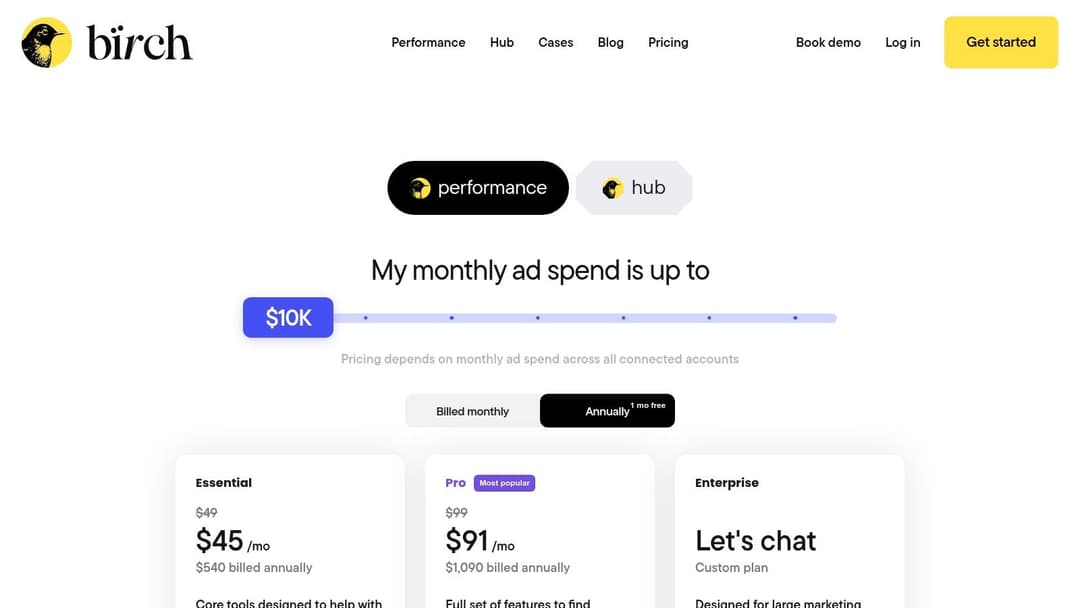
Pricing: Starts at $99/month for up to $10k in ad spend, with pricing scaling based on monthly spend.
Pros:
- Intuitive Rule Builder: Easy to get started with a visual and logical rule creation process.
- Cost-Effective: More affordable than many enterprise-level automation suites.
- Agency Favorite: Popular for its client management features, alerting, and safety rules.
Cons:
- Niche Focus: Concentrates on automation and does not replace creative or analytics tools.
- Spend-Based Pricing: Costs can increase significantly for advertisers with very high ad spend.
- Learning Curve for Advanced Rules: While the basics are simple, complex, multi-layered rules require practice.
As one of the most focused social media advertising tools for automation, it excels at its specific job.
Website: https://revealbot.com
12. G2 — Social Media Advertising Software category
While not a direct advertising tool, G2's category for social media advertising software is an indispensable research hub. It acts as a meta-resource, providing crowdsourced reviews, detailed rankings, and side-by-side comparisons of nearly every platform on the market. For performance marketers, it's the first stop for shortlisting vendors and validating their marketing claims with real-world user feedback.
This platform's strength lies in its ability to quickly provide a comprehensive market overview. Instead of relying solely on vendor websites, you can filter tools by company size, required features, and pricing models to find the best fit. Reading through verified user reviews offers invaluable insights into ease of use, customer support quality, and practical limitations that aren't mentioned in a sales demo, making it a critical step in the due diligence process.
Key Details & Features:
| Feature | Description |
|---|---|
| Crowdsourced Reviews | Access hundreds of verified user reviews with detailed pros, cons, and use-case context. |
| Category Grid & Reports | Visualize market leaders, contenders, and niche players based on user satisfaction and market presence. |
| Advanced Filtering | Narrow down options by business size, user rating, specific features, and platform integrations. |
| Side-by-Side Comparison | Directly compare features, pricing information, and user satisfaction scores for your top choices. |
Best For: Marketing teams and agency managers in the evaluation phase, looking to discover new tools, create a vendor shortlist, and validate choices with peer reviews before committing to demos.
Pricing: Free to browse and use for research.
Pros:
- Unbiased Peer Insights: Get honest feedback from verified users, cutting through marketing jargon.
- Efficient Discovery: Quickly find and compare dozens of social media advertising tools in one place.
- In-depth Vetting: User reviews often highlight support quality and ease of implementation.
Cons:
- Potential for Bias: Sponsored placements and review incentives can sometimes influence rankings.
- Information Lag: Product features and pricing can change faster than reviews are updated.
- Superficial Reviews: Some reviews may lack the depth needed for a complete technical evaluation.
To get a clearer picture of the landscape, you can explore this guide on the best social media advertising software.
Website: https://www.g2.com/categories/social-media-advertising
Top 12 Social Media Advertising Tools Comparison
| Product | Core focus | Key features | Target audience | Strengths (USPs) | Price & onboarding |
|---|---|---|---|---|---|
| AdStellar AI (Recommended) | AI-first automation for Meta ad launch, testing & scaling | Bulk creative + copy + audience generation, AI Insights (ROAS/CPL/CPA ranking), AI Launch, auto-learning scaling, Meta OAuth | Performance marketers, growth teams, e-commerce/DTC, agencies, B2B SaaS | Fast bulk production & one-click launch; goal-aligned ranking; auto-scale winners; centralized workflows | Meta-only; sales-led pricing / demo required; onboarding via secure OAuth; learning depends on historical data |
| Meta Ads Manager (Facebook + Instagram) | Native ad creation & optimization across Meta surfaces | Unified Ads Manager, granular targeting, pixel/CAPI, Advantage automation, A/B testing | Advertisers focused on Facebook/Instagram performance | Massive reach; deep conversion optimization and reporting | Free to use (ads incur spend); self-serve; variable support & account limits |
| TikTok Ads Manager | Short-video inventory with AI-guided workflows | AI/automation, video ad formats (In-Feed, Spark), Business Center, dynamic budgets | Brands seeking high-engagement short video, app installs | Highly engaging creative formats; strong guidance; business-level controls | Self-serve; common higher minimums (often ~$50/day); onboarding tools provided |
| LinkedIn Ads (Campaign Manager) | B2B professional targeting & lead generation | Job/company targeting, Lead Gen Forms, CRM integrations, campaign groups | B2B marketers, enterprise sales & demand gen | Strong role/firmographic targeting; quality B2B leads; Lead Gen integrations | Self-serve with transparent minimums; generally higher CPCs |
| Pinterest Ads (Ads Manager) | Visual discovery & commerce-driven ads | Catalogs & shopping ads, Performance+ bidding, CPC/CPM/CPV, ecommerce integrations | Ecommerce, lifestyle & discovery-driven brands | Commerce intent audience; often competitive CPCs; shopping integrations | Self-serve; regional feature variance; requires learning period |
| Snapchat for Business (Ads Manager) | Mobile-first vertical video & AR ad formats | Vertical video, AR Lenses, Collection, pixel/event tracking | Brands targeting Gen Z / mobile-first audiences | Immersive mobile formats; strong youth reach | Self-serve; creative asset requirements (vertical/mobile) |
| X Ads (formerly Twitter) | Real-time conversational & post-based ads | Promote posts, video & website objectives, quick post-to-ad flow | Media, timely campaigns, brands leveraging conversations | Fast ad creation from posts; real-time engagement; occasional ad credits | Self-serve; pricing/credit promos vary; simple entry |
| Reddit Ads (Ads Manager) | Community & subreddit-targeted advertising | Subreddit & interest targeting, dynamic product ads, CPC/CPM/CPV | Niche/community-focused advertisers, product launches | Highly engaged niche audiences; low daily minimums | Self-serve; often low min budgets (~$5/day); moderation sensitivity |
| Smartly.io | Enterprise creative automation & cross-channel buying | Dynamic templates, creative studio, cross-publisher orchestration, retail features | Large advertisers, global agencies, complex e-commerce | Production-at-scale; deep cross-platform integrations; proven enterprise use | Enterprise sales-led pricing; requires process adoption |
| Skai (formerly Kenshoo) | Omnichannel ad management & advanced measurement | Cross-publisher automation, budget/bid optimization, journey intelligence | Enterprises wanting consolidated multi-channel management | Single platform view across social/search/retail; predictable tiers | Enterprise pricing / high annual fees; vendor-led onboarding |
| Revealbot | Rule-based automation, bulk actions & alerts | Custom rules & schedules, Slack/Sheets integrations, API, multi-platform | Agencies and teams needing automation without full creative suite | Fast onboarding; intuitive rule builder; more affordable than enterprise suites | Tiered / spend-based pricing; self-serve with pricing page |
| G2 — Social Media Advertising Software | Crowdsourced vendor reviews & category shortlisting | Category rankings, filters, verified user reviews, buyer guides | Buyers researching and shortlisting advertising tools | Broad market view; user feedback validates claims; quick discovery | Free to browse; links to vendor trials/demos |
Building Your Ultimate Ad Stack: From Native Tools to AI Co-Pilots
Navigating the expansive landscape of social media advertising tools can feel overwhelming, but the journey to a high-performing ad stack is one of strategic layering, not a quest for a single, mythical "best" tool. As we've explored, the path to advertising excellence begins with a solid foundation. Mastering the native ad managers from Meta, TikTok, and LinkedIn is non-negotiable; they are the bedrock upon which all successful campaigns are built, offering direct access to audiences and granular control over your initial setup.
However, true scalability and competitive advantage are found in the layers you build on top of that foundation. As your ad spend and campaign complexity increase, the limitations of manual management become painfully clear. This is the critical juncture where automation and intelligence become essential, transforming your ad operations from a reactive, time-intensive process into a proactive, strategic engine for growth.
From Manual Management to Intelligent Orchestration
For teams managing significant budgets across multiple platforms, enterprise-grade solutions like Smartly.io and Skai provide a unified command center. They streamline cross-channel reporting, creative management, and high-level budget allocation, solving the orchestration challenges that plague large organizations and agencies. Similarly, rule-based automation tools like Revealbot offer a powerful, tactical advantage. They act as a tireless assistant, enforcing budget caps, pausing underperforming ads, and ensuring your carefully crafted rules are executed 24/7, preventing costly human error and freeing up your team's cognitive bandwidth.
The key takeaway is that your choice of social media advertising tools must mirror your team's maturity and primary objectives.
- For Startups and Small Teams: Focus on mastering one or two native platforms. Your goal is rapid learning and proving product-market fit. Don't overcomplicate your stack until you have a proven winning formula.
- For Growth-Stage Companies & E-commerce Brands: This is where the first layer of automation becomes crucial. Integrating a tool like Revealbot to manage bidding rules or a platform like AdStellar AI to accelerate creative testing can unlock significant efficiency gains and help you scale your winning campaigns faster.
- For Agencies & Enterprise Teams: Your challenge is complexity and scale. A comprehensive platform like Smartly.io or Skai is necessary for cross-channel visibility and workflow management, while specialized AI tools can provide a performance edge on your most critical channels.
The Emerging Role of the AI Co-Pilot
Ultimately, the most significant bottleneck for modern performance marketers isn’t a lack of data or platform options; it's the slow, manual, and often biased process of creative iteration. This is where the next evolution of social media advertising tools is making its mark. AI-powered co-pilots like AdStellar AI are not designed to replace the strategist but to augment their capabilities exponentially. By automating the tedious tasks of generating ad variations, structuring campaigns, and analyzing performance at a granular level, these tools liberate media buyers to focus on what humans do best: high-level strategy, audience insights, and creative direction.
Building your ultimate ad stack is an ongoing process of evaluation and adaptation. It’s about understanding your current limitations and strategically adopting the technology that solves your most pressing challenges. Whether you're just starting with Meta Ads Manager or orchestrating a global, multi-channel strategy, the right combination of native platforms, automation software, and AI-driven intelligence will be your greatest asset in achieving sustainable, profitable growth.
Ready to eliminate the creative bottleneck and scale your Meta campaigns faster than ever? See how AdStellar AI can act as your team's AI co-pilot, automating ad creation, testing, and analysis to uncover winning combinations at lightning speed. Explore the future of performance marketing and book your personalized demo at AdStellar AI today.