In digital advertising, selecting the right ad network is a critical decision for any growth-focused team. The landscape is crowded with powerful platforms, each with its own unique strengths, audiences, and performance dynamics. Choosing incorrectly can lead to wasted budgets and missed opportunities, while the right choice can unlock exponential scale. This guide is designed to cut through the noise, providing a comprehensive analysis of the top ad networks for advertisers today.
We move beyond surface-level feature lists to offer a practical look at where each platform truly shines, its hidden limitations, and the specific use cases it's best suited for. Inside, you'll find direct links and screenshots for each network. This resource is built to help you make informed decisions, whether you're a DTC brand looking to scale on social, a B2B SaaS company hunting for high-value leads, or a mobile app developer driving installs. Our goal is to equip you with the insights needed to build a diversified and resilient media mix.
This listicle will compare the giants like Google and Meta with high-growth channels such as TikTok and niche powerhouses like Reddit. We'll examine platforms including Amazon, Microsoft, LinkedIn, Pinterest, Taboola, and more. By the end, you'll have a clear framework for not only selecting the right partners but also for testing and scaling the ad networks that will most effectively drive your business forward. We'll help you allocate your budget with greater confidence and precision.
1. Google Ads
As the undisputed leader in search advertising, Google Ads offers unparalleled access to users with high commercial intent. It's the go-to platform for performance marketers aiming to capture demand across Google's vast ecosystem, including Search, YouTube, Display, Shopping, and App campaigns. Its dominance makes it an essential component of nearly every digital advertising strategy, providing a direct line to consumers actively seeking products or solutions.
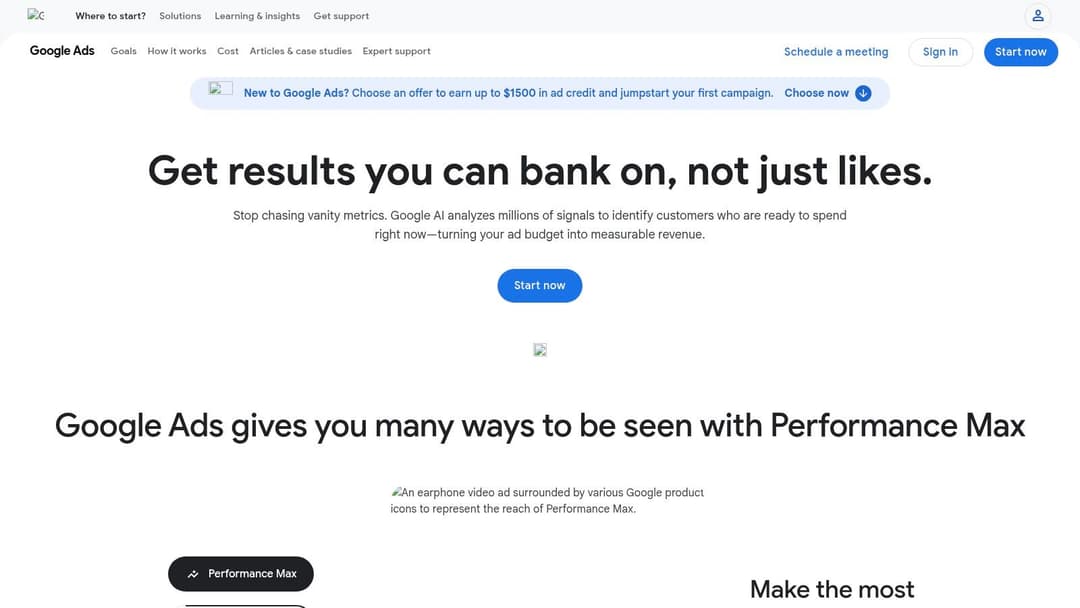
The platform’s power lies in its mature automation and robust measurement tools. Features like Performance Max (PMax) simplify campaign management by unifying ad buying across all Google properties, from Gmail to Maps. For advertisers who prefer more control, tools like Keyword Planner and the offline Google Ads Editor facilitate meticulous campaign planning and bulk editing.
Key Considerations
- Ideal Use Case: Best for advertisers focused on bottom-of-funnel conversions, lead generation, and e-commerce sales, where you can capitalize on existing search intent.
- Pricing Model: Primarily a pay-per-click (PPC) model, though other bidding strategies like CPM (cost per mille) and CPA (cost per acquisition) are available. Costs are highly variable and depend on keyword competition.
- User Experience: The interface can be complex for beginners, but its comprehensive nature provides deep control for experienced users. A massive ecosystem of tutorials and certifications is available for support.
Pro Tip: When launching new campaigns, especially with automated bidding, be prepared for a "learning phase" where the algorithm gathers data. This initial period can be costly, so budget accordingly and avoid making drastic changes that reset the learning process.
Pros:
- Access to the largest inventory of commercial-intent search traffic.
- Mature optimization tools and sophisticated automated bidding.
- Extensive support ecosystem and third-party integrations.
Cons:
- High CPCs in competitive industries can strain budgets.
- Increasing reliance on automation can obscure granular controls and performance insights.
Understanding how to choose the right ad network is crucial; learn more about how to select the right ad platform to ensure your budget is allocated effectively.
Website: https://ads.google.com
2. Meta Ads (Facebook & Instagram)
As a powerhouse for social commerce and brand discovery, Meta Ads provides unparalleled access to a massive, engaged user base across Facebook, Instagram, Messenger, and its Audience Network. It is the core channel for direct-to-consumer brands and e-commerce advertisers focused on creative-led campaigns, scaled prospecting, and sophisticated retargeting. Its strength lies in turning passive scrolling into active purchases through visually compelling ad formats.
The platform’s central hub, Ads Manager, allows for deep audience segmentation using interest, behavioral, and lookalike targeting. Optimization is powered by the Meta Pixel and Conversions API (CAPI), which feed the algorithm data to find users most likely to convert. Diverse formats, from immersive Stories and Reels to dynamic product carousels, make it an ideal environment for rapid creative testing and iteration.
Key Considerations
- Ideal Use Case: Best for e-commerce, DTC brands, and lead generation campaigns that benefit from strong visual storytelling and sophisticated audience targeting to drive both top-of-funnel awareness and bottom-of-funnel sales.
- Pricing Model: Primarily a cost-per-mille (CPM) model, where advertisers bid to show ads to their target audience. Costs are influenced by audience competition, ad quality, and campaign objectives.
- User Experience: The Ads Manager interface is powerful but can be complex, with frequent updates and a layered structure. Support can be inconsistent, often creating friction for new advertisers.
Pro Tip: Leverage Advantage+ Shopping Campaigns (ASC) for e-commerce. This automated campaign type simplifies setup and uses machine learning to dynamically test audiences and creatives, often outperforming manually structured campaigns for driving direct sales.
Pros:
- Sophisticated interest and lookalike targeting with powerful conversion bidding.
- Creative-led environment suited to rapid iteration and A/B testing workflows.
- Extensive reach across a highly engaged global user base.
Cons:
- Occasional account bugs, asset linking issues, and support friction can disrupt launches.
- Frequent platform and policy changes can unexpectedly impact campaign performance.
For those new to the ecosystem, it's vital to understand the toolset; learn more about Facebook Ads Manager to navigate the platform effectively.
Website: https://www.facebook.com/business/ads
3. Amazon Ads
Amazon Ads has emerged as a powerhouse, offering direct access to consumers in the final stages of their purchasing journey. It leverages Amazon's vast first-party retail data, allowing advertisers to reach high-intent shoppers on its retail site, devices, and across the web. The platform is indispensable for e-commerce brands seeking to boost product visibility and sales directly at the point of purchase.
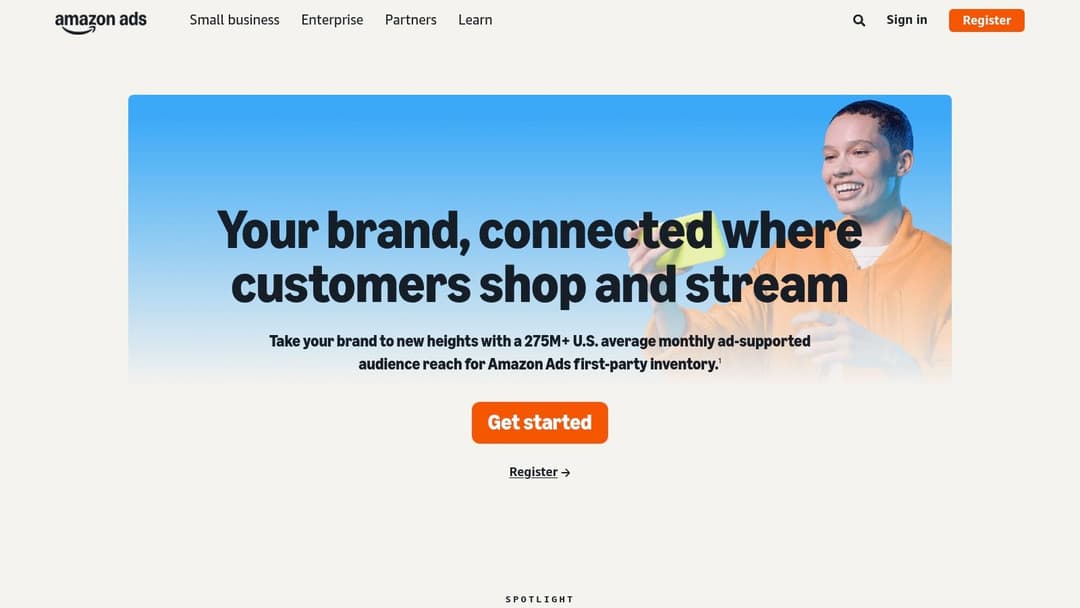
The platform is divided into two primary offerings: self-serve Sponsored Ads (Products, Brands, and Display) for marketplace sellers and the more robust Amazon DSP for programmatic buying. Amazon DSP extends an advertiser's reach beyond Amazon's own properties to include its streaming inventory like Prime Video and Twitch, making it a growing force in connected TV (CTV) advertising. This closed-loop measurement system provides clear attribution from ad spend to sales.
Key Considerations
- Ideal Use Case: Best for e-commerce and DTC brands with products sold on Amazon looking to drive sales. Also valuable for larger brands wanting to leverage Amazon's audience data for programmatic and CTV campaigns via the DSP.
- Pricing Model: Sponsored Ads primarily use a pay-per-click (PPC) model. Amazon DSP campaigns are typically priced on a CPM basis and often require higher minimum budgets.
- User Experience: The Sponsored Ads interface is relatively straightforward for those familiar with other PPC platforms. The DSP is more complex and may require managed service or significant expertise to operate effectively.
Pro Tip: Use Sponsored Products to defend your branded search terms and capture bottom-of-funnel demand. Use Sponsored Brands and Display to build awareness and target competitor product detail pages to conquest new customers.
Pros:
- Direct access to high-intent shoppers with rich first-party retail data.
- Closed-loop attribution connecting ad spend directly to sales on the platform.
- Growing reach in CTV and streaming audio through the Amazon DSP.
Cons:
- Sponsored Ads are most effective for brands with a retail-ready product catalog on Amazon.
- The DSP often has high minimum spend requirements and may be less accessible for smaller advertisers.
Compelling ad creative is essential for success; learn more about mastering good ad copy to maximize your campaign performance.
Website: https://advertising.amazon.com
4. Microsoft Advertising
Often overlooked in favor of its larger rival, Microsoft Advertising provides a crucial source of incremental search volume at often lower costs. It allows advertisers to reach users across Bing, Yahoo, DuckDuckGo, and Microsoft's growing network, including MSN and Edge. For advertisers already proficient with Google Ads, Microsoft Advertising offers a familiar environment and an easy import feature, making it a highly efficient way to expand reach.
The platform's strength lies in its ability to capture a different, often older and more affluent, search audience that may not be as reachable on Google. While its overall volume is smaller, the lower competition can lead to a higher return on ad spend. The network is also expanding its offerings in retail media and connected TV (CTV), positioning itself as a more comprehensive player in the digital advertising landscape.
Key Considerations
- Ideal Use Case: Best for advertisers looking to complement their Google Ads efforts, capture high-value search traffic at lower CPCs, and reach a more mature demographic.
- Pricing Model: Primarily a pay-per-click (PPC) model, operating on a similar auction-based system as Google Ads. Costs are generally lower due to less competition for keywords.
- User Experience: The interface is very similar to Google Ads, making it intuitive for experienced search marketers. The direct campaign import tool significantly lowers the barrier to entry.
Pro Tip: Use the Google Ads import feature to get started quickly, but don't just "set it and forget it." Monitor performance closely and adjust bids and budgets specifically for the Microsoft network, as user behavior and conversion costs will differ.
Pros:
- Access to incremental search volume at competitive costs.
- Familiar workflows for Google Ads practitioners simplify campaign management.
- Often reaches a demographic with higher disposable income.
Cons:
- Smaller overall search volume and reach compared to Google.
- New features and updates tend to roll out later than on Google Ads.
Effective budget allocation across multiple networks is key; learning about ad spend optimization can help you maximize your returns from platforms like Microsoft Advertising.
Website: https://ads.microsoft.com
5. TikTok for Business
TikTok for Business has rapidly emerged as a dominant force in social advertising, leveraging its powerful discovery algorithm to connect brands with a highly engaged global audience. Its platform is built around short-form video, making it an ideal channel for creative-led acquisition and driving product discovery. Unlike intent-based networks, TikTok excels at creating demand by serving users content that feels native, entertaining, and authentic.
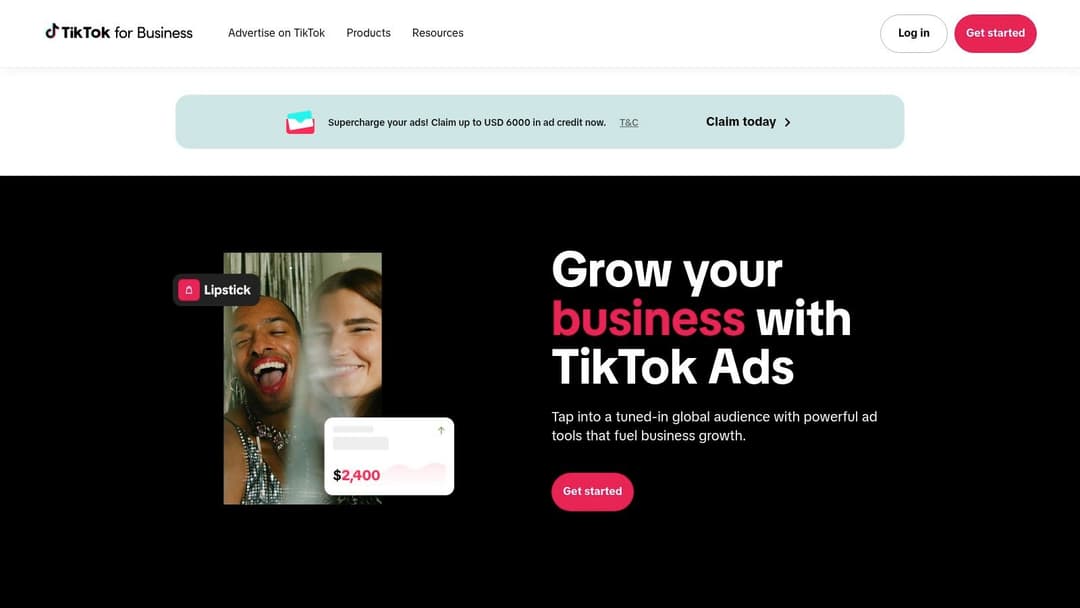
The self-serve Ads Manager provides access to formats like lead generation forms, catalog ads, and integrated Shop Ads that streamline the path from discovery to purchase. With tools like the Business Center and trend insights from its Creative Center, advertisers are well-equipped to produce content that resonates. For those looking to streamline their creative process, it's worth exploring the best AI tools for marketing to accelerate content production.
Key Considerations
- Ideal Use Case: Best for direct-to-consumer (DTC) brands, mobile apps, and companies targeting Gen Z and Millennial audiences with visually compelling products or services.
- Pricing Model: Primarily auction-based, using bidding models like CPM, CPC, and oCPM (optimized cost per mille). Costs are heavily influenced by creative performance.
- User Experience: The Ads Manager is relatively straightforward, resembling other social ad platforms. However, success is less about technical optimization and more about creative strategy and rapid iteration.
Pro Tip: Don't repurpose ads from other platforms. Create content that feels native to TikTok by using trending sounds, popular effects, and authentic, user-generated-style content. High-performing ads often don't look like ads at all.
Pros:
- Highly engaged audience with an algorithm that can deliver low CPAs for strong creatives.
- Native commerce integrations that effectively shorten the discovery-to-purchase journey.
- Excellent platform for brand building and generating viral awareness.
Cons:
- Creative fatigue happens quickly, requiring a constant stream of new ad concepts.
- Some advertisers have reported occasional account setup and review process quirks.
Website: https://ads.tiktok.com
6. LinkedIn Ads
For business-to-business (B2B) advertisers, LinkedIn Ads is the definitive platform for reaching professional audiences with unparalleled precision. It provides a direct channel to decision-makers, allowing advertisers to target users based on job title, company size, industry, seniority, and specific skills. This makes it an essential network for high-value lead generation, account-based marketing (ABM), and promoting B2B products or services.
The platform’s strength lies in its unique ad formats designed for professional engagement. Sponsored Content appears natively in the feed, while Message Ads allow direct inbox communication. Its standout feature, Lead Gen Forms, pre-fills with a user's profile data, dramatically reducing friction and increasing conversion rates for webinars, whitepapers, and demo requests. This seamless integration with professional identity is what makes it one of the top ad networks for advertisers in the B2B space.
Key Considerations
- Ideal Use Case: Best for B2B lead generation, account-based marketing, and promoting high-ticket services or SaaS products to specific professional roles.
- Pricing Model: Primarily uses CPC (cost per click) and CPM (cost per mille) models. Costs are significantly higher than consumer-focused platforms, reflecting the high value of the audience.
- User Experience: The Campaign Manager interface is straightforward and more accessible than many other ad platforms. It simplifies the process of building campaigns with its clear, step-by-step workflow.
Pro Tip: Use LinkedIn’s Matched Audiences feature to upload lists of target companies for ABM campaigns or retarget website visitors. This allows you to focus your expensive ad spend exclusively on high-intent prospects who have already engaged with your brand.
Pros:
- Unmatched B2B targeting fidelity by job function, industry, and company.
- High-quality lead generation with native forms that reduce friction.
- Professional context ensures brand safety and receptive audiences.
Cons:
- Significantly higher CPCs and CPMs compared to consumer platforms.
- Creative fatigue can set in quickly with a smaller, niche audience.
Website: https://business.linkedin.com/marketing-solutions/ads
7. X Ads (formerly Twitter)
X Ads provides advertisers with direct access to an audience engaged in real-time conversations and cultural moments. It’s an ideal platform for product launches, content amplification, and connecting with community-driven niches. By tapping into trending topics and live events, brands can achieve contextual relevance that is difficult to replicate on other social platforms, making it a unique player among the top ad networks for advertisers.

The self-serve Ads Manager enables objective-based buying, allowing for quick campaign activation without a minimum spend requirement. This flexibility makes it accessible for businesses of all sizes to test and scale their efforts. Advertisers can also leverage "promoted-only" posts, which appear as ads but not on the brand's organic profile, facilitating paid-only creative experimentation without altering the organic feed.
Key Considerations
- Ideal Use Case: Best for top-of-funnel brand awareness, driving conversations around events, and amplifying content to highly specific interest-based or follower lookalike audiences.
- Pricing Model: Primarily auction-based, with bidding options for objectives like clicks (CPC), impressions (CPM), video views (CPV), and app installs. Budgets are fully adjustable.
- User Experience: The interface is straightforward for launching basic campaigns. However, recent platform changes have led to some deprecated formats and mixed reports on the quality of advertiser support.
Pro Tip: Use keyword and conversation targeting to place your ads directly within relevant discussions. For example, a fintech app could target keywords like "investing" or conversations around major financial news to reach an active, engaged audience.
Pros:
- Powerful contextual targeting adjacent to trending topics and real-time events.
- Promoted-only posts allow for creative testing without impacting your organic profile.
- No minimum spend provides a low barrier to entry for testing campaigns.
Cons:
- Advertiser support experiences have been inconsistent for some users.
- Recent changes have led to the deprecation or alteration of certain ad formats.
Website: https://business.x.com
8. Pinterest Ads
Pinterest Ads carves out a unique space among top ad networks for advertisers by functioning as a visual discovery engine where users actively plan future purchases. It’s a powerful platform for lifestyle, e-commerce, and direct-to-consumer brands in verticals like home decor, fashion, beauty, and food. Unlike impulse-driven social feeds, Pinterest captures users in a high-intent planning mindset, making it ideal for influencing consideration and driving sales.
The platform’s strength lies in its evergreen content potential; a well-crafted Pin can continue to drive traffic and sales for months or even years. Ad formats are visually rich, including Standard Pins, Video, Carousels, and shoppable Collections, all designed to integrate seamlessly into the user’s browsing experience. Commerce integrations with platforms like Shopify allow for easy catalog synchronization, turning inspirational content directly into transactions.
Key Considerations
- Ideal Use Case: Best for e-commerce and DTC brands with strong visual appeal, aiming to reach users in the early-to-mid stages of their purchasing journey. Excellent for driving website traffic and direct sales.
- Pricing Model: Primarily auction-based, with CPC, CPM, and CPA bidding options available to align with specific campaign goals like awareness, consideration, or conversions.
- User Experience: The Ads Manager interface is straightforward and more accessible for beginners compared to more complex platforms. The visual-first workflow makes campaign creation intuitive.
Pro Tip: Focus on high-quality, vertically-oriented creative that feels native to the platform. Treat your ads like valuable content, providing inspiration or utility, as users are more likely to save and engage with Pins that add value to their boards.
Pros:
- High purchase intent from users actively planning and researching.
- Long lifespan of ad content provides lasting value and organic reach.
- Lower CPCs in many verticals compared to more saturated social platforms.
Cons:
- Audience scale is smaller and more niche than giants like Meta or Google.
- Attribution can be complex, as the path from Pin to purchase is often not immediate.
Website: https://business.pinterest.com/ads
9. Snapchat for Business
Snapchat for Business offers advertisers a direct channel to a highly engaged audience of Gen Z and Millennials. Unlike other social platforms, its strength lies in creative, AR-forward formats that encourage user interaction rather than passive consumption. For brands looking to build awareness, drive mobile app installs, or launch influencer collaborations, Snapchat provides a unique, visually-driven environment that can deliver incremental reach not found on more saturated ad networks.
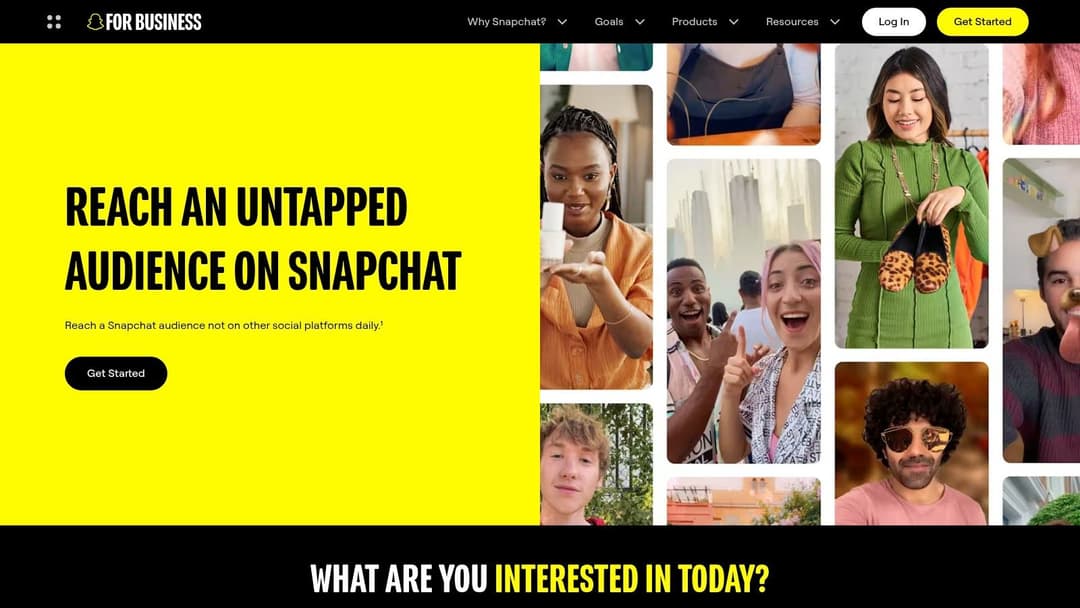
The platform is built around innovative formats like AR Lenses, Story Ads, and Sponsored Snaps that integrate seamlessly into the user experience. Its self-serve ad manager utilizes objective-based bidding, allowing advertisers to optimize for specific goals like app installs or website visits. Snapchat frequently offers promotional credits and incentives for new advertisers, making it an accessible option for brands experimenting with new channels.
Key Considerations
- Ideal Use Case: Best for mobile-first brands, e-commerce, and entertainment companies targeting a younger demographic. It excels at top-of-funnel awareness campaigns and driving engagement through interactive AR experiences.
- Pricing Model: Primarily auction-based, with bidding options for impressions (CPM), swipes (cost per swipe), or goal-based outcomes like app installs. Costs are generally lower than more competitive platforms.
- User Experience: The Ads Manager is straightforward and designed for quick, self-serve campaign setup. The creative development process, especially for AR Lenses, can be more resource-intensive but is central to the platform’s effectiveness.
Pro Tip: Lean into the platform's native style. Use authentic, user-generated-style content with clear calls-to-action. High-production, polished ads often underperform compared to creative that feels organic to the Snapchat environment.
Pros:
- Distinct incremental reach among younger audiences.
- Strong engagement with innovative AR and creative-first ad formats.
- Relatively lower media costs compared to other major social platforms.
Cons:
- Audience skews heavily younger, which may limit relevance for some brands.
- Creative requirements for visual and AR formats can increase production needs.
Website: https://forbusiness.snapchat.com
10. Reddit Ads
Reddit Ads provides a unique opportunity to connect with highly engaged communities organized around specific interests and niches. It excels for advertisers with products in gaming, tech, finance, or any area with a dedicated subreddit, allowing brands to reach users during the consideration and education stages. The platform's strength lies in its ability to target based on deep-seated interests, not just broad demographic data.
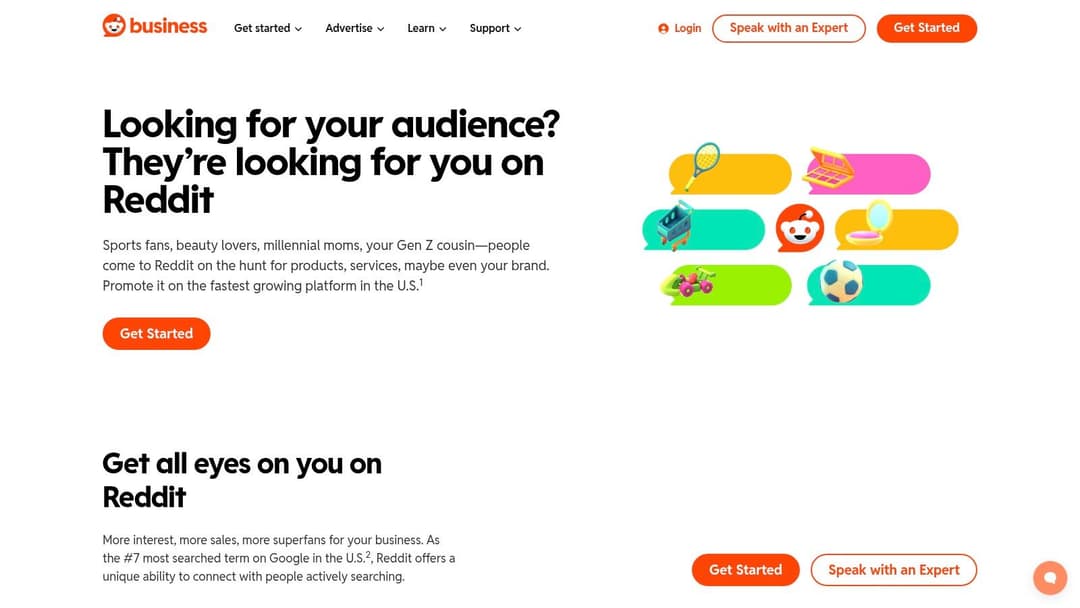
The self-serve ad platform offers a variety of formats, including image, video, carousel, and even conversation ads designed to spark discussion. For advertisers, the key is crafting creative that feels native to the platform and the specific communities they are targeting. Success on Reddit often means joining the conversation authentically rather than just broadcasting a message, making it one of the more community-driven ad networks for advertisers.
Key Considerations
- Ideal Use Case: Best for niche B2C and B2B brands that align with specific subreddits, community marketing campaigns, and gathering authentic user feedback.
- Pricing Model: Primarily a CPM (cost per mille) and CPC (cost per click) model with auction-based pricing. New advertisers can often find promotional ad-credit offers.
- User Experience: The ad manager is relatively straightforward compared to more complex platforms. However, the true challenge is understanding the nuances and cultural norms of each subreddit to ensure ad creative resonates.
Pro Tip: Spend time researching your target subreddits before launching a campaign. Read the top posts, understand the in-jokes, and observe the tone. Your ads will perform significantly better if they feel like they belong there.
Pros:
- Deep topical targeting by subreddit and community interests.
- Highly engaged audience that offers strong social proof potential in comments.
- Less saturation compared to major social platforms, leading to lower costs.
Cons:
- Creative must be carefully tailored to community norms to avoid backlash or poor performance.
- Community moderation sensitivity can make aggressive scaling more challenging.
Website: https://www.business.reddit.com/advertise
11. Taboola
Taboola is a dominant force in native advertising, placing sponsored content and ads across a massive network of premium publisher websites. It specializes in "discovery," serving ads that appear within editorial feeds, on homepages, and at the end of articles. This makes it an ideal platform for advertisers looking to scale direct-response funnels and acquire customers beyond the confines of traditional search and social media.
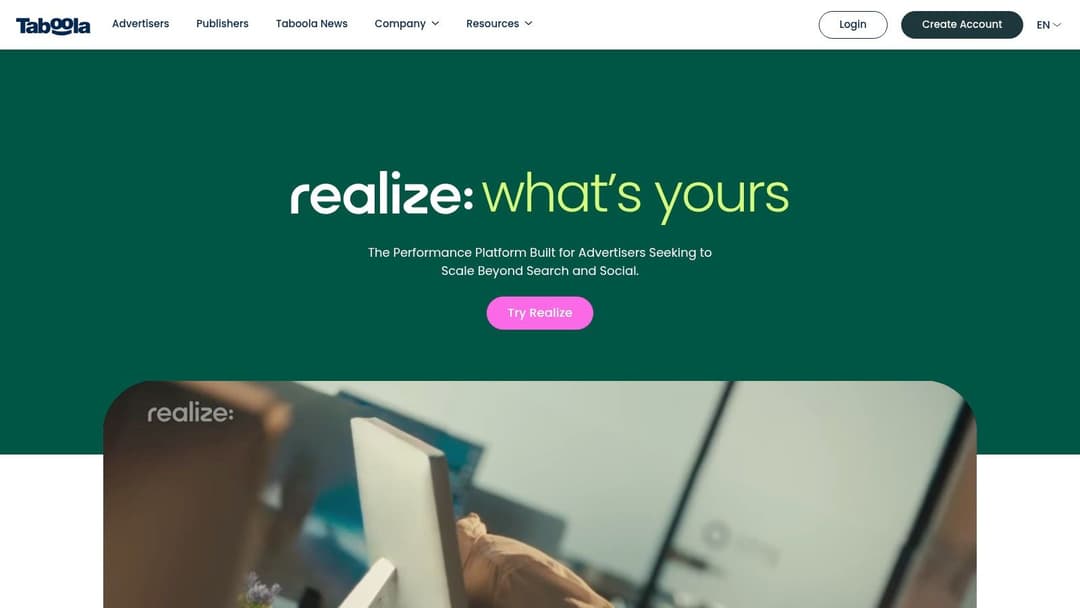
The platform has evolved to support modern creative formats, including vertical video and social-style assets, allowing brands to repurpose content from other channels. Key features include its Realize performance platform and a GenAI AdMaker tool for simplifying creative production. This focus on performance and creative support positions it as a key player among the top ad networks for advertisers aiming for broad, incremental reach.
Key Considerations
- Ideal Use Case: Best for top-of-funnel content promotion, lead generation, and scaling e-commerce campaigns that have already found success on search and social channels.
- Pricing Model: Primarily cost-per-click (CPC), where advertisers bid to have their content shown across the network. Costs are generally lower than search but require volume to find profitable placements.
- User Experience: The dashboard offers granular control and transparent reporting down to the individual publisher placement level. This transparency is crucial for optimizing campaigns and excluding underperforming sites.
Pro Tip: Success on Taboola often hinges on your landing page. Unlike search ads where intent is high, native traffic is colder. Your landing page must be compelling, align perfectly with the ad's promise, and be optimized for quick conversions.
Pros:
- Massive incremental reach across the open web and premium publisher sites.
- Detailed, placement-level reporting allows for granular campaign optimization.
- Supports modern creative formats like vertical video.
Cons:
- Traffic quality can vary significantly by publisher and requires diligent testing.
- Campaign success is highly dependent on effective landing page optimization and creative.
Website: https://www.taboola.com/advertise
12. Outbrain
Outbrain specializes in native advertising, placing branded content on premium publisher sites to reach users in a discovery mindset. It's a key player for advertisers looking to scale content-driven funnels, promote advertorials, and drive app installs beyond the confines of social media and search. The platform positions ads as recommended articles, creating a less intrusive user experience that can drive high-quality, engaged traffic.
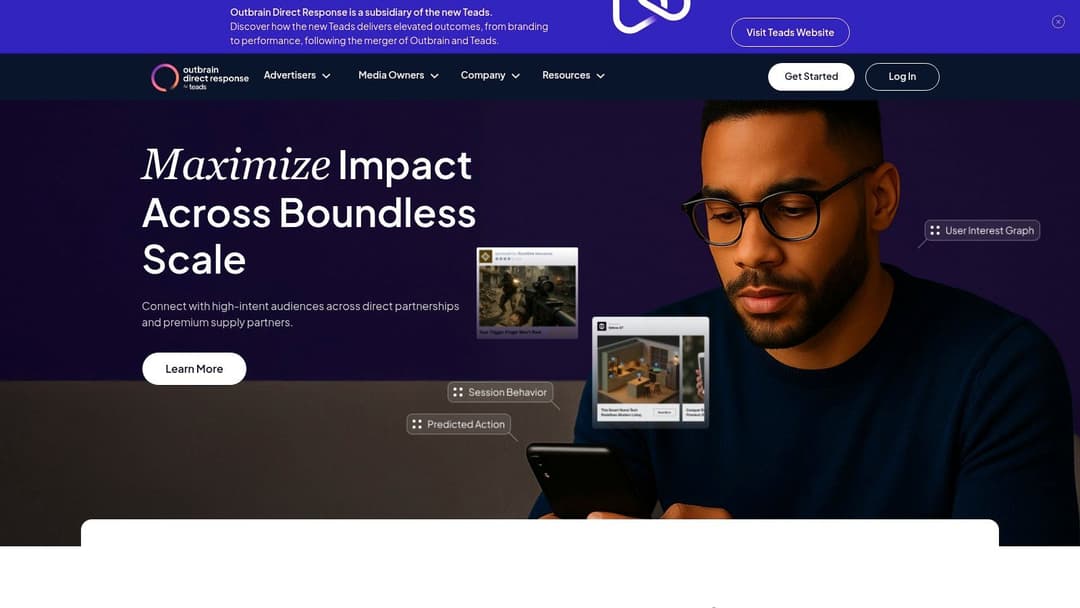
Its strength lies in its performance-oriented formats and AI-powered bidding technology, which automates campaign optimization toward specific conversion goals. Advertisers can leverage various formats, including standard native ads, carousels, and video clips, to tell their story effectively. With transparent reporting on publisher placements, Outbrain offers a scalable alternative for diversifying traffic sources and is one of the top ad networks for advertisers focused on mid-funnel engagement.
Key Considerations
- Ideal Use Case: Best for content marketing, lead generation via advertorials, and driving traffic to articles or blog posts. It’s also effective for app install campaigns and building brand consideration.
- Pricing Model: Primarily cost-per-click (CPC), where you bid for clicks from publisher sites. Minimum daily budgets are required, typically starting around $20-$50.
- User Experience: The platform is relatively straightforward, with guided campaign setup and access to resources like the Outbrain Academy. It’s more accessible for beginners than complex DSPs.
Pro Tip: Your success on Outbrain is directly tied to the quality of your pre- and post-click experience. Test multiple headlines and images for your native ads, and ensure your landing page delivers on the promise of the ad to maintain a low bounce rate.
Pros:
- Access to discovery-focused traffic on premium publisher websites.
- Transparent placement reporting helps you understand where your ads appear.
- Strong formats for content-led advertising and advertorials.
Cons:
- Performance is highly dependent on creative and landing page quality.
- Traffic quality and CPCs can vary significantly across the network.
Website: https://www.outbrain.com/advertisers
Top 12 Ad Networks: Advertiser Comparison
| Platform | Core strengths | Best for (Target audience) | Unique selling points | Cost / Scale notes |
|---|---|---|---|---|
| Google Ads | Intent-driven reach across Search, YouTube, Display, Performance Max | Performance marketers, e‑commerce, high-intent acquisition | Largest commercial inventory; mature automation & measurement tools | Competitive CPCs in saturated verticals; scales broadly |
| Meta Ads (Facebook & Instagram) | Creative-first formats, centralized Ads Manager, pixel/CAPI optimization | DTC, e‑commerce, creative testing & retargeting teams | Sophisticated interest/lookalike targeting; rapid creative iteration | Variable CPAs; occasional account/linking friction |
| Amazon Ads | Retail-surface ads + DSP with first‑party purchase signals | Commerce brands, sellers, retail-focused advertisers | High-intent shoppers; strong 1P retail data & purchase attribution | Sponsored best for ready catalogs; DSP needs higher budgets/eligibility |
| Microsoft Advertising | Search + partner network (Bing, Yahoo, DuckDuckGo); easy Google import | Search advertisers seeking incremental volume and lower CPCs | Cost-competitive search; familiar Google workflows | Smaller volume vs Google; feature rollouts may lag |
| TikTok for Business | Short-form video discovery with strong algorithmic reach | Product discovery, creative-led acquisition, Gen Z audiences | High engagement; native commerce & trend-driven creative guidance | CPAs can be low with strong creative; creative fatigue risk |
| LinkedIn Ads | Precise professional targeting and native lead gen | B2B, SaaS, ABM, high-value lead generation | Job/company/seniority targeting; strong lead quality | Higher CPCs/CPMs; limited scale vs consumer channels |
| X Ads (formerly Twitter) | Real-time conversation targeting and quick activation | Launches, content amplification, niche communities | Contextual adjacency to trends; promoted-only posts for testing | No minimum spend; mixed advertiser support; formats change |
| Pinterest Ads | Discovery-led placements with long content lifespan | Lifestyle, home, fashion, beauty, DTC with planning intent | High purchase intent during planning; evergreen content value | Volume niche by vertical; some features limited regionally |
| Snapchat for Business | AR-forward, mobile-first formats for younger audiences | Gen Z/Millennial acquisition, app installs, AR activations | Strong AR engagement; distinct incremental reach | Visual/AR production needs can increase cost; audience skews young |
| Reddit Ads | Community-targeted ads by subreddit; engaged discussions | Niche products, gaming, tech, consideration-stage education | Deep topical targeting; strong community social proof potential | Creative must match community norms; moderation sensitivity |
| Taboola | Native discovery across premium publishers; GenAI creative tools | Direct-response scaling beyond search & social | Placement-level transparency; GenAI AdMaker & vertical video | Traffic quality varies by vertical; requires landing-page testing |
| Outbrain | Native network focused on performance & content funnels | Content-driven funnels, advertorials, app growth | AI-powered bidding; premium publisher placements | Results depend on pre/post-click experience; variable CPCs |
From Selection to Scale: How to Test and Master Your Ad Network Mix
Navigating the landscape of the top ad networks for advertisers can feel overwhelming. From the unparalleled reach of Google and Meta to the niche, high-intent audiences on platforms like Pinterest and LinkedIn, the opportunities are vast, but so are the complexities. As we've detailed, each network possesses a unique DNA. Success isn't about finding a single "best" platform; it's about building a diversified, resilient media mix that aligns with your specific business goals, target audience, and creative capabilities.
The journey from selecting a promising network to achieving scalable, profitable growth is built on a foundation of rigorous, systematic testing. The initial choice is just the starting line. True mastery comes from an iterative process of learning, adapting, and optimizing your approach across your entire portfolio of paid channels.
A Framework for Intelligent Testing and Scaling
Your goal is to move beyond simply spending money on ads to making strategic investments in growth. This requires a clear framework. Start small by allocating a controlled test budget, typically 10-15% of your total ad spend, to a new network you've identified as a high-potential fit.
Define your hypothesis before you spend a single dollar. What is your primary KPI? Are you aiming for a specific Cost Per Lead (CPL), Return on Ad Spend (ROAS), or Customer Acquisition Cost (CAC)? Who is the precise audience segment you are trying to reach, and why do you believe this platform is the right place to find them? Run your test for a minimum of two to four weeks to gather enough data to make an informed decision, allowing the platform's algorithm to exit its initial learning phase.
The Central Role of Creative Iteration
On visually driven platforms like TikTok, Meta, and Snapchat, your creative is the single most important variable for success. Mediocre creative will fail even with a perfectly configured campaign. This is where many advertisers falter; manual creative testing is a significant bottleneck that drains time and resources, limiting the number of concepts you can realistically launch.
This is the exact challenge that specialized tools are designed to overcome. By automating the tedious process of building and launching ad variations, you can dramatically increase your testing velocity. Instead of spending hours in Ads Manager, your team can focus on what truly matters: analyzing performance data, deriving strategic insights, and developing new creative hypotheses. This data-driven feedback loop is what separates good advertisers from great ones.
Building a Cohesive and Evolving Strategy
As you validate new channels, remember to evaluate them holistically. A network with a higher CPL might deliver customers with a significantly better Lifetime Value (LTV), making it a more profitable channel in the long run. Use a blended, apples-to-apples comparison based on the metrics that drive your business forward, not just platform-specific vanity metrics. As you develop your ad network mix, integrating marketing automation strategies can streamline campaign management and improve ROI by nurturing leads and customers acquired through your paid efforts.
The ideal media mix is not a static destination; it's a dynamic strategy that must evolve. Consumer behavior shifts, platforms release new features, and your own business goals will change. By embracing a culture of continuous testing and leveraging automation to accelerate your creative workflow, you can transform your approach to the top ad networks for advertisers. You will move from a reactive cost center to a predictable, powerful engine for sustainable business growth.
Ready to eliminate the guesswork and scale your winning ads faster across the top ad networks? AdStellar AI automates your creative testing and campaign creation, empowering you to launch hundreds of ad variations in minutes and identify top performers with data-driven insights. Stop wasting time on manual tasks and start focusing on strategy by visiting AdStellar AI to see how it works.