Beyond the hype, the true tools fueling startup growth are usually less glamorous than the software homepages suggest. You're probably dealing with a familiar mix of constraints: a small team, a messy handoff between paid media and lifecycle marketing, and constant pressure to prove that every campaign is doing something useful. In that environment, the best digital marketing tools for startups aren't the ones with the longest feature list. They're the ones that help you move faster, learn faster, and stop wasting budget.
The mistake I see most often is building a stack backward. Teams buy reporting tools before they have reliable tracking. They add automation before they know which message converts. They pile on social schedulers when the main bottleneck is ad creative production. That creates a lot of motion and not much progress.
A better approach is to build a startup marketing stack by function. Start with measurement. Add one or two acquisition channels you can operate well. Layer in creative production, lifecycle marketing, and SEO once the basics are working. Then, when you have enough signal, use AI and automation to compress the testing loop.
That matters even more now because startup marketers need faster experimentation, especially on paid social. Tool selection isn't just about visibility or scheduling anymore. It's about how quickly your team can generate variations, launch them, learn from them, and feed that learning back into the next campaign.
1. AdStellar AI
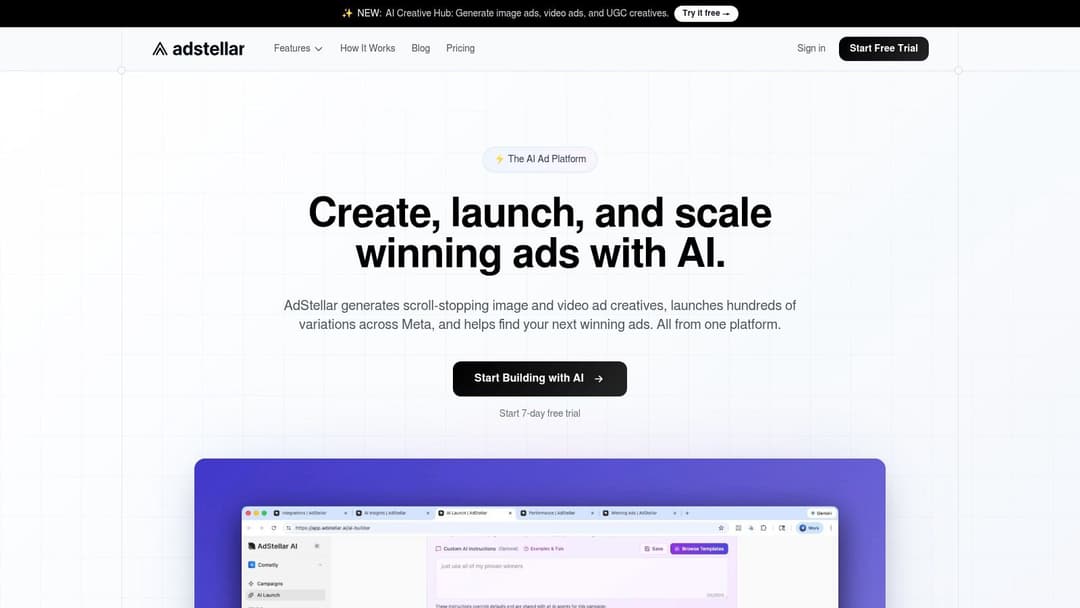
AdStellar AI is the tool I'd put at the center of a Meta-heavy startup stack once a team has real campaign history. It isn't trying to be a general marketing suite. It focuses on one of the biggest pain points in growth execution: turning manual Meta ad setup into a repeatable, data-backed workflow.
The platform connects to Meta Ads Manager through secure OAuth, ingests historical performance, and uses that account data to rank creatives, audiences, and messages against the business goal you care about most, such as ROAS, CPL, or CPA. That matters because teams often don't lose time in strategy meetings. They lose it in repetitive setup, scattered assets, naming inconsistencies, and slow testing cycles.
Why it stands out in a startup stack
A lot of startup tool roundups still treat social tools like scheduling software. That misses the primary bottleneck. Current market commentary points to a more important question: can your stack compress the creative-to-learning loop for paid social, especially as AI-assisted campaign systems become more central and manual micro-management becomes less effective, as discussed in Zapier's guide to digital marketing tools for modern teams.
AdStellar is built around that exact problem. It lets teams generate large sets of ad combinations quickly, publish them with one click, and organize campaigns, creatives, audiences, assets, and performance in one place.
Practical rule: AdStellar is strongest when your team already has Meta conversion data. If your ad account is brand new, you won't get the same value from its learning layer yet.
A few trade-offs are worth saying out loud:
- Best for active Meta advertisers: Teams with existing campaign history will get more out of the ranking and learning models than brand-new accounts.
- Strong execution advantage: Bulk creation and centralized workflow modules remove a lot of the mechanical work that usually slows down paid social teams.
- Less ideal for pricing-first buyers: There isn't public pricing on the site, so you'll need a sales conversation before you can evaluate total cost.
- Proof requires a demo: No public testimonials or award pages are listed, so operators who want validation upfront will need to ask direct questions.
If your startup runs Meta as a major acquisition channel, AdStellar solves a practical problem that most stacks ignore: speed of iteration. For teams trying to launch more tests without adding more manual work, its view on mastering AI-powered Meta ads is worth reviewing. If you want broader adjacent reading, this collection of product marketing resources is also useful.
2. Google Ads
A founder asks for leads this month, not brand lift six months from now. Google Ads is usually the first channel I test in that situation because it captures existing demand instead of waiting for an audience to care.
That matters in a startup marketing stack. Search often sits near the bottom of the funnel, where a team can turn problem-aware traffic into demos, trials, or purchases faster than most paid social campaigns. If your product solves a pain point people already type into Google, this channel can produce signal quickly.
Google Ads also has range. A startup can begin with search, then add Shopping, YouTube, Demand Gen, Display, or Performance Max inside the same system as the account matures. That progression is useful for lean teams that want one paid media layer before they add channel-specific complexity.
Where Google Ads works best
Google Ads works best for clear, searchable intent. SaaS products with obvious use cases, local services, B2B tools tied to a known job, and ecommerce categories with strong product demand usually have a cleaner path to early traction here than products that require heavy education.
The platform gives startups practical planning tools like Keyword Planner, Reach Planner, and Google Ads Editor. Those matter because early-stage teams usually do not lose money from lack of ambition. They lose it from poor structure, weak tracking, and landing pages that do not match the query.
Google Ads can be efficient fast. It can also waste budget fast.
The trade-off is precision. Search campaigns reward disciplined account design. Loose keyword groupings, weak negative lists, broad match used without control, and fuzzy conversion events make optimization harder than it needs to be.
A few practical realities:
- Best for demand capture: Strong fit when prospects already know the problem and are actively comparing options.
- Less effective for educating cold audiences: If buyers need to be convinced the problem matters, Meta or TikTok often generate earlier creative and audience learning. If you need that comparison, this guide to how Facebook Ads Manager handles audience and creative testing helps clarify the difference.
- Useful across startup stages: Search can validate message-market fit early, then YouTube or Performance Max can expand reach once conversion tracking is stable.
- Tracking quality determines ROI: Bad attribution does not just blur reporting. It leads to worse bidding, weaker budget allocation, and false confidence in the wrong campaigns.
If you're building search for the first time, this walkthrough on how to create an ad on Google is a solid starting point. The platform itself lives at Google Ads.
3. Meta Ads Manager
Meta Ads Manager remains one of the most practical growth tools for startups that need volume, creative testing, and retargeting in the same place. Facebook, Instagram, Messenger, WhatsApp, and Audience Network all run through one interface, which is useful when a lean team can't afford fragmented media operations.
This platform is strongest when your offer benefits from visual storytelling or repeated exposure. DTC brands, lead generation companies, and products with strong before-and-after value props usually learn quickly on Meta because the creative itself does a lot of the selling.
The trade-off with Meta
Meta gives you broad consumer reach and a strong environment for testing angles, hooks, formats, and audiences. Reels, Stories, carousels, and feed placements make it easier to pressure-test different messages without rebuilding the entire campaign structure each time.
But it isn't a plug-and-play machine. Signal loss and privacy changes made blind optimization much harder. Teams that still rely on loose event setups or inconsistent attribution usually end up reacting to noise.
Google's own product framing and startup-oriented tool roundups continue to position GA4 as the default analytics layer for web and app measurement, and many startup guides place it in the first tier because event-based tracking and cross-device reporting are critical when paid social, search, email, and retargeting all run at once, as discussed in MyEmma's overview of marketing tools for startups. For Meta buyers, that means Ads Manager works best when paired with disciplined measurement elsewhere in the stack.
- Use it when creative matters: Meta is still one of the best places to test positioning through ad creative.
- Expect volatility: Performance can move quickly when signals change or competition shifts.
- Track conversions correctly: Without rigorous event setup, campaign learning degrades.
If you're new to the platform, this explanation of what Facebook Ads Manager is helps clarify the moving parts. The native platform is Meta Ads Manager.
4. TikTok Ads Manager
TikTok Ads Manager is where startups go when polished ad creative stops working and native-feeling content starts winning attention. It's a discovery engine more than a pure intent platform, which makes it useful for finding net-new audiences and pressure-testing fresh creative concepts.
For some startups, TikTok is the first place they discover what message makes people stop scrolling. That's valuable even if the platform doesn't become the biggest budget line immediately. The creative lessons often carry over into Meta and YouTube.
What founders usually underestimate
TikTok doesn't reward ads that look like ads. It rewards creative that feels native to the feed. That means the media buying setup is only half the work. The other half is building a content pipeline that can produce concepts, hooks, creator-style edits, and variations quickly.
The platform supports in-feed ads, TopView, Spark Ads, creative tools, and creator marketplace integrations. It also includes budget controls, though minimum budgets can feel high for teams trying to validate a narrow audience with very limited spend.
Creative mismatch is the main reason startups call TikTok "unpredictable." The platform is usually telling you the concept doesn't fit the environment.
A few practical notes:
- Best for discovery: Strong for reaching people who weren't actively searching for you.
- Creative first: Native, fast, human content tends to beat overproduced brand ads.
- Tough for weak offers: If the hook isn't clear in the first seconds, the platform exposes that immediately.
- Budget floor matters: Very early-stage teams may feel constrained by minimums.
If TikTok contributes to Amazon or marketplace demand in your business, this piece on Facebook Instagram Amazon ROI is a useful reminder that channels often influence outcomes beyond the last click. For setup fundamentals, see TikTok Ad Manager and the platform at TikTok Ads Manager.
5. Google Analytics 4
Most startups don't need more dashboards. They need one source of truth they can trust. That's why GA4 belongs in almost every list of the best digital marketing tools for startups.
Google Analytics became foundational because it gives teams behavior-level visibility into how users arrive, what they do, and where they drop off. Google launched Google Analytics in 2005, and by 2019 the company reported more than 30 million websites using it. For startups, that historical scale matters because it shows analytics moved from a specialist function to basic growth infrastructure.
Why GA4 should be installed early
GA4 uses an event-based model across sites and apps, which is a better fit for modern startup journeys than older session-first thinking. A user might click a paid social ad on mobile, return through branded search on desktop, and convert later through email. If you don't track that journey well, channel decisions become guesswork.
The free standard tier is enough for many startups. Native integration with Google Ads also makes it easier to connect spend with outcomes, especially when you're managing search and on-site conversion together.
- Install it before scaling spend: If you wait, you'll spend weeks trying to reconstruct missing data.
- Define events clearly: Teams get into trouble when every click becomes an event and nothing reflects actual business milestones.
- Use it for diagnosis, not just reporting: GA4 is most useful when it helps explain why a funnel is leaking.
Independent startup guides regularly treat GA as a core tool for understanding acquisition sources and on-site behavior. That aligns with what operators need: a baseline for evaluating funnel health rather than just channel vanity metrics.
This guide to measuring true ad attribution pairs well with a proper GA4 setup. The platform itself is Google Analytics.
6. HubSpot Marketing Hub
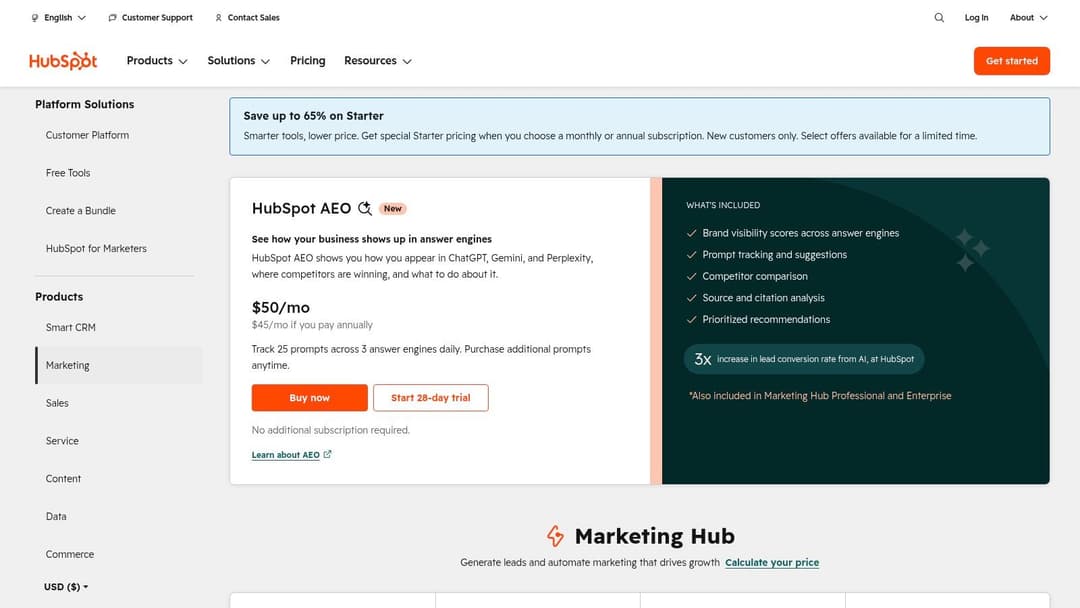
HubSpot Marketing Hub is what I recommend when a startup's biggest problem is no longer traffic. It's coordination. Leads come in, sales wants context, lifecycle messaging is inconsistent, and nobody has a clean view of the contact journey.
HubSpot solves that by putting CRM data at the center of marketing operations. Email, forms, landing pages, workflows, ad sync, segmentation, and reporting all connect around the contact record. For B2B startups and service businesses, that connection often matters more than any single feature.
When HubSpot is worth the cost
HubSpot works best when your business has a meaningful sales or nurture process. If someone converts and then needs onboarding, education, follow-up, routing, and scoring, the platform earns its place. If you're just blasting a simple newsletter and collecting a few leads, it's often more system than you need.
Its educational ecosystem is also a real advantage. Small teams usually don't just need software. They need a way to get new hires productive quickly.
Don't buy HubSpot because it does everything. Buy it when disconnected tools are already slowing down follow-up and muddying pipeline visibility.
What to watch for:
- Strong fit for B2B and hybrid funnels: Especially useful when marketing and sales share responsibility for conversion.
- Good for lifecycle orchestration: Workflows, forms, and CRM-linked segmentation are the core value.
- Can get expensive as you grow: Contact-based pricing changes the economics over time.
- Requires process discipline: A messy CRM inside HubSpot is still a messy CRM.
HubSpot's native pricing and product details are at Marketing Hub pricing.
7. Klaviyo
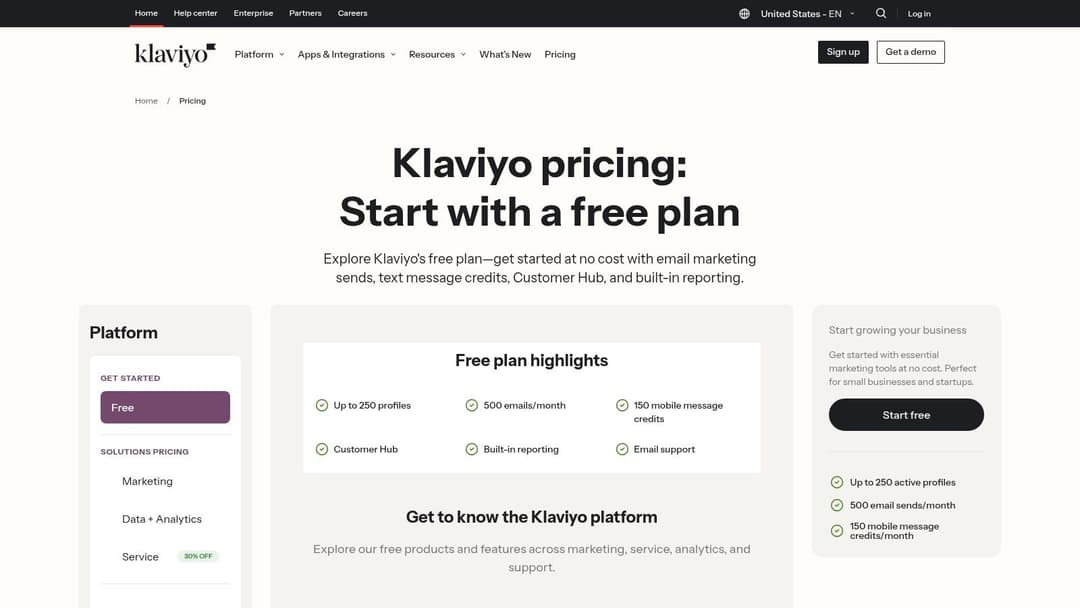
If you're in ecommerce or DTC, Klaviyo is one of the easiest ways to turn customer behavior into revenue-producing lifecycle campaigns. It was built for stores, and that shows in the way it handles segmentation, product-linked triggers, and visual automation flows.
Abandoned cart, browse abandonment, post-purchase education, replenishment, win-back, and VIP sequences are all native use cases here. You don't have to force the platform into an ecommerce shape. It starts there.
Why ecommerce teams pick Klaviyo
The Shopify and BigCommerce integrations are a big part of the appeal. Store data flows into the segmentation logic, which means teams can trigger messaging based on what a customer viewed, bought, skipped, or repeated.
Email and SMS under one roof also helps. Startups often try to stitch those together across separate tools and end up with duplicated audiences, conflicting cadences, or no shared reporting logic.
A practical way to think about Klaviyo:
- Best for product-driven retention: Ideal when repeat purchase behavior matters.
- Fast time to value: Templates and flows shorten setup for common ecommerce journeys.
- Cost grows with list size: Large inactive lists can become an unnecessary expense.
- Needs list hygiene: Teams that never prune profiles often pay for contacts that no longer matter.
Klaviyo is less compelling for startups with long consultative sales cycles or complex deal stages. In those cases, HubSpot usually makes more sense. But for stores that live or die on repeat purchases and campaign timing, Klaviyo is one of the sharper tools in the stack.
You can review its current options at Klaviyo pricing.
8. Semrush
Semrush is the tool I use when a startup has moved beyond pure paid acquisition and wants to build durable organic visibility. It's not just an SEO tracker. It's a research environment for understanding what your market is searching, what competitors rank for, where your site is weak, and which content opportunities are worth pursuing.
That matters because SEO is rarely a single tactic in startups. It supports content, product pages, category strategy, backlink discovery, and even paid search planning. One good research platform can replace several narrower tools.
Where Semrush earns its keep
The most useful parts for startups are keyword research, domain analysis, backlink analytics, site audits, rank tracking, and content ideation. If you're trying to decide whether to build landing pages around feature terms, alternative comparisons, jobs-to-be-done queries, or educational content, Semrush gives you enough context to make that call.
It also helps paid teams. Search query and competitor insight can improve ad account structure, landing page relevance, and expansion planning.
For early-stage teams, the main downside is cost. Semrush can feel heavy if you only need light keyword checking or occasional audits. It's much more justified when SEO becomes a recurring function rather than a side project.
- Best for structured SEO work: Strong when one person owns organic growth.
- Useful beyond SEO: Competitive research often informs PPC and positioning too.
- Not ideal for casual use: If nobody will use it weekly, it can become shelfware.
The platform is at Semrush pricing.
9. Canva
A startup usually hits the same bottleneck around the same time. Paid channels need fresh creatives, social needs weekly assets, sales wants a one-pager by Friday, and nobody has spare design capacity.
Canva earns its place in the stack because it removes that bottleneck for everyday marketing production. Teams can turn rough ideas into usable, on-brand assets fast enough to support real campaign velocity, not just occasional launches.
Why Canva fits the startup marketing stack
The core benefit is operational. Brand kits, reusable templates, collaborative editing, approvals, and quick resizing let one marketer adapt a campaign across paid social, email, landing pages, webinars, and sales enablement without rebuilding everything from scratch.
That matters because creative volume is now part of performance execution. Startups do not just need good-looking assets. They need a system for producing, updating, and testing them often enough to keep channels from stalling, especially as video and visual content take a larger share of acquisition work.
Canva works best as the production layer for routine creative. It keeps the team shipping while designers focus on higher-value brand and campaign work.
The trade-offs are straightforward:
- Strong for speed: Useful for ad variants, social graphics, pitch decks, lead magnets, and event promo assets.
- Accessible to marketers: Teams can produce decent work quickly without specialized design training.
- Limited for advanced creative: Complex motion, detailed illustration, and tightly controlled brand systems still belong in professional design tools.
- Better with process: Templates, brand controls, and light review workflows prevent a flood of off-brand assets.
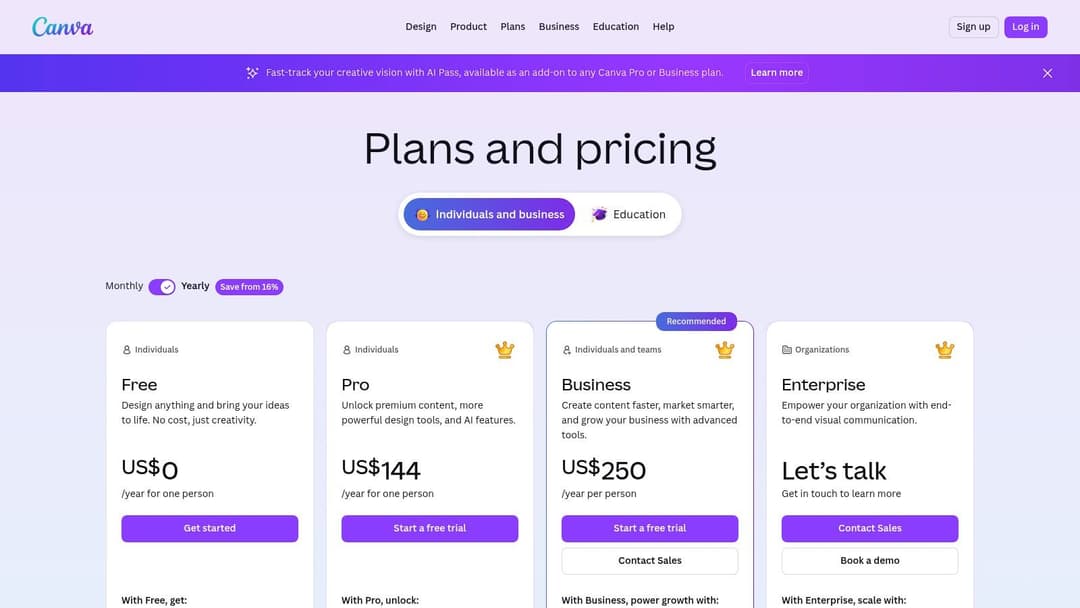
Canva is not the tool that defines your brand. It is the tool that keeps execution moving between bigger creative bets. For early-stage teams building a practical marketing stack, that distinction matters. The platform is at Canva pricing.
10. Mixpanel
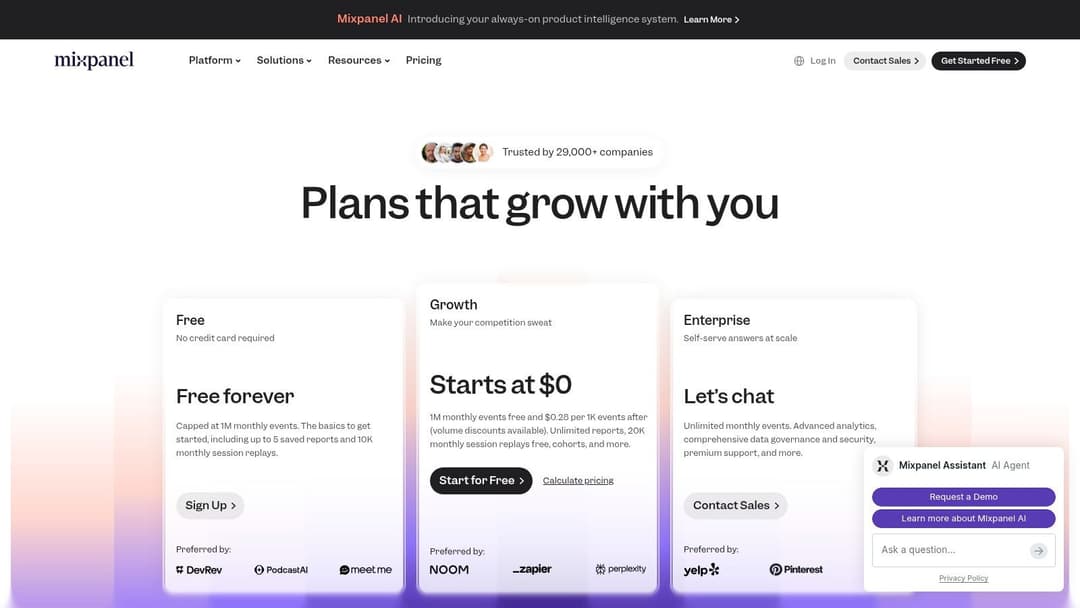
Mixpanel is where marketing starts talking to product in a useful way. If GA4 tells you how people reached the site and what they did at a high level, Mixpanel helps product-led startups understand activation, retention, feature adoption, and user journeys inside the product.
That's especially important in SaaS, apps, and freemium models. A paid channel can look efficient on the surface and still be poor if those users never activate or retain.
The implementation reality
Mixpanel is powerful, but it punishes sloppy instrumentation. If event naming is inconsistent or nobody defines what activation means, the reports won't rescue you. You'll just get cleaner-looking confusion.
The upside is that well-implemented event analytics can connect acquisition to real business outcomes. Instead of optimizing only for lead volume or signups, teams can optimize toward downstream behavior that accurately predicts account quality.
The broader lesson shows up in current analytics architecture guidance. Teams with a handful of sources operate differently from teams managing dozens, and the winning setups are the ones that reduce spreadsheet work, preserve source-of-truth integrity, and support unified dashboards across paid media, CRM, and web analytics, as outlined in Improvado's review of marketing analytics tools.
- Best for product-led businesses: Especially useful when in-product behavior determines conversion quality.
- Strong for cohort and retention analysis: Helps marketing teams see beyond the signup.
- Needs planning up front: Event taxonomy isn't busywork. It's the foundation.
- Works best in a broader data stack: Mixpanel is most valuable when paired with reliable acquisition and CRM data.
You can review it at Mixpanel pricing.
Top 10 Digital Marketing Tools for Startups, Quick Comparison
| Product | Core use case | Key features | Target audience | Strengths | Pricing |
|---|---|---|---|---|---|
| AdStellar AI | Automate bulk Meta ad creation, test & scale winners | Bulk ad generation & one‑click publishing, AI Insights ranking, auto‑learning campaign assembly, Meta OAuth | Performance marketers, agencies, DTC growth teams with Meta history | Recommended, 10× faster testing, metric-driven scaling, centralized workflows | Custom, contact sales (no public pricing) |
| Google Ads | Capture high‑intent search & video traffic | Search, Performance Max, YouTube, Display, planning tools | Startups seeking intent traffic & direct response | Massive reach, mature ecosystem & tools | Auction-based PPC; flexible budgets |
| Meta Ads Manager | Run ads across Facebook family placements | Cross‑Meta placements, Reels/Stories/Carousels, account setup tools | DTC, lead gen, creative testing & remarketing | Enormous reach, strong for creative-led testing | Auction-based PPC; budget controls |
| TikTok Ads Manager | Discovery & creator-led short‑form campaigns | In‑feed, TopView, Spark Ads, creator marketplace | Brands pursuing viral discovery & creator collaborations | High engagement, effective for new audience discovery | Auction-based; minimum campaign/ad group budgets |
| Google Analytics 4 (GA4) | Web & app measurement, attribution & funnels | Event-based model, conversion/funnel analysis, Google integrations | Any startup needing ROI measurement & attribution | Free standard tier, essential diagnostics for budget shifts | Free (standard) |
| HubSpot Marketing Hub | Lifecycle marketing + CRM‑connected automation | Email, landing pages, workflows, CRM sync, ad sync | Startups aligning marketing & sales, lifecycle teams | Tight CRM-marketing loop, extensive resources | Tiered pricing; scales with marketing contacts |
| Klaviyo | Ecommerce email & SMS lifecycle automation | Visual flows, deep Shopify/BigCommerce integrations, SMS+email | Ecommerce & DTC stores focused on revenue automation | Ecommerce-native segmentation & templates | Tiered by profiles; cost rises with list size |
| Semrush | SEO, keyword & competitive research for content & PPC | Keyword/domain research, site audits, rank tracking | SEO/content teams and paid search planners | Broad toolset for organic & paid planning | Paid tiers; can be expensive for small teams |
| Canva | Rapid production of static & lightweight animated creatives | Templates, brand kit, one‑click resize, collaboration | Small teams needing fast on‑brand assets without designers | Low learning curve, fast iteration for ads & socials | Free + Pro/Team subscriptions |
| Mixpanel | Product analytics to link acquisition to retention & LTV | Funnels, cohorts, retention, user journey, MTU plans | SaaS/apps tying marketing spend to product outcomes | Strong for CAC→LTV optimization, cohort analysis | Free tier; MTU/event‑based paid plans |
Building Your Startup's Growth Stack From Launch to Scale
The biggest mistake startups make with martech is adopting tools out of sequence. They buy like an enterprise before they've earned enterprise complexity. That usually leads to bloated subscriptions, broken tracking, and a lot of dashboards nobody uses.
A better path is to build your stack in layers, based on the constraint you're facing right now. At launch, the core need is simple: know where traffic comes from, know what visitors do, and run one primary paid channel well. That's why a lean early stack usually starts with GA4, either Google Ads or Meta Ads Manager, and Canva. That setup gives you measurement, acquisition, and creative production without too much operational drag.
Once the startup has some proof of demand, the next layer is retention and discoverability. At this stage, HubSpot or Klaviyo starts making sense, depending on whether you're running a CRM-led funnel or an ecommerce lifecycle model. Semrush also becomes much more valuable at this stage because SEO compounds over time, but only if someone is using the research to publish pages and improve site structure.
The final layer is about efficiency, not novelty. That's where specialized platforms like AdStellar AI and Mixpanel come in. AdStellar helps paid social teams compress the time between idea and learning. Mixpanel helps product-led teams connect acquisition to in-product outcomes. Neither should be the first tool you buy. Both can become powerful tools once the underlying data and workflows are already in place.
Here's the practical framework I use:
- Launch stage: Install GA4, set up one paid channel, and create assets in Canva.
- Validation stage: Add lifecycle messaging through HubSpot or Klaviyo once leads or customers need structured follow-up.
- Growth stage: Bring in Semrush to build organic demand and content discipline.
- Scale stage: Add execution-speed and product-analytics tools like AdStellar AI and Mixpanel when volume and complexity justify them.
One more point matters here. The best digital marketing tools for startups don't win because they have more features. They win because they remove a bottleneck. Google Ads helps capture demand. Meta helps test creative angles. Canva speeds production. GA4 clarifies funnel behavior. HubSpot and Klaviyo improve follow-up. Semrush supports long-term acquisition. Mixpanel exposes product truth. AdStellar accelerates Meta iteration.
Choose tools that match the next problem, not the next trend. That's how a startup stack stays lean and gets stronger over time.
If your growth engine increasingly depends on marketplaces as well as owned channels, it's also worth looking at services that improve my Amazon catalog so acquisition and conversion work together instead of living in separate silos.
If Meta is a serious growth channel for your startup, AdStellar AI is worth a closer look. It helps teams launch, test, and scale Meta campaigns faster by automating bulk ad creation, ranking creatives and audiences against performance goals, and turning historical account data into a more repeatable workflow. For growth teams that are stuck in manual setup and slow creative iteration, it's one of the more practical upgrades you can make.