In the crowded world of Meta, a winning campaign isn't just about a beautiful image or a clever headline. It's about strategic design that stops the scroll, speaks directly to an audience, and drives action. Many marketers focus on isolated elements, but high-performing Facebook ad designs are a complete system where creative, copy, format, and audience targeting work in perfect harmony.
This article moves beyond surface-level showcases to dissect 10 powerful ad design strategies that consistently deliver results. We'll break down the 'why' behind each example, providing annotated screenshots, strategic analysis, and replicable takeaways you can apply immediately. You'll learn the specific tactics used by top brands to achieve impressive click-through rates, lower costs per lead, and generate a strong return on ad spend.
More importantly, this is a practical guide. We won’t just show you what works; we’ll show you how it works and how to make it work for you. We will also reveal how you can use tools like AdStellar AI to automate the creation and testing of hundreds of variations. This approach turns these isolated examples into a scalable, data-driven creative engine for your own campaigns. Prepare to look at your ad creative not just as a static image, but as a performance-driving asset.
1. Single Image Ads with Bold Typography
In the fast-scrolling world of social media feeds, simplicity often wins. Single image ads paired with bold, can’t-miss typography are a staple of high-performing Facebook ad designs because they combine visual appeal with a direct message. This format works by instantly grabbing attention with a high-quality product or lifestyle image and then immediately delivering a clear value proposition through large, contrasting text overlays. It’s a powerful one-two punch for stopping thumbs and directing focus.
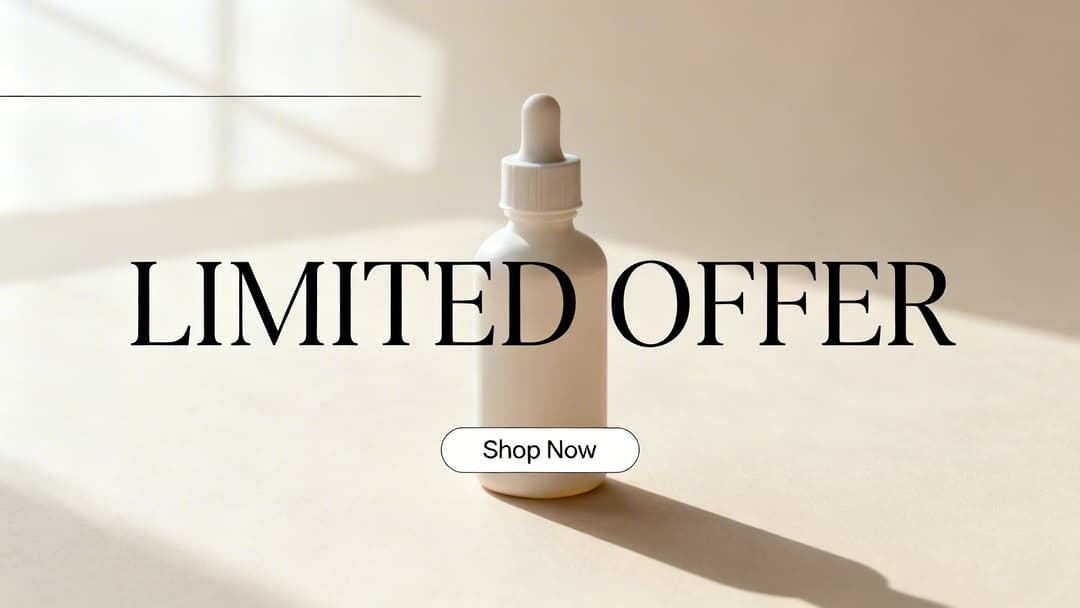
This ad design is especially effective for direct-to-consumer (DTC) brands like Warby Parker and Glossier, who masterfully blend minimalist product shots with aesthetic typography to communicate brand identity and drive conversions. The core principle is clarity; the user should understand the offer or benefit within a split second.
Why This Ad Design Works
- High Visual Impact: A single, compelling image acts as a strong visual anchor in a crowded feed.
- Immediate Clarity: Bold text ensures the primary message, like "Limited Offer" or "50% Off," is absorbed instantly.
- Mobile-First Efficiency: This format is easily optimized for vertical viewing. For detailed specifications, you can learn more about the best image sizes for Facebook ads to maximize your screen real estate.
- Versatility: It's adaptable for various goals, from brand awareness to direct-response sales promotions.
Actionable Tips for Implementation
To make this format work for your campaigns, focus on testing and optimization. Start by A/B testing benefit-focused copy ("Get Glowing Skin") against urgency-driven copy ("Sale Ends Friday"). Test at least three to five different typography styles per image to see which font and color combination grabs the most attention.
Strategic Takeaway: The goal is to create a visual hierarchy. The image attracts, the bold text informs, and the call-to-action directs. Ensure your text overlay doesn't just decorate the image but actively guides the user’s eye toward the next step.
For scaling your creative production, tools like AdStellar AI can automate the process, allowing you to generate and test dozens of typography and color variations in minutes, helping you find the winning combination faster.
2. Video Ads with Progressive Disclosure
In a feed where motion is king, short-form video ads that progressively disclose information are designed to maximize viewer retention. This Facebook ad design works by grabbing attention in the first second with a strong visual hook, then layering on the problem, solution, and call-to-action in quick succession. This format respects the user's limited attention span by delivering value incrementally, encouraging them to watch until the final CTA is revealed.
This strategy is highly effective for explaining a feature, showing a process, or telling a quick story. Brands like Slack use it for feature-focused demos, while meal-kit services like Blue Apron show the satisfying process of meal preparation. The key is to structure the video like a micro-narrative, with each new piece of information building on the last, keeping the viewer engaged for the entire 3-to-15-second duration.
Why This Ad Design Works
- High Initial Engagement: The immediate hook, often a text overlay or fast movement, is designed to stop the scroll and capitalize on the autoplay feature.
- Sustained Curiosity: Revealing information step-by-step keeps viewers wondering what’s next, increasing video completion rates.
- Clear Storytelling: This format breaks down complex messages into digestible parts, making it easier for users to understand the benefit.
- Sound-Off Optimization: With progressive text overlays and strong visuals, the core message is delivered effectively even with the sound off. For a deeper look at video strategy, you can find more information by mastering video for advertising.
Actionable Tips for Implementation
To execute this design, focus on the hook. Test at least five to ten different hook variations for each core message to find what captures attention most effectively. Always include captions, as the majority of users watch videos without sound; experiment with different caption styles (e.g., dynamic, color-changing text) to see what performs best. Keep videos under 15 seconds to maintain high retention and monitor your video completion rates to identify where viewers drop off.
Strategic Takeaway: The first second is everything. Your goal is to create an "information gap" immediately. Hook the viewer with a question, a bold statement, or a surprising visual, then use the following seconds to close that gap with your solution and a clear call-to-action.
Using a tool like AdStellar AI can help automate the creation of these video ads. It allows you to quickly generate multiple combinations of hooks, messages, and CTAs, so you can test and find the highest-performing sequence without extensive video editing.
3. Carousel Ads (Multi-Product Showcase)
Carousel ads give advertisers a swipeable canvas to display between two and ten different products, benefits, or features within a single ad unit. This format transforms a static ad into an interactive mini-catalog. Each card functions as its own miniature ad with a unique image, headline, description, and link, allowing you to showcase a collection, tell a story, or highlight multiple value propositions without forcing the user to leave their feed.
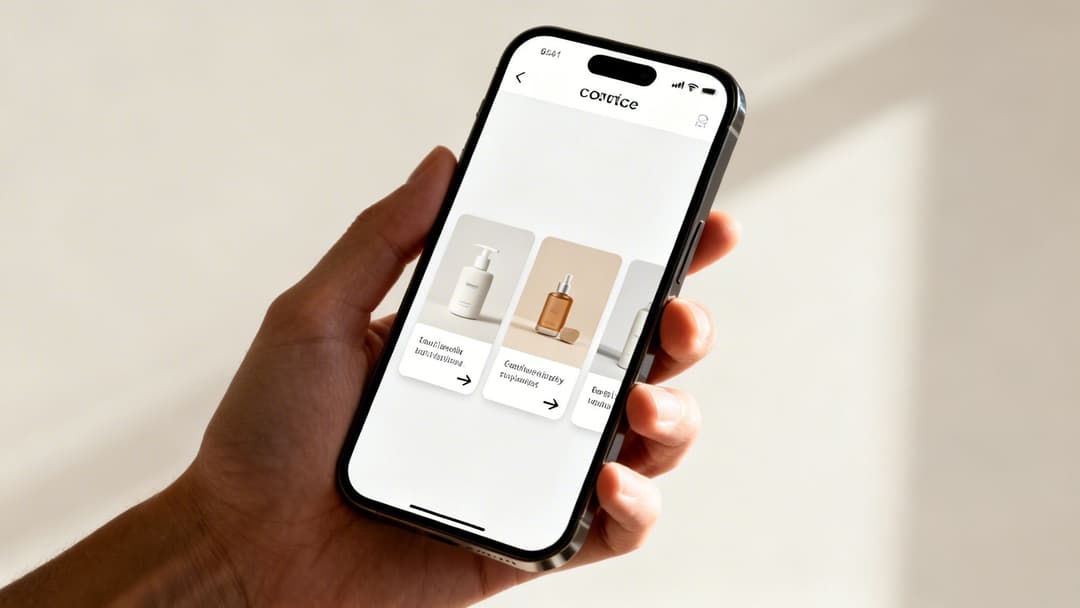
This design is a workhorse for e-commerce giants like Amazon and fashion brands like H&M, who use it to present new collections or a variety of products from a single category. The interactive nature encourages engagement, and its structure is perfect for testing different angles, products, and messages all at once, making it a favorite for performance-focused marketers.
Why This Ad Design Works
- Showcase Multiple Products: It's the most effective way to display a range of items, appealing to a broader audience with varied tastes.
- Explain Features or Benefits: Each card can be dedicated to a specific feature, benefit, or step in a process, making complex information digestible.
- Higher Engagement: The swipeable format invites user interaction, which can lead to lower CPMs and a higher Relevance Score.
- Rich Storytelling: Carousels can be used to tell a sequential story, guiding the user through a narrative that builds interest and leads to a call to action.
Actionable Tips for Implementation
To get the most out of carousels, always place your highest-performing product or strongest message on the first card to hook the user. Test different card sequences to see if a benefit-first approach outperforms a product-first one. Maintain a consistent visual style across all cards for brand cohesion. For a deeper look at the format, you can learn how to create a carousel post for platforms like Instagram.
Strategic Takeaway: Treat each carousel card as a unique testing opportunity. Monitor the metrics for each card individually to see which images, headlines, and products resonate most. This data is invaluable for optimizing not just the ad itself, but your overall product and messaging strategy.
Use a creative automation tool like AdStellar AI to generate hundreds of carousel combinations by automatically swapping cards, headlines, and images. This allows you to test multiple card orderings and creative elements simultaneously, helping you find the highest-performing arrangement with minimal manual effort.
4. Testimonial & User-Generated Content Ads
In an advertising environment where consumers are skeptical of branded messages, authenticity is a powerful currency. Ads that feature real customer testimonials, reviews, or user-generated content (UGC) bypass this skepticism by using social proof. This approach positions satisfied customers as genuine brand advocates, making the message feel more trustworthy and relatable than a polished corporate ad. It's a direct line to building trust with potential buyers.
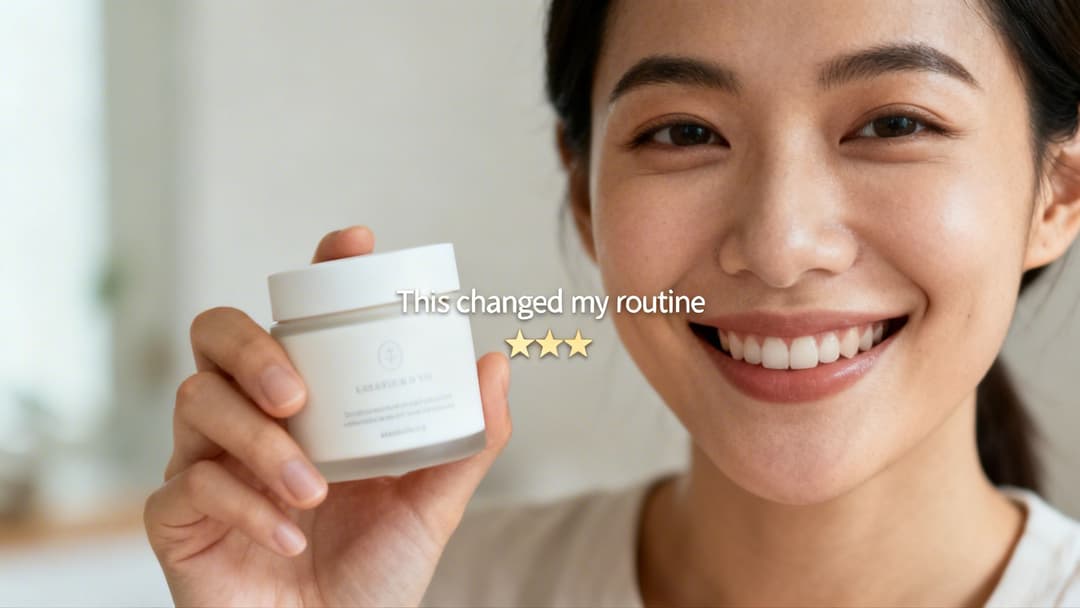
This method is a go-to for many successful brands. Skincare companies show dramatic before-and-after photos submitted by customers, Shopify highlights merchant success stories, and SaaS brands like Slack feature quotes from happy clients. The common thread is letting real people and their authentic experiences sell the product, a core principle in modern Facebook ad designs.
Why This Ad Design Works
- Builds Instant Trust: Peer recommendations are often more trusted than direct brand advertising.
- High Authenticity: UGC looks native to the social feed, reducing ad blindness and making it feel less intrusive.
- Boosts Conversions: Showing tangible results (e.g., "3x ROI") or relatable stories helps prospects visualize their own success.
- Provides Social Proof: It validates the product's value by showing that other people are already benefiting from it.
Actionable Tips for Implementation
To get this right, always request permission from the user and credit them when possible for maximum authenticity. Test different formats, pitting a text quote against a user's video testimonial. A surprisingly effective tactic is to A/B test a 3-star or 4-star review against a perfect 5-star one; the slightly imperfect review can appear more genuine and increase credibility. Finally, rotate your UGC frequently to keep your campaigns fresh and avoid ad fatigue.
Strategic Takeaway: The power of UGC is in its specificity. A generic "I love it!" is weak. A testimonial that says, "It cleared my acne in 3 weeks without drying my skin," is a conversion driver. Focus on testimonials that address specific pain points and offer concrete outcomes.
For marketers looking to scale this strategy, generating high-quality UGC can be a bottleneck. You can learn more about using an AI UGC generator to create diverse and authentic-looking ad creatives, allowing you to test dozens of customer testimonials and visuals rapidly.
5. Messenger Ads & Click-to-Message CTA
Instead of sending users to an external website, Messenger ads open a direct one-on-one conversation between the customer and the business. This powerful format captures intent at the peak moment of interest, converting an ad click into an immediate customer conversation. It’s an ideal choice for businesses with a considered purchase cycle or those that benefit from personalized interaction, as it removes friction and starts building a relationship right within the Facebook ecosystem.
This ad design is a go-to for service-based businesses like real estate agents, who use it to generate property inquiries, or car dealerships scheduling test drives. The goal is to move the user from passive interest to active engagement by making it incredibly easy to ask a question, request a quote, or book a demo. It transforms an ad from a broadcast medium into a conversational tool.
Why This Ad Design Works
- Reduced Friction: Users stay within the familiar Messenger app, avoiding slow-loading landing pages and complex forms.
- Immediate Lead Capture: It instantly turns an interested prospect into a direct contact, opening a line of communication.
- High-Intent Engagement: A user willing to start a conversation is often more qualified than one who just clicks a link.
- Personalization at Scale: Automated chatbots can qualify leads, answer common questions, and route conversations to the right team member.
Actionable Tips for Implementation
To get the most out of this format, focus on optimizing the entire conversational journey. Start by creating five to ten different messaging templates to test; try both question-based ("Have a question about pricing?") and benefit-based ("Get your free quote now") approaches. Set up immediate chatbot responses to qualify leads and manage expectations by stating an estimated response time in your ad copy. Monitor your conversation-to-lead conversion rates for each template to identify what works best for your audience.
Strategic Takeaway: The initial message is your new landing page. The ad’s call-to-action should set a clear expectation for the conversation. Craft a compelling CTA that makes the value of starting a chat undeniable. You can find more tips on how to write a call to action that converts.
For scaling, use a tool like AdStellar AI to test different creative and call-to-action combinations with your messaging variations. This allows you to quickly find the ad creative that most effectively drives high-quality conversations and accelerates your lead generation efforts.
6. Collection Ads (Full-Screen Mobile Experience)
Collection ads offer a seamless, catalog-like shopping experience directly within the Facebook app, making them a powerful tool for e-commerce brands. This format combines a primary hero image or video with a grid of related products underneath. When a user taps the ad, it opens into a full-screen, fast-loading "Instant Experience," allowing them to browse and shop multiple items without ever leaving the platform. This reduces friction and is designed to turn interest into immediate sales.
This ad design is a favorite for retail giants like Nike and Sephora, who use it to display entire product lines, from new shoe releases to curated makeup collections. The strength of this format lies in its ability to mimic an online store's category page, providing both inspiration through the hero creative and direct shopping opportunities through the product grid. This makes it an essential part of many successful Facebook ad designs for mobile commerce.
Why This Ad Design Works
- Reduced Friction: By keeping users within the Facebook app, you eliminate slow-loading landing pages, which often cause a drop-off in conversions.
- High Engagement: The immersive, full-screen experience is interactive and encourages users to browse, much like a digital storefront.
- Showcases Product Range: It’s perfect for launching new collections, promoting seasonal items, or highlighting a category of products.
- Mobile-Optimized: Designed from the ground up for mobile users, it provides a native and intuitive shopping journey.
Actionable Tips for Implementation
To maximize the effectiveness of your collection ads, begin by testing three to five different hero product variations. The hero creative is critical, as it often drives 40-50% of initial clicks. Arrange the products in your grid strategically, testing layouts based on popularity against layouts prioritized by profit margin. Ensure all product images in the grid are high-quality and use a 1:1 aspect ratio for a clean, uniform look.
Strategic Takeaway: Target your collection ads to existing customers or warm audiences who have saved payment methods on Facebook. This creates the most frictionless path to purchase, as they can browse and buy in just a few taps without re-entering their details.
For scaling your efforts, a tool like AdStellar AI can help generate over a hundred collection ad combinations with different product sequences and hero creatives. This allows you to rapidly test what resonates most with your audience, optimizing for both clicks and conversions.
7. Lead Generation Ads (In-Feed Forms)
For marketers focused on acquiring customer information, Facebook Lead Generation Ads are a game-changer. These ads feature an in-feed form that users can fill out directly within the Facebook app, eliminating the need to visit an external landing page. The platform pre-populates fields like name, email, and phone number using the user’s profile data, reducing friction and significantly increasing completion rates. It's one of the most efficient facebook ad designs for building an email list or sales pipeline.
This format is a go-to for service-based industries like real estate, insurance, and B2B SaaS. For example, a mortgage lender can offer a "Free Rate Quote" or a software company can provide a "Free Demo Sign-Up" without ever forcing the user to leave their social feed. The convenience factor is the primary driver of its success.
Why This Ad Design Works
- Drastically Reduced Friction: Pre-filled forms and no external redirects mean users can submit their details in just a few taps.
- Higher Conversion Rates: By removing common drop-off points like slow landing pages, lead ads often achieve a lower cost-per-lead.
- Mobile-Optimized Experience: The entire process is built for mobile, catering to the majority of Facebook users.
- Improved Lead Quality: You can add qualifying questions to the form to better segment and score incoming leads before your sales team reaches out.
Actionable Tips for Implementation
To maximize results, keep your forms as short as possible; aim for two to three essential fields. A/B test different incentives, such as an ebook versus a free consultation, to see which offer resonates most with your target audience. Also, test the phrasing of your form questions to balance lead quantity with qualification quality. Combining your lead form with an automated Messenger follow-up sequence can further boost conversion rates.
Strategic Takeaway: The offer is just as important as the form's convenience. A low-friction form won't perform well without a compelling reason for the user to share their information. Make the value exchange clear and immediate.
For scaling your lead generation, a tool like AdStellar AI can help you create dozens of form variations with different field combinations, privacy assurances, and offers. This allows you to quickly test what drives the highest volume of qualified leads for your specific business.
8. Retargeting Ads with Dynamic Product Feeds
For audiences already familiar with your brand, personalization is the key to conversion. Retargeting ads powered by a dynamic product feed are among the most effective Facebook ad designs for e-commerce because they automatically show users the exact products they’ve previously viewed or added to their cart. This highly relevant approach moves beyond generic brand messaging to serve as a direct, timely reminder, re-engaging warm leads with the specific items that caught their interest.
This strategy is the bread and butter of major retailers like Amazon, which masterfully reminds users of abandoned cart items. It’s also a core tactic for Shopify stores using "Complete Your Purchase" campaigns and travel sites that retarget users with recently viewed flights or hotels. The ad creative pulls directly from your product catalog, ensuring pricing and availability are always current.
Why This Ad Design Works
- Extreme Personalization: Ads are tailored to individual browsing history, making them feel less like an interruption and more like a helpful nudge.
- High Relevancy: Showing a user the exact product they considered drastically increases the likelihood of a click-through and purchase.
- Automated and Scalable: Once the product catalog is connected, the process is automated, serving personalized ads to thousands of users without manual creative work.
- Captures Lost Sales: It directly addresses cart abandonment, one of the biggest challenges in e-commerce, by bringing interested buyers back to complete their purchase.
Actionable Tips for Implementation
To properly implement this, segment your audiences. Create separate campaigns for users who only viewed a product versus those who added an item to their cart. The "add to cart" audience has higher intent, so you can test more aggressive offers or urgency-driven copy like "Your items are selling fast!" or "Price drop alert!"
Strategic Takeaway: The power of dynamic retargeting is in its timing and segmentation. Test different audience windows (7-day, 14-day, 30-day) to find the sweet spot. A 7-day window captures high-intent users, while a 30-day window can re-engage those who needed more time to consider. Monitor frequency closely to avoid ad fatigue.
For rapid optimization, use a tool like AdStellar AI to test dozens of messaging variations across your different retargeting audiences. Combining dynamic products with a compelling discount offer can lift conversions significantly.
9. Lookalike Audience Ads with Demographic Variants
Scaling your best customers is the holy grail of acquisition, and Lookalike Audience targeting is Facebook’s most direct path to achieving it. This strategy involves creating audiences of users who share characteristics with your existing high-value customers. The real power, however, comes from pairing these potent audiences with creative variants designed specifically for their demographic nuances, like age, gender, or location. It’s a methodical approach to finding new, high-potential customers by mirroring what already works.
This isn't just about finding similar people; it's about speaking their specific language. A successful ad design for this strategy doesn't use a one-size-fits-all creative. Instead, it segments the ad creative to match the demographic slices within the Lookalike Audience. For instance, an e-commerce brand targeting lookalikes of its top spenders might show different product images and messaging to a 25-34 year old segment versus a 45-54 year old segment, even though both are part of the same core Lookalike group.
Why This Ad Design Works
- Precision at Scale: It combines the power of Facebook's algorithm to find similar users with the nuance of demographic-specific messaging.
- Improved Relevance: Tailoring ad creative to age groups or locations makes the ad feel more personal and relevant, boosting engagement and conversion rates.
- Efficient Budget Allocation: By identifying which demographic sub-segments within a lookalike audience perform best, you can allocate your budget more effectively.
- Reduces Audience Fatigue: Serving different creative variants to the same core audience keeps the ads fresh and prevents performance decay.
Actionable Tips for Implementation
To properly execute this strategy, start with a high-quality source audience, such as a list of your top 5% of customers by lifetime value. Create 1%, 5%, and 10% Lookalike audiences and test them separately to find the right balance between reach and relevance. For each Lookalike, design creative variations for distinct age brackets (e.g., 20-30, 31-45, 46+) with copy and visuals that resonate with each group’s likely interests and life stage. Always remember to exclude your existing customer lists to avoid paying to acquire users you already have.
Strategic Takeaway: The goal is to move beyond broad targeting. Your Lookalike audience is a high-potential pool, but it’s not uniform. Segmenting your creative allows you to fish with the right bait for each type of fish in that pool, dramatically increasing your chances of success.
For marketers looking to scale this, a tool like AdStellar AI can automate the creation and testing of dozens of demographic-specific creative and audience combinations. This allows you to quickly pinpoint the most profitable pairings without manual guesswork.
10. Conversion Lift Optimization Ads (AI-Driven Creative Testing)
Manual A/B testing is giving way to a more powerful approach: AI-driven creative optimization. This method moves beyond simple one-to-one comparisons, using machine learning to simultaneously test hundreds or even thousands of ad variations. An AI platform automatically mixes and matches images, videos, headlines, copy, and audience segments to discover the highest-performing combinations, then reallocates budget in real-time to scale the winners. It's a systematic approach to finding what truly resonates with your audience at a scale impossible to manage manually.
This technique is a cornerstone for performance-focused e-commerce brands and SaaS companies that need to maximize return on ad spend (ROAS). Instead of guessing which product angle or value proposition will convert, they let an algorithm rapidly test every possibility. This data-first process identifies hidden opportunities and provides clear insights into which creative elements drive results, making it one of the most effective modern facebook ad designs for direct-response marketing.
Why This Ad Design Works
- Massive Scale: It automates the testing of a vast number of creative combinations, far beyond human capacity.
- Continuous Optimization: The system learns from live performance data, constantly refining and improving ad delivery without manual intervention.
- Data-Driven Insights: It reveals not just what works, but why, by pinpointing the specific images, copy, and audience pairings that drive conversions.
- Budget Efficiency: AI automatically shifts spend away from underperforming ads and toward top performers, maximizing your ROAS.
Actionable Tips for Implementation
To properly run AI-driven creative tests, you need to provide the algorithm with a diverse set of inputs. Start with a foundational library of at least 10-20 distinct creative assets (images, videos) and multiple variations of headlines and body copy. Allow the algorithm to run for a minimum of two to four weeks to gather sufficient data before drawing firm conclusions.
Strategic Takeaway: The goal is not just to find a single winning ad, but to build a system of continuous learning. Export the performance data from each test to inform your next campaign's creative strategy, creating a feedback loop that consistently improves results over time.
For a complete end-to-end workflow, platforms like AdStellar AI can manage the entire process. You can generate creative variations, launch extensive tests, monitor real-time performance, and scale the winning combinations automatically, turning creative optimization into a systematic growth engine.
10 Facebook Ad Design Formats Compared
| Ad Format | Implementation complexity | Resource requirements | Expected outcomes | Ideal use cases | Key advantages |
|---|---|---|---|---|---|
| Single Image Ads with Bold Typography | Low | Single high-quality image and typography assets | Moderate CTR (0.8–1.5%), fast deployment | DTC e‑commerce, product launches, time-limited offers | Fast to produce, low cost, strong scroll-stopping impact |
| Video Ads with Progressive Disclosure | Medium–High | Short-form video production, captions, editing | Higher engagement, CTR 1.2–2.5%, strong demo potential | SaaS, B2B, product education | Shows functionality, autoplay capture, strong ROAS potential |
| Carousel Ads (Multi-Product Showcase) | Medium | Multiple images/headlines, per-card URLs | Higher engagement, CTR 1.5–2.8%, longer interaction | E‑commerce, multi-product lines, collections | Tests multiple messages, showcases variety, good for comparisons |
| Testimonial & User-Generated Content Ads | Medium | UGC sourcing, rights management, curation | Trust-driven lifts, CTR 1.1–2.2%, conversion lift +25–40% | SaaS, B2B services, high-consideration purchases | High credibility, lowers CPL/CPA, authentic social proof |
| Messenger Ads & Click-to-Message CTA | Medium | Chat templates, bot automation or staff support | Lower CPL, high qualification (50–70% qualified) | B2B SaaS, lead gen, services, real estate | Eliminates landing page friction, enables real-time qualification |
| Collection Ads (Full-Screen Mobile Experience) | High | Product catalog, hero assets, instant checkout setup | High CVR (3–6%), higher AOV, fast purchases | E‑commerce, repeat customers, impulse buys | Lowest friction checkout, mobile-first immersive shopping |
| Lead Generation Ads (In-Feed Forms) | Low–Medium | Form setup, CRM integration, minimal fields | Higher form completion (25–40%), CPL 50–60% lower vs pages | B2B SaaS, insurance, financial services, lead gen | Pre-filled fields reduce friction, instant lead capture |
| Retargeting Ads with Dynamic Product Feeds | High | Pixel implementation, product catalog, audience data | Highest ROAS (3–8x), CVR 2–5% for warm audiences | E‑commerce, DTC brands, high-consideration items | Personalized reminders, automatic inventory/pricing sync |
| Lookalike Audience Ads with Demographic Variants | Medium | Seed audiences, segmented creatives, testing | Lower CPA (20–40% vs cold), ROAS 2–4x when seeded well | Customer acquisition, scaling winners, B2B SaaS | Efficient scaling, higher-quality prospects than broad targeting |
| Conversion Lift Optimization Ads (AI-Driven Creative Testing) | High | Large creative library, clean tracking, budget for tests | Up to 2–3x ROAS vs manual testing, 4–6 weeks to scale | Performance marketing, growth teams, data-driven brands | Automated large-scale testing, continuous optimization, faster scaling |
From Inspiration to Implementation: Your Blueprint for Better Ads
We’ve journeyed through a detailed gallery of high-performing Facebook ad designs, breaking down everything from bold single-image ads to interactive Collection and Messenger experiences. The goal was to move beyond simply admiring pretty pictures and instead dissect the strategic thinking that makes these ads work. Now, the final step is to translate this inspiration into a concrete, repeatable process for your own campaigns.
The common thread weaving through every successful example is not a magical color palette or a single killer headline. It is a persistent commitment to testing and iteration. The best marketers don't guess what will work; they build a system to find out. They understand that a static image might beat a video for one audience, while a user-generated testimonial might be the key to unlocking another.
Distilling the Core Principles of Effective Ad Design
If you take away nothing else from this guide, internalize these foundational truths. They are the constants that underpin successful advertising, regardless of format or placement.
- Clarity Over Clutter: The most effective ads communicate their value proposition almost instantly. Whether through bold typography, a clear product shot, or a direct-to-camera testimonial, the message is unmistakable.
- Audience-Centric Messaging: The creative and copy always speak directly to a specific audience's pain points, desires, or interests. The success of dynamic retargeting and Lookalike Audience ads is a direct result of this principle in action.
- A Clear, Compelling Call to Action: Every ad must guide the user toward the next step. "Shop Now," "Learn More," and "Send Message" aren't just buttons; they are direct instructions that resolve the user's interest.
Building Your Action Plan: From One Ad to a Testing Engine
Analyzing successful Facebook ad designs is the starting point. The real growth comes from applying those insights systematically. Manually creating, launching, and tracking dozens of creative variations is not only time-consuming but also a major barrier to finding winning combinations quickly. This is where a strategic approach, aided by automation, becomes essential.
Your blueprint for implementation should look something like this:
- Hypothesize and Deconstruct: Select a design concept from this article that aligns with your campaign goals. Break it down into its core components: the visual (image/video), the headline, the primary text, and the CTA.
- Create Strategic Variants: For each component, develop 2-3 variations. This isn't about random changes; it's about testing specific hypotheses. For example, test a benefit-driven headline against a pain-point-focused one. Test a lifestyle image against a product-in-use shot.
- Automate and Scale Your Testing: Instead of launching these variants one by one, use a platform to generate and manage these combinations at scale. This allows you to move from launching a handful of ads to deploying hundreds of micro-tests simultaneously, letting real-time data identify the most effective combinations of creative, copy, and audience. To ensure your AI-driven creative testing is effective, it’s vital to understand what constitutes a good Click Through Rate and how your designs measure up against benchmarks.
- Analyze, Iterate, and Scale Winners: The goal isn't just to find a single winning ad. The objective is to build a system that consistently discovers new winning ads. By automating the creation and testing process, you can quickly identify top-performing elements and scale them, ensuring your campaigns drive sustainable and predictable growth.
Mastering this process is what separates good marketers from great ones. It’s about building a reliable engine for creative discovery that works for you, day in and day out. The strategies in this guide are your creative fuel. Now, it's time to build the engine.
Ready to stop guessing and start scaling? AdStellar AI transforms your creative process, automating the generation of hundreds of ad variations so you can discover winning Facebook ad designs faster. Turn your inspiration into implementation and build a repeatable system for growth with AdStellar AI today.