Managing Facebook ad campaigns manually is a direct path to wasted ad spend and missed opportunities. The platform’s complexity, combined with ever-shifting audience behaviors and auction dynamics, makes it nearly impossible to optimize for peak performance without dedicated support. Relying solely on the native Ads Manager means countless hours spent on repetitive tasks: adjusting bids, pausing underperforming ads, duplicating ad sets for A/B tests, and manually refreshing creative assets. This manual grind doesn't just drain your time; it actively prevents you from focusing on high-level strategy, creative development, and market analysis, the very activities that drive significant growth.
The core problem is one of scale and speed. A human simply cannot process performance data and react quickly enough to capitalize on micro-trends or prevent budget waste in real time. This is where Facebook ad optimization tools become essential. These platforms automate the tedious, rule-based work, allowing algorithms to make thousands of micro-adjustments daily based on your specific performance goals. They transform campaign management from a reactive, time-consuming chore into a proactive, data-driven strategy.
This guide moves beyond generic feature lists to provide a comprehensive breakdown of the top Facebook ad optimization tools available today. We’ll analyze each platform’s core strengths, practical use cases, and potential limitations to help you identify the right solution for your specific needs, whether you're a B2B SaaS marketer, a growing e-commerce brand, or a digital agency juggling multiple clients. For each tool, you'll find direct links and screenshots to help you make a well-informed decision quickly.
1. AdStellar AI
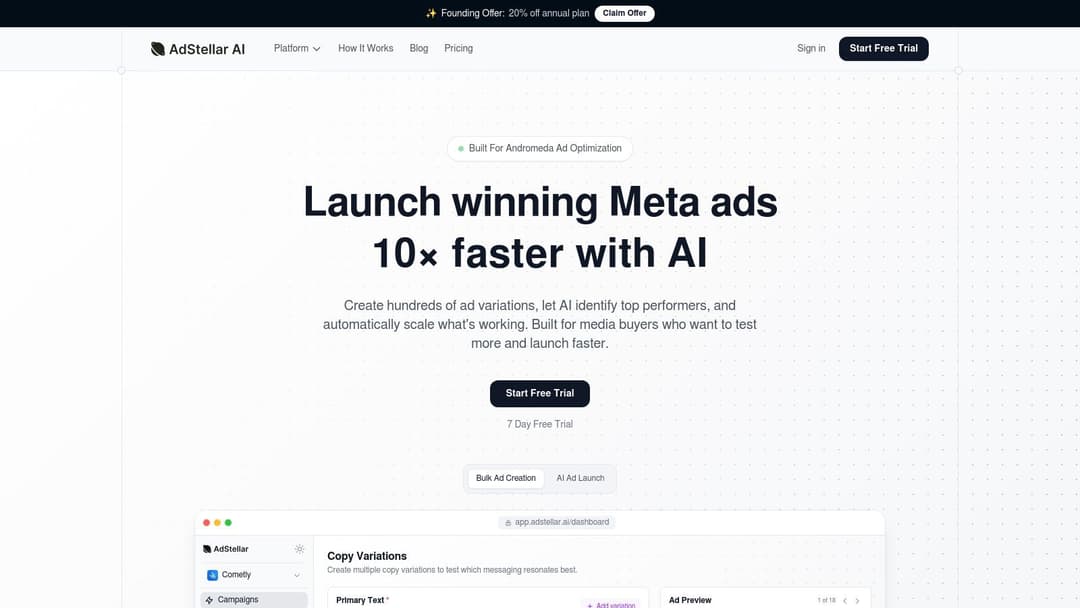
AdStellar AI stands out as a powerful, AI-driven platform designed explicitly for performance marketers who need to launch, test, and scale Meta ad campaigns with exceptional speed and precision. It moves beyond simple automation by integrating a learning engine that analyzes historical performance to recommend and build high-potential campaigns. This makes it an indispensable tool for teams focused on data-backed execution rather than manual guesswork.
The platform's core strength lies in its ability to dramatically compress campaign setup time. Instead of spending hours building ads one by one, users can generate over 100 ad variations in minutes and launch them with a single click. This workflow is a game-changer for agencies and e-commerce brands that rely on high-volume creative testing to find winning combinations.
Key Features and Strengths
AdStellar AI excels as a facebook ad optimization tool by centralizing the entire campaign workflow, from creative asset management to performance analysis, all within a clean and intuitive interface.
- AI-Driven Insights: The platform doesn't just launch ads; it analyzes them. Its AI ranks creatives, audiences, and copy against your primary business goals like ROAS, CPA, or CPL. This provides clear, actionable guidance on which elements are driving results, allowing you to reallocate budget effectively.
- Massive Scale Testing: AdStellar’s bulk creation engine is its signature feature. The ability to launch over 100 ads in under a minute transforms a team's testing capacity, enabling rapid iteration and faster discovery of winning formulas.
- Auto-Learning and Scaling: The system continuously learns from live campaign data. As it identifies high-performing combinations of creatives and audiences, it can automatically assemble and launch new campaigns, turning successful tests into scalable revenue drivers.
- Centralized Workflow: It consolidates your media library, creatives, audiences, campaign structures, and performance dashboards into one unified hub. This eliminates the need to jump between different tools and spreadsheets, streamlining team collaboration and operational efficiency. For a deeper dive into optimizing your ad workflows, explore these advanced Facebook ad optimization strategies.
Best Use Cases
AdStellar AI is ideal for performance-focused advertisers managing significant ad spend on Meta. Agencies can leverage its speed to manage multiple client accounts efficiently, while e-commerce brands can use its high-volume testing capabilities to quickly find profitable product-ad pairings. Its data-driven approach also makes it a strong fit for B2B marketers focused on optimizing for lead quality and CPL.
| Feature | Best For |
|---|---|
| Bulk Ad Launch | E-commerce, agencies, and teams needing high-volume creative testing. |
| AI Insights | Performance marketers focused on maximizing ROAS, CPA, or CPL. |
| Auto-Scaling | Growth teams looking to automate the process of scaling winning ads. |
| Centralized Hub | Teams seeking to streamline operations and improve collaboration. |
Limitations and Pricing
The platform's primary limitation is its exclusive focus on the Meta ecosystem; it is not a multi-channel ad management suite for Google or TikTok. Furthermore, the AI's effectiveness is closely tied to the quality and volume of your historical Meta Ads data. New ad accounts may require a "warm-up" period before the recommendations reach their full potential.
AdStellar AI offers a 7-day free trial to test its full capabilities. While full pricing isn't publicly listed, they provide a founding offer of 20% off the annual plan for new users.
- Pros: Massive time savings on campaign setup, goal-driven AI recommendations, automates scaling of winning ads, and provides a centralized workflow for teams.
- Cons: Meta-only platform, performance is dependent on historical ad account data.
Website: https://www.adstellar.ai
2. Meta Advantage (Ads Manager)
No list of Facebook ad optimization tools would be complete without Meta's own native automation suite, Meta Advantage. Integrated directly into Ads Manager, this is the foundational toolset every advertiser uses, whether knowingly or not. It serves as the baseline against which all third-party platforms are measured, offering powerful AI-driven features at no extra cost beyond your media spend.
Advantage simplifies campaign creation and management through automated processes. Its most notable feature, Advantage+ campaigns, allows advertisers to cede control over targeting, placements, and creative combinations to Meta's machine learning, which optimizes for conversions with impressive efficiency. This makes it an ideal starting point for new advertisers and a powerful, simplified option for seasoned pros focused on sales or lead generation. To get the most out of the native platform, you can explore this comprehensive Facebook Ads Manager tutorial.
Key Features and Use Cases
- Advantage+ Campaigns: End-to-end automated campaign setups for sales, apps, and leads that manage audiences, placements, and creatives.
- Advantage+ Creative: AI-powered tools that automatically enhance ad creatives by generating text variations, expanding image backgrounds, and applying visual touch-ups.
- Advantage+ Audience & Placements: Expands audience targeting beyond your initial selections and automatically allocates budget to the highest-performing placements across Meta's ecosystem.
- Advantage Campaign Budget: Formerly Campaign Budget Optimization (CBO), this feature automatically distributes your budget across the best-performing ad sets within a campaign.
Best for: Advertisers of all levels seeking a powerful, cost-effective baseline for optimization. It's particularly effective for e-commerce and DTC brands that can leverage Advantage+ shopping campaigns for streamlined performance.
| Pros | Cons |
|---|---|
| No additional cost beyond media spend | Less granular control compared to third-party tools |
| Deepest possible integration with Meta's systems | Automation can obscure performance insights (e.g., audience sources) |
| Strong default performance and easy to learn | Lacks the sophisticated, cross-channel features of external platforms |
Website: Meta Advantage Suite
3. Smartly.io
For enterprise-level advertisers managing massive budgets and complex creative needs, Smartly.io is a dominant force. This platform excels at unifying creative production, media buying, and performance analytics into a single, collaborative workspace. It goes far beyond standard optimization by offering sophisticated tools to automate the entire ad lifecycle, from creative templating to budget allocation, making it one of the most powerful Facebook ad optimization tools for large-scale operations.
Smartly.io shines in its ability to generate thousands of ad variations from a single template using dynamic data feeds. This is particularly valuable for e-commerce giants, travel companies, and food delivery services that need to personalize ads at scale with product catalogs or real-time information. Its automated optimization features and predictive algorithms work to minimize CPA and maximize ROAS, while its robust analytics provide deep insights that tie creative performance directly to core business KPIs.
Key Features and Use Cases
- Creative Automation & Templating: Create and deploy thousands of on-brand image and video ad variations using dynamic feeds and modular templates.
- Bulk Campaign Management: Use Workspaces to build, manage, and report on campaigns across multiple ad accounts and pages efficiently.
- Predictive Budget Allocation: Automates budget distribution across campaigns, ad sets, and ads based on performance predictions to maximize returns.
- Cross-Platform Reporting: Consolidates performance data from multiple channels (including TikTok, Pinterest, and Snapchat) for a holistic view of ad performance.
Best for: Large enterprise brands, global agencies, and sophisticated e-commerce advertisers with significant ad spend who need to scale creative production and automate campaign management across many accounts.
| Pros | Cons |
|---|---|
| Unmatched creative automation and dynamic ad capabilities at scale | Enterprise pricing model is prohibitive for small to medium-sized businesses |
| Powerful cross-account management and reporting features | Steeper learning curve; requires significant onboarding and process changes |
| Deep integration with Meta and other major social platforms | Can be overkill for advertisers with simpler campaign structures |
Website: https://www.smartly.io/page/meta
4. Hunch
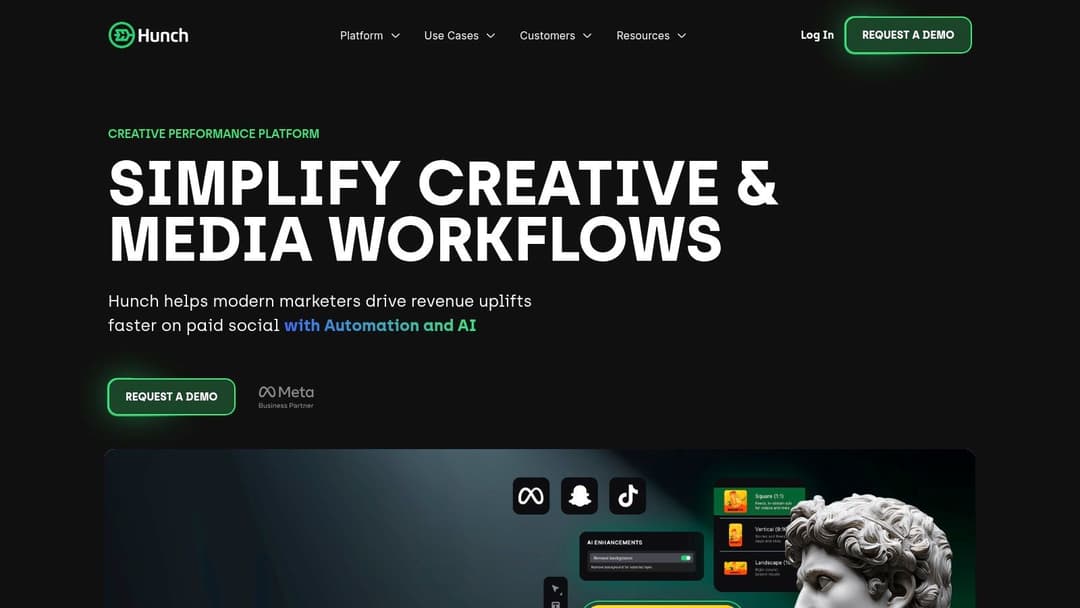
For advertisers whose biggest bottleneck is creative production and performance, Hunch offers a powerful creative automation and insights platform. It positions itself as a creative performance tool that goes beyond standard ad management by combining AI-powered creative production with dynamic data feeds and advanced automation workflows. This makes it a standout choice for high-volume e-commerce brands and agencies looking to scale their ad variations without overwhelming their design teams.
Hunch excels at turning static product catalogs into thousands of on-brand video and image ad variations. It connects directly to your product feeds and uses conditional logic and dynamic templates to generate hyper-relevant ads for different audiences, languages, or even local weather conditions. This deep focus on dynamic creative optimization helps unlock performance gains that are difficult to achieve manually. If you want to dive deeper into this concept, you can learn more about Dynamic Creative Optimization.
Key Features and Use Cases
- AI-Assisted Creative Automation: Uses AI to generate thousands of image and video ads from branded templates and product feeds, perfect for Dynamic Product Ads.
- Autopilot Automation Workflows: Create and manage campaigns directly from Google Sheets or other data feeds, enabling automated campaign updates based on performance or inventory.
- Hyper-Localization at Scale: Automatically generates ad variants for different languages, cities, and even triggers ads based on real-time data like weather or sports events.
- Unified Insights & Actions: Provides cross-channel analytics (Meta, Snap, TikTok) with automated rules to shift budgets or pause poor-performing assets based on your KPIs.
Best for: Growth-stage e-commerce brands and performance marketing agencies with significant paid social budgets (typically over €50k/month) that need to scale creative production and testing efficiently.
| Pros | Cons |
|---|---|
| Exceptional creative automation and DPA tools | Requires a significant media spend to justify the platform cost |
| Strong focus on localization and personalization | Steeper learning curve; requires data setup to unlock full potential |
| Hands-on onboarding and dedicated support | Less focused on pure bidding algorithms compared to other platforms |
Website: Hunch
5. Bïrch (formerly Revealbot)
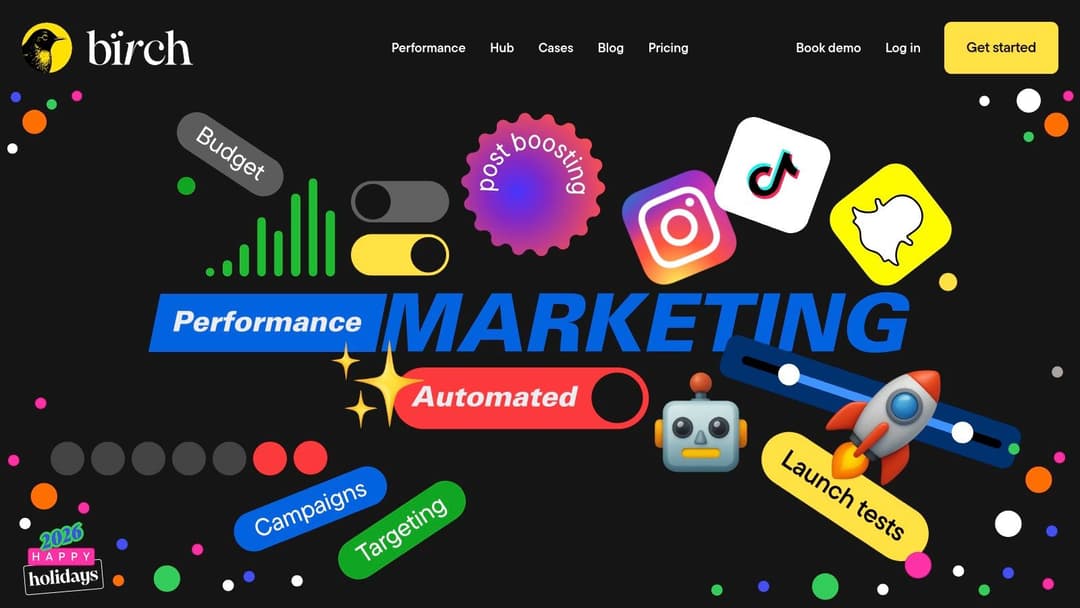
For advertisers who want granular, logic-based control over their campaigns, Bïrch (formerly known as Revealbot) offers a powerful rule-based automation engine. Instead of handing complete control over to a black-box AI, Bïrch empowers marketers to build custom "if this, then that" automation recipes that monitor key performance indicators (KPIs) and take specific actions, like pausing poor-performing ads or scaling budgets for winning ad sets. This makes it a standout among Facebook ad optimization tools for teams that have established their own successful strategies and want to automate their execution 24/7.
It connects directly to Meta, Google, TikTok, and Snapchat, allowing you to create complex, cross-channel automation flows and consolidated reports. Its interface is designed for creating and managing hundreds of rules efficiently, making it a favorite for agencies and in-house teams managing significant ad spend who need precision control that goes beyond native platform capabilities.
Key Features and Use Cases
- Automated Rules: Build custom rules based on any metric (ROAS, CPA, CTR, etc.) to automatically pause ads, adjust bids, change budgets, and duplicate ad sets.
- Top Creatives & Audiences: Quickly identify your best-performing assets with dedicated views and create rules to automatically scale what's working.
- Post Boosting: Automate the process of promoting top-performing organic Facebook and Instagram posts based on engagement triggers.
- Reporting & Alerts: Create scheduled performance reports and receive Slack or email notifications when rules are triggered or performance thresholds are met.
Best for: Digital marketing agencies and experienced performance marketers who need to implement precise, custom automation strategies at scale across multiple ad accounts and platforms. It’s ideal for those who prefer rule-based logic over pure AI management.
| Pros | Cons |
|---|---|
| Highly customizable and precise rule-based logic | Spend-based pricing can become costly with potential overage fees |
| Supports multiple ad platforms (Meta, Google, TikTok) | Some historical user feedback notes issues with support and overage bills |
| Quick web-based setup with a 14-day free trial | Has a steeper learning curve than all-in-one AI platforms |
Website: https://bir.ch/
6. Madgicx
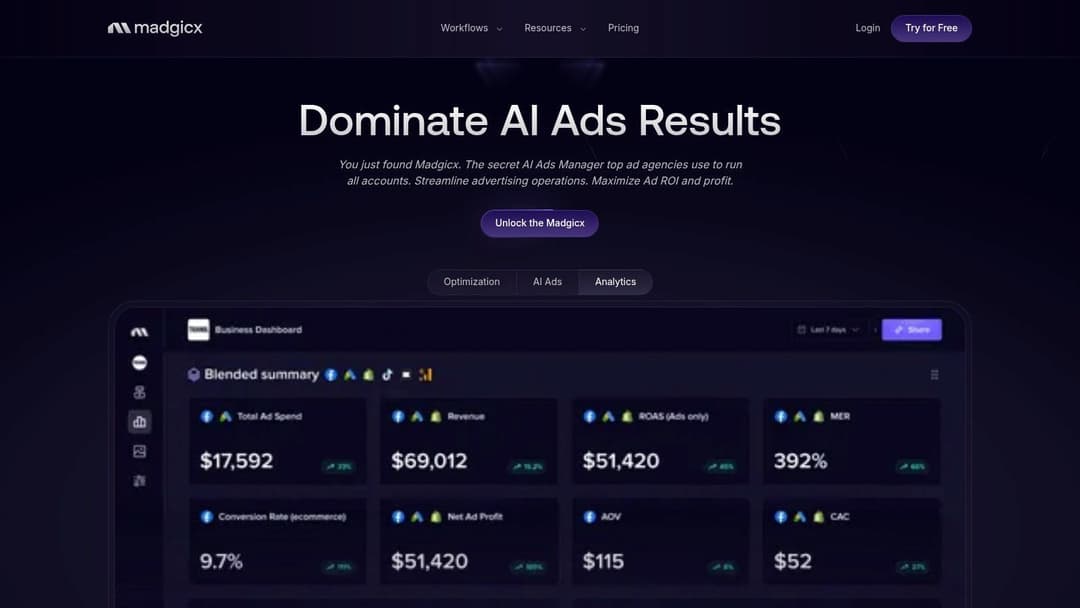
Madgicx positions itself as an intelligent optimization layer over Meta Ads Manager, designed for in-house media buyers and smaller teams who want sophisticated automation without enterprise-level complexity. The platform stands out by combining an AI agent that provides daily prescriptive recommendations with a powerful real-time automation engine, allowing users to act on insights with just one click. It's built to simplify complex tasks and surface growth opportunities quickly.
This dual approach of guidance and execution makes it a strong contender among Facebook ad optimization tools. Instead of just presenting data, Madgicx tells you what to do with it, from pausing underperforming ads to launching new creative tests. Its Ads Manager 2.0 interface offers advanced filtering and bulk actions that go beyond Meta’s native capabilities, streamlining daily workflow for performance marketers. For a deeper look into how this works, you can explore the principles of AI-driven ad optimization.
Key Features and Use Cases
- AI Marketer Audits: Delivers daily, prioritized recommendations with one-click implementation for budget shifts, bid changes, and ad set pausing.
- Ads Manager 2.0: An enhanced dashboard with multi-level breakdowns, custom filters, and bulk editing capabilities to manage campaigns at scale.
- Real-Time Automation: Allows users to build custom rules that trigger based on performance metrics faster than Meta’s native rules, enabling quicker reactions to market changes.
- Creative Insights & Launcher: Analyzes creative performance to identify winning elements and facilitates launching new ads and A/B tests directly from the platform.
Best for: Small to mid-sized e-commerce brands and in-house marketing teams that need both actionable AI-driven guidance and sophisticated rule-based automation to scale their Meta ads efficiently.
| Pros | Cons |
|---|---|
| Blends actionable recommendations with powerful automation | Some public user complaints mention billing and refund issues |
| Quick to implement changes and see results | Less cross-channel breadth compared to enterprise marketing suites |
| Real-time rule engine offers faster response than native Meta tools | User interface can feel dense for beginners |
Website: https://madgicx.com/
7. AdEspresso by Hootsuite
For advertisers seeking a middle ground between the native Ads Manager and complex enterprise platforms, AdEspresso by Hootsuite offers a powerful yet approachable solution. Acquired by Hootsuite, it focuses on simplifying the most time-consuming aspects of Facebook advertising: campaign creation, A/B testing, and performance analysis. Its interface is designed to streamline workflows, making it a favorite among small-to-medium-sized businesses, agencies, and teams looking to train junior media buyers.
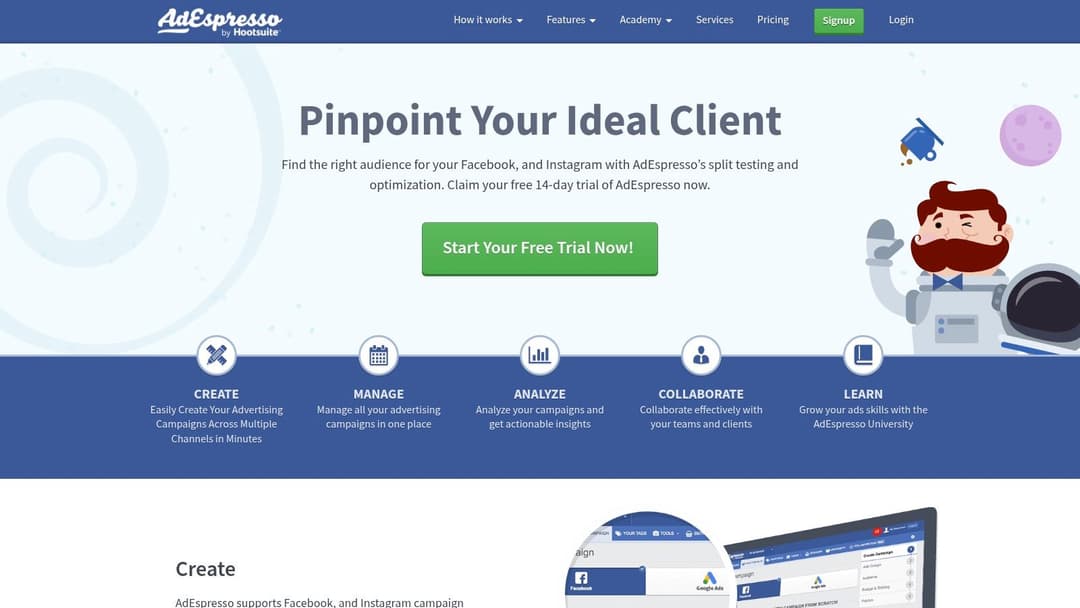
AdEspresso excels at making split testing accessible. You can easily test numerous variations of creatives, copy, and audiences in a single campaign build, a process that would be significantly more tedious in Ads Manager. The platform's rule-based automation and clear, customizable reporting dashboards help users quickly identify winning combinations and optimize budgets. This clarity is crucial for those wanting to better understand how to analyze ad performance for continuous improvement.
Key Features and Use Cases
- Bulk Campaign Creation & Split Testing: A streamlined grid-based workflow to rapidly build and launch multi-variant A/B tests across audiences, creatives, and placements.
- Automated Optimization Rules: Set custom performance triggers to automatically pause underperforming ads or reallocate budget to top performers based on metrics like CPA or ROAS.
- Multi-Page Management & Approvals: Centralized dashboard for agencies to manage multiple client ad accounts, with built-in workflows for campaign approvals and collaboration.
- PDF Reporting & Lead Sync: Generate customizable, white-label PDF reports for clients and sync new leads directly to popular CRM and email marketing platforms.
Best for: Small businesses, agencies, and consultants who need a more efficient way to manage and test campaigns without the complexity or cost of enterprise-level Facebook ad optimization tools. It’s an excellent stepping stone for those outgrowing the native Ads Manager.
| Pros | Cons |
|---|---|
| User-friendly interface with a gentle learning curve | Less advanced automation compared to enterprise-level platforms |
| Powerful and easy-to-use split testing capabilities | Limited multi-channel capabilities beyond Meta and Google Ads |
| Strong reporting and collaboration features for agencies | Can become costly as ad spend scales into higher pricing tiers |
| Affordable entry-level pricing with a 14-day free trial | Native Meta Advantage+ features have reduced some of its unique appeal |
Website: AdEspresso
8. Skai (formerly Kenshoo)
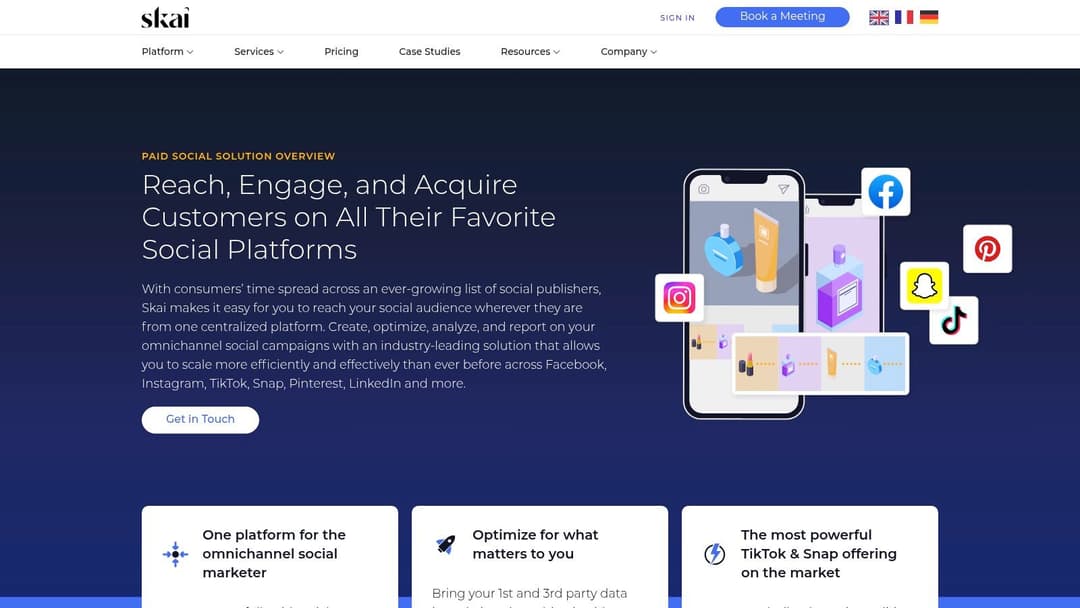
For large, multi-channel enterprises, Skai (formerly Kenshoo) offers a sophisticated, portfolio-level approach to paid media. This platform moves beyond single-campaign adjustments to provide holistic, algorithmic optimization across Meta, search, and retail media channels. It’s designed for organizations that need to manage massive budgets and complex strategies with a unified view of performance.
Skai’s core strength lies in its ability to connect disparate channels, allowing advertisers to understand how Facebook ads influence conversions on platforms like Amazon. Its customization capabilities are a key differentiator; advertisers can even build their own algorithms based on unique business KPIs, creating automation rules that go far beyond standard platform options. This makes it one of the most powerful enterprise-grade facebook ad optimization tools for advertisers with the scale and sophistication to leverage its deep feature set.
Key Features and Use Cases
- Portfolio & Algorithmic Optimization: Manages budget allocation and bidding across campaigns, ad sets, and even different publishers (e.g., Meta and Google) to maximize portfolio-wide returns.
- Build-Your-Own-Algorithm: Enables teams to create custom automation rules and bidding models tailored to specific business objectives and first-party data.
- Creative Intelligence: A Creative Center helps organize, classify, and analyze creative assets at scale to identify top-performing visual and messaging elements.
- Social Commerce & Retail Media Links: Connects social ad performance directly to sales on retail sites like Amazon through attribution features, proving the value of social spend.
Best for: Large enterprise advertisers and global agencies managing complex, multi-million dollar ad spends across search, social, and retail media who require deep customization and cross-channel visibility.
| Pros | Cons |
|---|---|
| Proven at enterprise scale with deep cross-channel controls | Custom enterprise pricing and significant onboarding process required |
| Mature experimentation, pacing, and forecasting workflows | Overly complex and expensive for most small to mid-market advertisers |
| Unique "Build-Your-Own-Algorithm" for ultimate customization | Requires a high level of internal team sophistication to use effectively |
Website: https://skai.io/social/
9. ROI Hunter
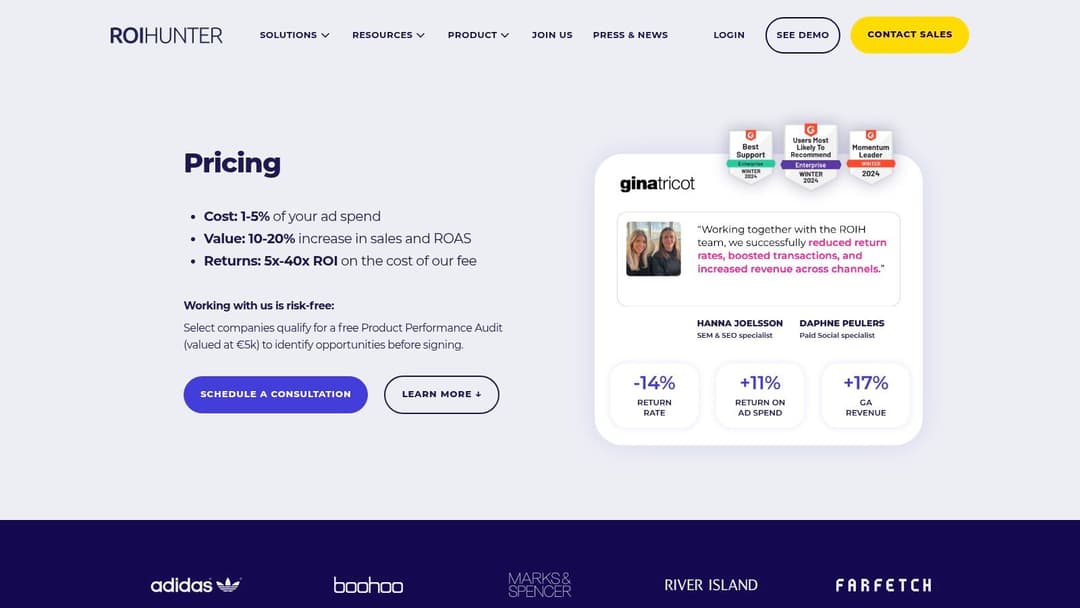
For large-scale e-commerce and retail brands, ROI Hunter offers a unique, product-centric approach to Meta advertising. While many tools focus on campaign-level metrics, this platform drills down to the individual SKU, enriching your product catalog with crucial business data like profit margins, stock levels, and performance trends. This allows you to build campaigns that optimize not just for revenue, but for actual profitability.
By connecting your product feed with business intelligence data, ROI Hunter transforms standard Dynamic Product Ads (DPAs) into powerful, margin-aware marketing assets. The platform excels at automating the promotion of high-margin winners and excluding unprofitable or out-of-stock items, ensuring your ad spend is always directed toward products that deliver the best bottom-line results. It is one of the most specialized Facebook ad optimization tools for retailers with extensive catalogs.
Key Features and Use Cases
- Product Performance Enrichment: Syncs your catalog with data like margins, stock availability, and discounts to inform ad-level decisions.
- Dynamic Creative Templates: Creates custom video and image templates for DPAs, allowing for on-brand, high-performing creatives at scale.
- SKU-Level Segmentation: Enables advertisers to build product sets based on business rules, such as promoting only items with a profit margin above 20%.
- Product Performance Audit: An initial analysis offered to qualified retailers to identify opportunities for profit uplift within their existing campaigns.
Best for: Large e-commerce businesses and enterprise-level retailers with thousands of SKUs who need to align their advertising strategy with specific product-level profitability goals.
| Pros | Cons |
|---|---|
| Directly connects ad performance to real business metrics like profit | Percentage-of-ad-spend pricing model is best suited for larger budgets |
| Powerful catalog manipulation and creative features for DPA campaigns | Niche focus on retail may not be suitable for B2B or lead-gen advertisers |
| Drives tangible commerce outcomes by focusing on profitable SKUs | Requires integration with product data sources beyond the standard feed |
Website: ROI Hunter
10. Sprinklr Marketing
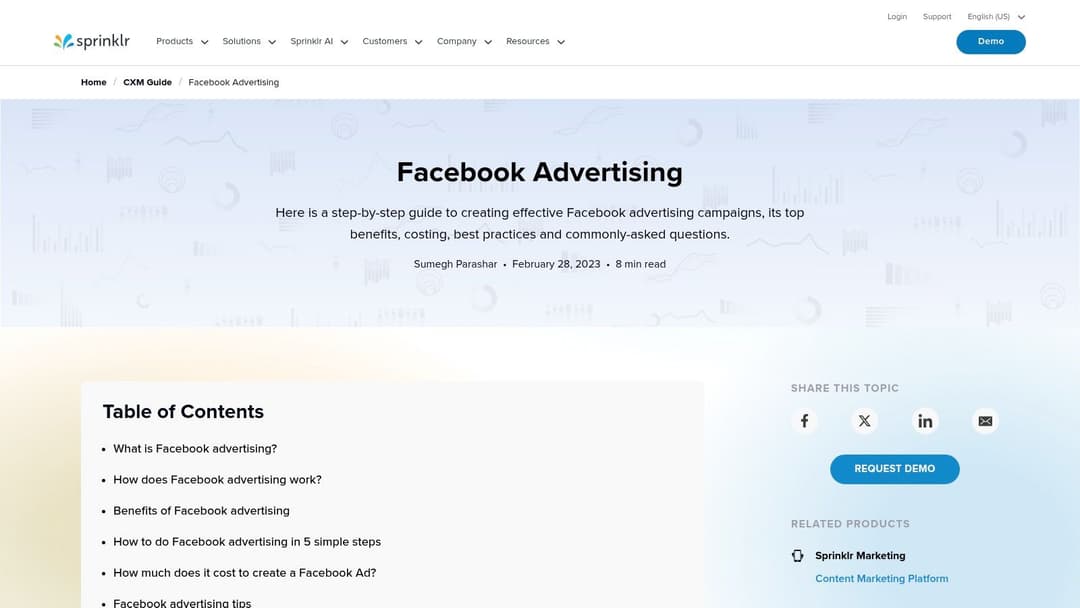
For large, complex enterprises, Sprinklr Marketing stands out as an AI-native customer experience management (CXM) platform where Facebook ad optimization is just one piece of a much larger, unified strategy. It’s designed not just for ad performance but for governance, compliance, and cross-team collaboration at a global scale. Unlike point solutions focused solely on media buying, Sprinklr centralizes paid, owned, and earned media into a single environment.
This unified approach allows massive organizations with multiple brands, regions, and teams to maintain strict brand safety, manage complex approval workflows, and gain a holistic view of the customer journey. It excels at bridging the gap between social listening, community management, and paid advertising, making it one of the most comprehensive enterprise-grade Facebook ad optimization tools for organizations prioritizing control and integration over pure SMB-style agility.
Key Features and Use Cases
- Enterprise Governance & Approvals: Implements multi-layered approval workflows and compliance rules for ad creation and publishing across disparate teams and markets.
- AI-Assisted Creative Insights: Leverages AI to analyze creative performance, provide localization recommendations, and ensure brand consistency at scale.
- Unified Paid & Organic Management: Manages and boosts organic posts alongside standalone ad campaigns within the same governed interface.
- Integrated CX Analytics: Connects ad performance data with insights from social listening, customer service, and other touchpoints for a complete view of campaign impact.
Best for: Large enterprise organizations, especially in regulated industries (finance, pharma) or global CPG, that require stringent governance, compliance, and a unified platform for all social media activities, including advertising.
| Pros | Cons |
|---|---|
| Unmatched enterprise governance and compliance features | Custom enterprise pricing requires significant investment and commitment |
| Integrates advertising into a broader CX and analytics stack | Steep learning curve and complex setup process (change management) |
| Centralizes paid, owned, and earned media workflows | Overkill for SMBs or mid-market companies focused purely on performance |
Website: Sprinklr for Facebook Advertising
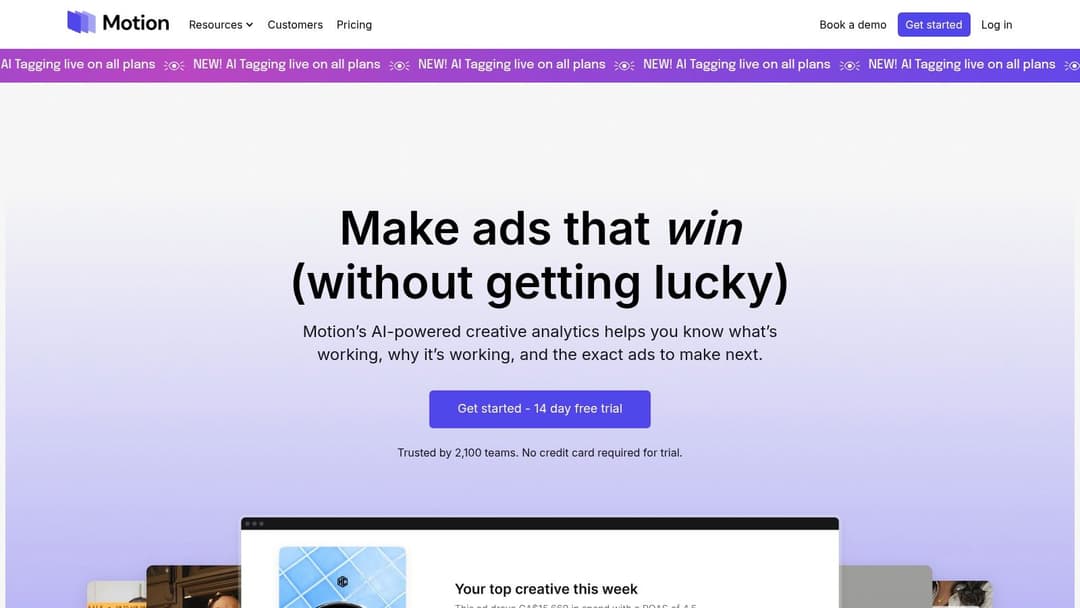
11. Motion
For advertisers who understand that creative is the single most important lever for growth, Motion is an indispensable analytics platform. It goes beyond standard ad performance metrics to deconstruct exactly why your creative assets succeed or fail. Motion provides granular, visual reporting that connects ad performance directly to the specific hooks, angles, and elements within your videos and images, making it a crucial tool for both media buyers and creative teams.
By unifying data from Meta and TikTok, Motion helps you identify top-performing assets and understand the underlying components driving their success. This creative-centric approach transforms ad optimization from a guessing game into a data-driven process, enabling teams to iterate on winning concepts with precision. It doesn't replace Ads Manager for buying but rather supercharges your creative strategy.
Key Features and Use Cases
- Creative Analytics: Detailed performance funnels and breakdowns for individual creative assets, showing which visual or messaging components are most effective.
- Unified Ad Dashboard: Consolidates creative performance data from Meta and TikTok into a single view for cross-channel analysis.
- Visual Reporting: Shareable, easy-to-understand reports designed to align creative and growth teams around data-backed insights.
- Automated Data Sync: Connects to ad accounts quickly and automatically refreshes data, eliminating the need for manual spreadsheet work.
Best for: High-volume creative testing environments, especially DTC brands, agencies, and performance marketing teams where creative is the primary driver of performance and scaling.
| Pros | Cons |
|---|---|
| Pinpoints which creative angles and elements drive conversions | Complements Ads Manager; it is not a media buying or automation tool |
| Bridges the gap between data-driven growth and creative teams | Pricing is not public; requires a sales call to get a quote |
| Eliminates tedious manual reporting and spreadsheet analysis | Some user reviews mention frustrations with customer support or billing |
Website: https://motionapp.com/
12. G2 (Social Media Advertising category)
While not a direct optimization tool itself, G2's Social Media Advertising category is an indispensable resource for researching, comparing, and validating which platform is right for you. Instead of automating campaigns, this buyer marketplace automates your due diligence. It aggregates user reviews, satisfaction ratings, and detailed feature comparisons, allowing you to see how different Facebook ad optimization tools perform in the real world for businesses similar to yours.
This platform is crucial for creating a shortlist before committing to demos or trials. You can filter vendors by company size, user satisfaction, and specific features, then read peer reviews that often highlight practical strengths and weaknesses that marketing materials might omit. G2’s quarterly Grid reports visually map out the market leaders and contenders, providing a data-backed starting point for your evaluation process.
Key Features and Use Cases
- User Reviews & Satisfaction Scores: Access authentic feedback from real users to gauge a tool's usability, support quality, and ROI.
- Detailed Vendor Comparisons: See side-by-side feature lists, pricing information, and integration capabilities to quickly evaluate alternatives.
- Quarterly Grid Reports: Visualize the competitive landscape for Small Business, Mid-Market, and Enterprise segments to identify leaders and niche players.
- Category Overviews: Get a high-level understanding of the social media advertising software space, including common features and buying considerations.
Best for: Marketers and agency leaders in the evaluation phase who need to compare potential Facebook ad optimization tools, validate vendor claims, and understand real-world user experiences before making a financial commitment.
| Pros | Cons |
|---|---|
| Broad coverage of vendors, from major players to niche solutions | Reviews can sometimes skew toward SMB experiences; vet against your needs |
| Free to access most reviews and comparisons | Some in-depth reports and data may require a business email to download |
| Peer reviews provide honest pros/cons to validate your shortlist | Information is aggregated and not a substitute for a direct product demo |
Website: G2 Social Media Advertising Category
Top 12 Facebook Ad Optimization Tools — Feature Comparison
| Product | Core features | Target audience | Key differentiator | Ease & pricing |
|---|---|---|---|---|
| AdStellar AI | Bulk ad creation (100+ variants), AI Insights (ROAS/CPL/CPA ranking), auto-learning & one-click push to Meta, centralized workflows | Performance marketers, growth teams, agencies, e‑commerce on Meta | Rapid bulk launch + goal-driven AI ranking that auto-assembles & scales winners | 7‑day free trial; founding 20% off annual; best with historical Meta data |
| Meta Advantage (Ads Manager) | Advantage+ setups, audience expansion, CBO, generative creative tools | Any advertiser running Meta campaigns | Native Meta automation and direct platform features | No platform fee beyond media; built into Ads Manager |
| Smartly.io | Bulk/cross-account creation, templates, catalog video, predictive optimization | Enterprises, large retailers, global brands | Enterprise-grade templating + dynamic catalog personalization | Custom enterprise pricing; requires onboarding |
| Hunch | AI creative templates, feed-driven DPAs, Autopilot workflows, localization | Growth-stage e‑commerce & agencies with sizable spend | Strong localization + feed-driven automation across channels | Mid-market pricing; hands-on onboarding; best ~€50k+/mo spend |
| Bïrch (Revealbot) | Rule-based automations, Top Creatives/Audiences, integrations, scheduled reports | Teams wanting precise rule logic across Meta/Google/TikTok | Flexible, customizable automated rules and reporting | Spend-tiered pricing; 14‑day trial; watch overage terms |
| Madgicx | AI Marketer audits, real-time rules, creative optimizer, bulk actions | Small–mid teams seeking prescriptive automation | Fast, actionable AI recommendations with quick bulk changes | Subscription pricing; quick setup; check billing/refund policies |
| AdEspresso by Hootsuite | Bulk creation, A/B testing, rule triggers, multi-page management | SMBs, agencies, teams training junior buyers | Low-cost, easy-to-learn tool for governance and split testing | 14‑day trial; lower entry price vs enterprise suites |
| Skai (Kenshoo) | Portfolio optimization, custom algorithms, Creative AI, cross-channel | Large enterprises needing cross-publisher optimization | Build-your-own-algorithm + portfolio-level forecasting | Custom enterprise pricing; significant setup |
| ROI Hunter | Catalog enrichment (margin/stock), dynamic templates, SKU-level promos | Large ecommerce/retailers with big catalogs | SKU-level profitability optimization for catalog ads | % of ad-spend model with minimums; retail-focused |
| Sprinklr Marketing | Cross-team workflows, approvals, AI creative insights, unified analytics | Complex organizations with many teams/markets | Enterprise governance, compliance and CX integration | Custom enterprise pricing; heavy change management |
| Motion | Creative-level breakdowns, top-asset views, visual reporting | Creative & growth teams focused on asset performance | Deep creative analytics that guide iterative testing | Complements Ads Manager; contact sales for pricing |
| G2 (Social Media Advertising) | Category overviews, user reviews, Grid reports, vendor links | Buyers researching and shortlisting vendors | Peer reviews and quadrant-style shortlisting for vendor selection | Free to browse (some reports/sign-in may be required) |
Stop Managing, Start Optimizing
Navigating the landscape of Facebook ad optimization tools can feel like an overwhelming task. We've explored a dozen powerful platforms, from all-in-one enterprise solutions like Smartly.io and Skai to nimble, AI-driven specialists like Madgicx and AdStellar AI. The one constant is clear: manual campaign management is no longer a viable strategy for achieving peak performance and scale on Meta's advertising platform. The goal has shifted from simply managing ads to strategically optimizing every single element of the funnel.
The core takeaway from our deep dive is that there is no single "best" tool, only the tool that is best for your specific context. An e-commerce brand scaling its dynamic product ads has vastly different needs than a B2B SaaS company focused on lead generation or an agency juggling dozens of client accounts. Your budget, team size, technical expertise, and ultimate business objectives must be the primary drivers of your decision-making process.
Your Roadmap to Choosing the Right Tool
To put this guide into action, you need a clear framework for evaluation. Don't get distracted by flashy features or aggressive marketing. Instead, focus on the foundational pillars that will deliver tangible results for your business.
Here’s a practical roadmap to guide your selection:
- 1. Define Your Primary Bottleneck: Before you even look at a demo, identify your single biggest challenge. Is it creative fatigue? Inefficient budget allocation? A lack of audience insights? Be brutally honest. If your creatives are underperforming, a tool like Motion is a better starting point than a complex bidding algorithm. If you're spending hours on manual rule creation, a platform like Bïrch could be your solution.
- 2. Map Features to Your Bottleneck: Once you know your problem, create a shortlist of tools whose core features directly address it. Look beyond the generic promises of "AI optimization." For example, if creative production is your issue, look for platforms with deep creative automation features like Hunch. If you need to streamline multi-channel reporting, an enterprise solution like Sprinklr Marketing may be more appropriate.
- 3. Conduct a Practical Trial: A demo is a sales pitch; a trial is a test drive. Insist on a free trial period and come prepared with a specific, measurable goal. For instance, task the tool with outperforming your best-performing manual campaign by 10% on ROAS or reducing your CPA by 15% over a two-week period. This data-driven approach removes emotion and subjectivity from the decision.
- 4. Evaluate Integration and Workflow: How seamlessly does the tool fit into your existing martech stack? Consider its integration capabilities, especially the reliability of its Meta Ads Manager OAuth connection. A powerful tool that requires constant manual data exports or creates workflow friction for your team is not a long-term solution.
Final Considerations for Implementation
Remember that these Facebook ad optimization tools are not magic wands; they are amplifiers. They amplify the quality of the inputs you provide. A sophisticated bidding algorithm cannot save a campaign with poor ad copy, a confusing landing page, or a flawed offer. Your fundamental marketing strategy remains the most critical ingredient for success.
As you integrate your chosen platform, start small. Isolate a single campaign or ad set to test its capabilities before rolling it out across your entire account. This minimizes risk and allows you to build a new workflow around the tool's strengths. While many of the platforms discussed here focus on optimization, the underlying principle is often automation. For a broader or alternative selection of platforms with a primary focus on automation, you might explore other lists such as the Top 12 Facebook Ads Automation Tools for 2025. Ultimately, the right software empowers you to transition from being a reactive campaign manager to a proactive growth strategist, letting technology handle the tedious work so you can focus on the bigger picture.
Ready to move beyond manual adjustments and unlock the full potential of your Meta ads with predictive AI? AdStellar AI specializes in autonomous budget optimization and audience discovery, helping you find your most profitable customers faster. See how our AI-powered platform can drive scalable growth for your business by visiting AdStellar AI today.