You publish a Facebook post. The creative is solid. The offer is clear. A few hours later, reach is flat, comments are thin, and the post never gets momentum.
That’s where many page managers either give up on organic or hit the Boost button too early.
A better move is to treat free reach as R&D. If you know how to boost facebook post for free, you’re not chasing vanity. You’re testing hooks, formats, angles, and audience signals before you spend on distribution. That changes organic from a weak side channel into a cheap validation layer for paid social.
The shift matters because bad posts usually stay bad when you pay for them. Good posts, on the other hand, often show signs early. Free boosting helps you spot those signs, stack more of them, and graduate only the strongest content into paid campaigns.
Why "Boosting for Free" is Your New Secret Weapon
Facebook organic reach got harder long ago. Some reports put page reach at as low as 2%, largely because Facebook prioritizes paid content and high-engagement posts across a platform with 3 billion global users competing for attention, as noted by Wow Real Academy’s breakdown of free Facebook post boosting.
That sounds like bad news. For performance marketers, it is a filter.
When reach is scarce, every post becomes a test. If a post earns comments, shares, or saves without media spend, it’s telling you something useful about the message. If it dies immediately, that’s useful too. You’ve just learned what not to scale.
The mistake is thinking “free boosting” means finding a workaround inside Facebook. It doesn’t. There’s no hidden setting that enables distribution. Free boosting is the process of increasing the odds that Facebook gives your post more organic visibility because the post and the page are sending stronger signals.
Three things make that valuable:
- It lowers creative risk. You can test a hook, angle, or format before putting budget behind it.
- It sharpens paid strategy. Organic winners often reveal which message deserves ad spend first.
- It builds repeatable feedback loops. Your team stops guessing and starts observing patterns.
If you're also trying to keep older posts active in the feed, this practical guide on how to bump a Facebook post is worth reading because it separates simple resurfacing tactics from actual engagement generation.
A lot of small teams also need a wider zero-budget mix around the post itself. This resource on free advertising for small business is useful if Facebook is just one part of the visibility stack.
Free reach isn’t the opposite of paid reach. It’s the cheapest way to decide what deserves paid reach.
That’s the mindset to keep through the rest of the playbook.
The Foundation Optimizing Your Presence for Reach
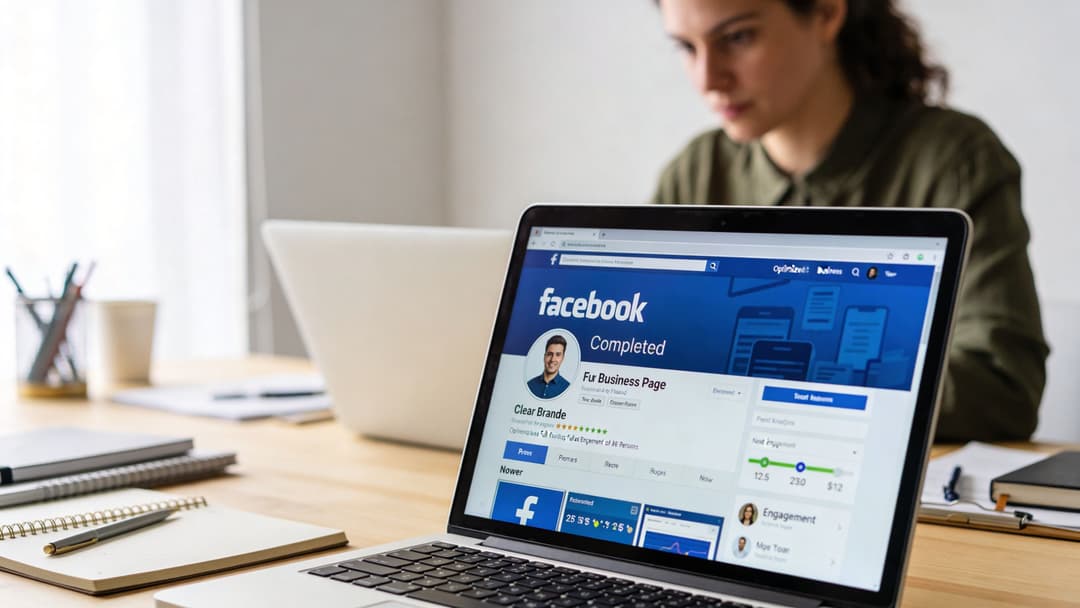
A post can’t outrun a weak page setup for long. Before worrying about hooks or timing, fix the container. Facebook uses page-level signals to decide whether your content looks trustworthy, relevant, and active.
Complete the page like it matters
Most underperforming pages are half-built. Missing descriptions, weak profile images, no cover strategy, and vague categories make the page feel abandoned.
Start with the basics:
- Choose the right category. Facebook needs context. A page categorized correctly has a better chance of appearing relevant to the people who do land on it.
- Write an About section with buyer language. Don’t stuff keywords. Use plain phrases your audience already uses when describing their problem or goal.
- Use a clean profile image and cover. A logo is fine if it’s readable on mobile. If you’re a founder-led or service-led brand, a strong face-forward image often creates more trust.
- Lock a custom URL if available. It’s easier to share in email signatures, sales decks, and other owned channels.
If your broader organic process still feels messy, this guide to organic social media marketing for small businesses is useful because it focuses on practical execution instead of abstract “brand building.”
Build your first engagement layer
One overlooked step matters more than people admit. Invite your existing network early.
According to the earlier source from Wow Real Academy, bringing in friends and family immediately after page creation helps create an initial engagement footprint. That early activity gives the page a basic layer of social proof and interaction history.
This isn’t about inflating vanity metrics. It’s about avoiding an empty-room problem. Posts from pages with no audience, no reactions, and no activity often struggle to get any traction at all.
A simple starting checklist helps:
- Invite personal contacts who are genuinely relevant. Don’t mass-invite random people.
- Ask team members to follow the page. Especially customer-facing staff, founders, and sales reps.
- Seed a few quality posts before wider promotion. A page with no content looks unfinished.
- Reply to every early comment. Those first interactions matter disproportionately.
Practical rule: Don’t start “promotion” from a blank page. Seed the page, then drive people to it.
Make discovery easier, not cleverer
A lot of marketers overcomplicate this part. You don’t need fancy branding language. You need clarity.
Use your page text to answer three questions fast:
| Page element | What it should communicate | Common mistake |
|---|---|---|
| Profile and cover | Who you are | Generic visuals with no context |
| About section | What you sell and for whom | Brand slogans that say nothing |
| CTA button | What action comes next | Sending people somewhere unrelated |
Your CTA button should match your business goal. Shop pages should push shopping. Lead-gen pages should route to contact or Messenger. Content-led brands may send people to a lead magnet or newsletter. Misaligned CTAs waste attention.
Verification also affects trust. If your brand qualifies, this walkthrough on getting a Facebook account verified is worth reviewing because it helps reduce the credibility gap that can hurt engagement.
Keep the page active before you scale posting
A dormant page makes every post work harder. Consistency matters. The same Wow Real Academy source notes that posting 3 to 5 high-quality updates weekly can help generate the kind of likes and shares that improve visibility when the posts are useful and shareable.
But quality has to lead. Daily filler posts usually drag down the page’s signal. A leaner cadence with stronger content is better than publishing just to “stay active.”
Use this simple page standard:
- Recent activity exists
- Branding is complete
- Basic audience is seeded
- CTA is relevant
- Posts look current and intentional
That setup won’t make weak content perform. It does remove the friction that keeps decent content from getting a fair test.
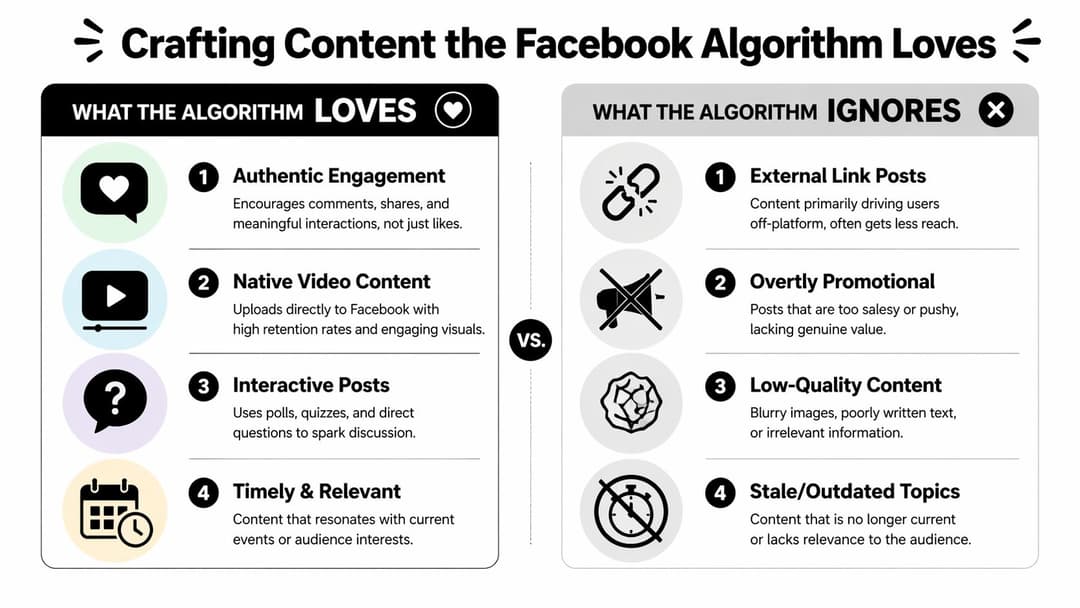
Crafting Content the Facebook Algorithm Loves
Content format still decides a lot of the outcome. Facebook evaluates signals such as post type and recency, and one proven pre-post tactic is spending 10 to 15 minutes engaging with other content before you publish, because active users can get prioritized distribution, according to Ads4SEO’s guide to free Facebook post boosting.
That means free reach starts before the post is live.
Start with formats that can actually travel
If your goal is reach, don’t give every format equal weight. The verified data is clear here. Video has the highest organic reach at 8.7% of fans, compared with 5.3% for links, based on the figures summarized in the verified dataset from Wow Real Academy.
That doesn’t mean every page should only post video. It means video deserves first testing priority when you’re trying to learn what Facebook will distribute.
Here’s a practical comparison table:
| Post Type | Average Organic Reach | Best For |
|---|---|---|
| Video | 8.7% of fans | Product demos, founder takes, customer proof |
| Links | 5.3% of fans | Blog distribution, lead magnets, article promotion |
| Plain text posts | 5.8% | Opinions, conversation starters, quick audience questions |
| Photographs | 3.7% | Visual proof, before-and-after, lifestyle content |
The takeaway isn’t “never post links” or “images are dead.” It’s that some formats need stronger creative and stronger distribution help to compete.
Build posts for comments and shares, not just likes
Likes are weak signals. Shares are stronger because they expose your post to new networks. Ads4SEO also notes that explicitly asking for shares can help because shares open up fresh visibility beyond your existing audience.
That’s why the best captions usually do one of four things:
- Ask a real question. Not bait. A question that someone can answer from experience.
- State a specific opinion. Clear stances get more comments than neutral summaries.
- Show proof. Customer reviews, process screenshots, before-and-after visuals.
- Create utility. Checklists, mini tutorials, short frameworks.
A bad caption sounds like an announcement.
A better caption sounds like the start of a conversation.
For example:
- Weak: “We just launched our new product. Check it out.”
- Better: “Most brands make this mistake before launching on Meta. We fixed it by changing one part of the offer. Would you keep the original angle or lead with the customer problem?”
The second version gives people a reason to respond.
Ask for input when input is natural. Ask for shares when the content genuinely helps someone else. Don’t force either one.
Make video simple enough to publish often
A lot of teams avoid video because they imagine production. Facebook doesn’t require production. It requires retention and relevance.
Use low-friction video types:
Founder or operator talk-to-camera
Strong for opinions, lessons, mistakes, and quick reactions to market changes.Screen recordings
Good for walkthroughs, ad account observations, product demos, landing page teardowns.Customer proof clips
Reviews, testimonials, screenshots turned into narrated explainer clips.Short process breakdowns
“How we wrote this ad angle,” “How we audited this page,” “What we changed and why.”
A good opening matters most. Put the payoff early. Human face in the opening frames often helps because it signals relevance fast, and the viewer knows there’s a person talking to them rather than a static brand card.
This video gives a useful visual reference for post-level optimization ideas:
Use the pre-post engagement routine
One tactic gets dismissed because it sounds too simple. It still works often enough to keep in the workflow.
Before publishing, spend 10 to 15 minutes engaging on Facebook. Like relevant posts. Leave a few thoughtful comments. Reply to comments on your older posts. The goal isn’t gaming the system. The goal is signaling active participation on the platform.
A lightweight routine looks like this:
- Comment on a few relevant posts
- Reply inside your own recent threads
- Check notifications and respond
- Publish while the page is active
What the algorithm tends to ignore
Some posts are dead on arrival because they ask Facebook to do something it doesn’t want to do.
Common reach killers:
- External-link-first posts that immediately send users away
- Overly promotional copy with no value before the ask
- Weak visuals that look recycled or low effort
- Stale topics that don’t connect to any current audience pain point
The fastest fix is often not “post more.” It’s changing the role of the post. Make the post valuable on-platform first, then use comments, follow-ups, or later retargeting to drive the harder conversion action.
Free Amplification and Distribution Tactics
A post rarely reaches its ceiling on the first publish. Distribution is where free boosting becomes a repeatable habit instead of a one-time hope.
One useful way to think about it is this: you don’t have one audience. You have several small audiences around the post. Your page followers are one. Group members are another. Your customer list is another. Team members, founders, and partners are another. Free amplification means moving the same post through those layers without making it feel copied and spammy.
Use Facebook Groups carefully
Groups can extend reach well because they’re built around active communities. But most brands misuse them by dropping links with no context.
A better pattern looks like this:
You publish a post on your page about a common problem in your niche. Instead of sharing the page post directly into a group with “new blog live,” you rewrite the angle for the group. Lead with the lesson, not the promotion. If group norms allow links, add the original post only when it helps the conversation.
That keeps the distribution native to the environment.
Try this checklist before sharing in any group:
- Check the rules first. Some groups allow discussion but not self-promotion.
- Adapt the copy. Don’t paste the exact same caption everywhere.
- Lead with relevance. Tie the post to a problem group members already discuss.
- Stay for replies. If people comment, answer them. Don’t drop and disappear.
Turn one feed post into several touchpoints
A strong feed post can become a Story, a Messenger share, an employee share, and an email mention. However, posts often stop at the feed.
Here’s a practical scenario. A DTC marketer publishes a customer-review video on the brand page. The feed post gets decent early engagement. The team then:
- Re-shares it into Facebook Stories with a short text overlay
- Sends it to the email list as “customer feedback we didn’t expect”
- Asks the founder to share it with a personal note
- Tags the customer if permission exists
- Adds it to relevant comments when related questions come in
That’s still one asset. It’s just distributed properly.
If you need a tactical walkthrough for resurfacing posts inside Facebook itself, this guide on how to bump a post on Facebook is a helpful companion because it focuses on practical post-level actions rather than broad social advice.
Distribution should feel like continuation, not repetition.
Stories, tags, and cross-channel nudges
Stories are useful because they sit in a separate consumption lane. Someone who missed the feed post might still see the Story. Keep the Story version lighter. A simple teaser, a cropped screenshot, or a short reaction works.
Tagging also helps when it’s done with intent. Good tags include:
- Collaborators
- Customers featured in the post
- Relevant pages directly involved
- Team members with visible contributions
Bad tags are random, aspirational, or purely reach-driven. Those usually get ignored and can make the post look needy.
Cross-channel nudges matter too. If you have Instagram, LinkedIn, a newsletter, or a community Slack, use them to point people toward your Facebook content when the post deserves more interaction. Don’t do this for every post. Save it for posts that already show signs of traction.
A simple post-publication routine
This is the kind of routine that teams can sustain:
| Time after publish | Action | Purpose |
|---|---|---|
| Early window | Reply fast to comments | Strengthen conversation depth |
| Same day | Share to Story | Catch followers who missed feed |
| Same day | Send to internal advocates | Generate authentic secondary reach |
| Later if relevant | Share in niche groups | Expand visibility in-context |
| Following days | Reuse angle elsewhere | Extend lifespan of winning message |
The point isn’t to force every post through a long workflow. The point is to give promising posts more chances to collect signals.
What usually doesn’t work is blasting the post into every group, tagging too many people, or re-sharing so aggressively that it trips spam filters. Heavy-handed tactics may create a temporary spike, but they often degrade the account signal over time.
Measuring Success and Troubleshooting Low Reach
If you don’t measure properly, “free boosting” becomes superstition. You need to know whether a post got more reach because the creative improved, because the distribution was smarter, or because you posted into a better moment.
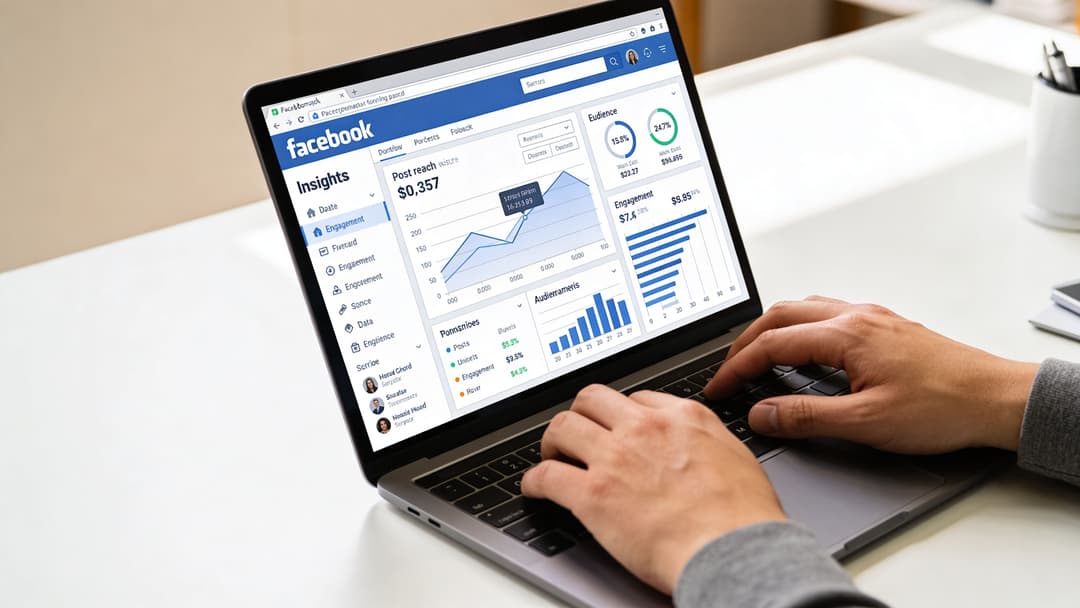
The useful benchmark mindset starts here: with organic reach often below 2%, marketers need to use Facebook Insights to track metrics like reach-to-impressions ratio and watch for engagement rate thresholds such as 10% for signal-gathering posts, according to 7 Mile Media’s discussion of free Facebook post boosting and measurement.
Look at signal quality, not just reach
Reach alone can mislead you. A post might reach people and still fail because it doesn’t prompt action. Another post may have modest reach but strong engagement, which often makes it a better candidate for reuse or paid testing.
Inside Facebook Insights, focus on these:
- Reach for initial distribution
- Impressions for repeat exposure context
- Reach-to-impressions ratio to see whether distribution is broad or narrow
- Engagement rate to judge whether the content earned a reaction
- Comments and shares to identify stronger intent signals
- Negative feedback if available, because that can explain distribution drops
If a post clears a strong engagement threshold, it may be worth preserving as a test asset even if the total reach wasn’t huge.
Diagnose the failure mode
Low performance usually falls into one of a few buckets. Don’t treat every bad post the same.
| Symptom | Likely issue | What to test next |
|---|---|---|
| Low reach from the start | Weak page signal, poor timing, weak format choice | Change format or improve early distribution |
| Reach is decent, engagement is weak | Creative didn’t connect | Rewrite hook and first line |
| Clicks happen, comments don’t | Content is useful but not discussable | Add a clearer opinion or question |
| Engagement appears unnatural | Reach suppression risk | Remove bait-style prompts and over-sharing habits |
Teams often improve fastest. Not by trying “more content,” but by naming the actual problem.
If reach is low, test distribution and format first. If reach is fine but conversation is weak, the creative is the problem.
Track posts as experiments
A simple spreadsheet is enough. You don’t need a complex BI setup to learn from organic.
Track each post by:
- Format
- Hook angle
- Theme
- Audience segment
- Early comments
- Shares
- Whether it got repurposed
- Whether it later became a paid candidate
Patterns show up quickly when you log them. You may find that founder POV posts outperform polished brand graphics. Or customer screenshots outperform offer-led posts. Or native video consistently beats link shares.
If you’re trying to connect organic outcomes to broader marketing performance, this guide on how to measure advertising effectiveness can help frame which signals deserve attention once content moves toward paid testing.
Watch for over-optimization and spam risk
This is one of the more under-discussed trade-offs. The same 7 Mile Media source also notes that aggressive organic tactics can carry shadowban risks. That matters because some teams respond to low reach by becoming noisier. More tags, more repeated comments, more group drops, more shallow “share this” prompts.
That can backfire.
Warning signs include:
- Sharp inconsistency between similar posts
- Good historical content suddenly getting little distribution
- Heavy use of repetitive sharing tactics
- Comment sections filled with low-quality bait prompts
If that happens, simplify. Pull back on anything that looks automated, repetitive, or manipulative. Return to clean publishing, native engagement, and useful posts.
Set a pass-fail standard
Every team needs a working definition of a useful post.
For organic testing, a post is worth keeping when it does at least one of these well:
- It earns meaningful discussion
- It gets shared without begging for it
- It attracts clear positive feedback
- It reveals a strong angle for retesting
- It produces audience insight you can use elsewhere
That’s enough to justify another iteration.
A post fails when it reaches no one, teaches you nothing, and doesn’t generate any signal worth reusing. Kill it, log it, and move on.
From Organic Winner to Paid Champion
In this situation, performance discipline matters. Once a post proves itself organically, the next move isn’t to celebrate the engagement. It’s to decide whether the post deserves paid support.
The strongest rule here is simple. Only boost posts with pre-existing organic traction. The verified data states that boosting underperformers leads to 40 to 60% lower reach per dollar, and for winning posts the recommended setup is an Engagement objective targeting People who like your Page + lookalikes with a small daily budget, based on the expert methodology summarized from this YouTube source on selecting and boosting high-engagement posts.
That changes how you should think about the Facebook Boost button.
Don’t pay to rescue bad content
A weak post usually doesn’t improve because you add money. It just becomes a more expensive weak post.
Organic traction is useful because it tells you the creative already resonates somewhere. Maybe the hook works. Maybe the proof lands. Maybe the format holds attention. Paid spend then becomes an amplifier, not a repair tool.
A practical graduation checklist looks like this:
- The post already got meaningful engagement organically
- Comments suggest real interest, not just polite reactions
- The format is boost-eligible
- The message is broad enough to scale beyond current followers
- You can explain why it worked
If you can’t explain why the post performed, be careful. Random spikes happen.
Keep the first paid test tight
When a post wins organically, the first paid test should stay small and controlled. The objective should match the stage of the post. If the content is built to trigger discussion and social proof, Engagement is usually the right first objective according to the verified expert methodology above.
Audience selection matters too. Starting with People who like your Page + lookalikes is a sensible bridge because it extends from a known signal base instead of throwing the post into a fully cold broad audience immediately.
Many teams waste money here. They skip validation, broaden too soon, and confuse distribution failure with creative failure.
Treat organic as creative selection
The biggest benefit of free boosting isn’t reach. It’s selection.
Organic tells you:
- Which hook earns attention
- Which visual format holds up
- Which topic gets comments
- Which proof element people trust
- Which creator voice or page voice feels native
That means your paid testing starts from a better place. You’re not asking Ads Manager to discover everything from scratch. You’re entering with a short list of messages that already showed life.
If you need a practical reference for that next step, this guide on how to promote a post in Facebook is helpful because it connects post-level validation with actual paid promotion choices.
The best use of the Boost button is not discovery. It’s confirmation.
That’s the bridge. Organic finds the candidate. Paid verifies whether the candidate can travel further.
Conclusion Your Blueprint for Smarter Reach
If you want to know how to boost facebook post for free in a way that effectively helps the business, think like a performance marketer, not a social media hobbyist.
Start by fixing the page. Then publish formats Facebook is more likely to distribute, especially content built for comments and shares. Don’t stop at publish. Distribute through Stories, groups, advocates, and owned channels with restraint and context. Then measure the post like an experiment. Look for signal quality, not vanity.
The bigger payoff is what happens next. Free boosting helps you identify posts that deserve paid support and filter out the ones that don’t. That makes your ad spend smarter because you’re not funding guesses. You’re funding evidence.
Organic Facebook isn’t dead. Random organic is. The teams still getting useful reach are the ones treating every post as a test, every metric as a clue, and every winner as a candidate for scale.
If your team wants to turn those winning Facebook posts into scalable Meta campaigns faster, AdStellar AI is built for that workflow. It helps growth teams generate creative and audience variations in bulk, launch campaigns quickly, and learn from performance so the best messages get scaled instead of buried in manual setup.