AI for ads isn't some far-off concept anymore; it's what savvy performance marketers are using right now. Think of it as the ultimate co-pilot for your campaigns. It takes the slow, manual grunt work off your plate and replaces it with smart systems that can generate creative, find audiences, and optimize performance on a scale that would be impossible for a human.
The New Reality of Advertising AI
Picture your agency or marketing team as a high-tech workshop. The old way of doing things was like painstakingly hand-crafting every single campaign. It was a slow, meticulous process that relied heavily on guesswork and took forever to show results. Today, AI has completely overhauled that workshop, turning it into a smart, automated factory floor.
This isn't just about being more efficient—it's about staying in the game. In a market this competitive, the team that can test, learn, and scale the fastest wins. AI is the engine that drives that speed, tackling the biggest headaches that keep marketers up at night.
Core Functions of Modern AI Advertising
At its core, AI for advertising stands on three powerful pillars that work in tandem to get you better results:
- Creative Generation: Forget agonizing over a single ad concept. AI can spin up hundreds of unique variations of images, headlines, and copy in minutes, each one fine-tuned for a specific audience segment.
- Audience Targeting: It can dig through the data to uncover high-intent customer profiles you’d never find on your own. This means getting your ads in front of people who are actually ready to buy.
- Campaign Optimization: The real magic happens here. Algorithms make real-time bidding adjustments and shift budgets automatically, pouring every dollar into what's actually proven to work.
This integrated system directly impacts your bottom line, helping you hit those ambitious Return on Ad Spend (ROAS) targets, drive down customer acquisition costs, and finally put an end to creative fatigue. You can learn more about how these trends are shaping the future of advertising technology.
The ad industry is seeing AI adoption speed up like never before. This isn't just a fleeting trend; it's a fundamental change in how campaigns get done, and it's quickly becoming the centerpiece of modern media buying strategies.
You can see this acceleration in the numbers. Global ad spend is on track to grow 9.5% in 2026, a huge leap from 5.7% in 2025. This explosion is being fueled directly by AI, with five of the top six focus areas for media buyers now centered on artificial intelligence. Check out more insights from the IAB 2026 Outlook.
How AI Transforms Core Advertising Workflows
To really get what AI for ads can do, you have to look past the buzzwords and see how it changes a performance marketer's actual day-to-day job. AI isn't just about making old processes faster; it's about rebuilding them from the ground up around data, speed, and real-time learning. It takes the manual, time-sucking work and splits it into four interconnected, intelligent workflows.
This diagram shows how AI fits into the entire advertising process, from the first spark of a creative idea all the way to analyzing the final results.
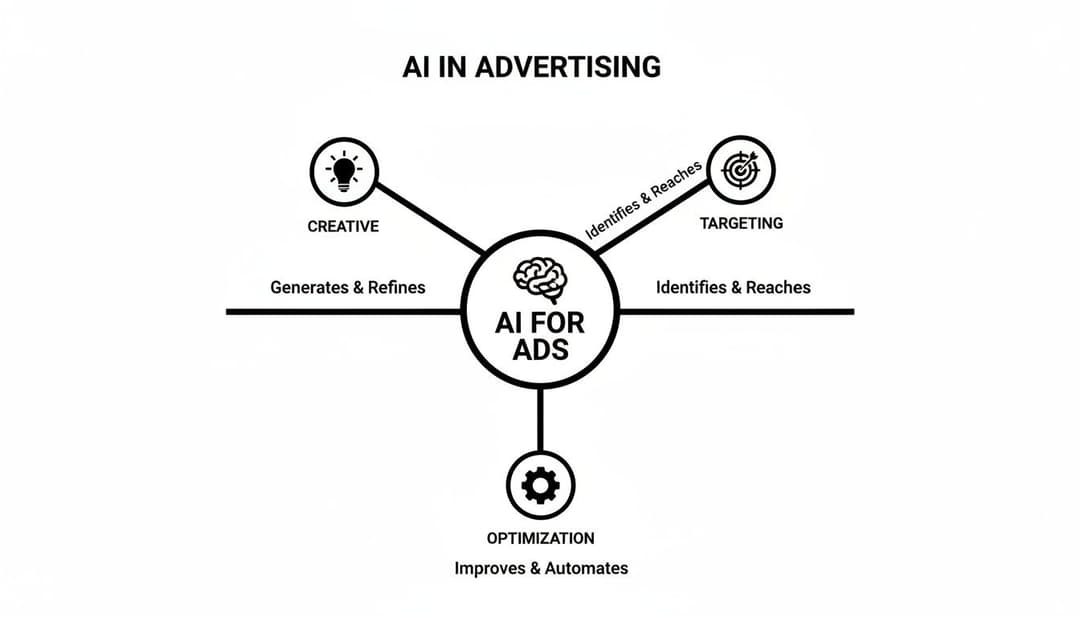
As you can see, these pillars—Creative, Targeting, Optimization, and Analytics—aren't just separate buckets. They're all part of a single, smart system that works together to drive better outcomes.
Let's break down how this actually looks in practice by comparing the old manual way with the new AI-powered approach.
Manual vs AI-Powered Advertising Tasks
The table below gives you a side-by-side look at how AI completely overhauls traditional advertising tasks. It's not just about doing things faster; it's about unlocking capabilities that were simply impossible before.
| Advertising Task | Traditional Manual Approach | AI-Powered Approach |
|---|---|---|
| Creative & Copy Generation | A designer and copywriter create a handful of ad variations. Testing is limited and slow. | Instantly generate hundreds of unique ad variations from a few core assets. Test on a massive scale from day one. |
| Audience Targeting | Build broad audiences based on general interests and demographics. It's often a best-guess effort. | Analyze first-party data to build precise lookalike audiences, uncovering high-intent segments invisible to humans. |
| Bidding & Budget Optimization | A media buyer checks performance a few times a day, making slow adjustments based on old data. | Algorithms work 24/7, making thousands of micro-adjustments in real-time to maximize ROAS. |
| Analytics & Insights | Manually sift through spreadsheets to find trends. It's time-consuming and hard to see patterns. | Dashboards automatically distill data into clear insights, identifying top-performing creatives and audiences. |
This shift moves teams away from tedious execution and toward high-level strategy, letting the machine handle the repetitive work while humans focus on the bigger picture.
AI-Powered Creative and Copy Generation
The first and most visible change is in creative production. For years, making ad variations was a huge bottleneck. A designer would cook up a few images, a copywriter would draft a handful of headlines, and a media buyer would painstakingly stitch together a limited number of combos to test.
AI blows that old process out of the water. Tools like AdStellar can take a few basic assets—your images, headlines, and CTAs—and spin them into hundreds of unique ad variations in minutes. This creative automation means you can test an almost endless number of combinations, quickly finding out which visuals and messages actually click with different audiences. AI is also changing the game for writing effective ad copy, using performance data to craft text that converts.
Think of it this way: a human can build a dozen ad variations in an hour. An AI platform can build 500 in five minutes. This isn't just a speed boost; it’s a fundamental change in how you can approach creative testing.
Intelligent Audience Targeting and Discovery
Next up is how we find our customers. Manually building audiences by picking broad interests and demographics has always been a bit of a shot in the dark. You might target "fitness enthusiasts," but that group is incredibly diverse—from marathon runners to casual yogis.
AI digs way deeper. It analyzes your own first-party data (like who has bought from you before) to build lookalike audiences with scary-good precision. It finds tiny patterns and behavioral signals that no human could ever spot, uncovering niche, high-intent groups that your competitors are probably overlooking. This means your ad spend gets focused on people who are actually likely to buy, boosting campaign efficiency from the get-go.
Real-Time Bidding and Optimization
This might be the most important function of all: real-time optimization. In a manual world, a media buyer might check on campaigns once or twice a day, shifting budgets around based on data that's already hours old. That slow feedback loop means you could be burning thousands on a bad ad before you even realize it.
AI algorithms, on the other hand, are on the job 24/7, making thousands of tiny adjustments every hour. They analyze performance data by the minute, automatically moving budget away from losing ad sets and doubling down on the winners. This self-piloting process makes sure your money is always flowing to the best-performing creatives and audiences, maximizing your ROAS without you having to live in the ad manager. It’s a huge piece of what makes AI marketing automation so powerful.
Advanced Analytics and Actionable Insights
Finally, AI turns a mountain of raw data into a clear roadmap. Instead of getting lost in a spreadsheet with endless rows and columns, AI-powered dashboards boil performance down to actionable insights. They can tell you exactly which headline is driving the most clicks or which image is resonating with a specific demographic.
This means you’re no longer guessing what worked. AI gives you the answers, ranking your top creative elements and audience segments. This creates an awesome feedback loop where the insights from one campaign directly fuel the creative and targeting strategy for the next one, locking in a cycle of continuous improvement.
Putting AI Into Practice With Real-World Use Cases
Theory is great, but seeing AI deliver real, measurable results is where things get exciting. Let's move past the abstract concepts and look at how this technology actually solves day-to-day problems for performance marketers.
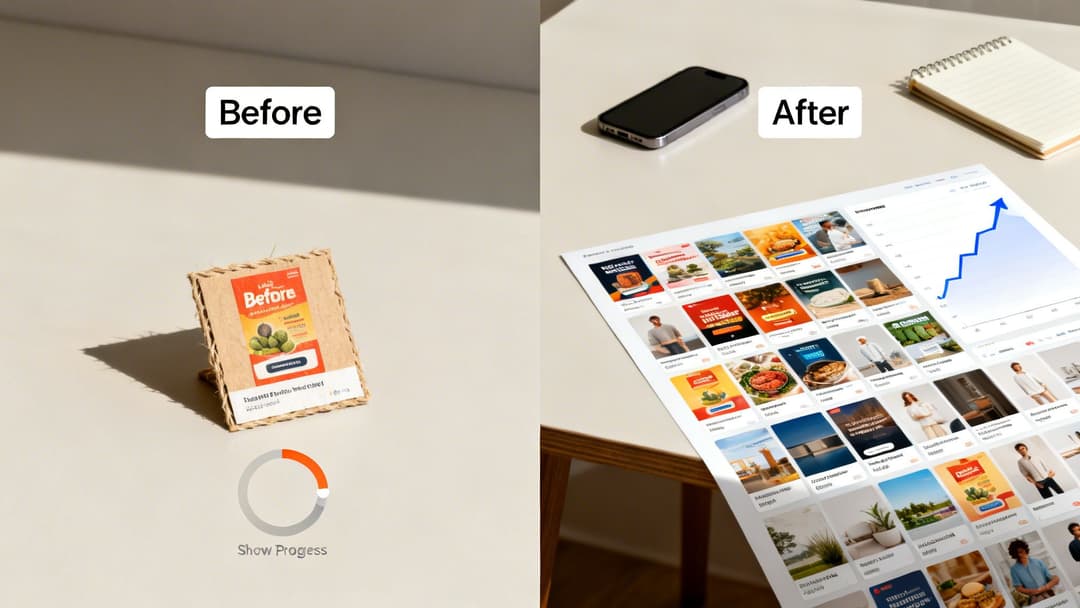
These scenarios show how AI platforms turn common marketing headaches into genuine growth opportunities. It’s all about shifting teams from putting out fires to building proactive, data-driven strategies. Each use case follows a simple problem-solution-result flow.
Scaling Creative Testing for a DTC Launch
The Problem: A direct-to-consumer (DTC) brand is launching a new skincare line. They need to figure out what ad creative works on Meta, and they need to do it fast. The marketing team has a few images, some video clips, and a handful of headline ideas, but they don't have the bandwidth to manually build and test hundreds of ad variations. Their old process would let them test maybe 10-15 ads, which means they’d be risking a slow start and a lot of wasted ad spend.
The AI Solution: The team uploads their core assets into a platform like AdStellar. The AI gets to work, automatically generating 500 unique ad combinations by mixing and matching every headline, image, video, and call-to-action. With a single click, these ads are launched in a structured testing campaign—a process that would have taken their team days to pull off manually. You can get a deeper look at how this works in our guide on using AI for Facebook ads.
The Result: Within 48 hours, the AI pinpoints the top 5% of creatives that are driving 80% of the purchases. The platform gives them a clear ranking, revealing that one specific video paired with a "Shop Now" button and a question-based headline is crushing everything else. The brand immediately shifts its budget to these proven winners and hits a profitable ROAS in the very first week of the launch.
This kind of rapid, large-scale testing takes the guesswork out of new campaigns. Instead of relying on hunches, you let real-world data guide the strategy right from the start.
Uncovering New Audiences for B2B Lead Gen
The Problem: A B2B software company is getting hammered by a high cost-per-lead (CPL) in their lead gen campaigns. Their targeting is pretty broad—just professional interests—and they have a nagging feeling they're missing out on niche audiences that are ready to buy.
The AI Solution: The company connects its historical ad account data to an AI platform. The system sifts through thousands of past conversions to build new, data-driven lookalike audiences. It picks up on patterns a human would never spot, like a high-performing segment of users who showed interest in "project management software" and also engaged with "financial analytics" content.
The Result: By targeting these new AI-generated audiences, the company slashes its CPL by 35% in the first month. Better yet, the leads are higher quality because the AI pinpointed users with multiple layers of intent signals, not just a single, surface-level interest.
These kinds of outcomes are becoming the norm as more teams adopt AI. In fact, data shows that 94% of marketers are already using AI in some way. Specifically, 80% use it for content creation and 75% for media production, which shows just how deeply AI is already embedded in these workflows.
Choosing the Right AI Advertising Platform
Picking the right AI advertising tool can feel like a massive decision, especially when every other platform claims to be the best. The secret is to look past the flashy marketing and zero in on what actually moves the needle for your business. A truly great platform isn't just another piece of software—it’s the command center for your entire advertising operation.
The best systems are built with deep, native integrations into the ad networks you live in every day, like Meta Ads. This is non-negotiable. It ensures all your data flows seamlessly and eliminates the painful delays that happen when you're trying to stitch together a bunch of disconnected tools. A platform that genuinely works for you learns directly from your unique historical data, turning every past win and loss into a smarter strategy for the future.
Key Evaluation Criteria for AI Platforms
To find the right fit, you need to understand the landscape of the best AI tools for digital marketing and what they actually do. When you're weighing your options, give top priority to platforms that bring the whole campaign workflow under one roof—from dreaming up creative to analyzing the final numbers.
Make sure any solution you consider can centralize three critical data streams:
- Creative Data: It needs to tell you which images, headlines, and copy are killing it—not just overall, but for specific audience segments.
- Audience Data: The platform has to be smart enough to find and build high-intent audiences from your first-party data, getting you way beyond generic, broad targeting.
- Performance Data: It absolutely must connect every creative choice and audience decision directly to your bottom-line results, whether that's ROAS, CPL, or CPA.
A unified platform that merges these three areas is light-years ahead of trying to duct-tape multiple point solutions for creative, analytics, and bidding. A fragmented tech stack just creates data silos and clunky workflows, which is exactly the problem AI is supposed to fix.
Moving Beyond Disconnected Workflows
The real magic of an AI platform like AdStellar is its ability to create a constant feedback loop, where learnings from one campaign automatically fuel the next one. This centralized approach finally gets your team out of spreadsheet hell and into a streamlined, data-driven process.
The goal is to adopt a platform that acts as a single source of truth. When your creative engine, audience builder, and performance analytics all live in one place, your team can make faster, smarter decisions that directly impact growth.
This integrated model takes the guesswork out of launching new campaigns. You’re not starting from scratch; you're building on a foundation of proven, winning elements and constantly doubling down on what works. For a deeper dive into what to look for, you can explore the top features of AI ad platforms that genuinely make a difference. Making a confident, informed decision on the right tool is the first step toward unlocking the full potential of AI in your advertising efforts.
Your AI Implementation Checklist for a Smooth Rollout
Jumping into a powerful new AI tool doesn't mean you have to rip up your entire marketing operation and start from scratch. A smart, structured rollout can turn a potentially chaotic process into a series of clear, manageable steps. The trick is to start small, prove the value, and then build momentum.
This checklist gives you a framework for weaving an AI for ads platform into your team’s existing rhythm. It’s all about building a solid foundation first, ensuring a smooth transition that gets you results right from the get-go.
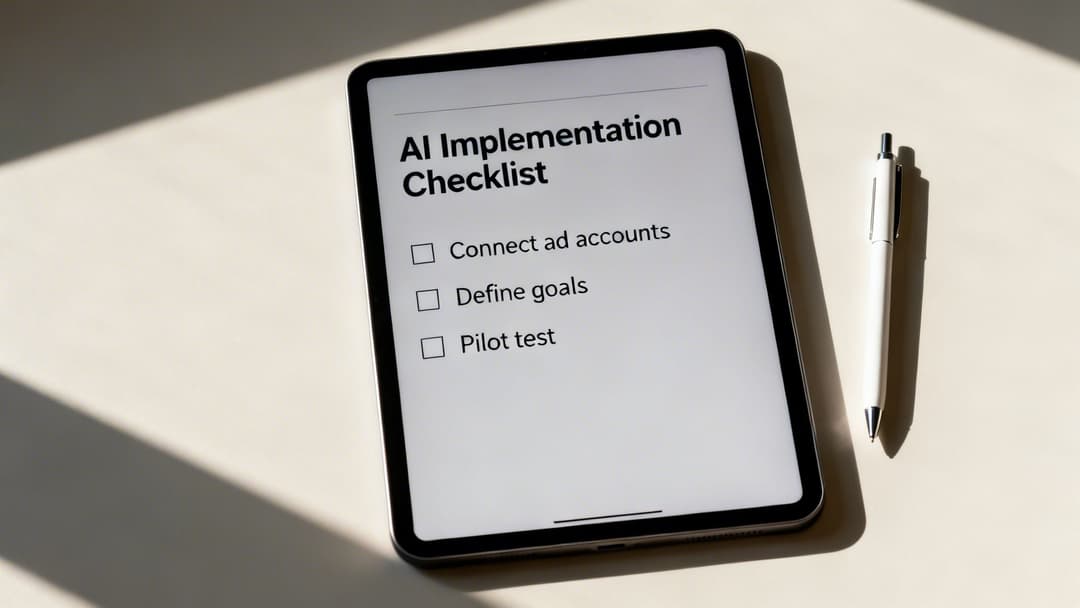
Phase 1: Foundational Setup
First things first, let's get the technical and strategic basics locked in. A clean setup is non-negotiable—it ensures the AI has the right data and clear goals to work with, which saves you a world of headaches later on.
Securely Connect Your Ad Accounts: Use the platform’s one-click connection (look for OAuth) to link up your Meta Ads Manager. This is how the AI ingests all that valuable historical performance data, which is absolutely critical for its learning process.
Define Your Primary Campaign Goal: What's the one metric you really care about right now? Is it a lower Cost-Per-Lead (CPL), a higher Return on Ad Spend (ROAS), or maybe a specific Cost-Per-Acquisition (CPA)? Pick a single, clear goal for your first few campaigns so the AI can orient every decision toward that specific outcome.
Start with a Pilot Project: Whatever you do, don't try to migrate all your campaigns at once. Choose one specific product, service, or audience to run a pilot test. This controlled experiment makes it much easier to measure the impact and build confidence across your team.
Phase 2: Workflow Integration
Once the technical foundation is solid, it's time to adapt how your team actually works to get the most out of the AI. This is less about the tool and more about shifting your mindset, ditching old habits, and embracing some new efficiencies.
An AI platform isn't just a new tool; it's a new way of working. The goal is to shift your team's focus from tedious manual execution to high-level strategic oversight, letting the AI handle the heavy lifting.
This means building a new muscle for creative testing—one that’s built for speed and scale. Get your team thinking in terms of launching 100+ ad variations at once, not just a few. You'll also want to centralize all your creative assets and audience definitions within the platform. This creates a single source of truth for all campaign activity, finally killing off those messy spreadsheets and making sure everyone is working from the same playbook.
Measuring the ROI of Your AI Advertising Efforts
So, you're thinking about bringing an AI tool into your workflow. Great. But how do you prove it’s actually worth the investment? When it comes to AI for ads, measuring the return isn't about a single magic number. It's about seeing the ripple effect across your entire process.
The business case for AI really stands on two legs: how much faster it makes you, and how much better your results get. You need to track both to get the full story of what the technology is doing for your team and, more importantly, your bottom line.
Efficiency Gains: The ROI of Speed
First, let's talk about operational wins. AI platforms are brilliant at automating the tedious, manual tasks that eat up your team's day. This isn't just about saving time; it's about reallocating that time to high-level strategy that a machine can't do.
- Time Spent on Campaign Creation: How long does it take your team to get a new campaign out the door, from a blank slate to launch? Track this before and after you bring in an AI tool. The difference should be pretty stark.
- Creative Testing Volume: Count the number of unique ad variations your team can launch in a week. AI can spit out hundreds of options in minutes, meaning this number should absolutely skyrocket. More tests mean more data, faster.
These metrics prove AI isn't just another performance tool—it's a productivity multiplier. It hands your team back their most valuable asset: time.
Performance Lifts: The ROI of Results
Getting faster is great, but the real test is whether the AI actually moves the needle on your campaign goals. These are the metrics that tie directly back to the money and show the financial impact of your investment. For a much deeper look, check out our guide on how to calculate return on ad spend.
Here are the key performance indicators to keep a close eye on:
- Improved ROAS: This is the big one. A good AI platform should consistently and measurably increase your return for every dollar you spend.
- Lower Cost-Per-Acquisition (CPA): By finding better audience pockets and optimizing bids on the fly, AI should bring down the cost of landing each new customer.
- Higher Conversion Rates: It's simple, really. Better creative matched with more precise targeting should naturally lead to a higher percentage of clicks becoming sales or leads.
When you track both efficiency and performance, you're not just justifying a software purchase. You're building an undeniable case for the real, tangible value AI brings to the table.
Common Questions About AI for Ads
Jumping into any new tech brings up some fair questions. If you're a performance marketer eyeing AI, you're not alone. Here are some straight answers to the most common things we hear.
Is AI Going to Replace My Job as a Media Buyer?
Not a chance. Think of AI as your new co-pilot, not the pilot. It’s here to take over the grunt work—the endless ad variations, the 24/7 data-crunching—so you can focus on what really matters.
Your job shifts from tedious execution to high-level strategy. You’ll spend your time on creative direction, interpreting the complex insights AI surfaces, and making the kind of smart, strategic calls that only a human can.
How Much Data Do I Need for AI to Work?
This is a big one, but the answer is probably less than you think. While more data never hurts, most modern AI platforms can start delivering real value with just a few weeks of your historical campaign data. A good tool doesn't need a mountain of data to get started; it needs a starting line.
It uses your initial data as a jumping-off point and gets smarter with every new campaign. It’s constantly learning from your performance, refining its recommendations, and improving its accuracy over time.
Is It a Headache to Integrate an AI Advertising Tool?
Definitely not. The best AI platforms are built to be plug-and-play. Most use a simple, secure one-click connection (like OAuth) to link right up with your existing ad accounts, like Meta Ads Manager.
There’s no complex code or painful technical setup. The real work isn't in the tech integration—it’s in adapting your team's workflow to make the most of all the new efficiencies you've just unlocked.
Ready to stop guessing and start growing? See how AdStellar AI can help you launch, test, and scale winning Meta campaigns 10x faster. Explore AdStellar AI today.