Stop Guessing, Start Winning: A Modern Playbook for Meta Ads
You launch a Facebook campaign, watch spend climb, and then open Ads Manager hoping the numbers tell a clean story. Instead, you see mixed signals. One ad gets clicks but no purchases. Another reaches plenty of people but attracts the wrong audience. A third looks promising, then falls apart after a few days. That cycle is where many advertisers get stuck.
The problem usually isn't effort. It's fragmentation. Creative gets tested without a clear audience framework. Audiences get expanded before tracking is reliable. Bidding gets adjusted before the landing page is ready to convert. When those pieces aren't connected, even decent campaigns become expensive experiments.
A better approach is to treat Meta advertising as a system. Creative testing, segmentation, conversion tracking, bidding, placements, and post-click experience have to work together. Once they do, performance gets easier to interpret and easier to scale. You stop reacting to random swings and start making deliberate decisions.
That's why the most useful best practices for Facebook ads aren't one-off hacks. They're operating rules. They're the habits that keep your account learnable for the algorithm, readable for your team, and profitable for the business.
If you need a practical starting point before getting more advanced, this Facebook advertising guide for SMBs is a solid companion to the framework below.
1. Implement A/B Testing at Scale with Multiple Creative Variations
Most advertisers don't test. They rotate a few ads, change several variables at once, and then guess why one version won. Useful testing is structured. It isolates one major variable, keeps context stable, and gives each variation enough room to produce a signal.
When I audit accounts, the biggest waste usually isn't bad creative. It's untraceable learning. Teams swap hooks, visuals, CTA language, and audience settings all at once, then call the winner "the best ad." That doesn't create a repeatable system.
Here is the visual discipline strong testing needs:
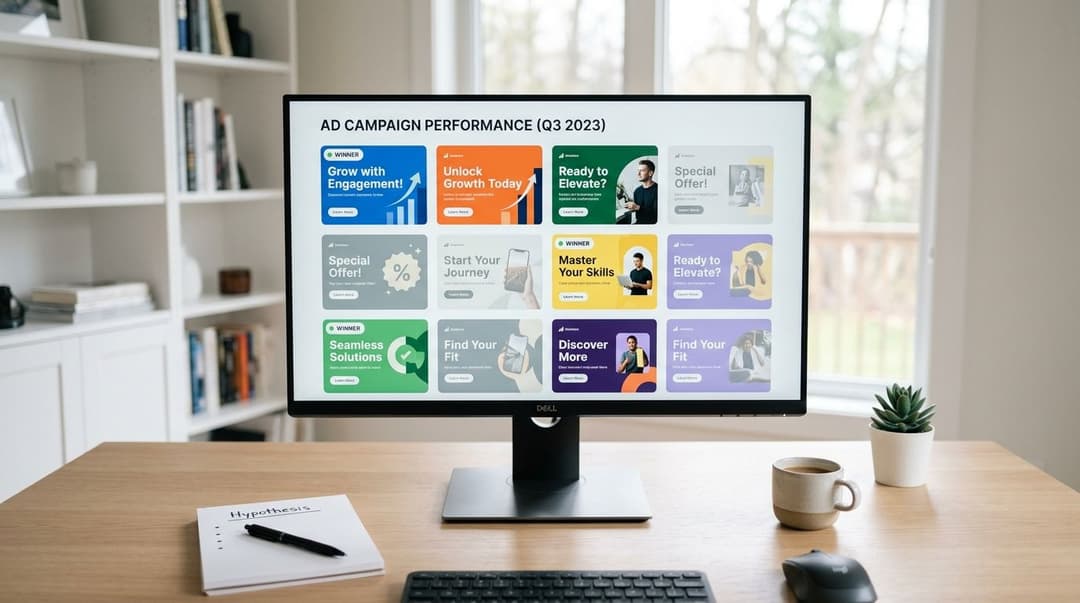
Build a test matrix, not a pile of ads
A D2C brand might test the same offer across lifestyle imagery, product-only imagery, and creator-style video. A SaaS team might hold the visual constant and test two value propositions, such as time-saving versus operational control. Both are valid. The mistake is combining both experiments in one batch.
Use a baseline from your best recent campaign. Then create variations around a single hypothesis and log the context that produced the result. If you need a more rigorous framework for volume and timing, this guide on sample size for testing is useful.
- Start from proven controls: Use your strongest recent ad as the benchmark, not a random new concept.
- Change one major variable: Test hook, image style, offer framing, or CTA, but don't rewrite the whole ad at once.
- Document the conditions: Note audience, placement mix, objective, and landing page used, so the insight can be reused later.
Practical rule: If you can't explain exactly what changed between version A and version B, you're not running an A/B test. You're running a creative reshuffle.
Scale matters here because patterns emerge across segments. An e-commerce store may find that product-close-up images outperform for retargeting, while lifestyle content works better for cold traffic. A B2B campaign may learn that founders respond to growth language while operators click on efficiency language. Those patterns become the raw material for better campaign structure.
2. Leverage Audience Segmentation and Lookalike Expansion
A campaign can show a healthy blended CPA while hiding a structural problem. Retargeting is doing the heavy lifting, prospecting is underperforming, and the account still looks acceptable in aggregate. That is why segmentation matters. It turns audience quality, message fit, and incrementality into something you can measure.
Start with customer stage, not interest stacks. A recent product viewer, a first-time buyer, and a net-new prospect are different jobs for the algorithm and different messaging problems for your team. Keep those stages separate so you can see where performance comes from and decide where to push budget.
For e-commerce, that usually means splitting product viewers, cart visitors, one-time buyers, and repeat customers. For SaaS, useful cuts often include site visitors, pricing-page visitors, webinar or demo viewers, trial users, and qualified leads. The point is not account complexity for its own sake. The point is control.
Prospecting needs a different discipline. Audience pools that are too narrow often create unstable delivery, higher frequency, and noisy learning. Meta's own guidance on Audience controls reflects the broader direction of the platform. Give delivery room to find converters, then use exclusions and creative to keep traffic quality in line.
Lookalikes still help, but the seed list determines whether they add signal or just add volume. Build them from high-value cohorts when possible. Repeat purchasers, high-LTV customers, and users who reached meaningful post-click milestones usually outperform a seed built from every converter dumped into one file. If you want the setup details, this guide to Meta lookalike audiences is a good reference.
This works best as part of a wider system. Creative tests from section one should feed audience decisions here. Conversion quality should feed back into seed selection. Tracking quality matters too, especially if you are building value-based audiences or qualified lead cohorts. A clean Meta Conversions API setup for Facebook ads helps keep those audience signals usable.
A few operating rules keep segmented accounts from getting messy:
- Exclude with intent: Remove existing customers from net-new acquisition unless the offer is built for reorder, upsell, or cross-sell.
- Refresh seed audiences: Customer files drift. Update source lists on a regular cadence so lookalikes reflect current buyer quality.
- Check overlap before scaling: If two ad sets compete for nearly the same users, results get harder to read and budget allocation gets less efficient.
- Match message to stage: Cold audiences need belief-building and education. Warm audiences usually respond better to proof, urgency, and offer clarity.
Segmentation is not a targeting trick. It is an account design choice that connects audience structure, creative relevance, bidding efficiency, and post-click measurement into one scalable Meta system.
3. Optimize for Business Results with Conversion Tracking and Smart Bidding
A campaign can show strong click-through rates, low CPCs, and still miss revenue targets by a mile. Meta is very good at finding the cheapest version of the outcome you ask for. If you optimize for soft actions, the system will keep finding people who complete soft actions.
Benchmarks can help with context, but they are a poor substitute for clean account-specific signals. WordStream's industry benchmark analysis reports wide variation in Facebook ad conversion rates and cost per action by vertical, which is exactly why event selection matters more than platform averages in day-to-day optimization (WordStream Facebook Ads benchmarks).
Track the event that maps to actual value
The best optimization event is usually the closest one to revenue that still gives Meta enough volume to learn.
For ecommerce, that is often Purchase. For SaaS, it may be Qualified Lead, Demo Booked, or Trial Activated instead of a basic form fill. For apps, install is often too shallow. Subscription start or paid trial usually gives the algorithm a better target if volume supports it.
That trade-off matters. If you optimize too high in the funnel, Meta learns speed, not quality. If you optimize too low with very little volume, delivery can stall and CPA becomes unstable.
For post-cookie measurement, use both the Meta Pixel and Conversions API. Meta explains in its guidance on Conversions API event coverage that stronger event coverage improves match quality and reporting continuity. In practice, this setup helps reduce signal loss, improves attribution, and gives bidding models better input.
Implementation detail matters here. A practical walkthrough like Facebook Conversion API setup and strategy helps fix duplicate events, missing parameters, and weak event matching before those problems distort optimization.
Better bidding starts with better event quality. If Meta receives incomplete, delayed, or low-value conversion data, it will optimize toward the wrong behavior.
Smart bidding works best inside a wider operating system. Creative tests should feed conversion quality. Audience segments should be judged on qualified outcomes, not just cheap leads. Post-click pages should pass back the signals that tell Meta which users are worth more. If your team is also refining messaging, these ad copy best practices for conversion-focused campaigns help align front-end promise with back-end event quality.
One more practical point. Automation gets stronger when naming, event taxonomy, and reporting are consistent across campaigns. That makes it easier to compare bid strategies, identify where value-based optimization is viable, and scale winners without rebuilding the account every month.
If you need faster concept generation while testing different offers against different conversion events, a free tool for ad copy can help speed up production without turning the account into a creative free-for-all.
4. Create Winning Ad Copy Through Psychological Triggers and Pain Point Messaging
A campaign can have clean tracking, solid bidding, and the right audience, then still stall because the message misses the moment. The ad asks for attention before it proves relevance.
Copy has one job first. Make the reader feel understood fast enough to stop the scroll.
That starts with the problem, not the product description. A finance SaaS buyer cares about delayed reporting, manual exports, and shaky forecasts. A skincare buyer cares about irritation, wasted money, and whether this product will fail like the last three. The trigger changes by category, but the pattern stays consistent. Name the friction, frame the consequence, then present the offer as a credible next step.
Match the trigger to the audience's stage
Audience stage should shape the copy angle just as much as the visual. Cold audiences usually respond to problem recognition, curiosity, or a sharp contrast with the status quo. Warm audiences can handle more specificity, including proof, features, and objection handling. Retargeting copy should reduce uncertainty. Shipping details, guarantees, social proof, pricing context, or a clearer explanation of who the offer is for often do more than louder urgency.
The CTA matters here because copy and action need to work as one system. Meta's own guidance on ad components emphasizes clear calls to action and direct value communication in ad creative, especially when the objective is to drive a defined next step, as outlined in Meta's advertising best practices. In practice, weak CTA language often wastes good hooks. "Learn More" fits education. "Shop Now" fits high-intent product traffic. "Sign Up" fits demos, trials, and lead capture.
I usually review copy in three layers:
- Hook: Does the first line identify the pain, desired outcome, or missed opportunity quickly?
- Body: Does it add proof, mechanism, or differentiation without turning into brochure copy?
- Action: Does the CTA match what the landing page and audience readiness can support?
The trade-off is clarity versus curiosity. Curiosity can lift clicks, but unclear ads often bring cheaper traffic that does not convert. Clearer copy can reduce click volume while improving lead quality or purchase rate. That is why copy should be judged with downstream metrics, not CTR alone.
This becomes even more important once you scale variation output. Teams using AI-assisted creative workflows can map different emotional triggers to different segments, then connect those messages to customized post-click experiences. If you're building that kind of workflow, these personalized marketing videos for segmented campaigns are a useful example of how message relevance can continue after the click instead of stopping at the ad.
If you want to sharpen copy frameworks around different intent levels, this resource on ad copy best practices is practical. You can also use a free tool for ad copy when you need rough variations to refine.
Good copy does not try to sound clever. It gives the right person a reason to act now.
5. Use Video Content to Drive Higher Engagement and Better Placement Fit
Static ads still work, but video gives you more ways to communicate value fast. You can show the product, demonstrate the use case, layer in text, and control the first impression with movement. That matters because attention on Meta is earned in seconds.
Here's the kind of mobile-first creative environment your ads need to match:
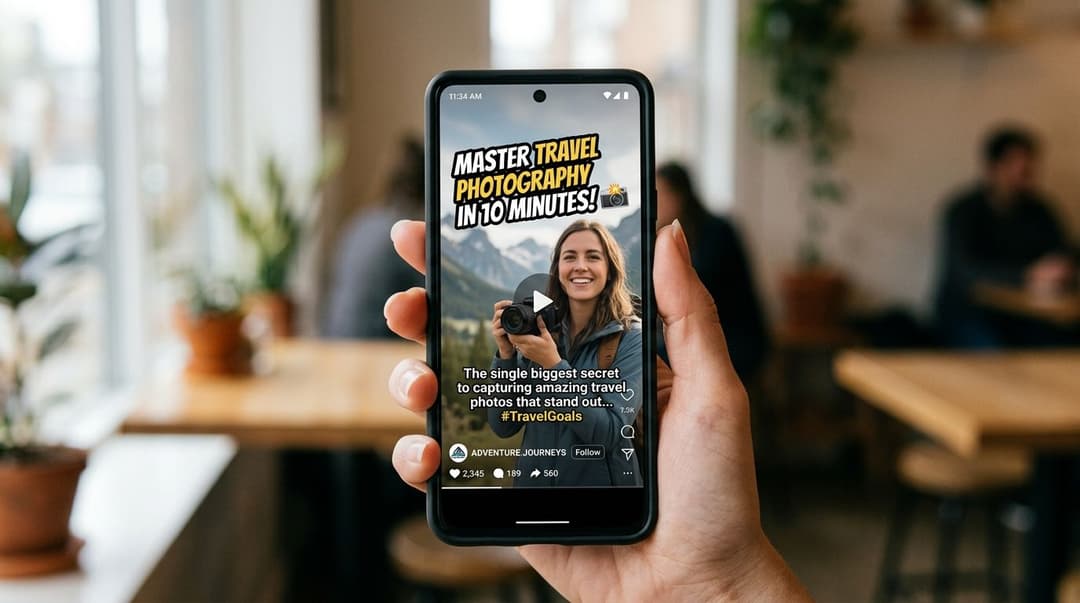
Structure video for the feed it enters
For 2026-focused creative guidance, LeadsBridge recommends 4:5 for feed placements and 9:16 for Stories and Reels, with video kept under 15 seconds and the primary hook delivered in the first 3 seconds, in its article on Meta ads best practices. That's less about style preference and more about fitting the way users consume content on mobile.
A product demo for a SaaS offer might open with the dashboard problem it solves. A DTC brand might lead with a striking product outcome or a tactile product-use moment. A creator-style testimonial often works when the first sentence sounds like a lived problem, not a script.
Facebook also recommends keeping parts of the Reels frame free of text or logos so interface elements don't cover your message. If you're producing personalized or modular creative at scale, this guide to personalized marketing videos can help operationalize that workflow.
The first three seconds don't need to explain everything. They need to earn the next three.
A common mistake is treating one video like a universal asset. Feed, Stories, and Reels reward different pacing and framing. Edit accordingly. The account performs better when the creative respects the placement rather than merely occupying it.
6. Implement Sequential Messaging Across Campaign Funnels
One ad rarely closes the whole sale, especially if the product needs education, comparison, or trust. Sequential messaging fixes that by changing the conversation as the buyer's awareness changes.
A cold prospect doesn't need a discount first. They need a reason to care. A warm prospect who watched your demo doesn't need another broad brand ad. They need proof, objection handling, or a stronger offer. Many accounts waste budget, continuing to repeat the same message to people who have already moved past it.
Build the journey on purpose
A typical SaaS sequence might start with a pain-point video, then move to feature clarity, then comparison content, then a trial or demo CTA. An e-commerce sequence may begin with category education, move into product benefit content, then user-generated proof, then a conversion-focused retargeting ad.
Use exclusions to keep people from seeing every stage at once. Someone who already purchased shouldn't sit in the same retargeting loop as a cart abandoner. Someone who viewed a webinar registration page likely needs a different follow-up than someone who bounced from a homepage visit.
- Map stages to actions: View content, click through, add to cart, start trial, and purchase should trigger different messaging.
- Control creative repetition: If the same promise appears at every stage, the funnel feels stagnant.
- Align landing pages to the stage: Educational ads should not jump straight to heavy-friction forms unless the audience is already warm.
Sequential structure also helps teams diagnose weak points. If awareness ads get attention but comparison ads stall, the issue isn't reach. It's mid-funnel persuasion.
7. Optimize Ad Placement and Format Mix for Performance
A strong ad can still lose if it enters the auction in the wrong shape.
I see this often in accounts that use one square image, one primary text block, and one video cut across every placement. Meta will deliver it, but delivery is not the same as fit. Feed gives you more room to explain. Stories and Reels reward speed, framing, and clear visual hierarchy. Carousel works when the user needs to browse, compare, or understand a sequence.
Start with automatic placements if the account does not yet have enough data to support tighter controls. That usually gives Meta the best chance to find low-cost inventory across surfaces. Then break performance down by placement, format, and device. Look past CTR alone. A placement can look cheap and still bring low-quality traffic, weak add-to-cart rates, or poor downstream conversion volume.
Creative formatting matters more than many teams expect. Meta provides placement specs for image, video, and carousel assets, and ignoring those specs usually lowers performance before the offer even gets judged. Cropped headlines, cutoff product shots, tiny subtitles, and awkward safe zones make average creative look broken.
A practical system looks like this:
- Launch broad, then trim with evidence: Restrict placements only after you see a clear pattern in CPA, conversion rate, or return on ad spend.
- Build placement-native versions: Change aspect ratio, hook timing, text density, and caption treatment for Feed, Stories, Reels, and carousel instead of forcing one master asset everywhere.
- Match format to user behavior: Single image can win for a straightforward offer. Carousel helps with comparison and catalog-style browsing. Short video usually fits top-of-funnel attention and mobile inventory better.
- Review by device and post-click quality: Mobile often drives volume, but check bounce rate, page speed, form completion, and purchase rate before shifting spend aggressively.
Placement decisions transition from a media-buying preference to an integral part of the operating system. Creative testing, audience segmentation, bidding, and landing page performance all affect which placements achieve scale. If your team uses automation or AI workflows, feed those systems the right inputs: placement-level conversion data, asset labels, and clear naming conventions. That makes it easier to spot which combinations deserve more budget and which ones should be cut fast.
The goal is not to find one best placement. The goal is to build ads that perform well across the inventory Meta can buy, then give more weight to the combinations that produce real business results.
8. Use Dynamic Product Ads and Catalog-Based Targeting for E-commerce
For e-commerce brands, dynamic product ads solve a practical problem. Most stores have too many products, too many browsing paths, and too many customer intents to rely on one generic sales ad.
Catalog-based delivery lets Meta match products to behavior. A shopper who viewed running shoes can see those products again. A customer who bought once can be shown complementary items. A brand with broad inventory can keep ads relevant without rebuilding campaigns manually every time product interest shifts.
Here is the kind of multi-format environment catalog creative has to support:
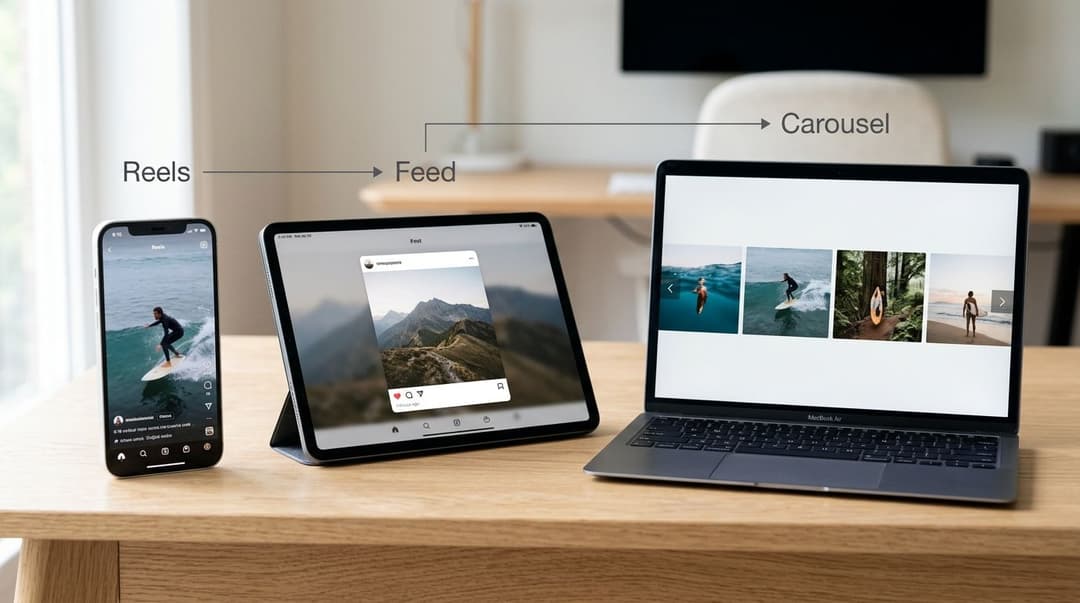
Catalog quality affects ad quality
Dynamic ads are only as good as the feed behind them. Weak titles, inconsistent images, missing variants, or delayed stock updates lead to poor ad experiences. That can waste spend and create avoidable friction after the click.
Set up product sets intentionally. Bestsellers, high-margin items, seasonal collections, and category-specific groups all create more control than one giant undifferentiated catalog. Exclusions matter too. You don't want discounted clearance products and premium hero items mixed into the same prospecting experience unless that's deliberate.
A dynamic ad is not a substitute for merchandising. It's a distribution layer for the merchandising decisions you've already made.
This approach works best when tracking is already stable and product pages are conversion-ready. Otherwise, dynamic relevance gets wasted on weak infrastructure.
9. Implement Continuous Testing and Auto-Scaling of High Performers
A campaign hits target CPA for three days, the team raises budget too fast, delivery resets, and performance slips before anyone knows whether the original win was real. That pattern is common in Meta accounts that test often but lack a scaling system.
Strong accounts treat testing, budget allocation, and creative refreshes as one operating loop. New ads enter on a schedule. Clear losers come out after enough spend or enough conversion data. Winners get more budget through rules that protect stability instead of reacting to daily swings. That is how creative testing starts compounding instead of resetting every week.
Protect learning before forcing growth
As noted earlier, Meta optimization works best when an ad set gets enough conversion volume to stabilize delivery. The practical takeaway is simple. Keep structures consolidated enough to produce a real signal, then scale from proven pockets instead of fragmenting budget across too many tiny tests.
I usually see two avoidable mistakes here. One is cutting tests before they have enough spend to separate weak ads from normal variance. The other is launching so many audiences, angles, and formats at once that none of them gather enough conversion volume to train properly.
A better system uses thresholds before action:
- Set stop rules for tests: Pause creatives only after they miss efficiency targets with enough impressions, spend, or conversion data to make the call credible.
- Scale budgets in controlled steps: Smaller increases help preserve delivery stability and make it easier to spot whether performance changed because of budget pressure or because demand weakened.
- Reserve budget for testing: If every dollar goes to current winners, the account loses its pipeline for the next winner.
- Separate messaging tests from design refreshes: A new edit can improve thumb-stop rate, but it will not fix an offer angle that no longer persuades.
Creative diagnosis matters here. In a Reddit discussion on creative angle fatigue and AI attribution, advertisers point out a useful distinction. Visual fatigue and message fatigue often show up differently. If click-through rate falls first, the hook or image may be wearing out. If clicks hold and conversion rate drops, the problem may sit in the offer, audience quality, or post-click path.
That distinction is where scaling gets more disciplined. The ad account is not just choosing winners. It is deciding what kind of winner it found. A strong visual with a weak angle should not get broad budget support. A strong angle with a tired visual usually deserves a refresh and another round of spend.
This matters even more for brands running multiple sales channels. If your Meta ads point to a marketplace listing as well as your site, the same testing logic applies to catalog quality after the click. Teams trying to improve my Amazon catalog often find that the ad was not the actual bottleneck. The product page was.
Auto-scaling works best when the rules are boring. Raise budget after stable efficiency over several days. Duplicate into broader spend only after the original ad set has held up. Refresh winners before they collapse, not after frequency has already pushed costs up. Automation helps when it reflects these trade-offs. Otherwise it just makes bad decisions faster.
10. Optimize Landing Pages and Post-Click Experience for Conversion
A campaign can hit target CTR, hold CPC, and still miss revenue goals because the failure happens after the click. Meta keeps finding people willing to visit. The landing page then wastes that demand with slow load time, weak message match, cluttered mobile UX, or a form that asks for enterprise-level commitment from cold traffic.
That is why post-click work belongs inside the Facebook ads system, not in a separate CRO bucket. Creative testing, audience quality, bidding, and landing page behavior affect each other. If one ad set attracts top-of-funnel clicks, the page should qualify and educate. If another ad set targets retargeting traffic with product intent, the page should remove buying friction and get to proof, pricing, and checkout fast.
Message match sets the floor for conversion rate
The page headline should continue the promise made in the ad. Same offer. Same angle. Same audience awareness level. A click on "compare top models" should land on a comparison page. A click on "book a demo" should land on a page where the form and scheduling step appear immediately, not after three blocks of brand storytelling.
The ROAS gap between average and strong accounts often comes from this handoff. B2C and B2B advertisers both feel it, even though the buying cycle differs. Consumer brands usually lose sales through speed, trust, or checkout friction. B2B teams usually lose leads through poor intent matching, bloated forms, or pages that ask for a decision before the visitor has enough context.
This short walkthrough is worth keeping near your CRO workflow:
I treat post-click optimization as a routing problem first, not a design exercise. Send each traffic type to the page built for that job. Prospecting traffic often needs tighter proof and clearer education. Retargeting traffic usually needs fewer distractions and a faster path to conversion. Catalog and marketplace traffic add another layer, because the product detail page becomes part of ad performance. Brands that sell through Amazon often need to improve my Amazon catalog before Meta efficiency improves in a lasting way.
A practical QA pass should cover four things:
- Keep forms proportional to intent: Cold traffic should not hit a long qualification form unless lead quality justifies the drop in volume.
- Design for mobile first: Check load speed, CTA visibility, thumb-friendly layout, and whether key proof appears before a long scroll.
- Reduce decision friction: Put price, shipping, returns, social proof, and primary objections near the action point.
- Track the final outcome: Use thank-you page events or server-side confirmation so Meta optimizes toward completed outcomes, not just page visits.
Strong ads expose weak pages quickly. Strong pages give the algorithm cleaner conversion signals, protect efficiency as you scale, and make creative winners easier to identify.
Facebook Ads: 10 Best Practices Comparison
| Strategy | Implementation complexity | Resource requirements | Expected outcomes | Ideal use cases | Key advantages |
|---|---|---|---|---|---|
| Implement A/B Testing at Scale with Multiple Creative Variations | High, requires hypotheses, tracking, and statistical controls | Budget for many variations, creative automation, analytics tooling | Faster discovery of winning creative, lower CPA, richer audience insights | DTC, e‑commerce, SaaS with moderate-to-high traffic | Rapid learning at scale; confident scaling of proven creatives |
| Leverage Audience Segmentation and Lookalike Expansion | Medium, data segmentation and audience hygiene needed | Clean customer data, minimum conversion volume, audience analysis tools | Higher relevance, improved engagement and ROAS, scalable reach | E‑commerce, SaaS, subscription services with customer lists | Precision targeting; efficient expansion into similar high-intent prospects |
| Optimize for Business Results with Conversion Tracking and Smart Bidding | Medium–High, conversion API and attribution setup required | Tracking infrastructure (pixel/API), conversion volume, bidding tools | Spend aligned to revenue, automated bid optimization, clearer ROI | E‑commerce, lead gen, apps optimizing for purchases or qualified leads | Direct revenue optimization; reduced manual bid work; better scaling |
| Create Winning Ad Copy Through Psychological Triggers and Pain Point Messaging | Medium, audience research plus iterative copy testing | Copywriters, customer insights, testing framework | Higher CTRs, better-qualified conversions, improved ad relevance | B2B SaaS, DTC brands, campaigns needing persuasive messaging | Improved engagement and differentiation via tested psychological triggers |
| Use Video Content to Drive Higher Engagement and Lower CPMs | Medium–High, production and format optimization required | Video production/editing, format variants (vertical/horizontal), captioning | Higher engagement and completion rates, typically lower CPMs | DTC brands, mobile-first audiences, storytelling-focused campaigns | Stronger engagement and algorithmic signals; better mobile performance |
| Implement Sequential Messaging Across Campaign Funnels | High, requires funnel mapping, sequencing and audience controls | Multiple creative sets, audience segmentation, tracking across stages | Higher conversion rates, more efficient spend, consistent narrative | SaaS free trials, e‑commerce funnels, B2B multi-touch sales | Guided customer journey; improves conversion likelihood and efficiency |
| Optimize Ad Placement and Format Mix for Performance | Medium, testing across placements and specs | Multiple creative formats, analytics, time for cross-placement tests | Lower CPMs in efficient placements, improved reach and relevance | Brands using multi-format campaigns, mobile-heavy audiences | Placement-specific cost and engagement optimization; format fit benefits |
| Use Dynamic Product Ads and Catalog-Based Targeting for E‑commerce | Medium–High, catalog/feed integration and sync required | Product catalog management, feed quality, pixel + API tracking | Personalized ads at scale, higher ROAS, automated product promotion | Retailers, large online catalogs, Shopify merchants | Personalization at scale; automated ad generation; improved conversion |
| Implement Continuous Testing and Auto-Scaling of High Performers | High, automation rules and ML safeguards required | Reliable tracking, automation platform, ongoing test budget | Faster optimization cycles, rapid scaling of winners, reduced waste | High-volume advertisers, agencies, growth teams | Removes manual bias; accelerates scaling; continuous improvement loop |
| Optimize Landing Pages and Post-Click Experience for Conversion | Medium, design, development and CRO testing needed | Landing page platform/dev resources, A/B testing tools, traffic | Higher conversion rates, lower CAC, improved full-funnel ROI | Any paid traffic campaigns, especially lead gen and e‑commerce | Enhances final conversion leverage; often high ROI from small changes |
From Practices to Systems Your Path to Scalable Ad Success
The biggest shift in Meta advertising isn't a new button in Ads Manager. It's the move from isolated tactics to connected systems. That's what separates accounts that lurch from test to test from accounts that compound learning over time.
If you look back across these best practices for Facebook ads, the pattern is clear. Creative testing works better when audience segments are well defined. Audience expansion works better when conversion tracking is reliable. Smart bidding works better when the event being optimized accurately reflects business value. Placements perform better when the asset was designed for the feed it enters. Landing pages convert better when they continue the exact message that earned the click. None of these pieces lives on its own.
That's also why random "growth hacks" usually disappoint. A CTA button, a new format, or a broader audience can help, but only if the rest of the system can support it. The modern Meta workflow is less about chasing isolated wins and more about removing failure points. You want a campaign structure that can absorb new creative, preserve clean measurement, and generate useful feedback without forcing your team to rebuild everything every week.
Start small if you need to. Pick one weak link. For some teams, that's tracking. For others, it's creative velocity. For many, it's post-click conversion. Fixing one area often reveals the next constraint quickly. That's useful. It means the account is becoming easier to read.
A practical rollout often looks like this:
- Stabilize measurement first: Make sure Pixel and Conversions API are sending usable events before making aggressive optimization decisions.
- Create a repeatable testing cadence: Decide how often new hooks, visuals, and offers enter the account.
- Consolidate where possible: Too many tiny ad sets make learning harder and reporting noisier.
- Build stage-based messaging: Match creative and landing page experience to audience awareness.
- Automate selectively: Use rules and workflows where they preserve speed without sacrificing judgment.
This is also where tooling can help, especially for teams managing volume across many campaigns, clients, or product lines. AdStellar AI is one option that fits this operating model. It focuses on bulk Meta campaign creation, creative and audience variation management, and performance analysis tied to outcomes like ROAS, CPL, or CPA. For teams trying to turn testing and scaling into a repeatable workflow, that kind of structure can reduce manual setup and keep decisions closer to performance data.
The goal isn't to make Meta ads feel automatic. The goal is to make them legible. When the system is well built, you know what you're testing, what you're optimizing for, and what broke when results change. That's how scaling gets less stressful. Not because uncertainty disappears, but because your process handles it better.
If you're building a higher-volume Meta workflow and want a faster way to launch, test, and scale structured campaign variations, take a look at AdStellar AI. It can help teams turn creative, audience, and campaign testing into a more repeatable operating system instead of a manual weekly scramble.