Beyond the swipe, most ads still fail for the same reason. They look polished, but they don’t give people a reason to stop, care, and act. You’ve probably seen it in your own account. A nice image goes live, the targeting is decent, the product is strong, and the ad still blends into the feed.
That’s the gap between an ad that looks good and one that feels cool in a way that matters. The best cool social media ads don’t rely on aesthetics alone. They borrow from platform behavior, lean into specific audience psychology, and remove friction between interest and action. They feel native, but they’re built with intent.
That matters more than ever because paid social keeps pulling budget and attention. Global social media advertising spend is projected to reach $276.7 billion in 2025, up 10.9% year over year, and about 30% of all digital ad spending is expected to flow through social, according to Sprinklr’s social media marketing statistics roundup. If you’re running growth campaigns, you’re not competing with a few brands in your niche. You’re competing with everything in the feed.
A cool ad earns attention fast, then cashes it in. That can mean a sharp carousel, lo-fi UGC, a retargeting message that meets buyer intent, or short-form videos that grab buyer attention without looking overproduced. The point isn’t to copy what looks trendy. It’s to break apart what works, then rebuild it in a way your team can test and scale with AI.
1. Interactive Carousel Ads with Product Showcases
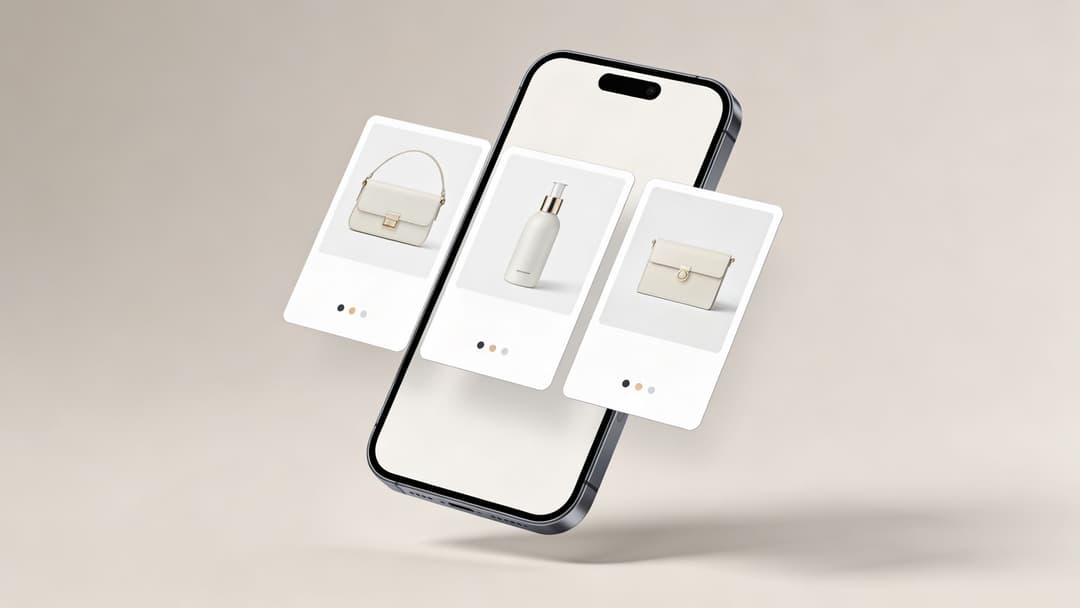
You launch a clean product ad, the item looks great, and clicks still come in soft because one image has to do too much work. Carousel ads solve that problem. They let you sell in sequence, so each card carries one job instead of forcing a single frame to explain the whole offer.
Beauty brands often get this right. The first card introduces the hero product. The next shows texture, shade, or application. Another card shows the result on skin. The final card gives the easiest next step. That structure works because it answers buying questions in the order people ask them.
How to make the swipe worth it
Strong carousel ads are built like a short sales flow. Property marketers use one card for the headline view, one for layout, one for amenities, and one for location context. Fashion brands do the same with outfit bundles, sizing context, detail shots, and offer framing. Different categories, same logic. Each card removes one point of hesitation.
A few rules consistently improve performance:
- Lead with the strongest commercial angle: Start with the product, result, or offer that earns the swipe.
- Give each card a distinct role: Use one for proof, one for use case, one for comparison, one for CTA.
- Keep the system visually consistent: Matching framing, typography, and color treatment keeps attention on the message instead of the layout.
- Order cards deliberately: Bestsellers first is one strategy. Problem first, bundle first, or seasonal first can outperform if that matches buyer intent.
Practical rule: Card two has to increase interest. If it repeats card one with a minor variation, your swipe-through rate usually drops fast.
Carousel ads go beyond being a design choice. They give you a clear testing framework. You can swap card order, opening angle, product grouping, and CTA style without changing the core concept. That makes the format useful for performance teams that need repeatable tests, not one-off creative wins.
For e-commerce brands, I’d treat each carousel as a modular system. Build one master concept, then version it by audience segment, price sensitivity, category interest, or funnel stage. Tools built for carousel Instagram ads make that process faster, and if your team also needs native-looking creative formats beyond product showcases, this guide on how to create UGC-style ads without creators is a useful companion. With AdStellar, that testing process gets easier to scale because your team can turn one angle into multiple structured variations without rebuilding every card by hand.
2. User-Generated Content (UGC) Ads with Real Customer Testimonials
The fastest way to make an ad feel uncool is to over-produce it. Audiences can smell branded polish immediately, especially on TikTok, Reels, and Stories. That’s why UGC keeps working. It feels closer to recommendation than promotion.
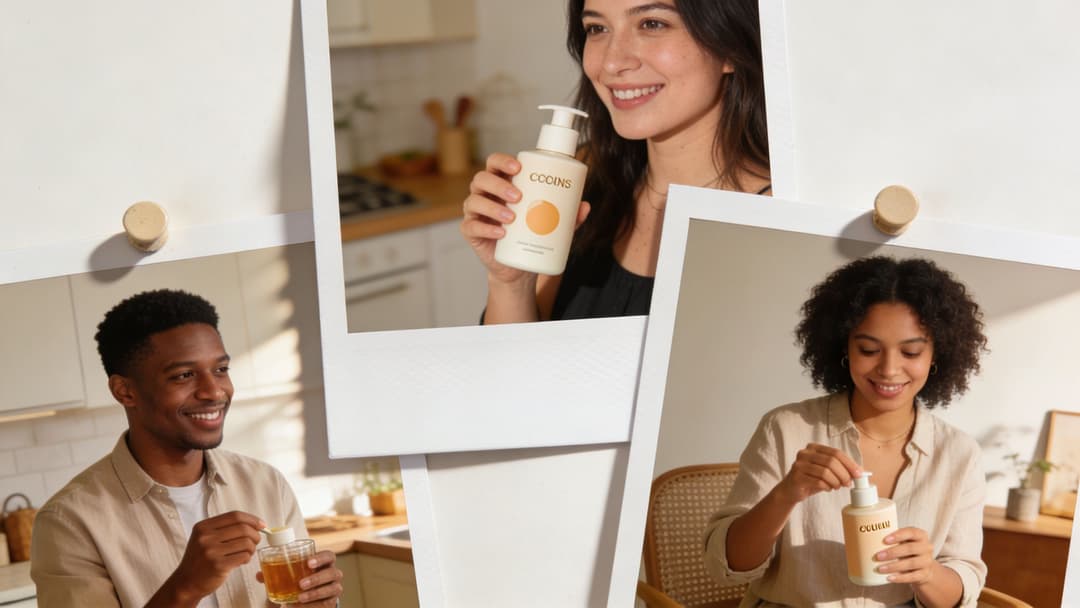
Brands like Kylie Cosmetics, Alo Yoga, and many DTC skincare labels win here because they repurpose creator content that already feels native to the platform. Not every asset needs a ring light and a script. A real customer in a kitchen, bathroom, bedroom, or car often carries more trust than a studio setup.
What strong UGC actually does
Good UGC doesn’t just say the product is great. It shows context. You see how someone uses it, what problem they had, and why they’d buy again. That’s what makes it persuasive.
The common mistake is collecting UGC and running it exactly as received. Raw doesn’t have to mean random.
- Brief for one moment, not everything: Ask creators or customers to show one use case, one objection, or one result.
- Preserve natural language: Don’t rewrite every line into brand copy. Leave in the human phrasing.
- Edit for pace, not polish: Tight cuts, captions, and a clearer opener usually help. Heavy branding usually doesn’t.
There’s also a scale problem. Teams often find one good testimonial and overuse it until performance fades. That’s where UGC-style ads without creators becomes useful as a workflow, because you can generate and test multiple hooks, voiceovers, and on-screen text angles around the same customer insight instead of burning out one clip.
The best UGC ads don’t look lazy. They look believable.
3. Vertical Video Ads 15 to 30 Second Reels and Stories
You launch a polished social video, the brand intro looks great, and retention falls off before the product even appears. That happens because Reels and Stories reward speed, clarity, and native pacing, not commercial-style buildup.
Vertical video earns attention by matching the viewing behavior people already have on mobile. Full-screen placement removes distractions, but it also raises the bar. Your first second has to carry the job that the first five seconds used to do.
The practical takeaway is simple. Treat 15 to 30 second vertical ads as conversion assets, not as cut-downs from a larger brand video.
The structure that usually wins
High-performing examples across fitness, fashion, meal kits, and SaaS tend to use the same sequence. They start with a visible problem, result, or action. They show the payoff early. Then they move into proof and a direct next step.
A useful working structure looks like this:
- Start with motion, friction, or a result: Lead with the burn, the mess, the transformation, the interface, or the outcome.
- Show the product in use by second three: Don’t make viewers wait to understand what they’re looking at.
- Use on-screen text with intent: Captions should clarify the hook, objection, or offer, not repeat every spoken word.
- End with one action: Shop, book, take the quiz, or get the guide. Give the viewer one clear path.
That trade-off matters. Trend-heavy edits can get attention, but they often hurt comprehension if the product role is vague. Brands usually get better results when they borrow the platform’s pacing and framing without letting the trend become the whole ad.
The scalable part is creative versioning. One core product demo can produce multiple ads by changing the first visual, the opening line, and the CTA angle for different audiences or funnel stages. A team running vertical video at volume needs a repeatable system for video advertising, plus a clear way to connect those creatives to downstream actions like lead generation ads.
AdStellar is useful here because the bottleneck usually isn’t filming the middle of the ad. It’s producing enough strong openings to test before fatigue sets in.
Strong vertical ads feel native to the feed, but they are built like performance creative. Fast hook, early proof, clear action.
4. Quiz and Interactive Ads with Lead Qualification
Interactive ads are useful when your product has choices, buyer intent is uneven, or the sales process benefits from qualification before the click. Skincare, supplements, career coaching, education, and real estate all fit that pattern.
A good quiz ad doesn’t feel like a form. It feels like relevance. Spotify-style personality prompts and skincare match ads work because the user expects a personalized outcome, not just a generic landing page.
The strongest proof in this category isn’t from flashy quiz branding. It comes from segmentation and follow-up. In a university lead generation campaign, an agency combined Facebook lookalike audiences with Google ads and generated more than 2,500 leads, a 50% increase from the prior year, over one academic year, with a 3133.63% ROAS, as described in Agorapulse’s social media ROI case study. The campaign also used UTM tagging and Conversions API integration for cleaner attribution.
The part most brands miss
The quiz isn’t the asset. The quiz result is the asset.
If you ask a prospect about skin type, budget, experience level, timeline, or goal, you should use that answer in the next ad, email, or landing page. Otherwise you’ve created friction without earning personalization.
Field note: Keep the question count short. The more curiosity the result creates, the less patience people have for unnecessary steps.
For teams building lead funnels, lead gen ads work best when the ad, the quiz logic, and the follow-up message all use the same promise. If the ad says “find your best-fit solution,” the result page and retargeting creative should continue that exact thread.
5. Dynamic Product Ads DPA with Real-Time Inventory
You know the situation. A shopper views three products, leaves, then gets served a generic brand ad that could apply to anyone. That gap costs revenue, and it usually has nothing to do with creative taste. It comes from weak feed hygiene, loose audience logic, or inventory data that is out of sync with what your store can sell.
Dynamic product ads solve a specific performance problem. They let you match product, price, availability, and intent without rebuilding ads by hand every time behavior changes. That matters for large catalogs, fast-moving inventory, and retargeting windows where relevance beats concepting.
Pinterest is a strong reference point here. The platform has published multiple examples of shopping ads driving efficient action because users are already in discovery and purchase mode. The lesson is practical, not platform-specific. Intent-aligned product ads tend to convert better than broad reminder ads because they reduce the distance between what the shopper considered and what the ad shows next.
The trade-off is operational. DPA performance depends less on art direction and more on system quality.
A few parts deserve close attention:
- Keep the feed clean: Product titles, images, sale prices, and stock status need regular QA. One broken field can push the wrong product into thousands of impressions.
- Match copy to behavior: A category viewer needs exploration language. A cart abandoner usually needs reassurance, urgency, or a reason to return now.
- Use real inventory signals: Back-in-stock, low-stock, and price-drop messages work because they reflect a real change, not because they sound clever.
- Build wrappers around the same feed: The product can stay constant while the headline, offer framing, or proof point changes by segment.
This is also where scale gets easier with the right workflow. If your team is managing dozens or hundreds of SKUs, display dynamic ads work best as a repeatable system built on feed rules, audience segments, and modular creative wrappers you can test quickly in tools like AdStellar.
One more practical note. Dynamic ads are often treated as a retargeting utility, but they can also sharpen prospecting when your catalog structure is strong and your product data is consistent. For teams tightening the link between paid social and conversion paths, this guide to converting campaigns for businesses offers a useful planning lens across channels.
6. Authentic Influencer Partnership Ads with Transparent Sponsorship
A lot of influencer ads fail because the brand buys reach and strips out the creator’s voice. The result looks sponsored in the least useful sense. It has disclosure, but no authenticity.
The better model is simpler. Pick creators whose audiences already trust them on the category. Then let the recommendation sound like something they’d say when you’re not in the room.
Glossier and Gymshark have both benefited from this general approach. So have niche SaaS tools working with small productivity or creator-education accounts. The audience doesn’t need a celebrity. It needs a believable match between creator, problem, and product.
What to protect in creator ads
The biggest trade-off is control. Tighter scripting creates cleaner brand consistency, but it often kills the ad’s native feel. More freedom creates better audience fit, but requires stronger review standards and clearer briefing.
Use a few guardrails:
- Protect the creator’s language: If they normally speak casually, don’t turn the ad into legal copy.
- Secure usage rights early: The value often expands when you can repurpose creator content into paid social.
- Look past vanity metrics: Comment quality, audience fit, and message pull matter more than surface popularity.
For a broader perspective on campaign design, this guide to converting campaigns for businesses is a useful complement to creative testing workflows.
One more point matters here. Transparent sponsorship usually helps more than it hurts. People don’t mind ads. They mind dissonance. If the creator obviously uses the product and the message sounds like them, disclosure doesn’t break the effect.
7. Storytelling Ads with Before After or Problem Solution Arc
Some of the coolest social media ads aren’t the funniest or most stylish. They’re the ones that make the viewer feel understood fast. Problem-solution storytelling does that better than feature stacking.
A buyer doesn’t wake up wanting “advanced workflow software” or “premium hydration support.” They wake up with clutter, frustration, low energy, wasted time, and too many tabs open. Strong narrative ads start there.

Build the tension before the reveal
Slack-style workplace ads, Peloton transformation narratives, and Headspace journey creative all work because they dramatize the “before” without overexplaining it. The viewer recognizes the problem before the product enters.
That structure often looks like this:
- Start with friction: Mess, confusion, delay, self-doubt, overwhelm.
- Introduce the shift: Show the product entering naturally, not like a hard pivot.
- Land on identity: The best ending isn’t just “task completed.” It’s “this is who I am now.”
Here’s a simple example of narrative pacing in motion:
One caution. Marketers often ruin this format by making the “after” unbelievable. If the transformation feels exaggerated, trust drops. Keep the story emotionally sharp but operationally realistic.
8. Retargeting Ads with Segmented Messaging by User Journey Stage
Retargeting gets boring when every audience sees the same reminder. Someone who bounced from your homepage doesn’t need the same message as someone who abandoned cart. Yet a lot of accounts still run that way.
Segmented retargeting feels cooler because it feels smarter. The ad meets the person where they are. A first-time visitor might get the brand story. A product viewer gets category proof. A cart abandoner gets urgency, reassurance, or a practical nudge.
Matching message to intent
Performance discipline matters more than creative flair. You don’t need one perfect ad. You need a sequence that respects behavior.
The university campaign mentioned earlier also points to a broader lesson. It used lookalike audiences and stronger attribution infrastructure, including Conversions API integration, so the team could connect ad engagement to downstream outcomes in a privacy-shifting environment. That’s the operational side of cool creative. Better signals create better follow-up.
Retargeting works best when it answers the next question the buyer has, not the last one.
A simple structure is often enough:
- Awareness visitors: Lead with pain point and category education.
- Consideration visitors: Show product proof, use cases, reviews, or comparisons.
- Decision-stage users: Use urgency, guarantees, shipping clarity, or cart recovery messaging.
- Existing customers: Move into cross-sell, refill, upgrade, or community.
This is also one of the clearest use cases for automation. When you need dozens or hundreds of variants mapped to journey stage, manual production gets messy fast.
9. Limited-Time Offer and Scarcity Ads with Visual Urgency Elements
Urgency works. Fake urgency doesn’t.
That’s the line. The coolest version of scarcity-based creative isn’t loud countdown spam. It’s an offer that looks time-bound because the time limit is real. Gymshark seasonal pushes, limited drops, product launches, and end-of-window promos all fit when the deadline is real.
Platform economics make this even more important. In the 2025 benchmark roundup summarized by Socialinsider’s discussion of social ad creative gaps, Meta CPM was described as up 15% year over year, alongside the argument that “cool” aesthetics underperform when teams don’t iterate with data. When inventory gets more expensive, weak urgency costs more.
Use pressure carefully
Visual urgency elements can help. Countdown stickers, expiry text, end-card reminders, and stock cues all focus attention. But if every ad screams “last chance,” buyers stop believing you.
Use scarcity where it belongs:
- Attach urgency to something concrete: A launch window, a seasonal promotion, an enrollment date, or limited inventory.
- Pair pressure with value: A timer without a compelling reason to act is just noise.
- Protect trust: If the deadline keeps resetting, audiences notice.
The best scarcity ads also match brand tone. A premium brand might frame urgency as early access or allocation. A mass-market DTC brand can be more direct. Both can work if the constraint is honest.
10. Community and Belonging Ads Featuring Lifestyle and Identity
You launch a polished ad, the targeting is accurate, and the product is competitive. It still gets ignored because the creative asks for attention before it gives the viewer a reason to identify with your brand.
Community ads solve that problem. They position the product inside a tribe, routine, or value system your buyer already wants to join. Peloton sells commitment. Gymshark sells discipline in public. The product matters, but the ad works because it answers a harder question first: Do people like me belong here?
Identity is the conversion filter
The strongest lifestyle ads do not try to please every qualified prospect. They make your best-fit customer feel recognized.
That means the signal has to be specific. Show the rituals, language, environments, and social cues that define the group. A wellness brand might show morning routines and progress check-ins. A creator tool might show behind-the-scenes work, peer validation, and the small status markers that matter inside that circle. Generic aspiration weakens the effect because it removes the identity marker that makes the ad memorable.
As noted earlier, the major social platforms give advertisers massive reach. Broad distribution creates a different creative job. Your targeting can find the audience, but your ad still needs to tell that audience, quickly, "this was made for you."
A belonging ad should make the right buyer feel included and the wrong buyer feel indifferent.
That is the standard I use.
If everyone relates to the ad, it usually means no one feels claimed by it. In practice, that trade-off is healthy. Belonging creative often narrows top-of-funnel appeal a bit, but it improves message match, saves wasted clicks, and gives retargeting pools better inputs.
To build these ads at scale, deconstruct them like a performance team, not a brand mood board. Identify the identity cue, the shared behavior, the visual proof, and the line of copy that names the audience without sounding forced. Then use a tool like AdStellar to generate and test multiple versions around each angle, such as beginner versus advanced identity, solo achievement versus group accountability, or status versus self-improvement. That is how you turn "cool" lifestyle creative into a repeatable system instead of a one-off hit.
10 Cool Social Media Ads Compared
| Ad Format | Implementation Complexity | Resource Requirements | Expected Outcomes | Ideal Use Cases | Key Advantages |
|---|---|---|---|---|---|
| Interactive Carousel Ads with Product Showcases | Medium, needs multi-card sequencing and testing | Multiple creative assets (images/videos), links per card, mobile optimization | Higher CTR (25-40% vs single image); ROAS +15-30% when sequenced | E‑commerce, DTC product ranges, storytelling product flows | Showcases multiple products/angles in one unit; great for A/B within one ad |
| User-Generated Content (UGC) Ads with Real Customer Testimonials | Low–Medium, simple to produce but needs permissions | Customer content sourcing, permissions, lightweight editing | Lower CPA (40–60% reduction); engagement 3–5x higher | DTC brands, social-first campaigns, trust-driven categories | High authenticity and trust; low production cost and fast iteration |
| Vertical Video Ads (15–30s Reels & Stories) | Medium, requires short-form video skills and editing | Vertical video production, captions, dynamic cuts, trending audio | Engagement +30–50% vs horizontal; 70–85% completion rates | Mobile-first campaigns, brand awareness, product demos | Aligns with platform algorithms; strong thumb-stopping and reach |
| Quiz and Interactive Ads with Lead Qualification | High, needs UX design, logic and CRM integration | Development of interactive flow, CRM/segmentation integration, copy | Engagement 10x vs static; lead cost −30–50%; completion 70–85% | Lead gen, SaaS onboarding, personalized recommendations | Qualifies leads, collects first‑party data, improves retargeting precision |
| Dynamic Product Ads (DPA) with Real-Time Inventory | High, requires product feed and pixel setup | Product catalog feeds, real-time inventory, pixel/tracking, automation | ROAS 4–8x in retargeting; cart recovery 20–35% | Large e‑commerce catalogs, retargeting cart abandoners | Scales across SKUs with automated personalization; minimal creative work |
| Authentic Influencer Partnership Ads with Transparent Sponsorship | Medium, relationship management and vetting required | Influencer sourcing, contracts, content coordination, tracking codes | Engagement 25–40% higher; CPL −20–35% | Niche audience targeting, lifestyle and beauty categories | Leverages creator trust and niche reach with transparent disclosure |
| Storytelling Ads with Before/After or Problem/Solution Arc | Medium–High, needs creative direction and copywriting | Scripted video/photo production, storytelling expertise | CTR +50–100%; ROAS +30–50%; completion 65–80% | Brand building, product transformations, emotional categories | Builds emotional connection and memorability; highly shareable |
| Retargeting Ads with Segmented Messaging by User Journey Stage | High, complex audience setup and sequencing | Advanced pixel tracking, audience segmentation, multi-stage creatives | Conversion improvement 5–8x; ROAS 6–12x; cost per conversion down 40–60% | E‑commerce, SaaS funnels, multi-touch purchase journeys | Delivers intent‑aligned messaging; reduces wasted ad spend |
| Limited-Time Offer and Scarcity Ads with Visual Urgency Elements | Low–Medium, creative is simple but must be authentic | Urgency visuals, countdown timers, inventory integration | Conversion +25–50%; CTR +35–60% (short-term spikes) | Flash sales, inventory clearance, time-limited promotions | Drives immediate action and reduces decision paralysis |
| Community and Belonging Ads Featuring Lifestyle and Identity | High, requires authentic community building | Community content, events, long-term engagement resources | LTV +40–60%; retention +50–70%; stronger advocacy | Lifestyle brands, fitness, wellness, creator platforms | Builds long-term loyalty, advocacy and reduced price sensitivity |
From Inspiration to Execution Your Ad Playbook
You know the pattern. A team saves ten cool social media ads, sends them around Slack, agrees they look strong, then stalls when it is time to build versions that fit your audience, your offer, and your budget. Inspiration is easy. Repeating the result is the hard part.
The examples above work because they solve specific performance problems. Carousel ads help you sell breadth without forcing a single message. UGC reduces skepticism in categories where polished brand creative can feel staged. Short vertical video gives you a fast way to earn attention in-feed. Retargeting and segmented messaging close the gap between interest and purchase by matching the ad to the buyer stage instead of showing the same pitch to everyone.
That is the fundamental standard for a cool ad. It has to fit platform behavior, match audience intent, and move someone toward an action with as little friction as possible.
Execution usually breaks in three places. Creative teams find one angle that works, then run it too long. Media teams know segmentation would improve efficiency, but they do not have enough variants to support it. Performance teams can spot a strong hook or offer, but the testing loop is too slow to turn one winner into twenty useful follow-ups.
AI helps when you use it for production volume and iteration discipline, not as a substitute for strategy. A good workflow starts with one proven message, then builds controlled variations around hooks, opening frames, offers, social proof, captions, and calls to action. From there, you compare by audience and placement, cut weak combinations early, and keep the themes that hold conversion rate as spend rises.
Use this section as a working playbook:
Start with the format that matches the sales job. If you need to show range, use a carousel. If trust is the bottleneck, use UGC or an influencer partnership with clear disclosure. If attention is weak, test a 15 to 30 second vertical video with the product benefit in the first seconds. If qualification matters, use quizzes or interactive ads before asking for the lead.
Then build versions on purpose. Change one major variable at a time when you need clean learning. Change several variables at once only when you need rapid exploration and have enough spend to support it. Keep the control. Log what changed. Refresh before frequency turns a winner into wallpaper.
The goal is not to copy what looked good in someone else’s account. The goal is to identify the mechanics behind the result: hook, proof, sequence, offer, and audience match. Once you can name those parts, you can reproduce them across campaigns without relying on guesswork.
For competitive research on what brands in your category are already running, this guide to mastering Meta Ad Library is a smart next step.