Your team just spent a week briefing concepts, pulling references, editing variants, and loading a fresh batch of ads into Meta. The launch goes live, spend starts moving, and the results are mediocre. CTR is soft, conversion quality is uneven, and nobody can agree on whether the problem is the hook, the angle, the audience, or the edit.
That cycle is common because creatives facebook ads are still treated as a mix of taste, urgency, and post-launch guesswork. The problem isn't effort. It's the lack of a system. Meta has made creative quality and variation central to delivery, and stale ads lose momentum fast. Meta representatives have said click-through rate drops by an average of 40% as exposure continues, especially after users have seen the same ad 8 to 10 times. If your workflow can't produce, test, and replace creatives quickly, performance decays before you can react.
The fix isn't one more template pack or another brainstorming board. It's a stack built around the full lifecycle: ideation, production, testing, analysis, and scaling. Some tools are best for rapid generation. Others are strongest at governance, creative diagnostics, or enterprise deployment. A few try to unify the whole process.
If you're rebuilding your process, start with a practical benchmark and compare your stack against proven approaches like AliSave Pro's Facebook ads strategy. Then use the tools below to close actual bottlenecks instead of adding more software for the sake of it.
1. AdStellar AI
A common failure point in Meta creative workflows happens after the team has a few useful insights but no fast way to turn them into the next test. Hooks are sitting in spreadsheets, winning angles are buried in old ad sets, and launch setup takes long enough that the market has already moved. AdStellar AI is built for that middle stage of the lifecycle, where ideation needs to become production and testing without a lot of handoff friction.
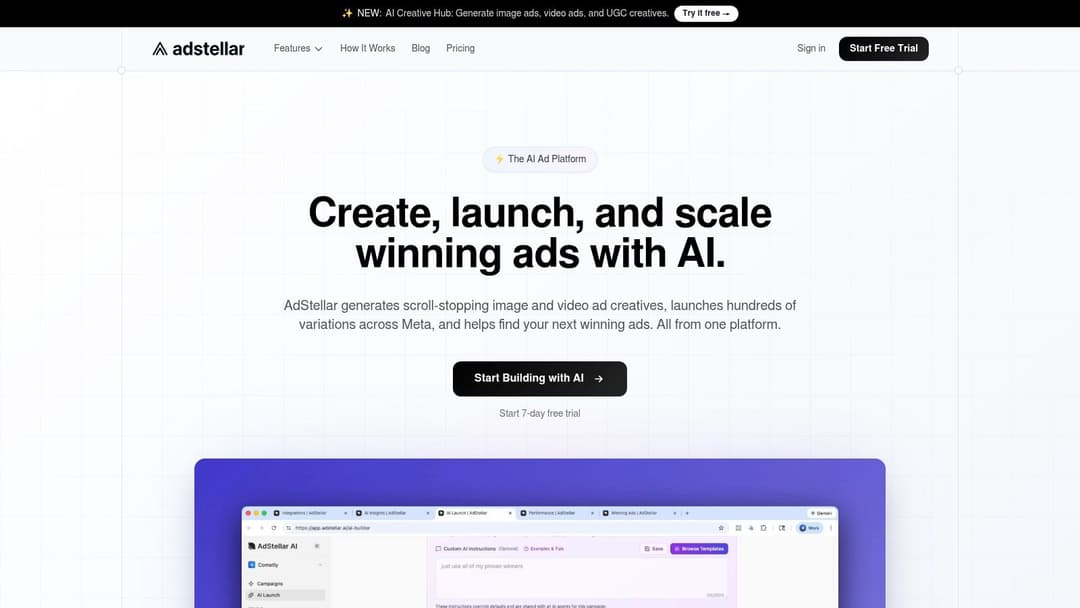
Its value is operational. The platform generates combinations of creative, copy, and audiences, then connects that work to campaign launch through Meta OAuth. For a team running frequent test cycles, that cuts out a lot of manual build work and keeps the feedback loop tighter.
Best for the gap between ideation and testing
AdStellar fits teams that already understand paid social basics and need a system for turning learnings into new variations quickly. Instead of stopping at asset generation, it brings in historical Meta performance data, scores combinations against goals such as ROAS, CPL, and CPA, and helps teams build the next round from patterns that have already shown promise.
That changes the workflow in a few useful ways:
- Test volume increases without extra setup drag: Teams can produce many combinations without rebuilding campaign structure every time.
- Creative and media stay in one operating layer: Buyers, strategists, and creative leads work from the same set of assets, audiences, and campaign data.
- Winning elements stay usable: Strong hooks, visual styles, and offer angles are easier to reuse because they are stored inside the system instead of disappearing into chat threads and inconsistent naming.
If the bottleneck is speed from insight to launch, this category matters more than another standalone design app.
AdStellar is strongest when Meta is the main paid channel and the team wants one place to handle ideation, launch, testing, and iteration. That focus is a real advantage for Facebook and Instagram advertisers. It is also a constraint. Brands that need equal depth across many paid channels may end up pairing it with other tools instead of making it the only control layer.
Where it works, and where it doesn't
The upside is clear. AdStellar centralizes the parts of creatives facebook ads workflows that usually break first: variation management, launch speed, and reuse of proven ideas. It is a better fit for active ad accounts with enough performance history to train the recommendation layer. Smaller teams looking for a low-cost design tool with broad channel coverage will probably find it too workflow-heavy for the problem they have.
For teams comparing stack options by workflow stage rather than by feature list, AdStellar's complete Meta ads workflow framework gives a useful view of how this kind of system is meant to run.
What stands out is the stack logic. AdStellar treats ideation, testing, analysis, and scaling as one connected loop, which is how strong paid social teams operate once volume starts to grow.
2. Smartly.io
Smartly.io for Meta advertisers is the tool I think about when a brand has outgrown ad account scrappiness. If you're managing large catalogs, multiple markets, localized offers, and a lot of stakeholders, Smartly starts making sense fast.
This is less about inspiration and more about industrialized production. Smartly is strong when your problem is scale with structure, especially for retail, ecommerce, and feed-driven campaigns where versioning can get messy.
Best for production at enterprise scale
Smartly's strength is dynamic creative templating tied to product feeds, locations, pricing, promotions, and language rules. That means a team can build systems for creative variation instead of hand-making every asset set.
A few practical advantages stand out:
- Catalog control: Retail teams can customize feed and DPA-style assets without rebuilding campaigns manually.
- Cross-account ops: Bulk edits and reporting help when multiple markets or business units are involved.
- Localization: Creative versions can map to regional pricing, offers, and language with less back-and-forth.
The main trade-off is obvious. Smartly is enterprise software. Smaller teams usually won't get enough value from its complexity unless their operational pain is already severe.
Large advertisers don't just need more creatives. They need a reliable way to produce controlled variations without breaking governance.
If your team is choosing between a point solution and a broader workflow layer, it's worth comparing Smartly's enterprise model with a more Meta-native setup like this complete Meta ads workflow approach.
What doesn't work well
Smartly isn't the tool I'd buy to figure out your first winning angle. It shines after you already know what needs to be produced repeatedly across products, audiences, or markets. Non-technical teams can also struggle early because the power comes with setup depth.
For enterprise brands, that trade-off is usually acceptable. For smaller operators, it often isn't.
3. VidMob
VidMob is the best fit when your team doesn't need more random variations. It needs better edits backed by performance evidence. That's a different job.
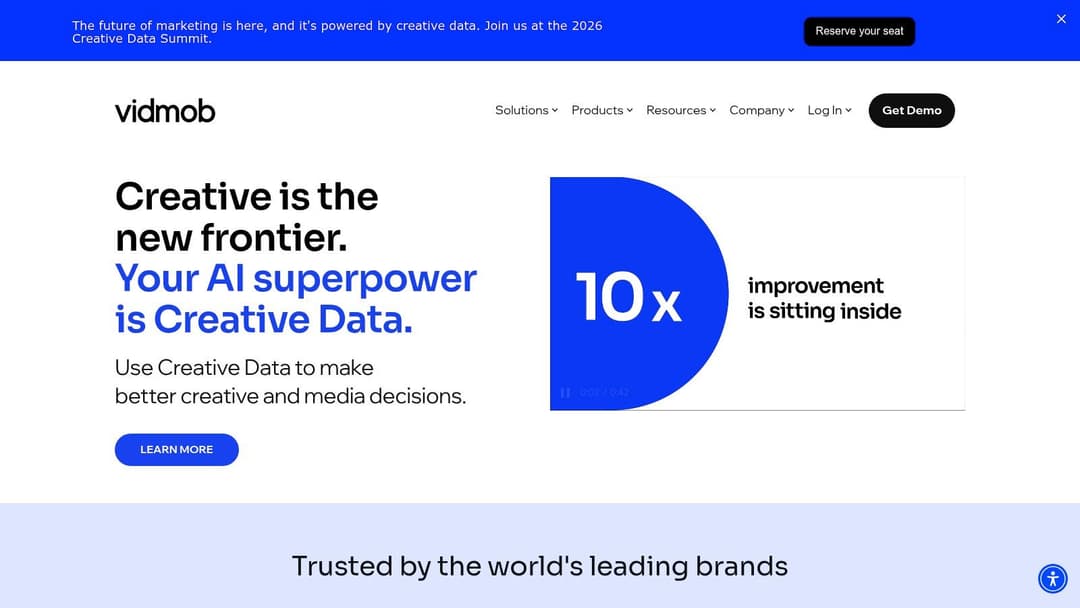
Many creative tools help you produce faster. VidMob is more useful when you're asking harder questions: Is the hook too slow? Is branding entering too late? Is the pacing wrong for Reels? Are we breaking platform-native patterns?
Best for evidence-based creative edits
For practitioners, the appeal is simple. VidMob connects creative analysis to specific editing decisions. That matters because "make it punchier" isn't a useful instruction, while "shorten the intro and move product proof earlier" is.
This approach becomes especially valuable once a campaign has enough delivery to produce meaningful signals. Funnel.io documented a Meta case where a multitask creative won more distribution because it led on proxy engagement metrics such as thumbstop rate, hold rate, and CTR, which then translated into the most initial sales meetings and SQLs in a B2B lead gen campaign through Meta's delivery system favoring quality signals early in the process (Funnel.io's Facebook ad creative analysis case study).
That kind of result is why I like platforms that make creative diagnostics more concrete. They help teams edit toward the signals Meta is reading rather than debating style preferences internally.
Where VidMob earns its keep
VidMob is strongest in environments with brand rules, legal review, and multiple stakeholders. It adds a governance layer that many AI generators don't handle well.
- Creative analysis: Better for diagnosing why a creative is underperforming.
- Compliance support: Useful for regulated or tightly managed brands.
- Managed optimization: Helpful if your team wants strategic support, not just software access.
The downside is that it can be more platform than a lean growth team needs. If all you want is to generate ten new statics and two UGC-style cutdowns by this afternoon, VidMob probably isn't the fastest route.
4. Motion
A common scenario. The media buyer says the winning ad was the UGC one. The creative strategist says it was really the pricing angle. The editor says the first three seconds carried the result. Everyone is partly right, and nobody has a clean way to prove what should be repeated.
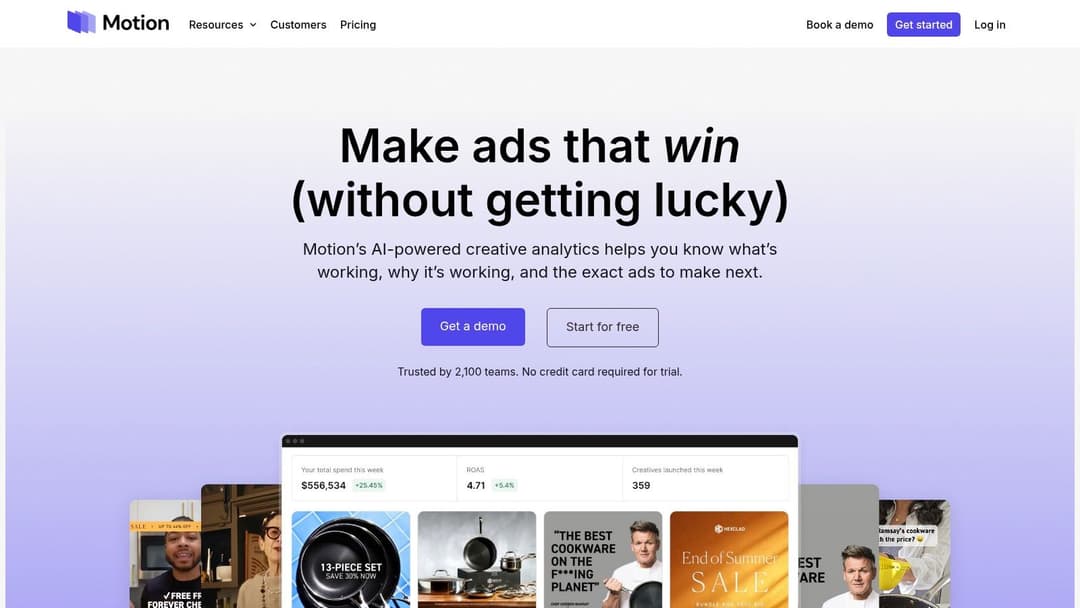
Motion is useful at the testing and analysis stages of the creative lifecycle. It gives teams a system for tagging hooks, offers, formats, creators, and visual patterns so performance can be reviewed at the concept level, not just at the ad ID level. That changes the conversation from "which ad won?" to "which inputs are worth producing again?"
Best for turning test results into production decisions
What I like about Motion is that it helps creative and media teams work from the same readout.
- Pattern analysis: See which hooks, messages, and formats keep showing up in winners.
- Creative planning: Turn those patterns into the next batch of briefs instead of guessing.
- Team alignment: Give buyers, strategists, and editors one shared view of what is working.
That matters because a lot of Meta accounts do not have a testing problem. They have a naming, tagging, and interpretation problem. Motion handles that gap well. If your team is already producing a healthy volume of ads, it can bring order to the feedback loop and make weekly creative reviews much more useful.
It also fits smaller teams better than heavier enterprise setups. Agencies, in-house growth teams, and operators managing several accounts can get to usable signal quickly without building a full analytics stack first.
The trade-off is simple. Motion will not increase output on its own. It improves decision quality after ads are live. If your bottleneck is ideation or asset production, start there first. If your bottleneck is knowing what to scale, cut, or brief next, Motion is the better buy.
For teams building a stronger testing process around Meta creative, these winning Facebook ad creative examples are a useful companion to Motion's reporting workflow.
If you're trying to understand the broader role of structured variation and automation in Meta, this explanation of dynamic creative optimization pairs well with Motion's analytics-first approach.
5. CreativeX
CreativeX is for brands that need consistency before they need speed. That's a narrower use case, but it's important. Plenty of global teams don't suffer from a lack of assets. They suffer from uneven quality, broken platform basics, and fragmented governance across markets.
CreativeX is useful because it gives teams a framework for evaluating whether creative meets platform best practices and internal quality standards before too much spend goes behind it.
Best for governance and quality control
This is the kind of tool enterprise teams use to standardize output across regions, agencies, and business units. If one market is shipping strong mobile-first creative and another is still running TV cutdowns into social placements, CreativeX helps expose that gap.
What I like here is the discipline. It pushes teams to operationalize quality instead of talking about it abstractly.
- Pre-launch checks: Useful when many teams contribute assets.
- Global consistency: Helps maintain standards across markets and languages.
- Creative benchmarking: Gives leadership a more structured way to review quality.
CreativeX isn't a generator. It won't save a weak pipeline on its own. But if your media team is spending serious budget behind ads that regularly miss basic Meta creative requirements, governance is a performance issue, not an admin issue.
What to expect in practice
CreativeX is most valuable when creative production is decentralized. The more assets, agencies, and local teams involved, the more likely standards drift. Smaller brands with one in-house editor and one buyer probably don't need this layer yet.
I wouldn't use it as a first creative tool. I'd use it when brand complexity starts creating performance inconsistency.
6. AdCreative.ai
AdCreative.ai sits at the production stage and targets a very common pain point. You need more variants, more sizes, more concepts, and you need them today.
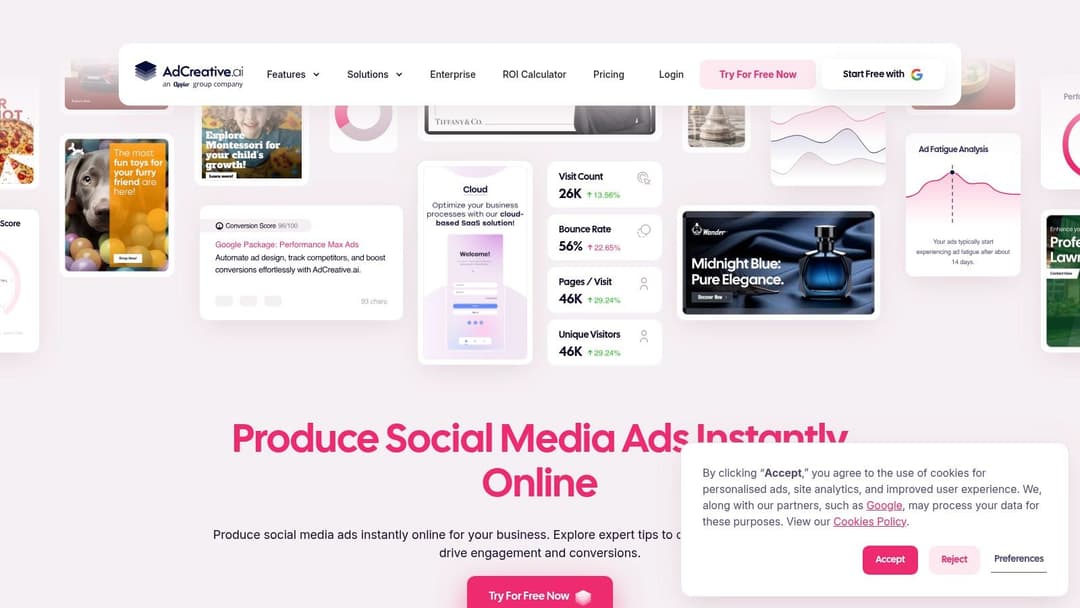
For SMBs, lean in-house teams, and agencies with constant asset pressure, that's attractive. Brand kits, templates, copy generation, resizing, and short-form visual output can take a lot of friction out of production.
Best for rapid asset volume
This category works when the bottleneck is blank-page syndrome or production bandwidth. AdCreative.ai helps teams move from concept to testable assets without waiting on full custom design cycles.
That can be powerful in accounts where fatigue hits quickly. A Facebook Ads case study published by Sweat Pants Agency showed that an ecommerce client grew revenue by 52% in 3 weeks while reducing CPA by 24% and improving ROAS by 31% after restructuring and refreshing creatives. The lesson isn't that any generator guarantees that result. It's that fresh, benefit-driven creative supply can materially change outcomes when the account structure supports it.
AdCreative.ai helps with that supply problem.
Where it helps, and where it falls short
Use it when you need lots of launch-ready variations fast. Don't expect every output to be final without human judgment.
- Fast iteration: Good for spinning up many concepts and sizes quickly.
- Self-serve setup: Easier for small teams than enterprise platforms.
- Creative scoring: Useful as directional input, not as the final decision-maker.
The fastest generator still needs a strong operator. Bad offers and weak angles don't become winners because the layout looks polished.
If you want inspiration on what good Meta creative looks like before generating your next batch, these Facebook ad creative examples are a practical reference point.
One caution. AI-generated ad creatives often need manual cleanup for brand tone, claims, and product nuance. That's normal. Treat the platform like a production accelerator, not a substitute for strategic thinking.
7. Pencil
Your team has a winning angle by noon, but it still needs four video versions before the next spend push. A founder cut, a UGC-style edit, a product demo, and a shorter placement-specific version. Pencil is built for that stage of the creative lifecycle: production after the idea is already clear.
Pencil stands out when Meta creative is becoming more video-heavy and the bottleneck is no longer ideation. The bottleneck is turning one message into enough usable assets to test across placements, audiences, and formats.
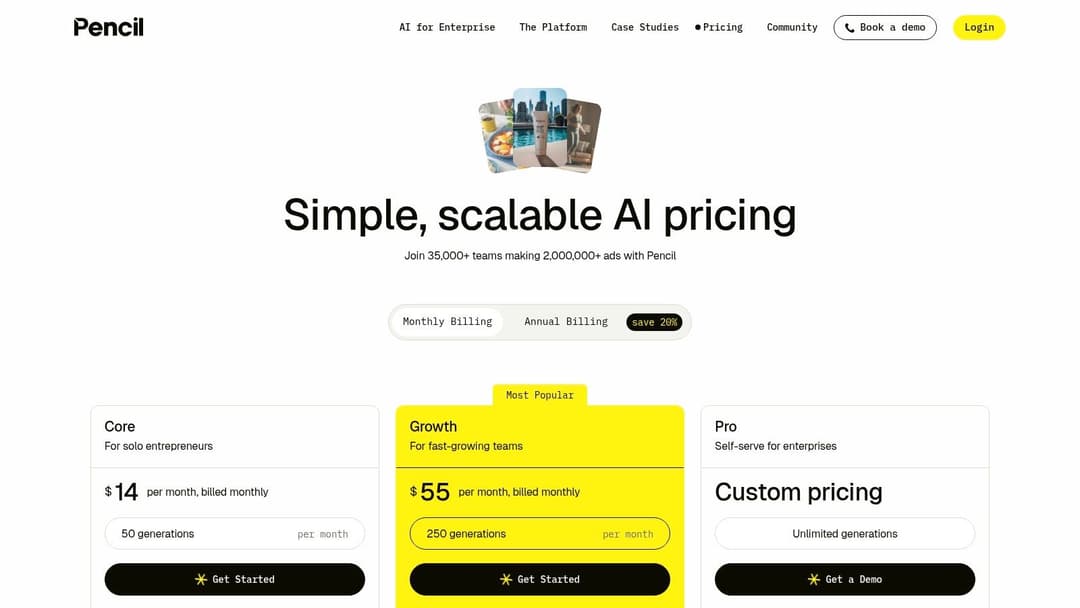
It is a practical fit for teams that want generation and publishing connected in one workflow. That matters when paid social managers are losing time to handoffs between copy docs, editors, design files, and Ads Manager.
Best for the production stage of a video-first system
Pencil works well when one proven concept needs multiple executions fast. That is a common scaling problem in Meta accounts. The first version proves the angle. The next five versions determine whether you can spend behind it.
For Facebook and Instagram advertisers, that usually means adapting the same core message into different visual treatments instead of chasing a brand-new concept every time. Pencil helps teams produce those variants faster, especially short-form assets built for feed, stories, and reels placements.
I would use it when the creative strategy is already set and speed of output matters more than frame-by-frame control.
Where it fits, and where it does not
Pencil is strongest for high-volume production workflows. It is less useful in approval-heavy environments where legal, compliance, or brand teams need to review every visual choice in detail before launch.
A few strong use cases:
- Video-led DTC brands: Fast cutdowns and multiple edits from one angle.
- Lean in-house teams: Fewer production handoffs between concept and launch.
- Testing programs with clear briefs: More variants shipped while the core message stays consistent.
The trade-off is straightforward. More creative output only helps if the team already knows what it is trying to prove. Pencil improves production speed. It does not replace judgment on hooks, offers, or positioning.
If your workflow also needs stronger copy inputs before production starts, this look at AI copywriting for ads pairs well with Pencil's video creation process.
Facebook Ads Creatives, Top 7 Tool Comparison
| Product | Implementation complexity | Resource requirements | Expected outcomes | Ideal use cases | Key advantages |
|---|---|---|---|---|---|
| AdStellar AI | Moderate, Meta OAuth setup and onboarding required | Requires historical Meta account data and initial configuration | Faster iteration and automated scaling of top creatives; improved ROAS/CPL/CPA | Performance marketers, e‑commerce/DTC, agencies and B2B SaaS focused on Meta | Rapid variant generation, AI ranking of winners, centralized campaign workflows |
| Smartly.io | High, enterprise integration and catalog configuration | Significant ops/engineering support and enterprise budget for large catalogs | Scaled dynamic creative, cross‑account reporting, localized catalog ads | Retail/ecommerce and multi‑market advertisers with large catalogs | Proven at scale, robust dynamic templates, centralized operations |
| VidMob | Moderate to high, managed creative workflows and analysis | Creative production resources and budget for managed services | Evidence‑based creative edits tied to performance and compliance | Brands seeking research‑backed creative optimization and governance | Granular creative analytics and performance‑driven edit recommendations |
| Motion (Creative Analytics) | Low to moderate, analytics-first setup, quick to adopt | Ad data feeds and team to act on insights (production separate) | Faster identification of winning hooks and formats; better team alignment | Paid social teams, SMBs and agencies needing fast creative insights | AI tagging, leaderboards, collaboration features and starter pricing |
| CreativeX | Moderate, governance rollout and enterprise onboarding | Access to large datasets, creative assets and enterprise budget | Standardized creative quality and improved media efficiency across markets | Global brands needing creative governance and benchmarking | Creative Quality Score, enterprise benchmarks and governance tools |
| AdCreative.ai | Low, self‑serve, quick to start | Minimal internal resources; subscription for templates and assets | Rapid production of many image/video variants and copy options | SMBs and agencies needing volume and speed | Fast variant generation, creative scoring, large template/library |
| Pencil | Low to moderate, self‑serve with direct publishing options | Brand assets, team review and optional enterprise add‑ons | Rapid video/image ad generation with performance insights and publish | Teams focused on video ads and rapid variant testing (startups to enterprises) | Strong video generation, integrated insights, clear tiered pricing |
From Creative Chaos to Campaign Clarity
The right stack for creatives facebook ads depends less on feature count and more on where your process breaks. Some teams have ideas but can't produce enough assets. Others can produce endlessly but don't know what works. Enterprise brands often have a different issue entirely. They have volume, but governance and coordination slow everything down.
That's why I don't look for one magic platform. I look for coverage across the lifecycle. Ideation needs a fast path from concept to draft. Production needs enough velocity to prevent fatigue. Analysis needs enough structure to separate signal from opinion. Scaling needs a workflow that can turn winners into new launches without forcing the team to rebuild campaigns manually.
There are also strategic gaps that most tools still don't solve well. Existing research points out that the cost of creative angle misalignment across the funnel remains poorly quantified, and teams still lack a standard way to measure "angle debt" in underperforming campaigns (Segwise on Meta creative testing gaps). Another blind spot is the lack of benchmarked frameworks for matching creative angle to audience awareness level across cold, warm, and hot stages (Leadenforce on why creative angle matters more than format). In practice, that means operators still need judgment. Software can speed execution, but it can't fully replace strategy.
If you want fast asset production, AdCreative.ai and Pencil are both practical choices. If your problem is understanding why some ads work and others fail, Motion gives you a cleaner testing feedback loop. If you're running enterprise operations across regions or catalogs, Smartly.io and CreativeX solve very different but equally real complexity problems. VidMob fits teams that need evidence-based edits with stronger governance.
AdStellar AI stands out because it connects more of the system. It helps teams generate combinations, learn from historical Meta performance, launch faster, and scale what wins from one environment. For operators who are tired of splitting ideation, testing, and execution across too many disconnected tools, that's the most compelling direction on this list.
The broader lesson is simple. Better ad performance rarely comes from one heroic creative. It comes from a repeatable process that keeps good ideas moving, weak ads retiring, and clear learnings feeding the next round. That's true whether you're a DTC brand, an agency, or a B2B team trying to make Meta work harder. The teams that build that process win more consistently, just like strong merchandising systems support the full eCommerce promotional mix elements instead of treating ads in isolation.
If you want one platform that helps you generate, launch, test, and scale Meta creatives without stitching together a bloated stack, AdStellar AI is worth a serious look. It fits teams that need more than asset generation and want a tighter loop between creative production, campaign execution, and performance learning.