If you want to get results from Instagram, you can’t just post and pray. Real promotion on the platform is a two-pronged attack: you build a genuine, organic presence with great content, and then you pour gasoline on the fire with smart, targeted ads.
But before you create a single post or launch your first ad, you need to step back and get your foundation right. It all starts with defining your goals and getting crystal clear on who you're talking to.
Building Your Instagram Promotion Foundation

Jumping straight into content creation without a clear plan is like setting sail without a map. Sure, you'll be busy, but you’ll have no idea if you're actually getting closer to your destination. This foundational work is what separates the brands that succeed from those that just make noise.
The potential here is massive. Instagram isn't just a place for pretty pictures; it generates over 4x more interactions than Facebook. A staggering 80% of users admit to using the platform to make purchasing decisions. With over 200 million businesses vying for attention, a solid strategy is non-negotiable.
For a deeper dive into why this platform is a goldmine for marketers, it’s worth checking out the latest Instagram stats and trends.
Set Crystal-Clear Goals
First things first: what does "success" actually look like for your business? Simply saying "I want more followers" is a recipe for wasted effort. You need specific, measurable objectives that tie directly back to your business goals.
- Brand Awareness: Are you the new kid on the block? Your goal might be to introduce your brand's mission and values to people who've never heard of you.
- Lead Generation: Maybe you need to fill your sales pipeline. Here, your promotions would focus on getting email sign-ups or webinar registrations, driving traffic to a specific landing page.
- Direct Sales: For e-commerce brands, the objective is straightforward—drive sales. Your content and ads should showcase products, highlight benefits, and make it ridiculously easy for people to buy.
Picking a primary goal is crucial because it dictates everything that follows—the content you create, the ad formats you use, and the metrics you obsess over. A brand focused on sales will live and die by its Return on Ad Spend (ROAS), while one focused on awareness will be watching its reach and impression numbers like a hawk.
Pro Tip: Stop trying to make one post do everything. A post designed to build your brand community won't be a great sales driver, and a hard-sell ad isn't going to win you hearts and minds. Match your content to your objective, every single time.
Define and Understand Your Audience
Once you know what you want to achieve, you need to figure out who you're talking to. A generic message aimed at "everyone" will ultimately resonate with no one.
This is where you need to go deep and create detailed audience personas. Forget basic demographics. What are their real interests? Their biggest pain points? What makes them tick?
Ask yourself:
- What other accounts do they follow and love?
- What content format gets them to stop scrolling (Reels, Carousels, Stories)?
- What problem does my product or service actually solve for them?
When you truly understand your audience, your promotional efforts stop feeling like ads and start feeling helpful and authentic. This is how you build a real connection that turns followers into customers.
A critical first step in this process is making sure your Instagram profile is set up as a professional account and properly connected to your other business assets. For a no-nonsense walkthrough, check out our guide on how to properly link your Facebook and Instagram accounts.
Mastering Your Organic Growth and Content Strategy
Paid ads are incredibly powerful, but they work best when you’ve built a solid foundation of genuine, organic engagement. Your organic strategy is how you build a real community, earn trust, and create a brand that people actually want to follow. Think of it as the long-term engine that makes your paid promotions far more effective and sustainable.
Your organic presence is your brand's home base on Instagram. It’s where you have daily conversations, let your personality shine, and prove your value long before you ever ask for a sale. A strong organic game means you're less reliant on ad spend and you've built a loyal audience that will amplify your message for free.
The Content Format Playbook
Let's be clear: not all content is created equal. The real trick is using each format for its unique strengths to tell a complete brand story. How you promote on Instagram organically depends entirely on matching your message to the right format.
Here’s a quick breakdown of how the best brands are using Instagram’s core content types:
- Reels for Reach: Reels are your number one tool for getting in front of new eyeballs. The algorithm is hungry for short, entertaining, and educational video content that grabs attention in the first three seconds. Use them to show off product tutorials, share behind-the-scenes moments, or jump on trends relevant to your niche.
- Carousels for Education: When you need to explain a concept or tell a story with a bit more depth, nothing beats a carousel. These multi-slide posts are goldmines for saves and shares because they pack a ton of value into a digestible format. They're perfect for step-by-step guides, "how-to" lists, or breaking down complex ideas.
- Stories for Connection: Stories are the heartbeat of your community. Their informal, here-today-gone-tomorrow nature is perfect for day-to-day interactions. Run polls, host Q&As, and share user-generated content (UGC). This is also where the "link sticker" becomes a powerful tool for driving traffic directly to product pages or blog posts.
Key Takeaway: Stop posting the same thing everywhere. A killer Reel idea probably makes for a terrible carousel. You have to tailor your content to fit the context. A Reel needs to hook a total stranger, while a Story should feel like a casual chat with a friend.
Cultivating a Thriving Community
A huge follower count is just a vanity metric if nobody's actually listening. Real promotion happens when you build an engaged community that actively participates with your brand. This isn't a "set it and forget it" task; it requires consistent effort and a real desire to connect.
Community management is so much more than just deleting spam comments. It’s about fostering a two-way conversation. When people comment, reply with thoughtful answers, not just a thumbs-up emoji. Acknowledge and respond to your DMs. When someone is awesome enough to share your content in their Stories, give them a shout-out.
One of the most powerful ways to ignite this community is through User-Generated Content (UGC). Actively encourage your followers to share photos or videos of them using your product with a unique hashtag. Featuring their content on your profile is a double-win: it gives you incredible social proof and makes your followers feel seen and appreciated, which builds unshakable loyalty.
Hashtags and Collaborations
Think of hashtags as the discovery engine for your content. They neatly categorize your posts and help people who don't follow you (yet!) find your stuff. The secret isn’t to just spam every popular tag you can think of. A strategic mix is key:
- Broad/High-Volume: Tags with millions of posts (like #digitalmarketing).
- Niche-Specific: More focused tags with tens or hundreds of thousands of posts (like #dtcgrowth).
- Branded: A unique tag just for your business (like #AdStellarAI).
I've found the sweet spot is around 5-15 relevant hashtags. Pop them in the first comment to keep your caption looking clean and focused.
Finally, collaborations are one of the fastest shortcuts to growth. Partner with creators or even other non-competing brands in your space for an Instagram "Collab" post. This single move puts your profile in front of their entire audience, driving a wave of new, highly relevant followers straight to your page. The key is to choose partners whose audience is a mirror image of your ideal customer.
And of course, none of this matters if your visuals aren't on point. To make sure your posts are always crisp and perfectly formatted, check out our complete guide on the best size for Instagram photos.
Launching and Scaling Paid Instagram Ad Campaigns
Organic growth is your foundation, but paid campaigns are the rocket fuel. When you're ready to move past simply boosting posts and start driving predictable revenue, Meta Ads Manager is where the real work happens. This is how you get in front of thousands of ideal customers who would have never found you otherwise.
The scale of the opportunity here is staggering. Instagram’s ad revenue is projected to hit $67.27 billion by 2025, making it an absolutely non-negotiable platform for performance marketers. With over 2 billion monthly active users, it’s a global marketplace where you can connect with highly engaged audiences. The data is even better for e-commerce brands: 40.1% of Instagram shoppers spend more than $200 a year right on the platform.
Choosing the Right Campaign Objective
Your first decision inside Ads Manager is also your most critical: picking a campaign objective. This single choice tells Meta's algorithm exactly what you want to achieve, and it will optimize everything—your bidding, your audience, your ad delivery—to get you that specific result.
You'll see a few common objectives:
- Awareness: Puts your ad in front of the maximum number of people who are likely to remember it. This is great for new brand launches or when you’re pushing into a new market.
- Traffic: Sends people off-platform to a destination like your website or a specific landing page. Perfect for driving blog readership or promoting a new collection.
- Engagement: Aims to get more post interactions, Page likes, or event responses. It’s a solid way to build social proof on your best ad creatives before you put serious money behind them.
- Leads: Helps you collect info from people interested in your business, usually through a simple on-platform Instant Form.
- Sales/Conversions: This is the go-to for e-commerce. It finds people who are most likely to take a valuable action, like making a purchase or adding an item to their cart.
For most direct-to-consumer brands, the Sales objective is king. It aligns your ad spend directly with revenue, which makes calculating your return on investment dead simple.
Building High-Intent Audiences
With your objective locked in, the next step is defining who sees your ads. Generic, broad targeting is a surefire way to burn through your budget with nothing to show for it. Instead, experienced advertisers lean on two incredibly powerful audience types to find their ideal customers.
First up, Custom Audiences. These are built from your own data sources, meaning you're targeting warm leads who already know your brand. You can create them from:
- Your customer email list
- People who have visited specific pages on your website
- Users who have engaged with your Instagram or Facebook profile
- Viewers who have watched a certain percentage of your video ads
Then you have Lookalike Audiences, which are Meta’s secret weapon for scaling. You feed it a source audience (like a Custom Audience of your best customers), and Meta’s algorithm goes out and finds millions of new users who share similar characteristics and behaviors. This is hands down the single most effective way to find new, high-intent customers at scale.
This is where your organic efforts really pay off. The work you put into content and community building gives you the raw material—the data and insights—to fuel incredibly powerful paid campaigns.
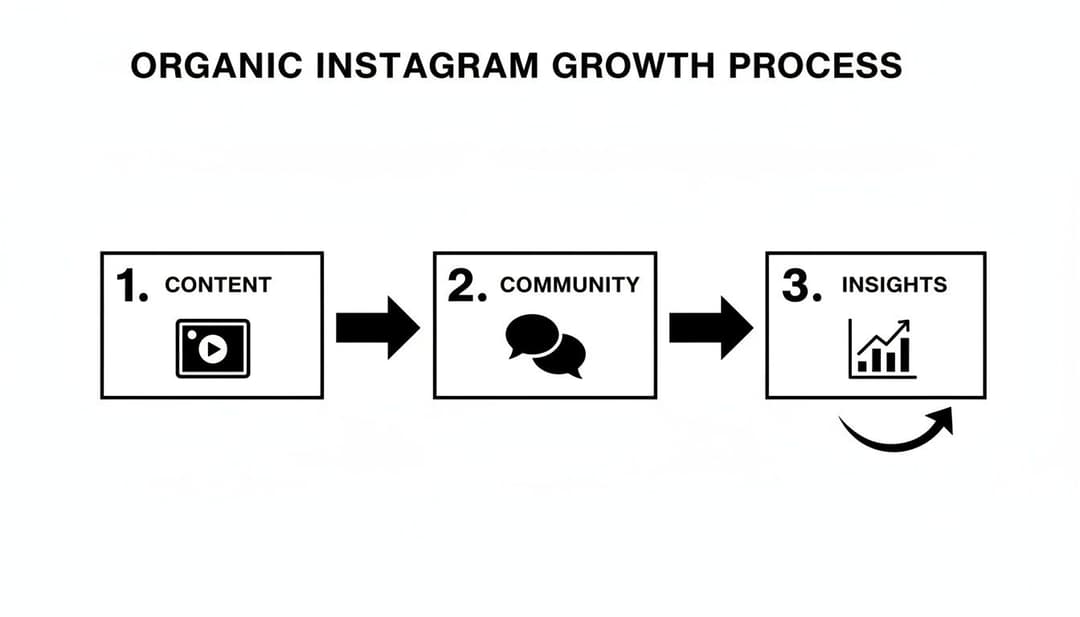
The flow is simple: great Content builds an engaged Community, which generates powerful Insights. That feedback loop informs both your ongoing organic strategy and your paid targeting.
Setting Budgets and Bidding Strategies
So, how much should you spend? Start with a budget you're comfortable testing with. You don't need a massive investment to get started—even $20 to $50 per day for each ad set is enough to gather initial data and see what’s working. You can set this as a Daily Budget or a Lifetime Budget for the entire campaign.
Your bidding strategy tells Meta how to spend that money. While you have options like "Cost Per Result" that give you more manual control, many advertisers are seeing huge success by moving toward Return On Ad Spend (ROAS) bidding. This lets you set a minimum ROAS target (say, 2.5x), and Meta's algorithm will work to hit that goal by automatically adjusting your bids in real time.
To make sure your investments are actually paying off, you have to get good at knowing how to measure the Return On Spend for your Paid Social campaigns. This lets you scale the winners with confidence and cut the losers quickly, maximizing your overall profit. This whole process of launching, learning, and scaling is the key to mastering how to promote an Instagram post far beyond just a simple boost.
Amplify Your Reach with Influencer Marketing

Paid ads are great for renting an audience's attention, but influencer marketing is how you earn their trust. Think of it as the ultimate form of social proof—a credible, third-party voice telling their community that your product is worth it.
When you get this right, you’re not just buying a sponsored post. You're borrowing the trust that a creator has spent years, sometimes a decade, building with their audience. It’s a non-negotiable part of any serious plan for promoting on Instagram today.
The numbers don't lie. The influencer marketing space on Instagram is on track to become a $22.2 billion industry this year alone. A whopping 80.8% of marketers are baking it into their 2025 plans, and for good reason. Brands are seeing an average media value of $4.12 for every $1 invested. The ROI is undeniable.
Finding and Vetting the Right Partners
The success of your entire influencer program lives and dies by who you choose to partner with. This isn't about chasing the biggest follower counts; it's about finding the account with the right audience for your brand.
Start by looking for creators whose content style and personal values feel like a natural fit for your brand. If an influencer is hawking a different product every single day, their recommendations start to lose meaning. You want someone who feels like a genuine fan.
Here’s what to zero in on when you’re vetting potential partners:
- Engagement Rate: A high follower count can be a vanity metric. A micro-influencer with 10,000 loyal, engaged followers will almost always drive better results than a macro-influencer with 500,000 who are just passively scrolling. Look for real conversations in the comments, not just a wall of fire emojis.
- Audience Demographics: Don't be afraid to ask for a media kit or a screenshot of their audience analytics. Do their followers’ age, location, and interests actually line up with your ideal customer?
- Content Authenticity: Scroll through their feed. Do their sponsored posts stick out like a sore thumb, or are they woven seamlessly into their usual content? The best partnerships feel completely organic.
Structuring and Tracking Your Campaigns
Once you've found your people, you need a clear game plan. Avoid giving vague instructions. Instead, create a detailed creative brief that outlines the key message points and deliverables. But—and this is important—give them creative freedom. Their audience follows them for their voice, not a corporate script.
Key Takeaway: The best influencer relationships are true partnerships, not one-off transactions. Treat creators with respect, pay them fairly for their work, and focus on building long-term collaborations that benefit both parties.
To understand the real impact of your campaigns, you absolutely have to track performance. Arm each influencer with unique assets to see who is moving the needle.
- Unique Discount Codes: Something simple like "CREATOR15" is the easiest way to attribute direct sales from their promotions.
- Custom UTM Links: Create trackable URLs for their bio or Stories. This lets you measure clicks and traffic right inside your analytics platform.
This data-first mindset is crucial for any brand, but it’s especially vital for those running sophisticated DTC marketing strategies where every dollar needs to work hard. By tracking everything, you can quickly identify your top-performing partners and double down on those relationships.
As a bonus, this process gives you a library of authentic, high-performing content that you can repurpose in your own paid ad campaigns. Nothing boosts social proof and lowers acquisition costs like an ad featuring a real person your audience already trusts.
Automating Your Promotions with AdStellar AI
Let's be honest—the manual grind of setting up, testing, and scaling Instagram ad campaigns is the biggest thing holding most brands back. We’ve all been there: spending hours buried in Ads Manager, duplicating ad sets, and uploading creative after creative, just to start the whole cycle over again when it's time to test a new angle. This isn't just a time-suck; it's a strategic bottleneck that actively stops you from finding winning ad combos and scaling them when they hit.
This is exactly where AI-powered platforms like AdStellar AI completely change the game. By automating the most tedious, click-heavy parts of campaign management, these tools free you up to think about the big picture instead of getting lost in the weeds. The goal is to shift from manual execution to smart, data-backed automation. This way, you can test more ideas, learn faster, and ultimately get way better results from your ad spend.
Bulk Creative Generation and Launch
Picture this: you have a new promotion you're excited to test. A decent test might involve three different ad images, two ad copy variations, and two distinct audiences. If you're building those manually, that’s 12 different ads you have to create, one by painful one. That complexity snowballs fast, making it nearly impossible to test at the volume you need to consistently find breakout winners.
AdStellar solves this by automating the entire bulk ad creation process. Instead of building ads individually, you just upload your assets—all your images, videos, headlines, and copy—and the platform spins up hundreds of unique combinations in minutes.
- Mix and Match Assets: The system automatically combines your different creatives with various copy angles and audience targets.
- One-Click Launch: Forget the endless clicking. Push all your test variations live to Meta Ads Manager with a single click, saving you hours of setup time.
- Structured Naming Conventions: It also applies clean, consistent naming rules to your campaigns, ad sets, and ads automatically, which makes digging into the performance data way easier later on.
This approach transforms your testing from a slow, painstaking chore into a rapid, high-volume operation. You're no longer limited by how many ads you can physically build in a day. The only limit is how many ideas you can come up with.
Everything is managed from a centralized dashboard, giving you a clear overview of these complex campaign structures.
This command center view allows you to see all the moving parts at a glance, from creative assets to performance metrics, turning what was once campaign chaos into organized clarity.
Uncovering What Works with AI Insights
Once your campaigns are up and running, the next big hurdle is figuring out what’s actually working. Sifting through Ads Manager reports to connect the dots between a specific image and your overall Return on Ad Spend (ROAS) can be a massive time sink. The data is all there, but making sense of it requires a ton of manual analysis.
AdStellar cuts right through the noise. It securely connects to your Meta Ads account, pulls in your performance data, and its AI Insights feature does the heavy lifting for you. It analyzes the results and ranks all your assets—creatives, copy, audiences—based on the metrics that actually matter to your bottom line.
You're no longer guessing which ad creative is your best. The AI tells you definitively, "This image, combined with this headline, is driving the highest ROAS with your 'Lookalike 1%' audience." This level of clarity is a superpower for any media buyer.
This means you can instantly see:
- Your top-performing ad creatives, ranked by CPA or ROAS.
- The exact audience segments delivering the most value.
- The specific ad copy that resonates most with your customers.
This data-driven feedback loop is everything. It takes the emotion and guesswork out of your optimization process, so you can make decisions based purely on performance. For anyone serious about promoting on Instagram with paid ads, this is a non-negotiable.
Smart Scaling and Automated Campaign Building
Finding your winning ads is only half the battle. The real money is made when you use those insights to scale your budget and launch new campaigns with confidence. And again, this is another spot where manual workflows tend to fall apart.
AdStellar introduces two features that automate this entire process. The AI Launch feature takes your proven winners—the top creatives, copy, and audiences identified by AI Insights—and uses them as the building blocks for new campaigns. With just a few clicks, you can build a new "best of" campaign made up entirely of your top-performing assets. This gives you the highest possible chance of success right out of the gate.
Beyond that, the platform uses auto-learning models to manage scaling in real time. It keeps an eye on your campaigns for high-performing ad sets and can automatically increase their budgets to capitalize on momentum. This proactive approach means you're scaling your winners the moment the data says "go," without having to wait for a manual review. If you want to dive deeper, you can learn more about how AdStellar's AI optimization features help teams drive better results.
By swapping out manual setup with intelligent automation, you create a powerful, self-improving system for growth. You can launch more tests, get clear insights faster, and use that data to build and scale winning campaigns—all while spending a lot less time buried in Ads Manager.
Instagram Promotion: Your Questions, Answered
Jumping into Instagram promotion can feel like there's a mountain of questions to climb. Whether you're just getting your feet wet or you've been in the game for a while, a few key questions always seem to pop up. Let's clear the air and tackle some of the most common ones we hear from brands and marketers.
How Much Should I Spend On Instagram Ads?
This is the million-dollar question, isn't it? The honest answer is: there's no single magic number. A smart place to start, though, is with a budget you're comfortable experimenting with.
Many businesses find their footing by starting with $20 to $50 per day for each ad set. This is usually just enough to get some meaningful data rolling in within a week, without having to empty your pockets.
But the real answer depends entirely on your goals. Are you trying to sell a high-ticket item, or are you just trying to get your name out there? Your budget should be a reflection of your Customer Acquisition Cost (CAC) and Lifetime Value (LTV). The objective isn't just to spend as little as possible—it's to spend intelligently. Once you've found a positive Return on Ad Spend (ROAS), that's your green light to start scaling up.
How Often Should I Post to Promote My Business?
Here's a hard truth: consistency will always trump frequency. It's far better to share three genuinely engaging, high-quality posts per week than it is to push out seven mediocre ones just for the sake of it. The algorithm doesn't reward volume; it rewards real, meaningful interaction.
If you're building a new account from scratch, here’s a solid baseline to aim for:
- 3-5 Feed Posts/Reels Per Week: This keeps your brand visible and top-of-mind without feeling like you're spamming your followers' feeds.
- 5-7 Stories Per Week: Think of Stories as your daily touchpoint. They're perfect for more informal, behind-the-scenes content, quick polls, and Q&As.
Don't just guess, though. Your own Instagram Insights are a goldmine of information. Dive in and see when your followers are most active, then schedule your content to meet them there.
Can I Promote My Instagram For Free?
Absolutely. In fact, you should. Organic promotion is the bedrock of any solid Instagram strategy. It definitely takes more time and sweat equity, but you can build some serious momentum without spending a single dollar on ads.
Channel your energy into these free promotional tactics:
- Create Content That Begs to Be Shared: Focus on Reels and Carousels that are so valuable or entertaining that people can't help but send them to a friend.
- Get Active in Your Community: Don't just post and ghost. Reply to every comment and DM. Find other accounts in your niche and engage with their content genuinely.
- Be Smart with Hashtags: Do your homework. Use a healthy mix of popular, broad hashtags and super-specific, niche ones to help the right people discover your content.
- Launch a User-Generated Content (UGC) Campaign: Give your customers a reason to post about your product, and then celebrate them by featuring their content on your page.
Remember, organic promotion isn't just about racking up followers. It's about building a real, loyal community that actually trusts your brand. That authentic connection is what makes your future paid ads so much more powerful.
What Is The Difference Between a Boosted Post and an Ad?
This one is critical. People often use these terms interchangeably, but they are worlds apart. While both involve paying to get more eyes on your content, they're designed for different jobs and offer wildly different levels of control.
| Feature | Boosted Post | Instagram Ad (Meta Ads Manager) |
|---|---|---|
| Objective | Built for quick engagement (likes, comments). | Optimized for specific business goals (sales, leads, traffic). |
| Targeting | Very basic options (location, age, gender). | Deeply advanced targeting (interests, behaviors, custom & lookalike audiences). |
| Placement | You have little to no control over placement. | You have full control over where ads show up (Feed, Stories, Reels, etc.). |
| Creative | Simply uses an existing Instagram post. | Lets you A/B test different creatives, copy, and headlines to find a winner. |
Think of boosting a post as hitting the gas on something that's already doing well on its own. It's quick, it's easy, and it gets you more visibility. But creating a true ad in Meta Ads Manager is the professional's move. If you're serious about driving measurable business results, Ads Manager is the only way to go.
Ready to stop the manual grind and scale your Instagram ads with confidence? AdStellar AI automates bulk ad creation, uncovers what's working with AI-powered insights, and helps you launch winning campaigns faster.
Discover how our platform can help you get better results with less effort at https://www.adstellar.ai.