Instagram direct message automation is a game-changer. It’s a strategy that uses specialized software to automatically send, receive, and manage conversations right inside your Instagram inbox. Think of it as more than just a chatbot; it’s a powerful system that can respond to post comments with a DM, answer common questions instantly, and even guide users through an entire sales funnel.
This turns your everyday engagement into a predictable, scalable growth engine.
Your Hidden Growth Engine Is in Instagram DMs
For most marketers and growth teams, the Instagram inbox is a reactive, time-sucking chore. It's an endless flood of routine questions, sales inquiries, and customer support issues that demands constant manual attention. This approach doesn't just drain your resources; it creates a massive bottleneck, making it impossible to engage every potential customer the moment they show interest. The result? Lost opportunities and a hard cap on your growth potential.
This guide is about flipping that script. We're going to reframe your DMs from a manual burden into a strategic, automated asset. By setting up Instagram direct message automation, you can transform your inbox into a primary channel for acquisition, engagement, and nurturing leads. It's about building an intelligent system that works for you 24/7, ensuring no lead ever goes cold.
Shifting from Manual Replies to Automated Funnels
The real magic happens when you move beyond one-off manual replies and start building structured, automated conversation funnels. Instead of just answering a single question, you can design an entire journey that moves a user toward a specific business goal.
For example, a simple comment on your latest Reel can trigger a complete sequence. The user gets an instant DM with the link or resource they asked for. The next message could ask a qualifying question. Based on their response—a simple tap on a quick-reply button—they might get a link to book a demo or a discount code for your store. This entire back-and-forth happens in seconds, without a single human touchpoint.
The real power of DM automation is its ability to shorten the customer journey. You collapse the path from initial interest (a simple comment) to a meaningful conversion, all within a single, private conversation.
Why This Matters for Marketers Now
The Instagram algorithm is rewarding content that sparks conversations more than ever. When someone comments on your post and you immediately follow up in their DMs, it sends a powerful signal to Instagram that your content is valuable and highly engaging. This alone can give your organic reach a serious boost.
But the direct benefits are even more compelling:
- Scalable Lead Generation: Turn thousands of comments into a qualified lead list by automatically asking for an email in exchange for a freebie.
- Enhanced User Experience: Provide instant, 24/7 answers to common questions. This drastically improves customer satisfaction and cuts down wait times.
- Increased Content Reach: By encouraging comments that trigger DMs, you generate more "sends"—a key metric that tells the algorithm your content is share-worthy.
For e-commerce brands, agencies, and SaaS companies, this isn't just a cool new trick. It’s a competitive advantage. You can finally maximize the ROI from your content and Meta ad campaigns by creating a seamless bridge between public engagement and private, conversion-focused dialogue. This guide will show you exactly how to build it.
Building Your DM Automation Strategy
Jumping into Instagram DM automation without a clear plan is like setting sail without a map. Sure, you'll create some activity and probably answer a few questions, but you won't end up anywhere valuable. A real strategy starts by figuring out exactly what you want to achieve before you write a single automated message.
First things first, what's the business goal here? Are you trying to get more qualified leads for your SaaS product? Maybe you want to drive more sales for your e-commerce store, or just cut down on the time your support team spends answering the same five questions over and over. Each of these goals requires a totally different kind of automated conversation.
Define Your Core Use Cases
Start by mapping out the most common and valuable interactions already happening in your DMs. This is where you'll find the low-hanging fruit—the spots where automation can make the biggest impact, fast. Getting this right is fundamental, and it builds on the broader principles outlined in a founder's guide to social media automation.
Here are a few common scenarios I see all the time:
- Lead Magnet Delivery: A user comments a keyword like "GUIDE" on your post. The bot instantly slides into their DMs with a link to download the resource and follows up by asking for their email to join your newsletter. Simple, effective, and fully automated.
- E-commerce Sales Funnel: Someone comments "DISCOUNT" on a Reel showing off your new product. An automation immediately sends them a DM with a unique discount code and a direct link to the product page. This creates a completely frictionless path from interest to purchase.
- Initial Customer Support: Your bot can handle the easy stuff, like "What are your hours?" or "Do you ship to Canada?" It only hands the conversation off to a human agent when the query gets too complex, freeing up your team for the real problem-solving.
Don't try to automate everything at once. Pick one or two high-impact use cases that solve a major pain point, like converting post commenters into email subscribers. Nail that flow, measure its success, and then expand from there.
This focused approach is a core principle of creating scalable marketing automation systems that actually deliver consistent results.
To help you get started, here’s a simple framework I use with clients to connect their business goals to specific Instagram automations.
DM Automation Use Case Planning Framework
| Business Goal | Instagram Trigger | Automated Action & Flow | Primary KPI |
|---|---|---|---|
| Generate Leads | User comments a keyword (e.g., "WEBINAR") on a post or Reel. | DM sends a link to a webinar registration page and asks for their email address to confirm. | Number of emails collected. |
| Increase Sales | User comments a keyword (e.g., "SAVE15") on a product post. | DM sends a unique discount code and a direct link to the product checkout page. | Number of discount codes redeemed. |
| Reduce Support Load | User sends a DM with a common question (e.g., containing "shipping"). | Bot provides a pre-written answer and asks if the user has more questions before offering human support. | Reduction in manual support tickets. |
| Boost Engagement | User replies to a Story sticker (e.g., a quiz or poll). | DM starts a conversation related to their answer, encouraging further interaction. | Number of DM conversations initiated. |
Thinking through each of these columns forces you to build automations with a clear purpose, which is the only way they drive real business value.
Selecting the Right Automation Tool
Once you know what you want to build, you need to choose the right platform to build it on. The market is flooded with options, but they are not all created equal. Your choice here directly impacts what you can build, how safe your account is, and whether you can even measure your success.
When you're evaluating tools, here's what you absolutely need to look for:
- Meta Official Partner Status: This is non-negotiable. Using an official partner ensures the tool is using the approved API, which is critical for compliance and protecting your account from being flagged or banned.
- CRM/ESP Integration: The magic happens when you can automatically send lead data—like emails and names—from your DMs straight to your CRM or email platform. This is what turns DM automation into a true growth engine.
- Advanced Analytics: You need more than just vanity metrics. Look for platforms that track open rates, click-through rates, and funnel completion rates. This is the data you'll use to actually optimize your conversation flows.
- Visual Flow Builder: Unless you're a developer, a user-friendly, drag-and-drop interface is a lifesaver. It makes it so much easier to design, visualize, and tweak complex conversation paths without needing to write a single line of code.
Setting Clear Objectives and KPIs
For every single automated funnel you design, you have to define a Key Performance Indicator (KPI) to measure if it's actually working. Without a clear metric, you're just guessing. Your KPIs should tie directly back to the business goal of that specific automation.
For instance:
- Goal: Generate leads for a webinar.
- KPI: Number of email addresses collected via DM.
- Goal: Drive sales from a new product launch.
- KPI: Number of discount codes redeemed.
- Goal: Increase engagement on Reels.
- KPI: Total number of comments that trigger a DM sequence.
By putting these foundational pieces in place—clear use cases, the right tool, and measurable KPIs—you're not just playing with bots. You're building a strategic framework. This ensures your Instagram DM automation efforts aren't just creating noise but are actively driving tangible, predictable results for your business.
Designing Automated Conversations That Convert
Once you’ve nailed down your strategy, it’s time to actually build the engine. Designing automated conversations is a delicate balance—they have to be efficient enough to handle volume but human enough to not feel like you're talking to a dial tone. This is where your big-picture plans get turned into tangible, interactive message flows that guide people from a simple comment to a real conversion.
That first message a user gets? It’s everything. It sets the tone for the entire back-and-forth. A dry, robotic "We received your message" is a complete non-starter. Your welcome message needs to feel warm, confirm why you’re sliding into their DMs, and give them what they want right away.
For example, if someone comments "GUIDE" on your latest post, don't just fire off a link. Try something more personal: "Hey [Username]! So glad you're interested in our Ultimate SEO Checklist. Here's the direct download link you asked for:" It’s a simple touch, but that little bit of personalization makes the whole thing feel less like a transaction and more like a genuine conversation.
This simple diagram breaks down the core of every successful DM automation. It's all about connecting a business goal to a specific trigger, which then kicks off an automated action.
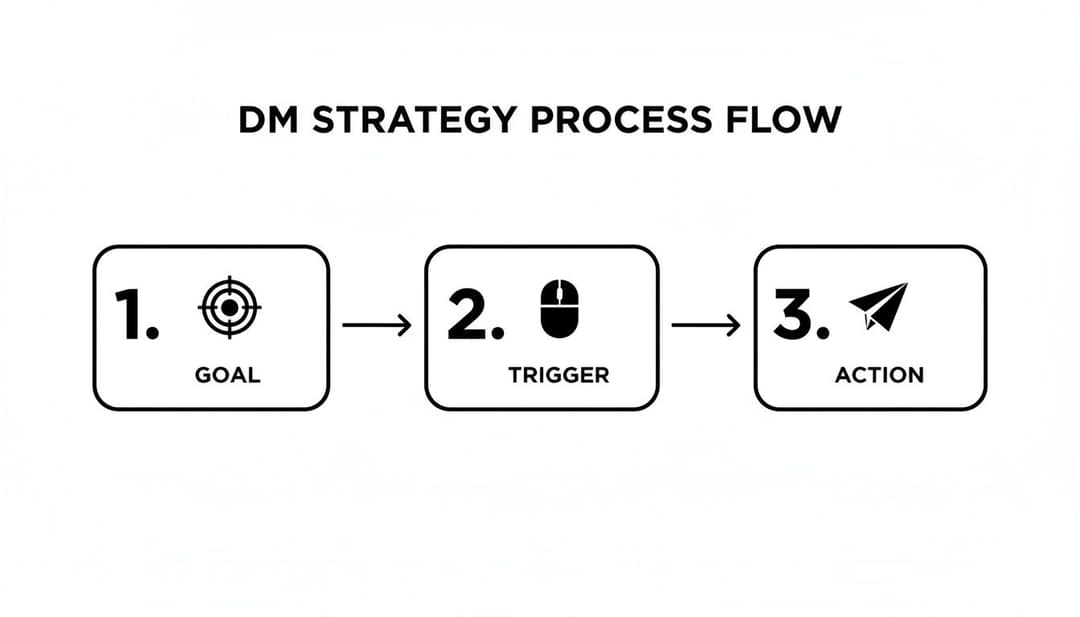
As you can see, every automated flow needs a clear purpose from the get-go, sparked by a specific user action.
Crafting Interactive Message Flows
Just sending a static message is a huge missed opportunity. The best Instagram direct message automation flows use interactive bits and pieces, like quick-reply buttons, to create a kind of "choose your own adventure" for the user. This keeps them tapping and, just as importantly, helps you figure out exactly what they need.
Let’s say a user DMs you after seeing one of your ads. Your first automated reply could be: "Thanks for reaching out! What can we help you with today?" and then offer up a few buttons:
- "Get Pricing"
- "Book a Demo"
- "Ask a Question"
Each button triggers a completely different, pre-built conversational path. Tapping "Get Pricing" might send them a link to your pricing page, while "Book a Demo" could ask for their email to fire over a calendar invite. It’s a super-efficient way to direct traffic without lifting a finger.
Real-World Script Examples for Common Scenarios
Enough with the theory. Let's look at some proven scripts you can swipe and adapt for your own funnels.
Scenario 1: Delivering a Lead Magnet from a Post Comment
This is the classic move for turning post engagement into actual leads.
- User Action: Comments "WEBINAR" on your Reel.
- Automated DM 1: "Awesome! You're in. Here is the link to register for the 'Growth Marketing Masterclass': [Link]. I'll send you a reminder the day of the event!"
- Automated DM 2 (1 minute later): "Just to make sure you get the event reminders, what's the best email address to send them to?"
Scenario 2: Recovering an Abandoned Cart
If your e-commerce store talks to your DM tool, you can set up triggers for when someone leaves items in their cart.
- User Action: Adds an item to their cart but doesn't complete the purchase.
- Automated DM 1: "Hey [Username], saw you left something in your cart! Did you have any questions about the [Product Name]? Happy to help."
- Automated DM 2 (optional, if no reply): "No worries if now isn't the right time! Just in case it helps, here's a 10% discount code you can use on your order: SAVE10"
A well-crafted automated message feels like a helpful nudge, not a hard sell. The goal is to remove friction and make it incredibly easy for the user to take the next step.
The Seamless Handoff to a Human Agent
Look, no bot is perfect. It can't handle every weird, nuanced question that comes its way. A critical part of designing these flows is knowing when to have the bot step aside and let a real person take over.
Your automation should always have a clear "escape hatch."
Often, it’s as simple as including a quick-reply button that says "Talk to a Human." When a user taps that, the automation needs to do two things instantly:
- Pause the bot: This is crucial. You don’t want the bot jumping back in and making things confusing or frustrating.
- Notify your team: The conversation should be flagged, moved to a priority inbox, and ping someone on your support or sales team via Slack, email, or your CRM.
The handoff message itself matters, too. You need to manage expectations. Something like: "Got it. I'm connecting you with one of our team members now. They'll be with you shortly to help with your question!" This simple script turns a potential friction point into a smooth, professional handoff. This mix of automation for speed and human expertise for the tricky stuff is what really gets results.
At the end of the day, the words you use in your DMs are just as important as the ones in your ads. For a closer look at what makes messaging click, check out our guide on how to write great ad copy—you’ll find a lot of the same principles apply.
Kicking Off Your Automation Funnels
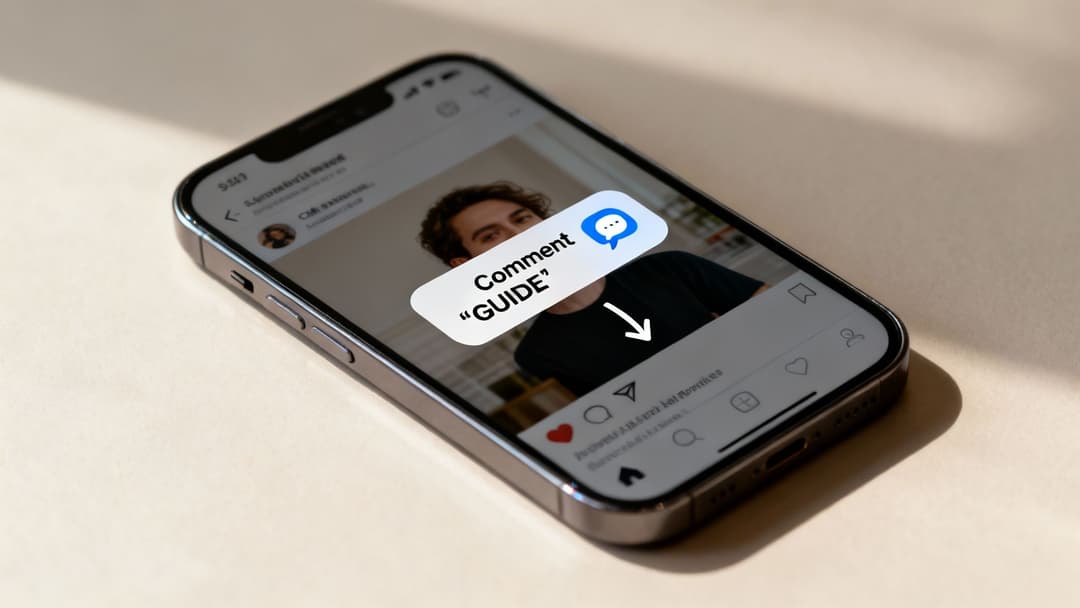
You can build the most brilliant, high-converting message flow in the world, but it’s completely useless until someone actually enters it. This is where your public content—your Posts, Reels, and Stories—steps in to become the crucial entry point.
Activating your funnels is all about strategically connecting these public touchpoints to your private DM conversations. We do this using specific, automated triggers that work like digital tripwires. Once a follower crosses one, your pre-built DM sequences are set in motion instantly. The real goal here is to make this leap from public view to private chat feel totally seamless and natural for your audience.
The Power of Comment Automation
Hands down, the most effective trigger in your arsenal is comment automation.
This whole process is simple: you prompt users to comment a specific keyword on a Post or Reel, which then automatically shoots them a DM. It’s an incredibly powerful method because it turns passive scrollers into active participants and feeds them directly into your lead generation engine.
To make this work, your on-post call-to-action (CTA) has to be crystal clear. Vague instructions like "Let me know what you think below" just won't get the job done. You need to be direct and give them a compelling reason to type that keyword.
Here are a few proven CTA formulas I’ve seen work time and again:
- For Lead Magnets: "This guide breaks down our entire process. Comment ‘GUIDE’ below, and I'll send it straight to your DMs."
- For E-commerce: "Want to grab this at a discount? Just comment ‘SAVE20’ and I’ll DM you a special code."
- For Exclusive Content: "I recorded a behind-the-scenes video explaining this in more detail. Comment ‘VIDEO’ and I’ll send you the private link."
This strategy does more than just rack up comments. It signals to the Instagram algorithm that your content is sparking real, meaningful interactions. In fact, the algorithm now prioritizes something called ‘sends per reach’ more heavily than likes or even standard comments. A well-executed DM automation strategy can dramatically increase these "sends," signaling high-quality engagement and potentially boosting your organic reach on future posts.
Leveraging Story Mentions and Replies
While post comments are fantastic for your broad-reach content, your Instagram Stories offer a more intimate setting to kick off your funnels. They’re perfect for engaging your most loyal followers—the ones who watch your content every single day.
Two main triggers work wonders here.
First is the Story Mention trigger. When a user tags your account in their own Story, you can set up an automation to instantly send them a thank-you message. This simple act of immediate acknowledgment can turn a casual fan into a true brand advocate.
Pro Tip: Don't just send a generic "Thanks for the tag!" Use this as a chance to deepen the relationship. Your automated reply could say something like, "Wow, thanks so much for the shout-out! We love seeing our community in action. As a small thank you, here’s a 10% discount code for your next purchase: STORYLOVE."
Second is the Story Reply trigger. When you use interactive stickers like polls, quizzes, or sliders, you can automate a DM based on a user's reply. If you post a quiz and someone gets the answer right, a DM could congratulate them and offer a small prize. It gamifies the experience and makes your brand that much more memorable.
Using Instagram Ads to Fuel Your Funnels
Organic content is great, but when you're ready to really scale, Instagram Ads are your best friend.
Specifically, ads with a 'Send Message' call-to-action are designed to drive users directly into your automated DM funnels. This is easily one of the most powerful combinations available to performance marketers today.
Instead of sending ad traffic to a cold landing page where drop-off rates can be painfully high, you bring them into an interactive, personalized conversation right in their DMs.
From there, your bot can:
- Instantly greet the user, referencing the specific ad they saw.
- Ask a few qualifying questions using quick-reply buttons.
- Deliver a lead magnet, book a demo, or provide a discount code.
- Capture their email or phone number without them ever leaving the app.
This approach slashes the friction and can seriously improve your conversion rates compared to traditional ad flows. By connecting your paid campaigns to these automated systems, you ensure every dollar spent is working to start a valuable conversation.
For those looking to dive deeper, exploring a range of Instagram campaign tools can provide even more ideas on how to integrate these strategies effectively. Once you master these triggers, you'll turn every piece of content into a potential conversation starter, creating a reliable system for growth.
Optimizing Performance and Staying Compliant
Getting your first Instagram DM automation live is a huge milestone, but let’s be real—that’s where the real work begins. If you just set your funnels and forget them, you're not only leaving money on the table but also putting your account's health on the line.
The game is all about continuous optimization. It's an ongoing cycle of measuring what works, refining your flows, and staying on the right side of Meta’s ever-changing rules. This isn't just about changing a word here or there; it’s about systematically improving every touchpoint to make your automation so genuinely helpful that people actually look forward to interacting with it.
Tracking the Metrics That Actually Matter
You can't fix what you can't see. To really dial in your DM funnels, you need to look past vanity metrics like post comments and zero in on the data that signals real business impact. These are the KPIs that tell you the true story of how your automated conversations are performing.
Here’s what I keep a close eye on:
- Open Rate: What percentage of people are actually opening your first message? If this number is low, it might mean the call-to-action on your post isn't setting the right expectation.
- Click-Through Rate (CTR): Of those who open the message, how many are clicking the link inside? This is a direct gut-check on how compelling your offer and messaging are.
- Funnel Completion Rate: How many people who start the conversation make it all the way to the end goal—whether that's dropping their email or using a promo code? This shows you how smooth the user journey is.
- Human Handoff Rate: What percentage of chats need a real person to jump in? A high rate here is a red flag that your bot is confusing, hitting a dead end, or its scope is too narrow.
Tracking these numbers helps you pinpoint exactly where people are dropping off. It’s this data-driven approach that turns a decent setup into a high-performing one. For a deeper look at this, our article on performance analytics for ads offers some great related insights on measuring campaign success.
A/B Testing Your Way to Higher Conversions
Once you've got your baseline metrics, it's time to start experimenting. A/B testing is your best friend here. It’s as simple as comparing two different versions of a message to see which one gets better results, and honestly, even tiny tweaks can create a massive lift.
Try testing different parts of your flow, one at a time:
- The Initial Hook: Does starting with a direct statement outperform a question?
- The Call-to-Action: Pit different button text against each other, like "Get the Guide" vs. "Download Now."
- Message Length: Are short, punchy DMs working better than ones with a bit more detail?
- Emoji Use: Does a well-placed emoji boost engagement, or does it come off as unprofessional for your specific brand?
The key is to run one test at a time and give it enough runway to collect meaningful data. This methodical process is what separates the pros from the amateurs.
Navigating Meta's Policies and Rate Limits
Automation is powerful, but with great power comes great responsibility. Meta is extremely protective of its user experience and has strict rules to prevent spam. If you ignore them, you risk getting your messaging capabilities temporarily restricted—or worse, your account shut down.
First rule of thumb: only use an official Meta Business Partner for your automation. These platforms are built on the approved API and have safeguards baked in to keep you out of trouble. Beyond that, you have to be smart about how your automation behaves. Understanding how to handle navigating automated behavior warnings on Instagram is crucial for long-term success.
Your automation should always feel like a natural extension of a conversation, not a robotic broadcast. The moment it feels spammy, you’ve lost the user’s trust and put your account at risk.
Here are a few practical tips to stay in the clear:
- Vary Your Message Templates: Don't blast the exact same message to everyone. Use personalization tokens like
[Username]and create several different versions of your core messages for the system to rotate through. - Set Realistic Delays: Nobody types and sends five messages in ten seconds. Build in small, natural-feeling delays between messages to mimic how a real person would chat.
- Provide Value First: Never, ever lead with a hard sell. Your first message should always deliver on the promise from your post, whether that's a link, a guide, or an answer to a question.
When done right, Instagram DM automation can slash manual reply time by 70% in just 60 days, letting you focus on strategy instead of repetitive tasks. This efficiency is how teams scale from handling 50 DMs a day to over 5,000. And with instant responses boosting sales chances by up to 400%, the upside is massive. By playing by the rules and focusing on the user, you can unlock these results without ever compromising your account.
Common Questions About Instagram Automation
Whenever you bring a new piece of tech into your marketing stack, questions are bound to pop up. Instagram direct message automation is no different. As more and more growth teams and marketers start tapping into these powerful tools, a few common concerns keep surfacing.
Let's walk through the most frequent ones. My goal here is to give you the clarity and confidence you need to get started the right way—using automation to genuinely improve the user experience and drive real, measurable results.
Will Using Instagram DM Automation Get My Account Banned?
This is always the first question, and for good reason. The short answer is no, as long as you’re smart about it.
Your account is safe when you use a platform that’s an official Meta Business Partner. These tools are built on Instagram's approved API, meaning they’re designed from the ground up to play by the rules. They work with the platform, not against it.
Where people run into trouble is with sketchy, unofficial tools that scrape Instagram or perform spam-like actions. To stay in the clear, you have to focus on creating value. For example, instantly sending a guide to someone who commented with a keyword is helpful and totally compliant. But mass-blasting all your followers with a surprise promo offer? That’s just spam, and it will get your account flagged.
The golden rule is simple: enhance the user experience, don't degrade it. Your automation should feel like a helpful concierge, not a pushy salesperson.
How Do I Handle Questions the Automation Cannot Answer?
Let's be real: no bot can handle every single complex or nuanced question a person might have. That’s why a solid automation strategy always includes a seamless human handoff process. Think of your bot as the first line of defense, handling the high volume of repetitive, predictable questions.
The best way to do this is by building an "escape hatch" right into your message flows. This can be as simple as a quick-reply button that says "Talk to a Human" or setting up keyword triggers like "help" or "agent." When a user hits that trigger, the automation should immediately pause and ping a real person on your team to jump in. This creates a smooth transition where automation handles the simple stuff, and your team steps in for the high-value conversations that need a human touch.
What Kind of Results Can I Realistically Expect?
While the exact numbers will depend on your industry and strategy, the impact is almost always significant and comes in a few different flavors.
Operationally, it’s pretty common for businesses to see a 70-80% reduction in the time their team spends manually answering the same questions over and over. That time gets immediately reallocated to more strategic work.
From a strategic standpoint, the results are even more exciting. When you turn post comments into DM conversations, you’re directly boosting your "sends per reach," a key metric that tells the Instagram algorithm your content is highly engaging. This often leads to a nice bump in the organic reach of your future posts. You're essentially turning passive engagement into an active, high-performance conversion funnel. For teams already automating their paid campaigns, adding DMs is the next logical step. You can see how this fits with other strategies in our guide to Facebook ads automation tools.
Can I Connect DM Automation to My Other Tools?
Absolutely—in fact, you should. This is where you unlock the real power of Instagram direct message automation, transforming it from a siloed social media tool into a fully integrated piece of your marketing engine.
Most reputable automation platforms like ManyChat or Chatfuel offer native integrations with popular CRMs, email service providers (ESPs), and other marketing software. For anything without a direct connection, a tool like Zapier can act as the bridge.
This allows you to automatically:
- Send new leads (names, emails, etc.) straight to your CRM.
- Add users to specific email nurture sequences in your ESP.
- Log customer chats in a shared spreadsheet for your sales team.
This integration is what closes the loop between a simple comment on Instagram and a fully tracked customer journey. It allows you to build powerful remarketing audiences and attribute real revenue directly back to your social media efforts. Research shows that Instagram chatbots can handle 80% of routine queries, and with DM campaign open rates hitting 80-100%, this channel is a goldmine for converting the 75% of customers who prefer messaging. You can dig into more of these stats over on OmniChat's blog.
Ready to stop manually managing ads and start scaling your campaigns with intelligence? AdStellar AI helps you launch, test, and optimize hundreds of Meta ad variations in minutes, not hours. See how our platform can turn your creative chaos into campaign clarity by visiting https://www.adstellar.ai.