You’re probably in one of two situations right now. Your Facebook lead campaigns are producing volume, but sales says the leads are weak. Or your CPL keeps climbing, and every new test feels like more work for less certainty.
That’s the challenge with lead generation facebook campaigns. The platform can still produce strong economics, but only if you stop treating lead gen as a form-fill exercise and start treating it as a system. Funnel design decides who you attract. The capture method shapes intent. Audience inputs determine quality. Creative sets expectations. Measurement tells Meta what to find more of. Follow-up closes the loop.
Many teams don’t have a lead problem. They have a signal problem. They optimize for what’s easy to count, then wonder why the downstream pipeline looks thin.
Designing Your Facebook Lead Generation Funnel
A workable Facebook lead gen setup starts before the first ad goes live. If you don’t know where a campaign sits in the funnel, Meta will still spend your budget. It just won’t spend it in service of the right business outcome.
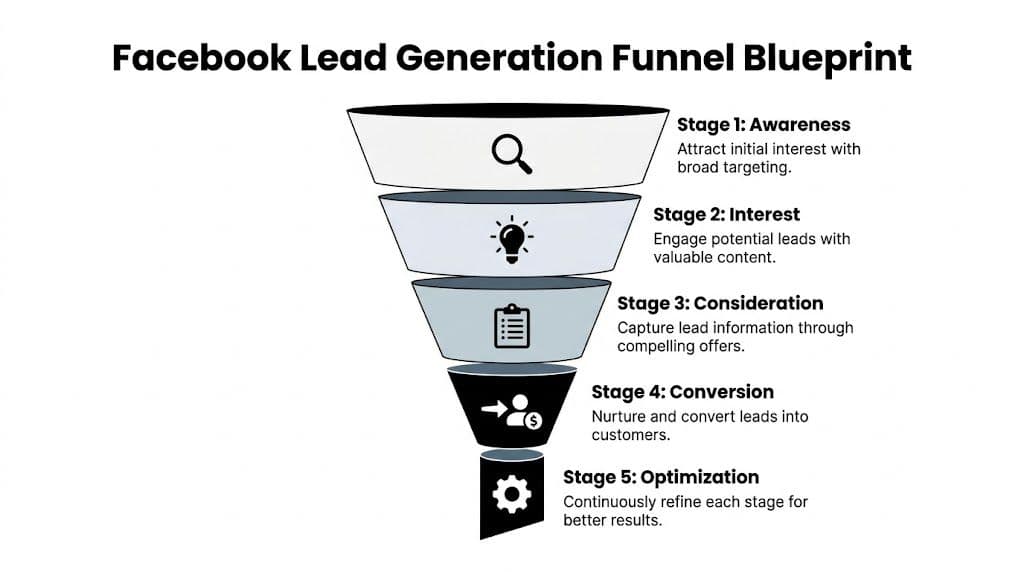
Match the campaign to funnel intent
Top-of-funnel campaigns work when the offer is light. Think newsletter signups, early access, buying guides, quizzes, or category education. In that environment, lower-friction lead capture makes sense because the user isn’t ready for a sales conversation yet.
Mid-funnel campaigns need a different standard. If you’re asking for a demo request, consultation, quote, or application, cheap leads are usually the wrong KPI. A higher-intent setup with tighter qualification often performs better at the revenue level, even if the front-end CPL looks worse.
A simple framing helps:
- Awareness stage: Use content and broad messaging that earns attention.
- Interest stage: Offer something useful enough to justify a click.
- Consideration stage: Ask for information only when the exchange is clear.
- Conversion stage: Push the lead into a follow-up path quickly.
- Optimization stage: Feed quality data back into Meta.
If you need a broader acquisition framework beyond Meta, this guide on how to generate leads online is a useful complement because it puts paid social inside a wider lead capture strategy.
Choose the objective based on what happens after the form
The common mistake is selecting a lead objective and assuming all leads are equal. They aren’t.
If your business can monetize a large lead pool through strong lifecycle marketing, then volume can be rational. E-commerce brands with SMS, email, and retargeting depth often fit here. If your business depends on a sales rep calling the lead, quality matters more than raw count.
Facebook lead generation performance is still strong, but it varies by industry. Across industries, lead campaigns averaged a 7.72% conversion rate, while Restaurants and Food reached 18.25% and Attorneys and Legal Services reached 10.53%, according to LocaliQ’s Facebook advertising benchmarks. Those numbers are useful because they set expectations. A weak result may be a campaign issue, but sometimes it’s the wrong funnel design for your category.
Practical rule: Don’t judge a top-of-funnel lead campaign by booked revenue in isolation, and don’t judge a mid-funnel campaign by cheap form fills.
Build the funnel backward from the sales outcome
The cleanest way to structure lead gen is to start at the end and work backward:
- Define the sales event that matters most. Booked call, qualified application, approved consultation, or purchase.
- Identify the lead type that most often gets there. Not every submitted form should count equally.
- Pick the campaign objective that gives Meta the clearest optimization signal.
- Choose the right capture environment. Native form or landing page.
- Set a lead handling path before launch. Routing, response timing, and CRM fields need to be ready.
For teams building repeatable workflows, this walkthrough on lead gen ads strategy is a useful reference for structuring campaign architecture around outcomes rather than surface metrics.
Lead Forms vs Landing Pages Deciding Your Path
A familiar scenario. Campaign one uses Meta Instant Forms and produces a flood of cheap leads. Campaign two sends traffic to a landing page and brings in fewer submissions, but sales calls those people back. The right choice is not the one with the lower cost per lead. It is the one that creates qualified pipeline without wasting follow-up time.
That decision shapes the whole system. It affects how much friction you add, what qualification data you can collect, how accurately you can measure quality after the click, and how much cleanup sales has to do later.
Where Instant Forms make sense
Instant Forms work best when speed and volume matter more than upfront screening. The user stays inside Facebook or Instagram, prefilled fields reduce drop-off, and mobile conversion is usually stronger because there is no extra page load or site experience to fight through.
That makes them a good fit for offers with clear, low-complexity value:
- Quote requests
- Promo offers
- Newsletter or guide signups
- Callback requests
- Early-stage demand capture where inside sales or automation qualifies later
I use Instant Forms when the business already has a strong post-lead process. That usually means fast lead routing, an email or SMS sequence, retargeting, and clear CRM stages. Without that infrastructure, low-friction forms can create the wrong kind of scale. The ad account looks healthy. The sales team sees a pile of weak leads.
Meta’s own native lead flow can still help quality if you configure it properly. Higher-intent form settings, custom qualifying questions, and clear expectation-setting in the ad reduce accidental submissions. Teams that want better audience control around those tests should pair form strategy with a clear Facebook ads audience targeting strategy, because weak targeting makes low-friction forms deteriorate fast.
Where landing pages earn the extra click
Landing pages are usually the better choice when each lead is expensive to work, close rates depend on context, or the offer needs explanation before a prospect is ready to talk.
That is common in B2B SaaS, legal, healthcare, education, financial services, and high-ticket home services.
A landing page gives you more than branding control. It gives you screening control. You can explain the offer, handle objections, show proof, set expectations, and ask better questions in the right order. Multi-step forms often help here because they let you collect richer information without presenting a wall of fields all at once.
The trade-off is simple. You will usually lose some top-of-funnel conversion rate. In return, you often get better intent and cleaner handoff to sales.
Instant Forms reduce submission friction. Landing pages increase decision friction, which often improves lead quality.
The real comparison is operational, not cosmetic
Many teams frame this as a design choice. It is really an economics choice.
If your sales reps can handle a larger lead pool and your qualification process is automated, Instant Forms can be efficient. If every bad lead costs real money in rep time, call center capacity, or compliance review, the lower CPL often stops mattering.
A practical way to compare them:
| Attribute | Facebook Instant Forms | Website Landing Pages |
|---|---|---|
| User experience | Fast, in-app, low friction | More steps, more user effort |
| Lead volume | Usually higher | Usually lower |
| Lead intent | Often mixed unless qualification is tight | Often stronger because the user commits more time |
| Qualification options | Limited by form tolerance and Meta form design | Greater control over multi-step questions and logic |
| Message depth | Short explanation inside the ad and form | Full page to explain offer, proof, objections, and FAQs |
| Tracking options | Good inside Meta, stronger with CRM syncing | Strong if your site events, CRM, and offline conversion flow are configured well |
| Best fit | High-volume capture with strong nurture | Higher-consideration offers where lead quality matters more than raw volume |
How to choose without guessing
Start with the cost of a bad lead.
If a weak lead only triggers an email sequence, Instant Forms are often fine. If a weak lead triggers a rep call, intake review, or manual qualification step, send that traffic to a landing page and let the page do more of the filtering.
Then test both paths with the same offer, similar creative, and the same definition of a qualified lead. Do not stop at cost per submission. Compare contact rate, meeting rate, opportunity rate, and closed revenue by source. That is where the winner usually shows up.
In practice, the scalable setup is often hybrid. Use Instant Forms for broad testing and fast signal collection. Use landing pages for offers, audiences, or sales motions where quality has to be screened before the handoff.
Building and Testing High-Intent Audiences
A campaign can produce cheap leads all week and still miss pipeline goals. The pattern is familiar. CTR looks healthy, form fills come in, sales follows up, and then the CRM shows a pile of contacts with no budget, no urgency, or no fit. Audience strategy usually sits at the center of that problem.

High-intent audience building starts with source quality. If you build lookalikes from everyone who ever filled out a form, Meta will find more people who behave like form fillers. If you build them from qualified opportunities, closed customers, or leads that passed a real sales checkpoint, Meta has a much better signal to model.
Start with revenue-adjacent source lists
Use first-party data that reflects business value, not platform vanity. Good seed lists usually include customers, sales accepted leads, booked meetings, approved applications, or another stage that shows real buying intent.
In practice, smaller clean lists often outperform larger messy ones. I would rather start with a tightly filtered customer or opportunity list than a bloated export of raw leads. The trade-off is reach. A narrower source can limit scale early, but it usually improves lead quality enough to justify the constraint.
Build your first lookalikes around one clear source at a time:
- Closed customers
- Qualified opportunities
- Sales accepted leads
- High-value product users or trial activations
- Existing customers for upsell or cross-sell exclusions and expansion tests
Keep those sources separate. Mixing very different behaviors into one seed list makes it harder to tell what Meta is finding.
Structure audience tests so you can learn something
Accounts lose weeks of learning when audience hypotheses are blended into one setup. A broad audience, a customer lookalike, and a retargeting pool should not compete inside a messy structure if the goal is to judge quality.
Split tests by audience type and keep the offer stable. That way you can answer useful questions:
- Which audience creates qualified leads, not just cheap submissions?
- Which audience needs stronger pre-qualification in the ad or form?
- Which audience supports scale without a collapse in contact rate or meeting rate?
For teams refining account structure, this guide on Facebook ads audience targeting strategy does a good job of mapping segmentation ideas to actual campaign builds.
One warning from experience. Broad targeting can work, but it works best in accounts with clean conversion feedback, disciplined exclusions, and enough volume for Meta to optimize against meaningful outcomes. Newer accounts often read broad success too early because they judge it on CPL alone.
Use three audience buckets with different jobs
Each bucket should answer a different strategic question. That keeps testing disciplined and makes scaling decisions easier later.
Retargeting audiences
Retargeting captures people who already showed interest. Site visitors, video viewers, social engagers, past lead form openers, and high-intent page visitors belong here.
This bucket usually produces the fastest read on offer-market fit. If warm traffic is not converting, the problem often sits with the offer, the audience window, or the ad-to-form message match.
Retargeting also needs restraint. Small pools fatigue quickly, especially in niche B2B accounts. Watch frequency and lead quality together. Cheap repeat impressions do not help if the same low-intent users keep cycling through the form.
Lookalike audiences
Lookalikes are often the cleanest path from proven demand to scalable prospecting. Their performance depends on the source list and the event quality feeding Meta.
Start narrow if quality matters more than volume. Expand only after downstream metrics hold. Many teams widen too early, see lower CPL, and assume they found efficiency. Then sales quality drops and the apparent win disappears in the CRM.
Interest and broad audiences
Interest and broad audiences are useful when first-party data is thin, when you are entering a new segment, or when you need to pressure-test message resonance outside existing demand.
They also need tighter controls. Stronger qualification language, sharper exclusions, and better creative specificity matter more here because the platform has less guidance. If the ad is vague, broad audiences will find plenty of curious users who never become revenue.
A practical way to sharpen those campaigns is to apply direct response principles from 10 Facebook Ads best practices. The targeting may be wider, but the message still needs to screen for fit.
Measure audience quality in layers
Audience testing breaks down when teams stop at platform metrics. A low CPL can hide poor sales outcomes for weeks.
Use a layered scorecard:
- Platform response: CTR, CPC, CPL
- Post-click quality: form completion rate, landing page conversion rate, question drop-off
- Sales signal: contact rate, meeting rate, qualification rate
- Business outcome: pipeline created, cost per opportunity, closed revenue
The key trade-off is speed versus truth. CTR and CPL arrive fast. Pipeline quality takes longer. Strong operators use front-end metrics to manage spend, but they let CRM outcomes decide what deserves scale.
A manageable test plan
Keep the first round tight. Three audience buckets are enough to expose where quality is coming from.
Run:
- One customer or qualified-opportunity lookalike
- One retargeting audience
- One broad or interest-based prospecting audience
- One offer
- Two or three creative angles tied to the same promise
That setup gives you contrast without turning the account into a spreadsheet exercise. Once one audience consistently produces qualified leads, expand with purpose. Test new seed lists, widen lookalikes carefully, refresh exclusions, and push budget into the combinations that hold quality after the handoff to sales.
Creative and Copy Frameworks That Convert
A familiar failure pattern looks like this. The campaign gets clicks, the form opens, and lead volume looks healthy by midday. Two days later, sales says the leads are weak because the ad attracted curiosity instead of intent.
That usually starts in the creative.
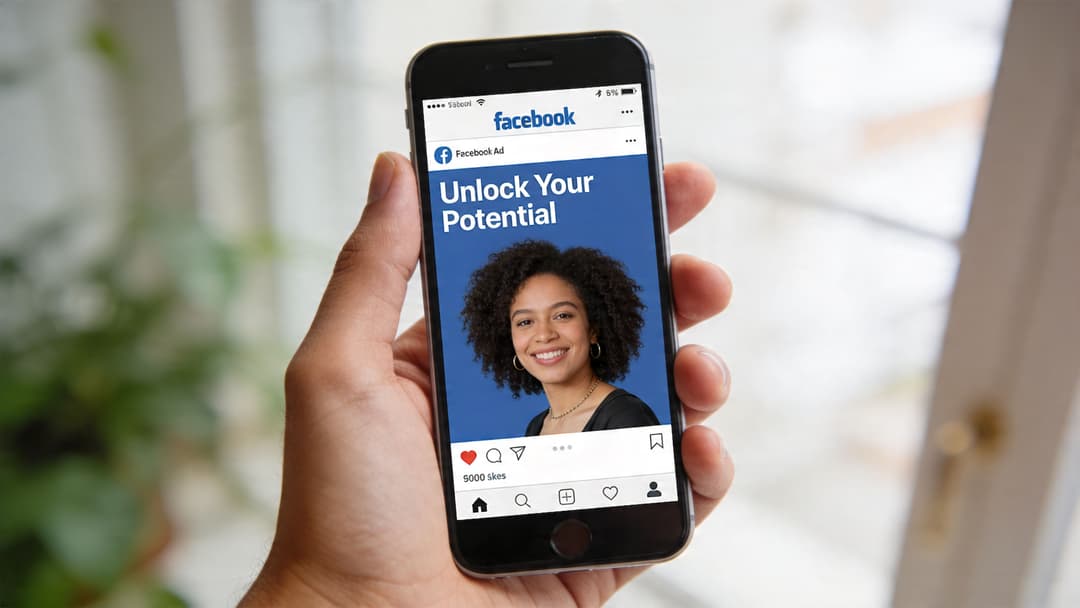
Lead with the exchange
Lead generation ads work best when the value exchange is obvious in the first few seconds. The user is giving you contact details. The ad needs to answer three questions fast: what is the offer, who is it for, and what happens after submission?
A practical framework:
- Problem: State the pain, delay, risk, or missed opportunity.
- Offer: Name the asset, quote, demo, consultation, audit, or application.
- Outcome: Explain the result the prospect should expect.
- Qualifier: Add detail that screens for fit.
- Friction reducer: Show that the next step is clear and manageable.
The qualifier matters more than many teams expect. “Get a free quote” can produce volume. “Get a custom quote for teams shipping 500+ orders per month” usually produces better sales conversations because the copy filters before the form does.
One useful resource for sharpening this kind of messaging is 10 Facebook Ads best practices, especially if your team tends to default to generic social copy instead of offer-led direct response.
Keep ad scent tight
High-converting creative stays consistent from impression to thank-you screen. If the ad promises a pricing estimate in minutes, the form should reinforce that promise, and the follow-up should explain what happens next. Any mismatch creates hesitation.
I have seen small breaks in message continuity hurt performance more than headline tweaks. A polished ad paired with a vague form intro often converts worse than a simpler ad with a very clear next step. Coherence beats cleverness.
For teams producing multiple variants, this guide on Facebook ad copy is a useful reference for writing hooks, benefit lines, and CTAs that match the offer instead of drifting into brand filler.
Match creative format to the sales job
Creative format should follow the amount of explanation and proof the offer needs.
A static image often works best when the user already understands the category and only needs a reason to respond now. Video earns its keep when trust, process, or product use needs to be shown. Carousel is useful when the buyer needs to compare service tiers, see steps, or understand several use cases before raising a hand.
Industry reporting has shown that instant form formats can produce lower cost per lead than heavier formats such as video or carousel in many Meta accounts. That does not make them the right default. Lower CPL is only helpful if the message still filters for fit and the follow-up process can convert those submissions into qualified opportunities.
Here’s a useful creative walkthrough to study before you build your next round of tests:
If the user can’t tell what happens after the click, the ad is not ready.
Build creatives that filter, not just attract
The strongest lead gen ads usually share a few traits:
- Specific offers: “Book a 15-minute consultation” or “Get a custom quote” sets clearer expectations than “Learn more.”
- Visible proof: Show the deliverable, product interface, service outcome, or the person behind the consultation.
- Fit signals: Mention industry served, company size, location, budget range, or use case where relevant.
- Direct CTAs: “Apply,” “Request,” “Book,” and “Get pricing” create stronger intent than softer prompts.
- Plain language: Buyers respond to clarity faster than they respond to clever lines written for internal approval.
Good creative does two jobs at once. It raises response from the right prospects and lowers response from the wrong ones. That is how creative improves lead quality, not just lead volume.
Production speed also matters. Teams that can launch more valid variations learn faster than teams debating one hero concept for a week. Tools that automate variant creation, like Meta’s dynamic options or platforms such as AdStellar AI, become a production advantage when the constraint is getting enough clean tests into market.
Bidding Budgeting and Scaling Your Winners
A campaign can hit target CPL at $100 a day and fall apart at $500. Usually the problem is not Facebook. It is weak guardrails, unclear economics, or scaling before the team has proof that lead quality holds after spend increases.
Set budget rules from your funnel economics first. Earlier benchmarks give a rough market reference, but budget decisions should come from your own numbers: lead-to-meeting rate, meeting-to-close rate, average deal value, and sales capacity. If a lead looks cheap in Ads Manager but only a small share turns into qualified pipeline, the account is buying volume, not efficiency.
That changes how bidding should work.
Match the bid strategy to the amount of signal you have
During testing, lowest-cost bidding is usually the right default. It gives Meta room to explore while you learn which audience, offer, and creative combinations produce qualified leads instead of just completed forms.
Cost controls make more sense after the account has stable conversion history and you know the CPL range the business can tolerate. Set a cost cap too low and delivery dries up. Set it too high and it does little to protect margin. I treat cost caps as a control tool for proven campaigns, not a rescue tactic for weak ones.
Scale only after a winner is repeatable
One good day is noise. A winner is something that holds performance across enough spend, enough time, and enough downstream validation from sales.
A practical scaling process looks like this:
- Keep tests clean: Change one major variable at a time so the result is readable.
- Promote combinations, not isolated ads: Scale the audience, offer, creative, and conversion path that worked together.
- Increase budgets in measured steps: Small increases are easier to read and less likely to reset performance.
- Check lead quality after each jump: Watch booked calls, qualified opportunities, and close rates, not just front-end CPL.
- Protect sales capacity: If follow-up slows down after a spend increase, quality usually drops even if CPL stays flat.
The hidden constraint is often operational. If the SDR team can properly work 40 leads a day and the campaign starts sending 90, reported efficiency may look fine for a week while actual pipeline quality slips.
For larger accounts, budget allocation gets messy fast across test campaigns, retargeting, and proven acquisition sets. A clear framework for Facebook ad budget allocation strategies helps standardize when a campaign earns more spend and when it should stay in test mode.
The Tech Stack Tracking Measurement and Automation
Lead generation gets expensive when the data path is broken. Meta can only optimize against what it can see clearly, and your team can only make good decisions if ad data, site data, and CRM outcomes line up.
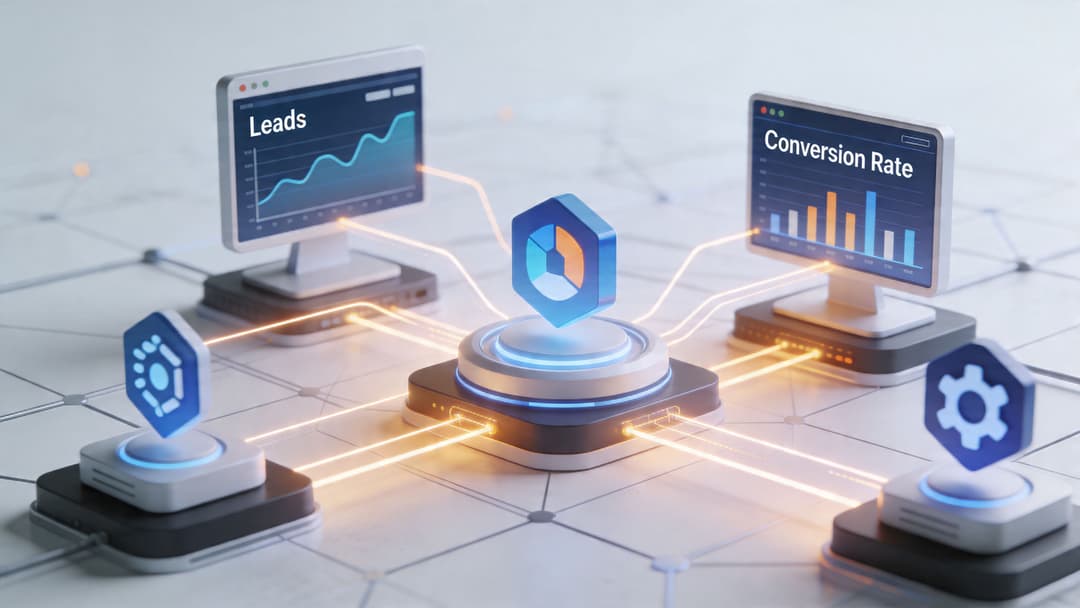
Pixel and CAPI need to work together
Client-side tracking alone isn’t enough anymore. Browser limitations and privacy changes make it too easy to lose signal. That’s why the durable setup pairs the Meta Pixel with the Conversions API.
According to Stape’s Facebook lead ads guide, CRM integration can improve lead quality by 20% to 30%, and using CAPI alongside the Pixel can deliver 95%+ attribution reliability. That matters because optimization quality depends on signal quality. If Meta sees incomplete or delayed outcomes, it learns from the wrong dataset.
For implementation details and platform-level considerations, this guide on Meta Conversions API is a useful reference.
CRM is where lead quality becomes measurable
If your CRM isn’t connected, Meta mostly optimizes to form completion. That’s fine for volume campaigns. It’s weak for serious revenue acquisition.
The important shift is passing downstream outcomes back to the ad platform. Not every lead should carry the same weight. Some become qualified opportunities. Some book meetings. Some disappear. Once that distinction enters the data flow, campaign optimization improves.
A clean stack usually includes:
- Meta Pixel: Captures browser-side actions.
- Conversions API: Sends server-side events for stronger attribution.
- CRM integration: Tells Meta which leads progressed.
- UTM discipline: Keeps source analysis clean inside reporting tools.
- Lead routing automation: Reduces delay between submission and response.
Follow-up speed and automation decide whether lead quality holds
A strong campaign can still underperform if leads sit untouched. That’s not a media buying issue. It’s an ops issue.
Stape’s lead ad guidance also emphasizes a practical process: install tracking before launch, optimize toward conversion-oriented lead goals when possible, build lookalikes from converted customers, test methodically, and follow up quickly after submission. The logic is simple. Better data improves targeting, and faster response improves the odds that intent is still active when your team reaches out.
A lead gen engine is only complete when ad delivery, qualification, and follow-up all share the same feedback loop.
Automation works best after the signal path is clean
Automation doesn’t rescue a bad setup. It amplifies a clean one. Once tracking, CRM feedback, and campaign structure are in place, automation becomes useful for repetitive work: launching variants, ranking audiences, surfacing creative patterns, and reallocating effort toward proven combinations.
That’s the practical sequence. First make the data trustworthy. Then automate around it.
Conclusion From Manual Effort to Automated Success
Strong Facebook lead generation doesn’t come from one trick. It comes from alignment. The funnel has to match the sales motion. The capture method has to match the user’s intent. The audience has to be built from real signals. Creative has to make the exchange obvious. Budget decisions have to reflect actual economics. Tracking has to connect the ad click to the sales outcome.
That’s why so many teams struggle when they run lead generation facebook campaigns manually. Each part can work on its own, but if the pieces aren’t connected, performance stalls. You get leads, but not enough quality. You get data, but not enough clarity. You get tests, but not enough learning.
The durable advantage comes from building a system that learns. When campaign structure, measurement, CRM feedback, and testing discipline all reinforce each other, Meta stops being a channel you constantly wrestle with and starts acting like a reliable acquisition engine.
If your team wants to turn this playbook into an operating system, AdStellar AI is built for that workflow. It connects to Meta Ads Manager, ingests historical performance, generates large batches of creative, copy, and audience combinations, and helps teams test and scale with a tighter feedback loop around CPL, CPA, and ROAS.