Your affiliate program usually breaks before it scales. Sales start coming in from a few creators, an agency partner asks for custom terms, someone edits commissions in a spreadsheet, and payout day turns into a reconciliation project nobody wants to own. At that point, affiliate software is no longer a nice add-on. It is operating infrastructure.
The decision is not whether to keep using links, coupons, spreadsheets, and manual approvals. The decision is which system fits the way your business grows, tracks attribution, and pays partners without creating more admin work. Teams already treating affiliate as part of a broader performance marketing strategy usually reach this point faster, because channel complexity shows up early.
The right choice depends on the business model. E-commerce brands tend to care about quick setup, coupon and SKU-level attribution, and reliable payout automation. SaaS companies usually need recurring commissions, partner onboarding, account-based tracking, and sometimes reseller support. Agencies and larger brands need APIs, approval controls, and reporting that can handle multiple partner types across many accounts.
That is why a flat top-10 list is not enough.
This guide groups affiliate tools by primary use case: Affiliate Networks, SaaS Platforms, and E-commerce Plugins and Lightweight SaaS. That structure makes the trade-offs clearer. Some tools help you recruit from an existing marketplace. Others give you tighter control over tracking, payouts, and workflows inside your own program.
Affiliate Networks
1. impact.com
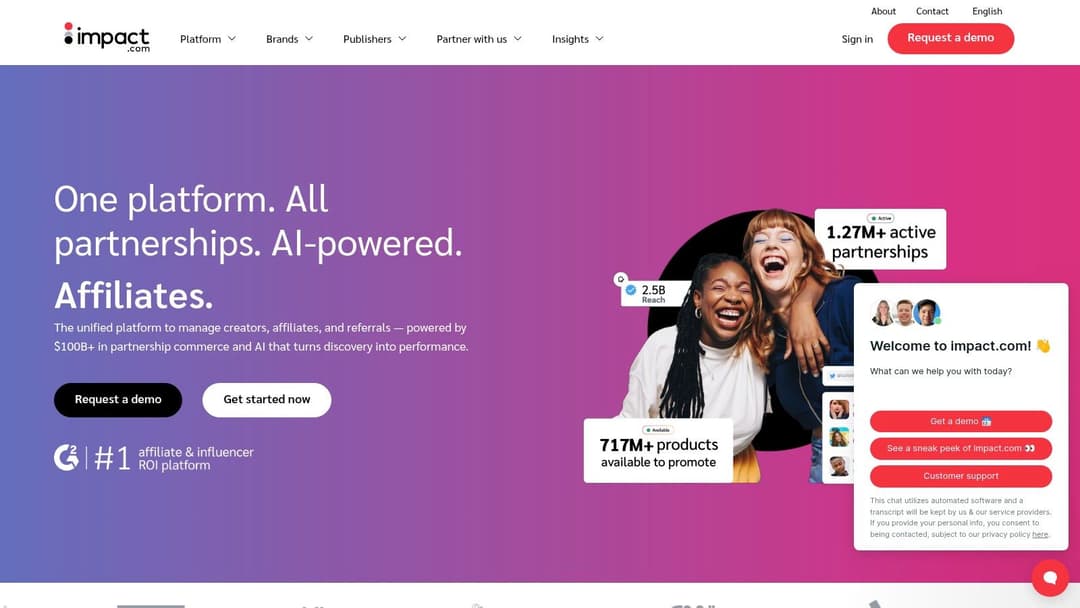
impact.com is what I'd put in front of a team that's already outgrown a basic affiliate program and is now managing affiliates, creators, referrals, and strategic partners in parallel. It's less a simple affiliate tool and more a partnership operating system.
That matters because affiliate software itself has become a sizable category. Credence Research estimates the affiliate marketing software market at USD 12.29 billion in 2024, up from USD 9.45 billion in 2018. Buyers aren't just comparing link tracking anymore. They're comparing governance, attribution depth, reporting, and workflow control.
Where impact.com fits best
impact.com is strongest when your program has exceptions. Different payout rules by partner type. Contract terms that need approval. Mixed models where one partner gets a flat fee and another gets a revenue share. If that sounds like your world, this platform makes sense.
It also works well for teams building a broader performance marketing operating model, not just a standalone affiliate channel.
- Broad partner coverage: You can manage affiliate, influencer, referral, B2B, and app-related partnership motions in one place.
- Flexible commissioning: Complex commission logic is a core strength, not an afterthought.
- Operational controls: Fraud checks, brand-safety tools, contracts, and approval workflows are built for larger teams.
Practical rule: If finance, legal, and growth all need to touch the same partner program, buy a platform that supports that reality from the start.
The trade-off is simple. impact.com can be heavier to implement than merchant-first tools, and smaller teams may end up paying for sophistication they won't use for months.
2. PartnerStack
PartnerStack is one of the clearest fits on this list. If you're a SaaS company running affiliate, referral, and reseller motions together, PartnerStack usually makes more sense than trying to stitch those together across separate systems.
The appeal isn't just tracking. It's partner onboarding, rewards, enablement, and the fact that many B2B SaaS teams don't want an affiliate-only product. They want one place to run the whole partner motion.
Why SaaS teams like it
Recurring commissions are where many generic affiliate tools start to feel awkward. PartnerStack is built with subscription businesses in mind, so it's more natural when you need to connect signups, account value, and long-term partner relationships.
Its marketplace can also help with recruitment, though that's not something I'd treat as automatic pipeline. Marketplace quality always depends on your niche and how compelling your offer is.
- Multi-program support: Affiliate, referral, and reseller programs can live under one roof.
- Onboarding automation: Useful when your team doesn't want to handhold every new partner.
- Native SaaS fit: Better for billing-connected partner programs than many retail-oriented tools.
The downside is that simple programs can feel over-platformed here. If all you need is a coupon code, a link, and monthly payouts, PartnerStack is probably more system than you need.
3. CJ
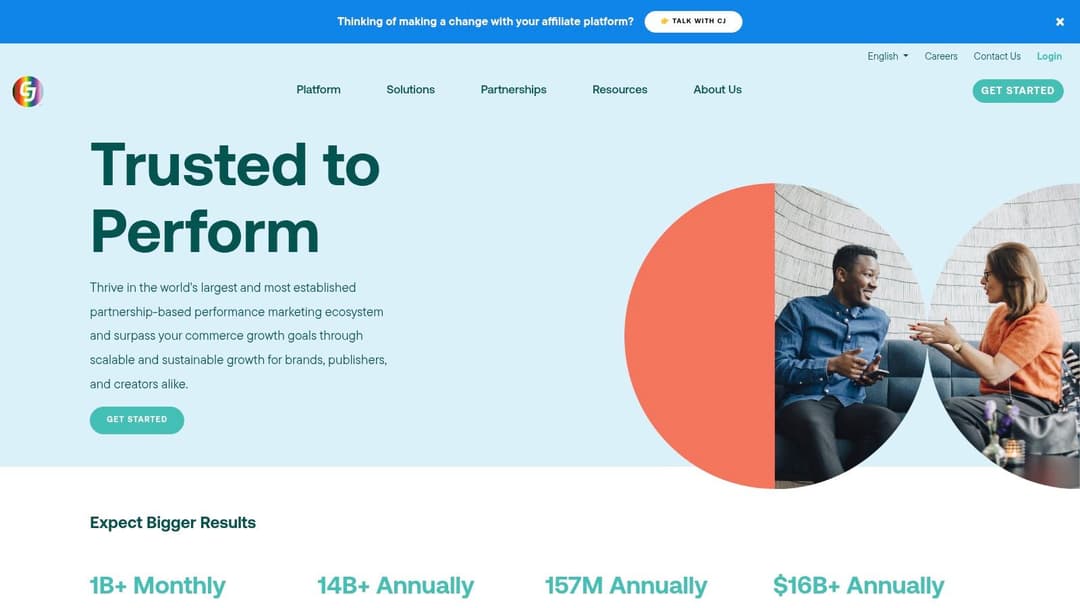
CJ is a network choice for brands that want reach and don't mind working within a more established, process-driven environment. It's one of the names teams often shortlist when they need scale in the U.S. and want access to a deep publisher base.
The practical difference between a network like CJ and a standalone platform is recruitment. With a network, you're not starting from zero. You're buying access to an existing ecosystem of publishers, along with the infrastructure to activate them.
When CJ is the right call
CJ makes sense when your problem is distribution, not just tracking. If your team already knows how to recruit, brief, and optimize publishers, a big network can accelerate growth faster than a merchant-only platform where you have to source every relationship yourself.
It's also useful when your campaigns include editorial placements and more structured activation plans, not only standard affiliate links. That lines up well with teams already thinking carefully about what strong campaign creative actually looks like.
Bigger networks help most when you already have a clear offer, a conversion-ready site, and someone on the team who can manage publisher relationships actively.
The trade-off is accessibility. CJ can feel heavyweight to newer operators, and the sales-led onboarding won't appeal to teams that want to self-serve and launch fast.
4. Rakuten Advertising
Rakuten Advertising has a long history in affiliate, and it still tends to show up in programs where brand quality matters as much as raw network size. If you're in retail, lifestyle, travel, or another brand-sensitive category, Rakuten is often part of the conversation for good reason.
This is not the cheapest or lightest route to market. It's a fit for brands that want network support, premium relationships, and more structured program management.
What stands out
Rakuten is attractive when you want a managed, enterprise-style approach without giving up modern optimization features. Dynamic commissioning and targeting options are especially useful when your margins vary by product line, customer type, or campaign context.
For commerce brands already running paid acquisition, that becomes more valuable because affiliate terms can complement your wider Facebook ads strategy for e-commerce, rather than sit in a separate silo.
- Premium network relationships: Better fit for established brands than for early-stage merchants.
- Migration support: Helpful if you're moving an existing program rather than starting from scratch.
- Enterprise controls: Stronger operational structure than many simpler tools.
Rakuten's main drawback is overhead. Smaller teams can find network processes slow, and if your affiliate motion is still experimental, you may not need this much platform around it yet.
5. Awin
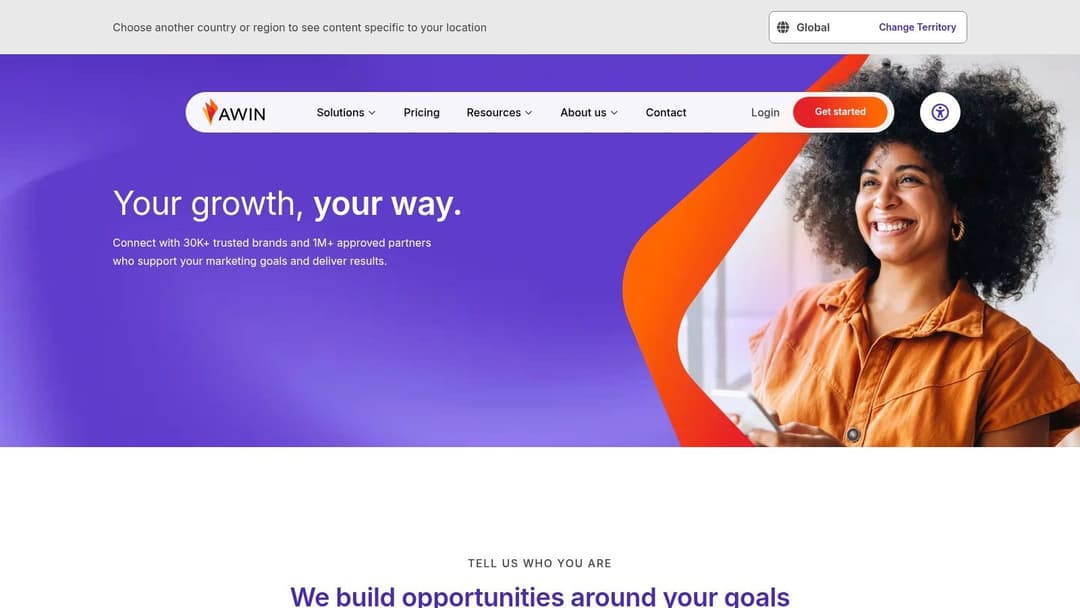
Awin fits brands that have outgrown a local affiliate program and need broader publisher coverage without jumping straight into the heaviest enterprise setup. For e-commerce teams selling across multiple regions, that matters. Awin gives you access to a large international network, established publisher relationships, and enough reporting depth to manage affiliate as a real acquisition channel instead of a side project.
It is especially relevant for merchants with ShareASale history. The overlap between those ecosystems makes Awin a practical option if your team is reviewing legacy program structure, partner quality, and where growth should come from next.
Best use case for Awin
Awin works best for established e-commerce brands that already know affiliate can produce sales and now need scale across markets, publisher types, or promotional models. It is a better fit for a retailer adding voucher, content, loyalty, and cashback partners than for an early-stage SaaS company trying to stand up its first referral motion.
The upside is reach. The trade-off is operational complexity.
If you run a large catalog, seasonal promotions, or country-specific offers, Awin gives you enough control to segment partners and evaluate performance with more nuance than a lightweight plugin. That becomes more useful once affiliate sits alongside paid social, search, and CRM instead of being managed in isolation. Teams that already use data-heavy acquisition workflows often pair affiliate decisions with a broader AI-driven performance marketing setup so commission rules, incrementality checks, and budget shifts are based on actual channel contribution.
One caution: migration can be messy. Teams coming from older ShareASale processes usually need time to rebuild reporting habits, clean up partner terms, and retrain whoever owns day-to-day affiliate operations. If your program is still small, that extra overhead may feel heavy. If you are already managing volume across regions, it is usually a reasonable trade.
SaaS Platforms
6. Refersion
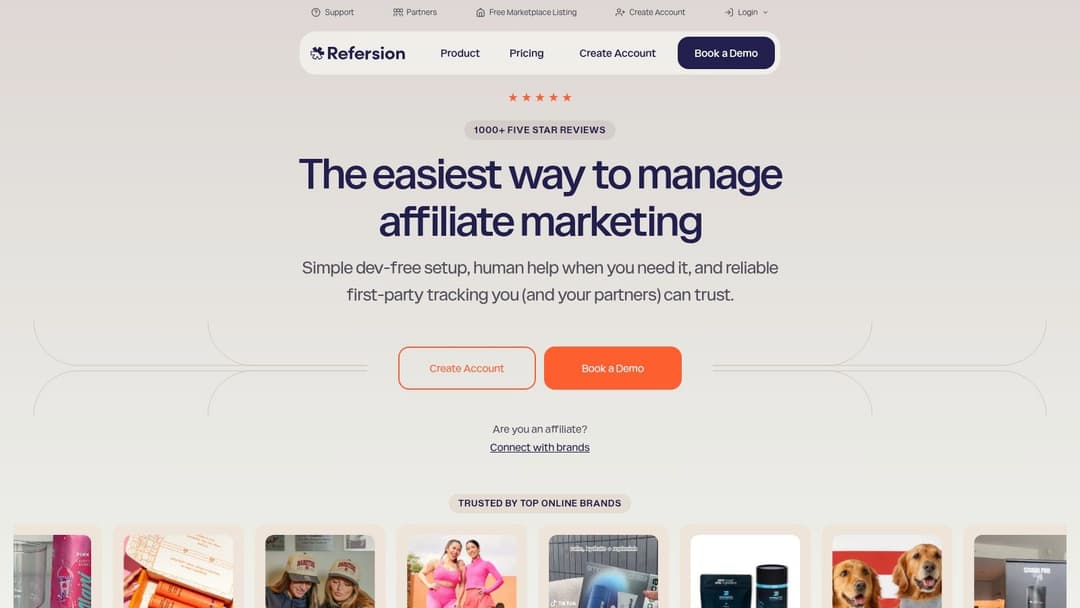
Refersion fits a specific use case well. E-commerce brands, especially on Shopify, use it to get an owned affiliate program live without buying a heavier partnership platform than they need.
That matters if your team is already juggling creator outreach, discount codes, and campaign reporting in separate tools. Refersion gives you one operating layer for applications, approvals, links, coupon attribution, commissions, and payouts.
The appeal is speed. A DTC brand does not need the complexity of a network or the configurability of an agency-grade platform just to manage ambassadors and affiliate partners cleanly. Refersion keeps the core workflow close to how e-commerce teams already work, which usually means less setup friction and fewer handoffs between marketing and ops.
It also works best with the right expectation. Refersion is for running your program, not sourcing partners for you. Brands with an existing customer base, creator roster, or ambassador pipeline usually get more value from it than brands hoping the software will solve recruitment on its own.
A practical setup often includes Refersion for partner operations and separate digital marketing tracking tools for broader attribution across paid, email, and onsite conversion paths.
- Best fit: Shopify and Shopify Plus brands running an owned affiliate or ambassador program
- Core strengths: Fast setup, clear commission management, coupon and link tracking, straightforward payout workflows
- Trade-off: Limited if you need built-in partner discovery, complex multi-channel attribution, or agency-style customization
If you sell physical products and care more about execution than platform complexity, Refersion is usually one of the shorter paths from manual spreadsheet work to a program your team can run consistently.
7. Everflow
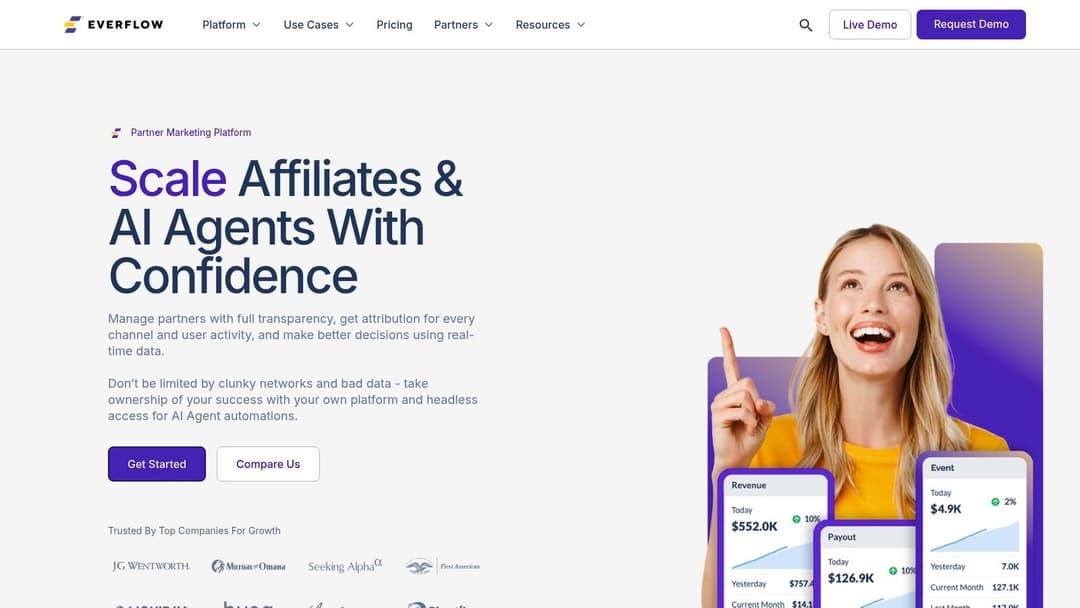
Everflow suits teams that run affiliate as one part of a broader performance engine. If you manage affiliates alongside influencers, media buyers, sub-affiliates, or other partner types, Everflow gives you more control than a lightweight e-commerce tool.
I usually recommend it when partner operations start getting technical. Multiple tracking methods, custom conversion logic, postback handling, and white-label reporting are the signals. Agencies and brands with several acquisition channels often benefit most because they need one system that can support different partner models without forcing everything into a simple affiliate template.
Where Everflow earns its keep
Configurability is the main reason to buy Everflow. Teams can tailor partner portals, reporting views, tracking setups, and integrations to match how the business already operates. That matters if affiliate sits close to paid media, lead generation, or reseller programs rather than inside a standalone e-commerce workflow.
It also fits the broader shift away from relying only on cookies. As noted earlier, tracking infrastructure across affiliate software is moving toward more durable first-party and server-side approaches. Everflow is better aligned with that direction than older tools that still depend heavily on legacy attribution methods.
For teams introducing automation into campaign execution, there's also a practical link between partner reporting and AI-driven performance marketing workflows.
Operating note: Everflow works best when the team already has clean naming conventions, defined conversion events, and someone who owns partner ops day to day.
The trade-off is complexity. Smaller brands can end up paying for flexibility they will not use, and setup tends to require more operational discipline than tools built mainly for Shopify-style affiliate programs. If your business model includes mixed partner types and custom reporting needs, that extra work is usually justified.
8. Partnerize

Partnerize sits firmly in the enterprise lane. It's built for brands that already have meaningful partner revenue and now want more advanced control over commissions, forecasting, and fraud prevention.
That usually means large retail, finance, or travel programs with many exceptions and a lot of internal stakeholders. If you're still validating whether affiliate works at all, this is too much platform.
What Partnerize does well
Dynamic payouts are the headline feature. That's valuable when not every sale deserves the same commission and when you need to tune incentives by product line, margin profile, or partner quality. Forecasting and service support also matter more at that level than many smaller teams expect.
The practical appeal is stability. Enterprise teams often don't just want software. They want workflows, support, and a services layer that helps the rollout stick across regions and teams.
- Complex payout logic: Strong fit for global programs with varied economics.
- Services layer: Useful when implementation touches multiple departments.
- Fraud and forecasting support: Better aligned with scaled programs than lightweight tools.
The trade-off is commitment. Partnerize tends to make sense after affiliate has already become material to the business, not before.
9. Affise
Affise is a useful option when you want a platform with white-label flexibility but don't want every pricing conversation to begin with a sales call. That alone makes it easier to evaluate than many competitors in this category.
It's a good fit for agencies, performance teams, and smaller networks that need postbacks, caps, domains, API access, and payment workflows in one system.
Why Affise makes shortlists
Affise gives teams room to grow without forcing them immediately into the heaviest enterprise stack. White-label support is especially important for agencies that need a client-facing layer without building one from scratch.
It also aligns with a broader workflow shift in affiliate. Research on tool selection highlights that many teams don't just need another platform category. They need a stack built around how they operate, with different mixes for SEO-led, content-led, or paid-social-led models, and that gap is often missed in generic roundups (Hostinger's affiliate marketing tools overview).
That's where Affise is strong. It gives you infrastructure, but still leaves room to tailor the surrounding workflow.
The main drawback is that not every tier includes the same depth, and partner discovery is thinner than what you'd get from a true network.
E-commerce Plugins and Lightweight SaaS
10. FirstPromoter
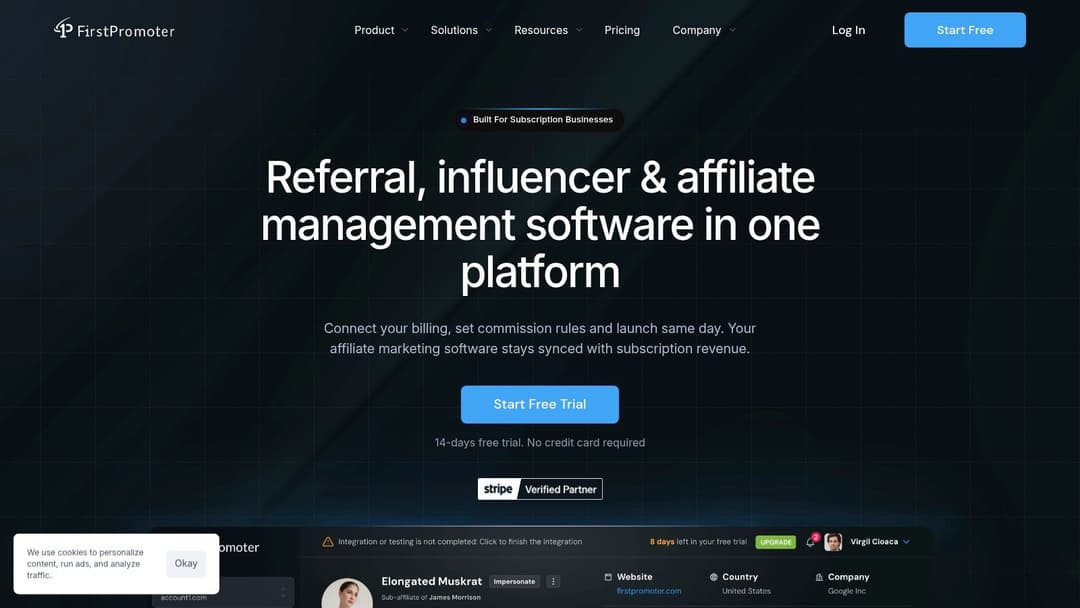
A SaaS founder launches an affiliate program, connects Stripe, and quickly runs into the question. How do you track recurring commissions without building payout logic in spreadsheets or paying for an enterprise platform built for agencies and retail brands? FirstPromoter is one of the cleaner answers.
It works best for subscription companies that want affiliate and referral tracking tied closely to billing events. The appeal is straightforward. Recurring commissions, a branded affiliate portal, and payout workflows are the product, not a side feature buried inside a much larger partner stack.
Best for lean subscription programs
FirstPromoter makes the most sense when your program is narrow by design. SaaS, paid subscriptions, Stripe-centered operations, and a team that wants to get live fast without a long implementation cycle. In that setup, simplicity is a feature, not a compromise.
I'd choose it for an early-stage or mid-market SaaS company that values speed and billing alignment over channel breadth. You get the core mechanics needed to run a partner program that matches monthly or annual revenue. You do not get the depth of a platform built for influencer programs, retail affiliate recruitment, or complex multi-touch partner attribution.
If your commission model follows subscription revenue, clean billing sync usually matters more than having a massive feature set.
The trade-off is clear. FirstPromoter is strong for focused SaaS referral and affiliate programs, but it starts to feel tight once the business adds multiple partner types, regional workflows, or broader partnership motions outside product-led acquisition. At that point, the lightweight setup that helped you launch quickly can become the reason you start looking at a larger platform.
Top 10 Affiliate Marketing Tools, Features & Pricing
| Platform | Core features | Best for | Unique selling point | Price & setup |
|---|---|---|---|---|
| impact.com (Partnership Cloud) | End-to-end partner lifecycle, flexible commissioning, fraud/brand-safety, robust APIs & reporting | Large enterprises running multi-channel partner programs | Broad channel coverage + enterprise governance and controls | Custom pricing; heavier implementation |
| PartnerStack | Multi-program mgmt (affiliate/referral/reseller), partner onboarding, marketplace, native integrations | B2B SaaS & recurring-revenue businesses | Partner marketplace and enablement tailored to SaaS motions | Custom pricing; moderate implementation |
| CJ (Commission Junction) | Large publisher network, placements marketplace, influencer activation support | Brands seeking US scale and retail reach | Established network with strong publisher relationships | Sales-based pricing; onboarding process can be heavyweight |
| Rakuten Advertising (Affiliate) | Premium merchant network, dynamic commissioning, tracking & optimization tools | Mid-market to enterprise retail & lifestyle brands | Access to premium merchants and “Affiliate Intelligence” optimization | Custom pricing; enterprise-focused setup |
| Awin | Global publisher reach, e‑commerce plugins, program analytics & automation | Brands needing international reach and cross-vertical scale | Broad US + global network with modernized integrations | Advertiser pricing via sales; migration/learning curve possible |
| Refersion | On-site partner signup, link/coupon tracking, e‑commerce integrations, payouts workflow | DTC e-commerce (Shopify/Shopify Plus) testing or scaling affiliates | Fast Shopify-friendly launch; pricing tied to affiliate-driven sales | SMB-friendly; quick to launch |
| Everflow | Cross-channel tracking, cohort analytics, white-label portals, robust API | Agencies, networks, and brands needing white-label & deep analytics | Highly configurable platform built for scale and agency use | Sales pricing; setup and taxonomy require discipline |
| Partnerize | Advanced commissioning & dynamic payouts, forecasting, fraud prevention, services | Large global retailers, travel, finance advertisers with complex needs | Enterprise forecasting + services layer for complex programs | Custom pricing; heavier implementation |
| Affise | Performance tracking (postbacks/coupons), white-label, built-in payouts, published tiers | Agencies/networks and SMBs wanting transparent pricing | Clear published pricing + white-label capabilities | Published tiers with caps; scalable by plan |
| FirstPromoter | Recurring commission logic, Stripe/Braintree integrations, branded portals, payouts | Subscription/SaaS companies running recurring referral programs | Simple, focused recurring-commission workflow for SaaS | Lightweight pricing; fast, straightforward setup |
How to Choose the Right Affiliate Marketing Tool
A bad affiliate tool choice usually shows up six months later. Reporting is messy, finance does not trust payouts, partners keep asking basic tracking questions, and the team realizes they bought for features instead of fit.
The right choice starts with your operating model. Decide whether you need partner discovery, tighter control over your own program, or a fast way to launch and test.
If recruitment is the main problem, start with an affiliate network. Networks such as CJ, Rakuten Advertising, and Awin make more sense for brands that want access to established publishers and can support outreach, approvals, and ongoing relationship management. That model fits companies that need scale from the network itself, not just tracking software.
If you already know who your partners are, a SaaS platform is usually the better buy. Refersion, Everflow, Partnerize, Affise, and FirstPromoter are stronger fits when the job is to manage creators, customers, agencies, influencers, or strategic partners you plan to recruit directly. You get more control over branding, workflows, payouts, and data, but you also own recruitment and program operations.
Your revenue model should narrow the shortlist fast.
SaaS companies usually need recurring commissions, clear partner onboarding, and reliable subscription attribution. E-commerce brands usually care more about coupon tracking, SKU or product-level commission rules, return windows, and payout workflows that do not create extra work for finance. Agencies and multi-brand operators tend to care most about API access, client-level reporting, and white-label portals. Those differences shape daily usability more than a long feature checklist ever will.
A practical selection framework
- Choose a network if: You need built-in publisher access and your team is ready to manage partner recruitment and approvals actively.
- Choose a SaaS platform if: You want more control over tracking, branding, and payout logic, and you are prepared to recruit partners yourself.
- Choose a lightweight plugin or focused tool if: You need to launch quickly, validate the channel, and avoid paying for complexity before the program proves itself.
Then pressure-test the tool in three areas: attribution, payouts, and reporting. If attribution rules are hard to explain, payout calculations need manual cleanup, or conversion reporting breaks every time marketing changes campaigns, the software will slow the program down. A cleaner tool with fewer features often performs better than a larger platform your team never configures properly.
One more practical filter helps. Match the tool category to the way your business grows. Marketplace-style brands and established retailers often benefit from network reach. SaaS teams with recurring revenue usually get more value from purpose-built platforms. Shopify brands that want to launch without a long implementation often do better with e-commerce-first tools. That is the difference between software that supports the channel and software your team works around.
From Manual Chaos to Scalable Partnerships
A familiar scenario plays out in growing affiliate programs. One partner asks why last month's conversions dropped. Finance has a payout discrepancy. Marketing is still checking coupon codes against a spreadsheet because attribution changed midway through the campaign. At that point, affiliate is no longer a channel problem. It is an operations problem.
The best affiliate marketing tools fix that operational drag. They give teams a reliable system for tracking, approvals, payouts, and reporting so partnerships can run with the same discipline as paid search, paid social, or lifecycle marketing.
Affiliate is established enough to warrant that level of structure, as noted earlier. The practical takeaway is not that every company needs the largest platform on the market. It is that affiliate deserves software that matches the way the business sells.
For e-commerce brands, that usually means fast setup, accurate link and coupon tracking, and day-to-day usability for a lean team. SaaS companies usually care more about recurring commissions, trial-to-paid attribution, and partner onboarding. Agencies and more complex partner programs tend to need stronger reporting controls, APIs, and white-label options because they are managing multiple stakeholders, not just one storefront.
The tracking side is changing too. First-party attribution, cleaner analytics, and tighter conversion validation matter more as older cookie assumptions become less reliable. Tools that look similar on a feature page can perform very differently once you start reconciling payouts, handling returns, or tracing which partner influenced the sale.
Start smaller than your ambition.
If the current program depends on manual approvals, scattered payout records, and inconsistent attribution, the fix is usually straightforward. Choose the right category first. A network helps if distribution and partner discovery are the main bottlenecks. A SaaS platform makes more sense if control, customization of the surrounding workflow, and reporting depth matter more. A lightweight e-commerce tool is often the right call if the goal is to launch quickly, prove the channel, and avoid enterprise overhead before the economics are clear.
Affiliate software also does not live in isolation. Teams that run affiliate alongside paid social often need creative testing and campaign execution tools such as AdStellar AI, especially when partner traffic and paid acquisition influence the same funnel. This creator-focused 2026 marketing playbook for creators is also a useful companion if the program depends heavily on influencers and content partners.
The goal is simple. Build a setup your team trusts, partners can use without confusion, and finance can reconcile without cleanup work at the end of the month.
If you're scaling paid acquisition alongside affiliate partnerships, AdStellar AI helps teams launch, test, and scale Meta campaigns faster with AI-assisted creative production, audience variation, and performance insights. It also offers an affiliate program for partners who want to refer the platform.