Think of a paid social ad as a smart, digital billboard. But instead of being stuck on a highway for everyone to see, it’s placed right inside a digital neighborhood where your ideal customers hang out. It’s a powerful way to deliver the right message to the right people to drive real results—whether that’s sales, new leads, or just getting your name out there. For any marketer focused on growth, getting this right is no longer optional.
Understanding Your Paid Social Ad Strategy
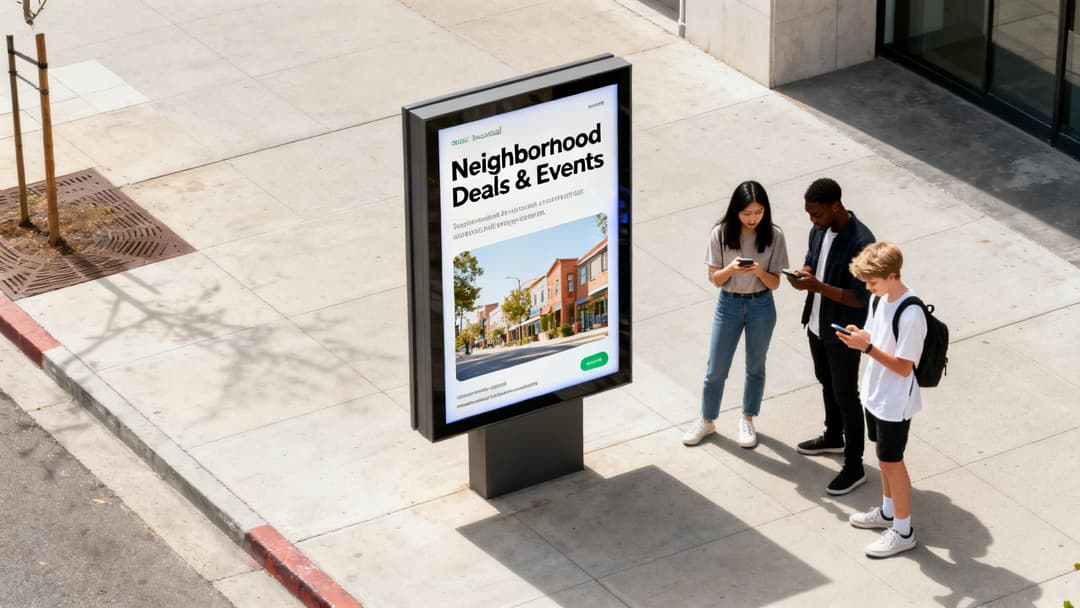
So, what exactly is a paid social ad? You’ve probably heard it called a What is a sponsored post before. At its core, it's a way for brands to pay to play, intercepting users right where they’re already scrolling and spending their time.
This is a huge departure from posting organic content and just hoping the algorithm shows it to your followers. Paid social ads give you control. You pay platforms like Facebook, Instagram, or TikTok to put your content directly into the feeds of very specific groups of people. It turns marketing from a passive game of chance into an active, targeted strategy.
The Core Value of Paid Social Advertising
The real magic here isn't just about reaching more people; it's about reaching the right people with incredible precision. Instead of shouting your message from a rooftop to a random crowd, you get to whisper it directly to the individuals most likely to care. That’s why it’s become an absolute must-have in modern marketing.
Paid ads are an amplifier, not a magic fix. They take what’s already working in your business—your best offers, clearest messages, and most engaged audiences—and scale it. A strong organic foundation is the key to unlocking the true potential of your ad spend.
This move toward precision and scale is shaking up the entire advertising world. In 2024 alone, global spending on paid social ads is expected to hit nearly a quarter of a trillion US dollars. That’s a massive 15% jump from 2023 and represents more than 3 out of every 10 dollars spent on digital advertising.
Why It Matters for Performance Marketers
For e-commerce brands and anyone focused on measurable results, paid social is a direct line to the finish line. The benefits are clear and immediate.
- Precise Audience Targeting: You can move way beyond basic demographics. Target people based on their interests, what they do online, and even how they’ve interacted with your brand before.
- Scalable Growth: Once you find a winning ad and audience combination, you can simply increase your budget to drive predictable growth and revenue. It's a formula you can repeat.
- Direct-Response Objectives: You can optimize your campaigns for the actions that actually matter to your business, like website purchases, lead form sign-ups, or app installs.
By mastering the fundamentals of a paid social ad strategy, you’re building a repeatable system for bringing in new customers. You can learn more about dialing in your approach in our complete guide to targeted advertising on social media.
Choosing the Right Platforms for Your Ads
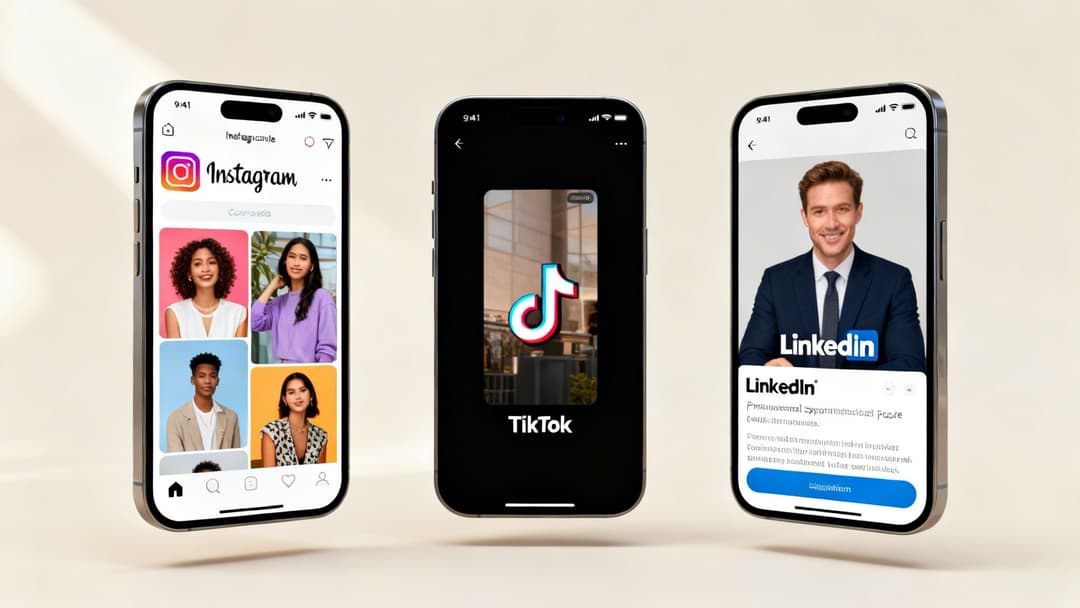
Picking a platform for your paid social ad is a lot like choosing the right tool for a job. You wouldn't use a sledgehammer to hang a picture frame, and you probably shouldn't use LinkedIn to sell trendy streetwear to Gen Z.
Each social platform has its own unique personality, audience, and set of strengths. Getting a handle on these differences is the first real step toward building a winning strategy. Think of it this way: your goal is to show up where your ideal customers are already hanging out and join the conversation in a way that feels natural, not forced.
The sheer scale of these platforms is staggering. By 2025, YouTube is expected to hit 2.53 billion users, with Facebook close behind at 2.28 billion. Instagram and TikTok are also powerhouses, projected to reach 1.74 billion and 1.59 billion users, respectively. With Facebook alone commanding over 25% of all digital ad spend, it’s clear these aren't just social networks anymore—they're essential advertising channels.
Meet the Power Players
To build a smart paid social ad strategy, you have to know the room you're walking into. Every platform caters to a different user mindset and behavior.
- Meta (Facebook & Instagram): This duo is the versatile, all-in-one workhorse. Think of Facebook as the community town hall, perfect for building connections and targeting people based on specific life events. Instagram is the polished art gallery, an absolute must for e-commerce, lifestyle brands, and anything that pops on camera.
- TikTok: Welcome to the loud, fast-paced hub of cultural trends. This is where entertainment, humor, and raw authenticity win. Ads here need to feel like native content—think less commercial, more behind-the-scenes—or you’ll get scrolled past in a heartbeat.
- LinkedIn: This is the professional B2B boardroom. It’s the go-to place for reaching decision-makers, showcasing industry expertise, and generating high-value business leads. The vibe is corporate, but the opportunities are massive.
Matching your ad’s style to the platform's native environment is everything. A beautifully polished carousel ad that crushes it on Instagram might fall completely flat on TikTok, where a lo-fi, user-generated-style video would resonate much more deeply.
Paid Social Platform Comparison Guide
To make it even clearer, here’s a quick-glance guide to help you match your goals with the right platform. Think of this as your cheat sheet for deciding where to spend your ad budget.
| Platform | Primary Audience | Best For (Objective) | Top Ad Formats |
|---|---|---|---|
| Meta (FB & IG) | Broad; Gen X & Millennials (FB), Millennials & Gen Z (IG) | E-commerce Sales, Brand Awareness, Community Building | Image/Carousel Ads, Video Ads, Stories, Reels |
| TikTok | Gen Z & Younger Millennials | Viral Brand Awareness, Engagement, User-Generated Content | In-Feed Video Ads, Spark Ads, TopView |
| B2B Professionals, Decision-Makers, Job Seekers | B2B Lead Generation, Brand Credibility, Professional Networking | Sponsored Content, Lead Gen Forms, InMail | |
| YouTube | Extremely Broad (All Ages) | Top-of-Funnel Awareness, Product Demos, Education | Skippable/Non-Skippable In-Stream Ads, Bumper Ads |
| Predominantly Female, DIYers, Planners | Driving Product Discovery, E-commerce Traffic, Inspiration | Promoted Pins, Video Pins, Idea Ads | |
| X (Twitter) | News Junkies, Tech Crowd, Professionals | Real-Time Engagement, Driving Conversation, Event Promotion | Promoted Ads, Follower Ads, Trend Takeover |
This table simplifies things, but remember that audiences can overlap. The key is to start where your core customers are most active and then expand your reach as you gather data.
Aligning Objectives with Platform Strengths
Your campaign objective—what you actually want to accomplish—is the final piece of the puzzle. These goals usually fall into one of three stages.
- Awareness: The goal is simple: introduce your brand to new people. Platforms with massive reach like Facebook and TikTok are fantastic for this, using video view or reach campaigns to get your name out there.
- Consideration: Now, you want to get people thinking about you. This could mean driving traffic to your website, getting them to watch a longer video, or encouraging comments and shares. Instagram's link stickers in Stories or Facebook's traffic ads are built for this.
- Conversion: This is where you ask for the sale, the signup, or the lead. Meta's conversion campaigns, powered by the Pixel, are incredibly potent for e-commerce. For B2B, nothing beats LinkedIn's Lead Gen Forms, which capture qualified prospects without them ever having to leave the platform.
Nailing this alignment is critical. For a more in-depth look, check out our guide on how to select the right ad platform. When you choose the right venue for your message, you set your paid social ad up for success right from the very beginning.
Building a High-Performing Paid Social Ad Campaign
A winning paid social ad campaign really boils down to two things: creative that actually stops the scroll and targeting that gets your message in front of the right people. Nail both, and you've got a campaign that prints money. Get one wrong, and you're just quietly burning through your budget.
Think of it this way: your ad creative is the bait, and your audience targeting is deciding where to cast your line. The most irresistible bait won't help if you're fishing in an empty pond. And if you're in a stocked lake with bad bait, you'll still come home empty-handed. They have to work together.
Crafting Thumb-Stopping Creative
You’ve got less than two seconds to grab someone's attention in a chaotic social media feed. That’s it. To make those seconds count, we can lean on a classic framework like AIDA, but give it a modern social media spin.
- Attention: You need a hook. A bold visual, a surprising statistic, or a direct question that hits on a real pain point works wonders.
- Interest: Once you have their attention, you have to get to the point fast. What is it, and why should they care? How does your product or service actually solve their problem?
- Desire: This is where you sell the dream, not the product. Show the transformation. Paint a picture of the benefit they’ll get, not just a list of features.
- Action: Be crystal clear. Tell them exactly what to do next. "Shop Now," "Learn More," or "Sign Up"—no ambiguity.
The best paid social ads don't even feel like ads. They feel like a helpful solution, a piece of entertainment, or an interesting discovery that fits right into the feed. Authenticity and genuine value will always beat a hard sell.
Mastering Audience Targeting
While your creative is grabbing eyeballs, your targeting is what makes sure they’re the right eyeballs. Platforms like Meta have some incredibly powerful tools to let you zero in on your perfect customer.
This screenshot from Meta's own resources shows how your campaign objective is tied directly to your audience strategy right from the start.
From the get-go, the platform connects your targeting to your business goals, whether that's building awareness, driving traffic, or making sales.
Here’s a practical breakdown of the three main audience types you'll be working with:
Core Audiences: This is your starting block for finding new people. You can build audiences based on demographics (age, location), interests (pages they like, hobbies), and behaviors (their purchase history, what device they're on). It's perfect for prospecting and reaching people who fit your ideal customer profile.
Custom Audiences: This is how you reconnect with people who already know your brand. Think of it as your warm audience. You can create lists from your website visitors, email subscribers, or people who have engaged with your social posts. This is the engine that drives powerful retargeting campaigns.
Lookalike Audiences: Here’s where the magic happens for scaling. You give the platform a "source" audience—like your list of best customers or people who converted on your site—and its algorithm goes out and finds millions of new users who share similar traits. This is how you find new, high-intent customers at scale.
By layering these audience types, you can build a complete full-funnel strategy. Use Core Audiences for brand introductions, Custom Audiences to nurture leads and retarget interested users, and Lookalike Audiences to find more people like your best customers. If you want to go deeper, check out our guide on structuring your Facebook ad campaigns for the best results.
Measuring The Metrics That Actually Matter
Running a paid social ad campaign without tracking the right numbers is like driving blind. You're definitely moving, but you have no clue if you're actually getting closer to your destination. A data-first strategy is what separates winning campaigns from wasted spend. Let's cut through the noise and focus on the Key Performance Indicators (KPIs) that truly move the needle.
Thinking about your metrics in terms of the marketing funnel gives you a powerful diagnostic tool. It helps you pinpoint exactly where your strategy is crushing it or falling short—from the very first impression all the way to the final sale. This approach turns a confusing spreadsheet of data into a clear, actionable roadmap.
When measured correctly, paid social ads deliver undeniable results. For example, retargeting ads on social platforms can drive 10x higher conversion rates compared to standard display ads. That's a huge performance lift, and it’s why getting your measurement right is so critical for maximizing your returns.
Awareness And Consideration Metrics
At the top of the funnel, the goal is simple: get noticed. You're introducing your brand to a new audience, so the metrics here are all about making that first connection.
- Reach: This is the total number of unique people who saw your ad. It's your audience footprint.
- Impressions: This tells you the total number of times your ad was shown. If your impressions are high but your reach is low, it means the same few people are seeing your ad over and over again.
Once people know you exist, the next question is: do they care? Engagement metrics tell you if your message is resonating enough to get them to take that first small step.
- Click-Through Rate (CTR): The percentage of people who saw your ad and actually clicked on it. A weak CTR is often the first sign that your creative, copy, or audience targeting is off the mark.
- Cost Per Click (CPC): The average price you pay every time someone clicks your ad. This is a core efficiency metric that tells you how much it costs to grab someone's attention.
Conversion: The Bottom-Line Metrics
This is where the rubber meets the road. Conversion metrics tell you if your ad spend is translating into tangible business results. These are the numbers that get your CFO's attention.
Tracking conversions is about more than just counting sales. It’s about understanding the entire customer journey, from the initial ad view to the final purchase. This data is the most valuable asset you have for optimizing future campaigns.
To help you get started, here's a quick look at the most important KPIs, what they tell you, and some general benchmarks to aim for.
Essential Paid Social Ad KPIs and What They Mean
| Metric (KPI) | What It Measures | Why It Matters |
|---|---|---|
| Reach & Impressions | The number of unique people who see your ad (Reach) vs. the total times it's shown (Impressions). | Measures the size and scope of your audience exposure at the top of the funnel. |
| Click-Through Rate (CTR) | The percentage of impressions that result in a click. | Indicates how compelling your ad creative and copy are to your target audience. |
| Cost Per Click (CPC) | The average cost for a single click on your ad. | Helps you understand the cost-efficiency of your campaigns and manage your budget. |
| Conversion Rate | The percentage of ad-clickers who complete a desired action (e.g., purchase, sign-up). | The ultimate measure of how effectively your ad and landing page persuade users to act. |
| Cost Per Acquisition (CPA) | The total cost to acquire one new customer through your campaign. | Determines the profitability of your customer acquisition efforts on a per-customer basis. |
| Return on Ad Spend (ROAS) | The total revenue generated for every dollar spent on advertising. | The definitive bottom-line metric that shows the direct financial return of your ad investment. |
These KPIs are your guideposts for success. The most critical bottom-funnel metrics include:
- Conversion Rate: The percentage of users who clicked your ad and then completed your goal (like making a purchase or filling out a form). This is a direct reflection of how effective your landing page and offer are.
- Cost Per Acquisition (CPA): On average, how much does it cost you to get one new customer? This number tells you whether your campaigns are profitable at a fundamental level.
- Return on Ad Spend (ROAS): This is the big one—how much revenue did you generate for every dollar you spent on ads? To truly understand your campaign's impact, it's essential to calculate Return on Ad Spend (ROAS).
By keeping a close eye on these funnel-specific KPIs, you can build a complete picture of your campaign's health. For an even more detailed look, check out our complete guide on the most important performance marketing metrics.
How AI Can Revolutionize Your Campaign Workflow
Knowing your metrics is just the first step; turning those insights into action at scale is a whole other challenge. Manually assembling, testing, and fine-tuning every paid social ad can leave you buried in spreadsheets—and missing critical chances to grow. Modern AI platforms are changing that by handling the heavy lifting.
Instead of spending days mapping out dozens of ad variations, these tools automate the repetitive tasks. Imagine rolling out hundreds of unique ad combinations—mixing headlines, visuals, and audience segments—in the time it used to take you to launch just a handful. That’s the practical upside of adding AI to your paid social strategy.
This infographic shows the simplified journey your ads must guide customers through, from initial reach to final conversion.
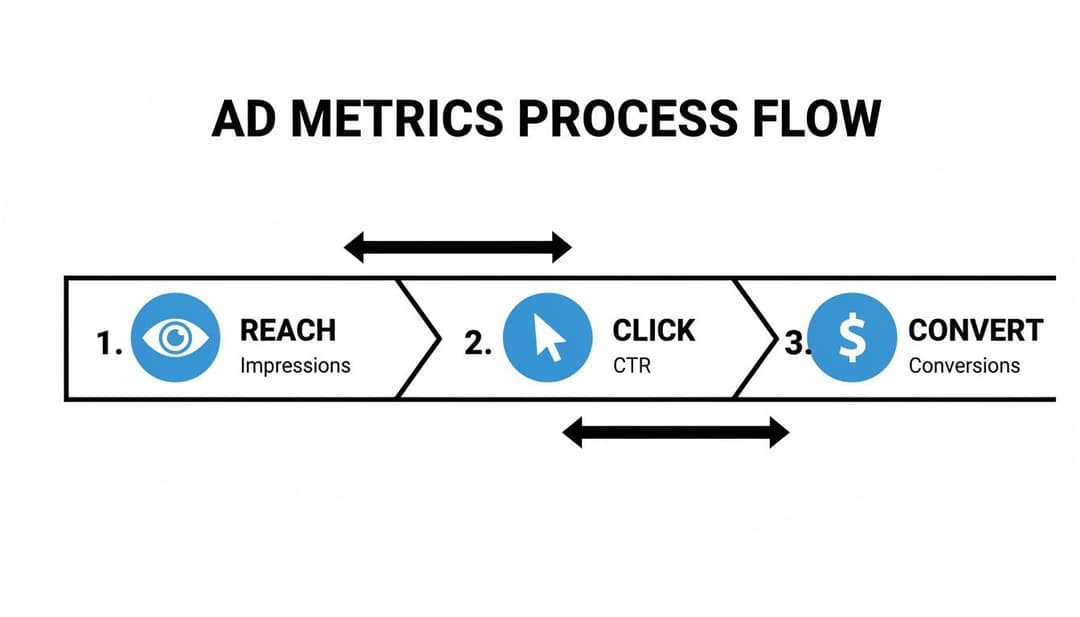
Each stage on this map is an opportunity for AI to speed decisions, uncover patterns, and make sure more people finish the journey.
From Manual Guesswork To Automated Intelligence
The biggest roadblock in classic campaign setups? Too many moving parts. Which creative is driving the highest ROAS? Which audience pool delivers the lowest CPA? Manually crunching those numbers often leads to hunch-driven choices.
Platforms like AdStellar AI connect straight to your historical data, acting like an ever-vigilant analyst that never tires. They spot top performers and hidden opportunities instantly.
- Automated Bulk Ad Creation: Spin up hundreds of ad variants in minutes by mixing visuals, copy snippets, and audience segments automatically.
- Data-Driven Creative Ranking: Let the system sift through CTR, CPA, and ROAS metrics to highlight the assets resonating best with your audience.
- Predictive Audience Matching: Go beyond generic targeting—AI pinpoints which segments will respond most to each creative, boosting relevance and conversions.
With routine tasks handled by automation, you can pivot your energy toward strategy and creative breakthroughs. Learn more about how this intelligence works in our guide on the role of AI for ads.
The New Workflow Scaling Winning Campaigns
The real magic happens when it’s time to scale. Once the system identifies a winning mix—like a specific image paired with a high-value lookalike audience—it can automatically funnel more budget into that winner.
Suddenly, campaign management feels less like dousing fires and more like steering toward success. AI spots winning combinations faster than any human, so you can double down on what works and cut wasted spend right away.
This approach lets you test more ideas, spot winners sooner, and expand your budget with confidence. Your paid social ad setup becomes a self-improving engine, constantly learning from live data. That efficiency doesn’t just save time—it delivers a stronger return on every dollar you invest.
Still Have Questions About Paid Social Ads?
Even when you have a solid plan, getting into the weeds of a paid social ad campaign can bring up a lot of questions. Let's tackle some of the most common hurdles marketers run into, from setting a smart budget to figuring out why a campaign is falling flat. The goal here is to give you the confidence to move forward.
How Much Should I Spend On A Paid Social Ad Campaign?
There's no magic number here, but a great way to find your starting line is to work backward from your goal. Let's say you're after 100 new leads. If your research tells you a good Cost Per Lead (CPL) is around $25, then your starting budget should be $2,500. This way, your spending is tied directly to a real business outcome.
The same logic works for e-commerce. If your product sells for $50 and you need a 4x Return on Ad Spend (ROAS) to be profitable, then your target Cost Per Acquisition (CPA) is $12.50. Many advertisers will dip their toes in the water with a small daily budget—think $20-$50—just to test the waters with different creative and audiences. Once you find a combo that works, you can start pouring more fuel on the fire.
Think of your initial budget as an investment in data, not just sales. The goal of early spending is to learn what resonates with your audience. Once you have that data, you can scale your paid social ad campaigns with much less risk.
This testing phase is absolutely non-negotiable if you're serious about results. It’s how you make sure every dollar goes toward combinations proven to work, instead of wasting it on guesses.
Why Are My Paid Social Ads Not Converting?
When a paid social ad isn't getting conversions, it almost always comes down to a disconnect in one of three places: your audience, your creative, or your offer. The first job is to play detective and figure out where things are going wrong.
Start with your targeting. Are you really talking to the right people? If you started with broad audiences and got nothing, try building a Lookalike audience from your existing customer list. This is a fantastic way to find people with similar traits and often brings in much higher-quality traffic.
Next, take a hard look at the ad itself.
- Is the hook strong? Does it stop someone's scroll in the first two seconds?
- Is the message clear? Can someone instantly grasp the value you're offering?
- Is the call-to-action direct? Do they know exactly what to do next?
Finally, follow the user's journey after the click. You can have the best ad in the world, but if it leads to a slow, confusing, or mobile-unfriendly landing page, you've lost the sale. That path from the ad to the "thank you" page has to be as smooth as possible.
Boosted Posts vs. Ads Manager Campaigns: What Is The Difference?
This one trips a lot of people up, but the difference is critical for getting real results. Boosting a post is the simplified option you see right on your business page. It's great for getting more eyeballs on existing content, but its targeting and objective options are extremely limited.
On the other hand, building a paid social ad campaign through a platform’s Ads Manager is how the pros do it. This unlocks the full toolbox, giving you everything you need to drive serious performance.
Here’s a taste of what Ads Manager gives you that boosting doesn’t:
- Granular Audience Targeting: Go deep with interests, behaviors, custom audiences for retargeting, and lookalike audiences for finding new customers.
- Specific Campaign Objectives: You can tell the platform to find people who are likely to actually convert, generate leads, or install your app—not just people who like and comment.
- Advanced Creative Control: Run proper A/B tests on different images, headlines, and copy to discover what truly drives action.
- Detailed Analytics: Get the real story with data on ROAS, CPA, and conversion rates, so you can make decisions based on numbers, not hunches.
Bottom line: for any goal that involves more than just reach, Ads Manager is the only way to go for a strong return on your investment.
Ready to stop the guesswork and scale your Meta ads with precision? AdStellar AI automates bulk ad creation, identifies winning combinations with AI-powered insights, and helps you launch high-performing campaigns 10x faster. See how AdStellar AI can transform your workflow.