Simply put, placement in advertising is all about where your ad shows up. Think of it like real estate for your brand—a brilliant ad in the wrong place is a billboard in the desert. The location you choose is just as important as the message you're trying to send.
What Placement in Advertising Really Means
Let's ditch the textbook definition for a second. At its heart, placement is the strategic decision of where to intersect with your audience’s attention. It isn't just about sticking a banner on a website or an ad in a social feed; it’s about showing up in the right digital location with a deep understanding of the user’s context, mindset, and what they’re trying to do in that moment.
Picture someone casually scrolling their Instagram Feed on a lunch break. They’re relaxed, browsing, and open to discovering something new. A slick, visually appealing ad can easily grab their attention. Now, imagine that same person on Google, actively typing in "best running shoes." They're on a mission, ready to buy. An ad at the top of the search results serves a completely different, much more direct purpose.
The Shift from Traditional to Digital Real Estate
In the old days, placement was pretty straightforward, but your options were limited. Advertisers had to choose between a primetime TV slot, a full-page magazine spread, or a massive billboard on a busy highway. The audience was huge and mostly anonymous, and measuring impact was often a game of educated guesses.
Today, the digital world is a sprawling map of potential ad spots, and the precision is incredible. Each placement comes with its own unique audience and psychological context:
- Social Feeds: Perfect for grabbing passive attention and building brand awareness.
- Video In-Stream: Great for reaching an engaged audience right before or during content they’ve chosen to watch.
- Search Results: The go-to for connecting with people who have an immediate need.
- Messenger Inboxes: The spot for starting direct, one-on-one conversations with potential customers.
This strategic selection is where modern marketers win or lose. Choosing the right placement doesn't just get your ad seen; it ensures it's seen by the right person, in the right mindset, at the right moment.
Why Mastering Placement Is No Longer Optional
Getting a handle on the nuances of each placement has a direct impact on your bottom line. A smart placement strategy can slash your customer acquisition costs (CAC) and send your return on ad spend (ROAS) through the roof. It’s about spending your budget more efficiently by focusing only on the digital locations that actually drive results.
When you match your ad's message and creative to the context of the placement, you create a more natural, less jarring experience for the user. This makes them far more likely to engage with your ad instead of scrolling right past it, turning simple ad views into valuable actions.
If you want to get into the weeds on how ad views are measured, you can learn more about what social media impressions are and why they matter. Honing this skill is the key to unlocking scalable and profitable advertising campaigns.
Where Your Ads Live: A Guide to Placements on Meta and Beyond
Deciding where to run your ads can feel a lot like choosing a restaurant in a massive city. Do you want the trendy, fast-paced spot downtown or the cozy, familiar neighborhood diner? Each one has a totally different vibe, menu, and crowd. This is your guide to the best digital real estate out there, starting with Meta's huge ecosystem and then zooming out to other key channels.
Think of it this way: your ad is the message, and the placement is the stage where it's delivered. The right stage makes all the difference.
This simple flowchart breaks down how a campaign actually works. The right message, delivered to the perfect placement, is what ultimately drives real results.
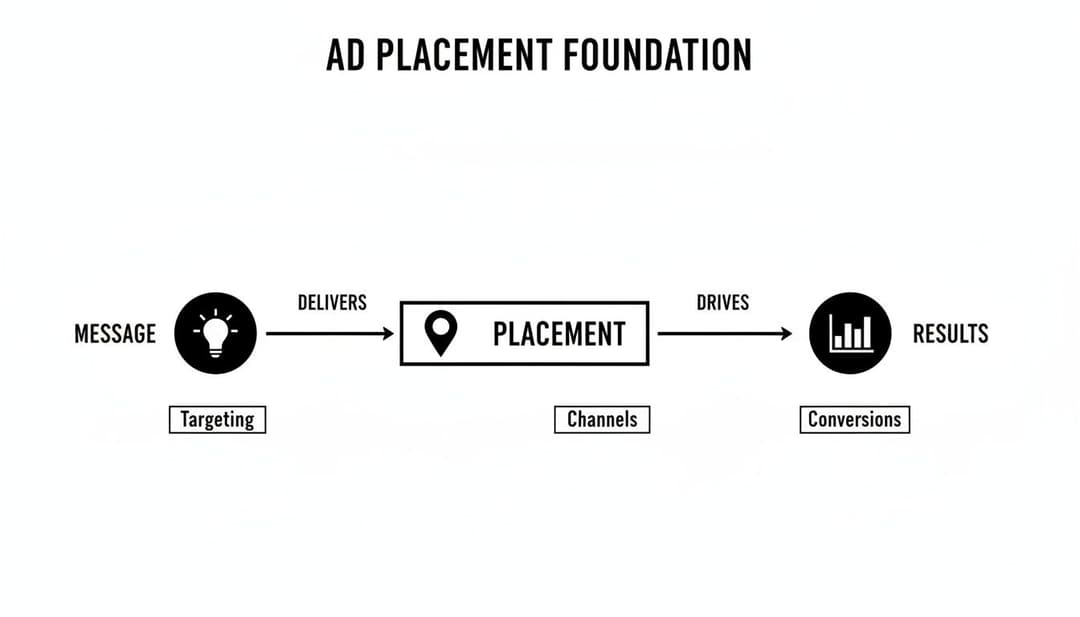
As you can see, placement is the critical bridge connecting your creative idea to your business goals. It’s no surprise the global ad industry has completely rewired its placement strategies over the past few years. Digital channels now pull in 72.7% of all ad dollars worldwide, with online spending rocketing past US$790 billion. That’s a massive jump from just six years ago when digital was less than half of the total spend. It just goes to show how quickly the game has changed.
The Meta Universe: A Tour of Key Placements
Meta’s platforms are packed with different ad placements, and each one has its own personality. Getting to know them is the first step to spending your ad budget wisely.
1. Feeds (Facebook and Instagram)
Think of the Feed as the bustling town square of social media. People are here to casually scroll, catch up with friends, and see what’s new. They're in a discovery mindset. Ads in the Feed feel native and blend right in, making them perfect for telling a story, showing off a product, or driving traffic to your site.
2. Stories & Reels (Instagram, Facebook, and Messenger)
This is the high-energy entertainment district. The content is full-screen, vertical, and immersive—it's designed to grab your attention now. These placements are killer for top-of-funnel brand awareness. You can capture someone's interest instantly with a visually punchy video. To really nail this format, check out our guide on the ideal video size for Facebook ads.
3. In-Stream Video (Facebook and Audience Network)
In-Stream ads are basically the commercial breaks for videos people chose to watch. They pop up before, during, or after the main content. Since you have a captive audience that's already leaned-in and watching, this placement is fantastic for building brand recall and getting people to consider your offer.
4. Messenger
Messenger is your direct line to the customer. Ads can show up in the main inbox as Sponsored Messages, or you can prompt a conversation when someone clicks a "Send Message" button on another ad. It's a powerhouse for bottom-of-funnel activities like nurturing leads, offering support, and closing deals through one-on-one chats.
The smartest Meta strategies don't just pick one placement and call it a day. They build a journey. A customer might first discover your brand in a flashy Reel, then see a more detailed carousel ad in their Feed a day later, and finally buy after a quick chat started from a Messenger ad.
To help you keep it all straight, here’s a quick-reference guide to the top placements in the Meta universe. It breaks down what each one is best for, what kind of creative works, and what the user is likely thinking when they see your ad there.
Meta Ad Placement Comparison Guide
| Placement Category | Best For (Objective) | Supported Formats | User Context/Mindset |
|---|---|---|---|
| Feeds | Driving Traffic, Conversions, Engagement | Image, Video, Carousel, Collection | "Lean-back" discovery, catching up, browsing |
| Stories & Reels | Brand Awareness, Reach, Video Views | Vertical Video, Image, Carousel | "Lean-in" entertainment, quick, immersive |
| In-Stream Video | Brand Awareness, Consideration, Video Views | Video (5-15 seconds recommended) | Captive audience, engaged in watching specific content |
| Messenger | Lead Generation, Conversations, Re-engagement | Image, Video, Carousel (Click-to-Messenger) | High intent, direct communication, problem-solving |
| Audience Network | Reach, Traffic, Conversions | Image, Video, Native | Browsing partner apps/sites, goal-oriented |
This table makes it easier to see how each placement serves a different purpose. Mixing and matching them based on your campaign goals is where the real magic happens.
Beyond Meta: Exploring Other Essential Channels
Meta is a beast, but a strong placement strategy looks beyond its walls. Diversifying across other high-impact channels gives you a more resilient and effective marketing mix.
Google Search: This is the ultimate high-intent channel. You aren’t trying to create demand; you’re capturing it. Your ad shows up at the exact moment someone is actively looking for what you sell. It’s an invaluable placement for driving direct sales and qualified leads.
YouTube: As the world's second-biggest search engine, YouTube gives you access to a massive and highly engaged audience. You can run anything from skippable in-stream ads to shorter pre-roll spots and discovery ads, giving you flexibility for everything from big brand awareness plays to direct-response campaigns.
Retail Media Networks (Amazon, Walmart, etc.): Think of this as getting the premium end-cap display in a digital store. Ads on these platforms hit shoppers right at the point of purchase. With access to rich first-party purchase data, the targeting precision for e-commerce brands is just incredible.
By understanding the unique context of each of these digital locations, you can move from just "running ads" to building a truly strategic presence. When you’re thoughtful about where your message appears, you ensure it always lands with maximum impact, turning your ad spend into a powerful engine for growth.
Connecting Your Creative to High-Performing Placements
Strategy and execution come together at a critical junction: the intersection of your creative assets and your choice of placement in advertising. It sounds simple, but this is where so many campaigns fall flat.
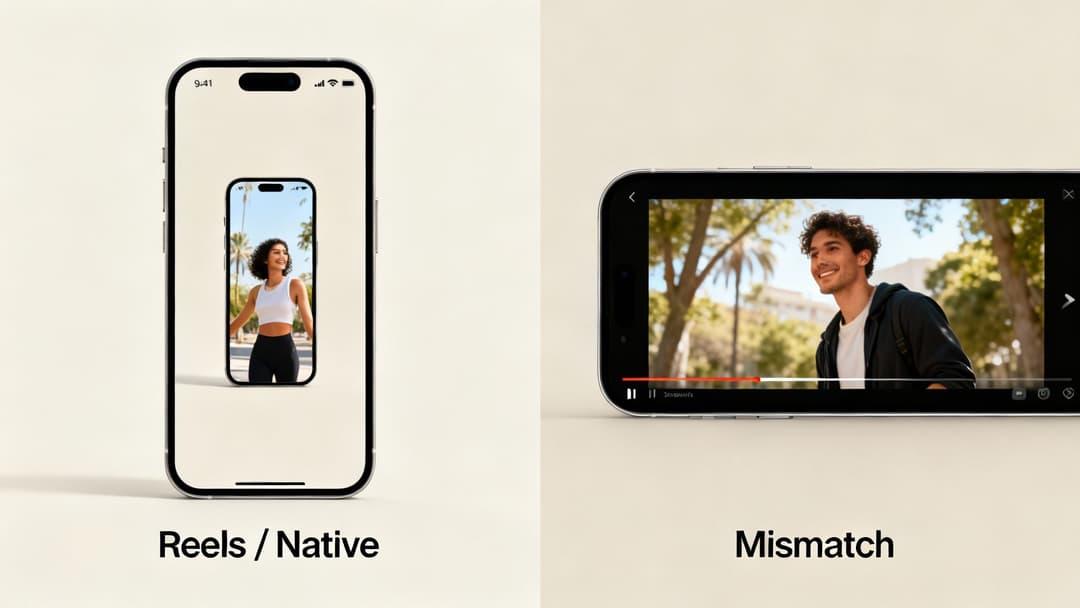
Think about it. A stunning, fast-paced vertical video might be an absolute knockout in Instagram Reels. But that same video will feel clunky and out of place if you shove it into a horizontal in-stream video spot. It’s like trying to fit a square peg in a round hole—it just doesn't work.
This is where the details matter, big time. A great ad feels native to its environment. It complements the user experience instead of rudely interrupting it. When you align your creative perfectly with its placement, your ad becomes a welcome piece of content, not an annoying intrusion.
Tailoring Creative for Specific Placements
One of the most common—and costly—mistakes advertisers make is adopting a one-size-fits-all approach to creative. To get this right, you have to think about two things for each placement: the technical specs and the user's mindset.
Feeds (Facebook & Instagram)
Users scroll through Feeds at their own pace, making it a great spot for more detailed creative that tells a bit more of a story.
- Aspect Ratio: Stick to 1:1 (square) for images and 4:5 (vertical) for videos. They simply take up more screen real estate and grab more attention.
- Video Length: You can go longer here, but videos under 60 seconds almost always hold attention better.
- Text: You’ve got space for primary text, a headline, and a description. Use it. Tell a compelling story or lay out a crystal-clear offer.
Stories & Reels (Instagram & Facebook)
This is a totally different ballgame. It's a fast, full-screen, sound-on world. Your creative needs to be instantly captivating or it's gone with a flick of a thumb.
- Aspect Ratio: Always, always use a 9:16 full-screen vertical format. Anything else will have those ugly, distracting black bars.
- Video Length: Keep it short and sweet. Aim for 15-30 seconds, and make sure you grab attention in the first three.
- Text: Keep on-screen text minimal and place it within the "safe zones" so it isn't covered by the platform's UI. Better yet, use interactive elements like polls and stickers to pull people in.
Think of your ad creative as a chameleon. It should adapt its colors and patterns to blend seamlessly into its surroundings. An ad in Reels should feel like a Reel, not a repurposed TV commercial.
How Placement Directly Impacts Your KPIs
Your choice of placement doesn't just affect how your ad looks; it has a direct, measurable impact on your key performance indicators (KPIs). Different environments encourage different user behaviors, and you'll see it plain as day in your data.
For example, click-through rates (CTRs) are often naturally higher in Feed placements. Why? Because users are in a browsing, discovery mode, making them more inclined to click on something that piques their interest. One study of thousands of ads found that Facebook Feed ads consistently delivered higher CTRs compared to right-column placements. No surprise there.
On the other hand, placements closer to a point of purchase, like Facebook Marketplace or ads that open up a Messenger conversation, can often produce higher conversion rates. In these spots, users frequently have stronger commercial intent. They're already thinking about buying, so they move from consideration to action more quickly.
Mastering Creative Alignment for Better Results
To truly master placement, you have to connect your creative strategy to your placement decisions from the very beginning. This means designing assets with their final destination in mind, not treating it as an afterthought.
Here’s a practical way to approach it:
- Group Placements by Format: Instead of getting lost in individual placements, group them by their creative requirements. Think in terms of a "Vertical Group" (Stories, Reels) or a "Square Group" (Feeds).
- Customize Your Message: The hook for a 15-second Reel ad has to be punchier and more direct than the narrative you might build in a longer Feed video. Your messaging needs to match the user's attention span in that placement.
- Use Asset Customization: Inside your ad platform, use the tools available to you. Features like Meta's Asset Customization let you upload different creative versions for different placement groups, making this whole process much easier.
By tailoring your visuals and messaging, you create a more coherent and effective user journey. This is a core principle behind some of the most powerful advertising techniques out there. To get a better handle on this, check out our guide on what is Dynamic Creative Optimization and see how it helps automate this process.
Ultimately, connecting your creative to the right placements is all about respecting the user's context. When you deliver an ad that feels right for the moment, you’re not just optimizing for clicks—you’re building a better brand experience that drives real, sustainable growth.
A Practical Framework for Ad Placement Testing and Optimization
Stop guessing where your ads should run. It’s time to start making decisions backed by real data. Building a winning campaign isn’t about stumbling upon one perfect placement in advertising; it's about creating a system to constantly discover what works best. This framework will help you move from uncertainty to confidence, making sure every dollar you spend is working as hard as it can for you.
The first big choice you’ll face is whether to use Meta’s automated option, Advantage+ Placements, or to manually pick each spot yourself. Honestly, there's a time and a place for both approaches.

Advantage+ Placements Versus Manual Selection
Think of Advantage+ Placements as handing your keys to a professional driver. Meta's algorithm is incredibly good at scanning its entire network to find the cheapest, most effective impressions for your goal, whether that's conversions or leads. For most advertisers, especially when you're just kicking off a new campaign, this is the smartest way to go.
But sometimes, you need to take the wheel. Going manual makes sense in a few specific scenarios:
- Creative Constraints: If your ad is a 9:16 vertical video designed specifically for Reels, forcing it into a square Feed placement is going to look terrible and tank your performance.
- Strong Historical Data: Got solid numbers showing that a couple of key placements consistently knock it out of the park for your brand? It makes sense to focus your budget right there.
- Brand Safety Needs: If you absolutely cannot have your brand appear in certain environments, like the Audience Network, manual selection gives you that crucial control.
For many of us, the best strategy is actually a hybrid. Start broad with Advantage+ Placements to see what sticks, then use the data you gather to refine your approach over time.
Building Your Systematic Testing Plan
A structured testing plan turns random ad spend into a powerful feedback loop. Instead of treating every placement as equal, your goal is to identify the stars and ruthlessly cut the underperformers.
Here’s a simple, repeatable process to get you started:
- Launch Broadly: Kick off your campaign with Advantage+ Placements turned on. This lets you gather baseline performance data across the whole network.
- Set a Check-in Cadence: Don't just "set it and forget it." Plan to review your placement performance after a set time, like 7 or 14 days, once you have enough data to make a call.
- Dive into the Breakdown: Head over to Meta Ads Manager and use the "Breakdown" tool. Select
By Delivery > Placementto see exactly how each individual spot—from Instagram Feed to Facebook In-Stream—is performing. - Identify Winners and Losers: Look at your key metrics, like ROAS or Cost Per Acquisition (CPA), for each placement. You're searching for placements that are eating up your budget without delivering results.
Your goal isn't just to find what's working, but to be ruthless about eliminating what isn't. Every dollar moved from a low-performing placement to a high-performing one directly improves your overall campaign efficiency.
Analyzing Data and Allocating Budget
Once you have this performance data, the real optimization begins. If you find that Instagram Stories are driving 80% of your conversions at half the cost of other placements, that’s a massive signal to double down there. On the flip side, if the Audience Network is spending money but bringing in zero conversions, it's time to cut it loose.
This is a cycle of continuous improvement. The insights from one test should directly inform how you allocate your budget and what kind of creative you run next. This iterative method is at the heart of other powerful testing strategies. To go deeper on this, check out our detailed guide on what is multivariate testing and see how you can apply it to your own campaigns.
To really sharpen your placement strategy and get a leg up, diving into a good competitor ad analysis playbook can be a game-changer. Seeing where your competitors are winning can help you spot opportunities and avoid making costly mistakes yourself. When you combine your own internal data with smart market intelligence, you build a tough, adaptable placement strategy that consistently gets results.
Automating Your Placement Strategy with AdStellar AI
Building a solid testing framework is a game-changer, but it quickly shines a light on the biggest bottleneck any growth team faces: the sheer amount of manual work. Sifting through data, building campaigns, and analyzing hundreds of placement tests takes hours, if not days.
This is where the real leap happens—bridging proven testing principles with the raw speed of automation. If you're ready to scale your winning strategies without the grunt work, AdStellar AI is built to automate this entire workflow, turning a multi-day grind into minutes.
From Manual Grind to Automated Growth
Imagine taking hundreds of creative, audience, and copy variations and launching them across distinct placement groups with just a few clicks. That’s exactly what AdStellar AI was designed to do. Instead of painstakingly building each ad set one by one, you can unleash a massive volume of tests all at once.
This lets you gather performance data at a scale that leaves the competition in the dust. The platform handles the complexity of testing every variable—from headlines and images to audiences and, crucially, placements—so you can finally step back from the setup and focus on strategy.
The goal here isn't just to make small, incremental improvements. It's to unlock exponential learning. By testing more combinations across more placements, you uncover those winning formulas that would have stayed hidden in smaller, manual tests.
This approach is especially critical in fast-growing channels like retail media. For instance, online retailers pulled in over US$167 billion from ad placements on their own platforms, and that number is projected to hit US$231 billion by 2025. Businesses spent over US$650 billion on programmatic placements in this space—a 12% yearly jump—because automation is the only way to scale effectively.
The AdStellar AI dashboard gives you a clean, centralized view for both creating campaigns and analyzing what works.
This is what replaces the messy spreadsheets and hours of manual setup, giving you a streamlined workflow for testing and scaling your best ads.
Let AI Find Your Top-Performing Placements
The real magic kicks in once your tests are live. AdStellar AI’s Insights engine starts crunching the numbers from your campaigns automatically. It completely removes the guesswork by identifying and ranking your top-performing placements based on the goals you actually care about.
- ROAS-Driven Insights: See exactly which placements are delivering the highest return on ad spend.
- CPA/CPL Optimization: Pinpoint the placements generating leads or sales at the lowest cost.
- Creative Intelligence: Discover which ad visuals and copy truly connect with audiences in each specific placement.
The system essentially automates the "Analyze and Allocate" step of your testing framework. Instead of getting lost in Ads Manager breakdowns, you get clear, actionable recommendations telling you exactly where to double down and where to pull back. You can see more on how the platform manages this with our features for AI-powered ad optimization.
As you bring automation into your placement in advertising strategy, you also need to think about brand safety. To avoid damaging your brand's reputation, it's crucial to understand the importance of controlling AI output for brand safety and make sure your automated systems align with your brand values. By combining smart automation with strategic human oversight, you build a placement strategy that’s not just efficient but also safe and effective—giving you an unbeatable edge.
Your Top Ad Placement Questions, Answered
Even the sharpest marketers run into questions about ad placements. Let's tackle the most common sticking points head-on, giving you direct answers to help you troubleshoot campaigns and make smarter decisions.
Should I Use Advantage+ Placements or Choose Manually?
For most advertisers, especially if your goal is conversions, starting with Advantage+ Placements is the right move. Think of it as casting a wide net. Meta's algorithm is incredibly good at fishing in every corner of its network to find low-cost opportunities you'd probably miss on your own.
That said, manually picking your placements is definitely the way to go in a few key situations:
- Your creative is hyper-specific. If you’ve designed a slick vertical video just for Reels, letting the system cram it into a horizontal in-stream spot is going to kill your performance and look sloppy.
- You have rock-solid historical data. If your own numbers scream that certain placements are pure gold for your audience, it makes perfect sense to double down and focus your budget there.
- Brand safety is non-negotiable. If you need tight control over where your ads show up, manual selection lets you steer clear of entire categories, like the Audience Network, that might not fit your brand image.
Often, the best strategy is a hybrid. Start broad with Advantage+ to let Meta gather data. Then, dive into your performance reports and start manually cutting the placements that are consistently burning cash.
How Do I Know Which Placements Are Actually Working?
The proof is waiting for you right inside your ads platform. In Meta Ads Manager, the "Breakdown" menu is your secret weapon for figuring out what’s really going on with your placements. It’s how you turn a mountain of data into a handful of smart decisions.
It’s simple to use. Just pick the campaign or ad set you want to dig into, click "Breakdown," and then choose By Delivery > Placement.
This one report is your window into what's truly driving results. It will show you every key metric—from ROAS and Cost Per Acquisition (CPA) to Click-Through Rate (CTR)—for each individual spot, from the Instagram Feed to Facebook Stories.
Keep an eye out for placements that are bringing in high-value conversions at a cost that makes sense. At the same time, you need to spot the ones that are just eating your budget with nothing to show for it. This kind of analysis is the bedrock of good optimization. Of course, tools like AdStellar AI can automate this entire deep dive, flagging these insights so you can act fast without getting lost in spreadsheets.
What Are the Most Common Placement Mistakes to Avoid?
I see the same three mistakes tanking campaign performance over and over again. Nailing your placement in advertising strategy means sidestepping these common pitfalls.
The "One-Size-Fits-All" Creative Trap: This is the number one error. You can't just force a single square image into every single placement. When that square asset gets shoehorned into a vertical Story, it looks jarring and amateurish, screaming "I'm an ad that doesn't belong here!" Always, always tailor your assets to feel native to their environment.
Ignoring User Context: A deep, complex ad that needs a user's full attention is destined to fail as a five-second, skippable in-stream video. That same ad, however, might do brilliantly in the Facebook Feed, where people scroll at their own pace and are more open to engaging with detailed content. Mismatching your message's complexity with the user's attention span is a surefire way to waste money.
"Setting and Forgetting" Advantage+ Placements: The algorithm is smart, but it's not infallible. Just turning on Advantage+ and walking away is a mistake. You have to get in there and regularly check your placement data to find and cut the spots that are quietly draining your budget on low-quality traffic.
By steering clear of these issues, you’re setting your campaigns up to run more efficiently and ensuring your budget goes toward the placements that deliver real, measurable results for your business.
Ready to stop guessing and start scaling? AdStellar AI automates the entire process of testing, analyzing, and optimizing your ad placements. Launch hundreds of creative and audience tests across every placement in minutes, and let our AI find your winning combinations 10x faster. Learn more and transform your Meta advertising at AdStellar AI.