In a world often dominated by expensive ad campaigns, the idea of meaningful small business free advertising can feel like a myth. For founders, marketers, and bootstrapped teams, however, it's a critical reality. Growing a business does not always require deep pockets; it demands strategy, creativity, and a relentless focus on creating value. The challenge isn't a lack of funds, it's knowing where to invest your most valuable asset: your time.
This guide moves beyond generic advice like 'post on social media' and dives into an actionable playbook. We'll break down 10 proven tactics, complete with step-by-step implementation, effort versus impact analysis, and key metrics to track your success. You will learn not just what to do, but how to execute it effectively, turning your efforts into a powerful, cost-free customer acquisition engine.
We will explore everything from mastering organic search and building a loyal community to forging strategic partnerships and generating authentic buzz. Each tactic is designed to build a sustainable foundation for growth, giving you the momentum needed to scale smart. Let's get started.
1. Social Media Organic Content & Community Building
Organic social media is more than just posting updates; it's about creating a direct, non-paid line of communication with your audience. This method of small business free advertising involves consistently sharing valuable content and actively engaging with followers to build a loyal community. By creating posts, stories, and reels on platforms like Instagram, TikTok, or LinkedIn, you establish brand awareness and trust without spending on ads.
The goal is to become a go-to resource, not just a seller. For instance, Grammarly built its B2B authority by sharing helpful writing tips on LinkedIn, while beauty brand Glossier fostered a massive following by prioritizing user-generated content and authentic engagement on Instagram.
Actionable Steps for Implementation
To get started, focus on consistency and value. A sporadic posting schedule won't build momentum.
- Content Pillars: Define 3-5 core topics your audience cares about that are related to your business. This keeps your content focused and relevant.
- Consistent Posting: Aim for a minimum of 3-5 posts per week. Use platform-native features like Instagram Reels or LinkedIn carousels, as algorithms often favor them.
- Authentic Engagement: Spend time daily engaging with other accounts. Comment thoughtfully on posts from potential customers or complementary brands to increase your visibility.
- Build a Community: Consider creating a dedicated space like a free Facebook Group or Discord server. Amy Porterfield's free group, for example, serves as a powerful funnel for her paid courses by providing immense value first.
When to Scale to Paid Ads
Monitor your organic analytics closely. When you identify a post that achieves unusually high engagement or drives significant website clicks, you have found a winning concept. This is the perfect signal to amplify its reach. You can repurpose this proven content into a paid campaign to get it in front of a much larger, targeted audience. For a deeper dive into platform specifics, you can find detailed guidance on how to promote your brand on Instagram.
2. Search Engine Optimization (SEO) & Organic Search
Search Engine Optimization (SEO) is the practice of refining your website and content to rank higher in organic search results on engines like Google. This form of small business free advertising focuses on attracting high-intent visitors who are actively looking for the products or services you provide, driving consistent and long-term traffic without a per-click cost.
The primary objective is to signal to search engines that your website is the most relevant and authoritative answer to a user's query. For example, HubSpot’s inbound marketing blog dominates thousands of keywords by creating exhaustive guides, while Ahrefs built its brand by producing industry-leading SEO content that ranks for highly competitive terms, establishing them as an authority and driving product sign-ups.
Actionable Steps for Implementation
Effective SEO is a long-term commitment to providing value and meeting technical standards. It requires a methodical approach to content and site structure.
- Target Long-Tail Keywords: Focus on specific, multi-word phrases (e.g., "handmade leather wallet for men") that have lower competition but higher purchase intent.
- Create Pillar Content: Develop comprehensive, in-depth articles (often 3,000+ words) that thoroughly cover a core topic. This positions you as an expert and attracts backlinks.
- Build Internal Links: Create a logical web of links connecting your related content. This helps search engines understand your site’s structure and distributes authority across your pages.
- Prioritize E-E-A-T: Demonstrate your Experience, Expertise, Authoritativeness, and Trustworthiness. Include author bios, cite credible sources, and display customer reviews or case studies.
- Use Free Tools: Regularly check Google Search Console to find which keywords your site is ranking for and identify "low-hanging fruit" opportunities to improve your position.
When to Scale to Paid Ads
Your SEO efforts provide invaluable data for paid strategies. When you see a blog post or landing page consistently ranking on the first or second page of Google and generating steady organic traffic and conversions, you have a proven asset. This is a clear indicator to create a Google Ads campaign targeting the same keywords. By running ads for terms you already rank for, you can dominate the search results page, capturing both organic and paid clicks and significantly increasing your visibility and lead flow.
3. Email Marketing & Newsletter Distribution
Building an email list gives you a direct, unfiltered communication channel to an audience that has already expressed interest in your brand. Unlike social media, this form of small business free advertising isn't subject to algorithmic changes, ensuring your messages land directly in subscribers' inboxes. It is an owned asset that builds deep, long-term customer relationships.
The power of email is evident in its success across industries. B2B SaaS company Drift nurtures leads through targeted email sequences, while creators on platforms like Substack build entire businesses by delivering exclusive content directly to their audience. For some brands, like Retention.tech, email is the primary engine, reportedly driving over 70% of company revenue.
Actionable Steps for Implementation
Success in email marketing hinges on providing consistent value and respecting your audience's inbox.
- Create a Lead Magnet: Offer something genuinely useful in exchange for an email address. This could be a checklist, a template, a short guide, or a discount code. The goal is to make the exchange feel like a clear win for the subscriber.
- Set Up a Welcome Sequence: Automate a series of 3-5 emails for new subscribers. Use this sequence to introduce your brand, set expectations for future content, and deliver immediate value or your lead magnet.
- Segment Your List: Don't send the same message to everyone. Create segments based on user behavior, such as past purchases, links clicked, or engagement levels. This allows for more personalized and effective communication.
- Focus on the Subject Line: Rigorously test your subject lines. Use personalization with the subscriber's name, create a sense of urgency, or ask a compelling question to boost open rates. Sending from a person's name (e.g., "Sarah from [Your Brand]") instead of just a brand name can also build trust.
When to Scale to Paid Ads
Your email analytics are a goldmine for identifying what resonates with your most engaged audience. When a particular email drives an unusually high click-through rate or a specific newsletter topic generates significant replies and positive feedback, you have validated content. This is a strong signal to take that concept and scale it. You can repurpose the email's content and winning angle into a paid Meta campaign, knowing it has a proven track record with an interested audience.
4. Content Marketing & Blog Publishing
Content marketing is the strategic practice of creating and distributing valuable, relevant content to attract and retain a clearly defined audience. This form of small business free advertising focuses on building authority and trust by solving your audience's problems through blog posts, guides, and case studies, ultimately guiding them toward becoming customers. Instead of directly pitching your products, you provide educational value first.
A prime example is HubSpot, which built its empire on an extensive inbound marketing blog that now generates millions of organic visits. Similarly, Buffer established its brand by publishing deeply researched content on social media marketing, attracting a steady stream of qualified leads without a heavy ad spend.

Actionable Steps for Implementation
Success in content marketing comes from a deep understanding of your customer's journey and a commitment to quality.
- Mine for Topics: Analyze customer support tickets, sales call notes, and online forums like Reddit or Quora to find the real questions and pain points your audience has.
- Create Pillar Content: Develop comprehensive, long-form articles (2,000+ words) around core topics. These "pillar posts" act as definitive resources that can rank for competitive keywords and demonstrate deep expertise.
- Optimize for Search Intent: Tailor your content to what users are looking for at each stage. Create awareness-level posts answering "what is" questions, consideration-level posts with "how-to" guides, and decision-level posts like case studies.
- Include Clear CTAs: Every piece of content should guide the reader to the next logical step. This could be subscribing to a newsletter, downloading a free guide, or requesting a demo.
When to Scale to Paid Ads
Your analytics will show you which blog posts are your best performers, consistently drawing high organic traffic and generating leads. These proven assets are perfect candidates for paid promotion. You can create a paid social media campaign that drives traffic directly to your high-converting article. The engagement data from the post also provides excellent insights for crafting compelling ad messages. To learn how to write copy that converts this traffic, you can get tips on crafting good ad copy for your campaigns.
5. Referral & Word-of-Mouth Marketing Programs
A structured referral program turns your most satisfied customers into an active, motivated sales force. This method of small business free advertising formalizes word-of-mouth by creating clear incentives for people to recommend your product or service. Instead of hoping for organic mentions, you give customers a compelling reason and a simple way to share, making it one of the most effective and credible growth channels.
The power of this approach is well-documented. Dropbox famously grew from 100,000 to 4 million users in 15 months by offering free storage for referrals, while PayPal's early "refer a friend, get $10" strategy fueled its exponential rise. It works because a recommendation from a trusted friend is more powerful than any traditional advertisement.
Actionable Steps for Implementation
To build a successful program, the process must be simple for the referrer and valuable for everyone involved.
- Offer Dual-Sided Incentives: Motivate both the referrer and the new customer. For example, give both parties a $20 credit or a free month of service. This creates a win-win scenario that increases participation.
- Keep Mechanics Simple: The referral process should be effortless. Provide users with a unique, easy-to-copy link, pre-written email templates, and one-click social sharing buttons.
- Choose the Right Rewards: The incentive should align with your business and customer values. Product credits or exclusive features often perform better and are more cost-effective than cash rewards, as they encourage repeat business.
- Promote at Peak Satisfaction: Ask for a referral right after a customer has a positive experience, such as after they leave a 5-star review, complete a milestone, or repurchase. Timing is critical for capturing enthusiasm.
When to Scale to Paid Ads
Once your referral program is consistently generating new customers, you have a proven acquisition model. You can amplify this by using paid ads to promote the referral program itself. Create campaigns targeting your existing customer base, reminding them of the referral benefits and encouraging them to participate. Additionally, consider collaborating with micro-influencers who can act as brand ambassadors, sharing their referral links through paid partnerships. To get a better understanding of how to work with influencers on platforms like Facebook, you can explore detailed strategies for partnering with creators on Facebook.
6. Strategic Partnerships & Co-Marketing
Collaborating with non-competing businesses is a powerful form of small business free advertising that allows you to tap into an established, relevant audience. Instead of building from scratch, you align with partners who serve the same customer demographic, creating mutual value by sharing audiences and resources through joint marketing efforts. This extends your reach exponentially by borrowing trust and credibility from an already respected brand.
The goal is to create a "1+1=3" effect where the combined effort is greater than the sum of its parts. For example, a local gym might partner with a neighboring health food store for a joint promotional event. Similarly, B2B companies like HubSpot have built extensive partner programs that generate significant referral revenue by creating an ecosystem of agencies and tech providers that all benefit from co-marketing.
Actionable Steps for Implementation
Successful partnerships are built on clear communication and mutual benefit. Start by identifying potential collaborators whose offerings complement, not compete with, yours.
- Identify Partners: Create a target list of 10-15 non-competing businesses that share your ideal customer profile.
- Propose a Joint Initiative: Suggest a specific, low-friction collaboration, like a joint webinar or a co-branded guide. This combines your expertise and instantly doubles the promotional reach.
- Establish Clear Terms: Before launching, agree on expectations, goals, and each partner's commitment to promotion. Define what success looks like for both parties.
- Cross-Promote to Existing Audiences: The core value comes from sharing your customer base. Plan a coordinated email campaign where each partner introduces the other's offer or content to their respective subscribers.
- Create Dedicated Campaign Assets: Build a specific landing page for your co-marketing campaign to track traffic and leads accurately. Featuring your partner’s logo on your site can also add social proof.
When to Scale to Paid Ads
Monitor the traffic and leads generated from your co-marketing landing page. If a particular partner collaboration drives a high volume of quality leads or sales, it signals a strong audience fit. This is an ideal opportunity to scale. You can create a paid ad campaign that specifically targets the lookalike audience of the leads you acquired from the partnership, effectively using proven data to guide your ad spend for a higher return on investment.
7. Public Relations & Media Outreach
Public relations (PR) focuses on generating earned media coverage, which is essentially publicity you haven't paid for directly. This method of small business free advertising involves building relationships with journalists and creating newsworthy stories that publications want to share with their audience. Unlike an ad, a feature in a trusted outlet acts as a powerful third-party endorsement.
The impact of this approach is clear. Slack’s early PR strategy, which centered on positioning itself as an "email killer," generated widespread coverage that built its initial user base. Similarly, a well-timed Product Hunt launch can flood a startup with organic traffic and early adopters, all driven by community and media buzz.
Actionable Steps for Implementation
Success in PR comes from telling a compelling story, not just promoting a product. For small businesses venturing into media outreach, gaining a clear understanding of understanding what PR stands for and its core principles is a crucial first step.
- Build a Media Kit: Create an easily accessible folder on your website with high-quality logos, founder headshots, product images, and a company fact sheet. This makes a journalist's job easier.
- Use HARO (Help A Reporter Out): Sign up for this free service to receive daily queries from journalists seeking expert sources. Providing a timely, insightful response can land you quotes in major publications.
- Craft a Newsworthy Angle: Frame your announcements around milestones (e.g., reaching 1,000 customers), unique data (e.g., a report on industry trends), or a compelling founder story. Pitch a narrative, not a sales sheet.
- Target the Right Journalists: Identify 5-10 writers who cover your specific niche. Follow them on social media, engage with their work, and personalize your pitches to align with their interests. A generic blast to a hundred reporters is less effective than a thoughtful pitch to five.
When to Scale to Paid Ads
Monitor the traffic coming from your PR placements. If an article in a specific publication drives a significant number of high-quality leads or sales, it’s a strong indicator that the publication's readership is your ideal audience. This is your cue to act. You can then run targeted paid ad campaigns aimed at that publication’s readers to amplify your reach. To do this effectively, you must first have a clear picture of who you're targeting; you can learn how to define your ideal customer profile to make your ad spend more efficient.
8. User-Generated Content (UGC) & Customer Advocacy
User-generated content (UGC) turns your customers into your most authentic marketing team. This form of small business free advertising involves encouraging and amplifying content your customers create, such as photos, videos, reviews, and social media posts that feature your products. It builds powerful social proof and provides a steady stream of credible, relatable content that resonates far more effectively than polished brand messages.
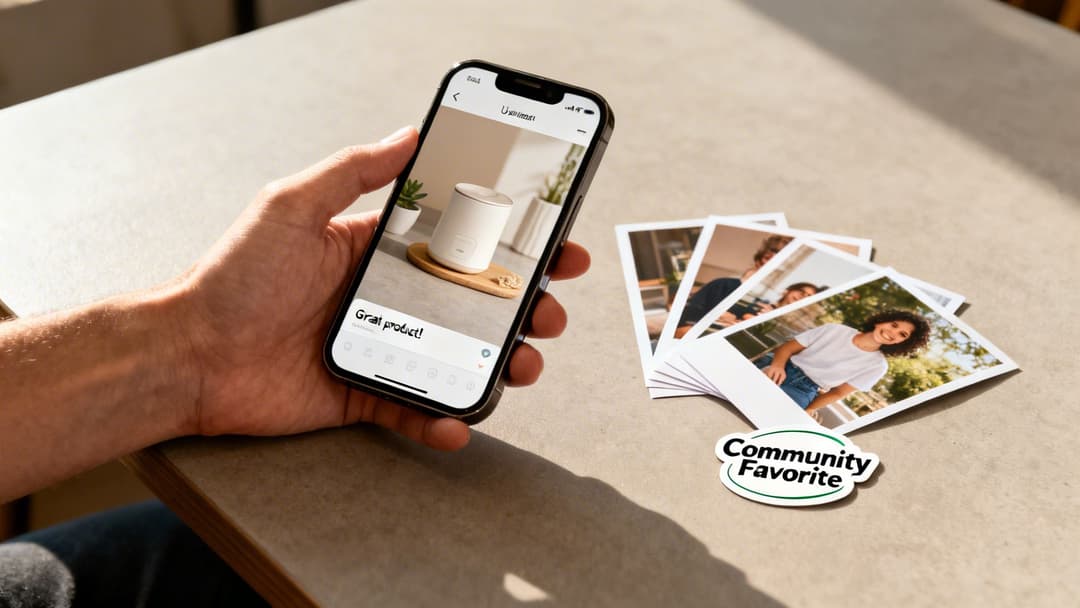
This strategy strengthens customer relationships by making them part of your brand's story. GoPro built an empire on this concept, using the #GoPro hashtag to gather millions of incredible videos from its users. Similarly, Warby Parker's "Home Try-On" program naturally prompts customers to share photos of themselves trying on frames, creating a massive, authentic lookbook.
Actionable Steps for Implementation
To get started, you need to actively create opportunities for customers to share and make it easy for you to find their content. A passive approach rarely yields results.
- Create a Branded Hashtag: Develop a unique and memorable hashtag (e.g., #MyBrandStory) and promote it everywhere: on your packaging, in your email signatures, and across your social media profiles.
- Actively Request Content: Don't wait for customers to post. Ask for reviews and photos in your post-purchase emails or offer a small incentive, like a chance to be featured on your page or a discount on their next order.
- Feature and Attribute: Showcase the best UGC on your website's homepage, product pages, and social media feeds. Always credit the original creator with a tag and a thank you to foster goodwill.
- Ensure Legal Compliance: Before using a customer's content in a major campaign, always obtain clear permission. A simple direct message asking for consent is often enough to protect your business legally.
When to Scale to Paid Ads
Your organic UGC feed is a goldmine for identifying high-performing ad creative. When a customer's photo or video generates exceptionally high engagement, comments, and shares, it's a clear signal that the content resonates with your audience. This is the ideal moment to scale. You can then repurpose that proven, authentic UGC into a paid social media ad. This approach is central to many successful direct-to-consumer businesses, and you can explore more about these powerful DTC marketing strategies to further refine your campaigns.
9. Webinars, Virtual Events & Live Streaming
Hosting free webinars, virtual events, or live streams is a powerful form of small business free advertising that builds authority and generates high-quality leads. This strategy involves creating live educational content that solves a specific problem for your target audience, establishing you as a trusted expert. In exchange for your valuable insights, attendees provide their contact information, creating a direct line for future marketing.

This method moves beyond simple content sharing by creating an interactive, appointment-based experience. For example, HubSpot’s extensive webinar program is a cornerstone of its lead generation, attracting thousands of qualified B2B prospects. Similarly, SaaS company Drift uses targeted webinars to demonstrate product value and drive demo requests, effectively turning educational sessions into a direct sales funnel.
Actionable Steps for Implementation
To run a successful virtual event, focus on providing immense value and creating a smooth attendee experience from registration to follow-up.
- Select a High-Demand Topic: Use keyword research, customer questions, or social media polls to identify a topic your audience is eager to learn about.
- Promote Extensively: Begin promoting your event 2-3 weeks in advance through email lists, social media channels, and partnerships with complementary brands. Create a simple registration page that clearly outlines the value and captures email addresses.
- Structure for Engagement: Plan a concise session, ideally 45-60 minutes, with a dedicated Q&A segment. Prepare your slides and talking points, but keep the delivery conversational. Inviting a guest speaker can add credibility and expand your promotional reach.
- Record and Repurpose: Always record your live sessions. Send a follow-up email within 24 hours containing the recording link, a summary of key points, and a clear call-to-action (CTA) like scheduling a consultation or starting a free trial.
When to Scale to Paid Ads
After your live event, analyze the registration and attendance data. If a particular webinar topic generated an unusually high number of sign-ups or led to a significant increase in conversions post-event, you have identified a high-value content asset. This is your signal to scale. You can run paid ads promoting the on-demand recording to a lookalike audience or retarget attendees who didn't convert with a special offer, maximizing the return on your initial content creation effort.
10. Industry Directories, Listings & Online Platforms
Getting your company listed on industry-specific directories and review platforms is a powerful method of small business free advertising. This tactic generates visibility, credibility, and inbound discovery by placing your business exactly where potential customers are actively searching for solutions. Appearing on sites like G2, Capterra, Product Hunt, local chamber of commerce directories, or even app stores provides searchable social proof.
The goal is to build trust through third-party validation. For example, B2B SaaS companies like HubSpot and Asana generate a continuous stream of high-intent leads from their prominent listings on G2 and Capterra, which are backed by thousands of positive user reviews. These listings act as permanent digital billboards in a highly relevant context.
Actionable Steps for Implementation
To get started, identify where your customers conduct research and build a strong, credible presence there. A well-maintained listing can become a significant source of traffic and leads.
- Identify Key Platforms: Research and select 5-10 of the most relevant directories for your niche. Ask your best customers which sites they used when looking for solutions.
- Create Comprehensive Profiles: Don't just fill out the basics. Complete every field with detailed company information, high-quality product screenshots, videos, and clear descriptions of your key features and differentiators.
- Proactively Seek Reviews: After a customer has a positive experience or achieves a milestone, send them a direct, personal request to leave a review on a specific platform. Make it easy for them with a direct link.
- Engage with All Reviews: Respond professionally and promptly to every review, both positive and negative. Thanking positive reviewers and addressing concerns in negative ones shows you are attentive and customer-focused.
- Regularly Update Listings: Keep your profiles current. Add information about new features, update case studies, and refresh screenshots to ensure your listing accurately reflects your offering.
When to Scale to Paid Ads
Monitor the inbound traffic and leads originating from your directory listings. If you notice a platform is consistently sending high-quality, conversion-ready leads, it's a strong signal to invest further. Most major directories like Capterra, G2, or Yelp offer paid options to boost your listing's visibility, place it higher in category rankings, or target competitors' profiles. Upgrading to a paid plan on a proven platform is a logical next step to amplify a lead source that is already working for you.
Top 10 Free Advertising Strategies Compared
| Channel | Implementation complexity | Resource requirements | Expected outcomes | Ideal use cases | Key advantages |
|---|---|---|---|---|---|
| Social Media Organic Content & Community Building | Medium — consistent content cadence and platform know-how | Moderate time for content creation, community managers; low direct ad cost | Gradual brand awareness, engagement, long-term advocacy | B2C brands, creator-led businesses, community-first products | Authentic engagement, algorithmic amplification, owned audience |
| Search Engine Optimization (SEO) & Organic Search | High — technical, strategic, and long-term work | High: skilled content/technical SEO, link building, analytics | Sustainable high-intent organic traffic and improved conversions over time | Businesses seeking scalable inbound acquisition and long-term growth | Durable traffic, compounding content assets, high conversion intent |
| Email Marketing & Newsletter Distribution | Medium — tooling and segmentation setup with ongoing optimization | Moderate: CRM/email platform, list growth tactics, copywriting | High ROI, repeat purchases, reliable direct conversions | SaaS, e-commerce, subscription businesses focused on retention | Owned channel, personalization at scale, measurable performance |
| Content Marketing & Blog Publishing | High — requires editorial strategy and consistent production | High time and expertise for long-form content, research, SEO | Authority building, inbound leads, SEO benefits and repurposable assets | Thought leadership, inbound B2B and consumer education strategies | Evergreen assets, multi-channel repurposing, trust-building |
| Referral & Word-of-Mouth Marketing Programs | Medium — design incentives and tracking systems | Low–moderate: incentive costs, tracking infrastructure, CX touchpoints | High-conversion referrals, lower CAC, improved retention | Products with satisfied users, B2B and viral-consumer offers | Very high conversion and LTV, cost-effective acquisition |
| Strategic Partnerships & Co‑Marketing | High — partner identification and coordinated execution | Moderate–high: co-created assets, shared promotion, legal/ops coordination | Rapid audience expansion and credibility transfer | Market expansion, complementary product audiences, event co-promotion | Access to new audiences with shared costs and credibility |
| Public Relations & Media Outreach | High — relationship-driven and storycrafting intensive | Moderate: PR time or agency costs, media assets, research | Earned visibility, credibility boosts, backlink and SEO benefits | Launches, funding announcements, executive thought leadership | Third‑party validation, high reach, trust from editorial exposure |
| User‑Generated Content (UGC) & Customer Advocacy | Low–Medium — solicit, curate, and manage rights | Low: customer incentives, moderation, rights management | Increased authenticity, engagement, and conversion uplift | Consumer brands, experience-led products, community-driven services | Cost-efficient authentic creative, ongoing content stream |
| Webinars, Virtual Events & Live Streaming | Medium — event production and promotion required | Moderate: webinar tools, speakers, promotion, follow-up workflows | Qualified leads, direct engagement, on‑demand assets for repurposing | B2B demand generation, product demos, educational marketing | Live interaction, gated lead capture, reusable recordings |
| Industry Directories, Listings & Online Platforms | Low — create and maintain profiles | Low: time to list, occasional updates, review solicitation | Discovery traffic, social proof, referral leads from platforms | SaaS, apps, local businesses, buyers researching solutions | Low cost, trusted discovery channels, SEO and referral benefits |
From Free to Funded: Scaling Your Success and Knowing When to Invest in Paid Ads
The journey through the world of small business free advertising reveals a powerful truth: effective marketing isn't about having the biggest budget, but the smartest strategy. We've explored ten distinct avenues, from the foundational pillars of SEO and content marketing to the community-driven power of user-generated content and strategic partnerships. Each tactic offers a unique way to build brand awareness, connect with customers, and drive growth without spending a dime on ad placements.
But mastering these free methods does more than just conserve cash. It forces a level of discipline, creativity, and customer-centricity that paid advertising can sometimes obscure. You learn firsthand what headlines grab attention, which blog topics solve real problems, and what email subject lines demand to be opened. This process turns your business into a data-gathering engine, collecting invaluable insights on audience behavior, messaging resonance, and channel effectiveness.
The True Value of a "Free" Foundation
Think of your free advertising efforts as the ultimate testing ground. The data you collect is the most authentic market research you can get because it's based on genuine interest, not paid-for impressions.
- SEO & Content: Reveals the exact questions and pain points your target audience is searching for. Your highest-ranking articles are a blueprint for compelling ad copy.
- Social Media & UGC: Shows you which visuals, tones, and community-driven messages create the most engagement. This is a goldmine for creative direction.
- Email Marketing: Your A/B tests on subject lines and calls to action provide direct evidence of what motivates your most loyal followers to act.
- Referral Programs: Pinpoints your most enthusiastic brand advocates and the incentives that activate them, information you can use to build lookalike audiences.
This foundation is your strategic advantage. It moves you from a position of guessing what might work in a paid campaign to knowing what already does. You’ve built an organic engine that not only generates its own momentum but also provides the roadmap for a high-performance paid strategy.
Transitioning from Free to Funded with Precision
The critical question is no longer if you should invest in paid advertising, but when and how. The signals to scale are embedded in the data from your free marketing efforts. You don't make the leap based on a hunch; you do it based on evidence.
Key Insight: Paid advertising should not be your starting point. It should be the high-octane fuel you pour onto a fire you’ve already built. Its purpose is to accelerate and scale what has been proven to work organically.
Look for these clear signals:
- Organic Reach Plateaus: You’ve hit a ceiling on a platform like Facebook or Instagram, where your excellent content is now reaching the same group of followers. Paid ads can break you out of that bubble.
- A Proven "Winner" Emerges: A specific blog post, video, or social media update consistently drives disproportionate traffic and conversions. It’s time to put a budget behind it to reach a wider, yet similar, audience.
- High-Intent Channel Identified: Your SEO efforts show that people searching for specific, long-tail keywords convert at a very high rate. This is a clear signal to run targeted search ads for those exact terms.
- You Need to Move Faster: Organic growth is steady but slow. If you have a time-sensitive launch or a competitive opportunity, paid ads provide the speed and scale that free methods can't match.
When these moments arrive, you aren't just buying ads. You are making a data-informed investment. You can take the exact messaging from your most successful email campaign, pair it with the imagery from your most-shared social post, and target an audience that mirrors your most engaged email subscribers. This drastically reduces the risk and waste often associated with a business's first foray into paid media. The goal is to make every dollar work smarter, using your organic intelligence to guide your paid execution. This is the essence of scaling successfully.
Ready to turn your proven organic winners into high-performance paid campaigns? AdStellar AI is designed for this exact moment, helping you scale what's already working by testing thousands of ad variations on platforms like Meta. Take the guesswork out of paid advertising and use our AI to match your best content with the perfect audience for maximum impact.