Let's start with a simple, almost obvious idea: not all of your customers are the same. So why would you talk to all of them with the exact same message?
Audience segmentation is the art and science of dividing your broad target market into smaller, more manageable groups. These groups are built around shared traits—who they are, where they live, what they buy, or why they buy it. It’s how you stop shouting one generic message into the void and start having meaningful conversations with people who actually want to listen.
Why Audience Segmentation Matters
Think of a bookstore owner. If they just threw every book into one giant, unsorted pile on the floor, finding what you want would be a nightmare. Instead, they organize everything into sections like 'Mystery,' 'Sci-Fi,' and 'Cooking.' This simple act makes it incredibly easy for readers to find exactly what they’re looking for.
In the world of marketing, audience segmentation works the same way. It’s all about creating clarity and relevance.
This shift away from a one-size-fits-all approach isn’t just a "nice-to-have" anymore; it’s a flat-out necessity for getting results. On hyper-competitive platforms like Meta, relevance is king. When you send the right message to the right group, you don't just get more clicks—you send a powerful signal to the ad algorithm that your content is valuable. This often leads to a cascade of positive effects, like lower costs and better placement.
From Broad Concepts to Practical Application
The goal here is to move past guesswork and start using real data to understand the distinct needs and motivations simmering within your larger audience. But before you get lost in the data, it's critical to nail the first step: defining your audience in a creative brief. This simple document ensures you have a crystal-clear picture of who you're trying to reach from the get-go.
And make no mistake, this isn't just some academic exercise; it has a massive financial impact. The growing need for this kind of strategy has lit a fire under the audience analytics market, which is what powers tools like AdStellar AI. In 2023, this market was already valued at a hefty USD 4.73 billion and is on track to explode to USD 12.70 billion by 2032. This boom is driven by one thing: marketers are desperate to turn mountains of data into actionable segments that make every ad dollar count.
If you want to build a solid foundation, you might find our deeper guide on how to identify your target audience incredibly helpful.
In practice, effective segmentation can slash customer acquisition costs by up to 50% on paid social platforms. For direct-to-consumer brands, it's common to see well-segmented campaigns on Meta pull in 2-3x higher Return on Ad Spend (ROAS) compared to broad, untargeted efforts.
To help visualize how these concepts translate into action, here’s a quick breakdown of the benefits and their practical uses on a platform like Meta.
Core Concepts of Audience Segmentation
This table provides a quick summary of the core benefits and common applications of audience segmentation in digital marketing.
| Key Benefit | Practical Application on Meta Ads |
|---|---|
| Deeper Customer Insight | Analyzing audience data to understand which segments respond best to specific ad creatives or messaging angles. |
| Improved Ad Relevance | Creating distinct ad sets for different segments, ensuring copy and visuals directly address their unique pain points. |
| Higher Conversion Rates | Tailoring landing pages and offers to match the expectations of each specific audience segment. |
| Efficient Budget Allocation | Shifting ad spend towards high-performing segments and away from those that show little interest or engagement. |
| Enhanced Customer Loyalty | Using retargeting segments to deliver personalized follow-up messages that build a stronger brand relationship. |
This table shows just how directly segmentation impacts the levers you can pull to improve campaign performance. It's the bridge between knowing your customer and showing them you understand them.
Ultimately, when you get audience segmentation right, you unlock the ability to:
- Improve Ad Relevance: Your messages stop being noise and start resonating because they speak directly to each group's specific interests and problems.
- Increase Efficiency: You put your budget where it matters most, targeting the most promising segments instead of wasting money on people who will never be interested.
- Boost Conversions: You can align your offers and creative so perfectly with what each segment wants that saying "yes" becomes the easiest and most natural choice for them.
The Four Main Ways to Segment Your Audience
Now that we've covered why audience segmentation is a non-negotiable for modern marketers, let's get into the how. There are four fundamental ways to slice up your market. Think of them as different lenses you can look through, each revealing a unique perspective that helps you craft a message that actually lands.
Mastering these four pillars gives you a complete toolkit for building smart, data-driven segments for any campaign. This isn’t about guesswork; it’s about precision.
This diagram shows the process perfectly—moving from a giant, undefined market to specific, actionable groups.
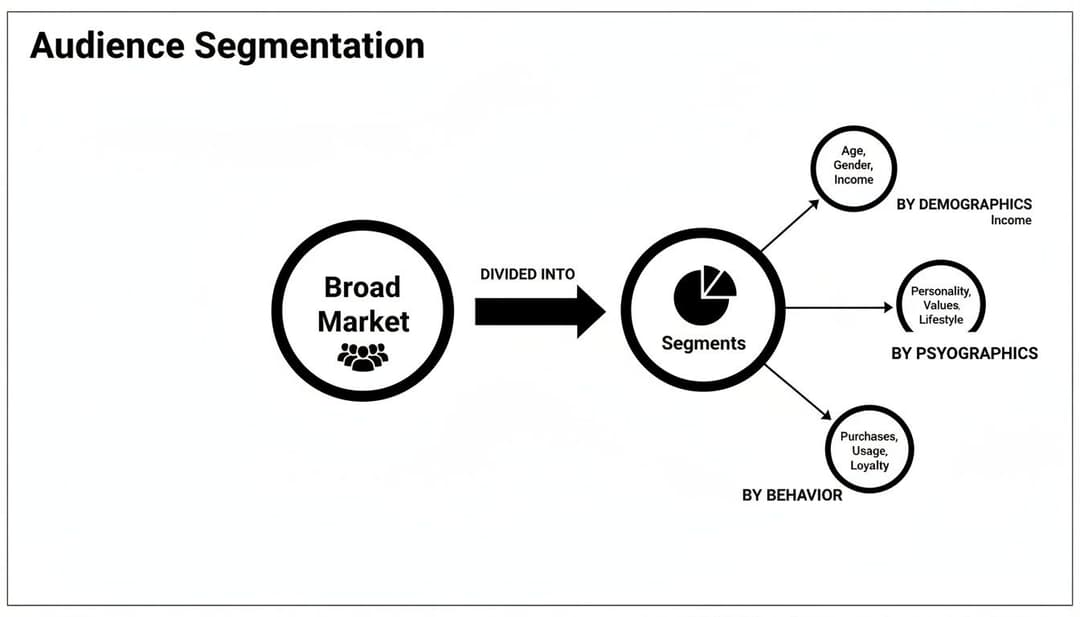
The real takeaway here is that segmentation is a journey of refinement. You start with a crowd and end up with distinct groups you can speak to directly.
Demographic Segmentation: The Who
This is usually the first stop for most marketers, and for good reason. Demographic segmentation is all about grouping people based on objective, statistical data. It’s the foundational layer—the "who" of your audience.
A fitness apparel brand, for example, might target its premium running gear toward men aged 25-40 with high household incomes. These are clear, measurable traits that ad platforms like Meta make incredibly easy to target.
Common demographic data points include:
- Age: Grouping by generation (like Gen Z or Millennials) or specific age brackets.
- Gender: Tailoring products or messaging specifically to men or women.
- Income Level: Differentiating between luxury goods and budget-friendly options.
- Occupation: Reaching professionals in certain fields (a goldmine for B2B).
- Education Level: Targeting based on academic background or qualifications.
Geographic Segmentation: The Where
Next up is geographic segmentation, which carves up your audience based on their physical location. This is crucial whether you're a local coffee shop or a global SaaS company because where people live heavily influences their needs, culture, and buying habits.
The classic example? A clothing retailer promoting heavy-duty parkas to customers in Chicago while pushing lightweight windbreakers to shoppers in San Diego. The product and messaging are perfectly tuned to the local climate. It’s all about being relevant on a local, national, or even international scale.
Pro Tip: Don't just stop at the city or country level. You can get much more granular by segmenting based on climate zones, population density (urban vs. rural), or even the dominant language in a specific region to make your campaigns hit home.
Psychographic Segmentation: The Why
Okay, this is where things get really interesting. Psychographic segmentation moves beyond the "who" and "where" to uncover the why behind what people buy. It groups them based on psychological traits like their lifestyle, values, interests, and personalities.
Imagine a travel company creating a segment for "Thrill-Seeking Solo Travelers." This group isn't defined by age or income, but by a shared mindset. They value experiences over things and are drawn to adventurous, off-the-grid destinations. This insight allows the brand to craft messaging that speaks directly to their aspirations, not just their demographics.
Behavioral Segmentation: The What They Do
Finally, we have behavioral segmentation, which is all about what people do. It groups audiences based on their past actions and interactions with your brand—what they click, what they buy, and how often they visit.
This is arguably the most powerful method for driving conversions because it’s based on proven intent, not just assumptions. An e-commerce store could create a segment of "VIPs" who have purchased more than three times in the last year and target them with early access to new products. Another segment could be "Cart Abandoners," who get a friendly reminder (and maybe a small discount) to nudge them over the finish line.
The rise of AI is making this kind of segmentation more powerful than ever. In fact, the market for AI-powered audience analytics hit USD 5.40 billion in 2023 and is projected to skyrocket to USD 15.01 billion by 2032. DTC brands using Meta's lookalike audiences—supercharged with real-time behavioral data—often see 15% lower CPLs because they can predict what users will do next with stunning accuracy.
To give you a clearer picture, here’s how these four models stack up against each other.
Comparing The Four Primary Segmentation Models
Each segmentation model offers a different piece of the puzzle. Understanding what data each uses and where it shines is key to building a comprehensive targeting strategy for your paid social campaigns.
| Segmentation Type | Data Points Used | Best For Targeting... |
|---|---|---|
| Demographic | Age, gender, income, occupation, education, marital status. | Broad-appeal products, life-stage marketing (e.g., new parents, retirees). |
| Geographic | Country, city, zip code, climate, population density. | Local businesses, seasonal promotions, region-specific products. |
| Psychographic | Lifestyle, values, interests, personality traits, opinions. | Niche brands, hobby-focused products, value-driven messaging. |
| Behavioral | Purchase history, website activity, app usage, brand loyalty. | Retargeting campaigns, loyalty programs, upselling/cross-selling. |
As you can see, none of these methods work in a vacuum. The real magic happens when you start layering them.
Each of these four methods provides a different layer of insight. When you combine them, you can build rich, multi-dimensional audience profiles that feel incredibly personal. To see how you can put these into action, check out our deep dive into different audience segmentation strategies.
How Segmentation Delivers Tangible Results
Okay, let's move past the theory and get to what every performance marketer actually cares about: results you can measure. Audience segmentation isn't just a neat way to organize your contacts; it's a direct line to making your campaigns more profitable. When you stop shouting one generic message at everyone and start having targeted conversations, everything changes.
You’ll see a tangible impact on everything from your ad costs to how long customers stick around. Each benefit stacks on top of the other, creating a marketing engine that runs smoother, faster, and more efficiently.
Driving Higher Engagement and Lowering Costs
Think about it. When an ad speaks directly to your interests, you're way more likely to pay attention. For a specific audience segment, an ad that feels like it was made just for them will always crush a generic, one-size-fits-all ad. This spike in engagement—the likes, comments, shares, and clicks—sends a massive signal to ad platforms like Meta.
The algorithm sees this high engagement and recognizes your ad as high-quality and relevant. It concludes you’re giving its users a good experience.
And what's the reward? The platform gives your ad better placements and, more importantly, lower costs per thousand impressions (CPM). You essentially get priority access to your best audiences for less money, which directly boosts your return on ad spend (ROAS).
This simple feedback loop is the bedrock of a winning paid social strategy. Better relevance creates higher engagement, which earns you more efficient ad delivery. It’s a powerful cycle.
Boosting Conversion Rates and Efficiency
One of the biggest wins from smart segmentation is the ability to seriously improve ecommerce conversion rates by tailoring the entire experience. Let's say you're selling a high-end skincare line. Your audience isn't just "women." It’s a mix of distinct groups with totally different motivations.
You might have a segment of younger customers focused on preventing acne and another group of older customers looking for anti-aging solutions. Sending an acne treatment ad to the anti-aging segment is a completely wasted impression. It’s a dollar down the drain. They won't click, and they definitely won't buy.
By aligning your offer, creative, and landing page with what each segment actually wants, you clear the path to purchase. This precision stops you from wasting budget trying to convince people who were never going to be interested in the first place. You can get a better handle on these improvements by tracking the right performance marketing metrics.
Building Stronger Customer Relationships
The impact of segmentation doesn't stop once you make the sale. Not even close. By consistently delivering relevant content, you show your customers that you get them—you understand their problems and their journey. This builds a much stronger connection than generic marketing ever could.
That connection pays off in the long run with increased customer loyalty and a higher Customer Lifetime Value (LTV). Just look at the opportunities after the first purchase:
- First-Time Buyers: This group can get a welcome series with tips on using their new product, making them feel supported.
- Repeat Customers: Target this loyal bunch with exclusive early access to new launches or special rewards to thank them for their business.
- High-Value Spenders: Make your VIPs feel like VIPs with personalized offers or invitations to special events.
Every one of these targeted interactions reinforces the relationship, turning one-time buyers into genuine brand fans. You’re no longer just selling a product; you're building a community. This deepens trust and makes your customers far less likely to jump ship to a competitor, securing your revenue for the long haul.
Building Your First Audience Segments in Meta
Alright, theory is one thing, but getting your hands dirty is where you'll see real results. This section is your practical, step-by-step guide to building your first few audience segments right inside Meta Ads Manager. Think of it less like technical wizardry and more like being a good detective—you’re just using the clues your customers have already left behind.
We’ll walk through a simple, repeatable framework. It starts with your goal and ends with a handful of well-defined segments ready to power your next campaign.
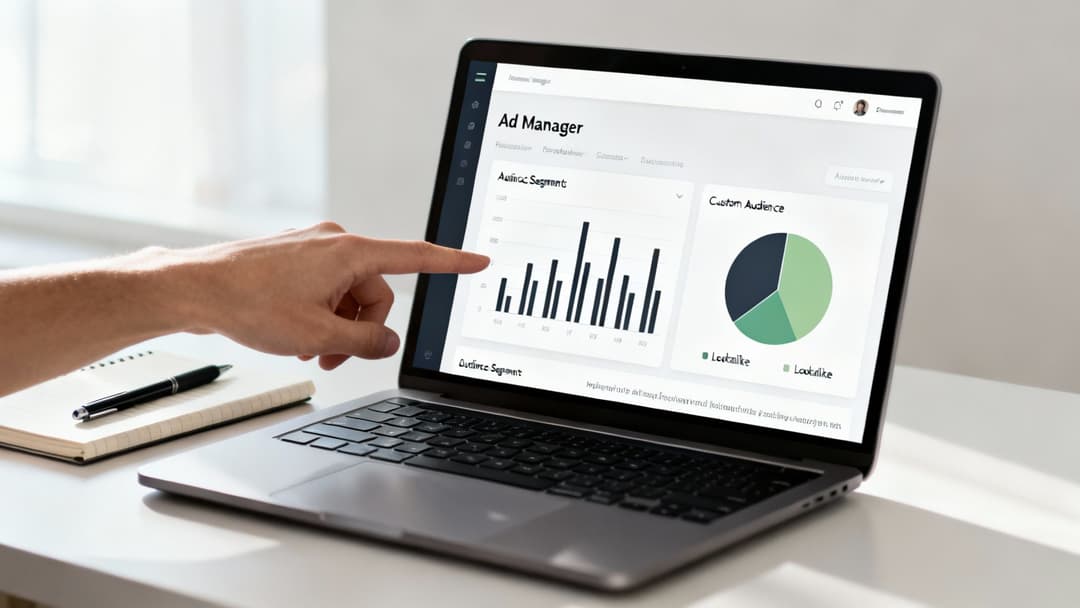
Start with a Clear Campaign Objective
Before you even open Ads Manager, you need to answer one critical question: What are you trying to achieve? Your campaign objective is the north star for your entire segmentation strategy. It tells you who you need to reach and what message will actually connect with them.
For example:
- Objective: Drive sales for a new luxury handbag. Your segments should zero in on high-income earners, past buyers of similar high-ticket items, or people who have shown interest in competing luxury brands.
- Objective: Increase free trial sign-ups for a fitness app. Here, you'd build segments around people interested in health and wellness, followers of popular fitness influencers, or website visitors who watched your demo video but never converted.
Without a clear goal, you're just grouping people randomly. A strong objective makes sure every segment you create serves a specific, measurable purpose.
Become a Data Detective
Now it's time to gather your clues. The best segments are built on a foundation of real data, not just gut feelings or assumptions. Your job is to spot the patterns and connections that reveal how different groups of people interact with your brand.
Here are the top three places to start digging for gold:
- Existing Customer Data (CRM/Email List): This is your treasure trove. Sift through your customer list to find your most valuable groups. Look for what your top 20% of customers have in common. Do they live in a specific city? Did they all purchase the same introductory product?
- Website Analytics (Google Analytics/Meta Pixel): Your website traffic tells a story. Check which pages get the most visits, where people tend to drop off, and what content actually leads to conversions. You might find that visitors who read your blog are 3x more likely to buy something than those who don't.
- Past Campaign Performance: Your old Meta campaigns are packed with useful insights. Dive into your Ads Manager reports and break down the performance by age, gender, placement, and interests. You might discover that your ads crush it with women aged 35-44 on Instagram Stories—a huge clue for your next segment.
This data-gathering phase is all about forming a hypothesis. For instance: "Based on our sales data, customers who bought Product A are our best candidates to buy Product B." That simple statement is the seed of a powerful segment.
A Practical Guide to Meta Audience Tools
With your objective set and a data-backed hypothesis ready, it's time to build inside Meta Ads Manager. Meta gives you three core audience types that you can use on their own or layer together to create incredibly specific segments.
1. Custom Audiences (Your Warmest Leads) These are people who have already engaged with your business in some way. They represent your highest-intent groups, making them perfect for retargeting campaigns. For anyone looking to really master this, our guide on Facebook retargeting ads offers a much deeper look into winning back these interested customers.
- Website Visitors: Create segments based on specific actions, like "visited the pricing page in the last 30 days" or "added an item to cart but didn't buy."
- Customer List: Securely upload your email or phone list, and Meta will match those users to their profiles. This is perfect for creating segments like "VIP Customers" or "Inactive Subscribers."
- Engagement: Target users who have watched your videos, liked a post on your Instagram profile, or engaged with a past ad.
2. Lookalike Audiences (Finding New Customers) This is where Meta's algorithm really flexes its muscles. You feed it a high-quality source audience (like that "VIP Customers" Custom Audience), and it goes out and finds millions of new users who share similar traits and behaviors.
Pro Tip: Start by creating a 1% Lookalike Audience. This will be the smallest, most concentrated group that is most similar to your source. It often delivers the best performance for direct-response campaigns. From there, you can test broader audiences (2-5%) to scale your reach.
3. Detailed Targeting (Reaching Cold Audiences) This is your broadest targeting option. It lets you build segments based on demographics, interests, and behaviors that users have shown on the platform. While it's less precise than Custom or Lookalike Audiences, it's absolutely essential for reaching brand-new people and filling the top of your marketing funnel. You can target based on interests like "digital marketing" or behaviors like being an "Engaged Shopper."
By combining these tools, you can finally move from theory to action, building a few powerful, data-driven segments that will immediately give your campaign performance a lift.
Using AdStellar AI to Automate Your Segmentation
Manually creating, testing, and analyzing even a handful of audience segments is a massive bottleneck. It just doesn't scale. Trying to manage dozens, or even hundreds, of combinations is basically impossible for a human. This is where automation isn't just an advantage; it’s a complete game-changer.
AdStellar AI is built to scale your segmentation strategy without the manual grind. It turns audience segmentation from a time-consuming chore into a powerful, automated engine for finding your most profitable customers.
From Manual Guesswork to Automated Intelligence
It all starts by securely connecting AdStellar to your Meta ad account. Once you're linked up, our AI gets to work, digging through your historical campaign data to uncover hidden patterns and opportunities you’d likely never spot on your own.
It looks past surface-level metrics to understand which specific audience traits, creative elements, and messaging angles have actually driven performance. This deep dive builds the foundation for smarter, data-backed segmentation from the get-go.
The AdStellar dashboard gives you a clean, at-a-glance view of how your different audiences are performing against your most important business goals.
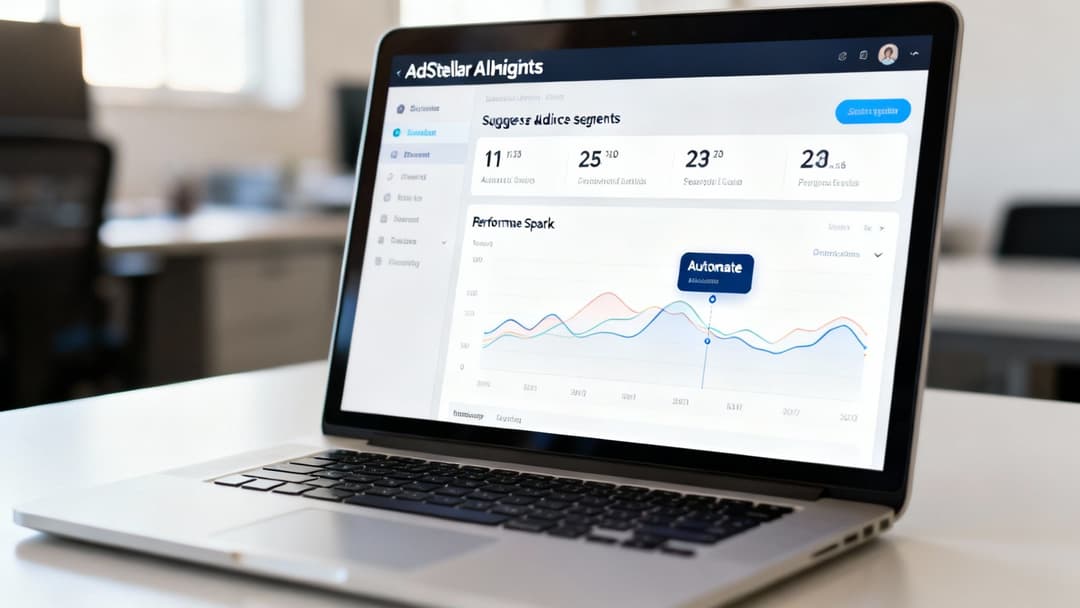
This centralized view helps you quickly see which segments are crushing it and which are falling flat, letting you shift your budget with confidence.
Scaling Your Testing at Unprecedented Speed
This is where the real magic happens. AdStellar’s AI can automatically generate and test hundreds of different audience and creative combinations in the time it would take you to build just a few by hand in Ads Manager.
Imagine you have five different audience segments and ten unique ad creatives. Manually setting up campaigns to test all 50 of those combinations would be a tedious, error-prone nightmare.
AdStellar automates this entire workflow. It systematically creates and launches these micro-tests, gathering performance data on each unique combination to find the winning pairs with incredible speed and precision.
This gets you out of the weeds of campaign setup. You can finally focus on high-level strategy and creative direction instead of getting bogged down in the mechanics. The platform handles all the heavy lifting of building, launching, and monitoring.
Gaining Actionable AI-Powered Insights
Gathering data is only half the battle. The real challenge is making sense of it all to make smarter decisions. AdStellar's AI Insights feature goes way beyond simple metrics like clicks and impressions to give you clear, actionable recommendations.
Instead of just dumping a dashboard full of numbers on you, the platform tells you exactly which segments are driving the best Return on Ad Spend (ROAS) or the lowest Cost Per Acquisition (CPA).
These insights are presented in a simple, easy-to-understand format, so you can quickly answer critical questions like:
- Which specific lookalike audience is most profitable for my new product line?
- Does my video ad perform better with my "engaged shoppers" segment or my "website visitors" segment?
- Which demographic slice within my broad interest-based audience is actually converting?
This clarity cuts through the noise of complex ad reports, allowing you to double down on what’s working and cut what’s not. To learn more about how this works, explore the core features of AdStellar's AI optimization engine.
Automating the Path to Scalable Growth
Ultimately, AdStellar transforms your entire approach to understanding your audience. By automating the most labor-intensive parts of the process, it creates a continuous loop of learning and optimization that fuels sustainable growth.
The system works like this:
- Analyze: The AI ingests your historical and real-time performance data.
- Generate & Test: It automatically builds and launches hundreds of segmented campaign variations.
- Identify Winners: The platform pinpoints the highest-performing audience and creative combinations based on your goals.
- Scale: It helps you reallocate budget toward the winning segments, maximizing your overall campaign profitability.
This automated workflow empowers you to test more ideas, learn faster, and unlock new pockets of profitable customers that manual segmentation would have never uncovered. It turns your ad account into a dynamic, self-optimizing system built for one purpose: finding and scaling your most valuable audiences.
Common Questions About Audience Segmentation
As you start putting audience segmentation into practice, a few questions always seem to pop up. Let's walk through some of the most common ones to clear things up and help you fine-tune your strategy.
How Many Segments Should I Start With?
This is a classic question, but the answer is simpler than you'd think: there's no magic number. A great starting point for most businesses is 3-5 distinct segments.
The real goal isn't to create dozens of tiny groups right out of the gate. It's about defining a handful of segments that are different enough to justify their own unique message or offer. If your segments are too small or overlap too much, your test results will be a muddled mess. It’s much better to start with a few high-quality, well-defined groups. Focus on the core differences that actually matter to your bottom line.
Once you have that solid foundation, a tool like AdStellar AI can step in to automatically manage and test a much larger number of segments. But for now? Start small, stay focused, and aim for early wins and clear insights.
Key Takeaway: Start with 3-5 well-defined segments. Prioritize quality and distinction over sheer quantity. This approach gives you clean, actionable data to build on as your strategy grows.
What Is the Difference Between Segmentation and Targeting?
This is one of the most frequent points of confusion, but the distinction is absolutely critical for thinking strategically. The easiest way to remember it is to think of a map and a journey.
Segmentation is the strategic work of drawing the map. It's the process where you analyze your entire customer landscape and divide it into meaningful groups based on shared traits. This is the "who"—understanding all the different types of people you could potentially reach.
Targeting is the tactical action of choosing a destination on that map. Once your segments are defined, you pick one or more of them to focus your marketing efforts on. This is the "where" you aim your ads.
In short, you segment first to understand all your potential customer groups, then you target to actively run campaigns at the most promising ones. One is about discovery; the other is about execution.
How Often Should I Update My Audience Segments?
Your audience segments should never be set in stone. Markets shift, customer behaviors evolve, and your own business changes. A segment that was a goldmine last year might be completely tapped out today.
As a general rule, it's a good idea to formally review your core segments every quarter. This gives you a regular checkpoint to make sure they still line up with your business goals and what's happening in the market. That said, certain events should trigger an immediate re-evaluation.
You should definitely revisit your segments whenever you:
- Launch a major new product or service: This will almost certainly attract a new type of customer or appeal differently to your existing base.
- Observe a big shift in customer behavior: Did a new trend just take off? Are buying patterns changing? Your data will often signal when it's time for a refresh.
- Notice a profitable segment is no longer performing: A drop-off in performance is a clear sign that the segment's needs have changed or your message has gone stale.
- Enter a new market or geographic region: A new location brings entirely new cultural and behavioral nuances that demand fresh segmentation.
Consistent monitoring is everything. Your campaign performance data is the ultimate truth-teller, giving you constant feedback on whether your segments are still hitting the mark.
Does Segmentation Work for B2B Marketing on Meta?
Absolutely. While the specific data points you use might be different, the core principle of delivering a relevant message to a specific group is just as powerful in B2B. You're simply shifting from consumer interests to professional characteristics.
Instead of focusing on hobbies or lifestyles, B2B segmentation on platforms like Meta is built around firmographics. This just means you're grouping audiences based on their professional attributes.
You can create some incredibly effective B2B segments by targeting things like:
- Company Size: Small businesses have completely different needs and buying cycles than enterprise corporations.
- Industry: A software solution for healthcare needs very different messaging than one built for the finance industry.
- Job Titles or Functions: You can get right in front of decision-makers by targeting titles like "Chief Marketing Officer" or roles like "Head of HR."
- Professional Interests: Target users who follow key industry publications, influencers, or professional associations.
Even better, you can build powerful custom audiences by uploading lists of target accounts straight from your CRM. This lets you run hyper-focused campaigns aimed directly at your most-wanted prospects. You can also retarget users who’ve engaged with your B2B content, like people who downloaded a whitepaper or visited your pricing page. It's an incredibly effective way to reach key decision-makers right where they're already spending their time.
Ready to stop guessing and start scaling? AdStellar AI automates the entire process of testing and finding your most profitable audience segments on Meta. Stop the manual grind and discover what truly drives performance. Find your winning audiences 10x faster with AdStellar AI.