Display ad targeting is the secret sauce behind modern digital advertising. Think of it like this: you could stand on a busy street corner handing out flyers for your high-end steakhouse to every single person who walks by—or you could place a perfectly timed ad in front of someone who just searched for "best restaurants near me." That's the power of targeting. It’s what separates shouting into the void from having a meaningful conversation with a potential customer.
What Is Display Ad Targeting and Why It Matters Now

At its heart, display ad targeting is all about getting the right visual ad in front of the right person at just the right moment. Instead of just buying up ad space and crossing your fingers, you're using data to pinpoint people who are genuinely likely to be interested in what you’re selling. This single shift turns display advertising from a simple brand awareness play into a serious performance-driving machine.
This strategic pivot has a massive impact on your budget and your results. When you connect with the right audience, you stop burning cash on impressions that will never, ever convert. It’s no longer just about buying ad space; it’s about building connections that count.
The Benefits of Precise Targeting
Getting your targeting right delivers a ripple effect of benefits. You're not just improving one metric; you're making your entire advertising ecosystem healthier and more effective.
Here’s what you stand to gain:
- Improved Return on Ad Spend (ROAS): By zeroing in on high-potential audiences, you directly increase the revenue you earn for every dollar you put in. It's that simple.
- Reduced Wasted Spend: You completely cut out the noise by not showing ads to people who are a bad fit. Every cent of your budget works harder.
- Enhanced User Experience: People actually see ads that align with what they care about. This feels less like an interruption and more like a helpful suggestion, which is great for your brand's reputation.
- Greater Campaign Insights: As you watch how different audience segments perform, you learn an incredible amount about who your customers really are. These insights can then fuel smarter marketing decisions across every channel you use.
To really get it, it helps to see how display ads fit into the wider world of Pay Per Click (PPC) advertising. While search ads are fantastic for capturing existing demand, display ads are all about creating it from scratch, making them the perfect complement.
Display Ad Targeting Methods at a Glance
The world of display targeting is pretty vast, and the real magic happens when you start layering different methods to get laser-focused. If you’ve spent any time running social media campaigns, a lot of these concepts will probably ring a bell. For a deeper dive into that specific area, check out our guide on targeted advertising on social media.
To get us started, here’s a quick-reference table that breaks down the key methods we'll be exploring. Think of it as your cheat sheet for the tools you have at your disposal.
| Targeting Method | Primary Use Case | Core Data Source |
|---|---|---|
| Contextual | Aligning ads with relevant website content | Website keywords, topics, and categories |
| Demographic | Reaching users based on age, gender, or income | User-provided data and statistical models |
| Behavioral | Targeting users based on their online actions | Browsing history, clicks, and past purchases |
| Remarketing | Re-engaging past website visitors or customers | First-party data (website and app activity) |
| Lookalike | Finding new users similar to your best customers | First-party customer lists or pixel data |
This table gives you a bird's-eye view, but we're about to get into the nitty-gritty of how each of these works and when you should use them.
The Evolution of Display Advertising
To really get a handle on today's display ad targeting, it helps to look back at how we got here. The early internet was a chaotic free-for-all for advertisers. Brands basically threw banner ads at the wall to see what stuck—a “spray and pray” approach with almost no idea who was on the other side of the screen. The results were, to put it mildly, pretty terrible. But it was a start.
The first major breakthrough came in 1996 with the launch of DoubleClick's DART system. For the first time, advertisers could track clicks and impressions in something close to real-time. This was a massive leap forward, finally giving us a way to make adjustments on the fly instead of just hoping for the best.
The Drive for Better Results
Even with this new tracking ability, the harsh reality was that conversion rates were still dismal. Most ads simply weren't reaching the right people. This massive inefficiency became the catalyst for the next wave of innovation, pushing the industry to get much, much smarter.
This pressure led to two key developments that are still the foundation of modern ad targeting:
- Behavioral Tracking: Advertisers started using cookies to get a sense of a user’s browsing habits over time, moving beyond just the content of the single page they were on.
- Retargeting: This was the real game-changer. The ability to show ads to people who had already visited your website or expressed interest in a product meant you could finally focus on converting warm leads.
These methods marked a fundamental shift in thinking. We weren't just buying ad space anymore; we were buying access to specific audiences. If you're curious about the mechanics of how this works, you can dive deeper into our guide on the top demand-side platforms that make this all possible.
Privacy as a Catalyst for Change
The next big shake-up wasn’t driven by performance, but by privacy. Regulations like GDPR in 2018 and the CCPA in 2020 completely rewrote the rules by heavily restricting the use of third-party cookies for tracking. This forced yet another round of innovation.
The privacy-first era has pulled the rug out from under advertisers who relied on third-party data. To succeed today, brands have to get serious about using their own first-party data and adopting more sophisticated, privacy-safe techniques like contextual analysis and AI-driven predictions.
This pivot isn't just a passing trend; it's a new reality. With global display ad spending hitting an estimated $247 billion in 2024, the strategies that work now are worlds apart from those of just a few years ago. In fact, these post-privacy shifts have made targeting tougher for 64% of marketers, according to recent reports. You can explore more about the display advertising market on futuredatastats.com.
This history shows a clear progression: from blind guesswork to data-driven precision. When you see how far we've come, it becomes obvious why platforms like AdStellar AI—which analyze your own historical performance data to automate audience testing and scale the winners—are no longer a nice-to-have. They are the essential solution to a challenge decades in the making.
Alright, let's get into the good stuff. Now that you have the big picture, it’s time to roll up our sleeves and explore the tools you’ll actually be using. Think of these core targeting methods as the foundational ingredients in your marketing kitchen. Each one has its own unique flavor, and while they're powerful on their own, the real magic happens when you learn how to combine them.
We're going to break down the four pillars of display ad targeting: Contextual, Demographic, Behavioral, and Placement. Getting a handle on how each one works—and where it shines—will give you the confidence to build a strategy that hits your goals, every single time.
Contextual Targeting: Matching Message to Moment
Let's start with the most intuitive method of them all: contextual targeting. The idea here is simple. You place your ads on websites, articles, or videos where the content is directly related to what you're selling. The focus isn't on who the person is, but on what they're looking at right now.
It’s like placing an ad for high-end running shoes inside a magazine dedicated to marathon training. The connection is obvious and feels natural. If you sell skincare, this means getting your display ad onto a popular blog's post about "The Best Morning Skincare Routines." You're catching people at the exact moment their minds are on that topic.
In a world increasingly focused on privacy, this method is making a huge comeback. It doesn't need personal user data or tracking cookies to work. Its strength lies in pure relevance, making your ad feel less like an interruption and more like a helpful suggestion.
This shift back toward privacy-safe, high-relevance methods is a major evolution in advertising, moving away from old-school interruption toward smarter, more respectful strategies.
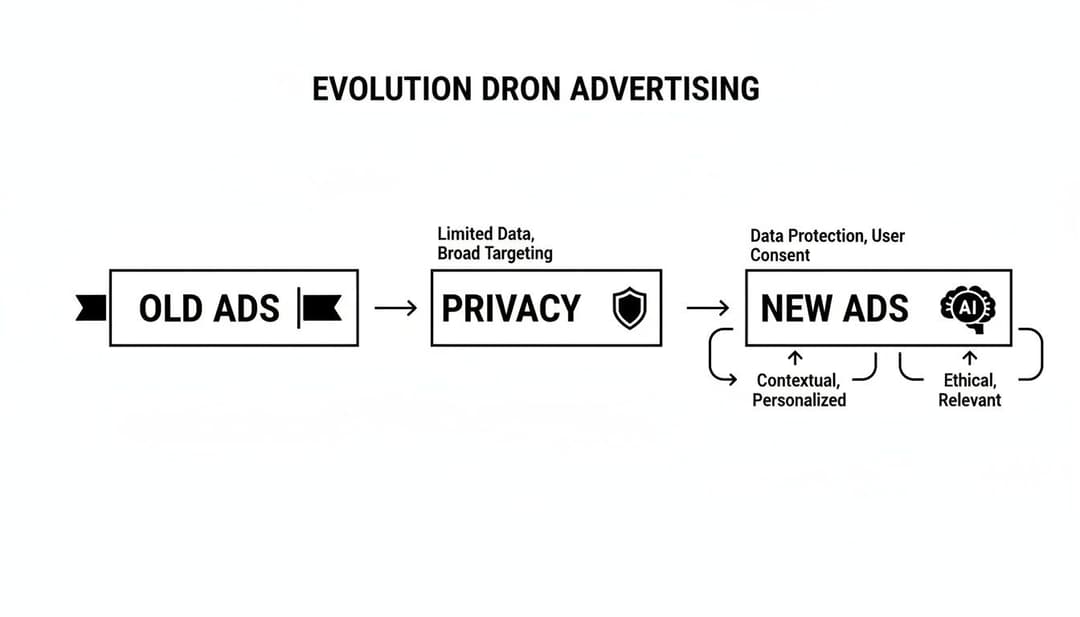
The key takeaway is that new privacy rules aren't just creating hurdles; they're pushing us to be smarter marketers. This move toward context-aware advertising ultimately creates a much better experience for the user.
Demographic Targeting: Reaching Specific Groups of People
If contextual targeting is all about the "what," then demographic targeting is all about the "who." This method involves grouping your audience based on observable, statistical data about them. It's a fundamental approach grounded in understanding demographic segmentation in marketing.
You’re essentially drawing a circle around a specific group of people using data points like:
- Age: Targeting Gen Z requires a completely different approach than targeting Baby Boomers.
- Gender: Incredibly useful for products with a clear appeal to one gender over another.
- Income Level: Absolutely critical for marketing luxury goods or, conversely, budget-friendly services.
- Parental Status: A goldmine of a segment for anyone selling family-oriented products.
For instance, a company offering high-end retirement planning services would use demographic targeting to find people aged 55+ with a high household income. This is a fantastic way to cast a wide-but-defined net, making it perfect for top-of-funnel campaigns where your goal is building broad awareness within a specific population.
Pro Tip: Demographics are a great starting point, but they're even better when you layer them with other methods. For example, you could target women aged 25-40 (demographic) who are also reading articles about organic baby food (contextual). Now that is a highly specific and receptive audience.
Behavioral and Placement Targeting: Getting Even More Specific
Now we get into targeting based on what people do. Behavioral targeting focuses on a user’s past online actions—the things they've searched for, the links they've clicked, or the products they’ve bought. The guiding principle here is that past behavior is one of the strongest predictors of future interest.
If someone has spent the last two weeks researching hybrid cars, showing them an ad for a new electric vehicle isn’t creepy; it’s just a logical and helpful next step. This method uses tracking data to build an interest profile over time, which lets you deliver incredibly personalized messages. It's a go-to for mid-funnel campaigns where you're trying to engage users who have already shown they're in the market.
If you want to go deeper on how to build these kinds of powerful user groups, check out our complete guide on effective audience segmentation strategies.
Finally, we have placement targeting, which gives you the ultimate manual control. Instead of relying on an algorithm to find relevant pages based on topics or keywords, you get to hand-pick the exact websites, YouTube channels, or even specific mobile apps where you want your ads to show up.
If you know for a fact that your ideal customer spends all their time on a particular niche forum or reads a specific industry blog every morning, placement targeting lets you guarantee a dominant presence right where they are.
Advanced Strategies to Maximize Campaign ROI

Once you've got the basics down, it’s time to get into the strategies that really move the needle. Moving past the fundamentals means digging into a few high-impact techniques that separate the good campaigns from the great ones. These are the methods that unlock a much higher return on ad spend (ROAS).
We’re talking about Retargeting, Lookalike Audiences, and Programmatic Signals. When you start layering these approaches, your display ads stop being a simple awareness play and become a powerful engine for real, measurable growth.
Smart Retargeting to Recapture Lost Leads
If there's one tool you need in your arsenal, it's retargeting. It’s the simple practice of showing ads to people who have already visited your website or engaged with your brand. The logic is solid: they’ve already raised their hand and shown interest, making them far more likely to convert than someone who has never heard of you. In fact, retargeting can lift brand-related searches by an average of 27%, turning past visitors into active shoppers.
But real pros know that advanced retargeting isn't about blasting every past visitor with the same generic ad. The magic is in smart segmentation. Not all visitors are the same, so why treat them that way?
Think about breaking your audience down into a few key groups:
- Cart Abandoners: These are your hottest leads, hands down. They were this close to buying. Hit them with dynamic ads showing the exact products they left behind, and maybe sweeten the deal with a small discount or a free shipping offer to get them across the finish line.
- Product Page Viewers: These people showed interest in a specific item but didn't take the next step. Retarget them with ads for that product, but add some social proof like customer reviews or user-generated photos to build confidence.
- Blog Readers or Content Consumers: This group is curious but probably not ready to buy just yet. Nurture them. Show them ads for related content, invite them to a webinar, or offer a helpful guide to keep them engaged and move them down the funnel.
A critical part of successful retargeting is managing frequency capping. Bombarding a user with the same ad a dozen times a day isn't persuasive; it's just annoying. Set a reasonable cap—like 3-5 impressions per user per day—to stay top-of-mind without causing ad fatigue.
Finding New Customers with Lookalike Audiences
What if you could find thousands of new people who act just like your best customers? That's the power of lookalike audiences, sometimes called similar audiences. This strategy takes your own first-party data and uses it to build a completely new audience of prospects who share key traits with your most valuable customers.
The process is pretty straightforward but incredibly effective:
- Create a Source Audience: You start with a "seed" list of your best people. This could be an email list of repeat buyers, users with the highest lifetime value (LTV), or anyone who completed a key action on your site.
- Let the Algorithm Work: You upload this list to an ad platform like Meta or Google. The platform's algorithm analyzes this group to find thousands of common threads—demographics, interests, online behaviors, you name it.
- Build the Lookalike: The platform then scans its massive user base to find people who "look like" your source audience, creating a fresh, high-potential group to target.
Lookalike audiences are a total game-changer for scaling your campaigns. While retargeting is about re-engaging people you already know, lookalikes help you systematically find new customers who are statistically wired to be interested in what you offer.
Automating Precision with Programmatic Signals
Programmatic ad buying uses AI and real-time bidding (RTB) to purchase and place ads automatically. Instead of you manually picking websites and placements, an algorithm makes millions of decisions in milliseconds to find the perfect ad spot for your specific goals. It's no surprise that programmatic ad spend is projected to blow past $594 billion in 2024—it's just that efficient.
This approach considers a huge range of real-time programmatic signals to find the ideal user in the perfect context for your ad. These signals can include things like:
- The user's device type (mobile vs. desktop)
- The time of day
- Their geographic location
- Recent browsing behavior
Programmatic advertising is fantastic at finding your ideal customer in the right place at the right moment, often in ways you could never have predicted on your own. Platforms like AdStellar AI take this a step further by using your historical ad data to automatically build, test, and scale hundreds of audience combinations, focusing on the ones that hit your specific KPIs like CPA or ROAS. This turns campaign management from a manual grind into an intelligent, data-driven system.
Comparing Advanced Targeting Strategies
Choosing between these powerful strategies can be tough, as each serves a different purpose. This table breaks down when to use each one to get the best results for your campaign goals.
| Strategy | Best For | Key Advantage | Primary Risk |
|---|---|---|---|
| Remarketing | Re-engaging warm leads and closing sales with high-intent users. | Highest conversion rates and ROAS due to targeting interested users. | Audience size is limited to past visitors; can cause ad fatigue if not managed. |
| Lookalike Audiences | Scaling campaigns by finding new, high-potential customers. | Systematically expands reach to people statistically likely to convert. | Performance depends heavily on the quality and size of the source audience. |
| Programmatic Signals | Reaching users at the perfect moment with hyper-relevant ads. | Unmatched scale and efficiency through real-time, automated ad buying. | Can feel like a "black box" and requires trust in the algorithm's decisions. |
Ultimately, the most sophisticated marketers don't just pick one; they blend these strategies together. You can use lookalikes to fill the top of your funnel with new prospects and then use retargeting to nurture them toward a purchase, all while programmatic technology optimizes your delivery in real time.
How to Measure and Optimize in a Privacy-First World
Getting your display ad targeting right is a huge win, but it’s really only half the battle. The other, and arguably trickier, half is proving its value—especially now that privacy shifts, like the end of the third-party cookie, are rewriting the entire rulebook for measurement.
Success isn't about chasing clicks or other vanity metrics anymore. It’s time to focus on what actually moves the needle for your business and proves your display campaigns are having a real impact.
Moving Beyond Vanity Metrics
For years, marketers obsessed over click-through rates (CTR). The problem? CTR is a notoriously bad way to judge display ad success. Most people never click on display ads, even when those ads directly influence a purchase they make later on. If you're only looking at clicks, you're missing a massive piece of the story.
To get a true picture of performance, you need to prioritize these more meaningful metrics:
- View-Through Conversions (VTCs): This is for users who saw your ad, didn't click, but came back to your site and converted later. VTCs are the key to showing how display ads build brand recall and drive future action.
- Conversion Lift: This measures the real increase in conversions from a group that saw your ads versus a control group that didn’t. It’s the gold standard for proving your ads are actually causing conversions, not just taking credit for sales that would’ve happened anyway.
- Return on Ad Spend (ROAS): The ultimate bottom-line metric. It answers the most important question: for every dollar I put into display ads, how much revenue am I getting back?
These are the numbers that tell the real story about the value of your display ad targeting.
Reclaiming Data in a Cookieless World
This new privacy-first world makes tracking these metrics tougher, but it’s far from impossible. With consent banners causing data accuracy to drop by 15-40% in some regions, marketers simply have to adapt. This is where modern solutions come in to help you get that critical performance data back.
The death of the third-party cookie isn't the end of measurement; it's the beginning of a smarter, more resilient approach. By embracing server-side tracking and first-party data, you can build a reliable and future-proof attribution model.
Technologies like server-side tracking and Conversions APIs are essential here. Instead of relying on a user's browser to send data (which gets blocked all the time), these solutions send conversion data directly from your server to the ad platforms. This method is far more reliable and can recover 25-50% of attribution data that would otherwise be completely lost. To see how this works under the hood, our guide on the Meta Conversions API breaks it all down.
A Framework for Continuous Optimization
Of course, measurement is pointless without action. Once you have a steady stream of reliable data flowing in, you can start the real work: continuous optimization through structured testing.
Here’s a simple framework for A/B testing your targeting to find what really works:
- Isolate One Variable: Always test one thing at a time. For example, you could pit a lookalike audience against an interest-based audience, but keep the ad creative and landing page exactly the same for both.
- Define Your Success Metric: Decide what "winning" looks like before you start. Are you aiming for the lowest Cost Per Acquisition (CPA) or the highest ROAS? This is your north star.
- Run and Analyze: Let the test run long enough to get statistically significant data. Don't jump to conclusions after just a day or two of results.
- Scale the Winner and Repeat: Once you have a clear winner, push more budget to that audience. Then, it's time to set up a new test with another variable and keep refining.
This methodical testing is non-negotiable. With the global display advertising market growing substantially, precise targeting is what separates you from the noise. For instance, first-party data remarketing consistently delivers 40-80% better results than old-school cookie-based methods—a huge advantage as privacy shifts become permanent. You can dig into more fascinating stats about the current state of display advertising on marketingltb.com.
By continuously testing and optimizing, you transform your campaigns from a "set-it-and-forget-it" expense into a finely tuned engine for growth.
Automating Your Success with AI-Powered Platforms
We’ve covered a ton of ground, diving deep into the different ways you can target your display ads. But let’s be honest: trying to manage all of this manually is a recipe for burnout. Juggling countless audience tests, getting lost in spreadsheets, and trying to connect the dots on what’s actually working is slow, inefficient, and almost guarantees you’re leaving money on the table.
This is where the final piece of the puzzle clicks into place. The modern way forward isn't about working harder; it's about embracing intelligent automation. AI-powered platforms are completely changing how performance marketers approach display ad targeting, turning what was once a complex, time-consuming chore into a streamlined system that delivers predictable growth.
From Manual Guesswork to Intelligent Automation
Think of a top chef trying to invent a new signature dish. They could spend weeks in the kitchen, tasting every single ingredient combination one by one. Or, they could use a sophisticated tool that analyzes thousands of flavor profiles to instantly point out the combinations most likely to be a hit.
This is exactly what AI platforms do for advertisers. Instead of you manually A/B testing a handful of audiences, these systems dig into your historical campaign data to automatically create and test hundreds, or even thousands, of targeting variations at once.
The goal isn't just to work faster; it's to work smarter. AI eliminates the guesswork by using your own performance data as a roadmap, systematically identifying and scaling the audience and creative pairings that deliver the highest return.
This shift transforms campaign management from a reactive, labor-intensive process into a proactive, data-driven engine for growth.
How AI Platforms Drive Predictable Growth
Platforms like AdStellar AI are built to solve this exact problem. Once you securely connect your ad accounts, the platform gets to work ingesting all your historical performance data. The AI then starts identifying the DNA of your most successful past campaigns to find out what really works.
Here’s how that translates into real-world benefits for your team:
- Rapid Campaign Launches: Forget spending days building out campaigns. You can generate hundreds of ad variations—with different audiences, creatives, and copy—and launch them in minutes. This speed lets you test more ideas and find winning combinations faster than ever before.
- Data-Backed Decision Making: The platform's AI scores all these new targeting combinations against your most important KPIs, whether that's Return on Ad Spend (ROAS) or Cost Per Acquisition (CPA). You can see at a glance which audiences are projected to perform best, cutting out expensive trial and error.
- Systematic Scaling: Once campaigns are live, the system doesn’t stop. It continuously learns from new performance data, automatically spotting the top-performing combinations and reallocating budget to scale what’s working. This ensures your ad spend is always being put to its best use.
This automated approach doesn’t just make your job easier; it unlocks a completely new level of performance. It frees up your team from the tedious, manual work of campaign setup so they can focus on high-level strategy and creative development. To get a better sense of how this all works under the hood, you can learn more about the role of AI for ads in modern marketing.
Ultimately, it’s about building a repeatable, scalable system for success that you can count on.
Frequently Asked Questions About Display Ad Targeting
Even the most seasoned marketers have questions when it comes to the finer points of display ad targeting. We've gathered some of the most common ones we hear and provided straightforward answers to help you navigate your campaigns with more confidence.
How Is Display Ad Targeting Different from Search Ad Targeting?
Think of it as the classic "push" versus "pull" marketing dynamic. Search ad targeting is all about pulling in customers who are already looking for you. They’re actively typing keywords into Google, which is a powerful signal of their intent.
Display ad targeting, on the other hand, is a push strategy. You're proactively putting your message in front of people based on who they are, what they're interested in, and the content they’re browsing online. It’s about creating demand, not just capturing it. So instead of waiting for someone to Google "best running shoes," you show them an ad for your shoes while they’re reading a blog about marathon training.
What Is a Good ROAS for Display Ad Campaigns?
A solid benchmark for Return on Ad Spend (ROAS) in display campaigns is usually somewhere in the 3:1 to 5:1 range. That means for every dollar you put in, you’re getting back $3 to $5 in revenue.
But remember, this is just a starting point. Your "good" ROAS depends entirely on your industry, profit margins, and what you’re trying to accomplish. A campaign designed to build brand awareness will naturally have a lower ROAS than one focused on direct sales—and that’s perfectly fine. What matters most is profitability and hitting your own unique business goals.
How Will the End of Third-Party Cookies Affect My Targeting?
The phase-out of third-party cookies is a huge shift, making the old ways of tracking users across different websites much less effective. This isn't the end of targeting, but it does force a pivot toward smarter, privacy-first methods.
Moving forward, the game is all about:
- Contextual Targeting: Getting back to basics and placing ads on pages with content that’s directly related to what you sell.
- First-Party Data: This is your goldmine. You'll be leaning on your own data—like customer email lists and website visitor info—to build powerful retargeting and lookalike audiences.
- Privacy-Safe Solutions: Getting comfortable with new technologies like Google's Privacy Sandbox and other tools that don't rely on individual cross-site tracking.
Can I Combine Different Targeting Methods?
Not only can you, but you absolutely should. This is called layered targeting, and it's what separates basic campaigns from truly sophisticated ones. For instance, you could create a super-specific audience by layering multiple criteria together.
Imagine targeting users who are "in-market" for a new car (intent), and have a high household income (demographic), and live in a specific city (geographic). Combining methods like this helps you zero in on your ideal customer. Just be careful not to get so specific that you shrink your audience too much, which can cause your campaign to struggle to get off the ground.
Ready to stop the manual grind of testing endless audience combinations? AdStellar AI uses your historical performance data to automatically generate, test, and scale winning campaigns on Meta. Eliminate the guesswork and unlock more revenue with less time and spend. Discover a smarter way to advertise at https://www.adstellar.ai.