You’ve spent time in the Meta Ad Library, saved competitor ads, and thought the same thing most performance marketers think: I can spot an ad that feels strong, but rebuilding one from scratch is harder than it looks.
That gap matters. Facebook rewards relevance, speed, and variation. If your ad looks polished but says the wrong thing, the click never comes. If the hook works but the offer is weak, traffic leaks. If the creative is right but the targeting is boxed in, scale stalls.
The best examples of great facebook ads are not just attractive pieces of creative. They are frameworks. Each one matches a format to a job, a message to a buyer stage, and a conversion path to the amount of friction a user will tolerate.
That is the part most roundups miss. They show the final ad, not the decisions behind it.
A stronger way to study Facebook ads is to break them down into four parts: creative, copy, offer, and targeting. Once you do that, patterns show up fast. Product discovery ads need breadth and visual variety. Retargeting ads need specificity. Lead gen ads need low friction and clearer qualification. Reels need native pacing, not brand-polish theater.
The payoff is practical. Instead of copying Sephora, Nike, HubSpot, or Pura Vida at the surface level, you can borrow the structure that made those ads work and adapt it to your account, budget, and funnel.
If you are trying to launch profitable Facebook ads, start there. Not with inspiration boards. With repeatable frameworks.
1. Carousel Ads for E-Commerce Product Discovery
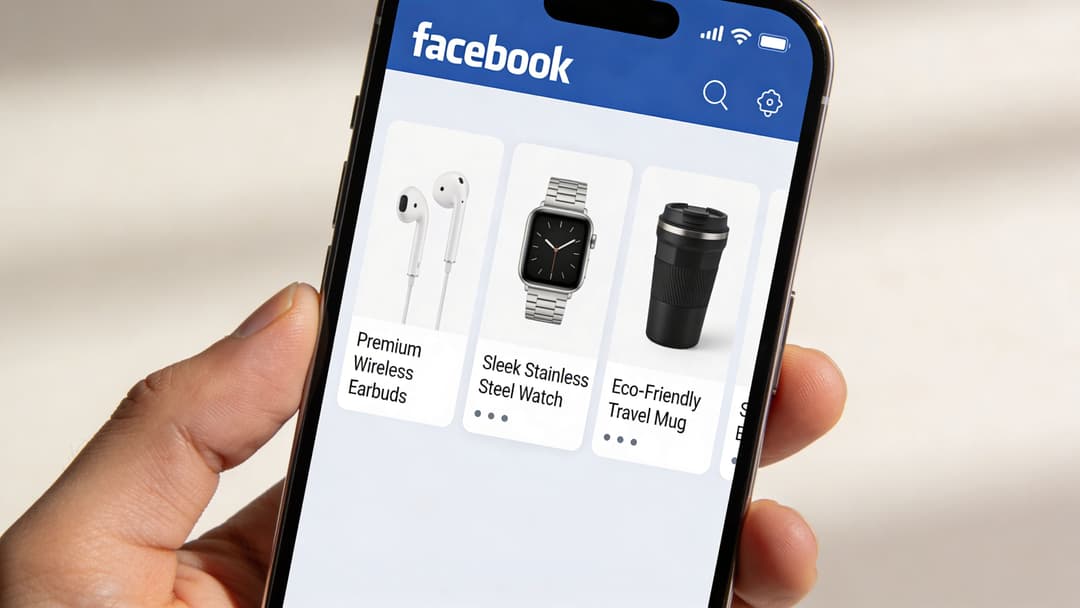
A prospect clicks your ad, lands on a category page, and leaves in five seconds. That usually happens because the ad asked them to do product discovery on your site instead of inside the feed.
Carousel ads solve that problem well. They let an e-commerce brand show range before the click. That matters for catalogs with variants, bundles, accessories, or products that make more sense side by side than alone.
Brands like Glossier, Warby Parker, and Allbirds fit this format because the buying decision often starts with comparison. Shade versus shade. Frame versus frame. Style versus style. A single image can force the wrong choice too early. A carousel gives the shopper a cleaner path.
Strategic breakdown
Creative: Card one earns the click, so put the strongest SKU, benefit, or visual contrast there. Save the brand scene for later unless brand recognition is already high. Each following card should add a reason to keep swiping, not repeat the same product at a different crop.
Copy: Write primary text for the collection, then let each card headline do the selling. "Pick your trail runner" works better than cramming four separate product claims into one intro.
Offer: Group products around one buying job. Travel setup, summer skin routine, under-$50 gifts, starter bundle. The tighter the theme, the easier it is for a cold audience to understand why these items belong together.
Targeting: Use prospecting audiences broad enough to give Meta room to match different cards to different interests. Carousel usually underperforms when the audience is narrow and every card speaks to a slightly different buyer.
A practical framework looks like this:
- Card 1: Best seller or clearest hook
- Card 2: Variant, color, or alternate style
- Card 3: Complementary item that raises AOV
- Card 4: Proof point, review snippet, or offer-driven closer
That sequence works because it mirrors how a shopper evaluates a new brand. First interest. Then preference. Then basket building. Then reassurance.
If your team is producing these at scale, tools for ecommerce carousel ad generation reduce the manual work of swapping products, headlines, and card order. The same production logic also pairs well with broader Facebook lead generation ad workflows when a catalog ad supports list building before the first purchase.
Track outbound CTR and CPC at the card level inside Ads Manager. The winning card often deserves its own image ad or video test.
KPI read on the format
Carousel ads are discovery ads first. Judge them that way. I look for strong outbound click rate, healthy thumb-stop performance on card one, and a product detail view rate that beats static prospecting ads. If those are weak, the problem is usually sequencing, not the format itself.
Three failure patterns show up often:
- Too many unrelated products: The ad feels like a marketplace search result.
- The same message on every card: There is no reward for swiping.
- Weak first card: Users never reach the products that might have sold them.
A good carousel does more than display inventory. It builds a path through the inventory. That is why this format belongs in any list of great Facebook ads. The best examples are not just attractive product cards. They are repeatable frameworks with a clear job, measurable card-level signals, and enough variation to turn one concept into multiple tests.
2. Lead Generation Forms for B2B SaaS
A SaaS team launches a demo campaign, gets a pile of cheap leads, and sales rejects half of them within a week. The format usually gets blamed first. The underlying issue is weaker message-to-form alignment.
Instant Forms work well for B2B SaaS when the conversion action is low friction and the payoff is immediate. Demo requests, webinar signups, audit bookings, and trial interest all fit. The format removes a landing page step, which helps on mobile and usually increases form completion rate. That trade-off is real. You get more volume, but quality depends on how tightly the ad frames the offer before the user opens the form.
Where these ads fail
Teams lower quality themselves by asking for enterprise-level qualification too early.
A user clicks an ad for a CRM cleanup audit and gets hit with job title, company size, budget, timeline, current stack, and phone number. Completion drops. The people who do submit often want the asset, not the sales conversation.
Use the ad to filter. Use the form to confirm fit. Use the thank-you screen to route intent.
Strategic breakdown
Creative: Show the operational pain or outcome. For a support platform, show tickets spread across inboxes, then the unified view. For an attribution tool, show the reporting gap getting closed, not a generic dashboard screenshot.
Copy: Pre-qualify with role, use case, and urgency. "For RevOps teams cleaning up lead handoff issues" does more than extra form fields ever will.
Offer: Specific offers convert better than generic CTAs. "Get a 15-minute funnel audit" sets clearer expectations than "Book a demo."
Targeting: Start with warm or category-aware audiences. Retarget site visitors, engaged video viewers, or CRM lists first. If you go cold, shift the offer up-funnel to a guide, benchmark, or webinar.
Industry analysis suggests that Facebook traffic can produce strong downstream buying activity, which helps explain why the platform still holds budget in B2B acquisition programs. That does not mean every Instant Form lead is sales-ready. Lead quality gets decided after the submit, in enrichment, routing, speed to contact, and the next page experience.
For execution details, this guide to Facebook lead gen ads is relevant if you need a cleaner workflow for form-driven campaigns. If the campaign needs a stronger top-of-funnel asset before the form, these Facebook video ad examples can help shape the creative approach.
Better lead quality usually comes from a tighter promise, one meaningful qualifier, and a thank-you screen that pushes the user into the next committed step.
A repeatable framework I use:
- Headline: Name one painful problem
- Primary text: Call out the audience, explain the outcome, set the next step
- Form: Name, work email, one qualifier tied to fit
- Thank-you screen: Calendly link, asset delivery, or a clear handoff to sales
That is why this belongs on a list of great Facebook ads. The best B2B lead form campaigns are not just high-volume units. They are repeatable frameworks with clear pre-qualification, controlled friction, and a handoff process built to turn form fills into pipeline.
3. Video Ads for Brand and Performance
A cold audience scrolls past your ad in under a second. If the video does not show the product, the problem, or the payoff right away, Facebook charges you for impressions that never had a chance.
That is why strong video ads earn budget across both brand and performance campaigns. They can introduce the category, demonstrate the product, and pre-qualify the click in one asset. The trade-off is production complexity. Video gives you more ways to win, and more ways to waste money.
Two older Facebook case studies still make the point. Sephora used short beauty tutorial style video to highlight products in action on Facebook and Instagram, and Facebook Business reported stronger engagement versus its other creative approach at the time. MeUndies used fast, personality-driven video to make a simple product feel distinct, and Facebook Business featured the campaign as a conversion-focused success. The lesson is not to copy either brand’s style. The lesson is to match the edit to the buying trigger.
Strategic breakdown
Creative: Lead with the strongest visual proof in the first beat. Show the product being used, the result, or the problem being fixed. Brand cues can come later.
Copy: Fill the gaps the video does not cover. Good primary text names the audience, frames the payoff, and sets the click. It should not describe obvious on-screen action.
Offer: Keep one job per ad. If the campaign is prospecting, sell the next step. If it is retargeting, sell the purchase. For follow-up sequences, these Facebook retargeting ad examples show how to shift the message after someone has watched or clicked.
Targeting: Separate broad prospecting from engaged-viewer audiences. Someone who watched 50 percent of a 20-second video has shown a different level of intent than someone who bounced after 3 seconds.
KPI read on the format
Video is not automatically better than static. I have seen static images beat video on CPA when the offer was obvious and the product needed no explanation. Video tends to win when the product benefits from demonstration, objection handling, or founder-led trust building.
The metrics to watch also change by objective. For top-of-funnel campaigns, thumb-stop rate, 3-second views, hold rate, and CTR tell you whether the hook is doing its job. For performance campaigns, focus on outbound CTR, landing page view rate, cost per add to cart, cost per lead, or purchase CPA. High view counts with weak downstream action usually mean the video is entertaining but not qualifying.
Use examples of video ads to build around repeatable frameworks instead of chasing one-off creative concepts:
- Demo-first: Show the product before the explanation
- Problem-solution: Open on the friction, then show the fix
- Creator-style testimonial: Face to camera, direct claim, proof on screen
- Comparison: Old way versus new way, weak option versus better option
AdStellar AI is useful here because video iteration usually breaks on volume. Teams can spot a winning angle, then fail to produce enough hook, headline, and CTA variations to scale it. A framework-driven process fixes that.
Common failure points are predictable:
- Slow openings that delay the payoff
- Videos that only work with sound on
- TV-style brand edits cut down for paid social
- Three different messages forced into one ad
- A strong video paired with weak offer framing
A simple working template:
- Hook: Name the pain or show the result in the first 2 seconds
- Middle: Demo, proof, or objection handling
- Offer: One clear reason to click now
- CTA: Match the campaign goal, shop, learn more, book, sign up
The best Facebook video ads do not just look polished. They compress a sales argument into a format people will watch, then give you clear signals on what to scale, cut, or rewrite.
4. Dynamic Product Ads for E-Commerce Retargeting
A shopper views a bestseller on desktop, adds a second item to cart on mobile, then disappears. If the retargeting setup shows the wrong product, stale pricing, or the same generic discount ad to everyone, spend climbs fast and conversion rate slips.
Dynamic Product Ads fix the matching problem. They connect Meta to your catalog so the ad can serve the exact product, or a relevant set of products, based on what the shopper already viewed, added to cart, or nearly purchased. That is why mature ecommerce teams keep DPAs in the account even when they are testing creators, UGC, and broad prospecting. The format handles intent better than a manually built retargeting ad ever will.
The catch is operational. DPA performance usually breaks in the feed, not in the campaign.
Bad titles, cropped images, duplicate variants, missing availability fields, and price mismatches create weak ads before the auction even starts. Meta can automate product selection. It cannot fix a messy catalog. Brands that treat feed quality as part of creative production usually get cleaner retargeting performance because the ad inherits whatever is in the catalog.
A better benchmark here comes from Meta’s own guidance on dynamic ads, which explains how catalog sales campaigns use shopper behavior and feed data to personalize product delivery at scale: Meta dynamic ads for retail.
A short walkthrough helps:
Strategic breakdown
Creative: Product image quality carries more weight here than clever design. Use clean primary images, test simple overlays for price or sale status, and avoid turning every card into a banner. If the catalog already looks polished, the ad feels more native in feed.
Copy: Match the message to the retargeting window. A product viewer from the last 24 hours needs a reminder and a reason to return. A cart abandoner may need shipping clarity, returns reassurance, or stock urgency. Generic “come back” copy wastes intent.
Offer: Reserve stronger incentives for the deepest intent pools. Cart abandoners and high cart value users can justify a discount test. Product viewers often convert with trust signals, bundles, or low-friction shipping language instead of margin-cutting promos.
Targeting: Segment by event and recency. Viewed content, add to cart, initiate checkout, and past purchasers should sit in separate audiences with clear exclusions. Broad retargeting pools look efficient until frequency rises and product relevance drops.
For KPI analysis, judge DPA on more than ROAS alone. Watch product-level click-through rate, view content to purchase rate, add-to-cart recovery rate, frequency, and feed item rejection issues. If CTR is healthy but purchases stay weak, the usual problem is landing page friction, poor mobile checkout, or a mismatch between catalog data and on-site reality. If frequency climbs while CTR falls, tighten the window or refresh exclusions.
The framework is repeatable:
- Creative template: Clean catalog image plus one light overlay, price, sale tag, or delivery cue
- Copy template for viewers: “Still comparing options? See updated pricing, reviews, and available sizes.”
- Copy template for cart abandoners: “Your cart is still waiting. Check out now before your selected items sell out.”
- Offer template: Free shipping first, discount second
- Targeting template: 1 to 3 day cart abandoners, 4 to 14 day product viewers, customer exclusions
If you are refining audience windows, exclusions, and recency logic, this guide to Facebook retargeting ads fits the workflow side well.
AdStellar AI is useful here for variation control. DPA often wins on structure, but teams still need multiple copy angles for viewers, cart abandoners, seasonal traffic, and higher AOV segments without rewriting everything from scratch.
Dynamic does not mean hands-off. Strong DPA accounts still need feed hygiene, segmented audiences, clear exclusions, and regular checks on which products the system is pushing hardest.
5. Collection Ads for Multi-Product Discovery
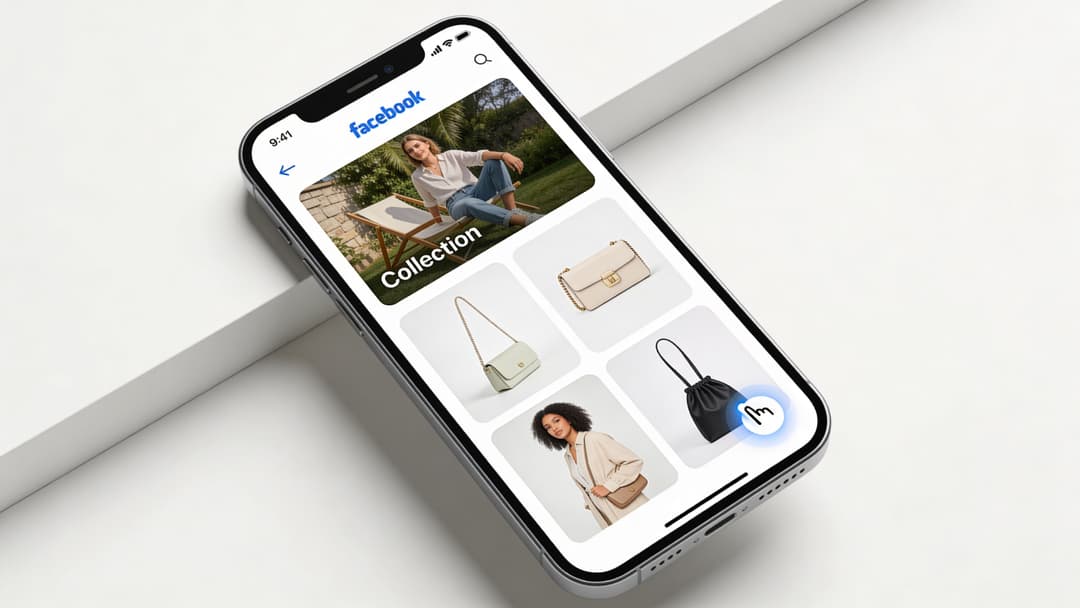
A shopper taps an ad for a summer outfit, sees the hero image, and immediately gets four matching products underneath. That is the use case collection ads solve better than a standard image ad or a plain product grid.
On mobile, that matters. The format gives brands a way to sell the idea first, then the products, without asking for a hard click before interest is formed. Retailers with broad assortments use it well because it turns browsing into a guided path instead of a loose catalog dump.
Why the format works
Collection ads separate jobs cleanly. The hero asset creates context, and the product tiles help the shopper choose.
That structure is effective for multi-product discovery because people rarely want one item in isolation. They want the routine, the room setup, the outfit, the gift bundle, or the travel kit. A strong collection ad packages that intent into a single creative system.
Creative: Build around one buying angle. A seasonal look, starter kit, skin care routine, or category bundle usually performs better than a mixed set of unrelated products.
Copy: Keep the headline and primary text tight. The visual sequence is doing a lot of the persuasion, so the copy should clarify the use case or buying occasion, not repeat what the shopper can already see.
Offer: Curated sets usually beat random bestsellers. “Desk setup essentials” gives the shopper a reason to keep exploring. “Shop our top picks” is weaker because it lacks a clear selection logic.
Targeting: Collection ads fit cold prospecting when the category needs visual merchandising. They also work for warm audiences that viewed a category page but did not settle on a product.
The KPI pattern is different from retargeting formats. I watch outbound CTR, instant experience opens, product detail views, and downstream purchase rate by collection theme. High opens with weak product clicks usually means the hero creative is interesting but the tile selection is off. Strong product clicks with weak conversion often points to pricing mismatch, weak assortment logic, or a landing experience that breaks the momentum created in the ad.
What usually underperforms:
- A polished hero image paired with products that do not match the story
- Too many low-intent tiles, especially accessories with no obvious connection
- Generic copy that gives no reason for this product grouping to exist
- A destination page that drops shoppers into a cluttered category instead of a filtered set
A good collection ad should feel merchandised, not assembled.
I get the best results when the product set answers a real shopping question. “Build a morning routine under $60” is clear. “Explore our range” is vague. That trade-off matters because collection ads sit between inspiration and action. If the concept is too broad, the ad earns curiosity but not selection.
For teams building variations at scale, AdStellar AI is useful for generating multiple angles around the same collection structure. One hero concept can be turned into several versions by audience, offer type, or product grouping, while keeping the creative and copy aligned across the full ad unit.
6. Conversion Ads with Custom Conversions for B2B Performance Tracking
A B2B account can show a healthy CPA and still miss pipeline goals.
That usually happens when Meta is optimizing for the wrong action. Ecommerce accounts can rely on purchase events. B2B teams rarely get that luxury. The actions that matter are messier, such as booked demos, qualified trials, pricing-page submits, proposal requests, and product activation milestones. If those events are not defined clearly, reporting turns into noise and the algorithm learns from weak signals.
The fix is straightforward. Build custom conversions around revenue-relevant steps, then separate campaigns by intent instead of rolling every lead action into one bucket.
A SaaS brand might run one campaign for demo requests, one for free trials, and one for onboarding completion after signup. Those are different jobs. A demo campaign can tolerate a higher CPA because the lead is closer to sales. A trial campaign needs lower friction and more volume. An onboarding campaign often targets warmer users and should be judged by activation rate, not by front-end lead cost alone.
Strategic breakdown
Creative: State the operational problem and the business outcome in plain language. “Cut support backlog by 30%” gives Meta and the buyer a clearer signal than product jargon.
Copy: Match the ask to the event. Trial ads should reduce perceived effort. Demo ads need a stronger reason to book time, such as a specific workflow improvement or cost-saving angle.
Offer: Use an offer that earns the click. Benchmarks, audits, ROI calculators, implementation plans, and direct product proof usually perform better than generic “learn more” CTAs in B2B funnels.
Targeting: Split education from demand capture. Broad audiences can feed trial or content-driven conversions. High-intent segments, such as site visitors, CRM lists, or bottom-funnel page viewers, are better fits for demo and sales-contact events.
The KPI review has to go past surface CPA. I look at cost per custom conversion, meeting rate from form fills, sales acceptance rate, and opportunity creation by campaign. That is where weak setup gets exposed. A cheap lead source often collapses once sales starts qualifying.
A practical framework looks like this:
- Track event 1: Form submit
- Track event 2: Meeting booked
- Track event 3: Opportunity created
- Compare: Ad-level CPA against downstream qualification and pipeline yield
One trade-off matters here. Early events give faster feedback, which helps during the learning phase. Revenue-proximate events give better optimization signals, but only if volume is high enough. I usually start with the earliest event that still reflects real intent, then shift budget and optimization toward deeper funnel actions once the account has enough data to support it.
Teams using AdStellar AI can speed up this process by generating campaign variants mapped to each conversion stage, then testing which message pulls not just more leads, but better leads. That is the point of this framework. The ad is only half the job. The conversion definition decides whether Meta finds volume or finds buyers.
7. Reels Ads for Virality and Engagement
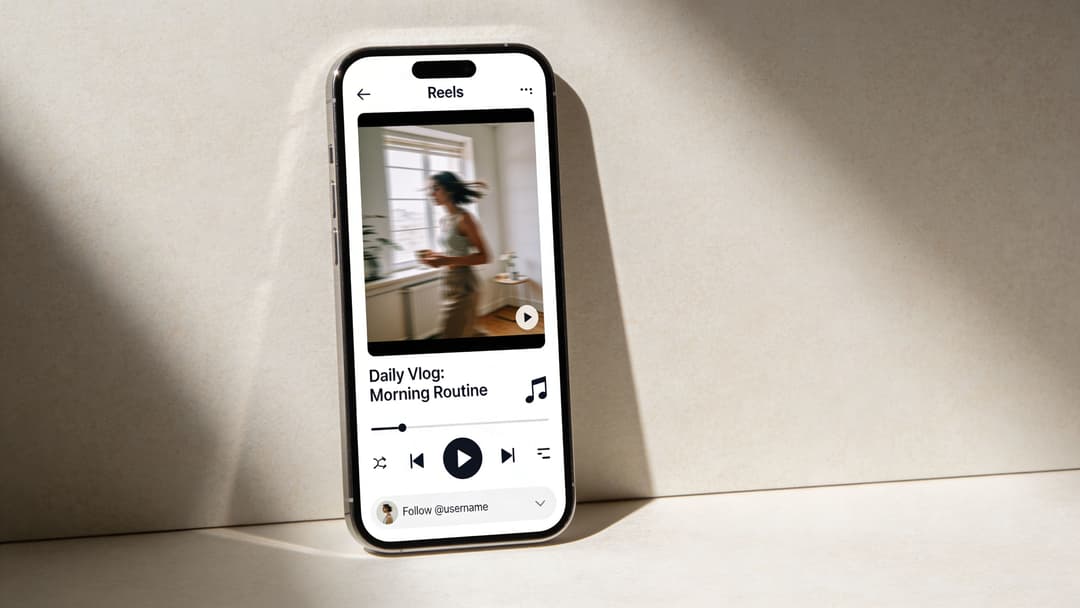
A brand cuts a polished 30-second product video, drops it into Reels, and watches hold rate collapse in the first two seconds. That happens because Reels is not just another placement. It is a different creative environment with different viewer behavior.
The advertisers that win here build for interruption speed. Chipotle, Gymshark, Dunkin’, and creator-led DTC brands use fast scene changes, human presence, direct product context, and edits that feel native to short-form video. Reels rewards ads that look like they belong in the feed and still make the product clear.
A useful example comes from Meta’s own case study library. In Meta’s write-up on La Redoute, the brand used creator-led vertical video across Reels and Stories with Advantage+ shopping campaigns to improve purchase efficiency and incremental return. The lesson is broader than one retailer. Placement fit and creative style can change performance materially, even when the offer and audience stay similar.
Strategic breakdown
Creative: Start with motion, a face, a product demo, or a visible outcome in the first second. Vertical framing should be planned at shoot time, not fixed in editing. If the asset depends on a logo intro or slow setup, it usually loses the scroll before the pitch lands.
Copy: Keep on-screen text and primary copy short enough to support the video, not compete with it. Reels viewers process the hook from motion first, then captions, then body copy if they care enough to pause.
Offer: Match the ask to the audience temperature. Cold audiences often respond better to curiosity, social proof, or a low-friction entry point. Retargeting can handle a stronger CTA because the viewer already knows the product.
Targeting: Broad targeting often works well if the creative is native to the placement and the hook is specific. In Reels, the ad does more of the targeting work than marketers expect. Weak creative gets exposed fast.
One source of underperformance is operational, not strategic. Teams still crop feed videos into 9:16, keep dense text overlays, and hope placement automation will solve the mismatch. It rarely does. Reels needs its own version of the concept, even if the core message stays the same.
Reels works best as a framework, not a format choice. Build for speed, visible relevance, and one clean viewer action.
What usually underperforms:
- Horizontal or square assets forced into vertical
- First frames with no person, product, or payoff
- Captions that cover half the screen
- Studio-polished edits with no creator-style energy
- Copy that asks for the sale before earning attention
A repeatable framework looks like this:
- Hook: Show the problem, outcome, or product use in the first second
- Proof: Add demo footage, UGC reaction, testimonial clip, or before-and-after context
- Offer: Give one reason to act now
- CTA: Keep it simple and placement-appropriate
If a team is producing Reels at scale, AdStellar AI can help generate multiple hook and script angles from the same offer so creative testing does not stall after one concept. That is the practical advantage of this format. Reels is not just for reach or vanity engagement. Used well, it becomes a repeatable top-of-funnel framework that feeds clicks, view-through lift, and assisted conversions.
8. Lookalike Audiences from High-Value Customer Cohorts
A prospecting campaign can look healthy on the front end and still bring in the wrong customers.
That usually happens when the seed audience is too broad. If the source list mixes one-time discount buyers, low-margin orders, and your best repeat customers, Meta will find more people who resemble the average. That average is rarely the customer you want more of.
The better framework is cohort-first seeding. Build lookalikes from customer groups that reflect business value, then test each one as its own acquisition path. This is less about finding reach and more about controlling who the algorithm goes out to find.
Brands with wide gaps in lifetime value use this approach because it changes traffic quality, not just volume.
A more useful seeding approach
Create separate seeds for:
- High-repeat customers
- High-AOV buyers
- Long-retention accounts
- Engaged email subscribers
- Recent converters
Then pair each seed with a message that matches why that cohort buys.
Strategic breakdown
Creative: Show the angle that fits the cohort. High-AOV lookalikes often respond to premium positioning, product detail, and outcome clarity. Recent-converter lookalikes usually need a simpler first-purchase message.
Copy: Write to motive, not demographic guesses. Convenience, durability, status, savings, and speed attract different buyers, even inside the same product category.
Offer: Protect margin where the seed quality is high. Stronger cohorts often convert with lighter incentives, while broader or lower-intent audiences may need a clearer entry offer.
Targeting: Keep ad sets separated long enough to judge quality after the click. If you blend seeds too early, you lose the ability to see which cohort is driving better CAC, AOV, or downstream retention.
A practical benchmark matters here. Larger seed audiences give Meta enough signal to scale, but the composition of that seed matters more than the raw size. A 1 percent lookalike from your top 1,000 customers often beats a larger lookalike built from every past purchaser.
I see teams dilute this strategy by stacking interests on top of a good seed. Sometimes that can help with compliance, geography, or category fit. More often, it constrains delivery and turns a strong customer-derived audience into a smaller, muddier one.
If you are building this framework at scale, AdStellar AI can help generate distinct creative angles for each cohort so the testing plan reflects the seed logic. That is the operational win. The ad, copy, offer, and audience are built as one system instead of four separate guesses.
9. Sequential Messaging for Multi-Touch Journeys
A prospect clicks your first ad, skims the landing page, then leaves. Two days later, you hit the same person with a hard conversion ask. That usually wastes the click.
Sequential messaging works because buying decisions rarely happen in one exposure, especially in B2B SaaS, subscriptions, considered ecommerce, and any offer that needs proof before commitment. The job is not to show more ads. The job is to change the message as intent changes.
HubSpot, Calendly, and similar brands use this well. The first touch frames the problem. The second gives proof, education, or product clarity. The third asks for the conversion. Ecommerce brands can run the same structure with launch education, product benefits, and then a time-bound purchase trigger.
Strategic breakdown
Creative: Give each stage one clear role. Stage one should stop the scroll and frame the problem. Stage two should show the product, result, or customer proof. Stage three should look closer to the sale, with stronger CTA treatment and clearer offer framing.
Copy: Write each ad to earn the next action. The first ad should create relevance. The second should answer the obvious objection. The third should reduce friction with specifics on price, trial terms, shipping, guarantees, or implementation.
Offer: Match the ask to the temperature of the audience. Cold users can take a guide, quiz, short video, or product explainer. Warm users can take a demo, trial, discount, or direct checkout push.
Targeting: Build the sequence from behavior you can verify. Video viewers, engaged Instagram users, landing page visitors, pricing page visitors, and cart abandoners should not see the same follow-up.
This framework wins because message architecture often matters more than any single ad. I have seen average top-of-funnel creative produce strong blended results when the second and third touches handle the primary conversion work.
A simple sequence usually looks like this:
- Stage 1: Pain point, insight, or category problem
- Stage 2: Demo, testimonial, comparison, or feature explanation
- Stage 3: Direct offer with CTA
- Stage 4: Reminder focused on urgency or risk reduction
Facebook still matters here because it gives advertisers enough reach, retargeting depth, and placement variety to build these journeys inside one system, as noted earlier. If your team needs help producing distinct angles for each touchpoint, AI tools for Facebook ads can speed up the creative workflow without collapsing every stage into the same message.
The common failure is simple. Teams run one retargeting ad with a discount for every recent visitor. That creates repetition, not progression. A proper sequence answers a different question at each step, and that is what moves a user from curiosity to conversion.
10. Advantage+ Shopping Campaigns for AI-Driven Automation
A common scenario looks like this. A store has enough purchase data to train Meta, but the account is still split into too many audiences, too many manual tests, and too many small ad sets. Spend gets fragmented, learning resets too often, and the team mistakes account complexity for strategy.
Advantage+ Shopping Campaigns work best after a product, price point, and conversion path are already proven. The upside is scale and faster delivery decisions across placements and audiences. The cost is reduced control over manual segmentation, exclusions, and budget shaping. For e-commerce brands with clean pixel signals, a solid catalog, and enough conversions coming through, that trade often makes sense.
Why this framework works
Advantage+ is not an ad format. It is an automation framework. That distinction matters.
Used well, it combines broad audience finding, placement optimization, and creative rotation inside one campaign structure. Used poorly, it becomes a place to dump average assets and hope Meta figures it out. The second approach usually burns budget because the system can optimize delivery, but it still depends on strong inputs.
Strategic breakdown
Creative: Give Meta real variation. Mix UGC, product demos, statics, founder clips, offer-led images, and benefit-first hooks. Five distinct angles beat twenty resized versions of the same product shot.
Copy: Keep the message clear enough for broad delivery. Lead with the product promise, objection handling, or offer. If the copy needs three paragraphs to explain the item, this setup is probably too automated for the stage of the funnel.
Offer: Advantage+ performs best with straightforward consumer offers. Clear pricing, an understandable discount, bundle logic, free shipping thresholds, or a strong hero product tend to fit. Products that need education, sales calls, or heavy comparison often perform better with tighter manual control.
Targeting: Broad targeting is part of the point. The primary job is not audience stacking. It is feeding the system quality conversion signals and checking whether it is bringing in profitable customers, not just cheap purchases.
One practical rule helps here. Judge the campaign on contribution margin and customer quality, not only front-end ROAS. Automation can find volume fast, but if it shifts too hard toward low-AOV buyers or one-time discount shoppers, the account looks healthy in-platform and weaker in the P&L.
For teams that struggle to generate enough creative variation before launch, AI tools for Facebook ad creative testing can help build more angles without turning every asset into the same ad with a different headline.
What usually breaks this framework:
- Weak product feed data or broken event tracking
- Too few creative angles for the algorithm to rotate
- Frequent edits during learning
- Judging performance too early
- Treating automation as the strategy instead of the delivery system
The replicable framework is simple. Start with a proven SKU or tight product set. Feed the campaign distinct creative concepts, not minor edits. Keep the offer obvious. Then watch downstream metrics such as AOV, new customer mix, and repeat purchase behavior. That is how Advantage+ becomes a scalable acquisition engine instead of an expensive black box.
10 Effective Facebook Ad Examples Compared
| Ad Format | Implementation Complexity | Resource Requirements | Expected Outcomes | Ideal Use Cases | Key Advantages |
|---|---|---|---|---|---|
| Carousel Ads for E-Commerce Product Discovery | Medium : create 3+ cards, per-card tracking | Multiple images/videos, creative production, analytics | Higher engagement; effective product discovery and in-ad A/B testing; strong e‑commerce ROAS | DTC brands with multiple SKUs, product launches, sequential storytelling | Multi-product showcase, simultaneous testing, strong engagement |
| Lead Generation Forms (Instant Forms) for B2B SaaS | Low–Medium : form design + CRM/webhook setup | Minimal creative, CRM integration, form optimization | Higher conversion rates and lower CPL; immediate lead capture | B2B SaaS demos, webinars, newsletter signups | Reduced friction, pre-filled fields, instant CRM ingestion |
| Video Ads (3‑Second Bumpers to Full‑Length) for Brand & Performance | Medium–High : produce/edit multiple lengths/aspect ratios | Video production, captions, editing variants, optimization | Highest engagement and retention; strong brand lift and conversion potential with good hooks | Brand storytelling, product demos, webinars, retargeting | Superior engagement, rich view metrics, favored by algorithm |
| Dynamic Product Ads (DPA) for E‑Commerce Retargeting | High : catalog, pixel/events, feed management | Product feed, inventory sync, developer setup, event tracking | Very high ROAS for retargeting; scalable personalized ads; recovers abandoned carts | E‑commerce retargeting, cart recovery, multi‑SKU campaigns | Real‑time personalization, automated matching, scale without manual combos |
| Collection Ads (Interactive Showcase) for Multi‑Product Discovery | Medium : primary creative + catalog tiles, mobile design | Quality primary video/image, product photography, catalog integration | Increased in‑ad browsing and add‑to‑cart rates; strong impulse purchases on mobile | Multi‑category discovery, cross‑selling, mobile‑first shoppers | Mini‑storefront experience, reduced friction, interactive discovery |
| Conversion Ads with Custom Conversions for B2B Performance Tracking | Medium–High : pixel/Conversions API and event/value setup | Developer implementation, analytics, sufficient conversion volume | Direct optimization for revenue/qualified leads; measurable ROAS and value‑based bidding | B2B SaaS acquisition, e‑commerce revenue optimization, high‑value lead tracking | Precise ROI measurement, algorithm learns from conversions, value optimization |
| Reels Ads (Short‑Form Native Video) for Virality & Engagement | Medium : trend‑aware creative and vertical editing | Short vertical videos, trending audio, fast creative cadence, creator partnerships | Lowest CPM, high organic reach and completion rates; strong virality potential | Gen Z / younger millennial targeting, entertainment‑first brand campaigns | Algorithm amplification, high reach, strong engagement and virality |
| Lookalike Audiences from High‑Value Customer Cohorts | Low–Medium : prepare source cohorts and create lookalikes | High‑quality source data (CRM/pixel), minimum converters for reliability | Scalable prospecting with higher conversion rates vs. cold targeting | Scaling acquisition, high‑LTV prospecting, post‑retargeting prospecting | Automated scalable targeting, higher‑quality prospects, broad applicability |
| Sequential Messaging (Asset Groups & Rules) for Multi‑Touch Journeys | High : rules, sequencing, asset planning and attribution | Multiple creatives per stage, segmentation, timing/rule setup | Improved relevance and ROAS for multi‑touch journeys; reduced ad fatigue | High‑ticket B2B, long consideration purchases, webinar funnels | Staged nurture, customized messaging per engagement, higher conversion efficiency |
| Advantage+ Shopping Campaigns (AI‑Driven Full‑Funnel Automation) | Low–Medium to launch; AI handles ongoing optimization | Complete product feed, many creative assets, budget and high conversion volume | High ROAS at scale when sufficient data exists; simplified campaign management | Large e‑commerce catalogs, ROAS‑focused scaling, brands trusting AI automation | Automated audience/creative/placement optimization, fast scaling, reduced manual work |
From Inspiration to Implementation Your Next Steps
The main lesson across these examples is simple. Great Facebook ads are rarely one-off creative breakthroughs. They come from a system.
Carousel ads work when you need breadth. Lead forms work when friction is the enemy. Video works when the product needs demonstration or pacing can carry attention. DPAs and Shop-style experiences win when relevance and reduced friction matter more than handcrafted storytelling. Reels work when the ad behaves like the placement. Lookalikes work when the source audience reflects customer quality, not just customer volume. Sequential messaging work when one touch is not enough. Advantage+ works when your inputs are strong enough for automation to help instead of hurt.
That is how seasoned media buyers think about examples of great facebook ads. Not as isolated winners, but as repeatable frameworks matched to funnel stage, buying behavior, and available data.
If you are rebuilding your own account structure, start smaller than many teams prefer. Pick one framework that matches the KPI you care about most right now.
If you need more first purchases, test carousel, collection, or Advantage+ with a clear product set.
If your issue is lead flow, tighten an Instant Form offer and clean up the handoff after submission.
If your account gets clicks but not enough conversions, work on the bridge between ad and landing page before blaming targeting.
If you sell a considered product, build a sequence instead of forcing cold traffic straight into a hard conversion ask.
The trade-offs matter. Broad targeting can unlock scale, but only if the creative is explicit enough to self-qualify. Native-looking Reels can win attention, but weak offers still stay weak. Retargeting can produce efficient purchases, but only if the feed, exclusions, and audience windows are clean. Automation can save time, but it does not replace good inputs.
That is why ad review should become framework review.
When a campaign underperforms, ask four questions:
- Is the format right for the job?
- Is the message right for the audience temperature?
- Is the offer strong enough for the amount of friction?
- Is the account producing enough variations to let winners emerge?
Those questions reveal the issue faster than another round of random tweaks.
A practical operating model helps. Build a small matrix of creative angles, copy variations, offers, and audiences. Launch enough combinations to learn something meaningful. Cut obvious losers early. Promote the winning angle into more formats. Then retest the message in the next stage of the funnel.
That process is where platforms like AdStellar AI can fit. Not as a substitute for strategy, but as a way to produce and test more variations without turning campaign setup into a manual slog. If your team is managing a large Meta account, multiple client brands, or frequent creative refreshes, speed of iteration becomes a real advantage.
The next ad that scales is unlikely to come from staring at a competitor screenshot longer. It will come from choosing the right framework, building enough variations around it, and assessing the account objectively once data starts coming in.
If you want a faster way to turn these frameworks into live campaigns, AdStellar AI helps teams generate, launch, and test large sets of Meta ad variations from one workflow, which is useful when creative volume is the bottleneck.