You launch a new campaign on Monday. By Friday, the spend is gone, the click-through rate is average, and the leads that did come in are a mix of renters, curious neighbors, and buyers who are six months out. That pattern is common in real estate because the problem usually is not budget. It is ad structure.
A real estate agency ad has to do more than announce a listing or put your logo in front of a ZIP code. It has to match the stage of intent, show proof fast, and give the prospect one clear action to take. Feed competition is brutal, especially inside Meta and Google, where your ad sits next to retail offers, creator content, and other local service businesses buying the same attention.
Budget allocation has already shifted online. The National Association of REALTORS® reports that agents use websites, social media, and search platforms as core marketing channels because buyers start their research there and compare options long before they contact an agent directly, according to the NAR Technology Survey. If your ads still look like print mailers resized for the feed, the message and the placement are working against each other.
The agencies succeeding now run systems instead of one-off promos. They pair creative with audience intent. They separate cold prospecting from retargeting. They build campaigns that move from attention to lead capture to follow-up, with different messages for sellers, first-time buyers, investors, and past site visitors.
That is the angle of this swipe file. Each example goes past inspiration and into execution. You will see the headline approach, copy structure, visual direction, targeting logic, A/B test ideas, and the operational details that make scaling possible. Teams producing a lot of social proof content can also use an AI testimonial video creator for ad production to turn client stories into faster testable assets.
Use these eight formats as campaign building blocks, not isolated ad ideas. That is how agencies turn media spend into qualified pipeline instead of vanity metrics.
1. Video Carousel Ad with Agent Testimonial
A homeowner is scrolling between listing photos, lender ads, and neighborhood videos. Your agency gets about one second to prove it understands the market and can be trusted with a high-value decision. A video carousel built around agent testimonials does that well because it shows expertise, personality, and proof in a format people already consume in-feed.
Use three to five short videos. Each card should earn its place. One strong pattern is: agent credibility on card one, client outcome on card two, process or marketing approach on card three, then a direct CTA on the final card. That turns the ad into a mini funnel instead of a generic brand piece.
What the ad should look like
Open with motion and a face, not a logo. An agent mid-sentence, a seller reacting to an offer update, or a quick listing-prep transformation usually stops the scroll faster than branded animation.
Strong headline options:
- Why sellers in this market call us first
- See how our agents market listings
- Real clients, real closings, real strategy
- First-time buyers trust this process
Body copy should stay tight and specific. For example:
“Meet the team behind listing launches that attract attention, tighter follow-up, and client communication that stays clear from first call to closing.”
The visuals matter as much as the script. Keep each clip under 20 seconds. Add burned-in captions. Mobile placement is too common to assume sound is on. Use simple text overlays with one idea per card. If every frame is covered in labels, badges, and talking points, attention drops fast.
Keep overlays sparse. The ad should feel like a confident person speaking, not a PowerPoint exported into Reels.
Why this format works
Testimonial video pulls together two things real estate ads need to establish early: trust and competence. The format also gives you more testing angles than a single talking-head ad because each carousel card can sell a different part of the story.
I have seen this work best when the testimonial is not vague praise. “She was amazing” is weak creative. “We got three qualified offers in six days after our previous listing sat for a month” gives the prospect a concrete outcome and gives your media team a sharper hook to test. If you want a stronger conversion path behind the creative, pair this format with a real estate lead generation ad structure that matches the CTA to audience intent.
Targeting and A/B tests
Match the speaker to the audience segment:
- Luxury sellers: Use the agent who communicates discretion, pricing confidence, and process control.
- First-time buyers: Use the agent who explains clearly and reduces uncertainty.
- Investors: Use the agent who speaks to speed, inventory access, and numbers.
Useful tests:
- Agent-led opening vs property-led opening
- Client testimonial clip vs agent explanation clip
- “Book a consultation” vs “Get your home value” CTA
- One agent across all cards vs different agents by audience pain point
If your team needs more creative volume, use an AI testimonial video creator workflow to turn one set of interviews into multiple hooks, cuts, and CTA variants, then scale the versions that produce qualified leads instead of cheap clicks.
2. High-Intent Lead Magnet Ad
A prospect scrolls past “Contact an agent” in half a second. The same prospect will stop for a tool that answers a live question, especially when the market feels uncertain.
That is why lead magnet ads keep producing qualified demand from cold audiences. They create an exchange the user understands immediately. Give me a useful answer, then ask for my details.
The format works best when the offer matches a real decision point, not generic curiosity.
The strongest angles
Choose the lead magnet based on intent, not on what sounds clever in a brainstorm.
For sellers, strong offers include:
- What could your home sell for right now?
- Is this the right time to list your home?
- Find out what buyers may pay for your property
For buyers, use:
- Are you ready to buy in this market?
- Find the neighborhoods that fit your budget
- See what kind of home your budget supports
For investors, test:
- Evaluate your next property faster
- Compare deal potential before you tour
- Get a quick investment property assessment
Static image ads usually win the first test because they communicate the value fast and are easier to iterate. Short-form video can outperform once the offer needs explanation, such as a buyer readiness tool with multiple outcomes or a report with neighborhood-level recommendations.
What to put on the landing page
The landing page has one job. Preserve intent.
Ask for the inputs that improve the output:
- Property type or buying stage
- Budget range or estimated home details
- Timeline
- Preferred area
- One contact field before showing the result or unlocking the full report
I have seen teams kill conversion rates by front-loading six or seven fields before the user gets anything back. That setup gives sales more data, but it usually gives media buyers worse economics. If the tool promises speed, the form has to feel fast.
For teams building these at scale, the cleanest execution usually comes from a dynamic ad workflow for local offers and audience segments. It helps when you need multiple creative versions tied to seller, buyer, and investor intent without rebuilding every asset manually.
A good benchmark for this format is relevance, not volume. The ad, the question set, and the result page should all feel built for the same person. Industry examples from Zillow, Realtor.com, and large brokerage funnels follow this pattern consistently. They narrow the promise, ask for just enough context, then return a result that feels specific.
That is what makes this more than a gallery example. In a real swipe file, the ad concept, landing page logic, audience targeting, and follow-up sequence all have to connect.
What to test before you scale
Test the promise first. Then test the packaging.
Useful A/B tests:
- “Home value” vs “Should you sell”
- “Buyer readiness” vs “What can you afford”
- Results-first headline vs anxiety-reduction headline
- Short form with immediate answer vs slightly longer form with richer output
Go one layer deeper on targeting, too. Run separate ad sets for recent site visitors, broad local cold traffic, and in-market lookalikes. The same lead magnet can perform very differently depending on whether the user is casually browsing or actively comparing agents.
If you are building campaigns at volume, use lead gen ad testing patterns to spin up multiple hooks, audiences, and result-page variants quickly.
Overbuilt quizzes usually lose. People want a useful answer fast, not a ten-step survey disguised as personalization.
3. Property Listing Showcase Ad
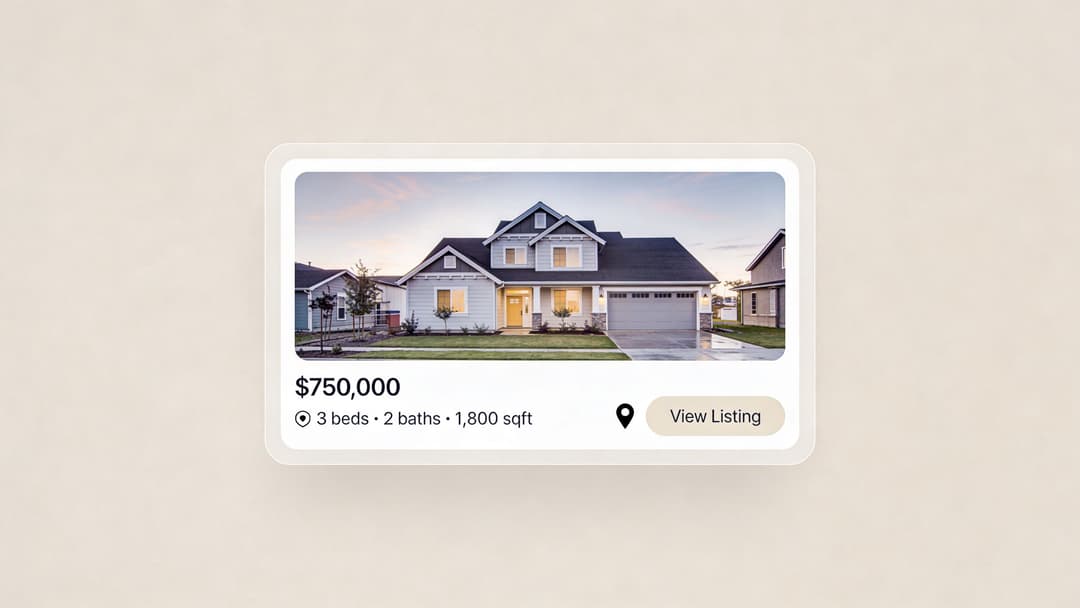
A buyer views three homes on your site Friday night. By Saturday morning, they should be seeing those same listings, or close substitutes, in paid social. If that handoff breaks, listing ads turn into manual busywork and missed demand.
Property showcase ads work best when they are feed-driven and listing-specific. The format is simple. The execution is not. Feed quality, image selection, price accuracy, and audience rules decide whether these campaigns produce tour requests or just cheap clicks.
Where property listing showcase ads earn budget
Use this format when the inventory itself is the offer. That usually means active listings, frequent price changes, new-to-market properties, or a large enough catalog that manual ad building slows the team down.
Strong setups usually include:
- A reliable MLS or property feed sync
- Naming conventions for property type, price band, and location
- Distinct audience pools based on on-site behavior
- A landing experience that picks up where the ad left off
The creative has one job. Help the user qualify the property fast. Lead with price, neighborhood or city, bed and bath count, and a strong primary image. Anything beyond that belongs on the listing detail page.
Headline examples:
- Homes available in [City]
- New listings in your price range
- See homes near [Neighborhood]
- Tour properties that match your search
The strategy behind the swipe file example
A weak version of this ad throws every property into one campaign and hopes the platform finds the right buyer. A stronger version breaks inventory into business-ready segments: starter homes, move-up homes, luxury, condos, and investor-friendly units. That gives you cleaner reporting, better budget control, and ad copy that matches what the user is seeing.
The copy should reflect the segment, not just the feed field. Starter-home campaigns can focus on affordability and monthly payment range. Luxury campaigns usually perform better with privacy, finishes, and location cues. Investor inventory needs yield, renovation upside, or tenant-ready framing. Same format, different buying logic.
Paid search still captures the clearest hand-raisers in real estate. Listing showcase ads support that intent by following site visitors, search-driven traffic, and saved-listing users with properties that fit the same pattern. That is why this section belongs in a real swipe file, not a gallery. The ad unit, feed structure, targeting, and follow-up all have to line up.
What to test before you scale
Start with the feed, then test the layers around it.
Useful A/B tests:
- Primary image: exterior curb appeal vs kitchen or living room
- Copy angle: new listing, price drop, neighborhood fit, or move-in ready
- Audience: broad local, listing viewers, saved-search users, or recent lead non-bookers
- Segmentation: single-family, condo, luxury, investor, or school-district-specific
- CTA: view details, schedule a tour, save listing, or ask an agent
One practical rule matters here. Do not judge these campaigns on click-through rate alone. Watch downstream actions by segment: listing detail views, saved homes, tour requests, and qualified inquiries. A lower-CTR luxury campaign can still outperform on commission-weighted pipeline.
If your team is producing campaigns at scale, use dynamic ad workflows for display and social campaigns to test copy overlays, audience splits, and feed segments without rebuilding every property ad by hand.
4. Educational Content and Authority Positioning Ad
A homeowner sees three listing ads before breakfast, ignores all of them, then clicks a local market explainer because it answers a question they already have. That is the job of an authority ad. It earns attention before it asks for contact details.
For real estate agencies, this format works best when the topic is tied to a live decision. Market updates, pricing guidance, neighborhood explainers, seller prep checklists, first-time buyer workshops, and relocation briefs all fit. Generic “join our webinar” creative usually underperforms because the user has to care about the format first. Strong ads make the pain point obvious in the first line.
Package expertise around the decision, not the asset
Use the same rule strong direct-response teams use in search and paid social. Lead with the problem the audience is trying to solve, then introduce the guide, event, or report as the answer.
Weak angle: “Join our webinar on the housing market.”
Stronger angle: “See what sellers in [Area] are mispricing before they list this month.”
That shift matters because it changes the ad from a content announcement into a decision aid.
Hooks that usually produce qualified engagement:
- Why homes in [Area] are taking longer to sell
- What first-time buyers should fix before applying for a mortgage
- How to price a home when inventory starts rising
- What relocation buyers miss about [City] taxes, commute time, or school zones
This is also where practitioners can turn a swipe file into execution. For each topic, define the headline, opening copy, creative format, audience, follow-up sequence, and test plan before launch. If the team needs fresh angles, these sample ad copy examples for different campaign goals are a useful starting point for message testing.
Why this format earns budget
Authority campaigns rarely win on immediate form-fill rate alone. They create cheaper remarketing pools, improve email engagement, and warm up users who are still early in the decision cycle. In residential real estate, that matters because a large share of buyers and sellers are not ready to book a call the first time they see your brand.
Brand campaigns from the National Association of Realtors have shown that trust-based messaging can move perception at scale. The lesson for agency operators is practical. Educational media can raise response rates later if the topic is specific, local, and followed by a clear next step.
Build the funnel before you buy traffic
The ad should promise one useful insight. The landing page should deliver that insight fast, then offer the next action without forcing it. After that, follow-up does the heavy lifting.
A simple structure works:
- Ad introduces a timely local question.
- Landing page gives a short answer, checklist, or registration option.
- Email sequence expands on the topic over several touches.
- Retargeting shifts the CTA to valuation, consultation, or tour booking based on behavior.
The trade-off is straightforward. Short guides usually get more top-of-funnel engagement. Webinars and workshops filter harder and often produce fewer but stronger leads. Teams that need pipeline fast should usually test both and judge performance on booked calls, valuation requests, and assisted conversions, not just cost per lead.
One rule from campaign management applies every time. If the educational ad has no retargeting and no email follow-up, it becomes a branding spend with weak attribution and inconsistent revenue impact.
A good authority ad does not need flashy creative. It needs a sharp local insight, clean copy, and a conversion path that respects buyer timing. That is what makes it a real acquisition asset instead of another “helpful content” post that never turns into pipeline.
5. Social Proof and Success Metrics Ad
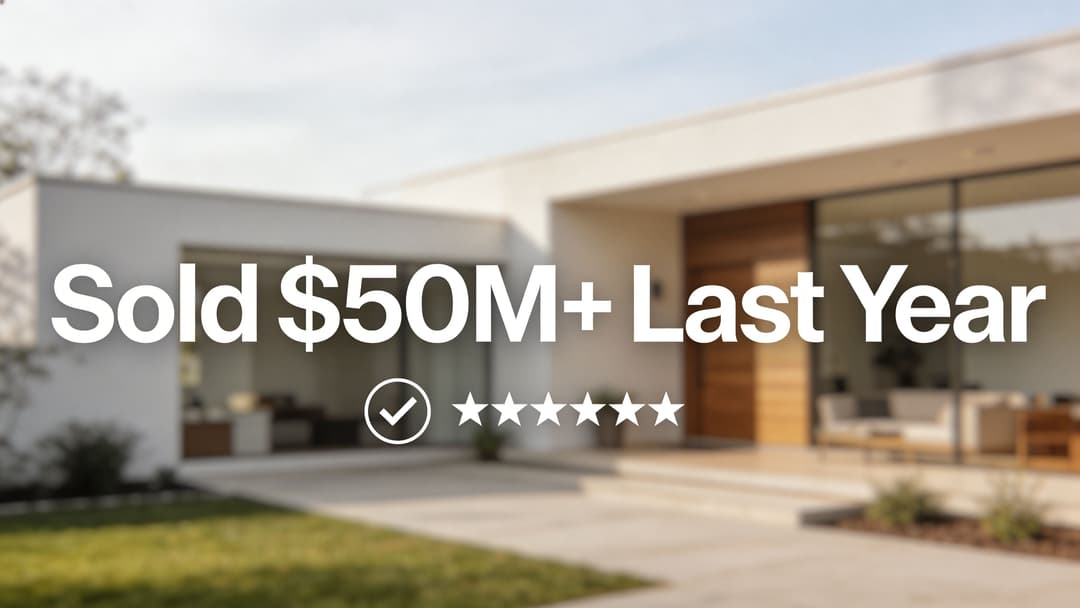
A seller scrolls past ten agents who all claim great service. One ad shows a sharp home image, one credible metric, and a direct next step. That ad gets remembered because it reduces uncertainty fast.
This format works when the proof point answers a real seller question. Can this team market my home well, attract serious buyers, and close without friction? A vanity number like “#1 trusted” does none of that. A specific claim tied to your process or market position can.
Use proof that changes behavior
Pick one signal and build the entire ad around it. Good options include:
- homes sold in a defined area or price band
- average days to contract compared with your own historical baseline
- repeat and referral business
- years marketing a specific neighborhood or property type
- a clear process advantage, such as professional video included on every qualified listing
If video is part of your seller pitch, use that angle without forcing a stat. Seller expectations have shifted. Listing media now affects perceived quality before an agent ever gets a call. That makes “video included in every launch plan” a stronger claim than generic promises about exposure.
Build the ad like a practitioner, not a designer
Keep the visual clean. One property photo or one team image is enough. Put the proof point in large text, then support it with one sentence of body copy that explains why it matters.
Example headline: Video included in every serious listing launch
Example copy: Your first showing often happens on a screen. Our campaigns use professional photo and video assets to help listings stand out, earn more qualified inquiries, and give sellers a stronger market presentation.
CTA options:
- Get your home value
- Book a listing strategy call
- See how we market homes
- View recent results
This section of the swipe file should also drive execution, not just inspiration. Test one metric-led version against one process-led version. In many accounts, the process angle wins because it feels more believable than production-volume claims. Then route engaged viewers into a follow-up sequence built on a clear retargeting ad campaign structure, especially if the click goes to a seller services page instead of a valuation form.
Where it works, and where it breaks
Social proof ads usually perform best with seller audiences, warm local traffic, and remarketing pools that already know your brand. Cold audiences can respond too, but only if the proof point is easy to understand in under two seconds.
For inspiration on framing concise, proof-led creative, study a few sample ad copy patterns and rewrite them in your market voice. Keep them tight. Stat-heavy creative loses impact when the copy tries to explain everything at once.
The trade-off is simple. These ads are fast to produce and easy to test at volume, but they rarely carry the whole funnel by themselves. Use them as the trust layer in a broader campaign system that includes a strong landing page, audience segmentation, and follow-up built for seller intent.
6. Retargeting and Abandoned Listing View Ad
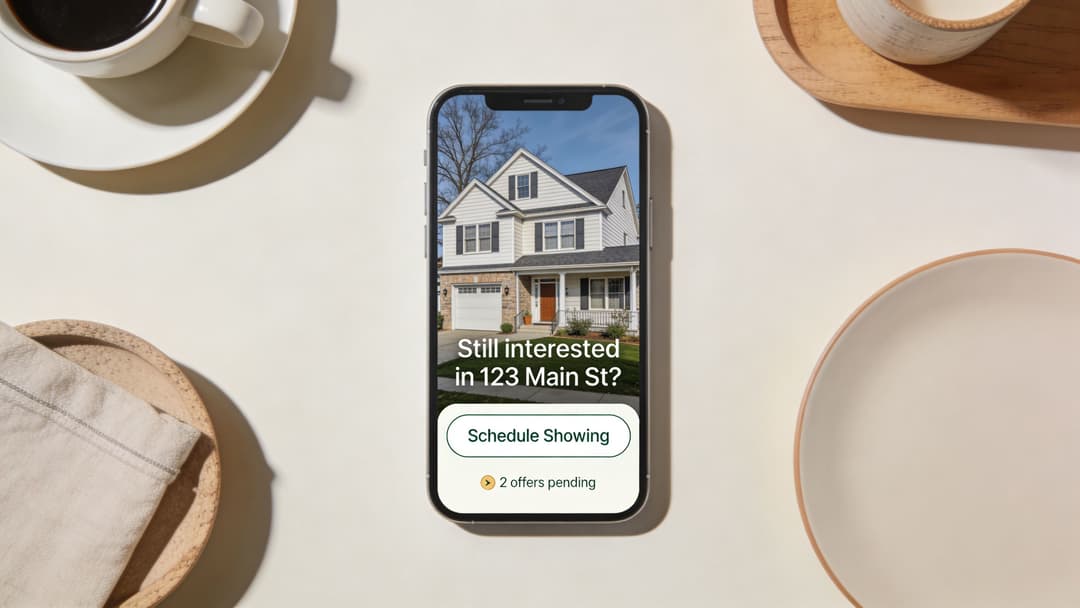
A buyer views the same listing twice, scrolls through 14 photos, checks the map, then leaves. That click is too expensive to waste on another generic brand ad. Serve a reminder tied to the property they already considered, or a close substitute if the home is no longer available.
Retargeting works because intent is already present. The mistake is treating all listing visitors as one audience. Performance improves when the ad reflects what the visitor did and how close that behavior sits to a showing request.
Use behavior-based segments such as:
- Viewed one listing once
- Returned to the same listing multiple times
- Saved or favorited a property
- Started a showing request or contact form
- Viewed luxury, waterfront, condo, or investor inventory only
Each segment needs its own message, CTA, and visual. A single-view visitor often responds to low-friction copy such as “See updated photos” or “Check weekend availability.” A repeat viewer is further down the funnel. Ask for the tour.
Ad build that usually wins
The highest-performing version is rarely the prettiest one. It is the ad that removes uncertainty.
Build the unit like this:
- Headline: Still considering 123 Oak Street?
- Primary text: You spent time on this home. See the latest price, open house times, and nearby alternatives before it goes off market.
- Visual: The hero image from the listing, not a stock team photo
- CTA: Schedule a tour, View details, or See similar homes
- Fallback version: If the listing status changes, swap to a dynamic ad featuring comparable homes in the same price band
For video-based reminders, short aerial clips can outperform static images on higher-end inventory because they quickly reestablish location and lot context. If your team is producing new media, this guide to the best drone for real estate videos is a useful reference for choosing footage quality that fits paid social placement.
Frequency, timing, and the trade-off
Retargeting fails when teams chase frequency without freshness. Four to six impressions over a short window can be productive. Twenty impressions with the same creative usually drives fatigue, hides the listing, and wastes budget.
Urgency also needs discipline. Use real status changes, open house dates, price drops, or “back on market” updates. Skip fake scarcity. Buyers notice, and click-through rates usually reflect that trust gap.
A practical testing plan:
- Test same-property reminder against similar-home alternative
- Test tour CTA against updated details CTA
- Test a 24-hour audience window against 7-day audience window
- Exclude converters and active leads in CRM follow-up
How to scale this across active inventory
The operational problem shows up fast. Ten listings can mean thirty ad variations once you account for status, audience stage, and platform format.
That is why a documented retargeting ad campaign structure matters. Build templates for headline, copy, image rules, exclusions, and listing-status triggers, then automate versioning by audience segment. That turns this from a one-off reminder ad into a repeatable system practitioners can run across dozens of properties without breaking workflow.
The best retargeting ads answer the exact hesitation that caused the bounce. Price, timing, fit, financing, or availability. Identify that friction, then write the ad around it.
7. Team and Agent Brand Positioning Video Ad
A seller is deciding between two agencies. Both promise strong marketing. One shows a standard listing reel. The other shows a polished brand video that makes the team look disciplined, selective, and capable of presenting a high-value home to the right buyers.
That difference matters.
Brand positioning video ads work best when the listing is part of the pitch, but the product is the agency itself. The goal is not just to generate buyer interest. It is to show prospective sellers how your team presents homes, how your agents carry themselves on camera, and whether the overall brand feels aligned with the price point you want to win.
A strong example of the style is below.
When this format earns its cost
Use this format selectively. It fits listings with distinctive architecture, premium finishes, strong natural surroundings, or neighborhoods where presentation shapes perceived value. It also works well when an agency is trying to win more listings in an upper-middle or luxury segment and needs proof of marketing quality, not just claims.
Earlier sections covered listing response and retargeting mechanics. This ad serves a different job. It sits higher in the funnel and improves seller confidence before the lead form ever appears. Industry research from Zillow has shown that richer media experiences, including immersive listing formats, can increase shopper engagement with a property. The same principle applies here. Better creative holds attention longer and raises perceived brand quality.
The playbook that keeps it performance-focused
The failure mode is easy to spot. Beautiful footage, no clear positioning, weak pacing, and an agent monologue that runs too long.
Use a tighter structure instead:
- Open with the most visually distinctive exterior or approach shot
- Show two or three interiors that signal price point fast
- Introduce the agent or team briefly, with presence but not overexposure
- Add a short proof point such as market specialization, service area, or presentation standard
- Close with one CTA tied to seller intent or a private showing
Keep on-screen text sparse and specific. Generic luxury language wastes valuable seconds. Better overlays include:
- Architectural detail
- Corner lot in [area]
- Sunset terrace
- Renovated chef's kitchen
- Represented by [team name]
This section should function like a swipe file entry, not a gallery item. For each ad, define the execution choices before production starts:
- Headline: “See how [Agency Name] markets standout homes in [City]”
- Primary copy: “Presentation affects perception. Our team creates listing campaigns designed to attract qualified buyers and win seller confidence from the first impression.”
- Visual direction: 20 to 45 seconds, strong opening shot in the first 2 seconds, branded color treatment, clean lower thirds, one agent soundbite max
- Targeting: homeowners in target ZIP codes, likely movers, high-income seller segments, past site engagers, CRM lookalikes
- A/B tests: agent-led intro versus property-led intro, seller CTA versus tour CTA, voiceover versus text-only cut, 15-second version versus 30-second version
If your team is adding aerial footage, this guide to the best drone for real estate videos is a useful production reference.
Distribution and scaling
Do not judge this ad only on last-click lead volume. In practice, it often performs better as a trust-building asset that feeds later conversion campaigns. A strong setup is to run the video to cold seller audiences, build view-based audiences from engaged users, then retarget those viewers with a home valuation offer, a listing consultation ad, or a proof-led case study.
That creates a measurable sequence. The video introduces the brand. The follow-up ad captures intent.
At scale, the operational challenge is consistency. Teams need repeatable templates for intro structure, captions, shot lists, CTAs, and audience mapping so every new video does not start from zero. That is where a platform like AdStellar AI helps. It gives performance teams a way to turn one strong creative concept into multiple versions by market, agent, audience segment, and campaign objective without rebuilding the system each time.
8. Audience Segmentation and Pain-Point Specific Ad
Many agencies leave money on the table in this area.
They know they serve different buyer types, but their campaigns still read like they serve “everyone in the city.” Generic ads create generic response. Better accounts separate personas and write to the pressure each one feels.
The best real estate ads sound like they know the buyer
A first-time buyer needs confidence and explanation.
An investor wants speed, clarity, and deal quality.
A relocating family needs local guidance and a lower-friction move.
A downsizer wants simplicity and a next chapter, not a hard sell.
That means the same property pool or service offer should be framed differently depending on the audience.
Examples:
- First-time buyer: “Confused by the buying process? Work with an agent who explains every step.”
- Investor: “Looking for your next rental or flip opportunity? See properties that fit your criteria.”
- Relocator: “Moving to [City]? Learn which neighborhoods match your commute and lifestyle.”
- Downsizer: “Ready for less maintenance and more flexibility? Explore right-sized options with local guidance.”
Why segmentation matters now
One of the strongest opportunities in real estate advertising is reaching underserved groups and micro-markets that broad campaigns miss.
Realtor.com’s campaign targeting underserved communities generated nearly 40 million impressions and 18,000 agent toolkit downloads, as cited in this write-up on inclusive real estate marketing. The broader takeaway is not just reach. It is demand for messaging that feels more specific and more relevant than the default generic ad.
There is a similar lesson in niche specialization. Agencies that understand a distinct segment often fail to communicate that expertise in the ad itself. This discussion of underserved micro-markets and specialization from Leednest’s niche-market perspective captures the gap well. The opportunity is not merely targeting narrower audiences. It is speaking to them with sharper offers.
How to build the campaign
Use separate ad sets or campaign structures by persona. Give each one its own:
- messaging
- visuals
- CTA
- landing page path
- budget line
Do not collapse all personas into a dynamic creative soup if you want to learn. Segmentation only helps when reporting stays interpretable.
A persona-based account usually outperforms a broad, one-message setup because it respects how different people make real estate decisions. It also gives you cleaner creative learnings, which is what lets you scale with confidence.
8 Real Estate Agency Ad Strategies Compared
| Ad Type | Implementation Complexity | Resource Requirements | Expected Outcomes | Ideal Use Cases | Key Advantages |
|---|---|---|---|---|---|
| Video Carousel Ad with Agent Testimonial | Medium–High, multi-clip video + carousel setup | Video production or agent-shot clips, editing, thumbnails, captions | Good click-through rates, high view completion, and strong return on ad spend for qualified leads | Agents showcasing results, multi-agent A/B tests, crowded social feeds | Interactive social proof, multiple value props in one ad, good for variations |
| High-Intent Lead Magnet Ad (Interactive Quiz/Assessment) | High, build gated interactive tool and flows | Development/vendor cost, landing page, immediate follow-up sequences | Good cost per lead, with high completion rates | Intent-driven capture (home value, buyer readiness, investor ROI) | Strong intent capture, rich data for retargeting and nurture |
| Property Listing Showcase Ad (Dynamic Product Ads - DPA) | High, MLS/feed integration and DCO setup | API/feed integration, dynamic creative engine, inventory sync | Efficient cost per lead, strong click-through rates, and consistent return on ad spend | Brokerages with 100+ listings, large inventory campaigns | Massive scale with low manual work, real-time relevance, reduced creative fatigue |
| Educational Content + Authority Positioning Ad (Blog/Webinar Funnel) | Medium, content creation + funnel setup | High-quality content (webinar/guide), landing page, email nurture system | Low cost per email lead, consistent list growth | Top-of-funnel brand building, long-term nurturing, high-ticket positioning | Lower CPM, evergreen lead gen, establishes expertise and trust |
| Social Proof + Success Metrics Ad (Stats-Driven Copywriting) | Low, simple static or short video creative | Accurate metrics, minimal design, verification elements | Strong click-through rates and high return on ad spend | Local/regional targeting, quick credibility boosts, conversion-focused ads | Immediate credibility via numbers, low production cost, memorable messaging |
| Retargeting + Abandoned Listing View Ad (Pixel-Based) | Medium, pixel audiences + timely delivery | Pixel implementation, real-time inventory sync, frequency caps | Very efficient cost per lead, high conversion rates, and exceptional return on ad spend | Visitors who viewed specific listings, website/app remarketing | Lowest CPL, easy attribution, highly targeted urgency-driven messaging |
| Team/Agent Brand Positioning Video Ad (Cinematic Property Tours) | High, professional shoot, editing, post-production | High production budget ($500–5K+), drone, crew, editing time | High view rates and good click-through rates | Luxury or premium listings, brand differentiation campaigns | Premium positioning, highly shareable, signals quality and expertise |
| Audience Segmentation + Pain-Point Specific Ad (Buyer Persona Targeting) | High, multiple ad sets and customized funnels | Persona research, many creative variations, bespoke landing pages | Good cost per lead, strong conversion rates, and high return on ad spend | Multi-audience campaigns (first-time buyers, investors, luxury) | Most relevant messaging, lower CPL per persona, scalable personalization and testing |
From Swipe File to Scaled Campaigns
A swipe file helps you move faster, but speed only matters if your execution system can support it.
That is the problem many teams run into after they collect a bunch of ad ideas. On paper, the strategy looks straightforward. Launch a testimonial carousel. Add a home value lead magnet. Run dynamic listing ads. Segment by persona. Retarget listing viewers. In practice, every one of those formats creates production load: new copy, new visuals, new audience sets, new naming conventions, new landing page variants, and new reporting questions from the team.
Manual campaign building breaks at exactly this point.
The reason is simple. Real estate advertising is not one campaign. It is a stack of campaigns built around different levels of intent. Cold education ads need different messaging than listing retargeting. Seller acquisition ads need different proof than buyer nurture ads. Luxury video needs a different follow-up sequence than a first-time buyer quiz. If you try to run all of that by hand, consistency slips and testing slows down.
The winning agencies build a repeatable system.
Start small. Pick one buyer-side format and one seller-side format. A common pairing is a high-intent lead magnet for sellers and a property showcase or retargeting setup for buyers. Once those are live, branch into one authority ad and one persona-segmented campaign. That gives you range without creating chaos.
Then tighten your feedback loop:
- Review which hooks attract qualified leads, not just cheap clicks.
- Compare performance by persona, not only by campaign total.
- Separate curiosity traffic from action traffic.
- Keep creative winners, but keep rewriting the opening lines.
- Refresh visuals before performance collapses, not after.
There is also a tactical point many teams miss. The best real estate agency ad is rarely a standalone winner. More often, the strongest result comes from sequencing. A cold user sees a market insight video. Later, they click a home value tool. Then they get a retargeting ad with proof or a direct consultation ask. That journey outperforms a single aggressive ad because it matches the trust curve in real estate.
The other pattern is specialization. Broad, generic messaging almost always underdelivers compared with campaigns designed for specific sellers, specific buyer stages, or a distinct neighborhood profile. A local agency that understands relocators, luxury downsizers, investors, or first-time buyers should make that visible in the ad account, not just on the website.
If you want more creative inspiration, this collection of 8 Real Estate Ad Example Masterpieces is worth browsing alongside the tactical formats above.
The practical takeaway is straightforward. Do not chase novelty. Build around proven ad types, structure them by intent, and test the pieces that change performance: the opening hook, the offer, the persona angle, the visual, and the CTA. Once one combination starts producing qualified demand, scale it hard and support it with adjacent formats.
The agencies that win paid media in real estate are not guessing better. They are learning faster, organizing better, and producing more relevant variations than everyone else.
If you want to turn these playbooks into live campaigns without spending your week duplicating ad sets, try AdStellar AI. It helps teams generate, test, and scale large sets of real estate ad variations across creatives, copy, and audiences, then identify which combinations deserve more budget. For brokerages, agencies, and performance marketers managing multiple listings and personas, that is the difference between scattered experiments and a repeatable acquisition engine.