The worst advice about facebook ads for page likes is still the most common. Chase the cheapest likes, target as broadly as possible, and celebrate a lower cost per like as if that number alone means the campaign worked.
That approach usually builds a page full of passive followers who never engage, never click, and never help the business. Cheap likes can be expensive if they dilute your audience signals and make your page look bigger than it really is.
A page growth campaign only makes sense when the followers you buy improve something downstream. That could be stronger engagement on organic posts, a warmer retargeting pool, better social proof for a newer brand, or better source audiences for future expansion. If none of that happens, the campaign didn't buy momentum. It bought a vanity metric.
Are Facebook Page Likes Still Worth It In 2026
Calling Page Likes a vanity metric is too simplistic. Bad Page Likes campaigns are vanity plays. Well-run ones are audience acquisition campaigns.
The difference is follower quality. Some advertisers still push for ultra-cheap likes through broad targeting, but that mindset ignores what happens after the click. According to the verified data, some campaigns aim for cheap likes at $0.01 to $0.05, yet 2025 Meta studies cited in the provided source found that 40% of ad-acquired likes from Advantage+ showed 2x higher 7-day engagement versus manual targets (YouTube reference). That doesn't prove every Page Likes campaign works. It proves quality can differ sharply based on how you acquire the follower.
Why most campaigns fail
Most failures come from buying the wrong person, not from using the wrong campaign type.
Common mistakes include:
- Optimizing for the lowest headline CPL: This rewards cheap inventory and weak intent.
- Using generic creative: Ads that say little more than "Like our page" attract low-commitment clicks.
- Ignoring what happens after the follow: If new followers don't engage with posts, they don't improve future performance.
- Treating all followers as equal: They aren't. A follower who comments, watches, clicks, or later converts is worth more than one who disappears.
A smarter way to think about this is effective follower cost. Not just what you paid for the like, but what you paid for a follower who later does something useful.
Practical rule: If a new follower doesn't increase reach, engagement, traffic quality, or audience seed quality, the low CPL didn't save you money.
If you need a refresher on why follower quality matters to distribution, this explainer on What Is Facebook Reach? is a useful companion. Reach and page growth aren't the same thing, but they affect each other once your page starts attracting people who respond to posts.
The bigger question isn't "Do facebook ads for page likes work?" It's whether they work better than your next-best use of budget. This perspective aligns with a broader performance mindset around paid social, and it's worth comparing that lens with this view on whether Facebook ads work.
The Strategic Foundation for Your Page Likes Campaign
A Page Likes campaign needs a job. If the only answer is "we want more followers," stop there.
Facebook's ad business remains too important, too competitive, and too mature for casual spending. Facebook's platform was projected to reach $164.5 billion in revenue in 2024, up 22.8% from 2023, and nearly 93% of social media marketers actively use Facebook Ads according to the verified data (Electro IQ). Marketers don't keep spending at that scale because they enjoy collecting vanity numbers. They spend because the channel can still produce measurable outcomes when the campaign matches the goal.
When a Page Likes campaign makes strategic sense
There are a few valid reasons to run one.
| Use case | Why it can matter |
|---|---|
| New brand launch | A completely empty page creates friction. Early follower growth can reduce that "nobody follows this brand" problem. |
| Content-led brand building | If your team publishes useful content consistently, adding relevant followers gives those posts a better chance to perform. |
| Audience seeding | A stronger page audience can support future audience modeling and broader paid social testing. |
| Stakeholder confidence | In some categories, visible page activity still affects partner, retailer, or investor perception. |
What doesn't work is using Page Likes as a substitute for a weak business model or weak content. If your page posts inconsistent, low-value content, buying followers just exposes more people to content they don't care about.
Tie page growth to one downstream action
Pick one operational reason for the campaign before launch.
- Social proof: You're trying to make the page look active and credible for people who check it before buying.
- Warm audience building: You're building a pool of people more likely to engage with future posts and retargeting.
- Creative testing support: You're growing a base that will give faster feedback on content angles.
- Lookalike seed quality: You're trying to build a better top-of-funnel input, not just a bigger one.
A Page Likes campaign is justified when the follower becomes a useful signal later. If the signal never gets used, the campaign was mis-scoped from the start.
Page Likes fits inside a wider paid social program, not as a standalone trophy metric. If your team manages multiple objectives across awareness, engagement, leads, and sales, this broader guide to paid social ads helps keep the campaign in the right strategic lane.
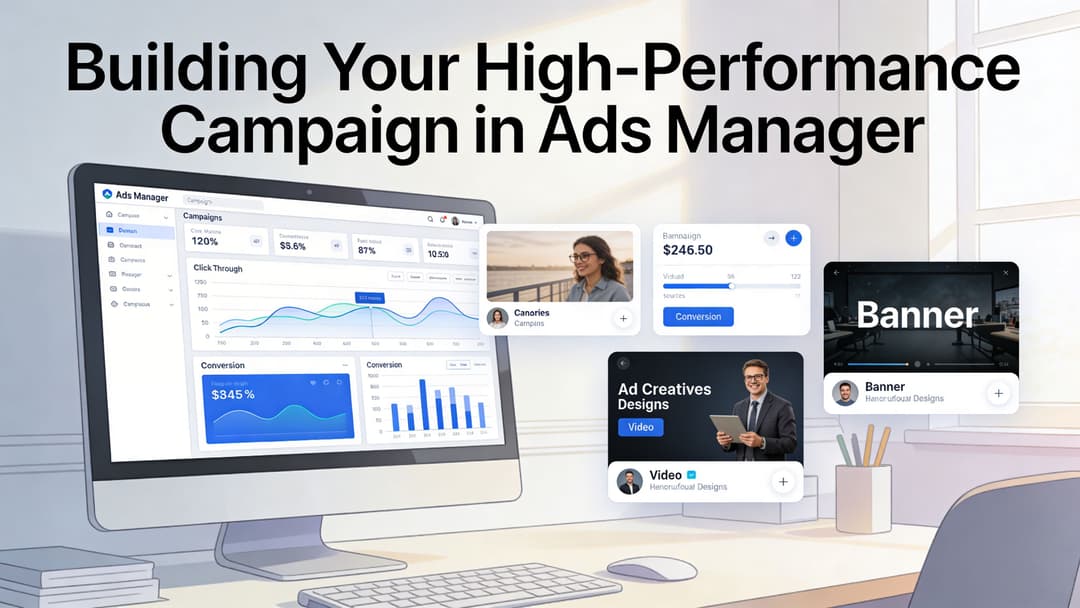
Building Your High-Performance Campaign in Ads Manager
Inside Ads Manager, the mechanics matter. Bad setup can waste budget before creative or targeting even gets a fair test.
Choose the right campaign path
For facebook ads for page likes, use the Engagement objective and select the page-focused engagement option that aligns with Likes. Don't force this campaign into Traffic or Sales just because those are more familiar. The platform optimizes delivery based on the objective you choose.
If you need a walkthrough of the interface itself before building, keep this guide to Facebook Ads Manager open in another tab.
Set up ad sets for clean testing
Early on, clarity beats complexity.
A practical testing structure looks like this:
- Separate audience ideas into different ad sets. Don't lump broad targeting, lookalikes, and fan-adjacent interests together.
- Keep placements under control during testing. If you're comparing audience quality, messy placement variation can hide the winner.
- Use daily budgets when you need fast feedback. They make pacing easier to read and adjustments easier to make.
- Use ABO for early tests. It gives each audience a fair chance before Meta shifts spend toward the cheapest short-term result.
Once you know which audience produces the right mix of cost and post-like behavior, then broader budget automation becomes more useful.
Budgeting and bidding trade-offs
There isn't one perfect budget model. There is only the right model for the stage you're in.
| Decision | Better for | Main risk |
|---|---|---|
| Daily budget | Fast iteration and regular checks | Can feel slower to spend at scale |
| Lifetime budget | Controlled campaign windows | Harder to steer day to day |
| ABO | Audience testing | More manual effort |
| CBO or broader campaign budget control | Scaling known winners | Can overfeed cheap, low-quality segments |
For bidding, most advertisers should start with Lowest Cost. It gives Meta room to find inventory and establish a baseline. A cost control approach can help later if your account has enough signal and you already know what an acceptable like costs for your business.
Build the campaign around exclusions
A simple but often missed step. Exclude people who already like the page.
That sounds obvious, but many accounts skip it and pay to reacquire users they already own. If you're using broader targeting or machine-led audience expansion, exclusions become even more important.
Before you launch, review competitor ads and category patterns in the Meta Ads Library. Not to copy them. To see what value proposition, visual style, and follower ask your market has already overused.
The setup should make it easy to answer one question later. Which audience and creative combination brought in followers who kept engaging after they liked the page?
Crafting Ad Creatives and Copy That Attract Quality Fans
Most Page Likes ads fail in the ad itself. The setup can be clean, the targeting can be sensible, and the campaign can still pull weak followers because the creative promises nothing meaningful.
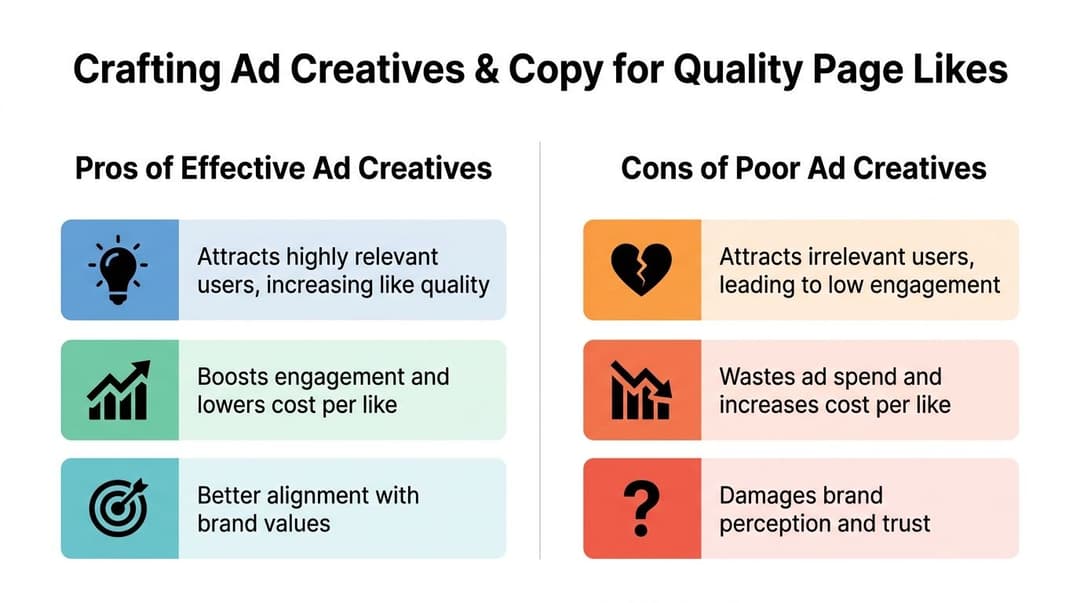
The core question isn't "How do I get someone to like the page?" It's "Why should the right person want this page in their feed?"
Lead with the value of following
A bad Page Likes ad asks for commitment before giving a reason.
Weak example:
- Like our page for updates
Stronger angles:
- Follow for product drops, tutorials, and behind-the-scenes content
- Like the page to get practical tips, not generic inspiration quotes
- Follow if you want early access to new releases and content we don't post elsewhere
Each one filters. That's useful. A strong ad should repel the wrong follower.
Use formats that fit feed behavior
Creative format changes performance materially. Verified data from Sprout Social states that vertical video content with audio achieves a 35% higher click-through rate than other video formats and generates 3% higher conversions per dollar spent (Sprout Social). For Page Likes, that matters because higher-engagement formats don't just attract more clicks. They help your brand signal feel current, native, and worth following.
That doesn't mean every page needs polished production. It means the format should match how people consume content on Facebook now.
A strong creative mix usually includes:
- Founder or team-led clips: Good for trust and category education.
- Product-in-use vertical videos: Better than static catalog-style images for most DTC pages.
- Short editorial reels: Useful when the page itself is the product experience, such as media, education, or community brands.
- Clean customer proof visuals: Strong when paired with a reason to follow for more.
For additional examples of what strong assets look like in practice, this library of Facebook ad creatives is useful reference material.
Write copy for the follower you want
The wrong copy often wins the cheapest like. That's the trap.
Use copy that signals intent. For example:
| If you want | Try messaging like |
|---|---|
| More engaged fans | "Follow for weekly tactics, launch breakdowns, and practical examples." |
| Higher-quality product followers | "Like the page for new drops, product demos, and customer-only previews." |
| Better B2B attention | "Follow for teardown-style insights, not recycled marketing advice." |
Creative filter: If the copy would attract almost anyone, it probably isn't specific enough to attract the people you want.
CTA buttons still matter
For classic Page Likes campaigns, the CTA should align with the action. "Like Page" is usually cleaner than trying to sneak in a traffic-style ask. Mixed intent lowers clarity.
Keep the visual simple. Show the brand voice, the content style, and the payoff of following. If someone can't tell what they'll get from your page within a quick glance, they're more likely to become a low-quality like even if they convert.
Advanced Audience Targeting and Scaling Strategies
Scaling Page Likes campaigns is where most accounts lose discipline. The first audience works, spend increases, then quality slips because the team expands too fast or lets cheap segments dominate.
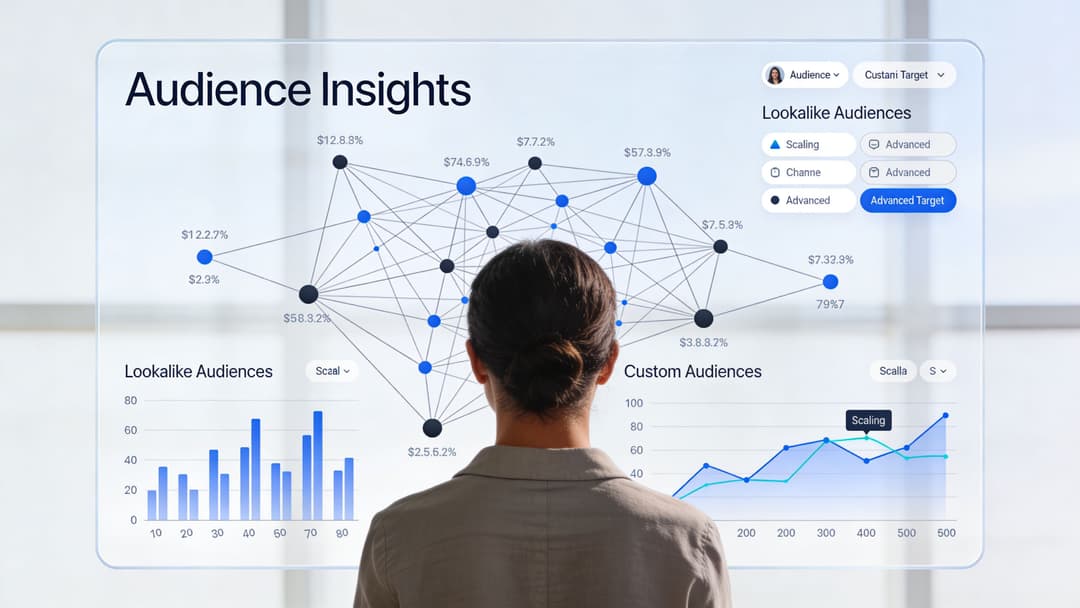
Start narrow with signal-rich lookalikes
For scaling, the strongest starting point is usually a lookalike built from high-intent activity, not from casual page interaction.
The verified guidance here is specific. Start with 1% to 2% Lookalikes built from high-intent pixel events such as AddToCart, because 1% Lookalikes can achieve 70% lower cost-per-conversion compared to broader targeting. After the campaign matures with more than 50 conversions per ad set, begin expanding into 5% to 6% Lookalikes (Digital Darts).
That sequence matters because Page Likes quality often tracks with seed quality. If the seed audience reflects actual commercial intent, the expansion audience usually produces better followers than generic interest stacking.
Manual lookalikes versus Advantage+
Campaign decisions for 2026 get more nuanced here.
Manual lookalikes still make sense when:
- Your seed is strong and recent
- You want clear audience-level comparisons
- Your account needs tighter controls during testing
Advantage+ becomes more compelling when:
- Your manual audiences plateau
- You need broader exploration after privacy loss reduced precision
- You care more about quality at scale than about preserving rigid targeting logic
The trade-off is straightforward. Manual targeting gives cleaner test conditions. Advantage+ gives Meta more room to find patterns your setup might miss. If your account has enough creative variety and decent exclusions, broader machine-led delivery can find stronger pockets than human-built assumptions.
Broader targeting isn't better by default. It's better when the account has enough signal and the creative clearly filters who should respond.
A practical scaling model
Don't scale the campaign that brought the lowest CPL. Scale the audience-creative pair that brought the best post-like behavior.
Use this progression:
- Test in ABO. Keep audiences separate so quality differences remain visible.
- Watch what new followers do after the like. Do they engage with later posts, click, react, or disappear?
- Promote winners into a broader budget structure. Once the good segments are obvious, centralize budget for scale.
- Expand in layers. Move from tighter lookalikes into wider lookalikes or Advantage+ only after the earlier pool proves useful.
- Refresh exclusions and creative regularly. Audience quality drops fast when the same people see the same promise too often.
What usually breaks at scale
A few patterns show up repeatedly:
- Audience expansion before enough signal exists
- Reusing the same creative while spend climbs
- Judging winners on cost alone
- Failing to separate high-quality followers from cheap followers in reporting
If you can identify which audience creates followers who later contribute to traffic, engagement, or conversion paths, scaling gets easier. If you only know the CPL, you're scaling blind.
Measuring Success and Troubleshooting Common Issues
A Page Likes campaign needs a scorecard that reflects business value, not just acquisition cost.
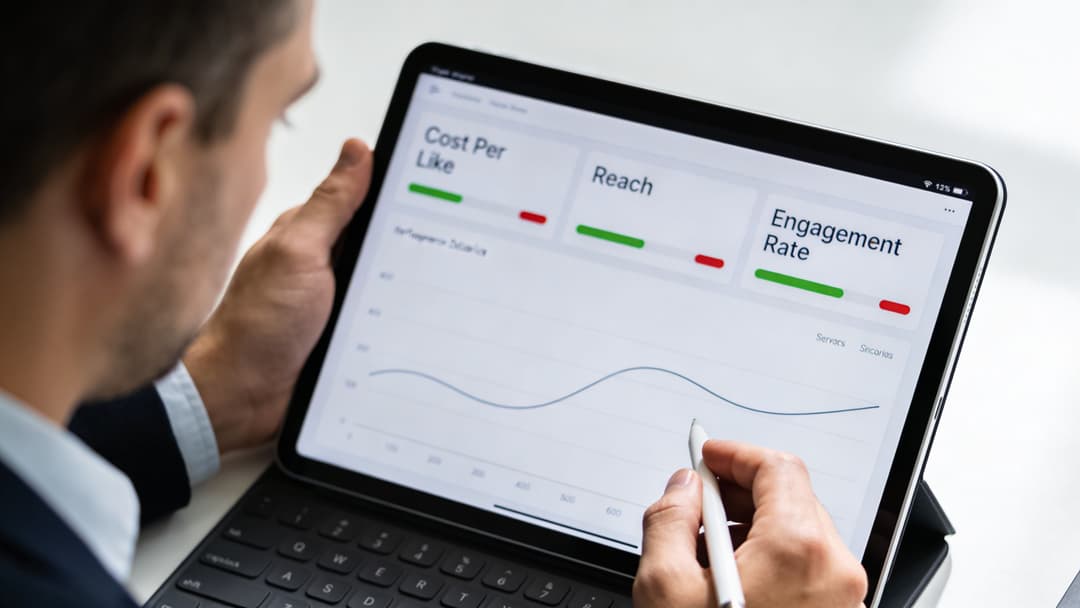
The most widely cited benchmark in the verified data is the average cost per like of $0.26, with mobile newsfeed placements capable of reaching $0.10 CPL when optimized (KlientBoost). That's a useful reference point, but it isn't the finish line.
Track more than CPL
A workable dashboard for facebook ads for page likes should include:
- Cost per like: The baseline efficiency metric.
- Post-like engagement quality: Are newly acquired followers reacting, commenting, or clicking on later content?
- Follower-source comparison: Which audience brought the strongest followers, not just the cheapest?
- Placement quality: Mobile-focused delivery often performs differently from other placements.
- Creative-to-follower fit: Which message attracted the right type of fan?
If your team needs a stronger framework for reading these results, this guide on how to measure advertising effectiveness is a practical reference.
Use effective follower cost
This is the metric many teams skip. A follower acquired cheaply but never engages may be less valuable than a follower acquired at a higher CPL who later clicks into product content or joins retargeting flows with stronger intent.
A simple internal review can classify followers into buckets:
| Follower type | What you usually see | Decision |
|---|---|---|
| Cheap and inactive | Low CPL, weak post-like activity | Reduce spend even if headline efficiency looks good |
| Moderate cost and engaged | Acceptable CPL, repeat interaction | Scale carefully |
| Expensive but high-value | Higher CPL, stronger downstream behavior | Keep if the business case supports it |
Troubleshoot the common failure patterns
If performance slips, diagnose it in this order.
CPL rises suddenly
Check these first:
- Creative fatigue: The ad has been seen too many times by the same people.
- Placement drift: Spend may have shifted into weaker inventory.
- Audience saturation: A narrow audience can stop producing efficient results after repeated exposure.
Fixes:
- Rotate in new creative angles.
- Tighten placements temporarily.
- Expand to the next qualified audience layer instead of broadening everything at once.
Likes come in, but new followers don't engage
This usually means the ad promise and the page experience don't match.
Look for:
- Ad copy that overpromises
- A page feed filled with inconsistent content
- Audience targeting that prioritizes low-friction clicks over actual interest
Fixes:
- Rewrite the ad around the actual value of following.
- Audit the page feed before spending more.
- Suppress audiences that convert cheaply but don't interact later.
A Page Likes campaign doesn't end at the like. The like is only the handoff to the page itself.
Strong audience, weak ad
Sometimes the targeting is fine and the creative is the blocker.
Try:
- Short vertical video instead of static
- A more specific reason to follow
- A direct CTA aligned with page following
- A visual that shows the kind of content the page publishes
Troubleshooting gets easier when reporting separates audience, placement, and creative. If all three are bundled together, every optimization becomes a guess.
Conclusion Integrating Page Likes into Your Growth Engine
Facebook ads for page likes still have a place in 2026, but only when you treat them like a quality acquisition channel. Cheap likes alone don't help much. Relevant followers who engage, strengthen page credibility, and support later campaigns do.
The playbook is simple. Start with a clear business reason, build clean campaign structure, use creative that filters for the right follower, scale audiences carefully, and measure what happens after the like. When Page Likes supports the rest of your funnel, it stops being a vanity metric and starts acting like an asset.
If you want to launch and test facebook ads for page likes faster, AdStellar AI helps teams generate large batches of Meta creatives, copy, and audience combinations, push them live quickly, and identify which combinations produce useful followers instead of just cheap ones.