Let's get one thing straight: the search for a secret trick to run Facebook ads for free is a dead end. It’s a common hope, but it’s based on a fundamental misunderstanding of how Meta’s powerhouse advertising platform actually works.
The real goal isn't to find some magical loophole for free ad placements. It's about mastering the art of free marketing on the platform to achieve the exact same results—reach, engagement, and even sales—without spending a dime on ads.
The Reality of Making Facebook Ads Free
Chasing after "free Facebook ads" is like trying to find a secret menu item that doesn't exist. Meta's ad platform is a multi-billion dollar engine, and it runs on paid placements. There's no hidden button or cheat code to launch a standard ad campaign without a budget.
But here's the good news: this shifts your focus from an impossible task to a genuinely powerful one. You can stop chasing a myth and start building a real playbook for generating free, organic results. This is about earning your audience’s attention, not just buying it.
Shifting From Free Ads to Free Results
The key mindset change is moving from just "advertising" to holistic "marketing." Paid ads are just one piece of the puzzle. Organic marketing on Facebook is all about creating value that the algorithm itself rewards with natural, unpaid visibility.
This means you’ll be focusing your energy on a few core areas:
- Content That Connects: Creating posts, Reels, and Stories that people actually want to watch and share.
- Community Building: Using tools like Facebook Groups to build a loyal following and generate warm leads.
- Strategic Engagement: Jumping into relevant conversations and providing value to naturally attract followers.
The real opportunity isn't just about eliminating costs; it's about maximizing your return on effort. When you build a strong organic foundation first, any money you eventually spend on ads becomes dramatically more effective.
Before we dive into the 'how-to,' let's clarify the difference between these two approaches.
Paid Ads vs Organic Marketing on Facebook
Here's a quick comparison of what 'paid' versus 'organic' means on Facebook, clarifying the key differences in cost, reach, targeting, and typical use cases.
| Attribute | Paid Facebook Ads | Organic Facebook Marketing ('Free') |
|---|---|---|
| Cost | Requires a direct ad budget. | No direct cost, but requires time and creative resources. |
| Reach | Predictable and scalable based on budget. | Variable and depends on algorithm, content quality, and engagement. |
| Targeting | Highly specific (demographics, interests, behaviors). | Broad; reaches your existing followers and their networks. |
| Speed | Can generate results almost immediately. | Takes time to build momentum and see significant results. |
| Use Case | Driving sales, lead generation, rapid audience growth. | Building brand loyalty, community engagement, long-term trust. |
Ultimately, the best strategies use a mix of both. But for now, our focus is squarely on mastering the 'free' side of the table.
Understanding the Cost-Benefit Equation
The idea of "free" is tempting, but it’s important to understand the trade-offs. While organic marketing doesn't drain your bank account, it absolutely requires a significant investment of time and creativity.
A poorly managed ad campaign can burn through cash with nothing to show for it. But an inconsistent or uninspired organic strategy will simply get you zero results, wasting your valuable time.
It’s true that Facebook ads have a minimum daily budget of just $1, though at least $5 per day is what you'll need for any meaningful testing. When you are ready to scale with paid ads, a solid organic presence will lower your costs. You can explore our detailed guide on what to expect from Facebook ad costs to get a better sense of the numbers.
When managed correctly, social media marketing delivers a powerful return—industry research shows an average of $5.28 for every $1 spent. You can find more data on social media ROI to see the full picture. This guide will show you how to build a powerful organic presence that delivers incredible value long before you spend your first dollar.
Turning Your Facebook Page Into an Organic Powerhouse
Think of your Facebook Page as more than just a digital business card. It’s the central hub for all your free marketing, and if you let it sit there collecting dust, the algorithm will bury it. A dynamic, active Page, on the other hand, becomes a content machine that pulls in followers, builds real trust, and drives business—all without touching your ad budget.
It all starts with getting the foundation right. Before you can even think about content, you need to understand how to create a Facebook Page that’s fully built out. That means a sharp profile picture, a great cover photo, and a compelling 'About' section. Once that's locked in, the real work begins.
Crafting Content That Earns Engagement
The secret to winning with the Facebook algorithm isn't some complex formula. It's about creating content that people actually want to engage with. The platform rewards posts that get real comments, shares, and reactions. This is how you effectively get free advertising—by earning your reach instead of paying for it.
Some formats just work. I’ve seen these consistently deliver results for brands of all sizes:
- Behind-the-Scenes Reels: A local bakery could post a quick Reel showing the process of laminating croissant dough. It’s satisfying to watch, feels genuine, and gives customers a peek behind the curtain. That’s how you build a connection.
- Educational Carousels: A software company can take a confusing feature and break it down into a simple, swipeable carousel. Each slide offers a small win, delivering immediate value and positioning the brand as a helpful expert.
- Storytelling Posts: Don’t just sell; tell a story. A clothing brand can share the inspiration behind a new collection. A consultant can share a client success story (with permission, of course). Stories create an emotional hook that cold, hard facts never will.
Your only job is to stop the scroll. If your content doesn't immediately offer value, entertainment, or a spark of curiosity, people will fly right past it. Every post needs to answer the silent question in your audience's mind: "What's in it for me?"
Finding Your Golden Hour with Page Insights
Posting your best content when no one is online is like shouting into an empty room. You need to post when your audience is most active to get that initial burst of engagement, which signals to the algorithm that your content is worth showing to more people.
This is where your Page Insights become your best friend.
Just navigate to your Page's Professional Dashboard, head to the Insights tab, and click on Audience. You'll find a chart showing the exact days and hours your followers are most active on Facebook.
This isn't generic advice—it's your brand's unique "golden hour." If your data shows a huge spike at 7 PM on Wednesdays, that’s when you schedule your most important posts. Forget those "best times to post" articles; your audience's behavior is all that matters.
Writing Captions That Spark Conversation
A great visual stops the scroll, but a killer caption starts the conversation. The caption is your chance to talk directly to your audience, and your primary goal should always be to get a response.
Instead of just stating the obvious, ask a direct question.
- Weak Caption: "Here’s our new seasonal latte."
- Strong Caption: "Our new Cinnamon Swirl latte is officially here! What's your all-time favorite coffee flavor to get you through the fall? Let us know below!"
See the difference? The second example doesn’t just announce; it invites people in. Every single comment is another signal to Facebook to push your post's reach even further.
If you’re serious about taking your content to the next level, our guide on Facebook strategies for influencers offers even more tips for building a loyal following. By optimizing your Page, creating content that serves your audience, and starting conversations, you’ll transform your Facebook presence from a passive profile into an organic powerhouse that delivers real results—for free.
Building Communities and Leads with Facebook Groups
While a polished Facebook Page is your digital storefront, the real magic—and the warm leads—happen inside Facebook Groups. Think of your Page as the public-facing shop window, but your Group is the exclusive VIP lounge in the back. This is where you can build a fiercely loyal audience without ever touching your ad budget.
Honestly, if you're looking for a way to get "free" results, this is it. You're creating a self-selected audience of people who are genuinely interested in what you have to say.
You have two main paths you can take here. You can either build your own branded community from the ground up, or you can jump into existing groups where your ideal customers are already hanging out. Both strategies work, but they play different roles in your marketing.
Building Your Own Branded Community
Creating your own Facebook Group gives you a direct, unfiltered line to your most passionate followers. This is your space. You control the narrative, set the tone, and deliver so much value that casual followers turn into die-hard brand advocates.
The trick is to make it a place people actually want to be, not just a digital billboard for your products.
Here’s how this looks in the real world:
- For a fitness coach: Host a weekly live Q&A where members can ask anything about nutrition or workout form. You could also drop exclusive, short workout videos that aren’t available anywhere else.
- For an e-commerce brand: Give your members a "first look" at new products before the public launch. Drop group-only discount codes or run special giveaways just for them.
- For a SaaS company: This is the perfect place for a user group. Customers can share tips, ask for help, and give you direct feedback. It creates an incredible feedback loop and makes your users feel like they're part of the team.
Your branded group should be built on a foundation of service, not sales. When you consistently provide value and facilitate genuine connections, the sales will follow naturally because you've already earned the members' trust.
Mastering this isn't just about posting content; it's about knowing how to build an online community that thrives by creating an environment where members feel seen, heard, and valued.
Participating in Existing Niche Groups
Your other option is to become a go-to expert in other groups where your target audience already spends their time. This move requires a bit of finesse and a "give, give, give, then ask" mindset. If you show up with blatant self-promotion, you'll get the boot. Fast.
The goal is to establish yourself as a genuinely helpful resource.
The process is straightforward but it demands patience. First, you need to find the right digital rooms to walk into. Search for groups related to your industry, your customers' biggest headaches, or even the hobbies they love. Look for active communities with solid moderation.
Once you're in, just listen for a while. Get the vibe of the group. When someone asks a question you can confidently answer, jump in with a detailed, helpful response right in the comments. Don't hold back.
Your name and profile picture are your new business cards. When you consistently offer great advice, people will get curious. They'll click on your profile to see who you are and what you do.
I once saw a financial advisor in a "Small Business Owners" group do this perfectly. Someone asked a complicated question about LLCs vs. S-corps. The advisor didn't drop a link; he wrote a 200-word, no-fluff comment explaining the pros and cons. That single act of expertise built more trust than any ad ever could.
Those curious members will check out your personal profile, which should be optimized to point them toward your business Page or website. You're nurturing leads without them even realizing it. For a closer look at the rules of engagement, our guide on leveraging Facebook advertising in groups covers some advanced tactics. It's an ethical and incredibly effective way to get results from Facebook for free.
Sparking a Fire with Contests and User Content
What if you could generate a genuine wave of excitement and reach new customers without opening your wallet for ads? This is where contests and user-generated content (UGC) come into play. These aren't just fun gimmicks; they're powerful strategies that turn your audience into your most passionate marketers.
This is about more than just giving away a freebie. It's about engineering a campaign that gets people talking and sharing. When done right, you create the perfect conditions for viral, organic promotion—the closest thing you'll get to free advertising on Facebook.
Designing a Giveaway That Spreads Like Wildfire
The best giveaways I've seen have a super low barrier to entry but are built from the ground up to maximize reach. The goal is to weave sharing mechanics right into the rules of the contest.
Let's take a local coffee shop giving away "Free Coffee for a Month." A lazy post would just say "like to win." A smart post builds a growth engine. Here's how they could structure it to get maximum organic spread:
- Follow our Page: This is your foundation. It's the non-negotiable first step to grow your immediate audience.
- Tag three friends in the comments who live for coffee: Here’s where the magic happens. Every tag sends a direct notification to a new, highly relevant person who probably shares the same interests.
- Share this post to your Story for a bonus entry: This is the real amplifier. A share to a Story puts your brand in front of that person’s entire network for 24 hours—a space you’d never reach on your own organically.
With a setup like this, every single entry creates a ripple effect. If you pull in just 50 entries and each person tags three friends, you’ve just been introduced to 150 new, warm leads without spending a dime.
The prize doesn’t have to break the bank, but it absolutely must be something your specific audience craves. A high-value, relevant prize is what convinces people to jump through all the hoops, turning a simple giveaway into a powerful organic reach machine.
Tapping into the Goldmine of User-Generated Content
While contests give you a fantastic burst of activity, user-generated content (UGC) is the gift that keeps on giving. UGC is any content—photos, videos, reviews, testimonials—created by your actual customers. It’s raw, it’s trustworthy, and it’s the most powerful social proof you can get.
The trick is getting customers genuinely excited to create content for you. You need a dead-simple call to action and a compelling reason for them to get involved.
Think about a small, independent clothing brand. They could run a campaign asking customers to post photos of themselves wearing the brand's gear with a unique hashtag, like #MyBrandStyle. To get people to actually do it, they offer a simple but powerful incentive: a chance to be featured on the brand’s official Facebook Page every Friday.
This strategy is brilliant for a few reasons:
- It creates a never-ending stream of authentic content. Suddenly, you're not spending hours brainstorming post ideas or staging pricey photoshoots. Your customers are doing the creative work for you.
- It builds a real community. When customers see their content highlighted, they feel seen and appreciated. This forges a much stronger connection to your brand.
- It provides undeniable social proof. Seeing real people loving a product is infinitely more persuasive than a polished ad. When potential buyers scroll through your feed and see it filled with happy customers, their trust in your brand goes through the roof. You can even find inspiration for your own creative in our collection of video ad examples.
This approach beautifully bridges the gap between your organic marketing and future ad campaigns. All that UGC you collect can be repurposed on your website, in email newsletters, and—most importantly—in future paid ads, which dramatically slashes your creative costs when you do decide to invest.
Still, it's vital to keep expectations in check. The idea of "free Facebook ads" can sometimes blur the lines between what organic success looks like and what paid performance delivers. A 2026 survey of marketers found that 63% spend between $1-$500 monthly, which shows that even small, strategic investments are crucial for scaling. There's a reason these businesses collectively spend over $2.5 billion a month on the platform. You can discover more insights about Facebook ad costs in 2026 and see exactly why a paid strategy eventually becomes essential for real growth.
Knowing When to Shift From Free to Paid Strategies
Every marketer loves a good organic win. There's a certain satisfaction in getting reach and conversions without opening the company wallet. But let's be real—organic has a ceiling, especially when you need to grow fast and consistently. There comes a point in every successful business journey where the focus has to shift from keeping things free to growing efficiently.
Sticking to a "free-only" strategy for too long can actually be more expensive than running ads. Think about the missed sales, the stagnant audience growth, and the market share your competitors are snapping up. The conversation has to evolve from "how do we get free ads?" to "how do we make our ads unbeatable?"
Reading the Signs of an Organic Ceiling
So, how do you know when you've maxed out your organic potential? The signs are usually pretty obvious once you know what to look for. Hitting these walls isn't a failure; it's actually a sign that you're growing and ready for the next level.
You've probably hit that ceiling if this sounds familiar:
- Flatlining Reach and Engagement: Your views are stuck in a rut. No matter what you post, your audience size just isn't budging.
- Inability to Reach New Audiences: Your content is great... for the people who already follow you. Breaking into new demographics or locations with organic content alone is slow and painfully unpredictable.
- Unpredictable Lead Flow: Your Facebook Group brings in leads, which is great! Except some weeks are a goldmine and others are a ghost town, making it impossible to forecast revenue.
- Your Competitors Are Using Ads: If you see sponsored posts from direct competitors in your feed, they're not just experimenting. They are actively paying to win over your potential customers while you're hoping the algorithm smiles on you.
This is the classic organic playbook for sparking some viral interest. You create something people want to share, and you encourage them to tag their friends.
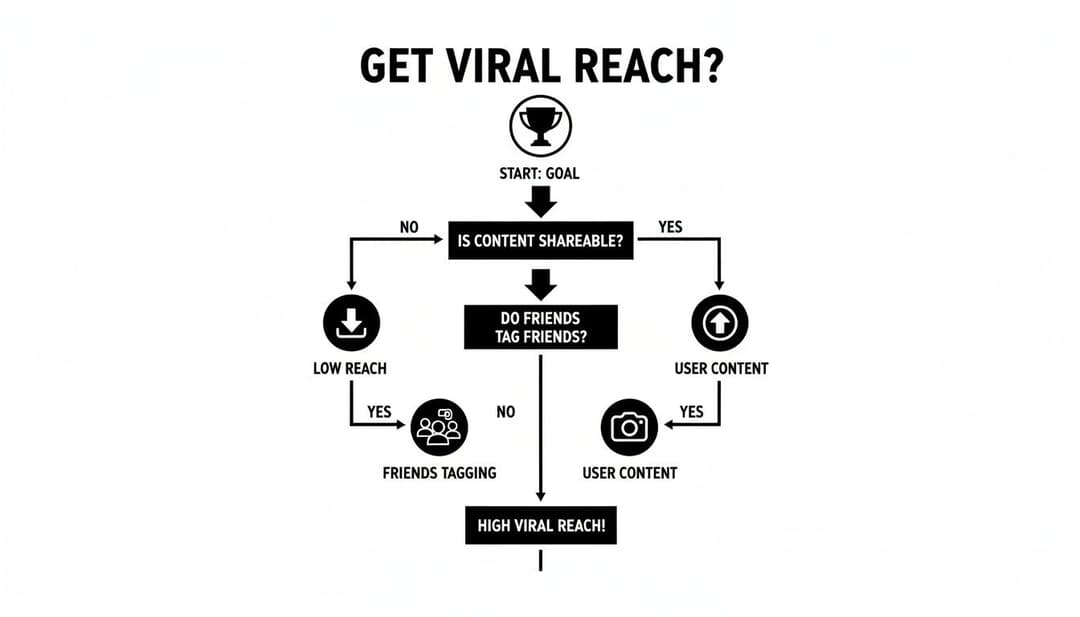
It's a solid tactic, for sure. But as powerful as friend-tagging and user-generated content are for creating buzz, they don't offer the laser-focused targeting and predictable scale of a paid campaign.
From Free to Efficient: Making Smart Investments
Making the jump to paid ads isn't about setting a pile of cash on fire and hoping for the best. It's about a strategic, data-backed decision to break through the limits of what organic can do for you. Efficiency is the name of the game.
This is where you stop thinking about ad spend as a cost and start seeing it as an investment in predictable growth.
The question you should be asking isn't "Can we afford to run ads?" It's "Can we afford not to?" A well-run ad campaign gives you a level of predictability, scalability, and control that organic marketing just can't touch.
The numbers don't lie. Meta's advertising platform is a competitive marketplace, and costs are a reflection of that. In 2025, the average cost per lead on Facebook has already climbed by 21% year-over-year. With the global average CPM sitting at $11.76, just "boosting" a post and hoping for the best is a recipe for wasted money. You need a sharp strategy, not just a bigger budget.
Key Indicators to Switch from Organic to Paid Ads
So, when is the right time to flip the switch? This isn't a gut feeling. It's a business decision based on clear growth signals. We've put together a quick checklist to help you see if you've outgrown an organic-only approach.
| Growth Signal | Organic Limitation | Paid Advertising Solution |
|---|---|---|
| You Have Product-Market Fit | People love your product, but not enough people know it exists. | Use lookalike audiences to find thousands of new customers who are just like your best current ones. |
| You Need to Scale Sales | Your growth targets require you to double sales, but organic leads are a trickle, not a firehose. | Create a predictable revenue engine with conversion campaigns that you can scale up or down on demand. |
| You're Launching a New Product | You need immediate buzz and first-day sales to get a new offer off the ground. | Instantly get in front of a warm, targeted audience with launch-day ads to drive sales and build momentum. |
| You Have Time Constraints | Your team is burning hours on organic tasks that are producing smaller and smaller returns. | Automate your top-of-funnel outreach and lead generation, freeing up your team for high-impact work. |
If you found yourself nodding along to the items in that table, it’s probably time. Moving from free tactics to a paid strategy isn't admitting defeat—it's a promotion. It signals that your business is mature, successful, and ready to compete at a higher level.
Once you’ve made the call, the next step is to build a smart budget and a solid strategy. A great place to start is our guide on when to scale your ad campaigns.
Frequently Asked Questions
As you start putting these organic strategies into play, some common questions are bound to pop up. Let's tackle the big ones I hear all the time, especially from founders trying to figure out where to best spend their resources.
How Much Time Does Organic Facebook Marketing Take?
When you’re looking up "how to make facebook ads free," the focus is usually on the money you save. But you’re trading that money for time, and it’s important to be realistic about that.
Let’s be clear: there’s no sugarcoating it. Meaningful organic marketing is a real time commitment.
To get any sort of traction, you should plan to spend at least 5-10 hours per week. This isn't just about dropping a post and walking away. It’s about the whole cycle: creating genuinely good content, showing up and engaging with your community, and then actually looking at your Page Insights to figure out what's hitting the mark.
Remember, consistency trumps intensity. It's far better to spend one focused hour every day building your presence than to pull an all-nighter once a month. The algorithm rewards steady, reliable activity.
This time investment is definitely front-loaded. As you build momentum and a solid content library, some things get faster. But the need for real, daily engagement never really goes away.
Can I Get Real Customers Without Paying For Ads?
Absolutely. It’s entirely possible to build a profitable business using only the free tools Facebook gives you. Plenty of successful brands got their start this way, proving that a big budget isn't a requirement for landing your first customers.
Think about it in practical terms. A well-run Facebook Group can become an incredible source of warm leads. When you create a strong community and provide a ton of value, you build the kind of trust that naturally leads to sales.
Here are a few ways free methods really deliver:
- Viral Contests: A smart giveaway, like we talked about earlier, can get your brand in front of thousands of potential customers in just a few days.
- Community Building: A dedicated Facebook Group lets you build deep relationships with your biggest fans, turning them into loyal customers who tell their friends about you.
- Expert Positioning: By consistently sharing helpful advice in other relevant groups, you can attract people who are actively looking for a solution and see you as the expert.
The trade-off, of course, is predictability. While you can definitely get customers, the process is much harder to scale than paid ads. It's a fantastic way to build your initial customer base, validate your product, and create deep brand loyalty from the ground up.
What Is a Realistic First Budget For Facebook Ads?
So, you've squeezed all the juice out of organic and you're ready to add some fuel to the fire with paid ads. The million-dollar question is, "How much do I need to spend?" You really don't need a massive budget to get going.
A smart, effective starting budget is $5 to $10 per day. This amount is the sweet spot for a couple of key reasons.
First, it’s just enough to run real tests. With that budget, you can start testing different audiences, ad creatives, and headlines to gather that all-important data. The goal on day one isn't to make a massive profit. You're investing in learning. You are literally paying to find out what messages connect with which people.
Second, it keeps your risk incredibly low. If a test bombs, you've only risked a small amount and you’ve learned what not to do next. That data is the foundation of every successful, large-scale campaign that comes later.
Think of it this way: your first ad budget is tuition for "Facebook Ads 101." You’re paying to learn directly from the market. Once you find that winning combination of creative and audience that brings in a positive return, that's your green light to start scaling your budget with confidence.
Ready to make that transition from "free" to "efficient" and scale your paid campaigns with confidence? AdStellar AI is built to help you launch, test, and optimize your Meta ads faster than ever. Stop the guesswork and start getting more revenue from every dollar you spend. Discover how AdStellar AI can transform your ad strategy today.