Let's be honest, trying to pin down a single, fixed price for Instagram ads is like trying to catch smoke. It just doesn't work that way. The real cost shifts based on your industry, who you're trying to reach, and what you want to achieve.
That said, you're not flying completely blind. Based on what we see across thousands of campaigns, you can generally expect to pay somewhere between $0.20 to $2.00 per click (CPC). If you're paying for visibility, a good benchmark is $6.70 to $10.00 per 1,000 impressions (CPM).
These numbers aren't set in stone, but they give you a solid starting point for your budget.
What Do Instagram Ads Actually Cost?
So, what's the real story behind Instagram ad pricing? Forget a simple price tag. It's much more like a real-time auction where you're bidding against other advertisers for a user's attention. Think of it less like buying a product off a shelf and more like bidding for prime real estate during rush hour.
While this means there's no "one size fits all" answer, we can look at extensive performance data to get a clear idea of what to expect. Knowing these averages is the first step toward building an advertising strategy that’s both predictable and profitable. It also really puts into perspective how different online advertising costs can be from one platform to another.
Typical Instagram Ad Cost Benchmarks
The latest 2025 agency guides confirm that Instagram still holds its own as one of the most budget-friendly social channels for advertisers focused on results. We’re seeing an average cost-per-click (CPC) as low as $0.13, a cost-per-thousand impressions (CPM) of $2.00, and a cost-per-engagement (CPE) of just $0.06.
For those running lead generation campaigns, the average cost-per-lead (CPL) hovers around $5.83. If you're in the app world, you'll be happy to hear the average cost-per-download is often just $0.54. These aren't just numbers; they're proof that you can test and find what works on Instagram without needing a massive upfront investment.
To make things even clearer, let's break down the typical costs you can expect to see across the most common advertising goals.
Average Instagram Ad Costs At a Glance
Here’s a quick summary table that acts as a financial cheat sheet for your Instagram ad budget.
| Metric | Average Cost Range | Best For |
|---|---|---|
| Cost Per Click (CPC) | $0.20 – $2.00 | Driving traffic to a website, landing page, or online store. |
| Cost Per Mille (CPM) | $6.70 – $10.00 | Increasing brand awareness and reaching a broad audience. |
| Cost Per Engagement (CPE) | $0.01 – $0.05 | Boosting post interaction (likes, comments, shares). |
| Cost Per Lead (CPL) | $5.00 – $10.00+ | Capturing contact information for potential customers. |
Think of these benchmarks as your guideposts. Your actual costs will definitely fluctuate, but the strategies we'll cover in this guide will give you the tools you need to keep them in check. The goal here is to drive real business results without emptying your pockets.
How the Instagram Ad Auction Really Works
Ever wonder what happens in the milliseconds after you launch an Instagram campaign? It’s not just about who throws the most money at the screen. Think of it as a lightning-fast auction for a user's attention, where relevance and quality often beat a bigger budget. Instagram’s main goal, after all, is to show people ads they actually find interesting, which makes for a better experience for everyone.
This whole process is run by an algorithm that decides which ad wins a specific spot in someone's feed, Stories, or Reels. To make that call, it calculates a "total value" score for every single ad competing for that placement. The ad with the highest score wins. This is why just cranking up your budget isn't a guaranteed ticket to success.
The Three Pillars of the Ad Auction
So, what goes into this "total value" score? It’s built on three core ingredients. Get these right, and you'll start to see your ad costs drop while you outmaneuver the competition.
- Your Bid: This is simply what you tell Instagram you're willing to pay for your desired outcome, whether that's a click, a lead, or a sale. It’s a direct signal of how much you value that specific action from a user.
- Estimated Action Rates: This is Instagram's prediction. Based on your ad, your audience, and your history, it estimates the likelihood that a person will actually take the action you're optimizing for. A compelling, relevant ad will naturally get a higher score here.
- Ad Quality: This is a catch-all for how good and relevant your ad is. It looks at things like user feedback (are people hiding your ad?), engagement history, and how well your creative resonates with the audience you're trying to reach.
This mind map breaks down how the auction’s outcome is measured through a few core pricing models.
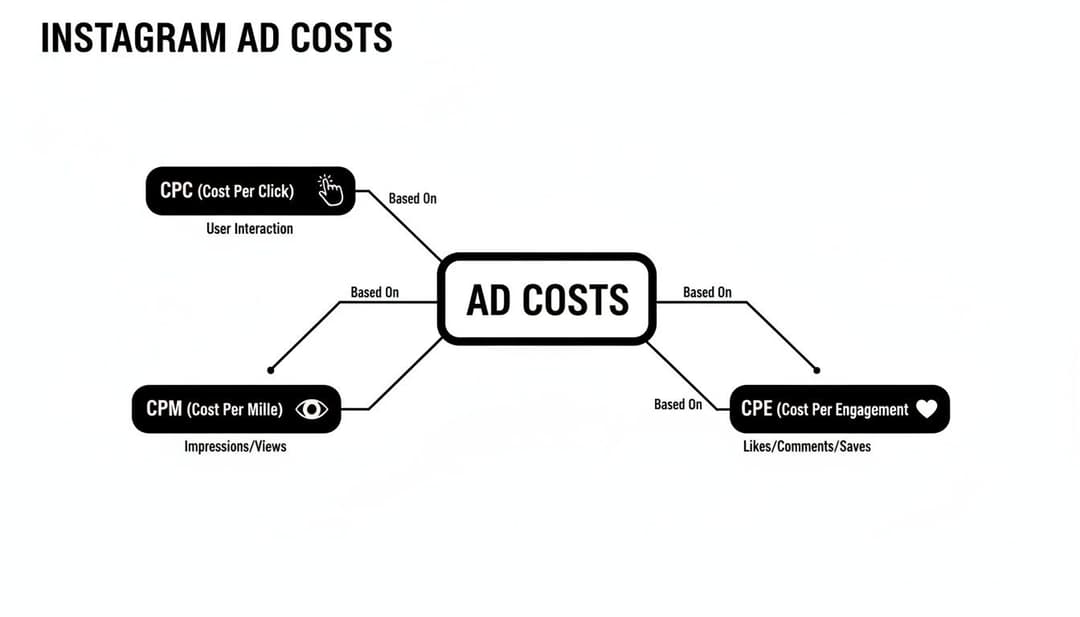
As you can see, metrics like cost-per-click (CPC), cost-per-thousand-impressions (CPM), and cost-per-engagement (CPE) are the final report card of a successful auction bid.
Key Takeaway: A lower bid can absolutely win the auction if your ad quality and estimated action rates are sky-high. A truly relevant, high-quality ad is rewarded by the system with more placements at a lower cost.
All of this is managed inside Meta's ad ecosystem. If you're just getting started, the first step is to get comfortable with the command center. Understanding what Facebook Ads Manager is is non-negotiable, as it’s where you’ll set your bids, build your campaigns, and ultimately master this auction process.
The 5 Key Factors That Drive Your Ad Costs
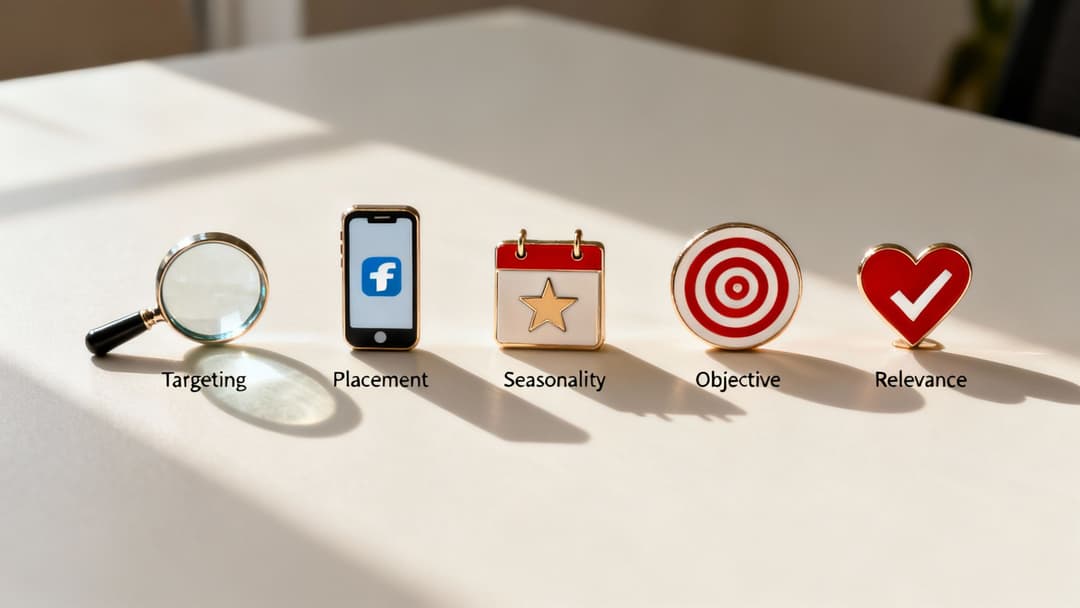
Understanding how the ad auction works is the first step. But to really get a grip on why your Instagram advertising prices are swinging up and down, you have to look at the levers you can actually pull. Your costs aren't random—they're a direct result of the choices you make every time you build a campaign.
Think of these factors like ingredients in a recipe. Tweak one, and you can completely change the final dish. In this case, that dish is your ad spend. Once you master these five drivers, you'll stop just reacting to your costs and start actively managing them for much better results.
1. Your Audience Targeting
Who you're trying to reach is probably the single biggest factor that determines your ad costs. It all comes down to supply and demand.
If you’re targeting a small, hyper-specific, and competitive audience—think "CEOs in San Francisco interested in SaaS"—you're in a bidding war with countless other advertisers for a very limited pool of attention. That high competition sends prices soaring.
On the flip side, a broader audience like "fitness enthusiasts in the United States" is massive, which means there's less competition for any single impression. That usually translates to lower costs. The real trick is finding that sweet spot between laser-focused targeting and broad reach to keep your costs in check while still hitting the right people.
2. Your Ad Placements
Not all ad real estate on Instagram is created equal. You’ve got options—the Feed, Stories, Reels, the Explore page—and each one has a different level of user engagement and available ad inventory. That directly impacts the price tag.
- Instagram Feed: This is the classic placement. It generally offers a solid balance of cost and performance because of its high visibility.
- Instagram Stories & Reels: These are immersive, highly engaging formats. Because they perform so well and are so popular with users, they can sometimes command higher prices.
- Explore Page: This spot is for users actively looking for new things, making it a goldmine for campaigns focused on discovery.
For most advertisers, using Automatic Placements is the smartest, most cost-effective move. Why? You’re letting Meta's algorithm do the heavy lifting. It will automatically find the cheapest and best-performing spots for your ads across its entire network, essentially optimizing your budget for you.
3. Seasonality and Timing
Advertising costs follow the calendar. When major shopping seasons like Black Friday, Cyber Monday, or the entire month of December roll around, competition explodes. Every retailer is trying to capture a piece of the spending frenzy, and that surge in demand for ad space drives up prices for everyone.
Even on a smaller scale, costs can change by the day of the week or the time of day. A B2B company might find its costs are highest during business hours, while a local restaurant might see a spike in the evening as people plan dinner. Being aware of these patterns helps you budget smarter and know when to expect a bump in costs.
4. Your Campaign Objective
The goal you choose for your campaign is a powerful signal to the algorithm. It tells Instagram what kind of action you value, and that value is reflected in the price.
An awareness campaign optimized for impressions will almost always be cheaper than a conversion campaign optimized for purchases. Think about it: getting someone to simply see an ad is a much easier—and less valuable—action than convincing them to pull out their credit card and buy something. Your objective sets the baseline for your Instagram advertising prices right from the start.
For a deeper dive on this, check out our guide on cost-per-impression rates.
5. Ad Quality and Relevance
Here's the good news: Instagram actually rewards you for making ads that people like. The algorithm uses an ad quality score to measure this, looking at things like engagement rates, positive feedback, and negative feedback (like when users hide or report your ad).
A high-quality, engaging ad doesn't just perform better—it's also cheaper to run. Instagram's system will actually prioritize showing a great ad over a low-quality one, even if the bid is lower. This is easily the most powerful lever you have for bringing down costs over the long term. A killer creative doesn't just get you more clicks; it makes every single one of those clicks cheaper.
Cost Drivers Comparison
To tie it all together, here’s a quick look at how these five factors can either inflate your costs or help you save money.
| Cost Factor | Impact on Price | Optimization Tip |
|---|---|---|
| Audience Targeting | High Impact: Narrow, competitive audiences are expensive. Broad audiences are cheaper. | Find the balance. Start broad, then use data to narrow down to your most profitable segments without over-specifying. |
| Ad Placements | Medium Impact: Some placements like Reels can be more competitive. | Use Automatic Placements to let Meta’s algorithm find the most cost-effective spots for your ads. |
| Seasonality | High Impact: Costs spike during major holidays and sales events (e.g., Black Friday). | Plan your budget for seasonal increases. If possible, run evergreen campaigns during off-peak times to build momentum. |
| Campaign Objective | High Impact: High-value objectives like Purchases cost more than low-value ones like Impressions. | Align your objective with your true business goal. Don't pay for conversions if you only need brand awareness. |
| Ad Quality | High Impact: High-relevance, engaging ads get lower costs. Poor ads get penalized with higher costs. | This is your secret weapon. Invest in great creative that resonates with your audience to lower costs across the board. |
By actively managing these elements instead of just setting and forgetting, you gain significant control over your Instagram ad spend and can drive much more efficient results.
Choosing the Right Budget and Bidding Strategy
Once you have a solid grasp of what drives your costs, you can move from theory to action. This is where the rubber meets the road: setting your budget and picking a smart bidding strategy. These aren't just numbers you pull out of a hat; they’re the foundation of your entire campaign, and they need to line up with your actual business goals.
One of the first questions everyone asks is, "How much should I spend?" The honest answer? It depends. Small businesses often start with a monthly Instagram budget between $500 and $5,000. On the other end of the spectrum, larger e-commerce brands and agencies regularly push past $10,000 a month to fuel aggressive testing and scaling.
For a lot of direct-to-consumer brands, these budgets get real results, often seeing average CPCs from $0.40 to $2.00 and CPMs around $5 to $10, especially in competitive spaces like fashion. If you want more benchmarks, you can find some great insights into Instagram ad costs on us.bastionagency.com.
Practical Budgeting Scenarios
Let's make this more concrete. Here’s how a few different businesses might set their initial budgets, not as a final number, but as a starting point to gather data and figure out what actually works.
- Local Startup (like a new coffee shop): A budget of $500–$1,500 per month is a realistic place to start. The main goal is local awareness and getting people in the door, so you'd focus that spend on a very tight geographic area to make every dollar count.
- Scaling E-commerce Brand: An online store with a product that’s already selling should be thinking in the $5,000–$15,000+ per month range. This gives you enough runway to properly test different audiences (cold traffic vs. retargeting) and a ton of different creatives to find the winning combinations you can scale.
- B2B Company (think a SaaS tool): For a B2B advertiser, a starting budget of $3,000–$7,000 per month makes sense. Here, the game is all about lead generation. You’re targeting specific job titles or industries, which means the sales cycle is longer and the cost-per-lead is naturally higher.
No matter where you start, you need a clear framework for managing your ad spend. We put together a guide on how to optimize ad budget allocation that goes deeper into making your money work smarter for you.
Decoding Meta’s Bidding Strategies
Your bid strategy is your instruction to Meta on how to spend your money in the ad auction. The right choice really boils down to your main goal: do you want the most results possible, or do you need to hit a specific cost-per-result to stay profitable?
Key Insight: Think of your bid strategy as a direct order to the algorithm. Choosing "Lowest Cost" tells it to go for volume, no matter what. "Cost Cap" tells it to prioritize efficiency and not to cross a specific cost line you’ve drawn.
Here’s a plain-English breakdown of the most common options:
- Lowest Cost (Highest Volume): This is the default setting for a reason—it’s the simplest. You tell Meta, "Get me the most results you can for this budget." It's fantastic for maximizing volume when you're starting out, but be prepared for your cost-per-result to bounce around a bit.
- Cost Cap: With this strategy, you set a maximum average cost you’re willing to pay per result. Meta's algorithm then works to get you as many results as possible without going over that average. This gives you much more control over your CPA and profitability.
- Bid Cap: This one is for the pros. You set a maximum bid for every single auction. It gives you the most granular control, but it's a double-edged sword. If your bid is too low, you'll barely win any auctions and your ads won't deliver.
For most advertisers, starting with Lowest Cost is the way to go. It lets you gather baseline data to see what your natural CPA is. Once you know that number, you can switch to a Cost Cap to lock in your profitability as you start to scale your campaigns.
Proven Tactics to Lower Your Instagram Ad Spend
Knowing what drives Instagram ad prices is half the battle. Actually controlling those costs? That’s where the pros separate themselves from the amateurs.
Let's move past the theory and get into the practical, actionable strategies that top-tier marketers use to consistently bring down their costs and boost their return on ad spend (ROAS). These aren't just generic tips; they're battle-tested methods for making every dollar in your budget work harder.
Refine Your Audience Targeting
The fastest way to burn through your budget is to show ads to people who will never buy. It sounds obvious, but it happens all the time. On the flip side, the quickest way to lower your costs is to laser-focus on the users most likely to become customers.
- Build Lookalike Audiences: Once you have a solid list of your best customers, you can ask Meta to work its magic and find new people with similar traits. A 1% Lookalike Audience is incredibly powerful because it targets the users who most closely resemble your top buyers, which almost always results in a lower cost-per-acquisition.
- Master Retargeting: Don't let interested prospects just wander off. Create custom audiences to retarget website visitors, people who have engaged with your profile, or past purchasers. Hitting these warm leads with specific, relevant offers is how you turn abandoned carts into sales and one-time buyers into loyal fans. This audience segment consistently delivers the highest ROAS.
Create High-Impact, Scroll-Stopping Creative
On a visual-first platform like Instagram, your creative does the heavy lifting. A generic, low-effort ad will get scrolled past in a heartbeat, and the algorithm will penalize you with higher costs for the low engagement.
Great creative is your single best lever for driving down costs. And a critical metric for understanding if your creative is actually working is your Cost Per Acquisition (CPA) and how to lower it. When that number goes down, you know your creative is connecting.
Pro Tip: Your ad creative has to feel native to its placement. A static image that looks great in the Feed will completely flop as a Reel. Always create content that feels natural in each format to maximize your relevance score and lower your ad spend.
Run Disciplined A/B Tests
Never assume you know what will work. The only way to find winning combinations of audiences, creative, and copy is to test relentlessly. Smart A/B testing isn't about throwing spaghetti at the wall; it’s about isolating one variable at a time to see what truly moves the needle.
Start by testing the big-picture elements first to get the most significant wins.
- Test Different Angles: Pit two completely different marketing messages against each other. For a skincare brand, that could be "anti-aging benefits" versus "all-natural, organic ingredients."
- Test Creative Formats: Run a polished video ad against a stunning static image or an interactive carousel. You might be surprised which format your audience actually prefers.
- Test Ad Copy: Once you have a winning creative, try testing two different headlines or primary text variations to see if you can squeeze out an even better click-through rate.
Use Automatic Placements
Finally, one of the simplest ways to lower your Instagram ad spend is to get out of the algorithm's way. Instead of hand-picking where your ads show up, select Automatic Placements.
This gives Meta’s delivery system the freedom to find the most cost-effective spots for your ads across its entire network—including Facebook, Messenger, and the Audience Network. It will automatically shift your budget toward the lowest-cost opportunities, doing much of the heavy lifting for you.
Scaling Your Ad Performance with AI
Manual A/B testing is a powerful tool, but let's be honest—it’s slow. It often becomes the bottleneck that limits how fast you can grow and keeps your Instagram advertising prices higher than they should be. This is where AI gives you a serious competitive advantage, shifting you from slow, manual tweaks to rapid, data-driven optimization.
Platforms like AdStellar AI were built to solve this exact problem. Instead of spending hours meticulously building a handful of ad variations, you can automatically create and launch hundreds in just a few minutes. It allows you to test creative, copy, and audience combinations at a scale that's just not humanly possible.
From Guesswork to Data-Driven Decisions
The real magic here is the speed to insight. You stop guessing what works and let the AI analyze real-time performance data to instantly pinpoint the combinations driving the highest ROAS or the lowest CPA. We've seen teams find winning ads 10x faster, allowing them to systematically bring down their customer acquisition costs.
For a deeper dive into how this works, check out our guide on using AI for Facebook ads—the strategies apply directly to Instagram campaigns, too.
This shift means you stop wasting budget on underperforming ads sooner and can reallocate spend to proven winners much more quickly, maximizing the efficiency of your entire ad account.
The dashboard below gives you a sense of how an AI platform visualizes performance across tons of ad variations, making it dead simple to spot the top performers at a glance.
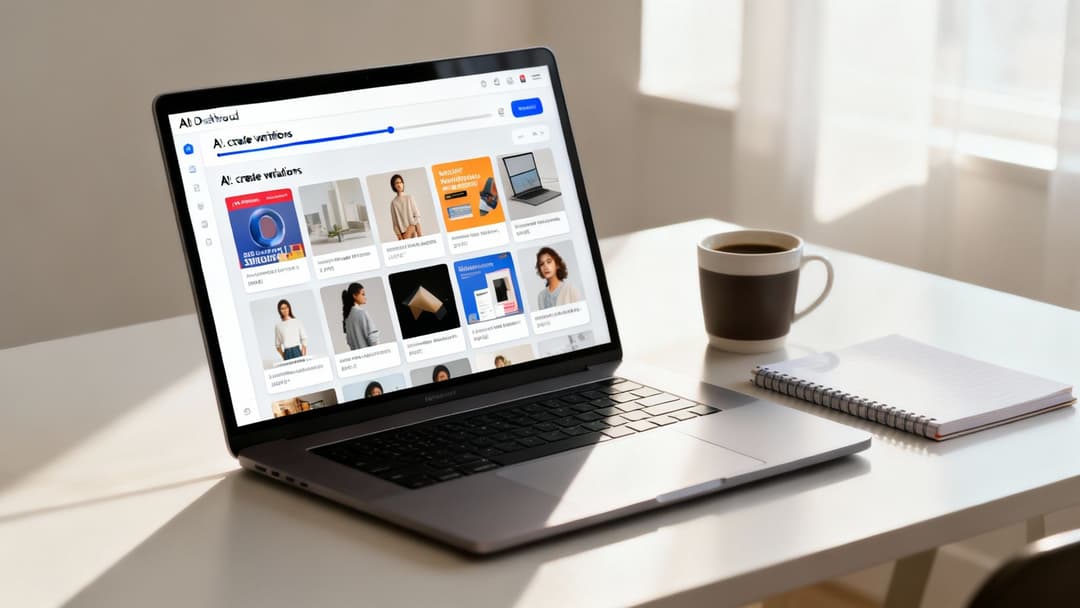
This kind of clarity helps you immediately see which creative elements are moving the needle, paving the way for smarter, faster campaign optimizations.
Automating for Maximum Efficiency
Ultimately, AI-powered tools completely change your workflow by automating the most tedious, time-sucking parts of managing campaigns.
This automation frees your team up to focus on big-picture strategy instead of getting buried in manual tasks. It empowers you to:
- Launch more tests without needing to hire more people.
- Identify winning ads in days, not weeks.
- Scale your budget with confidence because you know it’s backed by solid data.
By embracing this kind of technology, you turn ad testing from a necessary chore into a streamlined engine for growth, ensuring every dollar you spend is working as hard as it possibly can.
Common Questions About Instagram Ad Costs (Answered)
Let's dig into some of the most frequent questions I hear from marketers about what they can expect to pay for Instagram ads. Getting these answers straight will help you set the right budget and know what to look for in your own campaigns.
What’s a Good CPC or CPM on Instagram?
This is the million-dollar question, and the honest answer is: it depends entirely on your industry and what you're trying to achieve. That said, after running thousands of campaigns, we've seen some clear benchmarks for what "good" looks like.
Generally, a solid Cost Per Click (CPC) lands somewhere between $0.40 and $0.95. For Cost Per Mille (CPM), which is the cost per 1,000 impressions, a healthy range is typically $2.50 to $7.00.
But remember, these are just guideposts. A higher CPC might be a fantastic deal if it's bringing in high-ticket sales. On the flip side, a super low CPM is a huge win for a brand awareness campaign. The real measure of success is always your return on ad spend (ROAS).
Why Are My Instagram Ad Costs So High?
If your costs are creeping up or feel unexpectedly high, it almost always comes down to a few usual suspects. The number one cause? Audience competition. If you're targeting a small but highly sought-after group of people, you're essentially in a bidding war, and that will drive your prices sky-high.
Other major culprits include:
- Low Ad Relevance: Instagram's algorithm knows when your creative isn't landing. If people aren't engaging, it costs more to get your ad in front of them.
- Seasonality: Costs always jump during big shopping moments like Black Friday or the holiday season. More advertisers are competing for the same eyeballs, which pushes up auction prices for everyone.
- Ad Fatigue: When the same people see your ad over and over, they start tuning it out. Engagement drops, your relevance score takes a hit, and your costs start to climb.
The first place to look when diagnosing high costs is your click-through rate (CTR). A low CTR is a dead giveaway for poor ad relevance, while costs that slowly increase over a few weeks often point to ad fatigue.
How Long Until I See Results?
Patience is a virtue in advertising, especially right at the start. You have to give Meta’s algorithm enough time to work its magic and exit the “Learning Phase.” This is the initial period where the system is figuring out the best people to show your ads to, and it typically requires about 50 conversions per ad set to complete.
During this phase, performance will be all over the place. Don't panic.
As a rule of thumb, let any new campaign run for at least 3-5 days before you even think about making significant changes. This gives the algorithm enough data to find its footing and gives you a much clearer picture of what your real-world performance and costs will look like.
Ready to stop guessing and start scaling? AdStellar AI automates ad creation and testing, helping you find your most profitable campaigns 10x faster. Cut through the noise and unlock your true ROAS by visiting https://www.adstellar.ai.