You're probably making one of two decisions right now. You're either trying to buy your next pair of shoes and wondering whether the Swoosh or the Three Stripes fits your life better, or you're a marketer looking at two category-defining brands and asking a harder question: why does each one keep attracting such different people?
That's what makes nike vs adidas more interesting than a standard product comparison. This isn't just about cushioning, jerseys, or logo preference. It's about two companies selling performance, identity, aspiration, and belonging in very different ways.
For consumers, that changes what feels right on foot and on body. For brand builders, it changes how you position a product, shape a message, and build a loyal audience that sticks.
The Two Superpowers of Sportswear
The first thing to understand is scale. In business terms, this rivalry isn't as close as culture sometimes makes it look.
According to DataHut's Nike vs Adidas competitive analysis, Nike generates about $51 billion in annual revenue versus Adidas at around $23 billion, and Nike's market capitalization of $259.93 billion is 4.6 times Adidas's $56.40 billion. That matters because it changes how each company can invest, absorb mistakes, and defend its position.
| Category | Nike | Adidas | Strategic takeaway |
|---|---|---|---|
| Annual revenue | $51B | $23B | Nike has more room to fund product, media, and sponsorship bets |
| Market value | $259.93B | $56.40B | Investors price Nike as the stronger long-term business |
| Relative position | Global category leader | Major challenger | Adidas competes from a strong but different strategic posture |
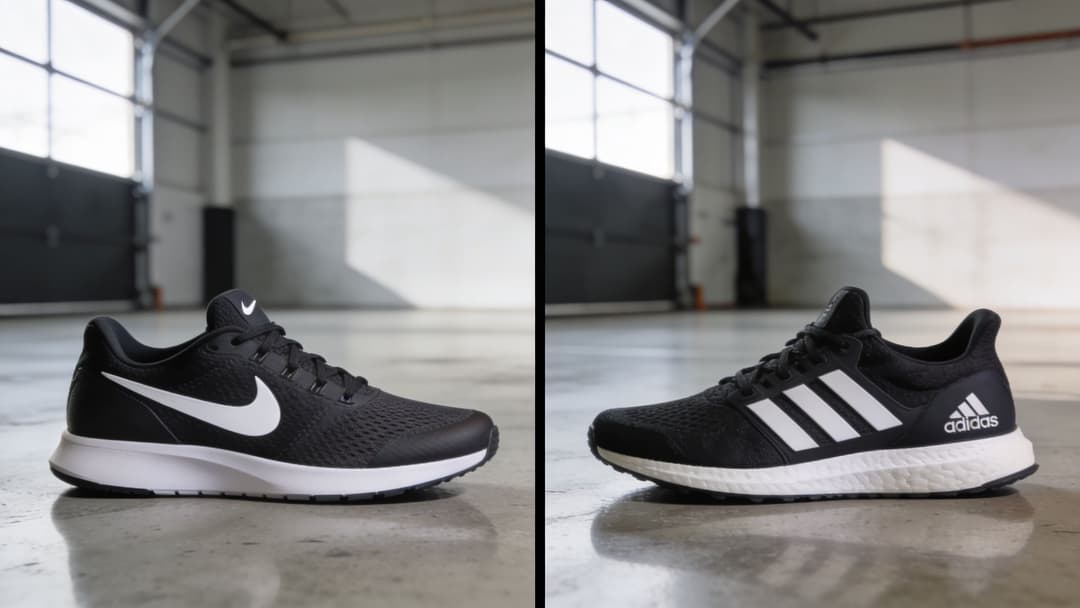
Scale changes the meaning of every product launch
A bigger company doesn't just sell more pairs. It gets to shape the conversation around the category.
Nike can put more weight behind athlete deals, premium storytelling, retail presentation, and product seeding. Adidas can still win specific moments, especially where style cycles and football culture matter, but it does so from a different base. It has to be sharper about where it concentrates attention.
That's why the consumer debate often feels tighter than the financial one. On the shelf, one great Samba, Gazelle, Ultraboost, or Predator release can narrow perception fast. On the balance sheet, the gap is still large.
Practical rule: When one brand leads this clearly in revenue and valuation, the challenger usually wins by focus, not by trying to mirror the leader everywhere.
The rivalry is about identity as much as inventory
Nike usually sells a forward-leaning promise. Speed. ambition. individual achievement. Adidas often feels more rooted in cultural fluency, heritage, and the social side of sport and style.
That difference shows up in how people shop. Someone comparing race-day shoes is making a performance choice. Someone browsing Latest Adidas markdowns is often making a taste and value choice at the same time. Brand meaning and purchase logic blend together.
For marketers, the category offers particular value. A brand doesn't need Nike's size to learn from Nike's clarity. It doesn't need Adidas's legacy to learn from Adidas's community signals. What matters is understanding the specific psychological lever you're pulling. If your message needs that lens, psychology in advertising is the right frame: people don't buy symbols randomly. They buy the symbols that reinforce who they think they are.
Innovation Engines and Core Technologies
The product battle starts in the midsole and upper. That's where both brands turn engineering into narrative.
Nike's language tends to emphasize propulsion and speed. Adidas often frames innovation around comfort, energy return, and all-day wearability. Those aren't just marketing styles. They create different expectations before the shoe even touches the ground.
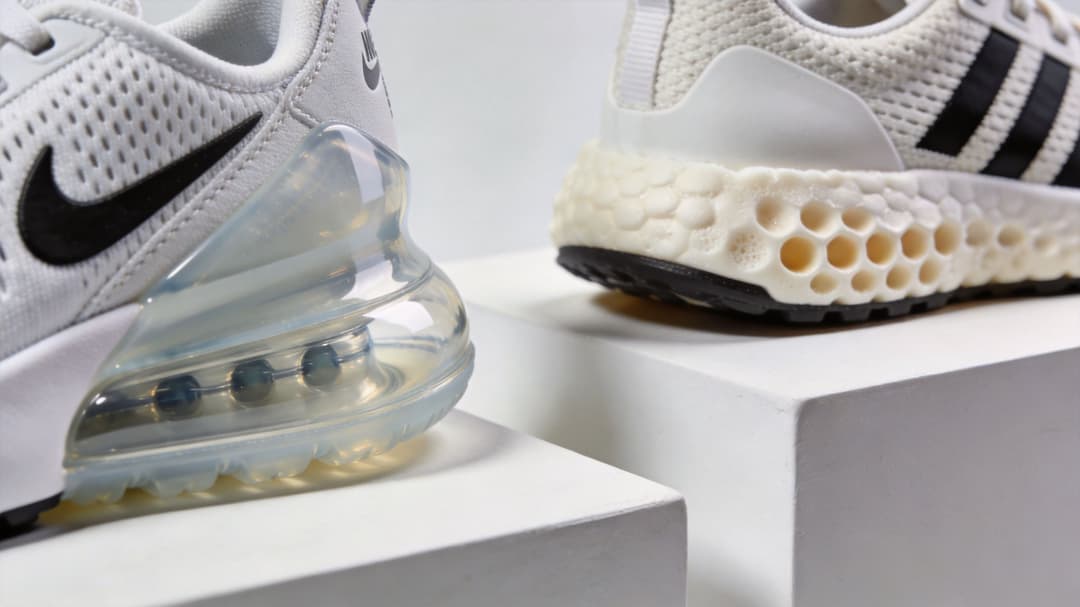
Cushioning philosophies feel different on foot
Nike's best-known systems include Air and ZoomX. Adidas's most recognized cushioning families include Boost and 4D.
In plain terms, Nike often chases a sensation of snap. The ride is meant to feel quick, aggressive, and efficient, especially in shoes built for racing or fast training. Adidas more often aims for a smoother rebound and a cushioned underfoot feel that people associate with comfort over long wear windows.
That's why runners and casual buyers can talk past each other when comparing these brands. A runner might prefer a shoe that feels like it wants to roll forward. A commuter might care more about softness and stability through a long day. Both can say they want “performance” and mean completely different things.
Upper construction reflects each brand's priorities
Nike's knit and mesh constructions often aim for containment. The foot should feel locked in, especially when pace changes quickly. Adidas uppers frequently prioritize flexibility and an easy step-in feel, which helps explain why some of its lifestyle-performance hybrids translate well from training to daily wear.
That distinction carries over into apparel. Adidas tends to excel when the product needs to move cleanly between sport and street. If you want a sense of how the brand handles football presentation and kit details, this SoccerWares expert adidas kit review is a useful reference point.
A lot of brands struggle because they talk about technology as if every user wants the same thing. They don't. One person wants speed cues. Another wants forgiveness.
Here's a visual explainer worth watching before you take any product claim at face value:
The marketing lesson inside the tech stack
Nike is usually strongest when it turns R&D into aspiration. Adidas is usually strongest when it turns R&D into accessibility and versatility.
That has a practical implication for ad creative. A Nike-style campaign often works best when the product is framed as an advantage tool. An Adidas-style campaign often works best when the product is framed as a better-feeling, better-looking part of everyday movement. Teams testing those angles at scale often need systems that can spin up multiple creative-message combinations quickly. One option is AI for ads, especially when you're comparing benefit-led variants rather than relying on a single polished campaign.
Head-to-Head on the Field and the Street
The easiest way to compare nike vs adidas is by category, because the winner changes depending on where the contest happens.
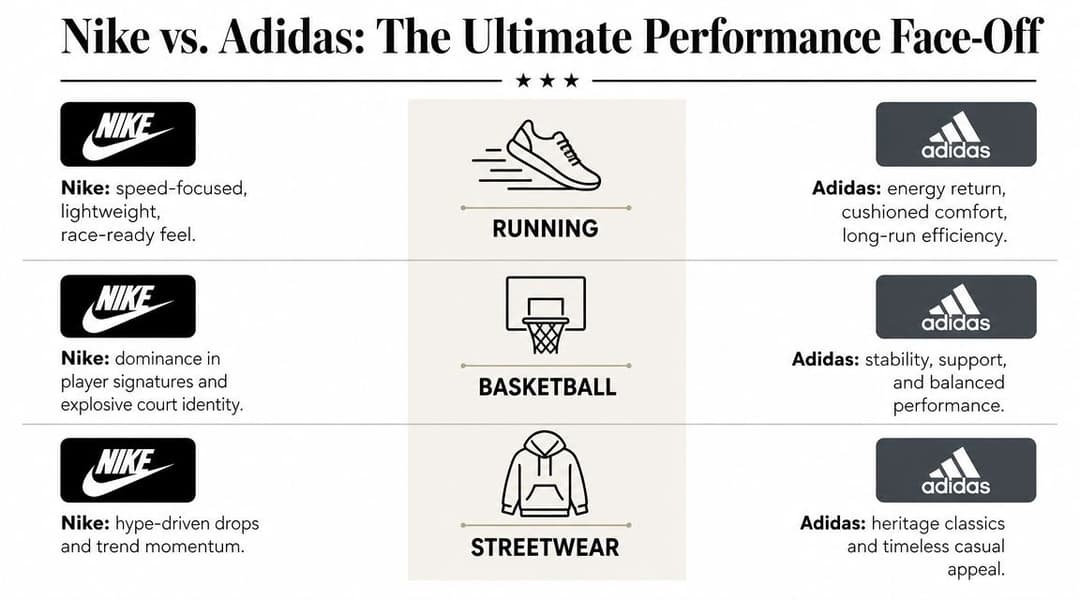
Running
Nike owns the sharper performance identity in running.
That edge comes from product framing as much as product design. Nike has spent years teaching runners to associate the brand with speed, breakthroughs, and race-day ambition. The language around shoes like Vaporfly-family models and ZoomX-based designs reinforces that every time the category conversation starts.
Adidas is far from weak here. It still appeals to runners who want comfort, consistency, and a less severe ride. In training environments, that can be an advantage. But if the question is which brand most strongly owns elite-performance running in public perception, Nike has the lead.
For running, Nike usually wins when the buyer wants a shoe with a clear performance thesis. Adidas wins when the buyer wants a more forgiving blend of running utility and everyday wear.
Basketball
Nike is even stronger in basketball, and not just because of product.
Basketball is where Nike's athlete-first brand architecture becomes hard to challenge. Signature shoes, player storytelling, and highlight-driven culture work together. The company doesn't just sell a basketball model. It sells a relationship between the athlete, the game, and the buyer's self-image.
Adidas can compete on design, comfort, and specific silhouettes. But basketball culture rewards icon-building, and Nike has been more consistent at turning athletes into product ecosystems.
Lifestyle and streetwear
The gap narrows and often flips.
Adidas has a distinct advantage when heritage silhouettes become the center of fashion conversation. The brand's archive is one of its strongest weapons because it lets Adidas look both classic and current without seeming forced. Samba, Gazelle, Superstar, and terrace-inspired styles fit naturally into wardrobes that don't want to look over-designed.
Nike's lifestyle strength comes from a different place. It's more hype-responsive and event-driven. Certain releases feel bigger, louder, and more collectible. That gives Nike intensity. Adidas often has more ease.
Sponsorship strategy explains a lot
The product differences make more sense once you look at sponsorship posture. According to RunRepeat's Nike vs Adidas business stats, Adidas excels in football by sponsoring World Cup-winning teams, while Nike leans into high-profile individual athlete endorsements across sports, with total endorsement deals valued at $9.34 billion.
That split shapes product meaning.
- Football strengthens Adidas's collective identity: Team kits, national associations, and club culture make the brand feel communal.
- Individual endorsements strengthen Nike's hero narrative: The athlete becomes the campaign, and the consumer buys into that personal arc.
- Streetwear borrows from both: Adidas benefits when football and terrace heritage spill into fashion. Nike benefits when athlete aura spills into lifestyle demand.
If you build ads in fashion, sport, or footwear, this matters. The creative should match the sponsorship logic behind the brand. Team-first cues and social belonging often land differently from achievement-first cues and star power. That's why studying cool social media ads is more than inspiration. It helps you see which visual grammar fits which brand world.
A Deep Dive into Pricing and Value
Price is where many buyers oversimplify the choice. They ask which brand is cheaper, when the better question is what kind of value each brand delivers at different tiers.
Flagship buys signal as much as performance
At the top end, you're rarely paying only for materials or engineering. You're paying for a performance story, a badge of seriousness, or access to a cultural object.
Nike's premium products often justify their position by promising sharper specialization. Adidas's premium products more often justify themselves through wearability across contexts. One says, “this is built for a specific high-performance use.” The other often says, “this gives you enhanced function without forcing you into a single identity.”
That's why premium value depends on the buyer. If you want race-day intent, Nike's premium can feel rational. If you want one product that can move between sport, casual wear, and travel, Adidas can feel like the smarter spend.
Mid-range is where Adidas often feels strongest
In the middle of the market, Adidas frequently makes a compelling case because comfort and style travel well. The buyer isn't always trying to maximize athletic output. They're trying to avoid a bad purchase.
Nike's mid-range can still win, especially when the design borrows from more elite performance lines. But Adidas often does well when the customer wants low-friction ownership. Easy to wear. Easy to style. Easy to understand.
Value isn't the lowest ticket. It's the lowest regret.
Discount channels reveal a different game
Outlet and markdown shopping changes brand perception fast. A discounted pair from either company can look like a bargain, but smart buyers look beyond the logo and ask whether the product belongs to a timeless line or a quickly dated one.
That's also why sportswear behaves differently from many apparel categories. Teamwear, heritage, and fan attachment can stretch product life well beyond a normal trend cycle. If you want a broader look at that commercial logic, this piece on how football shirt businesses operate gives useful context.
Marketers should read pricing through retention, not just conversion. A discounted first purchase only matters if the customer comes back. That's the same principle behind customer lifetime value in marketing: value isn't captured at checkout alone. It's captured across repeat behavior.
The Art of Building a Global Tribe
The deepest difference between Nike and Adidas isn't the sole unit or the jersey fabric. It's the tribe each brand builds around itself.
According to YouGov's analysis of Nike and Adidas loyalists, Adidas loyalists skew male at 53% and middle-income at 40%, while Nike loyalists are more female-leaning at 54% and more likely to be higher-income, with 24% earning over £50k versus Adidas at 18%. That's not a trivial difference. It suggests each brand is attracting a distinct social identity, not just a preference for different shoes.
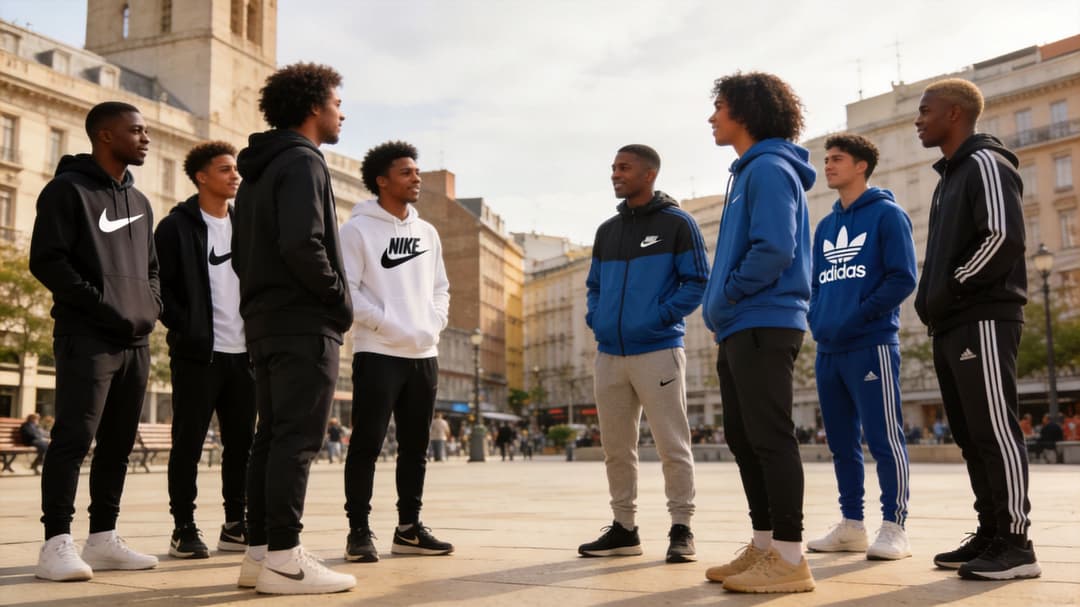
Nike sells personal ascent
Nike's brand logic is often individualistic. The athlete, creator, or buyer is positioned as someone pushing past limits, proving something, or expressing ambition in public.
That tends to attract people who respond to upward momentum and premium-coded self-presentation. The brand becomes a badge for striving. Even when the product is casual, the emotional script often isn't.
Adidas sells belonging with edge
Adidas feels different because it often carries more visible subcultural history. Football terraces, music, retro silhouettes, and street adoption all help the brand feel socially embedded rather than purely aspirational.
That makes Adidas especially instructive for marketers. It shows that loyalty doesn't always come from shouting the loudest. It can come from fitting into an identity system people already share.
- Nike's tribe is often achievement-coded: The product helps the buyer project discipline, ambition, or high standards.
- Adidas's tribe is often culture-coded: The product helps the buyer signal taste, scene awareness, or social belonging.
- Both are emotional systems: The product is the object. The tribe is the reason it keeps selling.
The strongest brands don't just acquire customers. They give people a role to play.
That lesson matters well beyond footwear. If you're testing creator-led, community-heavy, or lifestyle ads, the challenge isn't just producing content. It's finding material that feels native to the tribe you want to reach. That's where UGC advertising becomes strategically useful. It can make the message feel like it came from inside the community instead of being imposed from above.
The Final Verdict Who Wins for You
A buyer standing in front of a wall of Nike and Adidas shoes is rarely choosing between two equivalent products. They are choosing between two brand systems. One usually signals personal performance and competitive intent. The other more often signals cultural fluency, versatility, and team or scene affiliation.
That distinction is the useful verdict.
If you are the elite marathoner
Choose Nike.
Nike still has the stronger association with race-day speed, performance experimentation, and ambition at the sharp end of running. If your buying criteria center on split times, efficiency, and a product story built around measurable gains, Nike is usually the more coherent fit.
If you are the court dominator
Choose Nike.
Basketball is a product category and a storytelling category. Nike has been more effective at turning athletes into full signature ecosystems, which gives its basketball shoes an advantage as both equipment and identity markers. For buyers who want on-court credibility and off-court relevance in the same purchase, Nike remains ahead.
If you are the football-first buyer
Choose Adidas.
Adidas has deeper football resonance at the level of clubs, terraces, and shared ritual. That matters because football consumption is often collective before it is individual. If the product needs to feel connected to the sport's wider culture, Adidas usually has the stronger position.
If you are the sneakerhead collector
Your answer depends on what kind of collection you are building.
Choose Nike if you prioritize launch energy, athlete association, and high-attention drops. Choose Adidas if you value archival depth, easier styling, and classics with a longer shelf life. Nike tends to win the spectacle battle. Adidas often wins the wearability test.
If you are the style-conscious commuter
Choose Adidas.
Adidas is often easier to fold into daily use across work, travel, casual wear, and light exercise. Its strongest products tend to complement a wardrobe instead of dominating it. For consumers who want lower-friction versatility, that matters more than hype.
If you are the budget-savvy athlete
Start with Adidas, then compare both brands model by model.
At lower price points and in sale channels, Adidas often presents a clearer value case because comfort and casual utility still come through outside the top technical tier. Nike can still be the better buy when one of its stronger performance lines is heavily discounted. The practical rule is simple. Buy for fit, use case, and construction. Do not pay a premium for the logo alone.
If you are a performance marketer studying nike vs adidas
The better question is not which brand wins. It is which brand architecture matches your category.
Nike is the stronger template when demand is driven by aspiration, specialist credibility, or hero-centered storytelling. Adidas is the better template when growth depends on community cues, cultural relevance, and products that fit naturally into existing identity systems.
The audience signal worth paying attention to is how each base notices marketing. As noted earlier, Adidas loyalists are more likely to notice event sponsorships than Nike fans. That suggests stronger receptiveness to communal context, shared occasions, and brand presence embedded in culture rather than centered on a single standout figure. For media buyers and creative strategists, that changes the testing plan.
A useful framework:
Define the emotional job first
Is the customer trying to compete, belong, improve, or signal taste? Creative usually underperforms when that question is fuzzy.Match the visual world to the audience
Solo ambition, elite training, and personal progress trigger a different response than crowd energy, shared ritual, and social identity.Test strategic angles, not just ad variants
Compare performance-led, status-led, and belonging-led concepts as separate message families. Small copy changes inside one angle will not tell you much.Use production systems that support fast variation
If your team is testing many audience and creative combinations on Meta, AdStellar AI is one option for automating bulk ad creation, launching multiple combinations, and learning from performance patterns over time.
For consumers, the conclusion is straightforward. Buy Nike when you want sharper competitive positioning. Buy Adidas when you want easier crossover between sport, style, and everyday use.
For brand builders, the takeaway is more valuable. Market leadership in sportswear does not come from awareness alone. It comes from aligning product design, messaging, sponsorships, and community signals around a consistent identity. Nike and Adidas both do that well. They just optimize for different human motives.
If you're building paid campaigns around audience identity, creative angles, and fast testing cycles, AdStellar AI helps teams generate, launch, and analyze large sets of ad variations without the usual manual setup. It's built for marketers who want clearer signal on what messages, creatives, and audiences deliver results.