The world of digital advertising is powered by a diverse ecosystem of ppc advertising platforms, each with its own audience, rules, and strategic advantages. Selecting the right platform, or the right combination, is one of the most critical decisions a marketing team can make. It's the difference between reaching high-intent buyers at the exact moment of need and broadcasting your message into the void.
This guide moves beyond simple definitions to provide a strategic roadmap. We'll dissect the top 12 platforms, analyzing them not just by features, but by their ideal use cases, inherent limitations, and the specific business goals they're built to achieve. Each entry includes direct links and screenshots to give you a clear view of the interface and user experience.
Inside, you will find detailed breakdowns of giants like Google Ads and Meta Ads, alongside specialized networks such as LinkedIn Ads for B2B targeting and Amazon Ads for e-commerce dominance. We also explore how AI-powered tools like AdStellar can connect to these platforms, helping you manage campaigns with greater efficiency.
Whether you are a B2B marketer targeting niche professional roles, an e-commerce brand chasing retail sales, or a growth team looking to scale campaigns, this resource will help you match your budget and objectives to the platform that will deliver the best return on ad spend. We'll give you an honest assessment of what works, what doesn't, and where your money is best invested to achieve real results.
1. AdStellar AI
AdStellar AI operates as a powerful accelerator and optimization layer built specifically for the Meta Ads ecosystem. It is not a standalone PPC advertising platform in the traditional sense, like Google Ads, but rather an intelligent automation tool designed to maximize performance on one of the world's most critical ad networks. Its primary function is to eliminate the manual, time-consuming work of creating, testing, and scaling Meta campaigns, allowing marketers to focus on high-level strategy instead of repetitive setup. The platform is engineered for teams that need to test at a massive scale, promising a 10x faster launch process from creative brief to live campaign.
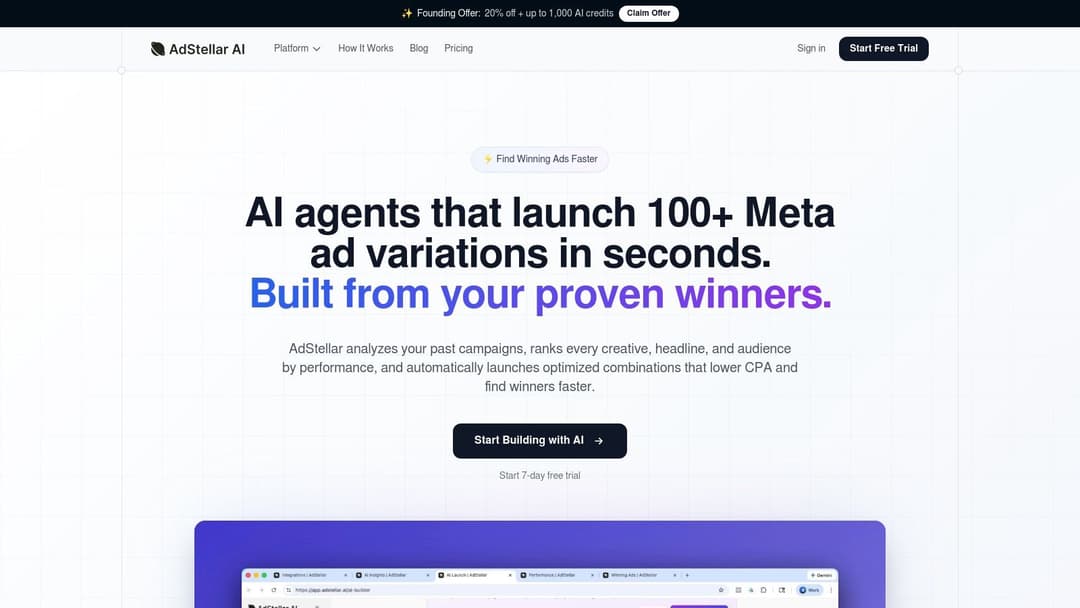
The core of AdStellar AI is its ability to auto-generate hundreds of creative, copy, and audience variations in minutes. This is a game-changer for performance marketers who understand that high-volume testing is the key to unlocking better results. Instead of building a handful of ads, teams can produce an entire matrix of permutations to find winning combinations with statistical confidence. When working with platforms like AdStellar AI, leveraging an AI ad creative generator can provide a significant edge in campaign performance by supplying a steady stream of fresh, high-quality visual assets.
Key Strengths & Use Cases
AdStellar AI’s standout feature is its goal-aware AI engine. After connecting securely to Meta Ads Manager, it ingests historical performance data and ranks all assets (creatives, audiences, copy) against your most important business goals, whether that’s ROAS, CPL, or CPA.
- Best for: Performance marketers, e-commerce brands, and agencies managing multiple Meta ad accounts.
- Key Feature: The AI Launch function automatically assembles new campaigns using only the top-performing assets identified by its ranking system.
- Workflow: An AI Scaling model continuously monitors campaign data, reallocating budget to the best performers to maintain momentum without manual intervention.
The platform centralizes the entire Meta workflow into dedicated modules for campaigns, creatives, audiences, and performance analytics. This organized structure is especially useful for agencies needing to maintain consistency and efficiency across different client accounts. For a deeper dive into its capabilities, AdStellar provides additional context on how AI drives advertising success.
Limitations and Considerations
The platform's primary limitation is its exclusive focus on Meta Ads. It is not a multi-channel solution and won't manage your campaigns on Google, TikTok, or other networks. It also requires a foundation of historical ad account data to inform its AI models, so brand-new accounts may experience a ramp-up period before seeing optimal results.
Finally, AdStellar AI does not publish its pricing or customer testimonials publicly. Prospective users must contact their team directly for a demo and cost details, which adds a step to the evaluation process.
2. Google Ads
Google Ads is the dominant force among PPC advertising platforms, offering access to an immense ecosystem that includes Search, Shopping, YouTube, Maps, and the Google Display Network. Its primary strength lies in its ability to capture high-intent users actively searching for products or services, making it a foundational channel for nearly any direct-response or brand-building strategy. For performance marketers, it is the starting point for scaled customer acquisition.
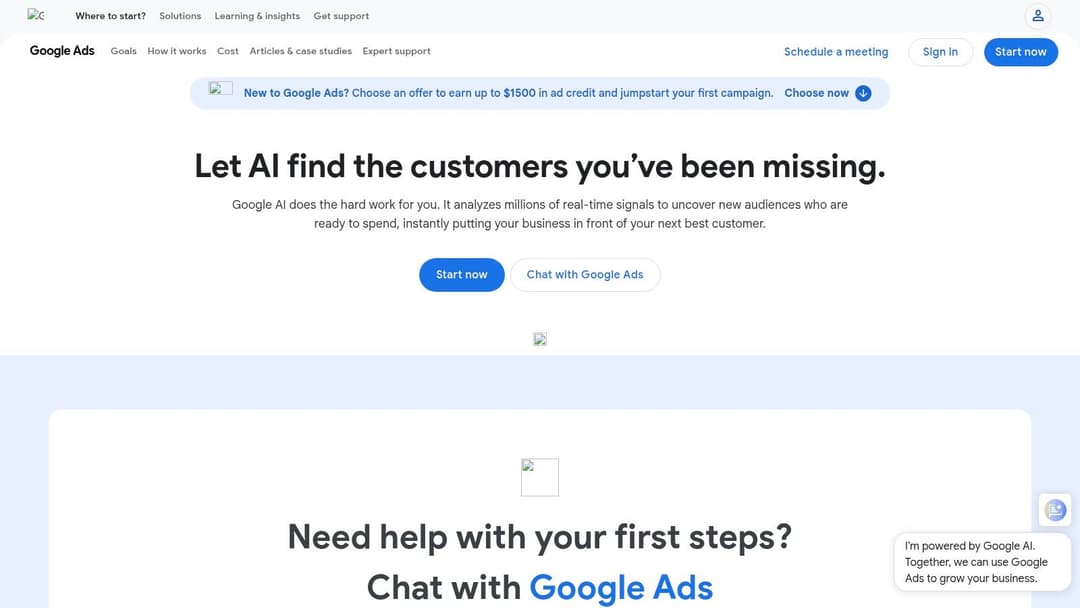
The platform has matured significantly, moving beyond manual bidding to powerful automation. Features like Smart Bidding (tCPA, tROAS) and campaign types like Performance Max manage targeting and bidding across all of Google’s inventory from a single campaign. This automates much of the heavy lifting, although it requires a deep understanding of audience signals and conversion data to steer effectively. While a foundational element for many advertisers, it's worth exploring how it fits into a broader media mix by reading up on the top ad networks for advertisers to ensure a diversified strategy.
Key Details & Considerations
- Ideal Use Cases: Lead generation, e-commerce sales, local business promotion (Maps), and large-scale brand awareness (YouTube).
- Pricing & Scale: Operates on a pay-per-click auction model. Costs vary dramatically by industry and keyword competitiveness, ranging from a few cents to over $100 per click for high-value terms. There are no minimum spend requirements.
- Pros: Unmatched reach to high-intent audiences, sophisticated automation and conversion tracking, and extensive integration possibilities.
- Cons: Intense competition can lead to very high CPCs, and the increasing reliance on automated campaigns can feel like a "black box," making budget pacing and control challenging at times.
3. Microsoft Advertising
Often viewed as a direct alternative to Google, Microsoft Advertising offers access to a valuable, albeit smaller, audience across the Bing search engine and Microsoft's extensive network of properties, including Outlook, MSN, and Edge. Its key advantage lies in providing access to high-intent search users at a typically lower cost per click. The platform taps into unique data signals, including professional attributes from LinkedIn profiles, which can be a significant benefit for B2B advertisers.
The interface and campaign structure will feel immediately familiar to anyone experienced with Google Ads, and Microsoft makes migration simple with a direct import tool. Beyond search, the Microsoft Audience Network provides native and display ad inventory, allowing advertisers to expand their reach. While search campaigns are the main draw, performance marketers should not overlook the potential of this network, as it often reaches a slightly older, more affluent demographic that can be highly profitable.
Key Details & Considerations
- Ideal Use Cases: B2B lead generation, e-commerce sales (especially for higher-ticket items), reaching older demographics, and supplementing Google Search campaigns.
- Pricing & Scale: Operates on a pay-per-click auction model. CPCs are generally lower than on Google due to less competition. There are no minimum spend requirements, making it accessible for all budget sizes.
- Pros: Lower CPCs and less competition, access to a unique and often high-value user base, and an easy import feature from Google Ads campaigns.
- Cons: Significantly smaller market share and overall reach compared to Google, and the Audience Network requires careful monitoring to ensure placement quality and performance.
4. Meta Ads (Facebook & Instagram)
Meta Ads is a dominant force in social media advertising, offering access to a massive user base across Facebook and Instagram. Unlike search-based PPC advertising platforms that capture existing intent, Meta excels at demand generation. It allows advertisers to reach audiences based on interests, demographics, and behaviors, making it powerful for both B2C and certain B2B brands to build awareness and drive direct-response actions. The platform is built for scaled performance, especially for e-commerce and lead generation.
The core of Meta's system has moved toward machine learning with its Advantage+ suite of products. Advantage+ campaigns, placements, and audience expansion use AI to automate targeting and budget allocation, finding the most likely converters across its entire network. Success on Meta is heavily dependent on strong creative assets and feeding the algorithm dense conversion data via the Meta Pixel and Conversions API. For those looking to master this channel, understanding the nuances of creative strategy is critical, and a deeper dive into paid social advertising best practices can provide valuable context.
Key Details & Considerations
- Ideal Use Cases: E-commerce sales, lead generation for B2C and B2B, app installs, and brand awareness campaigns leveraging video and Reels.
- Pricing & Scale: Operates on an auction model with objectives like CPM, CPC, or cost-per-action. Costs are highly variable based on audience targeting, seasonality, and creative performance. There are no minimum spend requirements, allowing for high scalability.
- Pros: Massive audience scale with sophisticated delivery optimization, high velocity for creative testing, and flexible campaign objectives from top-of-funnel awareness to bottom-funnel purchases.
- Cons: Performance is highly sensitive to creative quality and fatigue, and the algorithm requires consistent conversion signals to work well. Budget pacing can fluctuate, often needing active management to control spend.
5. Amazon Ads
Amazon Ads has become a critical channel among PPC advertising platforms, especially for e-commerce and direct-to-consumer brands. It operates directly within Amazon’s massive retail marketplace, allowing advertisers to reach customers at the precise moment they are searching for and ready to buy products. This direct line-of-sight from ad spend to sales makes it a powerhouse for catalog-driven businesses focused on tangible retail outcomes.
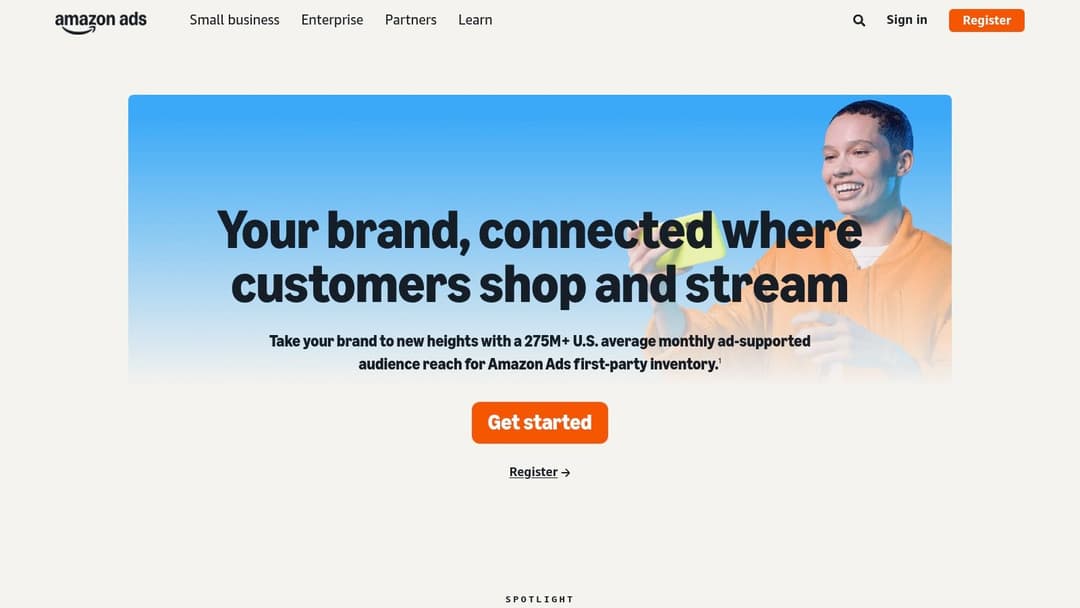
The platform offers a suite of ad types, including Sponsored Products, which appear in search results and on product pages, as well as Sponsored Brands and Sponsored Display for top-of-funnel awareness. Its strength comes from its retail-aware reporting, providing metrics like share of voice and new-to-brand data that are unavailable on other networks. This allows for clear attribution and a direct connection between ad performance and business growth, which is a core tenet of performance marketing. To succeed here, it is essential to understand what is performance marketing and how to apply its principles within a retail context.
Key Details & Considerations
- Ideal Use Cases: E-commerce sales, product launches, increasing market share within categories, and driving brand discovery on the Amazon platform.
- Pricing & Scale: Utilizes a pay-per-click auction model. Costs are highly dependent on product category and keyword competition. There is no minimum spend, making it accessible for sellers of all sizes.
- Pros: Access to extremely high-intent shoppers, clear visibility into revenue and retail performance (ACoS, ROAS), and scales effectively for marketplace sellers.
- Cons: Highly competitive categories can lead to steep CPCs, and campaign success is heavily dependent on having strong product detail pages, positive reviews, and consistent inventory.
6. TikTok Ads
TikTok Ads has rapidly become one of the most important social PPC advertising platforms, especially for reaching Gen Z and Millennial audiences. It is built around a powerful discovery algorithm that rewards engaging, native short-form video creative. Unlike search-based platforms, TikTok excels at generating demand and driving discovery, making it ideal for brands looking to build awareness and capture impulse buys.
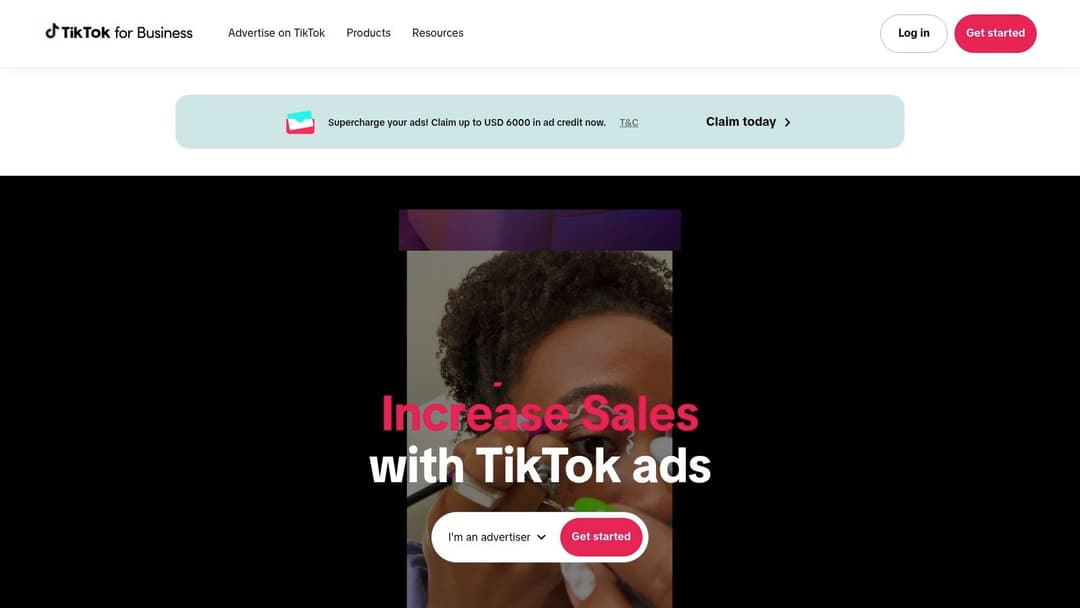
The platform’s strength is its ability to make ads feel like organic content through formats like In-Feed and Spark Ads, which use creator content. Its advertising system is becoming more mature, with features like its Pixel and Events API feeding an Advantage-style delivery algorithm that optimizes for performance. While CPMs are often efficient, the platform demands a constant stream of fresh, thumb-stopping creative to avoid audience fatigue, requiring a different operational tempo than other channels. Success here is less about perfect polish and more about authentic, rapid-fire testing.
Key Details & Considerations
- Ideal Use Cases: E-commerce and DTC product discovery, app installs, lead generation for broad-appeal B2C services, and brand awareness campaigns targeting younger demographics.
- Pricing & Scale: Operates on an auction model with campaign budget minimums (typically around $50/day) and ad group minimums (around $20/day). CPMs are generally lower than on platforms like Meta, but creative costs can be higher due to production needs.
- Pros: High engagement and viral potential, access to a massive and active user base, and increasingly effective direct-response and e-commerce features.
- Cons: Creative fatigue is a significant challenge, requiring a steady production pipeline. The learning phase and budget floors can be difficult for advertisers with very small test budgets to manage effectively.
7. LinkedIn Ads
LinkedIn Ads is the undisputed leader among PPC advertising platforms for B2B marketing, providing access to a professional network where business decisions are made. Its core strength is its powerful profile-based targeting, allowing advertisers to reach users based on job title, company size, industry, seniority, and specific skills. This makes it an essential channel for generating qualified pipeline for higher average contract value (ACV) deals and executing account-based marketing (ABM) strategies.
The platform offers a variety of ad formats designed for professional engagement, including Sponsored Content in the feed, direct Message Ads, and dynamic ads. A key feature is its native Lead Gen Forms, which pre-fill with a user's profile data, dramatically reducing friction and increasing conversion rates for content downloads, webinar registrations, and demo requests. While not a low-cost channel, the quality of leads generated is often superior to other social platforms, justifying the investment for B2B marketers.
Key Details & Considerations
- Ideal Use Cases: B2B lead generation, account-based marketing, event promotion, B2B content marketing, and brand building with a professional audience.
- Pricing & Scale: Operates on a pay-per-click or pay-per-impression auction model. CPCs are significantly higher than on consumer-focused social platforms, often starting at $5 and climbing much higher for in-demand roles. Small budgets can sometimes struggle to gather enough data to exit the learning phase effectively.
- Pros: Unmatched B2B audience quality and targeting precision, built-in lead generation and event promotion tools, and strong capabilities for account-based marketing.
- Cons: Higher CPCs make it less suitable for low-margin offers, and smaller budgets can find it difficult to gain initial traction. The audience is less receptive to direct B2C sales pitches.
8. X Ads (formerly Twitter)
X Ads (formerly Twitter) is a real-time, conversation-driven PPC advertising platform ideal for brands that want to connect with audiences during cultural moments and trending discussions. Its primary advantage is the ability to place ads directly within the flow of live news, events, and user conversations. This makes it a strong choice for product launches, event promotions, and campaigns aiming for fast feedback and immediate brand association with current topics.
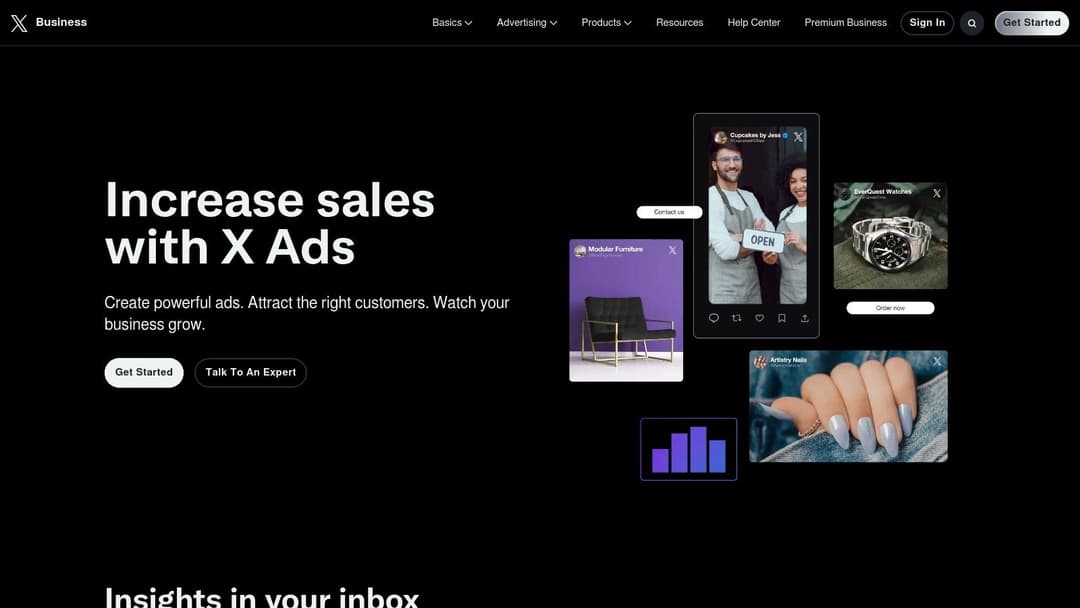
The platform supports a range of objectives, from website clicks and conversions to video views and app installs, using formats like text, image, video, and carousels. Advertisers can manage campaigns through the Ads Manager interface, setting budgets at the campaign or ad group level. Its targeting capabilities include standard retargeting via tags, but its unique strength is in reaching users based on the keywords they use and the accounts they follow, tying ad delivery directly to active interests and conversations.
Key Details & Considerations
- Ideal Use Cases: Product launches, event promotion, driving conversation around brand moments, and reaching audiences engaged with specific news or cultural trends.
- Pricing & Scale: Based on a pay-per-click auction model with no minimum spend. Costs can fluctuate based on audience targeting and the competitive landscape for specific events or topics.
- Pros: Direct access to real-time conversations, fast feedback loops for new campaigns, and strong interest and keyword targeting based on user activity.
- Cons: Brand suitability can be a concern, requiring active monitoring. Performance and auction supply can be volatile, especially outside of major trending events.
9. Pinterest Ads
Pinterest Ads operates as a unique visual discovery engine where users actively search for inspiration, ideas, and products. This makes it one of the most compelling PPC advertising platforms for reaching consumers early in their planning and shopping journey. Unlike platforms that capture immediate demand, Pinterest excels at influencing future purchases, making it a powerful tool for direct-to-consumer, lifestyle, home decor, fashion, and CPG brands that thrive on visually rich, shoppable creative.
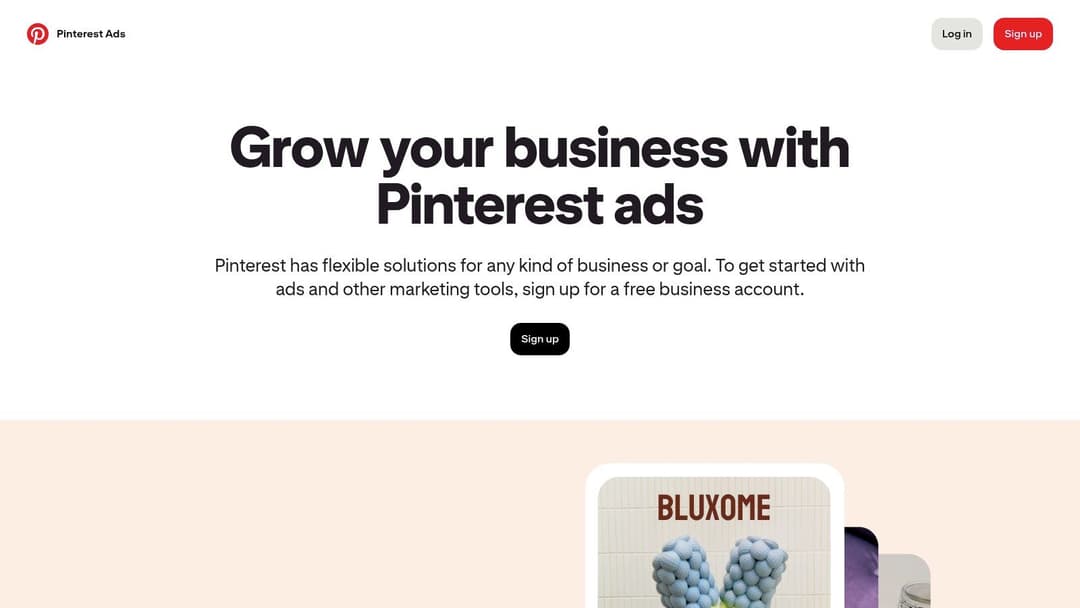
The platform supports a range of ad formats, including Standard Pins, Video, Carousel, and shoppable Collections, all designed to blend seamlessly into the user's feed. With features like Catalogs and product tagging, brands can turn their entire product line into browsable Pins, creating a frictionless path from inspiration to purchase. The introduction of automated campaigns like Performance+ further helps advertisers find relevant audiences across the platform, capitalizing on the brand-safe environment and users' forward-looking mindset.
Key Details & Considerations
- Ideal Use Cases: Driving e-commerce sales for visual products (fashion, home, beauty), promoting seasonal or event-based content (weddings, holidays), and building brand affinity through inspirational content.
- Pricing & Scale: Uses a CPC, CPM, or CPE (cost-per-engagement) auction model. Costs are generally lower than search platforms, but success depends heavily on creative quality. No minimum spend is required, making it accessible for businesses of all sizes.
- Pros: Access to an audience in a "planning" mindset, which can lead to strong downstream conversions. An excellent fit for visual brands and evergreen content that can be repinned. Improving catalog and shopping workflows simplify campaign management.
- Cons: Less effective for many B2B use cases and services that lack a strong visual component. User intent is less immediate than on search platforms, so creative must inspire action rather than just capture it.
10. Snapchat Ads
Snapchat Ads carves out a unique space among PPC advertising platforms by offering direct access to a highly engaged, younger demographic, primarily Gen Z and millennials. Its mobile-first, vertical video environment makes it ideal for brands focused on app installs, direct-to-consumer e-commerce, and creative brand storytelling. The platform's strength lies in its interactive and immersive ad formats that feel native to the user experience.
Unlike more formal ad networks, Snapchat thrives on authentic, low-production-value creative that mirrors user-generated content. Advertisers can run everything from simple Snap Ads and multi-asset Story Ads to advanced augmented reality (AR) Lenses for virtual product try-ons. Goal-based bidding optimizes campaigns for specific actions like swipes, app installs, or purchases, supported by a Snap Pixel and SDK for robust conversion tracking.
Key Details & Considerations
- Ideal Use Cases: App install campaigns, e-commerce promotions for youth-focused brands, driving foot traffic to local events, and interactive brand engagement through AR.
- Pricing & Scale: Uses a pay-per-impression (CPM) or goal-based auction model. Minimum daily spend can be as low as $5, making it very accessible for testing. Costs are generally lower than on more saturated platforms.
- Pros: Strong engagement with a concentrated Gen Z audience, highly interactive and novel AR ad formats, and low entry costs for campaign testing.
- Cons: The audience is narrower than giants like Meta or TikTok, and the novelty of creative formats requires frequent refreshes to maintain performance and avoid ad fatigue.
11. Quora Ads
Quora Ads operates within a unique niche among PPC advertising platforms, placing advertisers directly into conversations where users are actively researching solutions and seeking answers. This Q&A platform is ideal for reaching mid-funnel audiences with high consideration, making it particularly effective for B2B services and considered B2C purchases. The core value lies in its powerful contextual targeting, allowing ads to appear alongside specific questions, topics, or keywords that signal strong purchase intent.
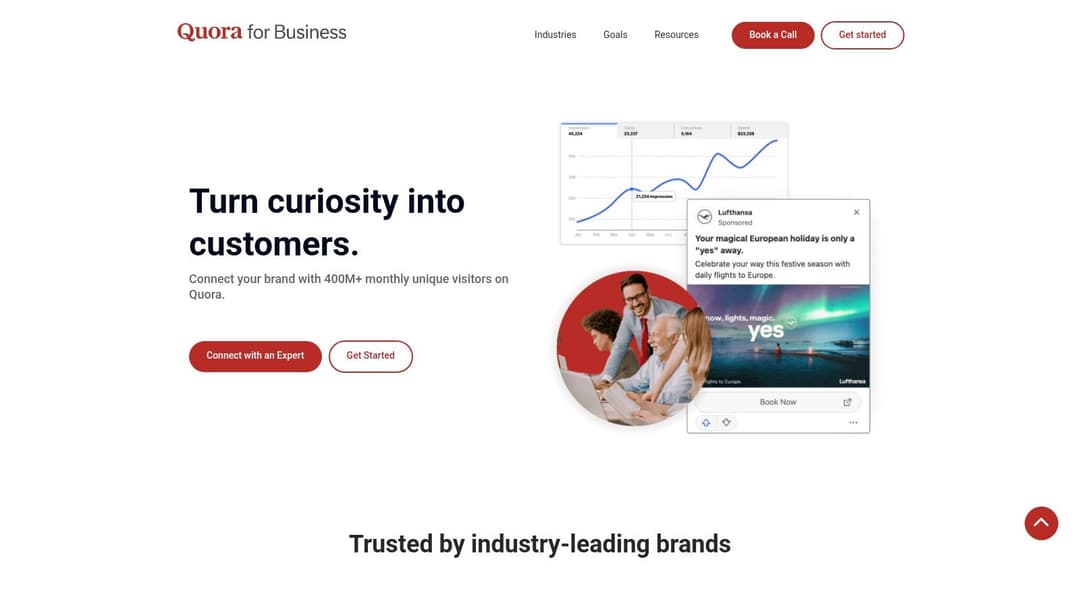
The platform supports CPC, CPM, and conversion-optimized bidding, with a simple self-serve interface that makes campaign setup straightforward. Advertisers can implement the Quora Pixel for conversion tracking and build remarketing or lookalike audiences. The real strength comes from granular targeting; placing an ad on a specific question like "What is the best CRM for a small real estate agency?" allows for exceptionally relevant ad copy that speaks directly to a user's immediate problem, often at a lower cost than more saturated channels.
Key Details & Considerations
- Ideal Use Cases: B2B lead generation, promoting high-consideration products (e.g., software, finance), and driving traffic for content marketing or educational resources.
- Pricing & Scale: Operates on a second-price auction model with CPC, CPM, and conversion bidding. CPCs are generally more efficient than on major search or social platforms, though audience scale is smaller. A minimum daily budget of $5 is suggested.
- Pros: High-intent contextual alignment with user research, efficient CPCs with granular question-level targeting, and a simple, user-friendly ad manager.
- Cons: Limited scale compared to giants like Google or Meta, and performance is heavily dependent on the ability to match specific user intent with tailored ad copy.
12. Apple Search Ads (Apple Ads Advanced)
For mobile app marketers, Apple Search Ads is a non-negotiable component of any user acquisition strategy. As one of the most effective PPC advertising platforms for the iOS ecosystem, it allows advertisers to place ads directly within the App Store. This includes high-visibility placements on the Search Results page, the Today Tab, and product pages, capturing users at the exact moment they are looking for new applications. The platform's primary value is its ability to connect with an extremely high-intent audience, resulting in strong conversion rates and a high-quality user base.
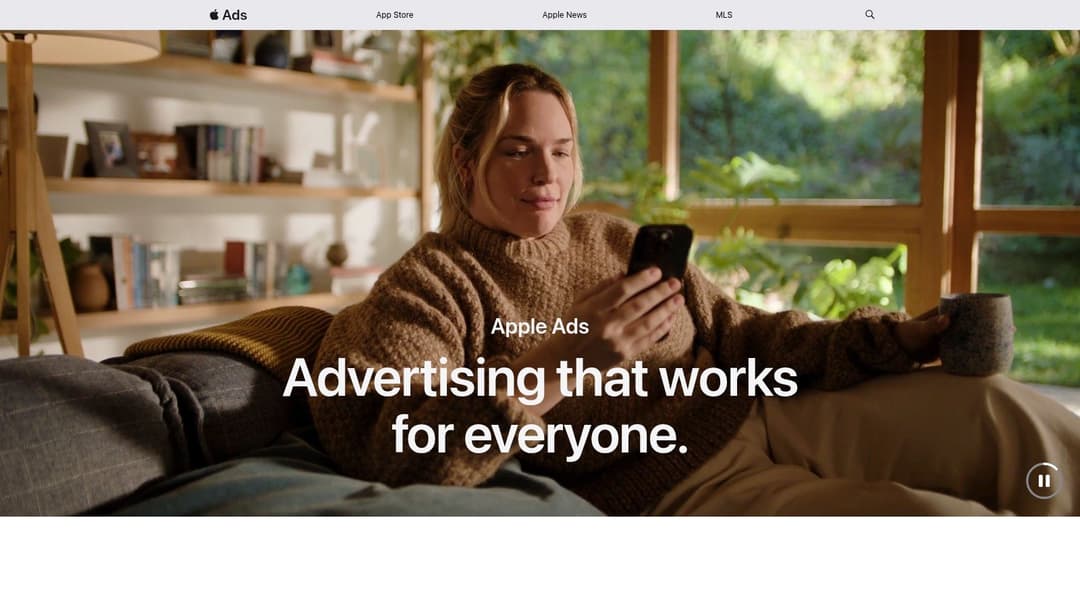
The platform operates on a cost-per-tap (CPT) auction model, meaning you only pay when a user engages with your ad. The "Advanced" version provides granular control over campaigns, offering keyword-level targeting with match types, audience refinements (like device type or new vs. returning users), and detailed reporting. This control allows marketers to fine-tune their approach, focusing budget on the terms and segments that drive the most valuable downloads. While its scope is narrow, its performance within that niche is often unmatched.
Key Details & Considerations
- Ideal Use Cases: Driving downloads for iOS apps, re-engaging past users, and boosting app visibility in competitive categories.
- Pricing & Scale: Uses a cost-per-tap (CPT) auction model with no minimum spend requirements. Costs can become expensive in competitive app categories, but campaigns can be scaled up or down quickly by adjusting daily budget caps.
- Pros: Access to a very high-intent audience leading to strong conversion rates, fine-grained keyword and audience targeting controls, and straightforward campaign setup.
- Cons: Strictly limited to iOS app promotion, and high competition for popular keywords can drive up CPTs significantly.
12 PPC Advertising Platforms: Side-by-Side Comparison
| Platform | Core features | Performance & UX | Best for | Unique selling point & Price |
|---|---|---|---|---|
| AdStellar AI | Automated bulk ad creation; AI Insights; Meta Ads Manager OAuth; campaign/creative/audience modules | Launch 10× faster; goal‑aware ranking (ROAS/CPL/CPA); centralized workflow | Performance marketers, growth teams, e‑commerce/DTC brands, agencies | Auto‑builds campaigns from winners and auto‑scales; Price not public — contact vendor |
| Google Ads | Search, YouTube, Shopping, Display; Smart Bidding; audience signals | Massive reach; high‑intent traffic; granular reporting | Scaled acquisition, e‑commerce, lead gen | Broad inventory + mature automation; CPC/auction pricing |
| Microsoft Advertising | Bing search; Microsoft Audience Network; LinkedIn signals; Copilot AI | Lower CPCs vs Google; similar search intent; easy Google import | Search advertisers seeking lower CPCs; B2B advertisers | Access to Microsoft properties & LinkedIn data; CPC/auction pricing |
| Meta Ads (Facebook & Instagram) | Advantage+ automation; Reels/video/carousel; Pixel & CAPI; commerce integrations | High creative testing velocity; strong delivery optimization | B2C performance, direct response, social commerce | Rich creative formats and delivery optimization; auction‑based pricing |
| Amazon Ads | Sponsored Products/Brands/Display/DSP; retail reporting; catalog integrations | High purchase intent; clear revenue attribution | Marketplace sellers, catalog businesses, retail brands | Ads at point‑of‑sale with retail metrics; CPC/DSP pricing |
| TikTok Ads | In‑Feed, Spark, TopView; Creative tools (CapCut); shopping integrations | Very high engagement; fast creative testing; risk of fatigue | Gen Z/Millennial audiences; discovery commerce | Native short‑form video + efficient CPMs; auction pricing |
| LinkedIn Ads | Profile targeting (title/company); Sponsored Content; Lead Gen Forms | High‑quality B2B leads; precise ABM targeting; higher CPCs | B2B marketers, enterprise sales, pipeline programs | Unmatched professional targeting; typically higher CPCs |
| X Ads (formerly Twitter) | Real‑time formats (text/image/video); conversation & keyword targeting | Fast feedback loops; performance can be volatile | Launches, cultural moments, awareness & traffic | Real‑time, trend‑aligned ad delivery; auction pricing |
| Pinterest Ads | Visual pins, video, catalogs, Performance+ | Planning mindset drives downstream conversions; visual discovery UX | DTC, lifestyle, home, fashion, CPG brands | Inspiration‑led shopping; variable CPC/CPM pricing |
| Snapchat Ads | Vertical video, AR Lenses, Snap/Story/Collection ads; pixel & SDK | Mobile‑first, engaged Gen Z; novelty needs refreshes | App installs, mobile e‑commerce, local activations | AR interactivity + low daily minimums; auction pricing |
| Quora Ads | Question/topic targeting; CPC/CPM; remarketing & lead gen | Contextual, research‑focused placements; efficient CPCs | Mid‑funnel considered purchases; B2B & considered B2C | Question‑level intent targeting; generally lower scale/pricing |
| Apple Search Ads | App Store CPT model; keyword match types; multiple placements | Very high intent for app installs; strong conversion | iOS app marketers, mobile UA teams | Pay‑per‑tap with fine keyword controls; CPT pricing |
| Amazon Ads | (Duplicate row removed if needed) | |||
| Microsoft Advertising | (Duplicate row removed if needed) |
Building Your PPC Portfolio: From Selection to Scale
Navigating the extensive world of PPC advertising platforms can feel overwhelming, but it's a critical exercise for any modern marketer. As we've detailed, the "best" platform is a myth; the most effective approach is to build a strategic portfolio tailored to your unique business objectives, audience demographics, and budget constraints. Your journey doesn't end after picking a single channel. Instead, it begins with creating a hypothesis, testing it with disciplined execution, and adapting based on real-world performance data.
The platforms we've explored, from the intent-driven powerhouse of Google Ads to the niche B2B precision of LinkedIn Ads and the visual discovery engine of Pinterest, each offer a distinct value proposition. No single platform can be all things to all brands. The key is to think of them not as isolated channels but as interconnected components of a larger growth engine. Your choice should be a direct reflection of where your target customers spend their time and what mindset they are in while there.
Crafting Your Initial Platform Strategy
For most businesses, the process of selecting the right PPC advertising platforms should follow a structured, phased approach. Avoid spreading your budget too thin across too many channels from the start.
Anchor Your Strategy: Begin with a foundational platform. For many, this will be Google Ads, capturing high-intent users actively searching for solutions. For others, particularly in e-commerce or community-focused niches, Meta Ads (Facebook & Instagram) will serve as the primary engine for audience building and demand generation. This anchor platform should align with your strongest market position and receive the bulk of your initial focus and budget.
Layer on a Secondary Channel: Once your anchor campaigns are stable and generating consistent data, introduce a secondary platform. A B2B SaaS company might supplement its Google Ads efforts with LinkedIn Ads to target specific job titles and industries. A direct-to-consumer apparel brand might add TikTok Ads or Pinterest Ads to its Meta strategy to build brand awareness and inspire purchases among a younger, visually-driven audience.
Experiment with Niche Platforms: With a solid foundation in place, you can allocate a smaller, experimental budget to test niche channels. Platforms like Quora Ads, Reddit Ads, or even Apple Search Ads can unlock highly specific, often less-competitive, pockets of your target audience. The goal here is discovery, not immediate scale.
From Manual Management to AI-Powered Scale
As you diversify your portfolio, campaign management complexity grows exponentially. This is especially true on platforms like Meta, where creative fatigue is a constant challenge and the sheer volume of audience and placement variables makes manual testing impractical. This is the point where integrating an AI optimization tool becomes a strategic necessity, not a luxury.
An AI-powered tool like AdStellar AI can take a high-performing Meta Ads account and put it on a path to greater scale by automating the most time-consuming and difficult part of the process: creative testing and optimization. Instead of manually building dozens of ad variations, an AI platform can systematically test thousands of combinations of images, headlines, and copy, rapidly identifying winning formulas and reallocating budget in real time. This moves your team's focus from tedious operational tasks to high-level strategy and creative direction.
Ultimately, remember that all your PPC advertising efforts drive traffic to one place: your website or landing page. If that destination isn't optimized for conversions, even the best-run campaigns will fail to produce a positive return. To truly maximize the return on investment from your chosen PPC platforms, it's crucial to understand how to improve website conversion rate. A 1% increase in your conversion rate can have a more significant impact on your bottom line than a 10% increase in ad spend.
The world of paid acquisition is not static. New platforms will emerge, consumer behaviors will shift, and ad formats will change. The most successful advertisers are not those who find a single "set it and forget it" channel, but those who build a resilient, multi-channel portfolio and embrace a culture of continuous testing and adaptation. Use this guide as your starting point to build a smarter, more diversified, and scalable PPC strategy.
Ready to stop guessing and start scaling your Meta campaigns? AdStellar AI connects to your ad account to automate creative testing, identify winning ads faster, and unlock new levels of performance. See how our AI can transform your results on one of the most important ppc advertising platforms by visiting AdStellar AI to learn more.