Facebook's advertising platform offers a powerful, yet complex, arsenal of ad formats. For performance marketers, choosing the right creative container isn’t just a tactical decision; it’s a strategic one that can mean the difference between a stalled campaign and exponential ROAS. With so many types of FB ads available, from simple images to immersive Instant Experiences, knowing which format aligns with your specific objective is critical for success. This isn't just about aesthetics; it's about matching the user's mindset and platform placement with an ad experience designed to convert.
This comprehensive guide moves beyond generic definitions to provide a strategic breakdown of the 10 essential Facebook ad formats you need to master. We will dissect each one, covering:
- Optimal Use Cases: Which funnel stage and campaign objective each format is built for.
- Creative Best Practices: Actionable tips to maximize engagement and drive results.
- Technical Specifications: The exact specs you need to build pixel-perfect ads.
- Performance Pros and Cons: A clear-eyed view of where each ad type shines and where it falls short.
Before we dive into the specific ad formats, it’s useful to understand how Meta's platform fits into a broader acquisition strategy. Grasping the fundamental differences in user intent between social platforms and search engines can clarify your channel selection, helping you decide when to allocate budget based on a deep understanding of the Facebook Ads vs Google Ads dynamic. This guide will equip you with the strategic knowledge to select the right formats, build more profitable campaigns, and scale your efforts efficiently.
1. Image Ads
Image Ads are the cornerstone of Facebook advertising and one of the most versatile types of FB ads available. This foundational format consists of a single, compelling static image accompanied by a headline, primary text, and a clear call-to-action (CTA) button. Their simplicity and universal compatibility across Meta's placements (Facebook, Instagram, Messenger, and Audience Network) make them an essential tool for nearly every advertiser.
Image ads excel at capturing attention quickly, making them ideal for both top-of-funnel brand awareness and bottom-of-funnel direct response campaigns. Because of their straightforward nature, they serve as the perfect baseline for A/B testing creative concepts, copy variations, and audience segments before scaling with more complex formats.
When to Use Image Ads
Image ads are most effective when your goal is to drive quick, clear action or introduce a concept visually without the need for motion.
- Top-of-Funnel (Awareness/Reach): Use visually stunning lifestyle imagery to introduce your brand to new audiences. The goal is to make a memorable first impression.
- Mid-Funnel (Traffic/Engagement): Showcase a product's key feature or benefit with a graphic overlay to drive clicks to a landing page or blog post.
- Bottom-of-Funnel (Conversions/Sales): Promote a limited-time offer, discount, or new product drop with a clear product shot and urgent messaging to drive immediate purchases.
Best Practices for High-Performing Image Ads
To maximize your return on ad spend (ROAS), focus on creative testing and strategic implementation.
- Prioritize Visual Clarity: Use high-contrast images with a single focal point. Avoid clutter and ensure your product or message is instantly recognizable, especially on mobile screens.
- Test Aggressively: Don't settle for one creative. Use AI-powered tools like AdStellar to rapidly generate dozens of image and copy variations, allowing you to test different angles, backgrounds, and value propositions simultaneously.
- Optimize Your Copy: Test different CTAs (e.g., 'Shop Now' vs. 'Learn More') to see which drives higher intent. Keep your headline and primary text concise and benefit-driven. For a deeper dive into effective visual composition, explore these banner ad design principles.
- Monitor Ad Fatigue: Image ads can tire audiences quickly. Keep a close eye on your ad frequency. If it creeps above 3-4 for a cold audience, it's time to refresh your creative to maintain performance.
2. Video Ads
Video Ads are a dynamic and engaging format, allowing brands to tell richer stories and demonstrate value in ways static images cannot. These types of FB ads use motion and sound to capture attention, ranging from short, 15-second clips for Stories and Reels to longer-form content for in-stream placements. Optimized for a mobile-first viewing experience, they are critical for driving higher engagement and conveying complex messages across the entire Meta ecosystem.
This format excels at storytelling, making it powerful for building brand affinity, educating potential customers, and showcasing products in action. Whether it's a slick product demo, a compelling customer testimonial, or a quick, attention-grabbing lookbook, video provides a more immersive ad experience that can stop users from scrolling and encourage them to connect with your brand on a deeper level.
When to Use Video Ads
Video ads are highly versatile and can be adapted to achieve objectives at every stage of the marketing funnel, from initial awareness to final conversion.
- Top-of-Funnel (Awareness/Reach): Use cinematic, story-driven content (e.g., brand stories or lifestyle videos) to introduce your brand's mission and values to new audiences. The goal is to create an emotional connection.
- Mid-Funnel (Consideration/Traffic): Deploy product unboxing videos, software demos, or customer testimonials to educate users who are already aware of your brand and guide them toward a solution.
- Bottom-of-Funnel (Conversions/Sales): Leverage user-generated content (UGC) or direct-response videos that highlight a specific offer or benefit. A clear call-to-action drives immediate purchases or sign-ups.
Best Practices for High-Performing Video Ads
To maximize performance, your video strategy must be built for mobile consumption and relentless testing.
- Hook Viewers Immediately: The first 3 seconds are crucial. Start with a strong visual hook, an intriguing question, or a bold text overlay to prevent users from scrolling past your ad.
- Design for Sound-Off Viewing: Most users watch videos on mobile without sound. Always include captions or clear text overlays to ensure your message is understood even when muted.
- Optimize for Placements: Create multiple aspect ratios and video lengths for different placements (e.g., 9:16 for Reels/Stories, 1:1 for the feed). For detailed technical requirements, review these Facebook video ad dimension guidelines.
- Scale Your Creative Testing: Use a tool like AdStellar to generate numerous video variations with different hooks, copy, and CTAs. This allows you to quickly identify the narratives that resonate most with your audience without manual effort.
- Monitor Key Metrics: Pay close attention to video completion rates and average watch time. These metrics provide valuable insights into which parts of your story are most engaging and where viewers are dropping off.
3. Carousel Ads
Carousel Ads are an interactive and dynamic format among the various types of FB ads, allowing advertisers to showcase up to 10 images or videos within a single ad unit. Each "card" in the carousel can have its own unique headline, description, link, and call-to-action (CTA), providing a rich, explorable experience for the user. They swipe through the cards on mobile or click arrows on desktop to navigate the content.
This format excels at storytelling and product discovery, enabling brands to display multiple products, highlight different features, or walk a user through a step-by-step process. Their interactive nature often leads to higher engagement and click-through rates compared to static ads, making them a powerful tool for consideration-focused campaigns.
When to Use Carousel Ads
Carousel ads are most effective when you need to present more information than a single image allows, or when you want to encourage active user exploration.
- Top-of-Funnel (Awareness/Reach): Tell a compelling brand story across multiple cards, showcasing your company's mission, values, or unique production process.
- Mid-Funnel (Traffic/Consideration): Display a range of products from a single category (e.g., "New Summer Arrivals") to drive traffic to different product pages. SaaS companies can use carousels to break down complex features into digestible benefits.
- Bottom-of-Funnel (Conversions/Sales): Retarget users with a dynamic carousel showing the exact products they viewed on your website. Use each card to highlight a different testimonial or user-generated content (UGC) shot to build social proof and drive purchases.
Best Practices for High-Performing Carousel Ads
To get the most out of your carousel ads, focus on creating a cohesive narrative and optimizing the sequence of your cards.
- Lead with Your Strongest Asset: Place your most compelling image, offer, or product in the first card to immediately capture attention and encourage users to swipe for more.
- Keep It Concise: While you can use up to 10 cards, performance data shows engagement often drops after 5-6 cards. Only use more if you are telling a clear, sequential story that requires it.
- Test Card Order and Content: Use a tool like AdStellar to rapidly generate and test different sequences of your carousel cards (e.g., A-B-C vs. B-C-A). This helps identify the narrative flow that drives the highest engagement and conversions. You can discover more advanced strategies in this guide to carousel ads on Instagram and Facebook.
- Optimize Each Card Individually: Ensure every card has a clear headline and a relevant CTA. Don't force users to swipe to the final card to find a link; give them multiple opportunities to convert throughout the experience.
4. Collection Ads
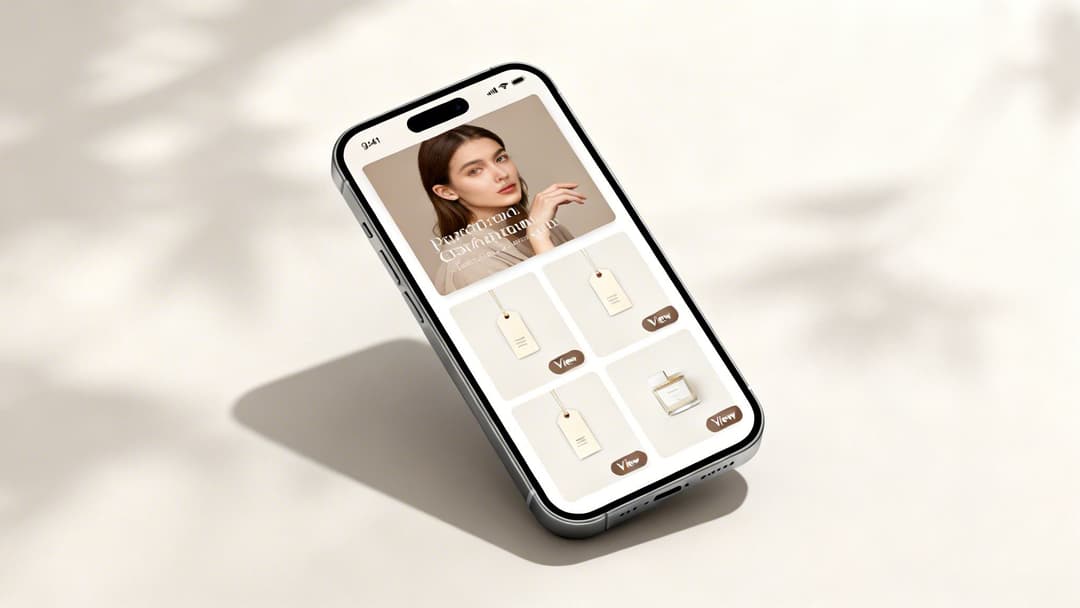
Collection Ads are a mobile-first, immersive format that transforms a standard ad into a dynamic digital storefront. This powerful ad type combines a primary cover video or image with a grid of four product images pulled directly from your product catalog. When a user taps the ad, it opens into an Instant Experience, a full-screen, fast-loading landing page within the Facebook or Instagram app where they can browse and shop multiple products without ever leaving the platform.
This seamless journey makes Collection Ads one of the most effective types of FB ads for e-commerce and direct-to-consumer brands looking to reduce friction and drive mobile sales. By bridging the gap between discovery and purchase, they provide an engaging shopping experience that captures high-intent users and simplifies the path to conversion.
When to Use Collection Ads
Collection ads are specifically designed for bottom-of-funnel objectives where the goal is to drive catalog sales and direct conversions.
- Mid-Funnel (Consideration/Traffic): Use a lifestyle video as the cover creative to showcase how products are used, then feature those same products in the grid below to drive exploration. This is great for introducing a new product line.
- Bottom-of-Funnel (Conversions/Catalog Sales): Target warm audiences, like cart abandoners or past purchasers, with a collection featuring best-sellers or a special seasonal offer. The frictionless experience is ideal for encouraging repeat purchases.
Best Practices for High-Performing Collection Ads
Success with Collection Ads hinges on a well-maintained catalog and a cohesive creative strategy.
- Ensure Catalog Health: Your Facebook Commerce Manager catalog must be accurate and up-to-date with correct pricing, high-quality images, and real-time inventory. A broken or outdated catalog will kill performance.
- Create Visual Cohesion: The cover image or video should be thematically and visually related to the product tiles shown below it. For example, a video of a model on a beach should be paired with a collection of swimwear from your catalog.
- Segment Your Product Sets: Don't rely on a generic "all products" set. Create curated product sets based on categories (e.g., "Best-Selling Dresses"), themes ("Summer Essentials"), or price points ("Gifts Under $50") to create more relevant ads.
- Leverage Dynamic Video: Use Meta's dynamic video tools to automatically create simple videos from your catalog images for the cover creative. This allows for rapid testing without needing a full video production team.
5. Instant Experience Ads (Interstitial/Full-Screen Ads)
Instant Experience Ads, formerly known as Canvas ads, are a powerful mobile-only format designed to create a full-screen, immersive microsite that loads instantly within the Facebook or Instagram app. This specific type of FB ad allows advertisers to combine video, images, carousels, product catalogs, and text blocks into a single, cohesive, and fast-loading brand story without directing users to an external website.
This format excels at holding user attention and is perfect for brands that want to tell a deeper story or showcase a collection of products. By keeping the user within the Meta ecosystem, Instant Experience ads reduce friction and bounce rates often associated with slow-loading mobile landing pages, making them a high-impact choice for engagement and consideration campaigns.
When to Use Instant Experience Ads
This format is most effective for mobile-first campaigns where storytelling and product discovery are key to driving conversions.
- Top-of-Funnel (Awareness/Reach): Use a captivating video or lifestyle imagery to launch a new collection or brand story, inviting users into an immersive lookbook experience.
- Mid-Funnel (Consideration/Traffic): Create an interactive product tour for a SaaS offering or a virtual property walkthrough for real estate. The goal is to educate and engage potential customers in a rich, detailed environment.
- Bottom-of-Funnel (Conversions/Lead Generation): Build a direct path to purchase by showcasing multiple products with tappable "Shop Now" links or embed a lead capture form directly within the experience to acquire high-intent leads for a B2B whitepaper or service demo.
Best Practices for High-Performing Instant Experience Ads
To maximize engagement and conversions, focus on a seamless and intuitive user journey.
- Lead with a Strong Video Hook: The first component of your Instant Experience is crucial. Use a compelling 3-5 second video clip to capture attention and entice users to scroll down and explore the rest of the content.
- Keep the Flow Concise: While the format allows for deep content, user attention is finite. Aim for an experience that is 3-5 screens (or scrolls) long to prevent user drop-off. Place your most important message and CTA early.
- Optimize for Action: Don’t wait until the very end to place your primary CTA. Integrate call-to-action buttons midway through the experience, such as after a compelling product feature showcase, to capture users when their intent is highest.
- Test Your Entry Point: The initial ad creative (the image or video in the feed) is what drives users into the Instant Experience. Use a tool like AdStellar to A/B test different headlines, primary text, and creative variations to see which combination achieves the lowest cost-per-entry and highest engagement.
6. Story Ads
Story Ads are a mobile-first, full-screen vertical format designed to appear between user-generated content in the Stories sections of Facebook, Instagram, and Messenger. As one of the most immersive types of FB ads, they leverage the native 9:16 aspect ratio to capture a user's complete attention. Their ephemeral, fast-paced nature makes them feel more organic and less intrusive than traditional feed ads.
This format is built for quick, engaging narratives that capitalize on the "swipe up" behavior. Story ads are highly effective for driving immediate action, from app installs and website traffic to direct sales, by seamlessly integrating brand messages into the user's daily content consumption flow. They are particularly powerful for reaching younger, mobile-native audiences who spend a significant amount of time in the Stories environment.
When to Use Story Ads
Story ads excel when you need to grab attention quickly and drive an immediate, mobile-centric action. They are a staple for campaigns targeting audiences accustomed to vertical video.
- Top-of-Funnel (Awareness/Reach): Use visually dynamic video or animated graphics to introduce your brand with a quick, memorable narrative. This is perfect for product launch teasers or brand storytelling.
- Mid-Funnel (Traffic/Engagement): Leverage interactive elements like poll or quiz stickers to boost engagement and gather audience data. Drive users to a landing page or blog post with a clear "Swipe Up" or "Tap Here" CTA.
- Bottom-of-Funnel (Conversions/App Installs): Showcase a limited-time offer, a flash sale, or a quick demo of your app's core feature. The urgency of the Stories format is ideal for driving impulse purchases and downloads.
Best Practices for High-Performing Story Ads
Success with Story ads depends on creating content that feels native to the platform and respects the user's short attention span.
- Hook Within 1-2 Seconds: The first frame is critical. Use bright, contrasting colors, motion, and large, readable text to immediately capture interest before the user swipes away.
- Design for Sound-Off Viewing: Most users watch Stories without sound. Use on-screen text overlays, captions, and strong visual cues to ensure your message is understood.
- Leverage Native Features: Incorporate interactive stickers like polls, questions, and countdowns to increase engagement. This makes your ad feel less like a promotion and more like organic content.
- Test Creative Variations: The fast-paced nature of Stories can lead to rapid ad fatigue. Use a tool like AdStellar to quickly generate multiple creative variations (e.g., testing urgency vs. curiosity angles) to keep your ad sets fresh and effective. A good starting point is creating 3-5 distinct story frames per ad set.
7. Lead Form Ads
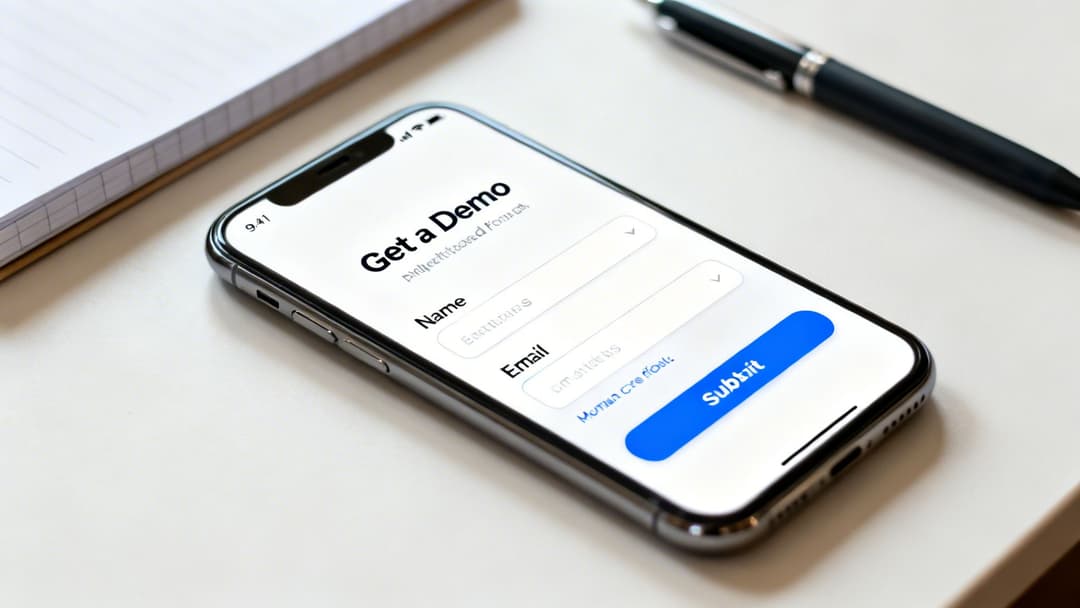
Lead Form Ads, also known as Instant Forms, are a powerful type of FB ad designed to capture user information directly within the Facebook platform. This format eliminates the need for users to click through to an external landing page by presenting a native, pre-populated form. Key fields like name and email are automatically filled using the user's profile data, dramatically reducing friction and increasing form completion rates.
This seamless experience makes Lead Form ads essential for any campaign focused on lead generation, especially for B2B SaaS, real estate, finance, and education sectors. By minimizing steps, they optimize for a lower cost per lead (CPL) and allow businesses to build their prospect lists efficiently.
When to Use Lead Form Ads
Lead Form ads are the go-to format when your primary campaign objective is to collect contact information from potential customers.
- Top-of-Funnel (Awareness/Reach): Offer a valuable, low-commitment asset like a free guide, checklist, or webinar registration to capture new leads while providing initial value.
- Mid-Funnel (Consideration/Traffic): Promote demo requests, free trial sign-ups, or consultation bookings for users who have already shown interest in your brand. This moves them further down the sales funnel.
- Bottom-of-Funnel (Conversions/Sales): Target warm, high-intent audiences with quote requests or pre-qualification forms to capture leads who are ready to make a purchasing decision.
Best Practices for High-Performing Lead Form Ads
To generate high-quality leads at a low CPL, focus on form optimization and prompt follow-up.
- Keep Forms Concise: Limit your form to 3-5 essential fields. Each additional field can decrease the completion rate, so only ask for what you absolutely need to qualify a lead.
- Leverage Custom Questions: Use custom fields to pre-qualify and segment leads effectively. For a B2B SaaS company, this could be "Company Size" or "Biggest Challenge," allowing your sales team to prioritize follow-ups.
- Integrate Your CRM: Set up an instant integration with your CRM (like HubSpot or Salesforce). This enables automated lead nurturing workflows to engage prospects immediately after they submit the form, which is crucial for conversion.
- Test Form Copy and CTAs: Use tools like AdStellar to A/B test different headlines, descriptions, and CTA buttons ('Get Demo' vs. 'Request Quote' vs. 'Download Guide') to identify the combinations that deliver the lowest CPL. For more advanced strategies, explore these best practices for Facebook lead ads.
- Monitor Lead Quality: Track leads from submission to final conversion in your CRM. If lead quality is low, refine your audience targeting or add a qualifying question to your form to filter out less-qualified prospects.
8. Playable Ads
Playable Ads are a highly interactive format that offers users a "try-before-you-buy" experience directly within the ad unit. Instead of passively watching a video, users can engage with a mini-game, a lightweight demo of an app, or an interactive product preview. This hands-on approach is one of the most powerful types of FB ads for mobile app promotion, proven to drive higher-quality installs and better user retention.
This format excels at qualifying users before they even click "Install." By giving them a taste of the core gameplay loop or app functionality, playable ads attract users who are genuinely interested in the experience. This pre-qualification often leads to 10–30% higher install rates compared to traditional video ads and results in users with higher lifetime value (LTV).
When to Use Playable Ads
Playable ads are most effective for mid to bottom-funnel campaigns where the primary goal is user acquisition and conversion, particularly for mobile apps and games.
- Mid-Funnel (Consideration/App Installs): Use a playable ad to showcase your app's core "hook" or unique selling proposition. For a game, this could be a key level mechanic; for a utility app, it might be a simplified demo of its main feature.
- Bottom-Funnel (Conversions): Target users who have shown interest but haven't installed yet. A playable ad can be the final push needed to convince them of your app's value by letting them experience it firsthand.
- E-commerce (Engagement): While less common, e-commerce apps can use playables to create interactive product customizers, such as building a custom sneaker or configuring a piece of furniture, driving engagement and eventual app installs.
Best Practices for High-Performing Playable Ads
Success with playables hinges on creating a seamless and rewarding micro-experience that accurately reflects your full app.
- Hook Users in 3 Seconds: The first few seconds are critical. Immediately present the core interactive element or the most satisfying part of your app's experience to capture attention.
- Keep it Short and Sweet: Aim for a total playable experience of 15–25 seconds. If it’s too long or complex, users will abandon it before reaching the call-to-action.
- Ensure a Clear 'Win' State: The user should understand the goal and feel a sense of accomplishment upon completing the playable. This success triggers a positive emotional response right before the install prompt appears.
- Track Post-Install Metrics: Don't just measure installs. Analyze post-install metrics like retention, daily active users (DAU), and LTV to understand the true ROAS of your playable campaigns and identify the creative that drives the most valuable users.
9. Dynamic Ads / Dynamic Product Ads (DPA)
Dynamic Ads are a powerful, automated advertising solution and one of the most effective types of FB ads for e-commerce and businesses with large product catalogs. This format automatically promotes relevant items from your entire catalog to people who have expressed interest on your website, in your app, or elsewhere on the internet. Instead of creating individual ads for every product, you create an ad template that automatically uses images and details from your product feed.
This personalization at scale makes Dynamic Ads the backbone of high-performance retargeting campaigns. They work by connecting your Facebook Pixel or SDK data with your product catalog, allowing Meta to serve hyper-relevant ads, such as the exact products someone viewed or added to their cart. This targeted approach significantly boosts conversion rates and return on ad spend (ROAS).
When to Use Dynamic Ads
Dynamic Ads are essential for driving bottom-of-funnel actions and are most effective for businesses with a significant number of products or services.
- Top-of-Funnel (Awareness/Reach): Use dynamic ads with a broad audience setting to showcase your best-selling products to people who haven't visited your site yet but have shown interest in similar products.
- Mid-Funnel (Consideration): Retarget website visitors who viewed specific product categories but didn't add anything to their cart. You can show them a carousel of related items to re-engage their interest.
- Bottom-of-Funnel (Conversions/Sales): This is where DPAs shine. Target users who abandoned their shopping carts with an ad featuring the exact items they left behind, often paired with an incentive like a small discount or free shipping to encourage purchase completion.
Best Practices for High-Performing Dynamic Ads
To unlock the full potential of DPAs, focus on your product feed health and strategic audience segmentation.
- Maintain a Pristine Product Catalog: Your product feed is the foundation. Ensure it's clean, accurate, and synced frequently (hourly is ideal) to reflect correct pricing and stock levels. Inaccurate data will kill your campaign performance.
- Segment Your Retargeting Audiences: Create distinct audiences for different user behaviors. Common segments include cart abandoners (last 7 days), product page viewers (last 14 days), and past purchasers (last 30-60 days) for upselling or cross-selling opportunities.
- Test Dynamic Creative Templates: Use different ad copy, overlays (like prices or discounts), and headlines for your segments. Test Meta's automatic placements and creative enhancements, as they often outperform manual setups. For an in-depth guide on optimizing automated creative, explore this resource on dynamic creative optimization.
- Monitor Product-Level Performance: Use the campaign breakdown feature in Ads Manager to see which specific SKUs are driving results. Pause low-performing or unprofitable products directly from the report to optimize your spend toward winners.
10. Messenger Ads / Messenger Sponsored Messages
Messenger Ads are a powerful conversational format within the ecosystem of types of FB ads, enabling direct, one-to-one communication with users inside the Facebook Messenger app. This format includes Click-to-Messenger ads, which drive users from their feed into a new conversation, and Sponsored Messages, which allow you to re-engage users who have already messaged your Page. They transform advertising from a one-way broadcast into an interactive dialogue.
This ad type is exceptionally effective for nurturing leads, providing customer support, and driving sales through personalized interactions. By meeting customers in a private, conversational space, brands can build stronger relationships and guide users through the consideration phase with tailored advice and automated assistance, making it ideal for high-consideration purchases and service-based businesses.
When to Use Messenger Ads
Messenger Ads are best used when your goal is to generate leads, provide personalized support, or re-engage warm audiences with tailored offers.
- Top-of-Funnel (Lead Generation): Use Click-to-Messenger ads to start conversations and capture lead information through automated questions, bypassing traditional landing page forms.
- Mid-Funnel (Nurturing/Consideration): Send Sponsored Messages to users who have previously engaged, offering them product tips, personalized recommendations, or answers to common questions to move them closer to a decision.
- Bottom-of-Funnel (Conversions/Re-engagement): Deploy Sponsored Messages to remind users about abandoned carts, notify them of back-in-stock items, or deliver exclusive, time-sensitive promotions to drive immediate sales.
Best Practices for High-Performing Messenger Ads
To maximize engagement and conversions, focus on providing immediate value and creating a seamless conversational flow.
- Build Your Audience First: Run Click-to-Messenger campaigns with a compelling offer (e.g., a discount or a free guide) to build an audience of users who have opted into messaging. You can then retarget this highly engaged group with Sponsored Messages.
- Automate with Purpose: Use chatbots to handle initial inquiries, answer FAQs, and qualify leads. This ensures instant responses and frees up human agents for more complex conversations. Set up quick-reply buttons ('View Details', 'Schedule Demo') to make interaction effortless.
- Keep Your Opener Short and Valuable: Your first message should be concise and immediately offer something useful. Avoid a hard sell. Start by asking a question or providing a helpful tip to encourage a reply.
- Segment and Personalize: Don't send the same message to everyone. Segment your Messenger audience based on their past interactions or purchases and tailor your Sponsored Messages to their specific interests for higher relevance and engagement.
10 Facebook Ad Types — Quick Comparison
| Ad Format | Implementation complexity | Resource requirements | Expected outcomes | Ideal use cases | Key advantages |
|---|---|---|---|---|---|
| Image Ads | Low — simple setup and approval | Single static image, headline, copy, CTA | Baseline brand awareness and direct-response conversions; ideal for A/B tests | DTC testing, e-commerce promos, performance baselines | Low cost; fast creation; broad placement compatibility |
| Video Ads | Medium–High — editing and multi-length variants | Video assets, captions, thumbnails, editing resources | Higher engagement and improved mobile conversions | Product demos, testimonials, narrative campaigns, mobile-first audiences | Strong storytelling; higher engagement and conversion potential |
| Carousel Ads | Medium — multi-card assembly and ordering | 2–10 images/videos, per-card copy and links | Higher CTR and product exploration; good for multi-offer engagement | Catalog showcases, step-by-step stories, multi-SKU promotions | Multi-product showcase; sequential storytelling; cost-efficient testing |
| Collection Ads | Medium — catalog & storefront configuration | Cover image/video plus synced product catalog and checkout setup | Reduced mobile funnel friction with higher conversion rates | Mobile e-commerce catalogs, impulse buys, shopping experiences | Native in-app storefront; fast browsing; optimized for large catalogs |
| Instant Experience Ads | High — custom, interactive builds | Mixed media (images, video), layouts, forms, design/dev work | High dwell time and brand recall; strong for lead capture but variable direct conversions | Immersive storytelling, lead gen, product tours | Immersive full-screen UX; rich interactivity; in-app conversion points |
| Story Ads | Low–Medium — vertical-first, short assets | Vertical images or short videos, captions, stickers | High completion and top-of-funnel engagement; good for app installs | App installs, flash sales, trend-driven promos for younger audiences | Native vertical format; high completion; quick consumption |
| Lead Form Ads | Medium — form and CRM integration | Ad creative + configured pre-filled form + CRM/webhook | High lead volume and lower CPL; immediate data capture | B2B demos, real estate inquiries, finance and education lead-gen | Pre-filled forms; higher submission rates; CRM integration |
| Playable Ads | High — interactive development required | Mini-game/demo build, dev resources, app-store redirect setup | Higher install rates and informed installs; better post-install retention | Mobile games, interactive app demos, hands-on product previews | Try-before-install engagement; high install conversion; improved retention |
| Dynamic Ads (DPA) | Medium — catalog + pixel + templates | Product catalog feed, pixel tracking, dynamic templates | Highly personalized retargeting with strong ROAS at scale | Cart abandoners, retargeting large catalogs, personalized recommendations | Automated personalization; scalable; excellent retargeting ROAS |
| Messenger Ads / Sponsored Messages | Medium — chatbot or messaging setup | Chatbot or messaging flows, API/CRM integration, support resources | High open and engagement rates; effective nurture and support | Conversational commerce, lead nurturing, customer support follow-up | Two-way interaction; high open rates; personalized follow-up |
From Formats to Performance: Automating Your Ad Strategy
Navigating the landscape of Meta advertising can feel like mastering a complex instrument. From the classic simplicity of Image Ads to the immersive storytelling of Instant Experiences and the high-intent targeting of Dynamic Product Ads, each format offers a unique set of tools to engage your audience. We've explored the entire spectrum of types of FB ads, detailing their technical specs, strategic use cases, and creative best practices. Understanding these individual components is the foundational knowledge every performance marketer needs.
However, knowledge alone doesn't guarantee results in today's hyper-competitive digital ecosystem. The critical differentiator is no longer just what you know, but how fast you can execute and learn. The true path to scalable growth lies in building a robust system for creative testing and optimization that operates at a pace manual processes simply cannot match.
Bridging the Gap Between Ad Formats and Business Goals
The ultimate goal of running any of these ad types is to drive a specific business outcome, whether that's generating leads, increasing sales, or building brand awareness. The journey from an ad click to a final conversion is a multi-step process that extends beyond the ad itself. For e-commerce brands, a high-performing Collection Ad is only as effective as the landing page it directs to. Ensuring that your on-site experience is seamless and persuasive is paramount. When focusing on performance, understanding the nuances of conversion rate optimization is key, as highlighted in this practical guide on Conversion Rate Optimization for Shopify. Your ad creative captures attention, but your website experience secures the conversion.
The New Competitive Edge: Strategic Automation
The challenge for modern growth teams is one of volume and velocity. Manually creating dozens of variations for a single Carousel Ad, testing different headlines for a Lead Form Ad, and then analyzing the performance data to iterate is a slow, resource-intensive cycle. This is where strategic automation becomes a game-changer, not just a time-saver.
By leveraging AI-powered platforms, you can transform your entire workflow:
- Creative Production at Scale: Instead of building a handful of ad variations, imagine generating hundreds of creative, copy, and audience combinations in minutes. This allows you to test hypotheses about imagery, value propositions, and calls to action simultaneously, covering more ground than was ever possible manually.
- Intelligent Optimization: AI can analyze performance data far more efficiently than a human, identifying winning combinations of creative elements and audience segments with statistical confidence. This removes guesswork and allows you to reallocate your budget to top-performing ads automatically, maximizing your return on ad spend (ROAS).
- Systematized Learning: An automated system creates a continuous feedback loop. The performance data from every ad test informs the next, building a repository of insights about what resonates with your specific audience. This institutional knowledge becomes a durable competitive advantage.
Mastering the different types of FB ads is your entry ticket to the game. But winning in 2024 and beyond requires more. It requires building an advertising engine fueled by rapid experimentation and intelligent automation. The advertisers who can test, learn, and scale faster than their competitors will inevitably capture the market. It's time to move beyond understanding the formats and start building the system that will dominate them.
Ready to move from manual ad creation to an automated, high-velocity testing engine? AdStellar AI empowers you to generate, test, and scale hundreds of ad variations across all the types of FB ads we've discussed. Stop guessing and start winning with AI-driven optimization. Try AdStellar AI today and build your unstoppable advertising system.