A team launches a new video campaign, starts comparing “video advertising companies,” and quickly runs into a selection problem. The options are not all the same type of partner. Some give you direct access to inventory, some handle cross-channel buying, and some sit on top of your ad accounts to improve creative testing and decision-making.
That distinction matters more than the vendor name. YouTube, Meta, TikTok, Roku, Amazon Ads, The Trade Desk, Innovid, and tools like AdStellar AI solve different problems, work with different budgets, and demand different levels of in-house skill. If the category is wrong, results usually suffer before the team realizes why. The campaign can end up in the wrong placements, reporting gets messy, and creative testing slows down.
Video keeps taking budget because it matches how people consume content across social feeds, streaming TV, and publisher sites. eMarketer expects US connected TV ad spending to keep growing in 2025, which is one reason more brands are reevaluating how they buy video across self-serve platforms and programmatic channels, according to EMARKETER's CTV advertising forecast. If you want a broader primer before choosing a platform, you can discover video advertising approaches.
This guide is built around that real buying decision. Instead of treating every vendor as a direct substitute, it breaks the market into the main types of video advertising partner: self-serve social platforms, streaming and CTV networks, demand-side platforms, ad serving and measurement tools, and AI systems that help teams produce and optimize more creative with less manual work. That makes it easier to match the partner to the job, whether the goal is efficient direct response, broader reach on TV screens, tighter measurement, or faster creative iteration.
1. AdStellar AI
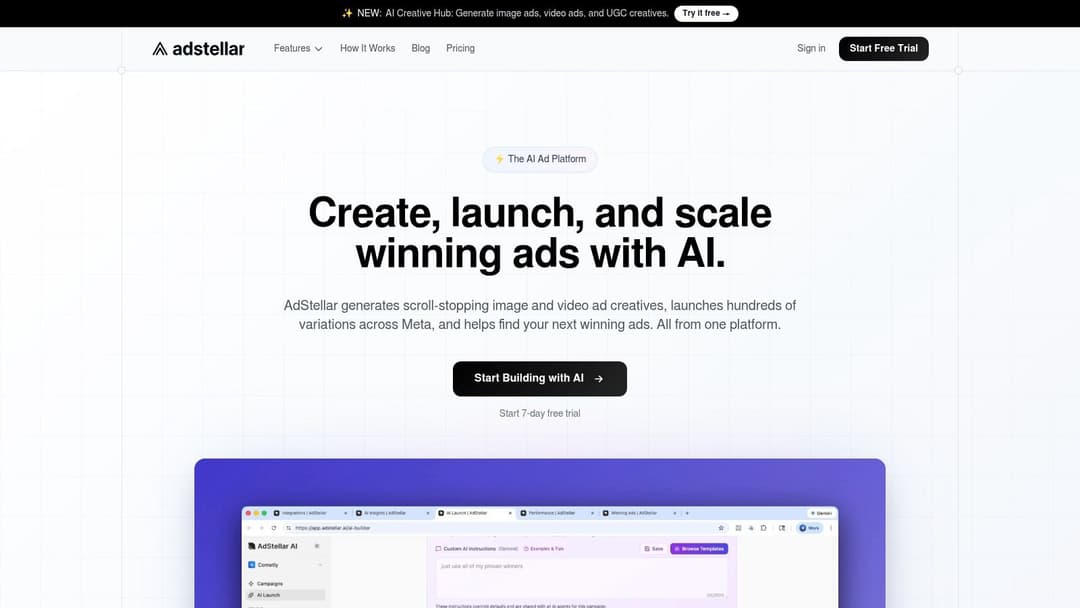
A common scenario: Meta already drives sales, but the team cannot produce, name, launch, and review enough creative fast enough to stay ahead of fatigue. In that situation, the right partner is not another broad video ad network. It is an execution layer built for one channel.
AdStellar AI sits in that category. It is an AI workflow and optimization platform for Meta advertisers, not a general buying platform for every video channel in this guide. That distinction matters because this list covers the full video advertising ecosystem, from self-serve platforms and CTV inventory to DSPs and ad tech tools. AdStellar belongs on the creative production and campaign operations side.
The platform connects to Meta Ads Manager through secure OAuth, pulls historical performance data, and uses that account history to suggest which creative angles, audience combinations, and messaging themes deserve more budget. Its AI optimization workflow is useful for teams that already have signal in the account and want faster decisions than a spreadsheet-and-manual-review process can support.
Where it fits best
AdStellar makes the most sense for growth teams, agencies, e-commerce brands, and B2B SaaS marketers that already know Meta can acquire customers profitably. The practical value is throughput. Teams can generate more creative variations, organize assets in one place, and launch tests without rebuilding the same campaign structure over and over.
That operational piece is usually where Meta programs stall.
The trade-off is focus. A Meta-first system can be stronger than an all-purpose platform if Facebook and Instagram are your main paid social channels. It is a weaker fit if your brief requires one interface for YouTube, TikTok, retail media video, and CTV buying. If cross-channel execution is the priority, look later in this guide at the platform and DSP categories instead.
A second trade-off is oversight. AI can speed up production and reduce repetitive setup work, but it does not remove the need for a buyer or creative lead to review claims, hooks, offer framing, and brand fit before launch. Teams that treat AI output as publish-ready usually create more testing volume, but not better testing discipline.
One useful side benefit is cleaner account structure. Centralizing campaigns, creatives, audiences, and media libraries helps reduce duplicate assets and naming drift, which becomes a real problem once a team is testing at scale. If your workflow already includes bulk editing in Google environments, the same operational mindset applies when using tools like Google Ads Editor for large campaign changes, even though AdStellar itself is built around Meta execution.
For teams that need outside help with YouTube instead of Meta, a specialist YouTube ad agency is a different type of partner entirely. That is the broader point of this guide. Choosing the right video advertising company starts with choosing the right category.
- Best for: Meta-first performance teams that need faster creative testing and tighter campaign operations
- Watch out for: Limited value if you need one system to run every paid video channel
- Buying note: Ask for a demo, confirm how recommendations are generated, and review reporting depth before committing
Use AdStellar AI if the problem is speed and testing discipline inside Meta, not broad media buying across the whole video market.
2. YouTube Ads Google Ads
A common scenario: the team needs video that can do more than generate cheap views. The product needs explanation, branded search is already active, and leadership wants a channel that can support both prospecting and conversion. In that setup, YouTube is often the right category of partner, not because it does everything, but because it sits between social video and full programmatic buying.
Bought through Google Ads, YouTube gives advertisers skippable in-stream, non-skippable, bumper, in-feed, and Shorts inventory in an interface many search teams already know. That familiarity matters. It shortens setup time, makes reporting easier to read across search and video, and gives performance teams a cleaner path to test video without adding a new buying platform on day one.
The trade-off is creative tolerance. YouTube usually gives you more intentional attention than a scrolling social feed, but it also exposes weak messaging fast. If the first five seconds do not earn the skip, targeting and bidding will not rescue the campaign.
Best use case
YouTube fits products and services that benefit from explanation, comparison, demo footage, founder-led messaging, testimonials, or problem-solution framing. It is especially useful in the mid-funnel, where the buyer knows the category but still needs proof.
That makes YouTube a different type of video advertising company option than Meta, TikTok, or a CTV platform. If you are comparing the channel mix itself, this breakdown of video advertising formats and channel fit is a useful reference.
Analysts at Wyzowl found in its video marketing statistics that video continues to influence purchase decisions for a large share of consumers. The practical takeaway is simpler than the headline stat. Video works when the message matches buyer intent and the landing experience carries the same promise.
For teams outsourcing execution, a specialist YouTube ad agency can help if in-house Google Ads experience does not extend to video strategy, audience exclusions, placement controls, and creative testing.
- Pros: Strong audience and context controls, large reach, formats that support both education and response
- Cons: Creative fatigue shows up quickly, mature categories can get expensive, and low-intent traffic can waste spend if campaign structure is loose
Visit YouTube Ads in Google Ads if you want a scalable starting point that can cover both brand and performance use cases.
3. Meta Video Ads Facebook and Instagram
A common scenario. A brand has solid creative, a working offer, and enough budget to test, but it still needs video to drive purchases or qualified leads this week, not just generate awareness. Meta is often the first place performance teams go because Facebook and Instagram combine broad reach with conversion tools, retargeting, and fast feedback loops inside one system.
That position matters in the broader video advertising ecosystem. YouTube is stronger for intent and longer explanation. CTV platforms are better for household reach and upper-funnel visibility. Meta sits closer to the point where creative testing, audience signals, and conversion optimization meet. For many teams, that makes it less of a traditional video advertising company relationship and more of a channel decision about whether they need a self-serve social platform that can scale direct response.
Why teams choose Meta
Meta works best when the business can support constant iteration. Reels, Stories, feed video, and in-stream all reward different hooks, pacing, and framing. Teams that treat video as one asset resized for every placement usually see performance flatten fast.
The upside is speed. Meta can identify winning combinations of creative, audience, and objective quickly when the pixel or app event signal is healthy and the account has enough conversion volume. That makes it useful for e-commerce, lead generation, app growth, and any offer where small creative changes can move CPA materially.
Here’s the trade-off.
Meta rewards operational discipline as much as good creative. If the team cannot keep producing new hooks, testimonials, UGC variations, offer angles, and cutdowns, the algorithm runs out of fresh inputs and costs rise. Attribution can also get messy, especially when paid social, creator content, and branded search all influence the same sale.
If your team is comparing short-form channels, this guide to setting up and using TikTok Ads Manager is a helpful contrast point. It makes the channel differences clearer, especially around creative turnover and testing cadence.
- Best for: E-commerce, lead gen, app installs, retargeting, and brands with an active creative pipeline
- Less ideal for: Teams built around slow approval cycles, polished brand film production, or infrequent creative refreshes
- Operational risk: Weak attribution setup, broad testing without clear controls, and creative fatigue can make Meta look inconsistent when the problem is campaign management
Go to Meta video ad formats if you want a self-serve platform that can handle both social reach and conversion-focused video campaigns.
4. TikTok Ads
A team launches TikTok with polished brand spots cut down from other channels, sees a brief spike in traffic, then watches CPA drift up within days. That pattern is common. TikTok is usually a creative system first and a media buying platform second.
It works best for discovery, new customer acquisition, and products that benefit from demonstration, reaction, or social proof. Buyers are not arriving with the same level of intent you get from search or even some retargeting-heavy social campaigns. The ad has to create interest on the spot, which changes both the creative brief and the testing process.
That is why TikTok belongs in a different bucket from CTV platforms and enterprise DSPs in this guide. It is a self-serve social platform where speed matters more than production value, and where the right partner is often a creator pipeline, an editor, or a team that can test hooks weekly.
Where TikTok earns budget
TikTok tends to work when a brand can produce multiple concept angles, not just multiple versions of the same ad. Product demos, problem-solution cuts, founder-led clips, creator testimonials, before-and-after sequences, and comment-driven iterations all give the system better inputs than polished repurposed assets.
Creative fatigue shows up fast here.
Teams that do well usually separate concept testing from scaling. They test broad themes first, identify the message that earns thumb-stop attention, then build variations around that winner. If you need a clearer view of the setup side, this guide to setting up campaigns in TikTok Ads Manager is a useful reference.
TikTok rewards relevance, speed, and creative range more than finish quality.
The trade-off is operational. TikTok can produce efficient reach and strong incremental demand, but only if the team can approve new concepts quickly, work with creators or creator-style production, and judge performance beyond vanity engagement metrics. If approvals take weeks or every asset has to clear heavy brand review, the channel gets harder to sustain.
- Strong fit: Consumer products, app installs, impulse-friendly offers, creator-led brands, and campaigns built for demand generation
- Weak fit: Teams that rely on polished brand film, long approval cycles, or narrow message control
- Common mistake: Scaling spend before finding a repeatable creative angle, then blaming targeting when the actual issue is weak concept testing
Use TikTok Ads if you want a self-serve video platform built for short-form discovery and rapid creative iteration.
5. Roku Advertising Roku Ads Manager and OneView
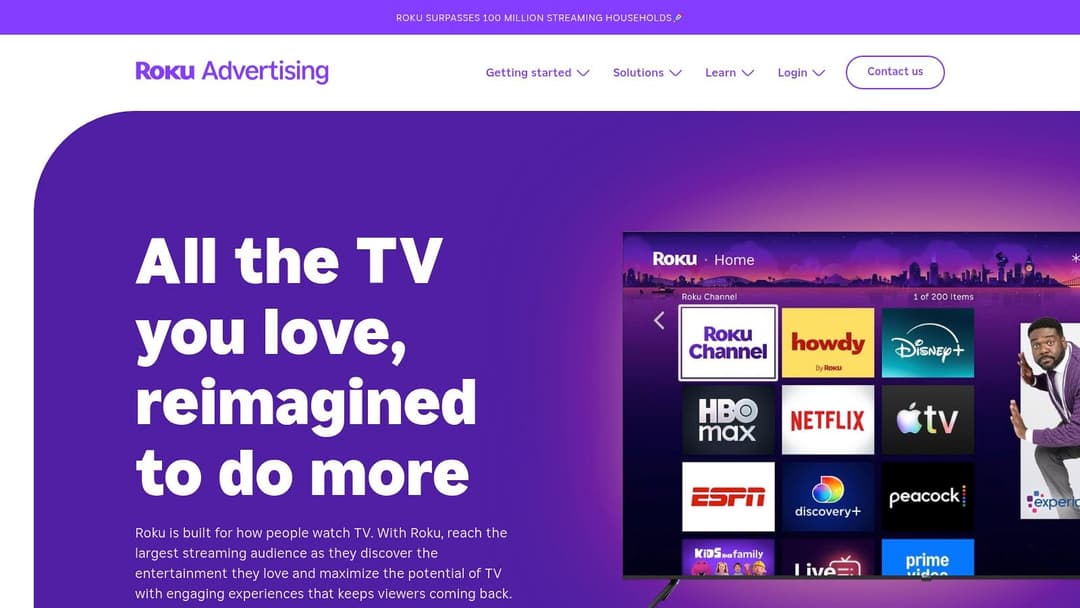
A common CTV problem looks like this: the brand wants television-style reach, the team has digital buying skills, and the budget is too small for a heavy managed-service setup. Roku sits in that gap.
Roku Ads Manager gives smaller advertisers a direct self-serve entry into connected TV. OneView is the more advanced path for teams that want broader programmatic control and cross-screen buying. That split matters in a guide like this because Roku is not just another “video advertising company.” It is one of the clearer examples of how the ecosystem separates into different partner types, from accessible self-serve tools to more technical buying infrastructure.
Why Roku makes sense for the right team
Roku is usually strongest when the goal is straightforward reach on the biggest screen in the house, without jumping straight into a large DSP workflow. The platform is easier to get started with than many CTV options, which makes it a practical test bed for teams graduating from social video.
Roku also brings useful household-level signals and ad formats built for streaming environments. For brands that have outgrown short-form social alone, that can make Roku a good next step rather than a full operational reset.
The trade-off is measurement discipline.
CTV rarely gives the fast feedback loop buyers get on Meta or TikTok. Creative learnings take longer to confirm, conversion paths are less direct, and lift often shows up through blended results instead of obvious last-click reporting. Teams that perform well on Roku usually enter with a clean test plan, a clear geographic or audience hypothesis, and realistic expectations about attribution.
Where Roku fits in the ecosystem
Roku Ads Manager is a fit for advertisers who want a self-serve CTV platform.
OneView is a fit for buyers who need more advanced programmatic capabilities and can handle the extra setup, targeting, and reporting complexity. If your team is comparing partner types across this article, Roku is one of the better examples of a platform that can support both stages.
- Strong fit: Brands entering CTV, regional advertisers, and mid-market teams that want streaming inventory without enterprise-level overhead
- Weak fit: Teams that need rapid creative iteration, dense in-platform conversion data, or highly customized programmatic execution from day one
- Common mistake: Treating Roku like a social channel and expecting the same optimization speed, instead of planning it as a reach and message-delivery channel with longer learning cycles
Use Roku Advertising if you want a more accessible way to test CTV before committing to a larger DSP-led setup.
6. Amazon Ads Streaming TV
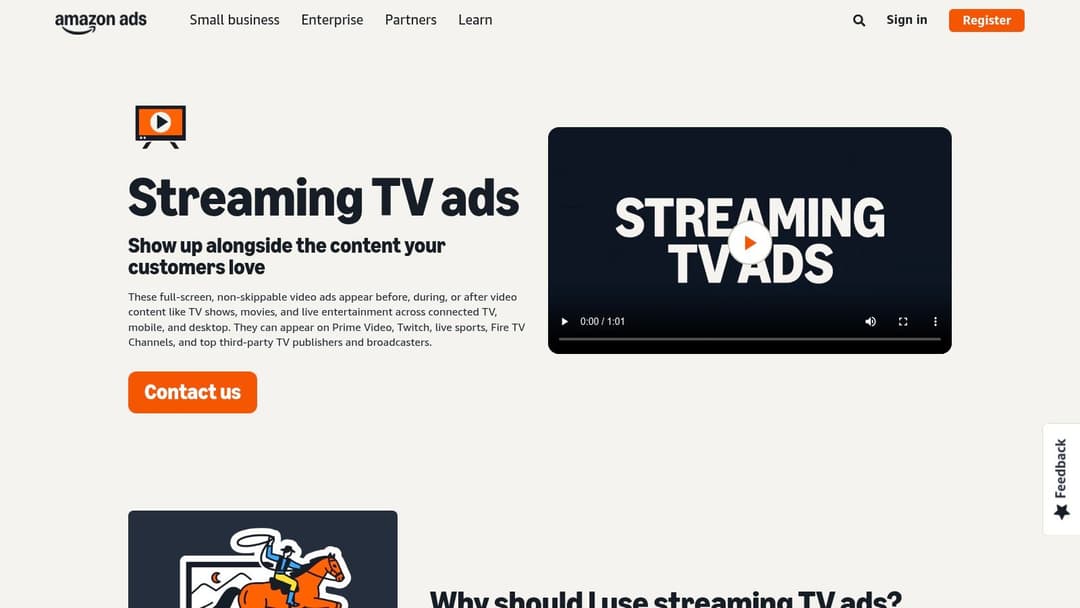
A common scenario. A brand wants the reach of streaming TV, but it also wants stronger purchase signals than a typical CTV buy can provide. Amazon earns attention in that situation because it sits closer to shopping behavior than most video platforms on this list.
That matters for advertisers choosing between partner types across the video ecosystem. Amazon is not just a streaming publisher, and it is not just a DSP. It spans self-serve options, managed services, and broader programmatic execution, which makes it useful for teams that are deciding whether they need a channel-specific tool or a more flexible buying setup.
What it’s best at
Amazon Ads Streaming TV works best for brands that care about product interest, retail intent, and household reach at the same time. Prime Video, Fire TV, and Twitch give advertisers different ways to show up across streaming environments, while Amazon’s commerce data gives those impressions more context than a standard awareness buy.
That combination is attractive for consumer brands, especially if Amazon is already part of the sales mix.
The operational catch
The product structure takes work to understand. Sponsored TV, Streaming TV, and Amazon DSP can all support video, but they solve different problems. Teams get into trouble when they treat them as interchangeable instead of choosing based on budget, reporting needs, and in-house buying experience.
If your team is still comparing Amazon’s DSP route against independent buying platforms, this guide to top demand-side platforms for video and programmatic media buying is a useful reference point.
- Strong fit: Consumer brands, retail-driven advertisers, and teams that want CTV reach with commerce-informed audience selection
- Weak fit: Advertisers that need a simple platform map, very fast onboarding, or one clean interface for every video use case
- Common mistake: Starting with Amazon’s full product set before deciding whether the goal is upper-funnel streaming reach, retail lift, or broader DSP-based audience buying
Use Amazon Streaming TV ads if you want streaming inventory tied to a commerce ecosystem and can handle a more layered setup.
7. The Trade Desk
A team outgrows self-serve video platforms when it needs one buying layer across CTV, online video, audio, and display, with tighter control over pacing, audience logic, and reporting. That is the job The Trade Desk is built for.
It fits advertisers that want an independent buying platform instead of splitting strategy across several closed ecosystems. The upside is reach and control across a wider set of publishers. The trade-off is operational complexity. Teams need clear naming conventions, stronger trafficking discipline, and someone who understands programmatic setup, not just social ads.
The Trade Desk makes the most sense for larger brands, agencies, and in-house teams already comfortable with DSP buying. If your team is still deciding between social video, retail media, and managed CTV options, start by comparing the broader category of demand-side platforms for video and programmatic media buying. That context matters because The Trade Desk is one type of video advertising partner, not a universal answer for every budget or workflow.
Its real strength is control. Buyers can shape frequency rules, test audience combinations, manage cross-channel pacing, and work with premium inventory without being boxed into one publisher’s measurement model.
That control cuts both ways.
A strong team can use The Trade Desk to run more intentional cross-screen campaigns. A thin team can waste budget through poor taxonomy, weak exclusion logic, or reporting setups that make optimization slower than it should be.
- Strong fit: Agencies, enterprise advertisers, and in-house programmatic teams that need cross-screen buying control and broader inventory access
- Weak fit: Small teams, low-budget advertisers, or brands that want fast setup inside a simpler self-serve platform
- Common mistake: Buying The Trade Desk for access, then under-resourcing campaign operations, measurement, and audience governance
Visit The Trade Desk if your priority is independent programmatic video buying with the staff and process to handle it well.
8. Innovid
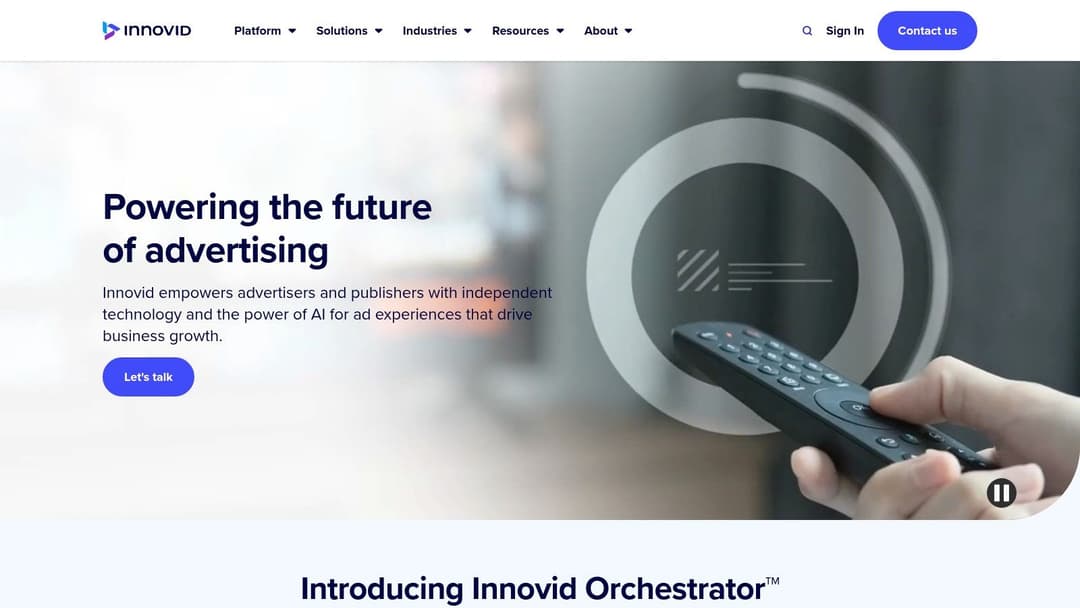
Your team is running video on Hulu, YouTube, a DSP, and a few direct publisher deals. Creative versions multiply, reporting arrives in different formats, and no one agrees on frequency or reach. That is the problem Innovid is built to address.
Innovid sits in the infrastructure layer of the video advertising ecosystem. It focuses on ad serving, creative delivery, interactive formats, and measurement across campaigns that run through multiple buying channels. That makes it a different kind of partner from a self-serve social platform, a CTV network, or a DSP.
That distinction matters.
Teams often search for a video advertising company and assume the answer has to be where media gets purchased. In practice, some advertisers already have enough buying access. What they lack is a cleaner operating layer across publishers, devices, and creative versions.
Why Innovid earns a place here
Innovid is a strong fit for brands running cross-publisher video at enough scale that fragmentation starts to cost real money. It can help centralize creative trafficking, support interactive CTV executions, and give teams a more consistent measurement setup than they get from publisher-by-publisher reporting.
The trade-off is complexity and cost. If media is concentrated inside one major platform, adding a separate ad serving and measurement layer may create more process than value. If spend is spread across several partners, that extra layer can improve control and make campaign analysis faster.
Interactive video also matters more here than in simpler buying tools. Innovid is relevant for advertisers that want shoppable units, dynamic creative variations, or CTV formats that do more than deliver a standard pre-roll asset.
The main limitation
Innovid does not solve inventory access. Your team still needs places to buy media, whether that is through direct publisher deals, self-serve platforms, or DSPs.
- Best for: Multi-partner video programs that need independent ad serving, cleaner measurement, and more advanced creative execution
- Not ideal for: Small teams that want one dashboard to buy media and launch quickly
- Best question to ask: Are reporting gaps and creative coordination slowing performance enough to justify a separate infrastructure layer?
Look at Innovid if your main issue is operational fragmentation across video buys, not a lack of places to spend budget.
9. Teads
Teads built its reputation on outstream video inside premium editorial environments. That still defines a lot of how buyers think about it, even as the company has expanded further into omnichannel video and CTV.
If you want video reach outside the biggest walled gardens, Teads is one of the more recognizable names. It can be a useful middle ground between social platforms and full enterprise programmatic stacks.
Where Teads works
Teads is a fit for advertisers that care about premium publisher context and want web video inventory that sits alongside quality editorial. It also helps when a brand wants more control over where creative appears than it typically gets in broad social inventory.
The caution is straightforward. Outstream placements aren’t the same as true in-stream or CTV. They can perform well, but the viewing context is different, and some buyers overestimate how immersive they are.
Premium publisher inventory can improve context. It doesn’t automatically improve offer-market fit.
Practical buying view
Teads is worth testing if you’re trying to diversify beyond Meta, YouTube, and TikTok while still keeping video central. It’s less compelling if your whole strategy depends on deep conversion optimization and fast social-style creative iteration.
- Good fit: Premium publisher reach, editorial alignment, web video expansion
- Less good fit: Buyers looking for the strongest direct-response engine
- Advice: Judge it on placement-level performance, not the pitch deck
See Teads if your team wants premium web video and growing CTV access without relying entirely on walled gardens.
10. Disney Advertising Hulu Disney Plus and ESPN streaming
A common scenario: a brand has already tested Meta, YouTube, and TikTok, but leadership wants video placements that feel closer to television than social feeds. Disney Advertising sits in that part of the ecosystem. It gives buyers access to Hulu, Disney+, and ESPN streaming inventory, which makes it a different kind of partner than a self-serve social platform or an open-web video network.
The appeal is straightforward. You buy into recognizable streaming environments, stronger content controls, and household-level reach that can support brand campaigns and upper-funnel performance goals. For teams that care about where the ad appears, not just how cheaply they can win impressions, that matters.
The trade-off is speed.
Disney is usually a better fit for advertisers with planned campaigns, approved creative, and a clear view on audience and measurement before launch. Teams that rely on constant creative swaps, loose approval workflows, or rapid-fire offer testing often feel constrained in premium streaming environments.
Where Disney fits
Disney belongs in the mix when the goal is premium CTV and streaming reach, especially for brands that want to appear beside established entertainment and sports content rather than user-generated or mixed-quality inventory.
It also works well as a complement to mobile-first channels. Social platforms are still better for fast iteration and conversion feedback. Disney adds a higher-attention screen and more controlled viewing context.
What to watch before you buy
The main question is not whether the inventory is premium. It is whether your campaign is built for it. Creative needs to hold up on a television screen, frequency needs closer attention, and measurement expectations should be realistic if your team is used to platform-native last-click reporting.
- Best for: Premium streaming reach, CTV campaigns, brand-sensitive advertisers, household awareness
- Potential drawback: Slower activation and stricter creative standards than self-serve social platforms
- Selection note: Choose Disney when context, content quality, and screen environment are part of the media strategy, not just added benefits
Use Disney Advertising if premium streaming inventory is part of the strategy and you want more controlled environments than open exchange video.
Top 10 Video Ad Platforms Comparison
| Platform | Target audience / Best for | Core features | UX & unique selling points | Pricing / scale |
|---|---|---|---|---|
| AdStellar AI (recommended) | Performance marketers, growth teams, e‑commerce, agencies, B2B SaaS | AI bulk creative + copy + audience generation; Meta Ads Manager OAuth; AI Insights & AI Launch; auto‑learning scale | One‑click deploy of 100s of variations; ranks creatives by ROAS/CPL/CPA; centralized campaign workflow; repeatable production | Pricing not public; enterprise/growth focus; needs historical data for best results |
| YouTube Ads (Google Ads) | Brands + performance video advertisers seeking intent reach | Skippable/non‑skippable, bumper, discovery, Shorts; objective bidding; advanced targeting | Massive intent‑rich reach; mature optimization & measurement; strong for awareness + direct response | Auction CPV/CPM; scalable SMB → enterprise; competitive CPMs in hot niches |
| Meta Video Ads (Facebook & Instagram) | Performance marketers seeking scale, retargeting & lookalikes | Reels/Stories, in‑stream, feed video; algorithmic optimization; first‑party signals | Native placements that scale with strong creative; excellent retargeting & lookalike workflows | Auction pricing; highly scalable; attribution/volatility can affect testing |
| TikTok Ads | Discovery‑driven brands, fast creative testing, commerce | In‑feed, TopView, Video Shopping; Smart+ automation; auction pricing | Very high engagement; trend‑driven scaling of winning creatives; growing commerce features | Auction; budget policies/minimums apply; performance varies by creative/niche |
| Roku Advertising (Roku Ads Manager & OneView) | CTV advertisers looking for accessible entry to streaming TV | Self‑serve Ads Manager; OneView DSP; Roku ACR audience targeting; shoppable experiences | Easy CTV on‑ramp with first‑party TV data; native CTV formats; transparent billing | Self‑serve campaigns from ~$500; strong US household reach |
| Amazon Ads, Streaming TV | Brands seeking premium streaming + commerce integration | Prime Video/Fire TV/Twitch streaming ads; interactive & remote‑enabled formats; self‑serve + DSP | Premium inventory + commerce signals; Sponsored TV no‑min self‑serve option | Self‑serve Sponsored TV (no minimum); DSP & managed options for scale |
| The Trade Desk | Agencies & enterprise teams needing cross‑screen programmatic control | Enterprise DSP; CTV/OTT planning; UID2 support; advanced bidding & pacing | Cross‑publisher scale beyond walled gardens; strong identity & measurement tools | Enterprise pricing; best for larger budgets and experienced teams |
| Innovid | Advertisers needing independent ad serving, dynamic CTV creative & measurement | Ad serving + dynamic creative personalization; interactive CTV; cross‑publisher measurement | Neutral infrastructure for consistent measurement; rich engagement metrics | Contracted/enterprise pricing; requires publisher/inventory buys |
| Teads | Brands seeking premium publisher video and outstream reach | InRead outstream units; Teads Ad Manager & Studio; expanding CTV placements | Access to premium editorial inventory; strong viewability controls; bridges web + CTV | CPM/CPCV models; mid‑market → enterprise focus |
| Disney Advertising (Hulu, Disney+, ESPN) | Brand advertisers wanting premium, brand‑safe streaming environments | Hulu/Disney+/ESPN streaming inventory; Disney Campaign Manager; targeting & policies | Premium content & brand safety; scaled US reach; co‑viewing audience access | Self‑serve tools for mid‑market; some advanced packages may have higher minimums |
Checklist How to Choose Your Video Advertising Partner
A team gets budget for video, shortlists a few recognizable names, and still picks the wrong partner. The mistake usually happens before pricing calls start. “Video advertising company” is too broad to be a buying category on its own. You are usually choosing between four different things: a self-serve social platform, a streaming publisher, a DSP, or an operating layer that helps your team make and test more creative.
Start with the job the channel needs to do. Brands that need quick feedback on offers, hooks, and conversion paths should usually test on YouTube, Meta, or TikTok first. Brands that care more about premium viewing environments, household reach, and larger-screen attention should spend more time on Roku, Amazon Streaming TV, or Disney. Teams buying across multiple publishers often need a DSP because consolidation, pacing, and measurement become operational problems, not just media problems.
That distinction matters because each category solves a different constraint.
Questions worth answering before you buy
- What outcome matters most: broad reach, site traffic, qualified leads, purchases, or contribution margin
- How much creative can the team produce each month: Meta and TikTok reward frequent testing, and weak creative throughput becomes a bottleneck fast
- Will one platform cover the plan, or do you need coordination across several publishers: if buys span channels, a DSP or independent measurement setup may justify the added complexity
- How fast do you need signal: social platforms usually show winners and losers faster than CTV
- Who owns execution every day: an experienced in-house buyer can get more from self-serve tools than a lean team with limited bandwidth
Measurement usually exposes partner mismatch first. A CTV buy can look inefficient if the team judges it with last-click expectations. A Meta video campaign can look overpriced if success is framed around completed views instead of purchases or qualified pipeline. Set the scorecard before vendor conversations get too far, or the best sales process wins instead of the best fit.
A practical filter helps here. Smaller teams, earlier-stage brands, and companies still proving channel fit usually learn more from self-serve platforms because testing is faster and setup is lighter. Larger brands with bigger budgets, stricter brand-safety requirements, or a need to plan across screens often get more value from CTV publishers and DSPs, even though buying gets more complex.
Sometimes media access is not the main problem. Execution is. If the team cannot produce enough new video, launch variants quickly, or review creative performance with confidence, another inventory source will not fix much. AdStellar AI fits that type of bottleneck. It helps teams generate video ads, test variations faster, and speed up workflow, especially in Meta-heavy programs.
The better question is not “Which video advertising company is best?” It is “Which type of partner removes the bottleneck in our program right now?” That answer might be a social platform, a streaming publisher, a DSP, or a creative operations tool. If you’re also evaluating outside support, this guide to vetting marketing agencies is a useful companion.
If your team already knows Meta can drive growth but creative testing and campaign setup are slowing results, AdStellar AI is worth a serious look, as noted earlier.