A media buyer is the strategic mind behind a company's advertising dollars. They're the ones responsible for buying and placing ads to hit the right audience at the right time, making every penny count. Think of them as portfolio managers for your marketing spend, investing in the right channels and creative to fuel business growth.
The Strategic Role of a Modern Media Buyer
Forget the old-school picture of a fast-talker haggling over ad prices on the phone. Today’s media buyer is a growth-obsessed strategist, acting as the critical link between a brand's budget and its success in the market. The role has grown far beyond just buying ad space; it’s now about making sharp, data-backed decisions to ensure every ad dollar is working as hard as possible.
You can think of them as a high-stakes portfolio manager. But instead of stocks and bonds, they invest a company's budget into a diverse portfolio of advertising "assets," such as:
- Ad Channels: Spreading bets across platforms like Meta (Facebook & Instagram), Google Ads, LinkedIn, TikTok, CTV, and others.
- Audiences: Pinpointing and targeting specific demographic, psychographic, and behavioral segments that are most likely to convert.
- Creative Campaigns: Constantly testing and scaling different ad formats, images, videos, and copy to see what resonates.
Their north star is simple: generate the highest possible Return on Ad Spend (ROAS). This means they aren't just buying space; they're buying tangible results. Much of their work involves deep analysis, relentless optimization, and a solid grasp of the company's overarching media strategy and planning to ensure their day-to-day actions align with the big picture.
Key Insight: The difference between a good and a great media buyer is their ability to turn campaign data into strategic action. They don’t just report what happened; they explain why it happened and lay out a clear plan for what to do next.
Core Functions of a Media Buyer at a Glance
To really get what a media buyer does day-to-day, it helps to break down their job into its core functions. While no two days are ever the same, their work almost always revolves around a continuous cycle of research, execution, and optimization.
Here's a quick summary of their primary responsibilities.
| Function | Objective | Example Activities |
|---|---|---|
| Strategy & Research | To identify the most effective channels and audiences. | Analyzing market trends, researching competitors, and defining target personas. |
| Negotiation & Buying | To secure the best ad placements at the most efficient cost. | Brokering deals with publishers or managing bids in programmatic platforms. |
| Campaign Management | To launch, monitor, and optimize ad performance. | A/B testing creatives, adjusting budgets, and pacing ad spend. |
| Analysis & Reporting | To measure results and inform future strategy. | Tracking KPIs like CPA & ROAS, and building performance dashboards. |
Ultimately, these functions all work together to turn a marketing budget into measurable business outcomes. A skilled media buyer is a master of all four, blending analytical rigor with creative insight.
A Day in the Life of a Performance Media Buyer
So, what does a media buyer actually do all day? Forget the stereotype of frantic phone calls and high-stakes lunches. The reality is a disciplined, data-obsessed routine focused on one thing: turning ad spend into profitable growth.
Think of it less as a single sprint and more like a series of focused rounds in a boxing match, each one designed to land a punch that moves the needle.
The day almost always kicks off with a deep dive into the performance dashboards, usually before the first coffee has even cooled. This is the moment of truth. A buyer logs into platforms like Meta Ads Manager or Google Ads to see how campaigns performed overnight.
They’re immediately looking at the core metrics: Is the Return on Ad Spend (ROAS) hitting its target? Is the Cost Per Acquisition (CPA) on that new e-commerce campaign starting to climb?
This isn't just about reading numbers; it's about diagnosing the story behind them. If an ad set is tanking, the buyer is already forming theories. Is it ad fatigue? Did a competitor just drop a surprise sale? This analytical start dictates the priorities for the rest of the day. And while this role is heavy on analysis, it’s quite different from other marketing functions. If you're wondering how it compares, take a look at our guide on what social media marketers do.
From Analysis to Action
By mid-morning, the focus shifts from analysis to action. This is where a buyer might launch a few A/B tests to find a new winning ad creative or shift budget over to a campaign that’s clearly crushing it. It’s a constant dance between creative intuition and cold, hard data.
This cycle of research, investment, and growth is the engine that drives everything a media buyer does.
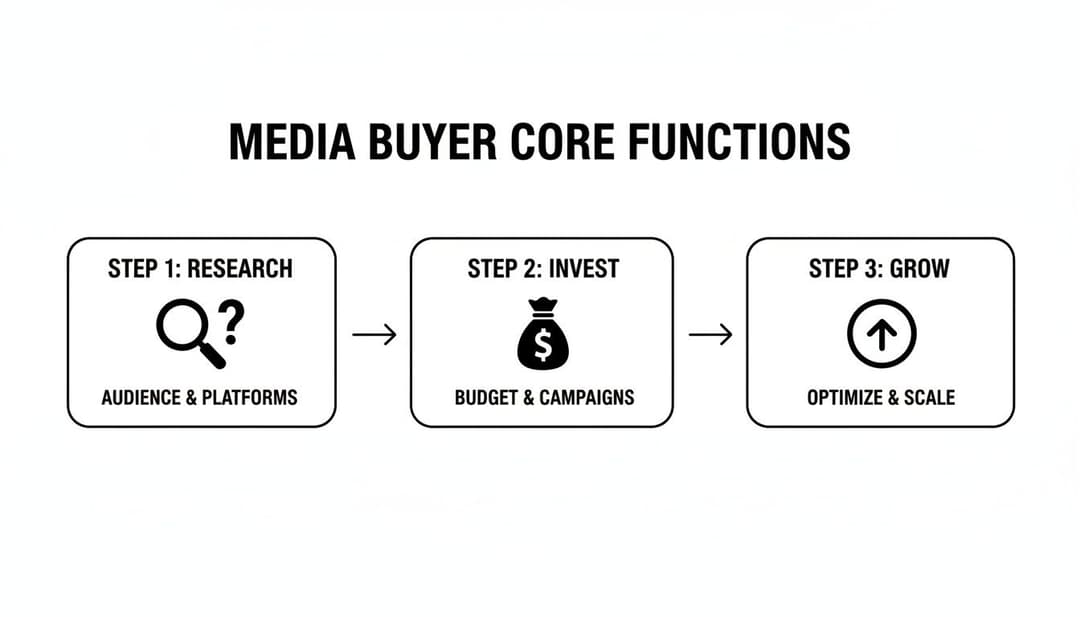
The image above perfectly captures this loop. You research, you invest based on that research, and the growth you generate provides new data to start the cycle all over again. It never stops.
Key Takeaway: A performance media buyer's day is a constant cycle of monitoring, hypothesizing, testing, and scaling. They are actively managing an investment portfolio, making real-time adjustments to maximize returns.
Afternoon Pacing and Negotiation
The afternoon is often about managing the money and planning ahead. The buyer makes sure campaigns are pacing correctly—not burning through the budget too fast or, just as bad, spending too slowly. This means forecasting performance and tweaking bid strategies or daily spending caps on the fly.
This is also where negotiation chops come in handy. A sharp buyer can haggle with platforms or publishers for better placements, sometimes securing rates 10-20% below list price. This is especially true in programmatic buying, which now dominates the display ad market. You can learn more about how media buyers operate in the ad market on evamobi.com.
The day usually wraps up with reporting—summarizing performance, sharing what worked (and what didn't), and laying out the game plan for tomorrow. Then, they get ready to do it all over again.
The Essential Skills That Define a Great Media Buyer
Ever wonder what separates a good media buyer from a truly great one? While anyone can learn to click buttons inside an ad platform, the top-tier pros have a unique mix of analytical skill and strategic creativity.
It’s this combination that lets them consistently turn ad dollars into real, profitable growth. Think of it as two sides of the same coin: the technical skills that get the job done, and the people skills that take performance from decent to exceptional. Let's break down what those skills are and why they matter so much.
The Technical Chops: Hard Skills You Can't Fake
First things first, media buying is built on a foundation of data. Without a solid command of the numbers and platforms, even the most brilliant strategy will fall apart. These are the non-negotiable skills every buyer has to master.
A great buyer doesn't just look at a report; they find the story hidden in the data. They can glance at a dashboard and instantly spot why a campaign’s Cost Per Acquisition (CPA) is climbing, connecting the dots between things like audience fatigue, a stale creative, or a new competitor in the auction.
Deep expertise in platforms like Meta Ads and Google Ads is table stakes. This isn't just about knowing where the launch button is. It’s about understanding the subtle nuances of their bidding algorithms, targeting options, and how to structure a campaign to help the platform’s AI do its best work.
Managing a budget is more than just not spending too much. It’s about pacing that spend effectively throughout the month, forecasting what's possible, and having the confidence to pull money from an underperforming campaign and push it toward a clear winner to maximize the overall Return on Ad Spend (ROAS).
Finally, the best buyers are methodical testers. They have a structured framework for A/B testing, making sure to isolate one variable at a time—whether it's the headline, the image, or the call-to-action. This is how you get clean data and generate real insights that actually improve performance over the long haul.
The Strategic Mindset: Soft Skills That Win Budgets
If hard skills cover the "what," soft skills determine the "how" and "why." These are the abilities that turn a technical operator into a trusted strategic partner. They're harder to measure, but they're just as crucial for success.
A media buyer’s true value isn't just in buying ads cheaply; it's in buying the right ads that attract high-value customers. This requires a deep understanding of business goals and the strategic thinking to align ad performance with metrics like Customer Lifetime Value (CLV).
Strong communication is absolutely essential. A buyer has to be able to translate complex performance data into a clear story for stakeholders who aren't in the weeds every single day. You need to be able to explain why a test failed or why you’re recommending a budget increase in a way that builds trust and gets everyone on board.
Negotiation and big-picture thinking complete the puzzle. Whether it’s securing better rates with a publisher or thinking three steps ahead to get in front of market changes, a great media buyer is always looking for an edge. They don't just follow the plan; they actively shape it, connecting their daily work directly to the company's biggest goals.
The Modern Media Buyer's Toolkit
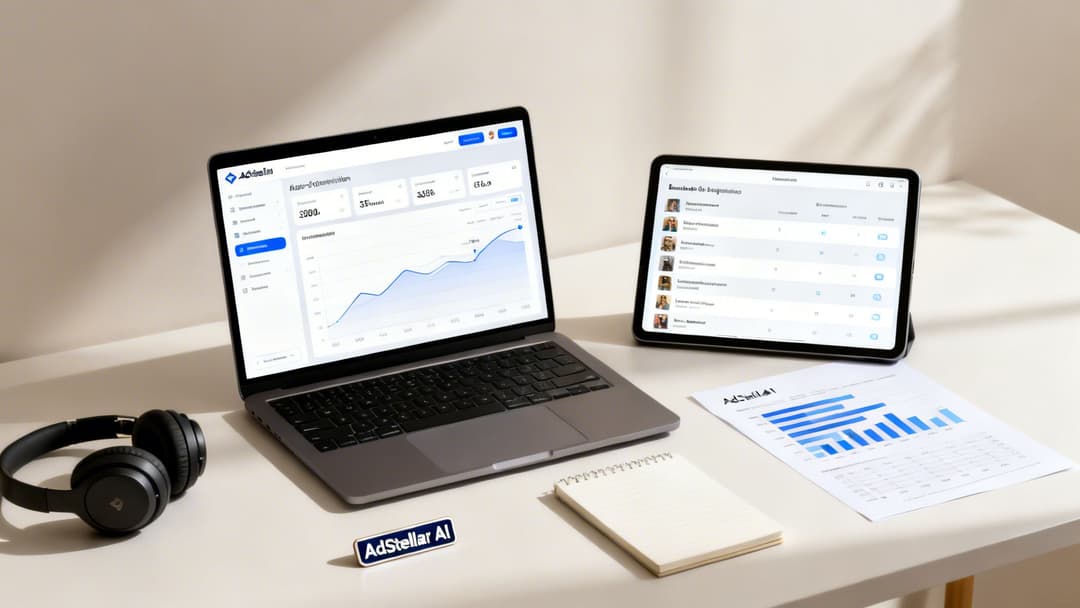
A great media buyer is like a master craftsperson, and every craftsperson needs a well-stocked workshop. Today, that workshop is digital. It's no longer enough to just be good with spreadsheets; the role has evolved.
The right set of tools moves a media buyer from being a manual campaign operator to a high-impact growth strategist. Sure, you absolutely have to master the native ad platforms like Meta Ads Manager and Google Ads. That's table stakes.
But what really separates the top-tier buyers from the rest is the sophisticated stack of third-party tools they use to make smarter, faster decisions.
Core Tools in the Buyer's Arsenal
While every buyer has their personal favorites, most high-performers rely on a mix of platforms that tackle a few critical jobs. Think of them as specialized instruments for specific tasks.
Analytics and Reporting Platforms: Tools like Google Analytics 4, Triple Whale, or Northbeam are your source of truth. They go beyond the ad platform's click and conversion data to show you what’s actually driving profit, helping you calculate crucial metrics like Customer Lifetime Value (CLV).
Research and Spy Tools: Why guess what’s working when you can see it? Platforms that uncover competitor ad strategies are a huge advantage. Buyers use them to see the exact ads, messaging, and offers that are already winning in the market.
Project Management Software: Juggling dozens of campaigns, split tests, and deadlines can get chaotic fast. This is where tools like Asana, Monday.com, or Trello come in. They keep everything organized so strategic plans are executed perfectly and nothing gets missed.
The AI-Powered Advantage
The biggest game-changer for the modern media buyer has been the arrival of AI-powered platforms. These tools are a massive force multiplier, automating the repetitive, time-sucking parts of the job so buyers can finally focus on strategy.
A media buyer’s goal is to find winning ad combinations and scale them. AI platforms accelerate this discovery process from weeks to mere hours, fundamentally changing the speed and intelligence of campaign execution.
For instance, a platform like AdStellar AI completely supercharges this process. It can automatically build hundreds of ad variations for testing by pulling data directly from Meta. It then ranks your top creatives by ROAS or CPA, eliminating the manual grind of data analysis. You can find more details on how these platforms empower media buyers on evamobi.com.
This kind of AI automates tedious jobs like launching dozens of audience tests or building out complicated campaign structures. By connecting to your ad accounts, it learns from your past performance to make intelligent recommendations. This shift from manual button-pushing to strategic oversight is what defines the elite media buyer in 2026. If you want to learn more, check out our guide on essential media buyer tools for Facebook Ads.
How to Hire or Become a Media Buyer
So, you're on one side of the table or the other. You're either desperately searching for a rockstar media buyer who can actually move the needle, or you're aspiring to become that exact person.
For companies, the challenge is sorting through the noise to find someone with genuine strategic talent. For aspiring buyers, it's all about building real-world skills and proving you can deliver a return.
Let's break down the roadmap for both sides of the hiring equation—what to look for, how to prove your worth, and the skills that truly matter.
What Companies Should Look For
Forget the shiny certifications for a moment. While they show initiative, they don't guarantee results. You're not hiring someone to just press buttons on an ad platform; you're looking for a strategic thinker who connects every dollar spent directly to business goals.
A top-tier candidate doesn't just know how to launch a campaign. They understand why it's being launched and how it fits into the bigger picture of revenue and profitability.
To find this person, you need to ditch the generic interview questions and put their skills to the test with real-world scenarios.
- Ask a Scaling Question: "Walk me through how you'd take a campaign that's working well from a $10,000 monthly budget to $50,000. What specific metrics are you watching? What are the biggest risks you'd be trying to mitigate?"
- Present a Failing Campaign: "I want you to imagine a campaign where the CPA is climbing and the ROAS is dropping. What are the first three things you dig into, and what are your initial theories about what’s going wrong?"
- Test Their Business Acumen: "Beyond just hitting a CPA target on the front end, how does a media buyer's role contribute to the overall profitability of the company?"
These kinds of questions strip away the fluff. They force a candidate to show you their problem-solving process and reveal whether they think like a spender or an investor.
Key Insight: A great media buyer is more than a campaign manager. They're a strategic partner who turns the advertising budget into a predictable profit center, not just another line item on the expense report.
Building Your Career as a Media Buyer
If you're aiming to become a media buyer, your journey is all about one thing: tangible, data-backed experience. Knowing the theory is a start, but employers are paying for proof that you can take a budget and turn it into more money.
Your first move? Get your hands dirty. You need to start building a portfolio, even if it means offering to run small-scale campaigns for local businesses, friends with a side hustle, or non-profits. For more ideas, check out our deep dive into building a career in performance marketing.
Once you have some experience, it's all about packaging it into compelling case studies. This portfolio is your single most important career asset. Each case study needs to tell a clear story:
- The Initial Challenge: What was the business trying to achieve? What problem were you hired to solve?
- The Strategy: What was your big-picture approach? Why did you choose that specific path?
- The Actions Taken: Get specific. What audiences did you target? What creatives did you run? What optimizations did you make along the way?
- The Results: This is where the numbers do the talking. Showcase the cold, hard data—the increase in ROAS, the drop in CPA, and the total revenue you generated.
This portfolio is what gets you hired. And when you're ready to make your move, there are plenty of platforms out there to help you find remote jobs and connect with companies looking for your exact skillset.
Real-World Media Buying Strategies in Action
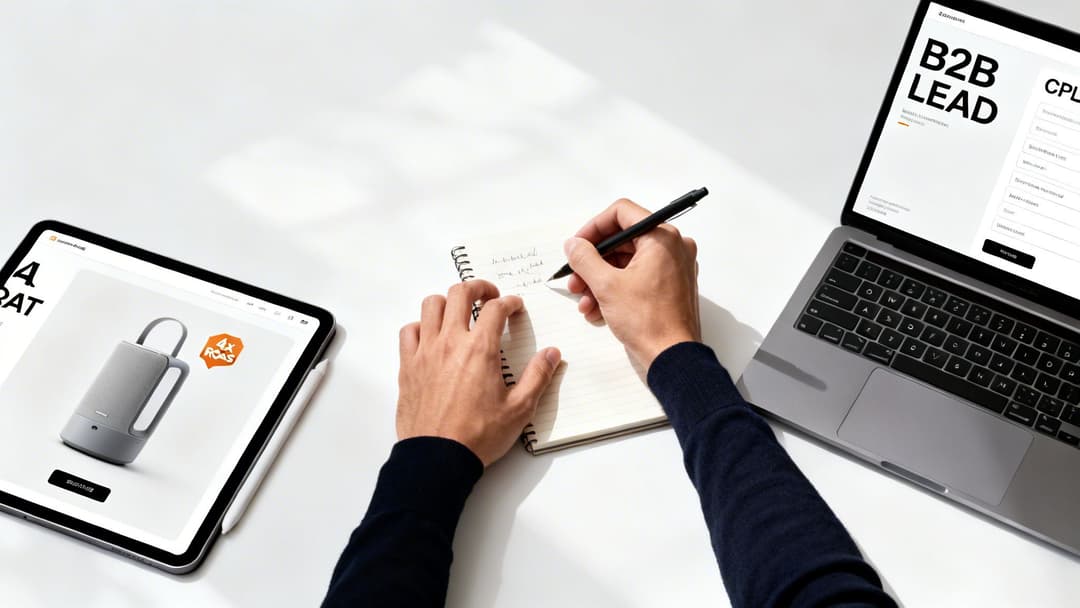
Theory is great, but let's be honest—seeing how the sausage gets made is what really makes things click. So, let’s pull back the curtain and look at how a skilled media buyer’s work translates into real money for a business.
We'll walk through two completely different scenarios to show you just how adaptable and critical this role is.
E-Commerce Product Launch on Meta
Picture a hot new e-commerce brand dropping a line of sustainable activewear. They have one big, shiny goal: hit a 4x Return on Ad Spend (ROAS) in the first 60 days. This is where the media buyer steps in, turning that number into a full-blown campaign on Meta platforms like Facebook and Instagram.
First thing’s first: research. They aren't just guessing who wants to buy this stuff. They’re digging into past customer data in Meta Ads Manager, building lookalike audiences that mirror the brand's best customers—a move that can bump up conversion rates by as much as 30%. You can dig deeper into the value of audience research over at evamobi.com.
With the who sorted, it's time for the what. The buyer sets up a creative showdown, pitting slick lifestyle videos against clean, product-on-white-background shots. They let the data do the talking.
As the early numbers roll in, a clear winner emerges. The buyer then starts pouring fuel on the fire, shifting the budget over to the top-performing ads and audiences. It’s a constant process of tweaking and optimizing to chase down that 4x ROAS goal.
B2B Lead Generation on LinkedIn and Google
Now, let's flip the script. Imagine a B2B SaaS company that needs to fill its sales pipeline with high-quality leads. The goal isn't a quick online sale; it’s about booking qualified demos. The media buyer's playbook looks totally different here.
They'll likely fire up a campaign on LinkedIn Ads, targeting professionals by their exact job titles, company size, and industry. The ads won't be pushing a "buy now" button. Instead, they'll offer something valuable, like a free industry report, in exchange for a business email. The North Star metric here isn't ROAS, but Cost Per Lead (CPL).
At the same time, they'll run a complementary campaign on Google Ads, zeroing in on keywords that scream "I'm ready to buy," like "best project management software for agencies."
Key Difference: For a B2B campaign like this, the media buyer's job doesn't end when a lead form is filled out. They’re in constant communication with the sales team, figuring out which channels and ads are bringing in leads that actually turn into customers. This feedback loop is what separates good media buying from great media buying, because it optimizes for lead quality, not just quantity.
These two stories show the same role in two different worlds. A media buyer’s true skill is in adapting their strategy, tools, and focus to hit whatever target the business sets, proving their worth with cold, hard numbers.
Your Media Buying Questions, Answered
Let's tackle a couple of the most common questions that pop up about media buying. It's a field with a lot of moving parts, so a little clarity goes a long way.
What Is the Difference Between a Media Buyer and a Media Planner?
This one comes up a lot. Think of it like this: the media planner is the architect, and the media buyer is the engineer.
The planner draws up the grand blueprint. They decide who we’re talking to, what the overall message should be, and which platforms—like TV, social media, or search—make the most sense for the budget. They set the high-level strategy.
The media buyer then takes that blueprint and makes it a reality. They’re the ones on the ground, negotiating ad placements, launching the campaigns, and obsessively tweaking them to make sure they perform under real-world pressure. They handle the execution.
Will AI Replace Media Buyers?
Not a chance. AI won't replace media buyers—it will make them better.
The truth is, AI is fantastic at handling the repetitive, number-crunching tasks that used to eat up so much of a buyer's day. It automates the grunt work, freeing up the human expert to focus on what really matters: strategy, creative insights, and understanding the subtle shifts in the market.
The media buyer of 2026 and beyond is an AI-augmented strategist. They use powerful tools to make smarter decisions, faster. It’s all about combining human intuition with machine intelligence to get the best results, which is a key part of learning how to measure advertising effectiveness in today's world.