You're probably doing one of two things right now. Either you're posting regularly on Facebook and the likes have flattened out, or you're boosting posts and getting activity that looks busy but doesn't turn into a stronger page.
That usually means the problem isn't effort. It's system design.
If you want to know how to get more likes on fb in 2026, stop treating likes as an isolated metric. The pages that keep earning them build a loop: strong page setup, content built for interaction, disciplined community management, then paid amplification on the posts that already proved they deserve more reach. Likes become the output of that loop.
Build Your Foundation for Facebook Growth
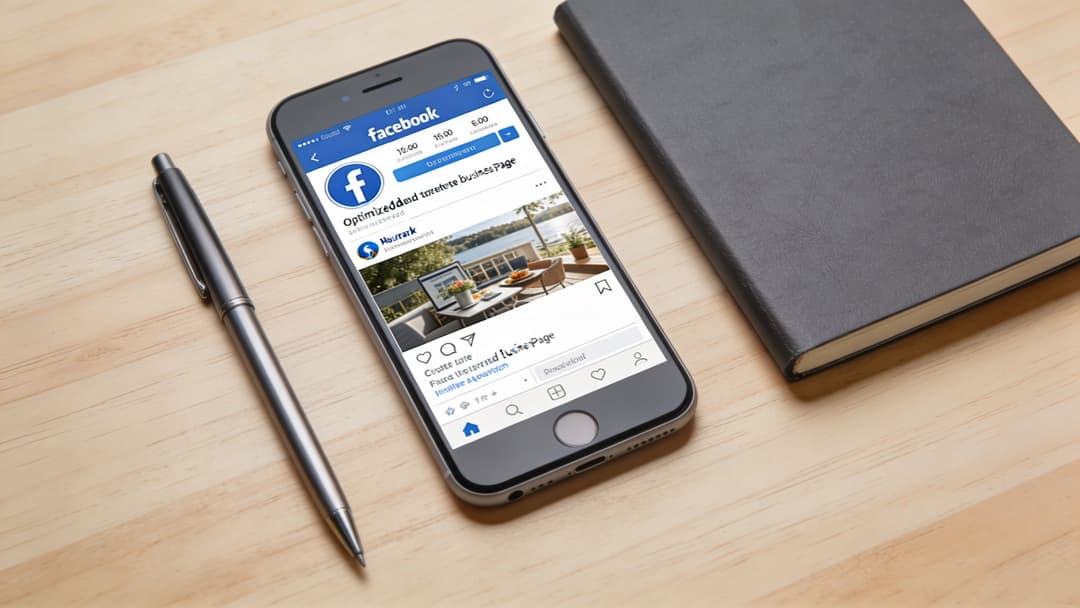
Most Facebook pages leak engagement before a post even has a chance to perform. Someone clicks through, lands on the page, and sees a weak cover image, a vague description, outdated branding, or a CTA button that points nowhere useful. That kills trust fast.
Treat your Facebook Page like a landing page. Its job isn't just to exist. Its job is to convert profile visitors into followers, engagers, and eventually customers.
Make your page instantly recognizable
Your profile image should be your logo or a brand mark people can recognize at a glance. Your cover photo should reinforce what you do, not just look nice. A clean value proposition, product visual, team photo, or campaign creative works better than decorative art.
Your page visitor should answer three questions in a few seconds:
- Who are you. Brand identity should be obvious without reading a paragraph.
- What do you offer. The page should make your category and value clear.
- Why should I stay. Visitors need a reason to follow, engage, or click.
If any of those answers are fuzzy, page likes get harder because the page feels disposable.
Write the About section like ad copy
Most About sections read like legal boilerplate. That's a waste.
Write yours like a short pitch. Say what you help people do, who you help, and what kind of content they'll get from following your page. Keep it simple, direct, and audience-centered. If you post tutorials, product tips, behind-the-scenes clips, or community updates, say that plainly.
Practical rule: If a stranger lands on your page and can't tell why your content matters to them, they won't like the page no matter how good one post is.
Audit the conversion points
Before you worry about reach, check the assets people hit after the click.
A quick page audit should include:
- CTA button alignment. If your main goal is lead generation, use a button that supports that path. If your goal is community growth, make sure the page experience supports more browsing and interaction.
- Pinned post quality. Pin a post that shows your brand voice and gives a new visitor a reason to care.
- Recent post consistency. A visitor who sees random formats and no clear theme won't know what they're signing up for.
- Response readiness. If people comment and no one answers, the page looks inactive even if you post often.
A strong page doesn't create likes on its own. It removes friction so that when a good post earns attention, that attention converts.
Crafting Content That Demands a Like
A user stops on your post for two seconds, gets the point, feels a reaction, and taps Like before scrolling. That outcome usually comes from planning, not luck.
On Facebook, strong creative does two jobs at once. It matches a clear audience problem or interest, and it fits the format people already engage with in-feed. Growth teams that treat those as separate decisions usually waste both organic reach and paid budget later, because weak organic signals make amplification more expensive.
Build around content pillars, not random ideas
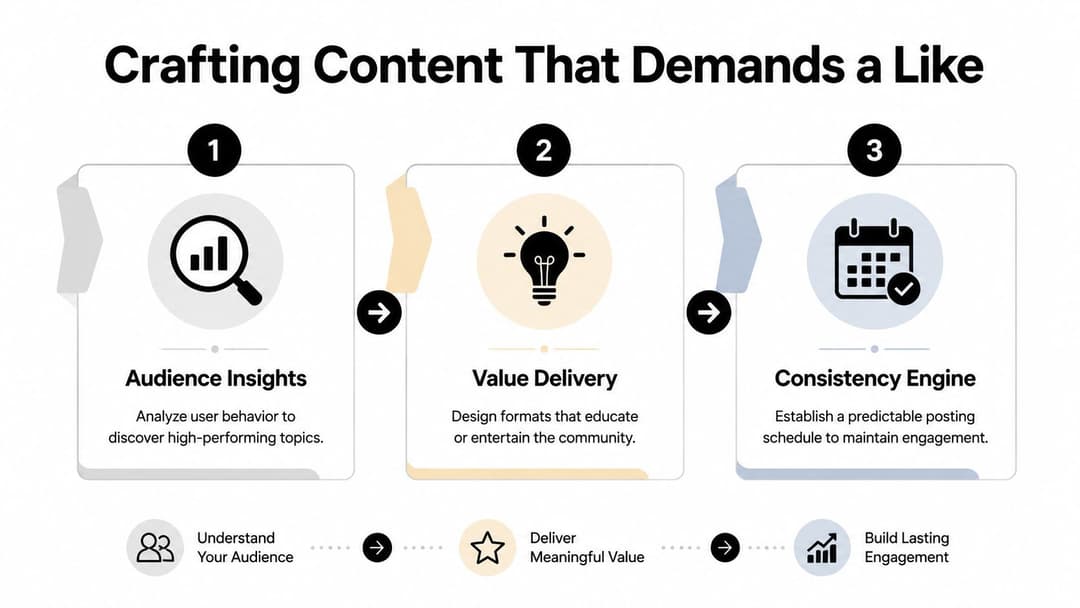
Random posting creates random results. A tighter system is to choose a few repeatable content pillars and test angles inside each one.
For most brands, four pillars cover the ground well:
| Pillar | What it does | Example angle |
|---|---|---|
| Education | Builds saves, clicks, and credibility | Quick how-to, checklist, myth busting |
| Proof | Builds trust | Customer result, testimonial creative, before-and-after |
| Personality | Makes the brand feel human | Team moment, founder opinion, behind the scenes |
| Conversation | Pulls comments and reactions | Question post, hot take, poll, timely prompt |
This mix matters because likes usually come from instant relevance. People respond faster when they understand the post immediately and know why it matters to them.
Presentation still affects the result. If a visual is cramped, cropped poorly, or hard to read on mobile, even a strong idea can lose momentum. Before shipping creative, check current Facebook image size guidelines for marketers so the asset fits the feed cleanly.
Match the message to the format
Format choice changes how a post gets consumed.
A short opinion or contrarian point often works better as text on a simple graphic than as a long caption. A customer result usually lands better with a visual sequence or before-and-after format than with a paragraph of explanation. Product education often performs best when the first frame gives the payoff fast and the rest of the post earns the swipe, click, or reaction.
Use format testing as a standard part of production:
- Run the same core idea as a static image, an album, and a Reel
- Put the strongest hook in the first line or first frame
- Cut setup and lead with the benefit, tension, or opinion
- Turn broad announcements into audience-specific use cases
- Reserve outbound links for posts where the click matters more than native engagement
That last point matters for growth teams. Posts that earn strong native engagement give you cleaner signals about what deserves paid spend. If a concept cannot get attention organically from your existing audience, boosting it rarely fixes the problem.
Original content earns more room to travel
Facebook rewards content that feels made for Facebook. Recycled assets often carry the opposite signal.
Social Media Examiner's analysis of Facebook reach and originality explains that Facebook continues pushing Reels and can limit distribution for reposted content with visible watermarks or weak originality signals. Review that guidance in its analysis of Facebook reach and originality.
The practical takeaway is simple. A clear, native post built for your audience usually has more upside than a polished asset copied over from another platform.
Keep the system easy to repeat
The content engine does not need to be complicated. It needs to be consistent enough that your team can learn from it.
A workable weekly process looks like this:
- Choose one audience segment for each post. Specificity raises relevance.
- Pick the format that fits the idea. Do not force every message into video.
- Open with a reason to react. Use a question, a strong opinion, a mistake to avoid, or a clear payoff.
- Review the signals that matter. Look at likes, comments, shares, clicks, and hold rate together.
- Promote the winners, not the guesses. Paid amplification works better when organic performance has already proven the angle.
That is the growth loop. Organic engagement is not separate from paid social. It is the testing layer that helps you find lower-cost creative, stronger audience hooks, and posts worth scaling.
Drive Engagement and Build Your Community
Likes don't come from content alone. They come from interaction around the content.
That's why some pages with average creative still grow steadily, while pages with polished visuals stay flat. The difference is community management. Facebook has increasingly prioritized meaningful interactions, which means your comment section and reply behavior influence what happens next.
Hootsuite's 2025 analysis says Facebook prioritizes posts from pages a user has meaningfully interacted with before, and it specifically recommends replying to comments because those interactions increase future engagement and visibility. The same piece also notes that albums average an engagement rate of 1.6%, ahead of several other post types in its cited benchmark set. You can review that directly in Hootsuite's guide to the Facebook algorithm and engagement signals.
Replying is distribution work
A lot of brands still treat comment replies like customer service cleanup. That's the wrong frame.
When you reply well, you're doing three things:
- Extending the life of the post
- Training the audience that conversation happens here
- Sending positive interaction signals back into the feed system
That's why a fast, human reply cadence matters. Not canned one-word responses. Real replies that move the conversation one step forward.
For teams trying to improve reach before spending money, this guide on how to boost Facebook posts for free is useful because many “free” wins are really engagement discipline wins.
Ask better questions
“Thoughts?” is lazy. It doesn't give people a reason to respond.
Better prompts usually do one of these:
- Force a choice. Which version would you pick?
- Invite experience. What's the biggest mistake you made with this?
- Challenge a norm. Is this still worth doing in 2026?
- Make it easy to answer quickly. Yes or no. Better or worse. A or B.
Comments create momentum. Momentum creates more distribution. More distribution creates more chances to earn likes.
You can also create “comment hooks” that don't feel like bait. For example, a brand selling supplements might ask what people struggle to stay consistent with. A SaaS company might ask which dashboard metric gets ignored most often. A local business might ask customers to vote on a new flavor, service hour, or event idea.
Here's a useful benchmark for your own workflow: if a post earns reactions but no discussion, it may be easy to consume but weak at building future reach.
A quick explainer can help teams align on this mindset:
Turn followers into participants
User-generated content helps because it shifts the page from broadcaster to community hub. Customer photos, story reshares, testimonials, and audience spotlights all work when they feel earned and relevant.
A simple operating model works well:
- Publish posts that invite a response.
- Reply to the strongest comments first.
- Pull audience language from those comments into future posts.
- Feature the community when possible.
That's how likes stop being random. People engage more when they recognize that the page listens.
Master Facebook's Native Growth Tools
A page can publish strong content and still stall if it uses Facebook like a single feed. Growth comes from matching the format to the job. Native tools matter because each one trains a different behavior. Reels get discovery. Stories get quick taps and replies. Groups build repeated attention from people who want an ongoing conversation.
Reels for discovery
Use Reels to reach people who do not follow the page yet. The format rewards speed and clarity, so the strongest posts get to the point in the first seconds. Short how-tos, product proof, reactions to a timely change in your market, and before-and-after transformations all fit well here.
A simple structure keeps production focused:
- Start with the payoff or problem.
- Show the proof, screen, product, or result as early as possible.
- Close with a response prompt or a reason to visit the page.
Keep some static formats in rotation too. As noted earlier, image posts and question-led posts can still drive strong engagement, especially for brands whose audience responds better to clear opinions than to short-form video. Native growth usually improves when the content mix includes both fast-reach formats and easy-response formats.
If a Reel or feed post starts earning comments and reactions on its own, that is often the right time to add spend. This guide on how to promote a post in Facebook is a useful reference for deciding what to boost after organic signals show real interest.
Stories for fast interaction
Stories work well for low-friction touches. Polls, quizzes, behind-the-scenes clips, launch countdowns, and short Q&As give followers a quick way to interact without asking for much time.
That trade-off matters. Stories usually do less for durable feed engagement, but they are strong for frequency and recency. If the audience sees and taps through your Stories often, your page stays familiar. Familiar pages get more attention when a feed post appears later.
Use Stories to test ideas before committing them to the feed. A poll response, a spike in replies, or a common question from viewers can tell you which angle deserves a full post or paid push.
Groups for authority and relevance
Groups are slower to build, but the engagement quality is often better. People join groups for discussion, troubleshooting, recommendations, and peer validation. That makes them useful for brands with a clear topic customers already care about.
Brand-run groups work best when the conversation can survive without constant product mentions. A fitness brand might host accountability threads. A SaaS company might center the group on workflow problems, reporting setups, or industry benchmarks. If every post points back to the offer, participation fades.
Joining existing groups can work too, with restraint. Answer questions well. Add context people can use. Share your page content only when it directly helps the thread. The goal is to build recognition first so page visits and likes happen as a byproduct of usefulness, not as the opening ask.
The teams that grow efficiently on Facebook assign each native tool a clear role. Reels expand reach. Stories keep warm audiences active. Groups build trust and repeat exposure. Feed posts collect the engagement signals you can later use for amplification.
Albums are worth testing too. They are useful for event coverage, step-by-step tutorials, product collections, and before-and-after sequences because they create a browsing pattern that can hold attention longer than a single image.
Amplify Your Reach with Smart Paid Strategies
Most brands waste money on Facebook likes because they optimize for the wrong thing too early. They launch Page Like campaigns, watch the count move, then realize the audience doesn't comment, doesn't share, and rarely engages again.
That's the vanity trap.
Practitioner guidance now explicitly warns against basic Page Like ads and recommends a different route: run Engagement campaigns first, then invite the people who engaged to like the page. That approach is highlighted in this breakdown of higher-quality Facebook page growth tactics.
Why Page Like campaigns underperform
The issue isn't that page likes are useless. The issue is that cold audiences rarely care about your page before they care about your content.
When you ask for the like first, you're asking for commitment before relevance has been established. That often attracts low-intent users. The number goes up, but the page gets weaker because the follower base doesn't engage consistently.
That creates a second problem. Your future organic posts get shown to people who may have liked the page but don't care enough to interact.
A better paid growth loop
A stronger workflow looks like this:
| Step | What you do | Why it works |
|---|---|---|
| 1 | Publish organically first | You need proof that the post can hold attention |
| 2 | Identify posts with strong real engagement | These posts already resonate |
| 3 | Run an Engagement campaign on those winners | You amplify quality, not guesses |
| 4 | Invite engagers to like the page | They've already raised their hand |
| 5 | Retarget high-intent engagers later | The audience is warmer and more qualified |
This is a cleaner way to think about how to get more likes on fb through paid media. Don't buy the like first. Earn the interaction first, then convert it into a page relationship.
What to amplify
Not every post deserves spend. The best paid amplification candidates usually have one or more of these traits:
- Strong comment density. People aren't just tapping react, they're participating.
- Clear audience fit. The post speaks to one segment, not everybody.
- Native creative. It looks built for Facebook, not pasted in from another channel.
- Simple hook. The value is obvious in the first second or first line.
Posts that are broad, link-heavy, or overly polished in a way that feels ad-like often struggle even if they looked good internally.
Keep testing operational, not emotional
Paid social teams often overinvest in message debates and underinvest in structured variation. You need testing across audience, hook, creative format, and opening line.
That's where workflow matters. Tools like AdStellar AI can support this by generating and launching many Meta ad variations quickly, which is useful when you want to scale engagement-first testing instead of manually building each version in Ads Manager.
Don't ask paid traffic to rescue weak content. Use paid amplification to scale the posts that already proved they can create interaction.
This also keeps creative learning cleaner. When a post earns comments and likes organically, then performs under paid amplification, you've learned something about audience fit or packaging. When a post never worked organically and also fails as an ad, you've mostly learned that the idea was weak.
Measure What Matters and Scale Your Success
If you only track the raw like count, you'll make bad decisions.
A post can earn likes because it was easy to consume, because it reached the right people, or because it started a comment loop that increased visibility. Those are different outcomes, and they require different next moves. The point of measurement is to figure out which mechanism is driving the result.
Read Facebook Insights like an operator
Start with post-level review inside Facebook Insights or Meta Business Suite. Don't look for one magic metric. Look for patterns across a small cluster:
- Reach
- Comments
- Reactions and likes
- Click-through behavior
- Post format
- Audience segment or theme
Brandwatch's explanation of Facebook ranking highlights four core factors in feed ranking: author, format, engagement, and recency. It also points marketers toward a practical loop of defining one primary audience per post, publishing in the format that audience prefers, prompting early engagement, and iterating with Insights. You can review that framework in Brandwatch's guide to the Facebook algorithm for marketers.
Build a review process you'll actually use
Keep reporting simple. A weekly scorecard is enough for the majority of teams.
Use a table like this internally:
| Review area | What to check | What to do next |
|---|---|---|
| Top posts by likes | Which topics and formats pulled the most response | Recreate the angle in fresh creative |
| Top posts by comments | Which prompts created discussion | Turn those into follow-up posts or paid tests |
| Posts with reach but weak engagement | Where the hook worked but the content didn't close | Rewrite the opening or change the format |
| Posts with strong engagement but low scale | Where resonance exists but reach was limited | Amplify through paid or repost in a stronger format |
That's how you stop guessing. You're not asking, “What should we post next?” You're asking, “Which repeatable patterns earned attention from the right people?”
Segment your winners
A common mistake is calling something a winner too early. One post might work because the topic is good. Another might work because the visual was stronger. Another might perform because the prompt hit a pain point your audience already felt.
Separate those variables. Tag your winning posts by theme, format, audience, and hook style. If you're running e-commerce campaigns, it can also help to compare top e-commerce AI software and look at how different tools support creative testing, audience analysis, and reporting workflows across channels.
For paid teams, this guide on how to measure advertising effectiveness is useful when you want to connect engagement signals back to broader performance outcomes instead of treating social likes as an isolated KPI.
Good Facebook growth comes from feedback loops, not content calendars alone.
When you identify a post pattern that earns likes, comments, and useful clicks, do three things. Rework it into another format. Show it to a nearby audience segment. Then decide whether it deserves paid support.
That's the scalable version of Facebook growth. The like count becomes a signal, not the strategy.
If you want to turn this playbook into a faster testing system, AdStellar AI helps teams build and launch large numbers of Meta campaign variations, learn from performance data, and scale the creative and audience combinations that are already working.