Welcome to your complete guide for mastering Meta's ad formats. Think of the different Facebook ads types as a specialized toolkit. Each tool is built for a specific job, whether that’s getting your name out there or closing a sale on the spot. Nailing the match between your ad type and your campaign goal is the absolute cornerstone of a winning strategy.
Quick Guide to Facebook Ad Types and Goals
Before we dive deep, here’s a quick-reference table to help you match the right ad format to your campaign objective. Think of it as your cheat sheet for making smarter decisions, faster.
| Ad Type | Primary Goal | Best For |
|---|---|---|
| Image Ads | Sales / Leads | Driving traffic to a landing page with a strong, simple message. |
| Video Ads | Awareness / Sales | Telling a compelling brand story or demonstrating a product in action. |
| Carousel Ads | Sales / Engagement | Showcasing multiple products, features, or testimonials in a single unit. |
| Collection Ads | Sales (e-commerce) | Creating a seamless mobile shopping experience for multiple products. |
| Lead Ads | Leads | Capturing user information directly on Facebook without leaving the app. |
This table gives you a high-level view, but the real magic happens when you understand the why behind each choice. Let's get into it.
Matching Your Goal to the Right Ad Format
Picking an ad type isn't just about what looks good—it's a strategic move that directly wires your campaign for success or failure. You wouldn't use a sledgehammer to hang a picture frame, right? In the same way, running a brand awareness ad when you desperately need immediate sales is just a fast track to burning through your budget with nothing to show for it.
Your first move, always, is to get crystal clear on your primary objective. Are you trying to:
- Build Awareness? Think of this as introducing your brand at a party. You want to make a good first impression on a broad, new audience.
- Generate Leads? You're looking to start a conversation by getting contact information from people who’ve shown some interest.
- Drive Sales? This is the closer. You’re asking users to pull out their wallets and make a purchase right now.
Once you know what you’re trying to achieve, you can pick the ad format built specifically for that job. This alignment is what allows Meta’s algorithm to work for you, not against you. The system is designed to find the people most likely to take your desired action and put your ad right in front of them, optimizing your spend for a higher Return on Ad Spend (ROAS) or a lower Cost Per Lead (CPL).
This decision tree gives you a visual map for connecting your main business goals—Awareness, Leads, or Sales—to the ad formats that will get you there.
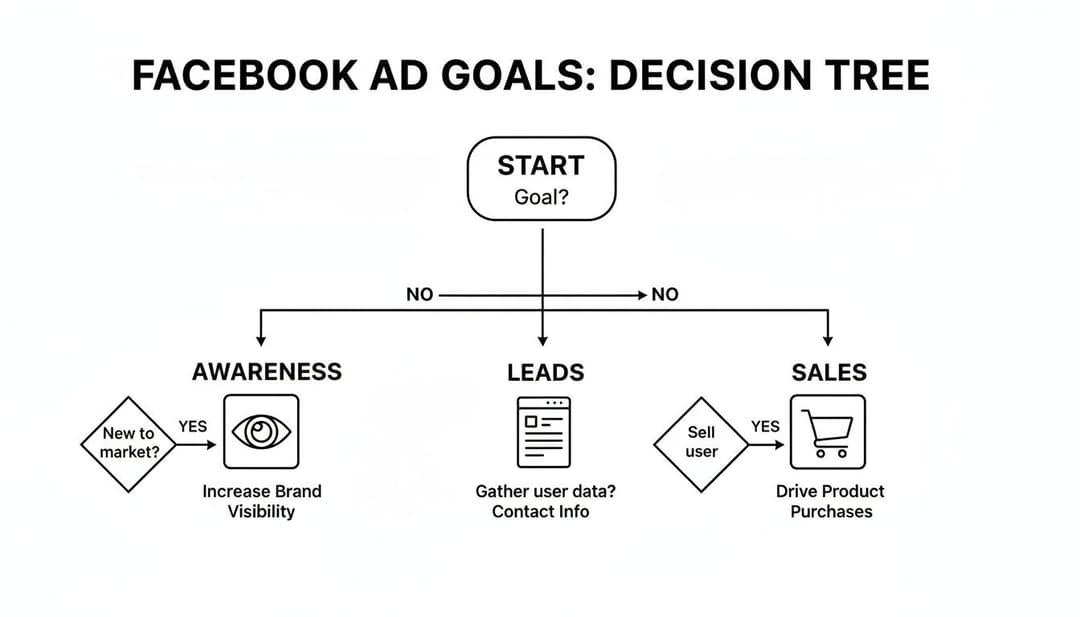
As you can see, every major goal branches out into specific campaign objectives and ad types designed to deliver on that outcome. To really master this, it helps to explore the objective of your campaign in more detail. This single choice dictates everything that follows.
Mastering Image and Video Ads
Alright, let's start with the absolute essentials. Image and video ads are the bread and butter of countless winning campaigns on Facebook. They’re the most common formats you'll see, and getting them right is the first, non-negotiable step to success.
Think of a single image ad as a digital billboard. Its one and only job is to stop someone dead in their scroll and land a clear message almost instantly. Their simplicity is precisely what makes them so powerful and versatile, especially for grabbing top-of-funnel attention or driving that first click to your website.
The Power of a Single Image
You don't need to tell your entire brand story with one static image. The real goal is to grab attention and earn the click. Since you only have a few seconds to make an impression, your creative has to be on point.
- High-Resolution Visuals: Always, always use sharp, professional-quality images. A blurry or pixelated ad just screams amateur hour and will get scrolled past without a second thought.
- Strategic Text Overlay: Keep text on the image itself minimal and bold. You want to highlight a key benefit or an irresistible offer, like an e-commerce brand plastering "50% Off Flash Sale" on a hero product shot.
- A Clear Focal Point: Your image needs a single, central subject that immediately draws the eye. Steer clear of cluttered, busy visuals that just confuse people.
For an image ad, success often boils down to its Click-Through Rate (CTR). A high CTR is your proof that the creative and messaging are strong enough to make someone act. Juggling all the different ad specs can be a headache, but our complete guide to Meta ad sizes makes it much easier.
Telling Stories with Video Ads
While images deliver a quick punch, video ads are where you get to tell a story. This format lets you actually demonstrate how a product works, feature glowing customer testimonials, or forge a much deeper emotional connection with your audience. The magic is in combining sound, motion, and a narrative to create a truly immersive experience.
And in recent years, one specific style of video has absolutely taken over.
In 2026, UGC-style videos have solidified as the dominant creative format across Facebook ad placements, driving ~29% higher conversion rates compared to polished studio content, according to benchmarks from leading ad intelligence tools. Short-form vertical videos (15-30 seconds) in 9:16 format for Reels and Stories outperform others, boasting the highest survival rates—ads over 60 seconds make up less than 10% of long-performers. You can discover more insights about these creative benchmarks on shortvids.co.
This data just confirms what experienced marketers already know: authenticity sells. People trust content that feels like it belongs in their feed, not like a slick TV commercial that interrupts it.
To get the most out of your video ads, you have to nail the hook in the first 3 seconds. Grab their attention immediately before they have a chance to swipe away. For placements like Stories and Reels, keep your videos under 30 seconds and always use a vertical 9:16 aspect ratio.
Measuring video success is a bit more nuanced than with static images. You’ll be looking at key metrics like view-through rate (VTR), average watch time, and, of course, the conversions or sales tied back to the ad. A high VTR is a great sign that your video is holding attention—the critical first step toward driving profitable action.
Once you’ve mastered static images and videos, it's time to explore the ad formats that truly mimic an interactive shopping trip. This is where Carousel and Collection ads come in. They go way beyond a single message, inviting people to browse, explore, and find what they love without ever having to leave the Facebook app.
Creating Interactive Shopping Experiences
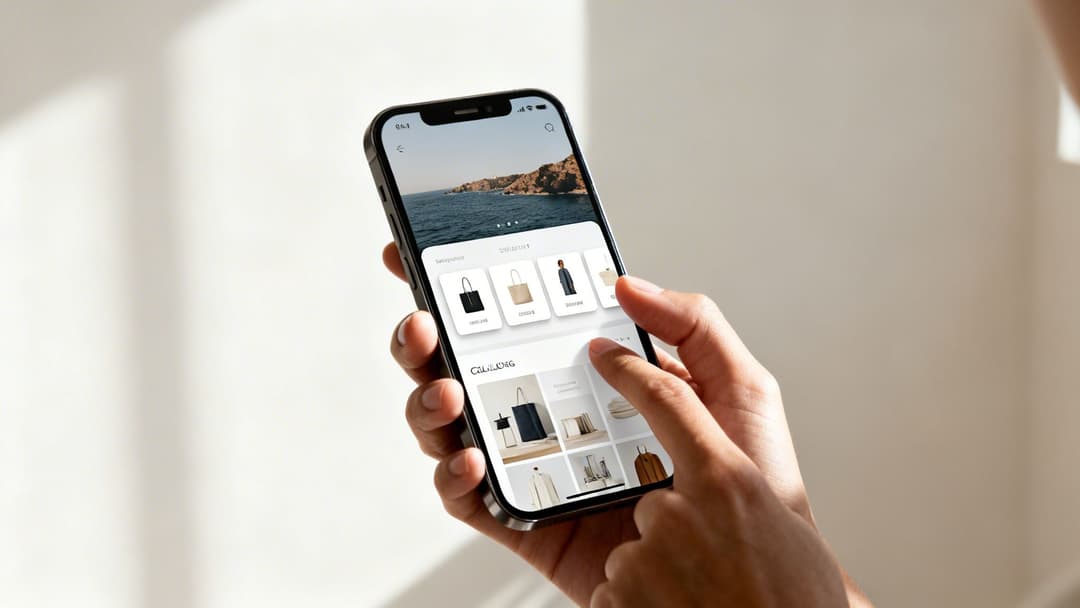
Think of a Carousel Ad as your own digital storefront window. You get a single, swipeable ad unit where you can feature up to ten different images or videos. Even better, each "card" gets its own headline, description, and link, giving you a ton of creative real estate.
This format is an absolute workhorse for showing off a range of products or walking a potential customer through a step-by-step story.
How to Use Carousel Ads to Drive Action
The real magic of a Carousel ad is its flexibility. It's not just for e-commerce. You can use it to break down a complicated service, spotlight different features, or tell a cohesive story. You're giving users the controls, which encourages them to swipe and engage with your brand on their own terms.
Here are a few ways different businesses can put them to work:
- E-commerce Brands: Show off an entire product line. A fashion retailer could feature different colors of the same shirt or style a complete outfit from head to toe across the cards.
- SaaS Companies: Build a mini-walkthrough of your software. Each card can highlight a different feature or explain a key benefit, making complex software feel simple.
- Service Providers: String together multiple customer testimonials or case studies. This builds a powerful dose of social proof within one compelling ad.
And the numbers back it up. Carousel link ads have been shown to deliver a 30-50% lower cost-per-conversion and a 20-30% lower cost-per-click compared to single-image ads. If you want to dive deeper, check out these Facebook ad statistics on uproas.io.
Pro Tip: Always check the box that lets Meta’s algorithm automatically optimize the order of your carousel cards. Facebook will analyze which card gets the most engagement and show it first, which can give your click-through rate a serious lift.
Building a Mini-Storefront with Collection Ads
Ready for the ultimate mobile shopping experience? Meet the Collection Ad. This format is a game-changer. It combines a main "hero" image or video with a grid of four smaller product images pulled directly from your catalog.
When someone taps the ad, it doesn't send them to a slow-loading website. Instead, it opens an Instant Experience—a gorgeous, full-screen, and lightning-fast storefront right inside the Facebook app.
This frictionless journey is precisely why Collection ads are a go-to for direct-to-consumer (DTC) brands obsessed with maximizing their Return on Ad Spend (ROAS). The user flows seamlessly from discovery to browsing to purchase, all without the frustrating wait times of an external site.
To get started with Collection ads, you’ll need to have a product catalog set up and linked to your Meta Business account. If you're new to this, our guide on setting up your Instagram Shop is a great place to start, since it uses the same catalog process. These ads are designed specifically for mobile and are conversion machines, built to turn casual scrollers into happy customers.
Generating Leads and Starting Conversations

Driving traffic and ringing up sales is fantastic, but some business goals are different. What happens when you need to build a client list, book appointments, or simply start a one-on-one dialogue? For that, you need ad formats built specifically to capture customer info and spark direct conversations.
These are the tools you pull out when the mission is to generate high-quality leads or nurture prospects personally.
The undisputed champion in this arena is the Lead Ad, often called an Instant Form. Think of it as the express lane for lead generation. Instead of kicking users over to a clunky landing page where they have to peck out their details, a Lead Ad pops up a form right inside the Facebook or Instagram app.
This is where it gets good. The form instantly pre-fills with the user's info pulled directly from their profile—name, email, phone number. You’re removing almost all the friction from the sign-up process, which is why these ads can absolutely slash your Cost Per Lead (CPL). They are a must-have for service businesses, B2B campaigns, and anyone looking to grow an email list without the usual drop-off.
Using Lead Ads to Balance Quality and Volume
Of course, whenever you make something this easy, the question of lead quality comes up. To get ahead of this, you can add custom qualifying questions directly into your Instant Form. For instance, a local gym booking tours could ask, "What is your primary fitness goal?" This simple step helps weed out casual clickers and filter for more serious prospects without making the form too burdensome.
Here's where they really shine:
- Service Businesses: A real estate agent can use Lead Ads to let users request a viewing for a specific property.
- B2B Companies: A SaaS firm can offer a high-value whitepaper in exchange for a work email and job title.
- Local Businesses: A car dealership can get potential buyers to request a test drive without ever leaving the app.
By pre-populating user data, Lead Ads eliminate the biggest hurdle in lead generation—manual data entry. This seamless experience is why they often outperform traditional landing page campaigns, especially on mobile where typing is a pain.
Turning Clicks into Conversations with Messenger Ads
Another incredibly powerful format for direct interaction is the Messenger Ad. These ads don't just ask for information; they invite users directly into a one-on-one chat with your business. This approach is perfect for providing instant customer support, nurturing warm leads who have questions, or re-engaging people who’ve shown interest before.
There are two main flavors you need to know:
- Click-to-Messenger Ads: These look and feel like standard feed ads, but the call-to-action button opens a direct conversation in Messenger. An online boutique, for example, could use this to offer a "personal shopper" experience through a guided chat.
- Sponsored Messages: This format allows you to send a promotional message directly to people who have already chatted with your business page. It’s a phenomenal tool for re-engagement, like sending a special offer to someone who asked about a product weeks ago.
When you combine these formats, you create a powerful system for both capturing and nurturing leads, all without ever leaving Meta's ecosystem. For a deeper tactical breakdown, you can learn more about how to set up effective lead gen ads in our detailed guide. These conversational and form-based ads are fundamental building blocks for so many successful campaigns.
Alright, once you've mastered the basic ad formats, it's time to explore the advanced options that can really move the needle on performance. These formats are designed to create more personal, immersive experiences for your audience. They might take a bit more effort to set up, but the payoff in deeper engagement and better returns is often well worth it.
First on the list is the undisputed king of e-commerce retargeting: Dynamic Ads. Think of this format as your own automated personal shopper working 24/7. Instead of you having to manually create an ad for every single item in your store, this ad type plugs directly into your product catalog.
From there, it works its magic, automatically showing hyper-relevant ads to people based on what they’ve already looked at on your website or app. Someone browsed a specific pair of blue running shoes but left without buying? A Dynamic Ad can pop up in their feed later, showing them that exact pair of shoes. This level of personalization is incredibly powerful and a non-negotiable for e-commerce, travel, and real estate brands with large inventories. They are the ultimate tool for turning window shoppers into paying customers.
Building Full-Screen Narratives
Next, we have Instant Experience ads, which you might remember by their old name, Canvas ads. This format is less of an ad and more of a mini-landing page that lives right inside the Facebook app. When someone taps your ad, instead of waiting for an external website to load, a full-screen, lightning-fast experience opens up immediately.
This is your playground for deep brand storytelling or detailed product showcases. Inside an Instant Experience, you can mix and match different elements to build a rich, interactive journey for your audience:
- Videos and images
- Product carousels
- Text blocks for in-depth descriptions
- Buttons with clear calls to action
Because they load almost instantly and keep the user inside the Facebook ecosystem, Instant Experiences slash the friction that leads to high bounce rates on mobile sites. They're perfect for brands looking to make a big impression and hold a user's attention.
The real advantage of advanced formats like Dynamic Ads and Instant Experiences is their ability to reduce friction. By automating personalization or eliminating slow load times, they create a smoother path from discovery to conversion, which has a direct impact on your bottom-line metrics like ROAS and CPA.
Exploring Next-Generation Ad Formats
Finally, let's look at the most innovative formats Meta has to offer. These use newer technology to create genuinely memorable and interactive moments that help you stand out from the crowd.
Playable Ads are a complete game-changer for mobile app and game developers. They give users a small, "try-before-you-buy" preview of the app experience, all within the ad unit itself. This interactive demo gives users a real taste of the gameplay or app functionality, which can significantly boost install rates.
Augmented Reality (AR) Ads take this interactivity to a whole new level. Using the camera on a person's phone, AR ads let them virtually "try on" products. A cosmetics brand can let users see how a new lipstick shade looks on them, or a furniture company can let someone see how a new sofa would fit in their living room.
Sure, these advanced Facebook ads types require a bit more technical work, like integrating a product catalog for Dynamic Ads or developing AR filters. However, their ability to deliver unique, personalized experiences makes them invaluable. To learn more about automating your retargeting efforts, you can explore our guide to dynamic advertising solutions.
How to Build a Winning Full-Funnel Ad Strategy
Knowing your ad formats is a great start, but the real magic happens when you weave them together into a full-funnel strategy. You can't just throw one type of ad at everyone and hope for the best. It’s like trying to get a total stranger to buy a car on the first handshake—it just doesn’t work that way.
Think of your customer’s path to purchase as a road trip. You wouldn’t use a quiet neighborhood street for the cross-country highway portion of the journey. In the same way, you don't use the same ad for someone who's never heard of your brand as you do for someone who abandoned their cart five minutes ago.
A smart ad strategy layers different formats to guide people from that first "hello" all the way to checkout.
Mapping Ad Formats to the Funnel
A winning full-funnel approach isn't about running isolated campaigns. It's about building a system where each ad format has a specific job and smoothly passes the baton to the next stage of the journey.
Here’s a classic example of how this plays out:
Top of Funnel (Awareness): You start with broad-reach Video ads to tell your brand story. Your goal here isn't a quick sale; it's about capturing attention from new, cold audiences and making a memorable first impression.
Middle of Funnel (Consideration): Next, you can retarget people who watched that video with an engaging Carousel ad. Now that they know who you are, you can show them specific products or dive into key features, nudging them to click and explore your offerings.
Bottom of Funnel (Conversion): Finally, you bring in the heavy hitters. For users who visited your site or added items to their cart, you can serve up highly-relevant Dynamic Ads. By showing them the exact products they just looked at, you’re giving them that final, personalized push to complete the purchase.
The big idea here is that no single ad format can do it all. Real success comes from a mix of creative diversity and data-driven sequencing. The goal is to find the perfect recipe of ad formats that moves your specific audience through their unique journey.
This layered approach helps ensure you’re always sending the right message at the right time. But figuring out that perfect combination isn't a matter of guesswork; it demands a serious commitment to testing and optimization.
The sheer volume of creative, copy, and audience combinations makes manual testing at scale practically impossible. This is where AI-powered automation becomes a total game-changer. It allows you to test hundreds of ad variations, analyze performance against your goals like ROAS or CPA, and find the insights you need to grow your campaigns faster than you ever could on your own.
Frequently Asked Questions
As you get your hands dirty with different Meta ad formats, some practical questions always pop up. We get it. When you’re trying to squeeze every drop of performance out of your ad spend, you want clear answers.
Here are the ones we hear most often from performance marketers in the trenches.
What Is the Best Facebook Ad Type for a Limited Budget?
When you're working with a tight budget, single Image ads are your best friend. They're the most cost-effective format to produce and test, period. Plus, their versatility means you can use them for almost any goal, from building awareness to driving sales.
The key to making a small budget work is to nail the fundamentals. Focus on a crystal-clear call-to-action and get laser-focused with your audience targeting. Once you land on a winning image and audience combo, you can start reinvesting those profits into a higher-production Video or a more complex Carousel ad.
How Many Ad Formats Should I Test at Once?
You don't need to test everything all at once. A great place to start is by testing 2-3 different formats that make sense for your campaign goal.
For example, if you're launching a new e-commerce product, you could pit a single Image ad against a short, scrappy UGC-style Video ad and a Carousel showing off different product features. This gives you enough variety to see what your audience actually responds to without stretching your budget too thin.
Should My Ad Format Change Based on the Placement?
Absolutely, and this is non-negotiable. You have to optimize your creative for the specific placement where it's going to run.
For placements like Stories and Reels, go with a vertical 9:16 aspect ratio. These are fast-paced environments, so your content needs to grab attention instantly. For the main Feed, a 1:1 or 4:5 ratio is perfect and gives you a bit more room to play with longer copy or more detailed videos.
Tailoring your creative to the placement is what makes an ad feel native and not like a jarring interruption. Ads that feel out of place get scrolled past instantly. The ones that blend in naturally are the ones that drive real performance and engagement.
Ready to launch, test, and scale your Meta campaigns without the manual guesswork? AdStellar AI helps you generate hundreds of ad variations in minutes, uses AI to find your top performers, and automates campaign creation so you can unlock more revenue with less effort. Discover how much faster you can grow at https://www.adstellar.ai.