If you're new to Instagram ads, the first question is always the same: "How much is this going to cost me?"
The short answer is you can expect to pay somewhere between $0.20 to $2.00 per click (CPC). If you’re paying for impressions, that range looks more like $2.00 to $15.00 per 1,000 views (CPM). Of course, these are just ballpark figures. The final price tag depends heavily on who you're targeting, your industry, and what you’re trying to achieve.
Decoding Your Instagram Advertising Cost
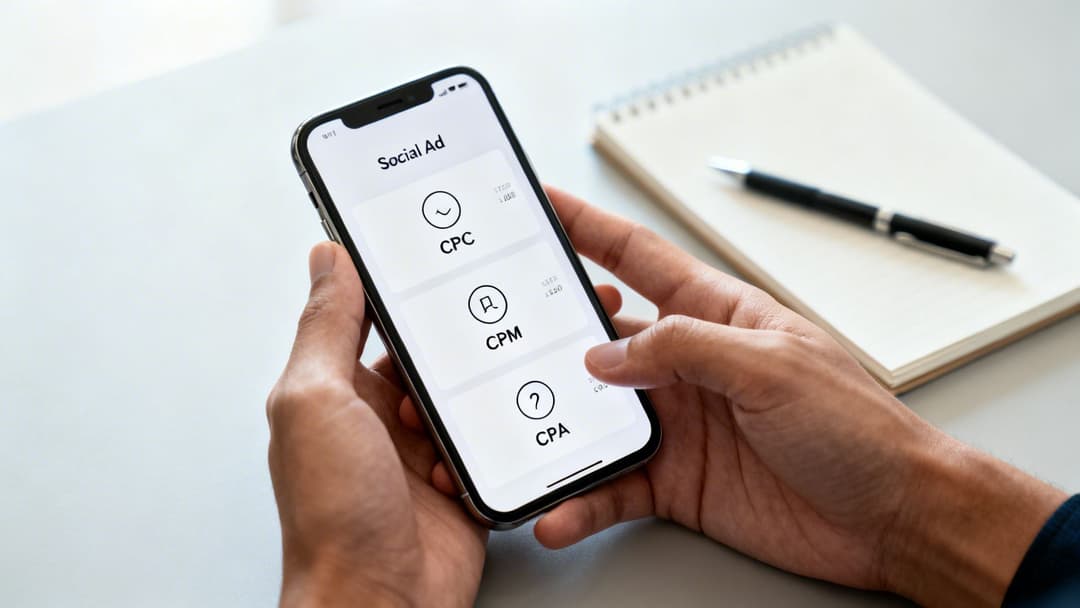
Figuring out your Instagram ad cost isn't about finding a single number on a price list. It's about understanding the language of the ad auction and knowing how your budget translates into real results.
Think of it like this: you could pay for a billboard on a busy highway, pay a promoter only when they get someone to walk into your store, or pay them only after a sale is made. Each model serves a totally different purpose, and Instagram gives you that same kind of flexibility.
The Core Pricing Models
The models you'll run into most often determine exactly how your ad dollars get spent. Each one is built for a different business goal, whether you want to get your name out there or drive direct sales.
Here's a quick look at the main ways you can structure your ad spend.
| Metric | Typical Cost Range | Best For (Campaign Goal) |
|---|---|---|
| Cost Per Mille (CPM) | $2.00 – $15.00 | Brand Awareness, Reach |
| Cost Per Click (CPC) | $0.20 – $2.00 | Website Traffic, Engagement |
| Cost Per Acquisition (CPA) | Varies widely | Leads, Sales, App Installs |
Let's break down what each of these really means for your campaigns.
- Cost Per Mille (CPM): "Mille" is just Latin for a thousand. With CPM, you’re paying a flat rate every time 1,000 people see your ad. This is your digital billboard—the goal is pure exposure and getting your brand in front of as many eyes as possible.
- Cost Per Click (CPC): This one’s simple: you only pay when someone actually clicks your ad. It’s the perfect model when your main goal is to drive people to your website, a product page, or a specific landing page.
- Cost Per Acquisition (CPA): Sometimes called Cost Per Conversion, this is where things get serious. You only pay when someone takes a specific, valuable action—like buying a product, signing up for your email list, or downloading your app. It's the most performance-focused model of the bunch.
Key Takeaway: Your campaign objective should always guide your choice of pricing model. If you just want eyeballs, CPM is your friend. If you need traffic, CPC is the way to go. And if you're all about sales and leads, CPA is where you'll measure your success.
The actual numbers can swing wildly. Recent data shows Instagram ad costs can go from $0.13 all the way up to $2.00 per click (CPC), mostly depending on how many other advertisers are trying to reach the same audience you are.
Similarly, CPM can range from $2.00 to $15.00, and the cost-per-engagement (CPE) often lands somewhere between a penny and $0.08.
Getting a handle on these concepts is the first step toward making strategic investments instead of just spending money. If you want to dig a little deeper into what makes a "good" price, our guide on what is a good cost per click is a great place to start.
The 5 Key Factors Driving Your Ad Spend
Ever stare at your ad reports and wonder why one campaign is getting clicks for pennies while another seems to be eating your budget for breakfast? It's not random. Your Instagram ad cost is decided in a massive, real-time auction, and a handful of key factors determine how much you'll need to bid to win that precious screen time.
Getting a handle on these variables is the first real step to mastering your ad spend. Instead of just throwing more money at a campaign, you can start pulling the right levers to boost your efficiency and get a much better return.
1. Your Target Audience
Who you’re trying to reach is probably the single biggest factor driving your costs. Think of it like real estate—a billboard in a quiet small town is a whole lot cheaper than a digital screen in Times Square. The same exact logic applies to Instagram audiences.
If you target a massive, general audience, you can often reach them for a lower cost per person (a lower CPM). But what if you need to reach someone very specific? A high-value audience—say, "CEOs in the tech industry who recently visited a competitor's website"—is a much smaller, more competitive group. A lot of advertisers are fighting for their attention, and that bidding war drives the auction price way up.
Targeting a narrow, high-value audience is like fishing in an exclusive, well-stocked pond. It costs more to get in, but the potential catch is far greater.
2. Ad Placement and Format
Not all ad spots are created equal. Where your ad shows up on Instagram directly impacts what you pay. Placements with tons of visibility and engagement, like the main Instagram Feed and Stories, are usually the most competitive and, you guessed it, more expensive.
On the flip side, you can sometimes find a bargain in newer or less crowded spots, like the Explore page or Reels. The format of your ad plays a role, too. A simple image ad will have a different cost structure than an interactive poll ad or a video that requires more of a user's attention.
3. Seasonality and Competition
The ad auction is a live marketplace, and just like the stock market, prices swing based on demand. Certain times of the year get incredibly competitive, causing a surge in advertising costs for pretty much everyone.
Think about the big shopping holidays and events:
- Black Friday/Cyber Monday: Competition goes through the roof as every retailer on the planet battles for eyeballs.
- Valentine's Day: Costs climb for anyone in industries like jewelry, restaurants, and gifts.
- Back-to-School Season: Bids go up as retailers target parents and students getting ready for the new year.
During these peak times, you should fully expect your CPM and CPC to climb as more advertisers jump into the auction.
4. Ad Quality and Relevance
Here’s something most people don’t realize: Instagram wants its users to have a good experience. That means they prefer showing people ads they actually find interesting or useful. The platform rewards advertisers who create high-quality, engaging content with a better Ad Relevance Score.
This score is basically Meta's prediction of how well your ad will land with your target audience. A higher score can actually lead to lower costs and better delivery from the algorithm. But if your ad gets negative feedback (like people hiding it or reporting it), Instagram might penalize you with higher costs or even limit your reach. Nailing your targeting is key here, which is why tracking user behavior is so important. To learn more, check out our guide on the Facebook Pixel and how it works.
5. Your Bidding Strategy
Finally, the instructions you give Instagram for spending your money play a huge part. Your bidding strategy tells the algorithm what it should prioritize.
- Highest Volume (Lowest Cost): This approach tries to get you the most results possible within your budget. It’s great for scaling, but your cost per result can bounce around a lot.
- Cost Per Result Goal: Here, you set an average cost you’re willing to pay for each result. This gives you more stable, predictable costs, but it might limit your reach if your goal is set too low for the auction to win placements.
Picking the right strategy really comes down to your campaign goals. Are you trying to reach as many people as possible, or do you need predictable costs to maintain profitability?
Setting Realistic Cost Benchmarks for Your Industry
Your Instagram advertising cost doesn't exist in a vacuum. Think of your industry as its own unique marketplace—some are quiet and easy to navigate, while others are crowded and fiercely competitive. This environment has a massive impact on what you'll end up paying for clicks and impressions.
For instance, a luxury fashion brand chasing high-income shoppers will almost always pay a higher CPC than a local coffee shop targeting folks in the neighborhood. Why? The potential lifetime value of that luxury customer is enormous, so dozens of brands are willing to bid aggressively to get their attention. That intense competition naturally drives up the auction price.
This is where the interplay between targeting, placement, and ad quality comes into sharp focus.
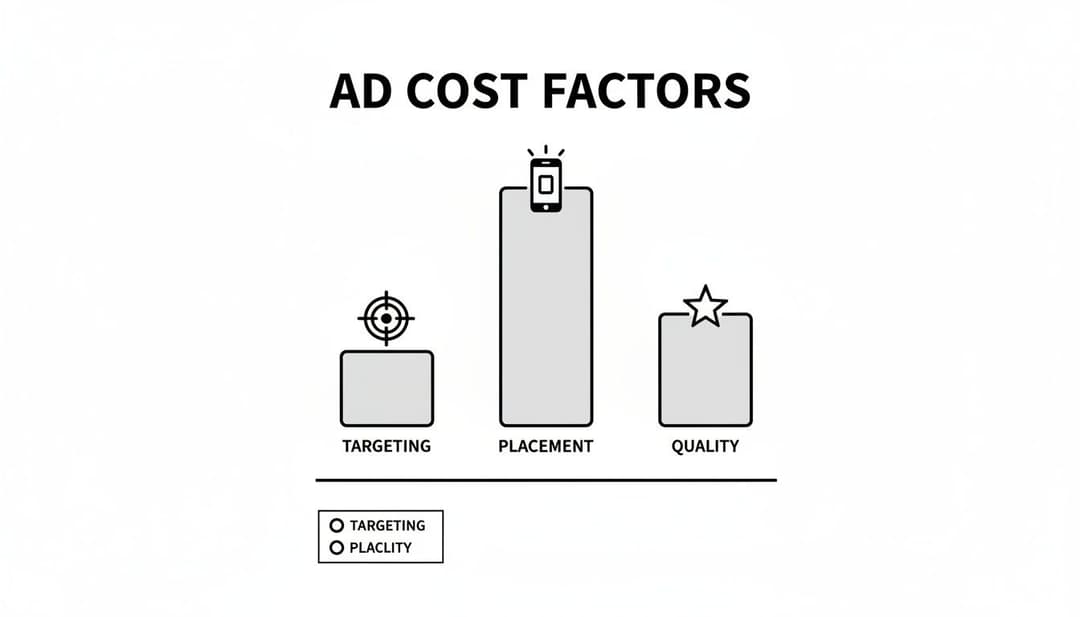
As you can see, your targeting and placement choices are huge cost drivers. The good news? A high-quality, relevant ad can help you punch above your weight and keep those costs in check, even in a competitive space.
Comparing Costs Across Different Sectors
Knowing where your business fits in is the key to setting a realistic budget. It lets you measure your performance against the right benchmarks, not just some generic, meaningless average.
Here’s a rough breakdown:
- E-commerce and DTC Brands: Welcome to the big leagues. This is one of the most competitive spaces on Instagram, so expect higher CPCs. The path from click to purchase is incredibly short and direct, making every single click extremely valuable.
- B2B and SaaS: The audience here is far more niche and professional. While you might pay more per click, the potential payoff from a single qualified lead is huge, which easily justifies the higher cost. These campaigns are usually all about lead generation, not instant sales. If you're new to this, we have a guide that breaks down what cost per lead actually means.
- Health and Wellness: This industry is a mixed bag. It balances broad awareness campaigns with super-specific niche targeting (think yoga enthusiasts or marathon runners). Costs can swing wildly depending on how granular you get, with broader campaigns typically landing on the lower end of the CPC spectrum.
How Your Campaign Goal Shapes Your Spend
The final piece of this puzzle is what you're actually trying to achieve. An ad built for brand awareness (optimized for CPM) will have a completely different cost structure than one designed for direct sales (optimized for CPA). It's like comparing apples to oranges.
When it comes to cost-per-acquisition (CPA) goals, DTC and e-commerce brands should brace for costs between $10 and $75 per acquisition. This wide range depends on everything from your product category to how slick your sales funnel is.
It’s also important to remember that seasonality plays a huge role. Instagram advertising costs can fluctuate by as much as 35–40% throughout the year simply due to more brands bidding during peak seasons like holidays.
Key Takeaway: Stop comparing your lead generation CPC to an e-commerce brand's sales CPC. Your industry, your audience's value, and your specific goal create a totally unique pricing environment for your ads. A "good" cost is always relative to your business objectives and the return you're getting.
How to Budget for Instagram Ads That Actually Work
Knowing what goes into your Instagram ad costs is one piece of the puzzle. The other, much bigger piece, is building a budget that actually drives growth. It’s tempting to just pick a round number that feels right and hope for the best, but that's a recipe for wasted spend. A truly effective budget isn't guesswork; it's a strategic calculation rooted in your business goals.
Think of it like planning a road trip. You wouldn't just jump in the car and start driving aimlessly. You'd figure out your destination (your goal), estimate how much gas you'll need (your budget), and map out the best route to get there (your strategy). Your Instagram ad budget needs that same level of intention, starting with the end goal in mind.
Calculating Your Starting Budget
The most powerful way to set a starting budget is to work backward from what you want to achieve. This approach immediately connects your ad spend to real-world business outcomes, like getting a new customer or a qualified lead. It makes sure every dollar you put to work has a clear job to do.
Here's a simple framework to figure out your initial test budget:
- Define Your Target CPA: First, you need to know the absolute maximum you can afford to pay for one conversion (a sale, a signup, you name it) and still be profitable. Let's say your target Cost Per Acquisition (CPA) is $25.
- Set a Conversion Goal: Next, decide how many conversions you want to get from this initial campaign. To get enough data to make smart decisions later, you should aim for at least 50-100 conversions. For our example, let's shoot for 60 conversions.
- Calculate Your Budget: Now, just multiply your target CPA by your conversion goal. In this case: $25 (Target CPA) x 60 (Conversions) = $1,500. That’s your data-driven starting budget.
This simple calculation transforms your budget from an expense into an investment. You're not just "spending $1,500" anymore. You're investing $1,500 with the specific goal of acquiring 60 new customers.
It also helps to know what others are spending. As a benchmark, small businesses often allocate anywhere from $500 to $5,000 per month for their campaigns. Looking at the bigger picture, companies typically dedicate 11–20% of their total digital marketing budget to Instagram ads alone. You can discover more insights on 2025 ad costs to see how your numbers stack up.
Leveraging Campaign Budget Optimization
Once you have a budget, you have to spend it wisely. Meta’s Campaign Budget Optimization (CBO) is a fantastic tool that automatically pushes your budget to the best-performing ad sets in real time.
Instead of you manually splitting your budget between different audiences or creatives, CBO acts like a smart portfolio manager for your ads. It constantly analyzes performance and shifts funds toward the ads that are actually getting you results, maximizing your return without you having to constantly check in. It’s especially powerful when you’re testing multiple audiences and want to let the algorithm find the winners for you.
Getting your budget right is a foundational skill. For a much deeper dive into planning your spend, check out our guide on strategic marketing budget allocation.
Proven Strategies to Lower Your Instagram Ad Costs
Knowing what drives your Instagram advertising cost is one thing. Actively pulling the right levers to bring it down is where the magic happens. Smart optimization isn't about pinching pennies or slashing your budget—it's about making every dollar work harder for you.
Think of your ad campaign like a high-performance engine. You can't just set it and forget it; it needs constant tuning to get the best mileage. By focusing on a few key areas, you can methodically cut out the waste and seriously boost your return on ad spend (ROAS).
Improve Your Ad Relevance Score
Instagram rewards ads that people actually like seeing. It’s that simple. The algorithm assigns an Ad Relevance Score to your creative, which is basically its prediction of how well your ad will land with your target audience. A higher score tells Instagram your ad is a good fit, and in return, you often get preferential treatment and a lower cost to run it.
The quickest way to boost this score? Create content that doesn't feel like an ad. Your creative should blend seamlessly into a user's feed. For instance, studies have shown that images on Instagram can get 23% more engagement than when they're posted on Facebook, which really drives home just how visual and native the platform is.
Systematically A/B Test Everything
Guesswork is the most expensive mistake you can make in advertising. Instead of just thinking you know what will work, you need to be testing constantly. This data-first approach takes the emotion out of the equation and lets the numbers tell you what your audience truly wants.
The key is to isolate one variable at a time so you get clean, usable results. Start with the big stuff:
- Audiences: Test a broad lookalike audience against a super-niche interest-based one.
- Creative: Pit a raw, user-generated video against a slick, polished graphic from your design team.
- Copy & Headlines: Does a short, punchy headline work better than a longer, more descriptive one? Test it.
- Calls-to-Action (CTAs): See if "Shop Now" drives more conversions for your product than "Learn More."
This process uncovers hidden pockets of efficiency you’d never find otherwise, allowing you to shift your budget to the ads that are actually delivering.
Key Takeaway: A/B testing is your single most powerful tool for cost control. Even tiny improvements in your click-through rate (CTR) or conversion rate can have a massive impact on your final cost per acquisition.
Master Retargeting and Ad Scheduling
Not all audiences are created equal. Someone who’s never heard of your brand is a much harder sell than someone who just visited your website and added a product to their cart. This is exactly what retargeting is for.
By building custom audiences of these "warm" users, you can serve them hyper-relevant ads designed to nudge them over the finish line. These campaigns almost always have a much lower CPA because you're talking to people who are already familiar with and interested in what you offer.
On top of who you're targeting, you need to think about when. If your analytics show that your audience is most active and buying on weekday evenings, use ad scheduling to focus your spend during those peak hours. Why waste money running ads at 3 a.m. if no one is there to see them?
Of course, managing all of this—testing hundreds of creative variations, analyzing results, and shifting budgets on the fly—is a massive amount of work. This is where AI-powered automation platforms like AdStellar completely change the game. They can run through these optimization cycles at a scale and speed no human could ever match, giving you a serious advantage in the ad auction.
Using AI to Master Your Instagram Ad Spend
Let's be honest, manually optimizing your Instagram advertising cost can feel like a constant battle. You're up against a mountain of data, and while A/B testing and audience tweaks are crucial, they're slow. You’re limited by how much one person (or even a small team) can realistically analyze. This is where AI flips the script, shifting your strategy from simply reacting to predicting what works next.
Think of an AI platform as your own dedicated team of data scientists, working around the clock. They don't just automate the boring stuff; they dig through performance data at a scale no human ever could. This means they can spot the winning combinations of creative, copy, and audiences in a tiny fraction of the time.
This speed is a game-changer. It dramatically cuts down that expensive "learning phase" every campaign goes through—the part where you're essentially paying to figure out what resonates. AI can bypass much of that by recognizing patterns and scaling the high-performers almost instantly, making sure your budget goes straight to what's actually driving results.
Moving From Automation to Insight
But the real magic of AI isn't just about doing things faster; it's about doing them smarter. These platforms deliver insights backed by hard data, empowering you to make genuinely better strategic decisions. Instead of just guessing which ad creative is the best, the system shows you exactly which elements are consistently pushing your CPA down.
AI isn't just a tool; it's a strategic partner. It translates messy performance data into clear, actionable advice, taking the guesswork out of where to put your money and what creative to push.
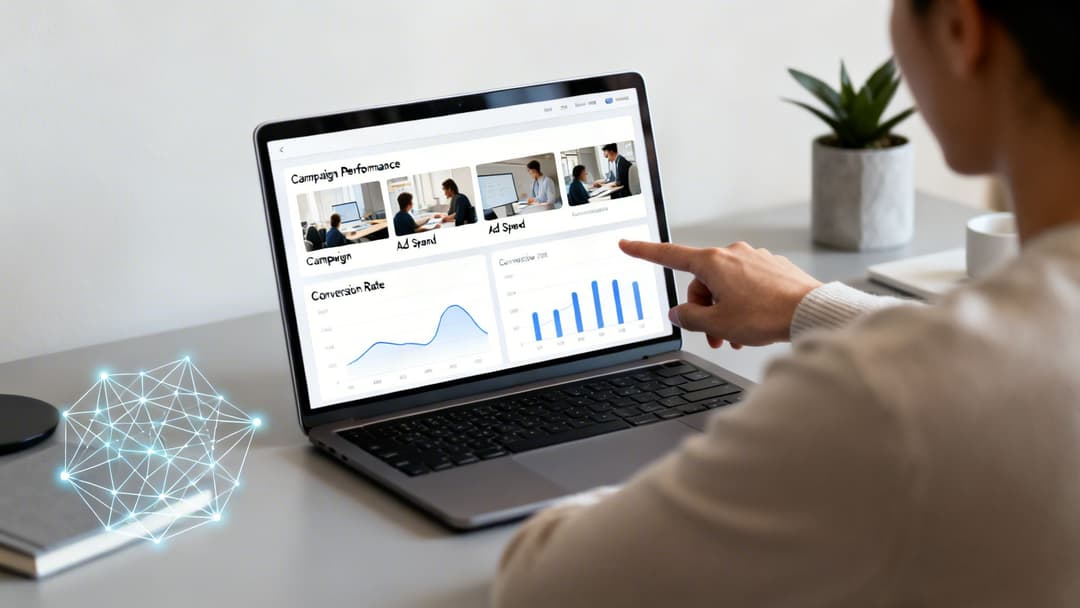
Imagine a dashboard, like those from platforms such as AdStellar, that cuts through the noise and visualizes performance data in a way that just makes sense.
The biggest takeaway from a tool like this is clarity. It instantly highlights your top-performing ads and audiences. This allows you to double down on what’s working and, just as importantly, cut the dead weight from your budget immediately. It creates a continuous learning loop, ensuring your Instagram ad costs are always being pushed toward maximum efficiency and a better return on ad spend (ROAS).
By bringing these tools into your workflow, you stop just managing costs and start truly mastering your ad spend. And if you're running campaigns on Facebook too, you can see how to apply the same thinking in our guide on using AI for Facebook Ads.
Got Questions About Ad Costs? You're Not Alone.
When you're trying to nail down Instagram ad costs, a few questions always seem to pop up.## Got Questions About Ad Costs? You're Not Alone.
When you're trying to nail down Instagram ad costs, a few questions always seem to pop up. Getting some straight answers can make all the difference in setting a smart budget and knowing what success actually looks like.
What Is a Good CPM for Instagram Ads?
Ah, the million-dollar question. The honest answer? "Good" is completely relative. While you’ll see industry benchmarks floating around the $2.00 to $15.00 mark, that range doesn't tell the whole story.
Think about it this way: a high-end fashion brand might be thrilled with a $20 CPM because they’re reaching buyers ready to drop serious cash. On the flip side, a mobile game trying to get mass downloads would probably aim for a CPM under $5.00.
A "good" CPM isn't just a low number. It's the price you pay to get in front of the right people, leading to a profitable return on your ad spend (ROAS). That’s the only number that really matters.
How Much Should a Small Business Spend on Instagram Ads?
If you’re just getting your feet wet, don't feel like you need to mortgage the house. The goal for a small business is to start with a test budget—enough to gather meaningful data without breaking the bank.
A great starting point is somewhere between $500 and $1,500 per month. This gives you enough runway to test different audiences, experiment with a few ad creatives, and see what works. After a few weeks, you'll have real performance data (like your actual CPC and conversion rates) to decide whether to scale up, tweak your strategy, or pull back.
Can I Really Run Instagram Ads for $5 a Day?
Technically, yes, you can. But it’s critical to understand what that $5 a day can—and can't—do for you.
A micro-budget like this is a precision tool, not a sledgehammer. It's best for tiny, highly specific goals, such as:
- Hyper-local targeting: Promoting a happy hour special to people within a one-mile radius of your cafe.
- Retargeting a tiny audience: Showing an ad to the handful of people who visited your checkout page in the last 24 hours.
- Boosting a single post: Getting a little more visibility on an important announcement to your existing followers.
With such a small daily spend, you won't be gathering data quickly or reaching thousands of new customers. Think of it as a tool for surgical strikes, not for winning a war.
Ready to stop guessing and start scaling? AdStellar AI launches, tests, and optimizes your Meta ad campaigns 10x faster. Automate your ad creation and unlock data-backed insights today at AdStellar AI.