In paid social, impressions are the lifeblood of your campaigns. Before you can get a click, a lead, or a sale, someone has to actually see your ad. That’s an impression. Think of it as the total number of times your ad has been served up on a screen.
What Are Social Media Impressions in Paid Advertising?
Before we can even talk about clicks and conversions, we have to start with the most basic unit of advertising visibility: the impression. For a great deep-dive, you can check out this guide on what social media impressions are and how they work across different platforms.
Let’s use an analogy. Imagine your ad is a digital billboard on a busy highway. An impression is counted every time a car drives past it. It doesn’t matter if it’s the same person driving past 10 times on their daily commute—that’s 10 impressions.
This concept is simple enough, but it's often confused with two other critical metrics: reach and engagement. Getting these straight is key to understanding what your data is actually telling you.
- Reach is the number of unique cars that drove past. So, that one person driving by 10 times counts as 10 impressions, but a reach of just 1.
- Engagement is when a driver actually slows down, reads your billboard, and maybe even takes the exit you recommended. In the social media world, this means likes, comments, shares, and clicks.
Impressions vs Reach vs Engagement at a Glance
To make this crystal clear, let's break down these three core metrics side-by-side. Each one tells a different part of your campaign's story.
| Metric | What It Measures | Analogy | Primary Use Case |
|---|---|---|---|
| Impressions | Total number of times an ad is displayed | The total number of times a billboard is seen by passing cars | Measuring overall ad visibility and frequency |
| Reach | Total number of unique people who see an ad | The number of unique cars that see the billboard | Understanding the size of your unique audience |
| Engagement | Total number of interactions with an ad | The number of people who act on the billboard's message | Gauging audience interest and ad relevance |
Understanding these distinctions is essential. Each metric answers a different question about your campaign's performance, helping you pinpoint exactly what’s working and what isn’t.
The Real Role of Impressions in Campaign Strategy
This isn't just marketing jargon; it directly shapes how you run your campaigns. Your impression count determines your ad frequency—the average number of times one person sees your ad. If your frequency is too high, you risk annoying your audience with ad fatigue. Too low, and your message might never cut through the noise.
An impression is the raw material of a successful ad campaign. While it doesn't guarantee a conversion, no conversion can happen without it. It's the first and most critical step in the customer journey.
The graphic below perfectly illustrates how these metrics relate to each other.
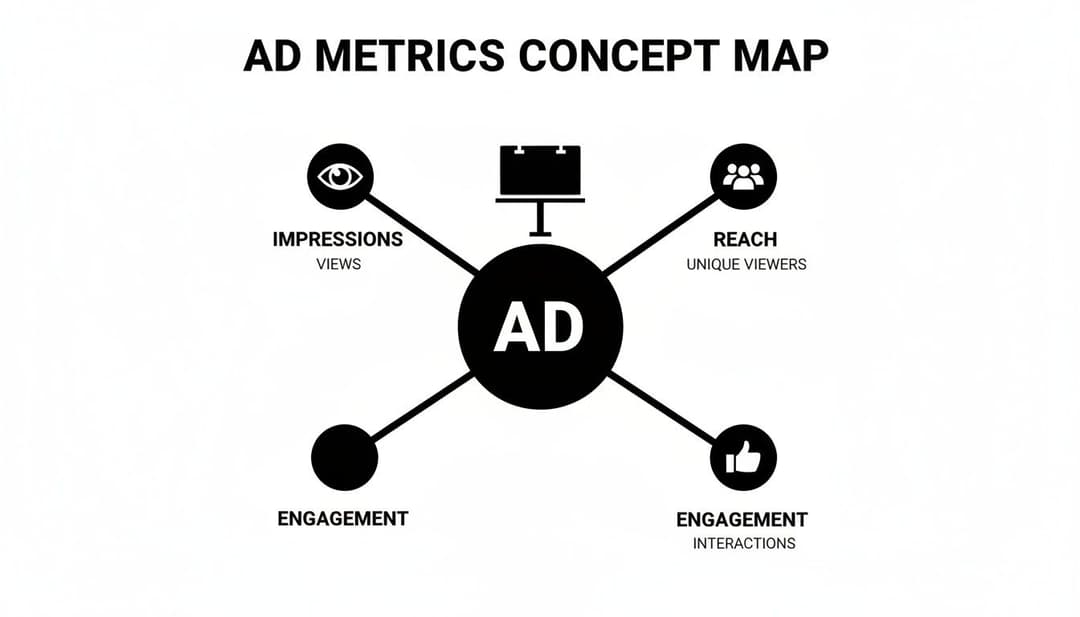
As you can see, impressions are the broadest measure of visibility. From there, reach narrows it down to the unique audience size, and engagement captures the active response from that group.
Measuring the Cost of Visibility
Ultimately, advertisers are paying for these eyeballs. The standard metric for this is CPM, or Cost Per Mille (which is just Latin for a thousand). CPM tells you exactly how much you’re spending to get your ad in front of users 1,000 times. Knowing the typical cost per impression rates helps you set realistic budgets and benchmarks.
But modern ad platforms are getting smarter. It’s no longer just about racking up views. The real goal is to deliver quality impressions—showing the right ad to the right person at the right time. That's how you turn a simple view into meaningful action and, ultimately, a better return on your ad spend.
How Social Media Platforms Count Impressions
So, what really counts as a social media impression? It’s not just any time your ad flashes on a screen. Every platform has its own technical rulebook for what qualifies as a "view," and getting a handle on these details is key to analyzing your campaigns correctly.
Put simply, an ad has to be successfully "served" to a user's device and then meet specific viewability criteria before it officially gets tallied in your impression count. It's not a trivial detail—it's the very foundation of fair measurement.
Think of it this way: you wouldn’t count a highway billboard as "seen" if you drove past it at midnight with all its lights off. Social media platforms have the same kind of standards to make sure you're only paying for ads that genuinely had a chance to be seen.

The Official Standard for Viewability
Most of the major players, including Meta (Facebook and Instagram), follow guidelines from the Media Rating Council (MRC). This is the organization that helps create a level playing field for how digital ads are measured.
Here’s the generally accepted standard for a viewable display ad impression:
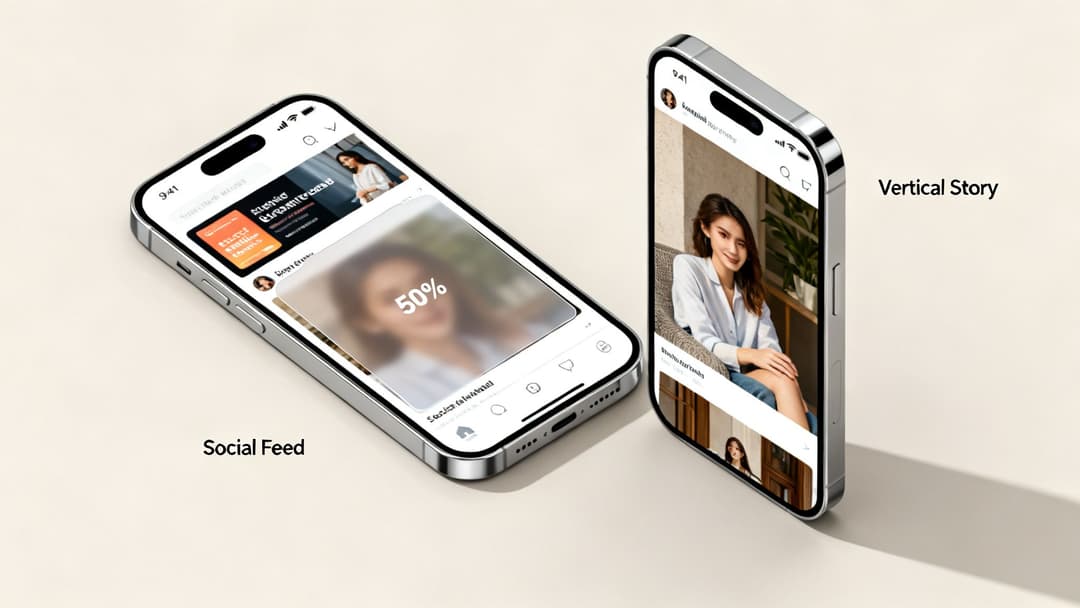
- Pixel Requirement: At least 50% of the ad's pixels have to be on the user's screen.
- Time Requirement: Those pixels need to be visible for at least one continuous second.
For video ads, the rules are a bit stricter. The standard is usually 50% of the ad in view for at least two continuous seconds. Anything less, like someone swiping past your ad in a blur, just doesn't make the cut.
An impression isn't just about an ad being sent to a device; it’s about that ad actually appearing on the screen long enough for a person to have a real opportunity to see it. This is the crucial difference between delivery and viewability.
Why Placement Determines Impression Value
Understanding these technical rules helps explain a fundamental truth: not all impressions are created equal. Where your ad shows up has a massive effect on its potential impact and, by extension, what it costs you. For a closer look at how this plays out, check out our guide that breaks down what impressions on Instagram mean across different formats.
Just think about these two common placements:
- Instagram Feed: People tend to scroll through their Feed at a relaxed pace. An in-feed ad has a great shot at meeting that one-second viewability rule as users pause to check out content from accounts they follow. The impression quality here is typically pretty high.
- Instagram Stories: This format is all about speed and immersion. Ads pop up full-screen between Stories, but viewers can tap right through them in a fraction of a second. Even though the ad takes up more real estate, the viewing time can be incredibly short, leading to lower-quality impressions if your creative doesn’t grab them instantly.
This is exactly why your placement strategy is so important. Choosing spots like the Facebook Feed or Instagram Explore page often results in more deliberate views than you'd get in faster formats. This directly influences the quality of your social media impressions and what you pay for them, which is measured by your CPM (Cost Per 1,000 Impressions). If you misread this data, you could end up wasting your ad budget on placements that don’t actually help you reach your goals.
What Your Impression Data Is Really Telling You
It’s easy to look at impressions as just another number on a dashboard—a simple tally of how many times your ad was seen. But that’s a surface-level view. In reality, your impression data is the pulse of your paid social campaign. It’s a running story that tells you exactly what’s happening behind the scenes, and every spike, dip, or flatline is a clue.
Learning to read this story is what separates reactive marketers from proactive ones. A sudden change in your social media impressions is often the canary in the coal mine, signaling a fundamental shift in audience behavior, ad relevance, or even the competitive auction.
Instead of just reporting the number, the real goal is to ask why. Why did impressions suddenly double? Why are they stagnant even though you just bumped up the budget? The answers are where you’ll find the biggest performance wins.
Using Impressions to Diagnose Campaign Health
To get the full picture, you have to look at impressions in context. By itself, the number is pretty meaningless. It’s the relationship between impressions and your other core metrics—like click-through rate (CTR), cost per click (CPC), and cost per acquisition (CPA)—that tells you what’s actually going on.
Let’s walk through a few common scenarios and what they’re trying to tell you.
Scenario 1: High Impressions, But Low CTR This is a classic case of a relevance gap. The platform is doing its job and getting your ad in front of a ton of people, but the ad itself just isn't connecting enough to earn a click.
- What's likely happening: Your creative is probably suffering from ad fatigue. The audience has seen it too many times, and now they’re just scrolling right past it.
- What to do next: Time for a refresh. Get in there and test new visuals, different copy, or a completely new ad format to grab their attention again.
Scenario 2: Impressions Suddenly Tank If your ad delivery just grinds to a halt, it almost always points to an issue with your audience or your bid. The platform is essentially telling you it can't find people to show your ad to within the rules you've set.
- What's likely happening: You might have hit audience saturation, which is common with smaller, niche targeting. Pretty much everyone who was going to see your ad has.
- What to do next: Broaden your horizons. Try expanding your targeting with lookalike audiences or building out new interest-based segments to find fresh pockets of users.
Reading Between the Lines of Cost and Efficiency
Beyond just getting clicks, the cost of those impressions adds another critical diagnostic layer. Your Cost Per Mille (CPM), or the cost for every 1,000 impressions, is a direct measure of how expensive your ad inventory is. When that number moves, it’s a sign that something important is changing in the ad auction. You can dig deeper into how these numbers connect by exploring different performance marketing metrics.
A rising CPM isn't automatically a red flag. If it comes with a lower CPA, that’s a trade-off you should take all day. Paying more to reach a higher-quality audience that actually converts is smart business. The trick is to analyze these metrics together, never in isolation.
Let's look at one more scenario that ties directly into your campaign's financial health.
Scenario 3: Your CPM Is Skyrocketing When your CPM starts climbing, you're paying more to get in front of the same number of people. If you don't get it under control, this can absolutely torpedo your return on ad spend (ROAS).
- What's likely happening: This could be driven by increased competition in the auction (think Black Friday) or the platform flagging your ad for low relevance or poor engagement scores.
- What to do next: First, check your ad’s relevance diagnostics if the platform provides them. From there, see if your bid strategy is too aggressive or if you can improve your creative quality to earn cheaper, higher-quality impressions.
Tactics for Boosting High-Quality Impressions
Anyone can buy social media impressions. That’s the easy part. The real challenge—and where the money is made—is earning high-quality views that actually pave the way for conversions. Just throwing money at visibility won't cut it anymore; you need to win over the algorithm. And that takes a sharp, data-backed approach to the levers that control how, where, and why your ads show up.
The game has completely changed. We're seeing a massive shift toward algorithmic discovery on social platforms, which means your follower count is no longer the main driver of who sees your content. On TikTok, for example, For You Page impressions shot up from 31% to a staggering 58% in just two years. Instagram saw a similar explosion, with non-follower views jumping from 30% to 49% in a single year—that's a 63% spike in impressions hitting brand new audiences.
These numbers don't lie. High-quality, genuinely engaging content is now the master key to unlocking massive algorithmic reach. You can dive deeper into the numbers by reading the full research on social discovery trends.
Refine Your Ad Creative
Your ad creative is the single most powerful factor in earning quality impressions. A thumb-stopping visual doesn't just catch a user's eye; it sends a powerful signal to the algorithm that your content is valuable, which means you get broader, more cost-effective distribution.
- Test Diverse Formats: Don't get stuck in a creative rut. You should constantly be pitting different styles against each other. Test authentic, user-generated content (UGC) against polished, studio-shot assets. See if static images outperform short-form videos or carousels. The goal is to find what truly captures attention.
- Focus on the First 3 Seconds: Attention spans are microscopic. The opening of your video ad is everything. Use bold text overlays, quick cuts, and a crystal-clear hook to communicate your value before someone can even think about swiping away.
Sharpen Your Audience Targeting
Showing the perfect ad to the wrong person is the fastest way to burn through your budget and rack up low-quality impressions. Precision targeting ensures your message lands with people who will actually find it relevant, which naturally boosts engagement signals and brings down your costs.
- Move Beyond Basic Demographics: Age and location are just the starting point. The real magic happens with behavior- and interest-based targeting. Layer in specific interests, recent purchase behaviors, and website visitor data to build hyper-relevant audience segments.
- Leverage Lookalike Audiences: Take a list of your best customers or leads, upload it, and let Meta’s algorithm go to work finding users with similar traits. This is easily one of the most effective ways to scale your campaigns and discover new pockets of high-intent users.
Quality impressions are a direct result of relevance. The more aligned your creative is with your audience's interests and needs, the more favorably the algorithm will treat your ad, leading to better placements and lower CPMs.
Optimize Your Bidding Strategy
Your bid strategy is you telling the platform exactly how to spend your money to hit your campaign goal. Picking the right one is critical for keeping costs in check and ensuring you get stable impression delivery. The wrong strategy can lead to chaotic spending and dismal performance.
For more advanced tactics, some marketers gather competitive intelligence by using tools and methods like proxies for web scraping data collection to see what’s resonating with audiences in real-time. This can give you a serious edge.
- Lowest Cost (Highest Volume): This strategy tells the algorithm to get you the most results or impressions possible for your budget. It's fantastic for maximizing reach, but it can sometimes chase lower-quality placements because it's always hunting for the cheapest opportunities.
- Cost Cap: This option gives you more control, letting you set a maximum average cost you’re willing to pay per result. It's a great way to protect your CPA and maintain profitability, though it might limit your impression volume if your cap is set too low.
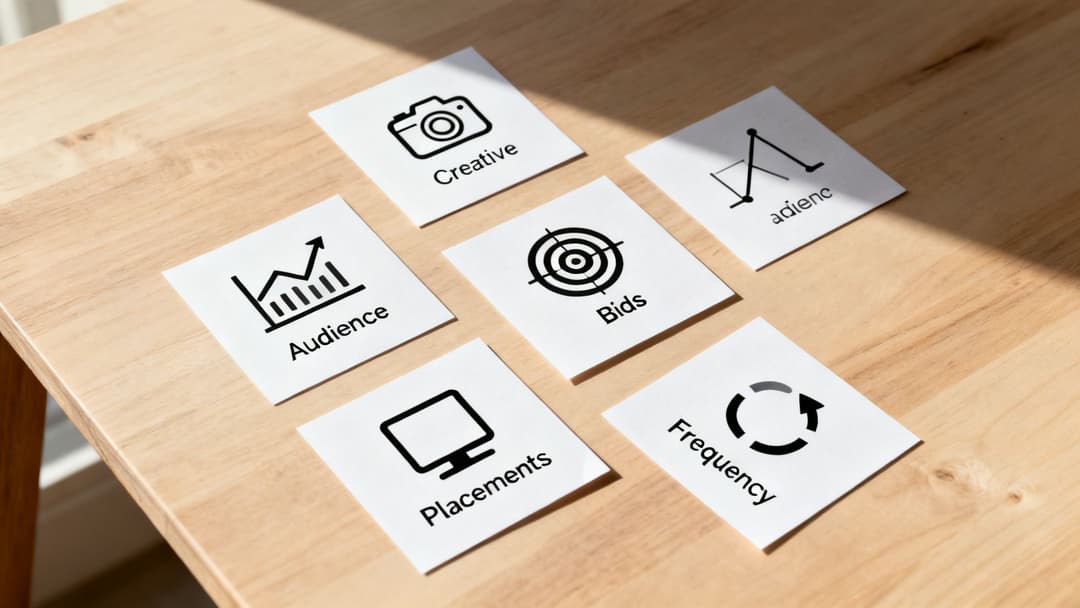
To help visualize how these pieces fit together, here’s a quick summary of the levers you can pull on a platform like Meta to influence your impressions.
Impression Optimization Levers for Meta Ads
| Optimization Lever | Key Action | Impact on Impressions |
|---|---|---|
| Creative | Test diverse formats (UGC, video, statics) and hooks. | Better creative earns higher engagement, leading to more, cheaper, and higher-quality impressions. |
| Audience | Layer interest, behavior, and Lookalike targeting. | Increased relevance means the algorithm shows your ad to more receptive users, improving impression quality. |
| Bidding | Choose between Lowest Cost, Cost Cap, or other strategies. | Directly controls cost-per-impression (CPM) and the stability of ad delivery. |
| Placements | Manually select high-performing placements (e.g., Feeds, Stories). | Concentrates budget on placements where users are more engaged, avoiding wasted impressions. |
| Frequency | Monitor and refresh creative when frequency gets too high. | Prevents ad fatigue, which causes negative feedback and drives up the cost of impressions. |
Each of these levers offers a way to fine-tune your campaign, ensuring you’re not just getting impressions, but the right impressions.
Select Strategic Placements
Not all placements are created equal. An impression in the Instagram Feed is a world away from one in the Audience Network. Manually selecting your placements—or at least customizing assets for each one—gives you way more control over the user experience and the quality of impressions you're paying for.
Take a look at your data. If you have placements that consistently deliver low engagement or conversion rates, don't be afraid to turn them off. For instance, if Audience Network always has a rock-bottom CTR for your brand, excluding it will force your budget into higher-performing spots like Instagram Stories or the Facebook Feed.
Manage Your Ad Frequency
Frequency is the average number of times a person has seen your ad. A little repetition is good for brand recall, but when it gets too high, you run into ad fatigue. People start tuning you out, or worse, hiding your ad and leaving negative feedback.
A good rule of thumb is to keep a close eye on your frequency, especially in smaller retargeting audiences. If you see it creeping above 5-7 in a short timeframe, that’s a huge red flag. It’s the algorithm’s way of telling you the audience is sick of your ad. This is your cue to swap in fresh creative or broaden your targeting before you saturate your audience and watch your costs skyrocket.
Using AI to Supercharge Your Impression Strategy
Let's be honest. Manually testing every variable to get your social media impressions just right is a brutal, soul-crushing process. It’s also impossible to do at scale. You can tweak your creative, sharpen your audience targeting, and adjust your bids, but trying to do that across dozens of campaigns is a one-way ticket to burnout.
This is exactly where AI steps in, not as a replacement, but as a performance marketer's most powerful partner. Instead of you manually pulling every lever, AI platforms automate and amplify these tactics. They act as a force multiplier, letting you execute at a speed and scale that a human team just can't match.
Generate and Test Creative at Scale
The absolute foundation of earning high-quality impressions is creative that actually connects with people. AI-driven creative tools let you test hundreds of ad variations in minutes, not days. By mixing and matching different headlines, images, videos, and calls-to-action, you can rapidly figure out which combinations grab the attention of platforms like Meta.
This kind of high-volume testing quickly shows you what works for different audience segments. The algorithm sees this positive feedback and starts serving your ads more confidently and, more importantly, more cost-effectively. The result? You get a higher volume of valuable impressions that actually lead to engagement, not just empty views.
This is a game-changer on platforms like Facebook. The platform saw a 56% jump in impressions in a single year, with reach growing by 51%. With over 3.07 billion monthly active users, its impression potential is massive, making it a non-negotiable channel for growth. Using AI to test creative on a platform this huge is the only way to maximize your impact. For a wider view, you can check out some eye-opening social media usage statistics and trends.
Pinpoint Winning Combinations with AI Insights
Beyond just making ads, AI is a beast at analysis. Trying to manually sift through performance data to find the winning ad components is a recipe for disaster, clouded by our own biases and assumptions. AI, on the other hand, can analyze historical campaign data to objectively identify your top-performing creative elements, audience segments, and messaging angles.
AI doesn't have hunches; it has data. It cuts through the guesswork by showing you the statistically significant patterns in your performance, telling you exactly which levers to pull to improve impression quality and drive down your Cost Per Lead (CPL).
This turns your ad account from a messy spreadsheet into a library of actionable insights. You stop starting from scratch with every new campaign and instead build on a foundation of proven winners. Every ad you launch becomes smarter than the last.
Automate Campaign Launch and Scaling
Finally, AI connects the dots between great creative and smart execution. Platforms like AdStellar use AI to automatically launch campaigns and scale budgets, making sure your ad spend is always flowing to the top performers. It’s the end of tedious, manual campaign setup and budget babysitting.
This centralized approach means the AI is always watching, monitoring results in real-time. It can spot the ads that are gaining traction and automatically shift budget toward them, ensuring your money is always working to maximize high-quality social media impressions that drive real business outcomes, like a higher Return on Ad Spend (ROAS).
By automating this process, you free up your team to think about high-level strategy instead of getting lost in the weeds of campaign management. For a deeper dive, check out our guide on how to effectively use AI for Facebook Ads to get your operations running like a well-oiled machine.
Turning Social Media Impressions Into Business Growth
Let's be honest: social media impressions are just the starting point. They're the raw material, but what every performance marketer is really chasing is measurable business growth.
Each ad view, every algorithmically-served placement, is just one step toward a real outcome—a new lead, a sale, or a bump in brand recognition. The journey from a simple view to actual revenue is built on a foundation of high-quality, strategically earned impressions. It’s not about chasing the biggest number on your dashboard. It's about digging into the story the data is telling you and making smarter decisions because of it.
From Data Points to Strategic Decisions
Winning at paid social means looking past the raw impression count and asking why. Why did one creative absolutely crush another? Why did that specific audience segment deliver a much lower cost per impression? Answering these questions is how you stop just reporting on metrics and start actively shaping them.
This informed approach is critical for every single part of your campaign. The insights you pull should directly feed into your:
- Creative Development: Pinpointing the visual styles, messaging hooks, and CTAs that consistently earn positive attention.
- Audience Targeting: Finding the exact segments that are most receptive to your ads, leading to higher-quality, more cost-effective impressions.
- Bidding Strategy: Making data-backed calls in the ad auction to protect your profitability while you scale up.
The Role of AI in Unlocking Growth
Trying to connect all these dots manually across multiple campaigns is a massive headache. This is exactly where AI-driven tools like AdStellar become essential. AI acts as an analytical engine, crunching thousands of data points to find the hidden patterns that lead to campaign success. It takes the guesswork out of optimization.
A sophisticated paid social strategy doesn't treat impressions as a vanity metric. It views them as the first critical signal of campaign health, using data to ensure every dollar spent is maximizing the potential for a profitable return.
By automating creative testing and budget allocation, AI platforms make sure your ad spend is always flowing toward the combinations most likely to drive results. The complex web of creative variables gets transformed into clear, actionable insights. You can see how to build this into your own work by checking out our guide to building a paid social media strategy.
The real goal here is to build a repeatable system for growth. By pairing a data-first mindset with powerful automation, marketers can turn the fundamental metric of social media impressions into a reliable engine for driving revenue and hitting sustainable business goals.
Frequently Asked questions about social media impressions
Even when you've got the basics down, a few persistent questions always pop up when you're in the trenches running campaigns. Let's tackle some of the most common ones I hear about social media impressions.
Why Are My Impressions High but Clicks Are Low?
Ah, the classic. This is one of the most frustrating problems for any media buyer, and it almost always points to one thing: a creative-to-audience mismatch. High impressions mean the platform is doing its job—it's showing your ad to people. But low clicks mean your ad isn't doing its job.
Simply put, your ad is being seen, but it isn't resonating. You need to break down the creative. Is the visual grabbing attention in the first second? Is the headline clear and compelling? Is your copy speaking directly to a pain point? A weak link in any of these will kill your click-through rate (CTR).
High impression volume is actually a golden opportunity for aggressive testing. Don't get frustrated—get scientific. Use the data flow to A/B test your creative elements and quickly find out what actually gets people to stop scrolling and click.
What Is a Good Cost Per 1000 Impressions (CPM)?
This is the "how long is a piece of string?" of social ads. There’s no magic number for a "good" CPM. It's an incredibly fluid metric that swings wildly based on your industry, how niche your audience is, where you're advertising, and even the time of year. Just try running e-commerce ads in Q4 and watch your CPMs hit the roof.
Instead of chasing a universal benchmark, you should be obsessed with your own CPM trend and how it connects to your real goal, like cost per acquisition (CPA). A rising CPM can be a red flag for ad fatigue or tougher competition. But here's the thing: a high CPM isn't necessarily bad if it’s for a hyper-valuable audience that delivers a killer return on ad spend (ROAS).
How Does Ad Frequency Affect My Impressions?
Frequency is just the average number of times one person has seen your ad. The formula is simple: Impressions ÷ Reach. This little metric is a critical health indicator for your campaigns. A little repetition is great for brand recall, but when that number creeps up, it’s a massive warning sign for ad fatigue.
Once people see the same ad over and over, they tune it out. Even worse, they might start hiding it or leaving negative feedback. That tells the platform's algorithm your ad is annoying, and your CPMs will start to climb as the algorithm struggles to find anyone left who's willing to see it. If your frequency is getting high—say, above 5-7 on a conversion campaign in just a few days—it's time to swap in fresh creative.
Ready to turn creative chaos into campaign clarity? AdStellar AI helps you launch, test, and scale your Meta ad campaigns 10x faster, ensuring every impression counts. Stop guessing and start growing with AdStellar AI.