Scaling paid media gets messy before it gets better. You start with a capable team, a few winning campaigns, and enough channel coverage to keep growth moving. Then performance flattens. Creative testing slows down. Reporting turns into a debate about what drove revenue. Your team isn't underperforming. It's overloaded.
That's usually the point when brands start looking at media buying companies. Not because they want another vendor, but because they need specialized execution, sharper measurement, and a faster operating rhythm than their current setup can support. The challenge is that most agency roundups read like directories. They don't help you decide whether you even need an agency in the first place.
This guide is built for that decision. It highlights seven media buying companies worth knowing, but it also frames the bigger choice between outsourcing, building internally, or using software to remove operational bottlenecks. If your team needs stronger paid social execution right now, it may be worth reviewing options for Senior PPC management alongside the firms below. The goal here is simple. Help you make a better call on who should run your media, how they should be measured, and what trade-offs you're signing up for.
1. Tinuiti
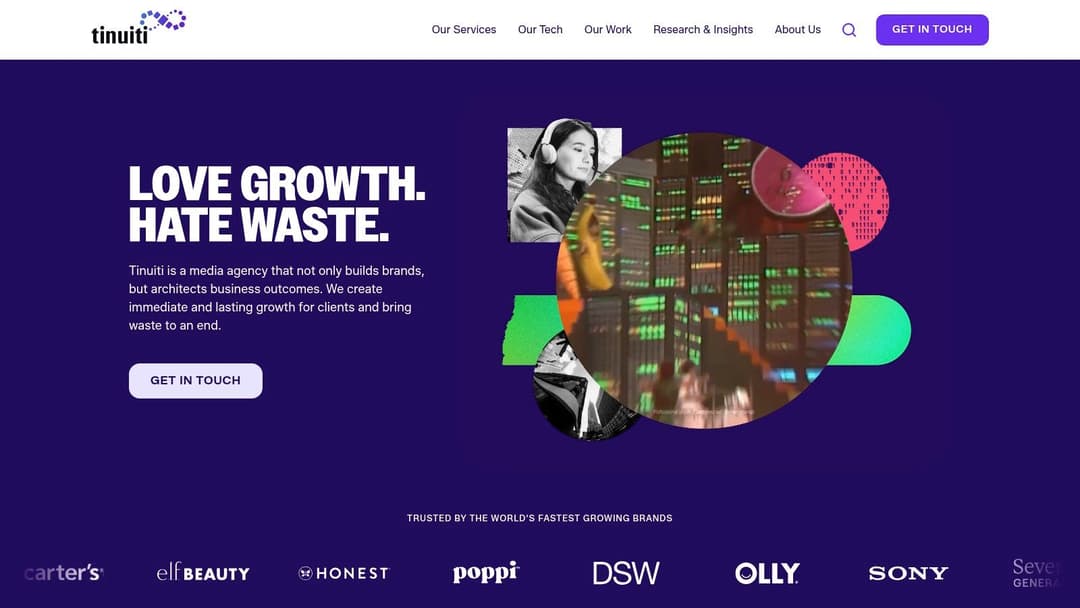
Tinuiti is one of the clearest fits for brands that need full-funnel scale without going straight to a holding company. Its strength is range. Paid social, search, retail media, Amazon, programmatic, CTV, and analytics all sit inside one operating model. That matters when your Meta team, Amazon team, and measurement team can't afford to work in silos.
What makes Tinuiti more interesting than a generic large agency is the emphasis on tying media decisions back to business impact. Its Bliss Point system is positioned around connecting audience, creative, media, and measurement so teams can spot waste earlier and scale what's working with more confidence. If you're hiring for mature paid social and marketplace execution, that combination is hard to ignore.
Where Tinuiti fits best
Tinuiti tends to make the most sense when your internal team already understands channel basics but needs a stronger engine for orchestration and analysis. It's a solid option for brands dealing with retail media complexity, multi-channel budget allocation, or paid social programs that have gotten too large for manual coordination.
A practical advantage is the agency's testing orientation. That matters because too many media buying companies still rely on platform-reported efficiency as if it were the full truth. If your team is trying to move beyond that, Tinuiti sits in the right part of the market.
Practical rule: If an agency talks constantly about ROAS but gets vague when you ask about incrementality, holdouts, or access to raw data, keep looking.
For teams still defining the role internally, it helps to understand what a modern buyer owns. This breakdown of the digital media buyer role is useful context before you decide whether to outsource it.
Pros
- Channel breadth: Strong coverage across social, search, marketplaces, and programmatic.
- Measurement mindset: Better fit than average for brands that care about incrementality and structured testing.
- Independent scale: Large enough for enterprise needs without the typical holding-company baggage.
Cons
- Enterprise bias: Smaller brands may find the process heavy and the fit uneven.
- Custom scoping: Pricing and engagement structure aren't public, so qualification can take time.
You can review the agency directly at Tinuiti.
2. Wpromote
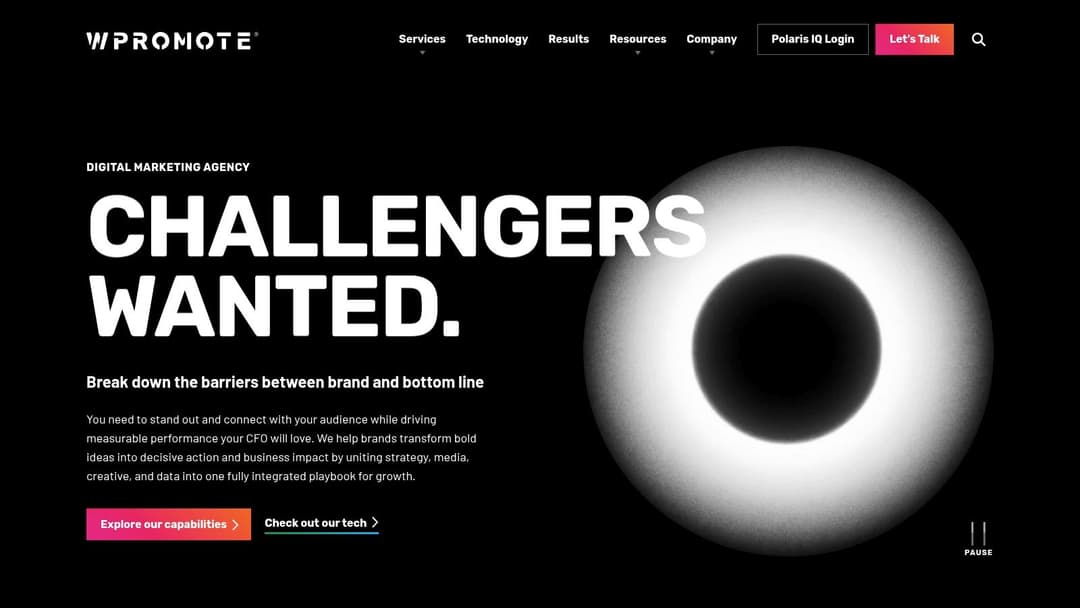
Wpromote is a good choice when performance and brand can't live in separate workstreams. A lot of agencies say they bridge that gap. Fewer build around it. Wpromote's mix of media, creative, lifecycle, and B2B capabilities makes it relevant for brands that need demand capture and narrative control at the same time.
This is especially important in categories where the ad account isn't the whole system. B2B teams need sequencing, revenue alignment, and stronger coordination with RevOps. Consumer brands need creative that can hold up across search, social, and upper-funnel video. Wpromote tends to land well in both situations.
Best use case
If your internal friction isn't campaign setup but cross-functional alignment, Wpromote is worth a serious look. It's a practical option for teams that need paid media connected to CRM, lifecycle, or account-based programs instead of treated as a standalone acquisition machine.
That said, it's not the leanest fit for every company. Early-stage teams that just need someone to stabilize Meta and Google may end up paying for a broader system than they can fully use. Wpromote is better when leadership already wants an integrated operating model.
The broader market context supports that shift. The media buying services market was valued at USD 80.5 billion in 2025 and is projected to reach USD 167.8 billion by 2036, with a 6.9% CAGR, according to Fact.MR's media buying services market report. That doesn't tell you which agency to hire, but it does confirm that specialized execution is becoming more central, not less.
If your team is still defining how channels should work together, this guide to a paid media strategy is a helpful companion before agency selection.
Agencies that combine media and creative can be a great fit. They can also hide underperformance behind “brand building” language. Ask how they separate creative opinion from measured learning.
Why teams choose Wpromote
- Integrated model: Stronger than average fit for brands that need media and storytelling together.
- B2B depth: Better suited than many peers for ABM, attribution, and complex funnels.
- Platform maturity: Enterprise relationships and broad channel experience help with larger programs.
Trade-offs
- May be oversized: Smaller paid programs can get swallowed by a bigger process.
- Opaque commercial model: You'll need a real scoping conversation to know if it fits.
Visit Wpromote.
3. Brainlabs
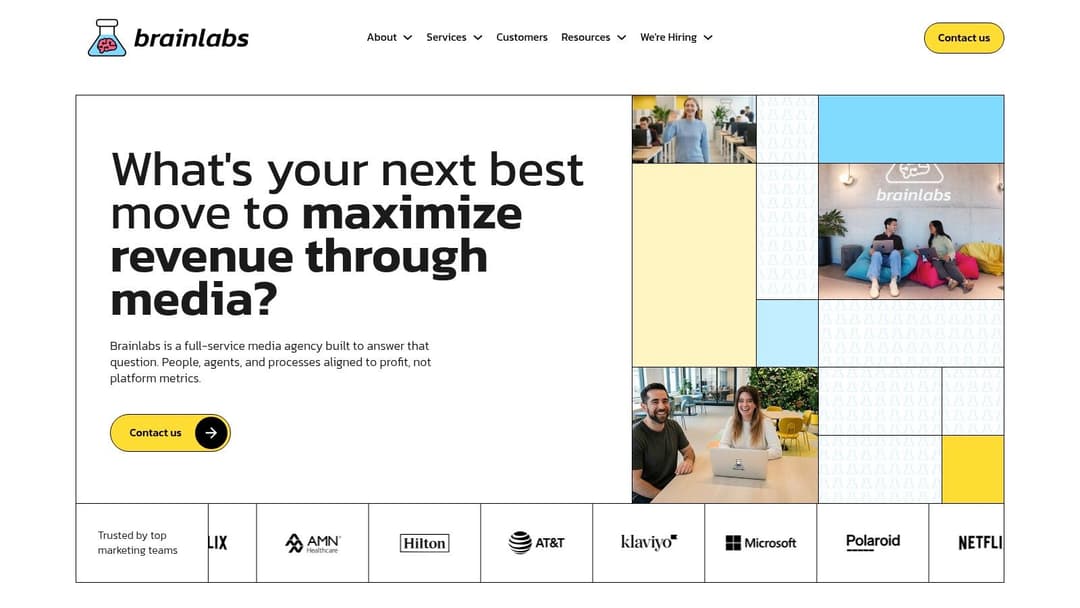
Brainlabs is for teams that want media buying run like an experimentation program, not a reporting ritual. Its reputation comes from analytics, automation, testing discipline, and a more scientific operating style than most agencies bring to the table.
That style has clear advantages. When channels get noisy and attribution gets messy, structured experimentation matters more than polished decks. Brainlabs tends to appeal to brands that want hard questions asked about lift, waste, and cross-channel effects instead of simple platform explanations.
What sets it apart
The biggest reason to hire Brainlabs is rigor. If your team values incrementality testing, marketing mix modeling, and decision-making grounded in analysis, this agency is positioned well. It's also useful for international programs where consistency across markets matters but local execution still needs oversight.
The downside is obvious. Not every brand needs this much machinery. If your current challenge is basic account hygiene, slow creative turnover, or a single underperforming channel, Brainlabs may be more system than you need.
One issue more brands should press on is measurement transparency. Public discussion around media buying still underplays the gap between platform-reported ROAS and true incrementality, while more serious advertisers are shifting toward geo-holdouts and contribution-margin analysis to audit real lift, as discussed in this analysis of agency measurement blind spots. Brainlabs is in the category of firms where that question is worth asking directly.
For teams sharpening their own experimentation playbook, this article on how to do performance marketing helps frame what a rigorous setup should look like.
Pros
- Testing culture: Strong fit for brands that want a formal experimentation cadence.
- Advanced measurement: Better alignment with incrementality and MMM than most agencies.
- Global capability: Useful for brands scaling across markets.
Cons
- Process-heavy: Simpler businesses may find the model excessive.
- Custom engagement: Like most enterprise agencies, commercial terms aren't transparent upfront.
See Brainlabs.
4. Power Digital
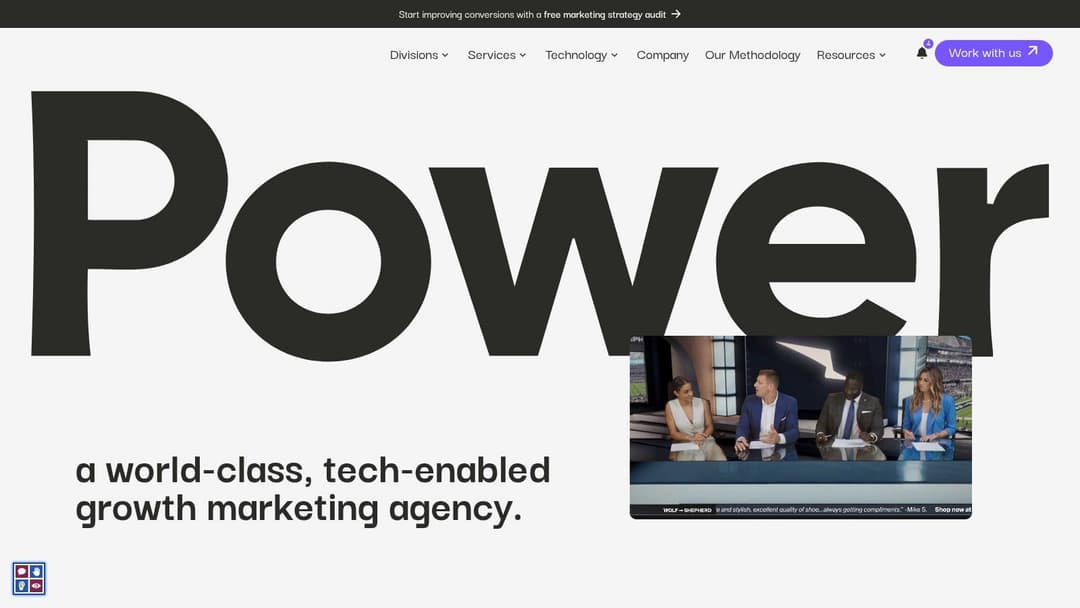
Power Digital is a practical option for brands that don't want separate partners for acquisition, creative, lifecycle, SEO, and CRO. Some companies need specialist shops. Others need one team that can coordinate the full growth system without constant internal mediation. Power Digital is built for the second scenario.
That integrated setup can improve execution when media performance depends on more than media. Weak landing pages, slow lifecycle follow-up, and disjointed creative feedback loops often create more inefficiency than bidding strategy does. A partner that can address those adjacent problems can be worth the extra complexity.
Where it works well
Power Digital is most useful when leadership wants one partner accountable for more than ad delivery. DTC brands, funded scaleups, and enterprise teams with cross-channel growth goals tend to get the most value from that model. It's less compelling if you already have strong internal owners for creative, retention, and web conversion.
There's also a scale question. These broader-service media buying companies usually make sense only when you have enough spend, enough channel activity, and enough internal complexity to justify the coordination layer.
The wrong agency structure creates duplicate meetings, slower testing, and blurry accountability. The right structure removes handoffs.
The market trend also supports more specialized execution. Mordor Intelligence projects the global media buying services market will grow from USD 105.8 billion in 2025 to USD 174.1 billion by 2031, at a CAGR of 8.67% between 2026 and 2031, in its media buying services market report. Specialized service providers are taking a larger role as digital allocation gets harder to manage well.
If you're comparing integrated partners, it helps to benchmark what others in that category offer. This overview of performance marketing agencies gives useful context.
Strengths
- Integrated growth support: Media, creative, SEO, CRO, and lifecycle under one roof.
- Cross-channel planning: Better fit for businesses where paid performance depends on adjacent functions.
- Broad category experience: Useful for both DTC and larger brands.
Limitations
- Not ideal for small budgets: The model usually fits funded or scaled companies better.
- Scope can sprawl: If you don't define ownership clearly, integrated service can turn into extra overhead.
Explore Power Digital.
5. Goodway Group
Goodway Group stands out when programmatic, commerce, and retail media all need to connect. A lot of agencies claim they do commerce. Fewer have real depth in the messy operational side of retailer ecosystems, multi-location support, and the overlap between shopper marketing and digital media execution.
If your growth plan depends on more than Meta and Google, Goodway becomes more relevant. It's particularly useful when media needs to influence both online and in-store behavior, or when retailer relationships shape what campaigns can do.
Why commerce teams look here
Goodway's value is in connecting channels that often get managed separately. Search, social, programmatic, CTV, audio, and retail media all affect commerce outcomes, but most internal teams still organize around platform ownership rather than business outcomes. Agencies with stronger commerce plumbing can reduce that fragmentation.
The catch is support model variability. Goodway offers flexible engagement structures, and that flexibility can be a plus, but it also means you need to understand exactly what support, access, and strategic involvement you're buying.
One area where brands should push harder is accountability around where budgets go. Reporting around diverse and Black-owned media often focuses on agency pledges, while publishers report little change in spend despite commitments from large firms, according to Portada's reporting on minority media buys. If equitable spend matters to your brand, ask for a framework, not a promise.
Teams managing many brands, markets, or campaign structures should also think about operational load. This look at multi-account management is useful if you're weighing agency support against internal complexity.
Best for
- Programmatic-heavy brands: Stronger fit than average for CTV, DSP, and retail media coordination.
- Commerce-focused organizations: Helpful when in-store and online outcomes both matter.
- Flexible partnerships: Can work for direct brands and partner-led models.
Watchouts
- Support can vary: Clarify how much hands-on strategy you'll get.
- Custom minimums: Commercial fit depends heavily on scope.
Visit Goodway Group.
6. PMG
PMG is a strong candidate when your biggest problem isn't buying media, but governing it. Enterprise teams often struggle less with access and more with consistency. Budgets are large, markets are fragmented, local teams have different priorities, and every reporting cycle turns into reconciliation work. PMG fits that environment well.
Its positioning is full-funnel and cross-channel, but the practical appeal is operational discipline. Search, social, programmatic, commerce, customer experience, and analytics are easier to coordinate when one partner has a clearer governance model and a habit of producing usable planning insights.
Who should shortlist PMG
PMG makes sense for brands that need structured planning, cleaner reporting habits, and stronger market-to-market coordination. Retailers, multi-market brands, and larger digital programs are the obvious fit. Smaller teams may respect the quality and still decide it's too much process for what they need.
That's a common issue in this category. Enterprise-focused media buying companies often solve real complexity, but they also introduce more meetings, more workflows, and more stakeholder management. If your paid media operation is still fairly concentrated, a leaner setup may outperform a more elaborate one.
The category itself is still expanding. The global media buying agencies and representative firms market reached $69.82 billion in 2025 and is projected to grow to $86.2 billion by 2030 at a 4.6% CAGR, with North America the largest region in 2025 and Western Europe the fastest-growing region, according to The Business Research Company's market report. That steady growth reflects how essential these partners remain even as teams build more in-house capability.
Good governance isn't glamorous. It does prevent wasted spend, duplicated tests, and reporting arguments that eat half the quarter.
PMG's site is PMG.
7. MuteSix

MuteSix is one of the more obvious picks for DTC and e-commerce brands that live or die by paid social velocity. If your growth model depends on fast creative iteration across Meta and TikTok, this is the kind of agency profile that tends to matter more than a broad full-service pitch.
Its appeal is the tight connection between creative production and media buying. That's not a small detail. On paid social, performance often degrades because creative testing gets slow, not because the buying team suddenly forgot how to manage budgets.
Why DTC teams consider MuteSix
MuteSix is built for brands that need rapid feedback loops. New hooks, new formats, UGC variations, and channel-specific creative often matter more than adding another reporting layer. For e-commerce teams trying to keep social acquisition efficient, that's a practical advantage.
The trade-off is that specialist paid social agencies can skew expensive relative to smaller boutiques, and they aren't always the best fit once your channel mix becomes more diversified. If paid social is your core battleground, that's fine. If retail media, programmatic, or broader brand planning are becoming equally important, the fit gets less obvious.
The operational gap many teams face is speed. Only 12% of marketing budgets are currently allocated to media buying based on real-time performance data, while marketers that effectively integrate first-party data into media buying achieve an average 2.5x higher ROAS, according to Media Buying Time's summary of 2025 eMarketer findings. That's exactly why creative-media feedback loops and first-party data usage matter so much in social-heavy accounts.
Strong fit
- DTC and e-commerce: Especially where Meta and TikTok drive core acquisition.
- Creative-led media buying: Faster iteration when production and buying stay connected.
- Seasonal execution: Helpful for brands that need clear paid social playbooks during peak periods.
Potential drawbacks
- Retainer pressure: Confirm commercial fit early.
- Channel concentration: Best when paid social is still central to growth.
Check MuteSix.
Top 7 Media Buying Companies Comparison
| Provider | Implementation complexity | Resource requirements | Expected outcomes | Ideal use cases | Key advantages |
|---|---|---|---|---|---|
| Tinuiti | High, enterprise processes and integrated OS | Significant, enterprise budgets, cross‑functional teams | Scalable paid social & retail growth, stronger incrementality & measurement | Enterprise brands seeking full‑funnel paid social/retail expertise and measurement | Deep Meta/Amazon expertise, proprietary "Bliss Point" OS, testing culture |
| Wpromote | Medium‑high, integrated media + creative and ABM setups | Mid‑to‑high, custom engagements, AI‑powered tech and teams | Balanced brand storytelling and performance, revenue‑linked B2B outcomes | Brands needing performance + creative integration; B2B/ABM programs | AI martech, strong B2B/ABM capabilities, integrated creative+media |
| Brainlabs | High, experimentation‑first, data/measurement heavy | High, analytics, testing infrastructure, measurement specialists | Rigorous performance improvements via experimentation and MMM | Brands prioritizing testing, incrementality, and cross‑market scaling | Advanced measurement, strong testing culture, independent global delivery |
| Power Digital | Medium‑high, cross‑channel plus integrated services | High, media plus creative, SEO, CRO, lifecycle teams | Media spend tied to business impact; improved cross‑channel efficiency | Brands wanting a single partner for media, creative, and lifecycle programs | Integrated services (SEO/CRO/creative), performance-led approach |
| Goodway Group | Medium, programmatic + commerce alignment | Mid‑to‑high, programmatic/trade desk and retail media capabilities | Reduced waste, aligned programmatic & retail outcomes, shopper lift | Brands requiring programmatic + retail media alignment and retailer support | Strong programmatic & retail expertise, flexible engagement models |
| PMG | High, enterprise governance, CX and commerce integration | High, multi‑market analytics, governance and planning teams | Rigorous governance, cross‑market analytics, CX‑linked media performance | Enterprise/global brands needing governance, insights, and seasonal planning | Strong insights/reporting, CX/commerce integration, enterprise planning |
| MuteSix | Medium, rapid social testing and creative iteration | Mid, platform specialists, creative/UGC production | Fast paid social iteration, creative-driven scaling for e‑commerce | DTC and e‑commerce brands focused on Meta and TikTok performance | Meta/TikTok specialization, tight creative‑media feedback loop, UGC production |
Your Vetting Checklist How to Choose the Right Partner
The biggest mistake brands make when evaluating media buying companies is assuming the decision is agency versus agency. It usually isn't. It's agency versus in-house versus software-enabled hybrid. The right answer depends on what's broken.
Hire an agency when the problem is capability and speed. That usually means your team lacks deep channel expertise, senior strategic oversight, or the operational capacity to test fast enough. If you're entering retail media, trying to scale paid social aggressively, or need stronger measurement discipline, an external partner can close the gap faster than hiring from scratch.
Build more in-house when your edge depends on product knowledge, close creative coordination, or proprietary customer insight. Internal teams often outperform agencies when they have enough senior talent, clean workflows, and the time to learn from the data. The catch is that many teams want in-house control without funding the infrastructure and operating discipline that make it work.
A hybrid model is often the most practical. Keep strategy, positioning, and business context in-house. Use an agency for specialist execution or channel coverage. Add software where the primary bottleneck is volume, speed, or repeatable workflow.
The questions that actually matter
When you vet a partner, don't start with case studies. Start with operating reality.
- Who will run the account day to day: Ask who owns execution, who owns strategy, and how often senior people are involved.
- How do they measure success: Push past dashboard metrics. Ask how they validate incrementality, how they handle attribution conflicts, and whether you'll get raw data access.
- What does testing look like: A real testing framework has hypotheses, prioritization, and decision rules. “We test constantly” isn't an answer.
- How do they handle creative feedback loops: This is critical for Meta, TikTok, and display-heavy programs.
- What is their reporting cadence and style: You want clarity, not reporting theater.
- How do they use first-party data: If they can't explain this cleanly, that's a warning sign.
- What tools are required on your side: Some agencies reduce workload. Others create more of it.
Ask every finalist what they do when platform-reported performance looks strong but business results don't. The quality of that answer tells you a lot.
If the issue isn't strategic talent but execution speed inside Meta, a platform can be the better fix. AdStellar AI is one relevant option for teams that want to automate campaign buildout, testing, and scaling workflows inside Meta without adding agency overhead. That doesn't replace strategic judgment, but it can remove a lot of repetitive production work from media buyers and agency teams.
The goal isn't to find the most impressive partner. It's to find the operating model that matches your stage, team, and growth constraints. If you know where the bottleneck really is, the choice gets much easier.
If your team is spending too much time building campaigns and not enough time learning from them, AdStellar AI is worth a look. It's built to automate Meta campaign creation, testing, and scaling workflows so media buyers and growth teams can move faster with less manual setup.